

1. Why MoistureShield Outperforms Traditional Wood Decking in Texas Climate
Texas architects designing contemporary homes know that material selection shapes everything. Wood decking delivers the warmth and natural character your designs demand, but traditional lumber struggles against our climate’s relentless heat, humidity, and moisture swings. MoistureShield composite decking bridges that gap, giving you authentic wood aesthetics with engineered durability that actually survives Texas weather. We’ve worked with Austin and Dallas design firms for years, and we’ve seen how the right composite choice eliminates callbacks while preserving the material integrity architects value.
Texas weather creates specific challenges that catch most architects off guard. Our summer humidity peaks above 80%, rainfall concentrates in spring and fall, and temperature swings from 30 degrees to 100 degrees within months. Premium cedar and cypress hold their appeal only if you accept ongoing maintenance, warping, checking, and eventual replacement within 10-15 years.
MoistureShield eliminates the core problem: moisture infiltration. Unlike solid wood, composite boards won’t cup, twist, or splinter under our temperature extremes. The engineered composition resists water absorption at the cellular level, so rain and humidity never compromise structural integrity. You specify one material at project start, and it performs consistently for decades.
This matters for your clients’ expectations. When homeowners invest in an architect-designed residence, they expect finishes that age gracefully without constant maintenance. MoistureShield delivers that promise. The material won’t fail after year three or require stripping, sanding, and restaining every few years.
Actionable takeaway: When scoping deck materials for Texas projects, ask suppliers whether their composite uses solid wood cores or engineered strand matrix. MoistureShield’s construction method keeps moisture out, while cheaper composites absorb water and deteriorate faster.
2. MoistureShield’s Moisture Protection Technology and Durability Advantages
MoistureShield’s engineered core uses a compressed wood strand matrix bound with resin, creating a material that won’t absorb moisture like traditional lumber. The outer cap layer adds a weather shield that reflects UV and prevents color fading. This two-layer design outperforms single-layer composites that fail at edges and fastener penetrations.
We’ve specified thermally modified wood products for years, and we appreciate similar engineering principles applied to composites. Both approaches address wood’s fundamental weakness: moisture sensitivity. MoistureShield applies that logic to composite technology, creating boards that hold up under Austin’s Hill Country humidity and Houston’s coastal salt air.
The durability advantages translate directly to cost savings. You won’t field calls about cupping deck boards or rot around posts. Fastener corrosion, a common complaint with wood decking, doesn’t occur because water stays out. Staining and mold resistance come standard, not as premium add-ons.
Span ratings also matter for architectural freedom. MoistureShield boards handle longer spans than many wood species, so your designs can feature cantilevered sections or open underdecks without additional framing. This structural flexibility lets contemporary aesthetics drive the design rather than lumber limitations.
Actionable takeaway: Request warranty documentation and span charts from any composite vendor. MoistureShield’s published performance specs back up durability claims, and transparent engineering lets you design with confidence.
3. Aesthetic Options That Match Contemporary Architectural Vision
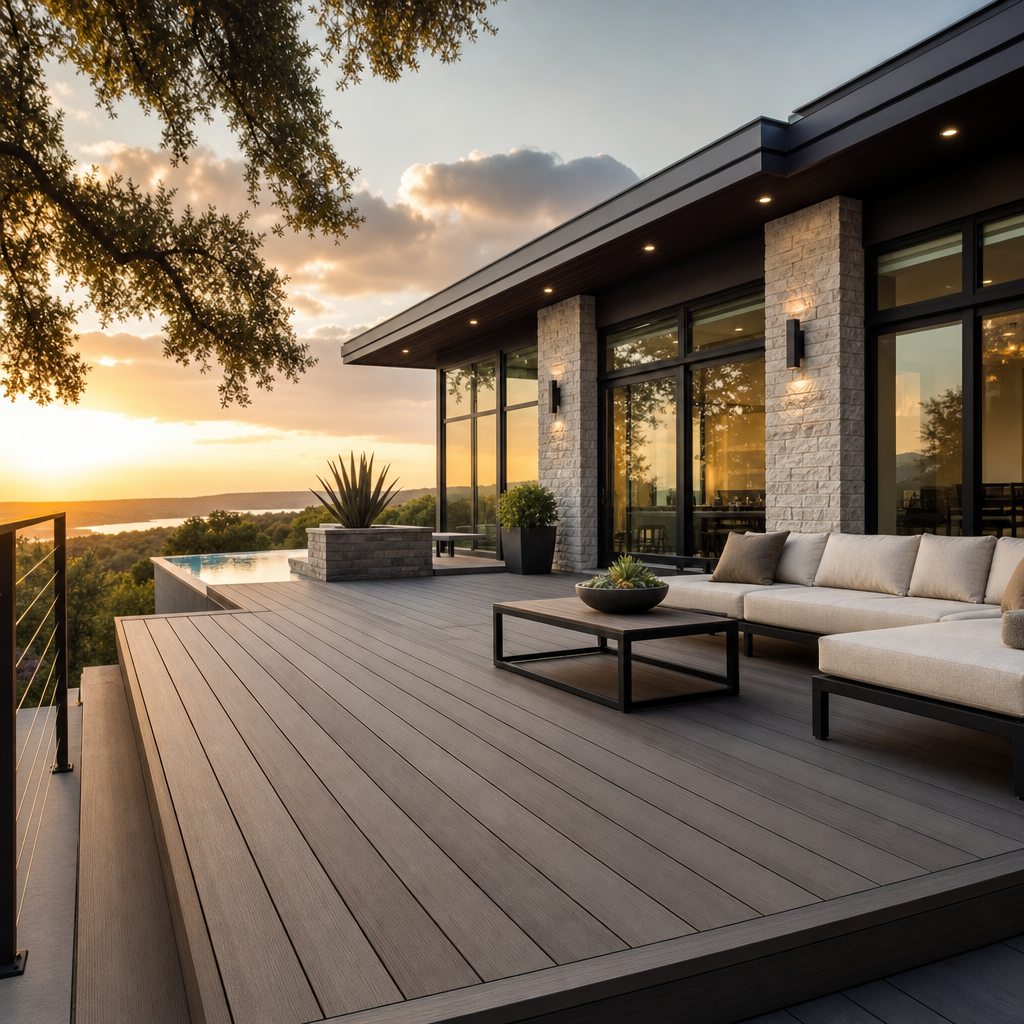
Modern contemporary design emphasizes honest material expression and subtle color palettes. MoistureShield offers finish options that read as authentic wood rather than plastic lookalikes. The grain texture captures the character architects appreciate while maintaining composite durability.
Color selection matters as much as texture. Warm gray tones complement natural cedar and cypress aesthetics without mimicking them too literally. Deeper charcoal finishes create dramatic contrast with light-filled interiors and expansive glazing. Lighter options work for residential designs emphasizing openness and minimalism.
We work with architects who specify natural wood siding and cladding alongside decking. When you choose MoistureShield composite decking, the material reads consistently with timber cladding and siding systems that define your aesthetic vocabulary. Composite and natural wood coexist on the same project without visual conflict.
The key difference from economy composite brands: MoistureShield invests in texture fidelity and color development. Budget options flatten the grain and oversaturate colors, producing the plastic appearance that damages architect credibility. Premium composites hold their character, aging beautifully as subtle UV weathering creates depth and richness.
Actionable takeaway: Request samples in your project’s specific lighting conditions. Ask about color consistency across production batches, since some manufacturers show variation that disrupts large deck installations.
4. Low Maintenance Benefits That Save Time and Cost
Architects often underestimate how maintenance expectations shape client satisfaction. Traditional wood decking requires annual inspection, seasonal staining, power washing, and repair work that stretches across years. That burden falls on homeowners, and it creates friction between the design intention and lived experience.
MoistureShield eliminates this equation. No staining. No sealing. No stripping. Occasional rinsing removes surface dust, and you’re done. This simplicity attracts high-end residential clients who value their time more than modest material savings. It also protects your reputation when clients compare their deck’s performance against neighbors’ wood decking that needs refinishing.
Cost analysis favors composites over 20-year lifecycles. Material investment runs slightly higher upfront, but labor and ongoing maintenance costs compress dramatically. Traditional wood might cost less to install but requires $2,000-4,000 in maintenance every three to five years. MoistureShield amortizes differently: higher initial cost, minimal lifetime expense.
For architects designing for repeat clients or concerned about long-term project performance, this stability is valuable. You specify once, and the material delivers consistently without revisits or warranty disputes.
Actionable takeaway: Create a simple lifecycle cost comparison showing your client wood versus composite expenses across the first decade. Most homeowners underestimate maintenance cost and choose better when they understand total ownership.
5. Environmental Sustainability and Responsible Material Sourcing
Contemporary architects emphasize sustainability, often specifying FSC-certified materials and responsible sourcing. MoistureShield uses engineered wood components from well-managed forests, paired with UV-stable resins that don’t require toxic coatings.
The sustainability advantage over traditional wood decking may surprise you. Premium cedar and cypress, while beautiful, face harvesting pressures and long growth cycles. Composite technology using engineered strands from faster-growing species or reclaimed sources reduces forest impact. Longer material lifespan means fewer replacements and less cumulative environmental footprint.
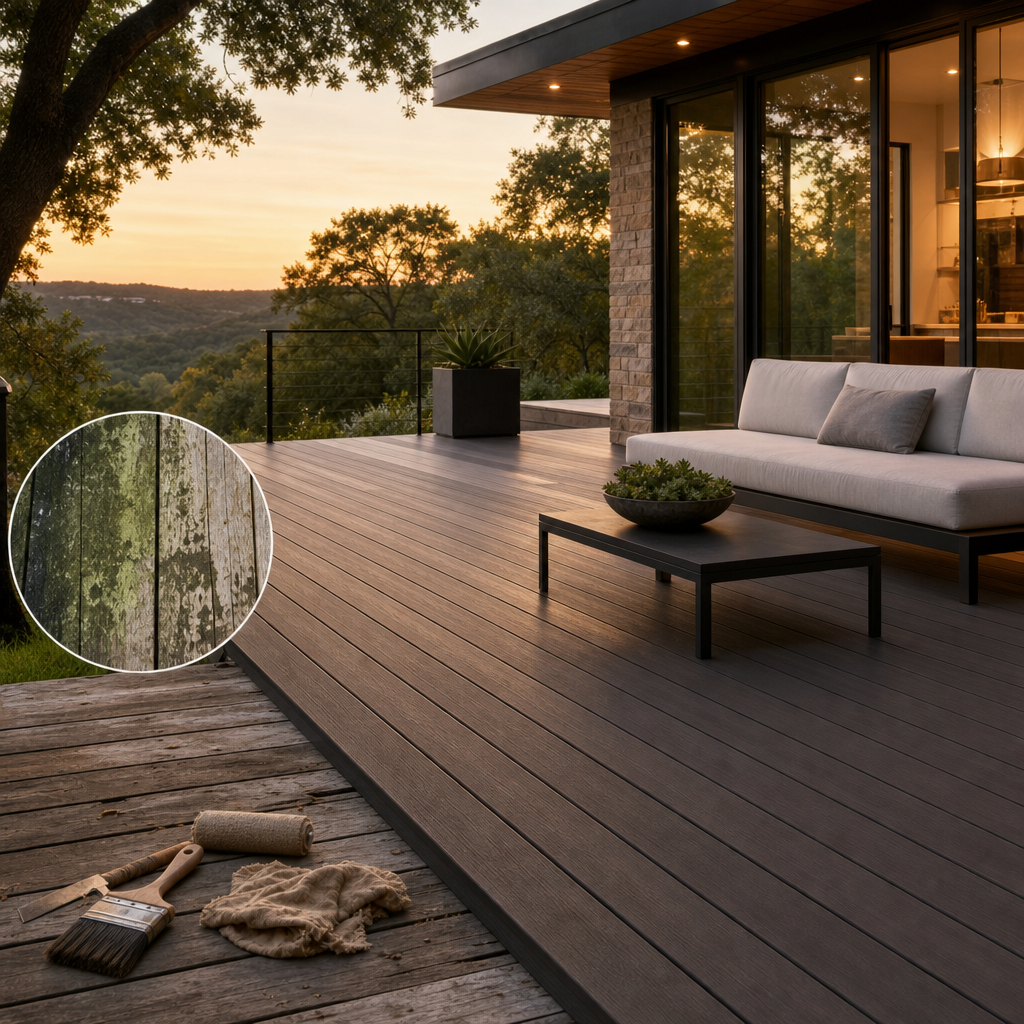
We stock FSC-certified hardwoods and thermally modified wood products for architects prioritizing environmental responsibility. Composite decking complements that commitment by offering durability without harvesting pressure. It’s not a replacement for natural wood but a strategic choice for specific applications where performance demands durability.
The chemical profile also matters. MoistureShield uses non-toxic binders and UV packages, unlike budget composites that rely on problematic additives. This distinction appeals to architects specifying for wellness-focused designs or LEED certification.
Actionable takeaway: Request sustainability documentation and third-party certifications from composite manufacturers. Greenwashing is common, and verified sourcing and production claims distinguish authentic sustainability from marketing.
6. Fire Rating and Safety Performance for WUI Compliance
Texas Wildland-Urban Interface (WUI) codes require Class A fire ratings for exterior materials in high-risk zones. This regulation affects Austin Hill Country properties, areas around Dallas-Fort Worth, and Houston-adjacent developments. Material choice isn’t optional in these regions; it’s code-mandated.
MoistureShield meets Class A standards without sacrificing aesthetics. The engineered composition includes fire-resistant additives that prevent rapid flame spread. Unlike some fire-rated wood treatments that yellow or degrade over time, composite coatings maintain performance and appearance through the structure’s lifetime.
We supply WUI-compliant decking, cladding, and siding products to architects designing in restricted zones. The regulatory landscape keeps tightening, particularly in the Hill Country and similar areas experiencing increased development pressure. Specifying code-approved materials from day one eliminates redesign cycles and approval delays.
Documentation matters for code officials. Request certified test results and specific class ratings, not just general claims. MoistureShield provides independent third-party verification that satisfies building department requirements.
Actionable takeaway: Check current WUI regulations for your project’s specific zip code or county. Fire-rating requirements vary by location, and early specification prevents costly redesigns mid-project.
7. Installation Expertise and Local Texas Support We Provide
Material excellence means nothing without proper installation. We work directly with architects and builders across Texas, providing technical support that extends from specification through construction. Our team understands regional climate challenges and local code requirements that national suppliers often miss.
When you partner with us for MoistureShield composite decking, you get access to installation best practices developed from hundreds of projects across Texas. We advise on fastening systems, ventilation strategies, and expansion allowances that account for our specific weather patterns. This guidance prevents common failures that undermine composite performance.
Local inventory means no extended lead times. We stock MoistureShield products at our Texas distribution center, ready for immediate project needs. National suppliers often quote six-week delays that compress construction schedules; we eliminate that constraint.
We also coordinate with local builders and contractors who’ve worked with composite systems on previous projects. Our network includes experienced installers who understand contemporary architectural expectations and deliver finishing quality that matches your design intent.
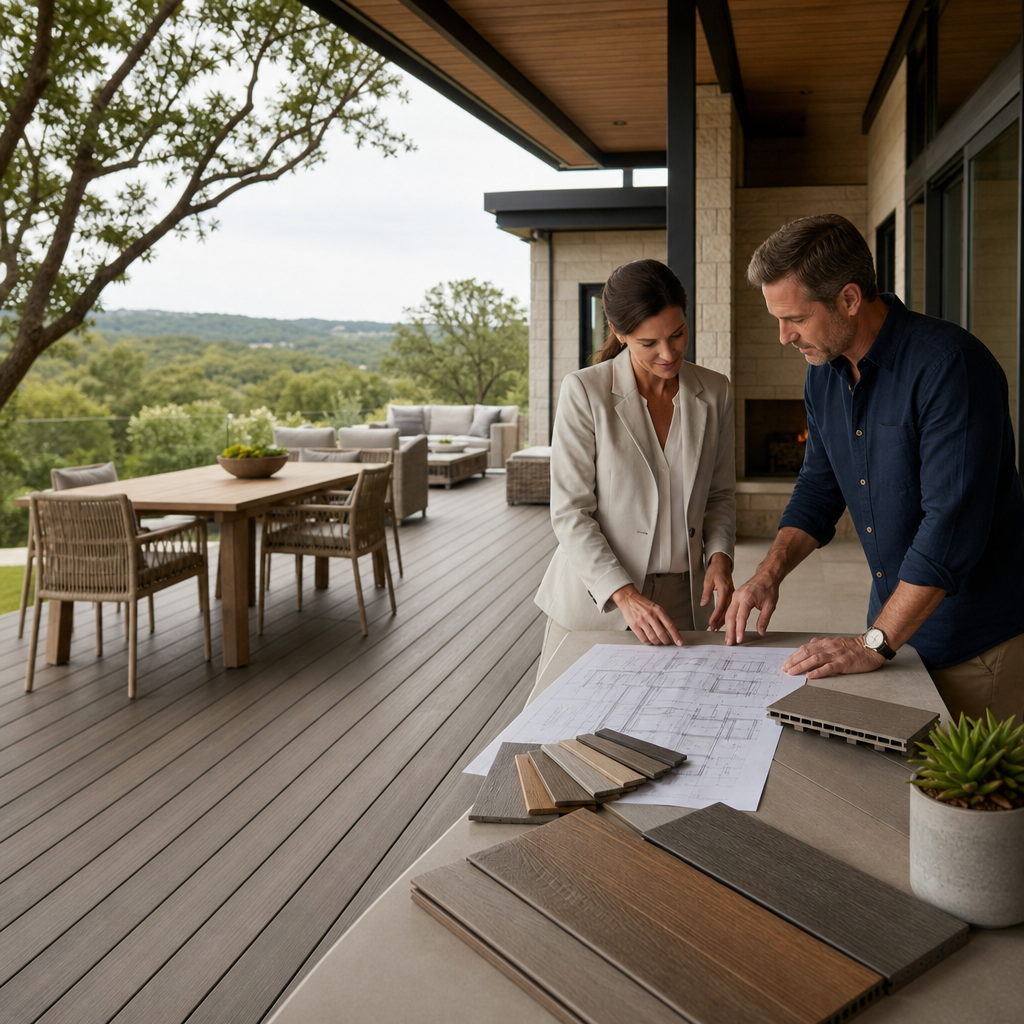
Beyond product supply, we provide architect support through specification review, color consultation, and lifecycle cost analysis. This collaborative approach ensures your projects succeed from initial conception through final completion, with material performance that validates your design decisions.
Actionable takeaway: Schedule a project consultation with our team before final specification. We’ll review your design intent, discuss regional considerations, and confirm that MoistureShield aligns with your architectural vision and performance requirements.
—
MoistureShield composite decking represents the practical solution for Texas architects balancing aesthetic vision with climate-appropriate durability. The engineered technology delivers wood character without the moisture vulnerability that traditional lumber brings to our challenging climate. Lower lifetime maintenance costs align with high-end client expectations, while proven fire ratings and environmental responsibility address regulatory and sustainability concerns.
We’ve seen how the right material choice strengthens architect-builder relationships and builds client trust across project lifecycles. MoistureShield performs consistently, aging gracefully without the maintenance burden that strains those relationships. If you’re designing contemporary homes that demand both visual authenticity and engineered reliability, we’re ready to support your specification with expertise and local Texas partnership.
Contact us to discuss your next project and explore how MoistureShield composite decking can elevate your architectural vision while delivering the performance that Texas weather demands.
To place orders, order samples, or talk with a live person.
Frequently Asked Questions (FAQ)
Does MoistureShield decking really hold up better than wood in Texas humidity?
Yes, our experience supplying both materials across Texas shows MoistureShield delivers superior moisture resistance compared to traditional wood decking. The composite construction prevents the swelling, warping, and rot that plague natural wood in our hot, humid climate, especially during our intense summer rainy seasons. Your deck maintains structural integrity and appearance year after year without the seasonal maintenance wood demands.
What aesthetic options do we stock to match contemporary architectural designs?
We carry MoistureShield products in multiple finishes and color profiles that align with modern architectural vision, including options that replicate the warmth of natural wood grain without the maintenance burden. Our inventory supports the clean lines and natural material expression that architects like Lake|Flato emphasize in their designs. We work with you to select profiles and colorways that complement your specific project vision while delivering the durability Texas weather requires.
How does our local support make installation and material sourcing easier?
We maintain robust inventory across our Texas locations and provide direct coordination with contractors and architects on deck specifications, material delivery, and installation timelines. Our team understands local building codes, WUI compliance requirements, and the particular demands of Texas construction, so we can troubleshoot issues quickly and keep your project moving without delays.


