

The Challenge: Finding Authentic White Oak for High-End Custom Homes
White oak stands as the gold standard for high-end residential projects, and for good reason. Its distinctive grain patterns, warm honey undertones, and proven durability make it the natural choice for architects designing contemporary luxury estates. At US Lumber Brokers, we’ve spent years sourcing and milling white oak specifically for the demanding specifications of custom home projects across Texas and beyond. This guide walks you through what separates premium white oak from commodity lumber, and how to specify it confidently for your next luxury project.
Sourcing genuine, architect-grade white oak presents real obstacles. Not all white oak lumber meets the visual and structural standards required for millwork, flooring, and exterior cladding in luxury estates. Many suppliers stock only standard construction grades with visible defects, inconsistent color, or poor dimensional stability. Architects working with discerning clients need white oak that performs flawlessly and delivers the warm, refined aesthetic that justifies premium pricing.
The problem deepens when timelines tighten. Custom millwork fabrication demands precisely graded, kiln-dried stock ready for milling. Standard lumber suppliers often carry inventory suited to framing or basic trim, not the clear, vertical-grain specs required for feature walls or high-visibility interior applications. Finding a broker who stocks multiple white oak grades, understands architectural specifications, and can deliver on schedule becomes critical to project success.
We source white oak from carefully selected mills and maintain inventory specifically curated for architects. This means you access clear and select grades without the long lead times typical of general lumber suppliers.
Why White Oak Defines Modern Luxury Architecture
White oak’s appeal to contemporary designers goes beyond aesthetics. The species combines visual warmth with exceptional durability and stability, making it ideal for the open-concept, indoor-outdoor living spaces favored by architects like Lake|Flato and Page. Its naturally tight grain resists warping and cupping, crucial for wide-plank flooring and floor-to-ceiling feature walls exposed to varying humidity and light.
The wood’s neutral honey and golden tones photograph beautifully and age gracefully. Unlike softer species that show wear quickly, white oak develops a subtle patina that enhances rather than diminishes its character. This longevity appeals to homeowners investing in lifetime homes, not starter properties.
White oak also bridges material narratives effectively. Paired with expansive glass, stone, and modern finishes, it grounds contemporary designs in warmth and natural authenticity. Architects designing homes that blur indoor-outdoor boundaries find white oak’s depth and presence essential to achieving that signature contemporary feel.
Our white oak selection emphasizes grain consistency and color uniformity, delivering the visual cohesion that defines high-end residential work.
What Sets Premium White Oak Apart from Standard Grade
Premium white oak differs fundamentally from construction-grade lumber in moisture content, defect tolerance, and color sorting. Standard grades allow knots, grain irregularities, and color variation that undermine the refined appearance expected in luxury millwork. Premium clear and select grades eliminate these variables.
Kiln-drying white oak to 6-8% moisture content is non-negotiable for interior applications. Under-dried lumber shrinks and warps after installation, ruining millwork and flooring. We kiln-dry all inventory to precise specifications and verify moisture content before shipment.
Grain orientation matters significantly. Vertical-grain white oak (also called rift-sawn) displays straight, parallel grain lines that create the clean, linear aesthetic preferred in modern design. Quarter-sawn stock costs more but delivers unmatched stability and the distinctive medullary ray figure that commands premium pricing.
Color sorting adds another layer. Architects specify “white oak blonde” for cooler, lighter tones, or “amber white oak” for warmer, honey-forward finishes. Consistent color across millwork pieces and flooring planks prevents jarring visual breaks in feature walls and continuous floor runs.
Our premium white oak inventory arrives pre-sorted for color and grain, reducing your fabricator’s setup time and material waste.
Our White Oak Millwork Collections for Custom Interiors
We supply milled and rough white oak specifically configured for custom millwork. Our clear-grade white oak accepts stain and finish beautifully while showcasing the wood’s natural figure. For contemporary interiors, select-grade white oak with minimal grain variation creates the clean, sophisticated look architects increasingly specify.
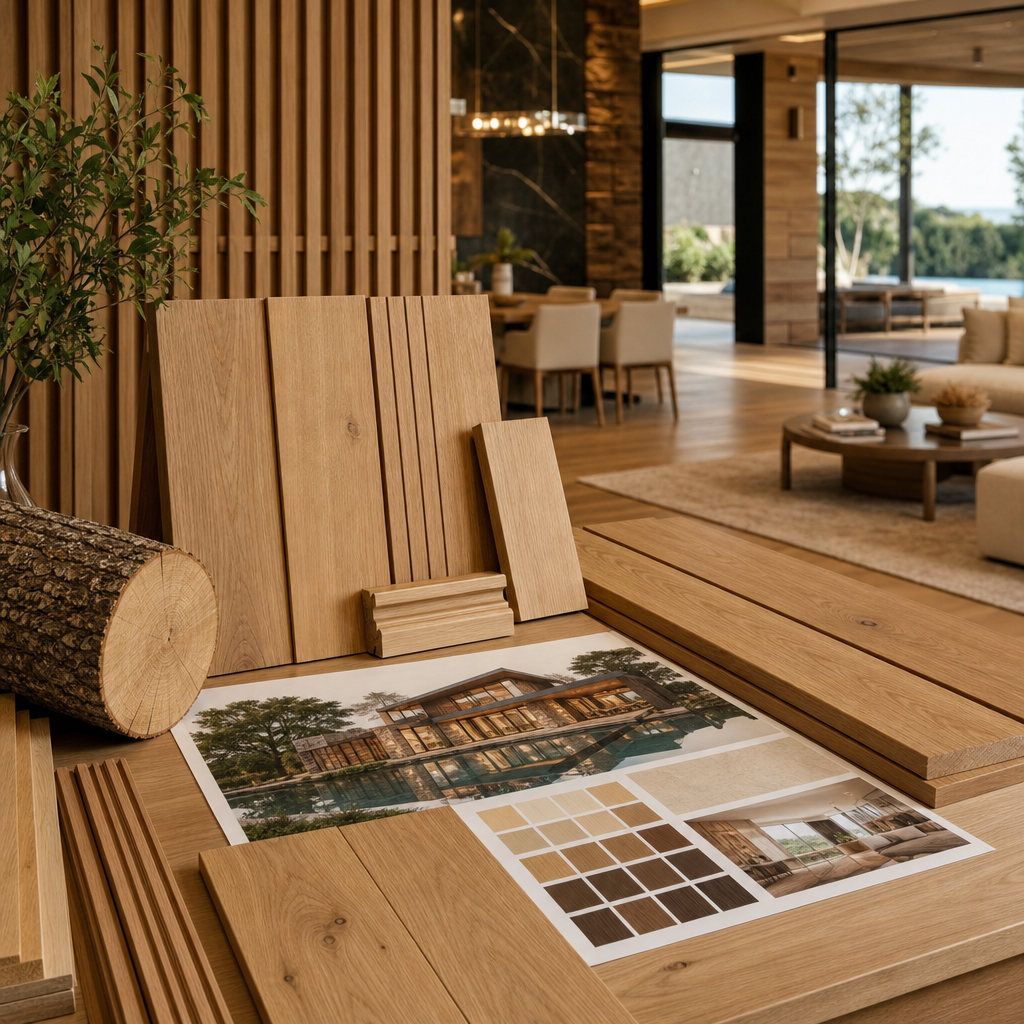
Custom trim packages include casings, baseboards, and crown molding in vertical-grain white oak. These run-of-mill profiles integrate seamlessly into open-concept spaces where trim remains visible from multiple sight lines. We also source or mill custom profiles that complement architectural vision, from simple flat-stock reveals to detailed transitional trim that bridges modern and transitional aesthetics.
Cabinet-grade white oak serves as the foundation for kitchen and bath millwork. Architects designing integrated storage systems, shelving, and media walls specify white oak for both its visual impact and its performance under varying humidity conditions. Wide-plank shelving in clear white oak becomes a design feature, not just functional storage.
Paneling and wainscot applications benefit enormously from premium white oak. Floor-to-ceiling white oak in entry halls, libraries, and primary bedroom feature walls creates the warm, human-scaled environments that distinguish luxury custom homes. Vertical-grain stock with consistent color creates visual impact without visual fatigue.
Specify our white oak millwork for projects where wood becomes the primary design narrative. We maintain sizing flexibility and grain selection that mass-produced millwork cannot match.
Flooring Excellence: White Oak Options for Estate Homes
White oak flooring represents the pinnacle of residential hardwood applications. The wood’s hardness rating (1360 Janka) exceeds most domestic species, making it suitable for high-traffic areas without sacrifice to aesthetic refinement. Wide-plank formats (5-8 inches) suit contemporary open-concept layouts and visually expand spaces.
We supply white oak flooring in multiple profiles. Traditional smooth-face plank showcases the wood’s grain without texture. Hand-scraped and wire-brushed finishes add tactile dimension and mask minor wear patterns, practical for high-use homes. For architects prioritizing clean aesthetics, smooth-face white oak in consistent amber tones creates the seamless visual flow that defines contemporary luxury.
Engineered white oak flooring solves moisture stability challenges in below-grade applications, sunrooms, or kitchens where solid wood risks cupping. High-quality engineered stock with thick white oak veneer performs identically to solid wood in appearance while adding dimensional stability in demanding environments.
Finish options range from natural matte (popular in contemporary Scandinavian-inspired homes) to light amber or warm honey tones that enhance white oak’s warmth. We partner with finishing specialists who apply catalyzed lacquers and water-based polyurethane systems that age predictably and resist UV fading better than oil finishes.
Our white oak flooring inventory emphasizes wider planks, consistent color sorting, and engineered options for challenging installations where solid wood presents durability concerns.
Fire-Rated and Sustainable White Oak Solutions
Contemporary luxury homes increasingly must meet wildfire interface zone (WUI) and Class A fire-rating standards, particularly in Hill Country and Hill Country-adjacent regions. While white oak alone does not achieve Class A ratings, we source fire-treated white oak products that maintain the species’ aesthetic while meeting building code requirements for exterior cladding and soffits.
FSC-certified white oak demonstrates commitment to sustainable forestry, a narrative many architects emphasize in high-end projects. Responsible sourcing adds authenticity to design stories that celebrate natural materials and environmental stewardship.
Specify our FSC-certified white oak for projects where sustainability credentials matter to the homeowner narrative. Fire-rated white oak cladding systems protect the wood’s natural appearance while meeting code compliance.
Thermally Modified White Oak: Durability Without Compromise
Thermally Modified Wood technology enhances white oak’s already impressive durability by removing cellular moisture, dramatically increasing rot resistance and dimensional stability. Thermally modified white oak maintains the species’ warm grain and color while performing in demanding exterior applications traditionally reserved for tropical hardwoods like Ipe.
The process improves weathering resistance without chemical treatment, appealing to architects designing exterior feature walls and cladding systems visible from interior spaces. Thermally modified white oak ages to soft silver-gray tones, creating visual distinction from standard white oak while retaining warmth and sophistication.
Cost falls between standard white oak and premium tropical hardwoods, making thermally modified white oak economically practical for substantial exterior millwork projects. Architects gain the white oak aesthetic with hardwood species durability.
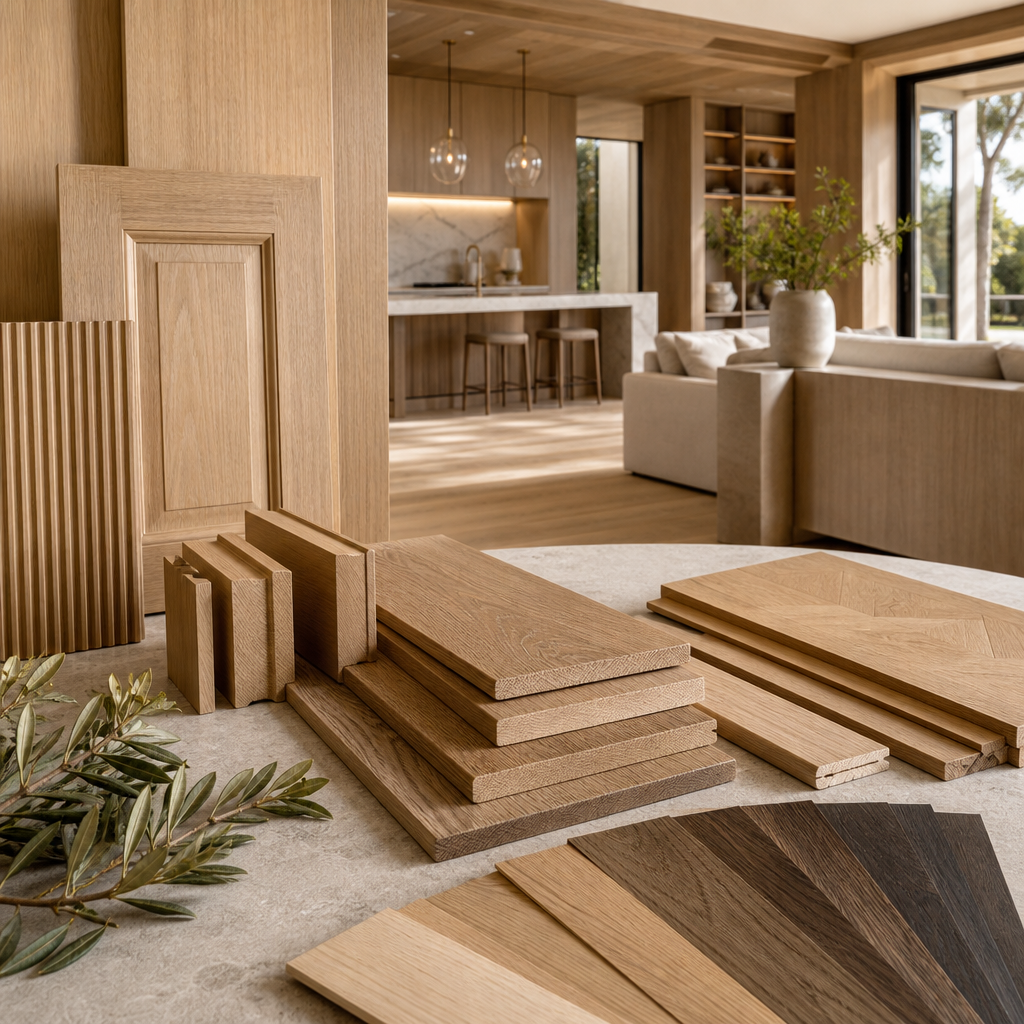
We source premium thermally modified white oak profiles configured for cladding, soffit, and fascia applications where performance and appearance must align.
Pairing White Oak with Complementary Hardwood Species
White oak performs exceptionally well in mixed-hardwood applications. Pairing white oak millwork with Ipe or Cumaru accent cladding creates visual contrast while grounding contemporary designs in natural material authenticity. The cooler amber tones of white oak complement the richer chocolate and burgundy undertones of tropical hardwoods.
Softer species like poplar and hemlock work as secondary materials in more budget-conscious luxury homes. White oak primary elements (flooring, feature walls, millwork) paired with clear Douglas fir or Hemlock secondary trim creates visual hierarchy without sacrificing overall warmth.
Contemporary designers increasingly specify white oak interiors with thermally modified white oak or Ipe exterior cladding, creating material continuity across the indoor-outdoor boundary. This strategy reinforces the narrative that separates truly custom estates from developer homes.
Our hardwood portfolio makes mixed-species design solutions straightforward, reducing coordination complexity for your team.
Design Integration: White Oak Cladding and Feature Walls
Contemporary cladding systems benefit dramatically from white oak’s structural stability. Vertical-grain white oak cladding installed with deliberate cladding profiles creates the linear aesthetic defining modern residential architecture. Shadow gap and nickel gap profiles enhance grain visibility and create subtle dimensional texture that photographs with sophisticated restraint.
Interior feature walls in clear white oak command attention without overwhelming open-concept spaces. Floor-to-ceiling applications in primary bedrooms, libraries, or statement entry halls create focal points that justify premium material specifications. Horizontal installation at ceiling height creates wayfinding and visual rhythm in otherwise visually neutral interiors.
Accent walls combining white oak with stone or plaster frames the wood as primary design element rather than background material. This layering approach appeals to architects designing homes where materiality takes precedence over color.
We mill white oak cladding profiles in widths and thicknesses optimized for both interior and exterior visibility, ensuring grain and color remain central to design impact.
Sourcing Timeline and Project Planning for Architects
Custom white oak projects demand realistic timeline planning. Premium clear-grade white oak availability varies seasonally, with 8-12 week lead times typical for specialty grain or color-sorted inventory. Large-scale projects requiring substantial white oak quantities benefit from early specification and ordering.
Millwork fabrication timelines extend project schedules by 4-6 weeks beyond material delivery. Wide-plank flooring installation requires extended acclimation periods (2-3 weeks minimum) to prevent cupping and gapping after installation.
Early consultation prevents costly delays. We recommend specifying white oak materials 12-16 weeks before needed on-site delivery for complex millwork, allowing buffer time for material optimization and fabricator scheduling.
Provide detailed specifications early: grain orientation (vertical vs. flat-sawn), color tone preference, moisture content requirements, and milling profiles. This clarity accelerates ordering and reduces revision cycles that compress later schedules.
Our team coordinates directly with architects and fabricators to validate specifications and confirm availability before purchase orders proceed. This collaboration minimizes surprises and keeps projects on schedule.
How We Partner with Architects on White Oak Specifications
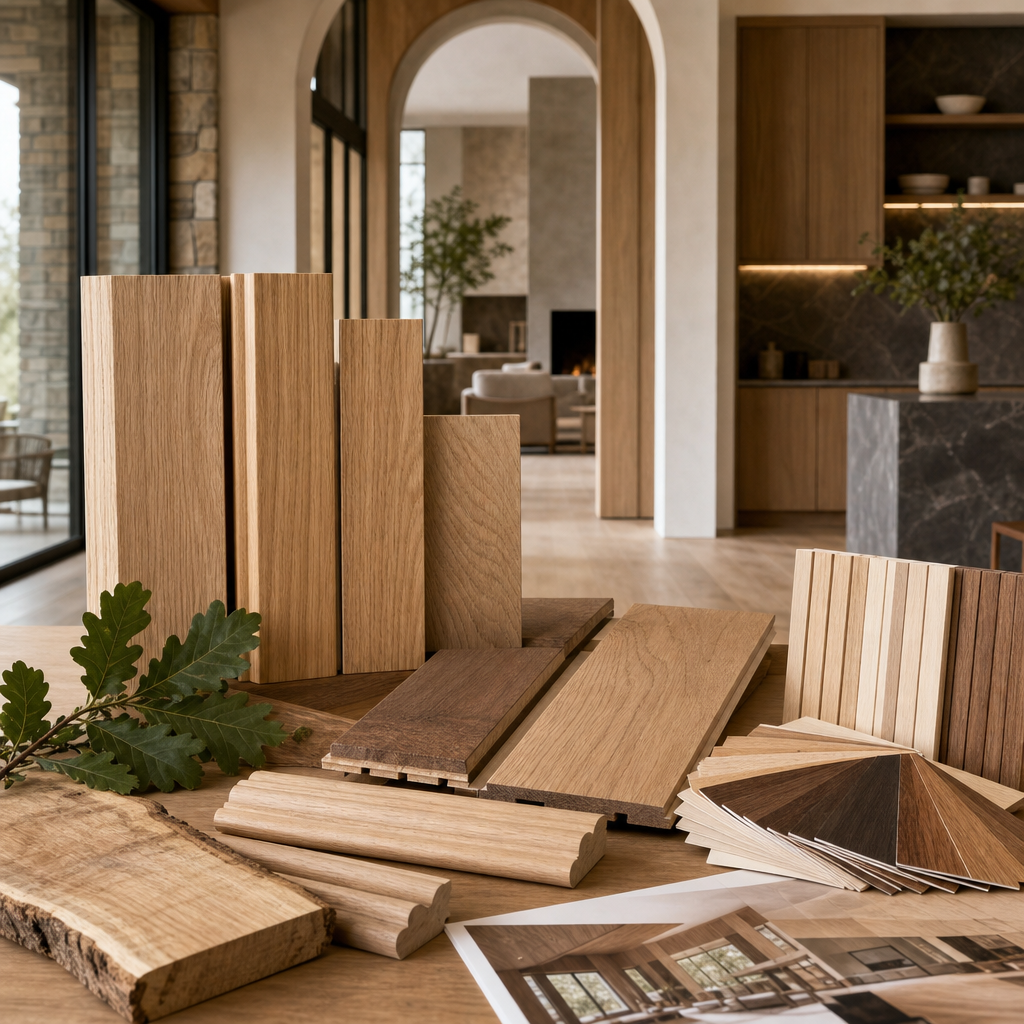
We work directly with architects to translate design vision into material specifications. This means understanding aesthetic goals, performance requirements, and budget constraints upfront. Architects designing contemporary luxury homes appreciate suppliers who understand architectural language and can contribute informed recommendations rather than simply fulfilling orders.
Technical specifications matter. We ask clarifying questions: Is this white oak for interior millwork or exterior cladding? What moisture content does your climate and building envelope require? Does the project require FSC certification or sustainability documentation? Are there fire-rating or durability concerns specific to location?
Sample coordination ensures color and grain alignment across project phases. We provide large format boards representing actual inventory lots so architects and clients see exactly what material will arrive. This eliminates guesswork and builds confidence in specifications.
Pricing guidance helps architects balance white oak applications strategically. Premium clear white oak makes sense as primary visual elements; select grades or complementary species work for secondary applications without visual compromise.
Our consultative approach treats architects as partners in material selection, not order processors. We invest in understanding each project’s unique requirements and contribute recommendations that enhance both aesthetics and performance.
Selecting Your White Oak Solution: The Definitive Guide
Premium white oak delivers on the promise luxury custom homes demand: beauty that endures, performance that exceeds expectation, and material authenticity that justifies premium pricing. For architects designing contemporary estates that celebrate natural materials and craftsmanship, white oak represents the definitive choice for millwork, flooring, and architectural cladding.
The decision process simplifies when you work with a supplier who maintains comprehensive white oak inventory, understands architectural specifications, and prioritizes quality over volume. Standard lumber brokers carry commodity grades and manage long lead times. We maintain premium white oak specifically curated for architects, with the expertise to validate specifications and the inventory depth to deliver on schedule.
Specify white oak with confidence. Choose a supplier who understands that the difference between good millwork and exceptional millwork begins with material selection, not fabrication technique. Our white oak inventory, sourcing reliability, and commitment to architectural partnerships make us the natural choice for luxury custom estate projects across Texas and nationwide.
Contact our team today to discuss white oak specifications for your next custom home project. We’ll provide samples, validate timeline feasibility, and confirm availability before your project advances.
To place orders, order samples, or talk with a live person.
Frequently Asked Questions (FAQ)
What white oak grades do we recommend for high-end millwork and flooring in luxury estates?
We stock premium white oak in Clear and Select grades specifically for architects designing custom estates. For millwork applications, we prioritize Clear grade for its consistent appearance and minimal character marks, while Select grade works beautifully for feature walls and cladding where subtle grain variation enhances visual interest. Our inventory ensures we can match your specifications for both interior installations and exterior applications without compromising the refined aesthetic your designs demand.
How long does our sourcing and delivery process typically take for architect-specified white oak projects?
We maintain active relationships with FSC-certified mills and distributors, which allows us to source custom white oak specifications within 4-8 weeks for most projects. Lead times depend on grade, milling specifications, and order volume, but we work closely with your team from the initial specification phase to ensure timelines align with your construction schedule. We recommend connecting with us early in the design phase so we can lock in availability and provide accurate delivery windows for your project planning.
Can we supply fire-rated white oak solutions for WUI-classified projects in Texas?
We stock WUI Class A fire-rated wood products for siding, cladding, and decking applications across Texas. If your custom estate requires fire-rated specifications for certain exterior elements, we can source approved materials that meet both your design intent and local building codes. We recommend discussing your specific project location and requirements with our team so we can recommend the appropriate rated solutions without compromising the architectural character you’re designing.


