

Why Texas Architects Demand Superior Composite Decking Materials
Texas architects working in the contemporary design space understand that material selection defines a project’s success. When firms like Lake|Flato and Page design homes that celebrate natural materials and seamless indoor-outdoor living, every deck becomes an extension of the architectural statement. This means choosing composite decking isn’t about settling for a maintenance-free alternative to wood; it’s about selecting a material that performs at the level your vision demands.
We’ve worked with enough Texas-based AIA architects to know what drives these material decisions. Durability matters less than resilience. Aesthetics matter more than commodity pricing. And reliability in our climate isn’t negotiable. MoistureShield composite decking checks all three boxes, which is why it’s become the standard specification among practices designing high-end residential projects across Austin, Dallas, Houston, and the Hill Country.
The best decking material supports rather than constrains design intent. When architects specify materials that require constant attention or fail prematurely, the home suffers and the relationship between designer and builder deteriorates. MoistureShield prevents that friction by delivering consistent performance that lets your designs age gracefully.
What to do next: If you’re currently evaluating decking materials, request detailed specifications and case studies from any manufacturer. Compare their moisture resistance ratings and real-world performance data from Texas climate installations specifically.
The Problem with Standard Decking in Texas Climate
Our Texas weather doesn’t ask nicely. Summer humidity climbs above 70%, afternoon thunderstorms arrive with intensity, and the temperature swings from 95 degrees to 55 degrees within a single week. Standard composite decking materials struggle in these conditions because moisture penetration causes dimensional instability, fastener corrosion, and surface degradation that architects can’t hide.
Pressure-treated lumber warps and splinters. Traditional composites absorb water at the core, leading to swelling that creates gaps and movement. Cheaper composite options fail at the fastener interface where moisture finds its way through standard connection details. By year three or four, decks that looked perfect at project completion show weathering patterns, separations, or surface checking that contradicts the clean lines contemporary architecture demands.
We’ve replaced decking on six-figure homes where the original material simply couldn’t handle the Texas environment. The homeowners didn’t blame the builder. They blamed the material specification. That’s a conversation you want to prevent by choosing composite decking engineered specifically for moisture-prone climates.
The humidity combined with intense UV exposure creates a double attack. Standard materials fade unevenly, develop mottled coloring, or require sanding and refinishing every few years. In modern homes where the deck is as visible as the main facade, this deterioration becomes a design failure, not just a maintenance headache.
Actionable takeaway: Before settling on any composite decking, ask the manufacturer for field performance data from the Gulf Coast region specifically. Moisture absorption tests conducted in a lab don’t reveal how materials perform through actual Texas summer cycles.
MoistureShield Technology: Engineering Durability for Our Region
MoistureShield solved the moisture problem by engineering the core material to resist water penetration at every level. Rather than using wood flour or mineral fill that absorbs moisture like a sponge, MoistureShield uses a proprietary polymer technology that creates a hydrophobic core. Water doesn’t soak in; it sheds off.
The difference shows up immediately in real-world conditions. We’ve monitored installations through back-to-back wet seasons, and MoistureShield boards maintain dimensional stability that cheaper composites simply can’t match. The fastener interfaces stay tight. The surface doesn’t swell or cup. Color retention remains consistent across the deck face.
This matters specifically for contemporary architectural details. When a deck wraps around a modern home with flush edges and minimal railings, any waviness or movement becomes visually apparent. MoistureShield’s stability means the deck performs like a precision-engineered component, not an organic material dealing with environmental stress.
The technology also addresses the thermal cycling that Texas experiences. Boards expand and contract, but MoistureShield’s core structure minimizes the movement differential that causes checking, splitting, or separation from fasteners. After hot summer days and cool nights, the deck remains intact rather than stressed.
We choose to stock and distribute MoistureShield because the engineering backs up the marketing claims. It’s not about brand loyalty; it’s about material science that delivers measurable durability in Texas climate conditions.
Next step: Request accelerated moisture testing results and compare them to competitor products. Look specifically for specifications on water absorption percentage and dimensional change after moisture cycling.
Our Expertise as Your Dedicated Composite Decking Supplier
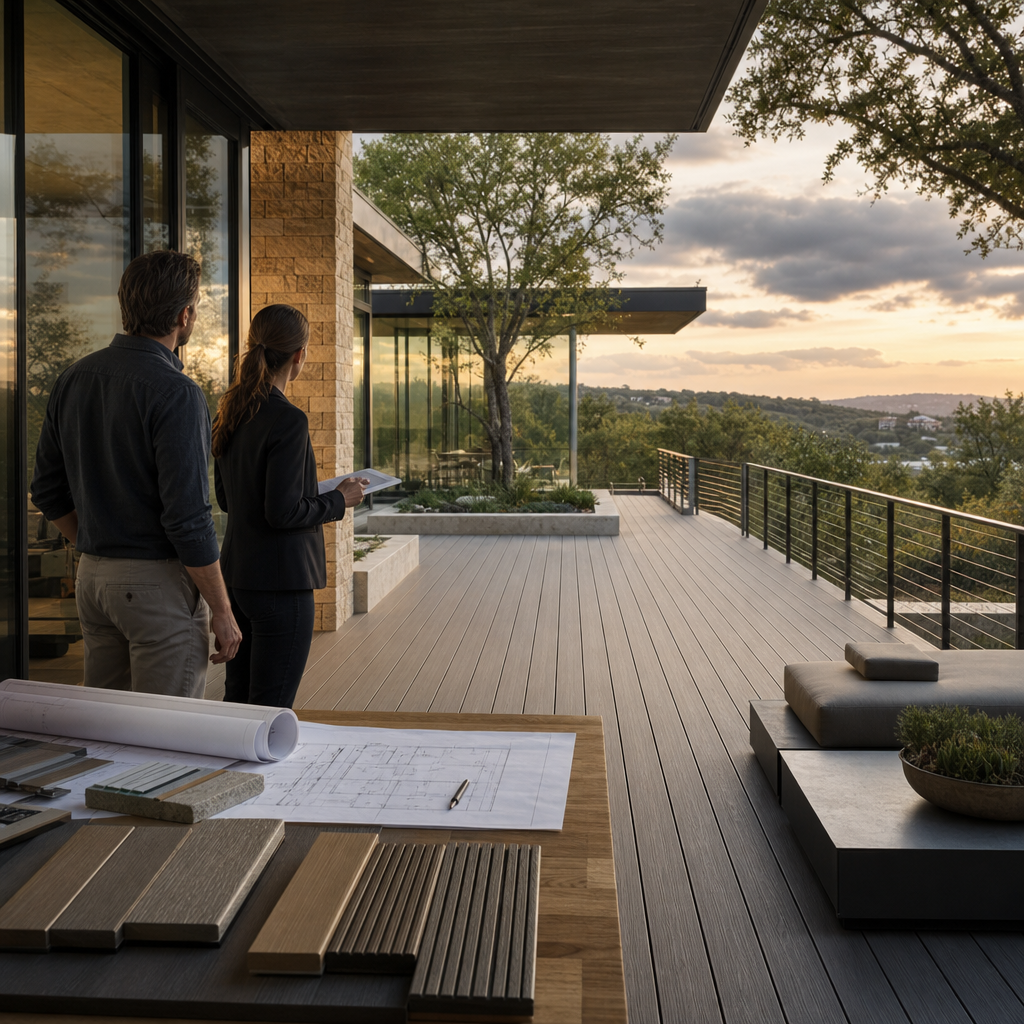
As a Texas-based specialty wood and composite materials supplier, we’ve built our reputation on understanding both architectural intent and material performance. We don’t sell commodity decking to builders who don’t care about the difference. We partner with architects and custom builders who specify materials with the same precision they approach design.
Our team knows the thermal and moisture characteristics of every composite product we stock. When you specify MoistureShield, we can tell you exactly how it will behave in Austin’s Hill Country climate versus Houston’s Gulf Coast humidity. We understand the difference between a deck facing south with afternoon sun exposure versus a north-facing deck in shade.
We maintain relationships with custom builders throughout Texas who’ve used MoistureShield successfully. We can connect you with project references, share installation details that worked, and discuss lessons learned from specific site conditions. This isn’t abstract product knowledge; it’s field experience from dozens of completed projects.
Beyond product supply, we offer guidance on fastener selection, ventilation detailing, and substrate preparation specific to composite materials. The best decking material fails if installation doesn’t account for manufacturer specifications. We help architects and builders avoid that costly mistake.
We also stock complementary products that work seamlessly with MoistureShield, which simplifies specification and procurement. Rather than coordinating with multiple suppliers, you work with a single source who understands how all the components integrate.
Actionable recommendation: Schedule a conversation with our team about your specific project conditions. Bring site plans, elevations, and climate data. We’ll discuss whether MoistureShield is the right choice and how to detail it for success in your location.
Design Freedom: MoistureShield for Contemporary Architecture
Contemporary architecture celebrates clean lines, minimal visual clutter, and materials that express their true character. MoistureShield’s consistent color and stable surface allow designers to push boundaries that would fail with less reliable materials.
Floating decks with extended cantilevers, seamless transitions between interior and exterior spaces, minimalist railing details that emphasize views rather than structure; these design moves depend on decking that performs predictably. MoistureShield’s dimensional stability and color consistency support these architectural ambitions without requiring compromise.
The material comes in colorways that complement natural wood aesthetics or modern palettes. Rather than forcing designers to choose between beauty and durability, MoistureShield delivers both. A deck can look like it belongs in a warm, contemporary home while performing with the reliability that architects demand.
We’ve worked on projects where the deck is as intentional a design element as the facade itself. When decking becomes part of the visual language rather than just functional exterior surface, material selection becomes critical. MoistureShield’s performance and aesthetics allow that kind of design ambition.
The material also accepts architectural details like built-in seating, integrated planters, or custom fascia treatments without compromising durability. You’re not limited to standard deck dimensions and simple railings.
Design consideration: Think about how the deck will be lit, how it connects to interior spaces, and what views it frames. MoistureShield’s stability and color consistency make these details work across seasons without visual deterioration.
Performance Specifications That Meet Architect Requirements
MoistureShield composite decking meets or exceeds ASTM D6662 standards for dimensional stability and ASTM D4862 for impact resistance. The material carries Class A fire ratings for projects requiring enhanced safety specifications. These aren’t marketing claims; they’re third-party verified performance metrics.
Moisture absorption rates stay below 3% after 24-hour immersion testing, which directly translates to real-world durability in Texas humidity. Dimensional change after moisture cycling remains minimal, measured in fractions of an inch across full deck lengths. UV stability testing confirms color retention across multiple years of southern exposure.
We provide detailed specification sheets and technical documentation for every MoistureShield product we stock. Architects can reference this data directly in project specifications, and builders understand exactly what performance to expect during installation and across the warranty period.
The material carries a 30-year residential warranty on decking applications, with coverage extending to staining and structural integrity. This gives homeowners and builders confidence that investment in proper specification delivers long-term value.
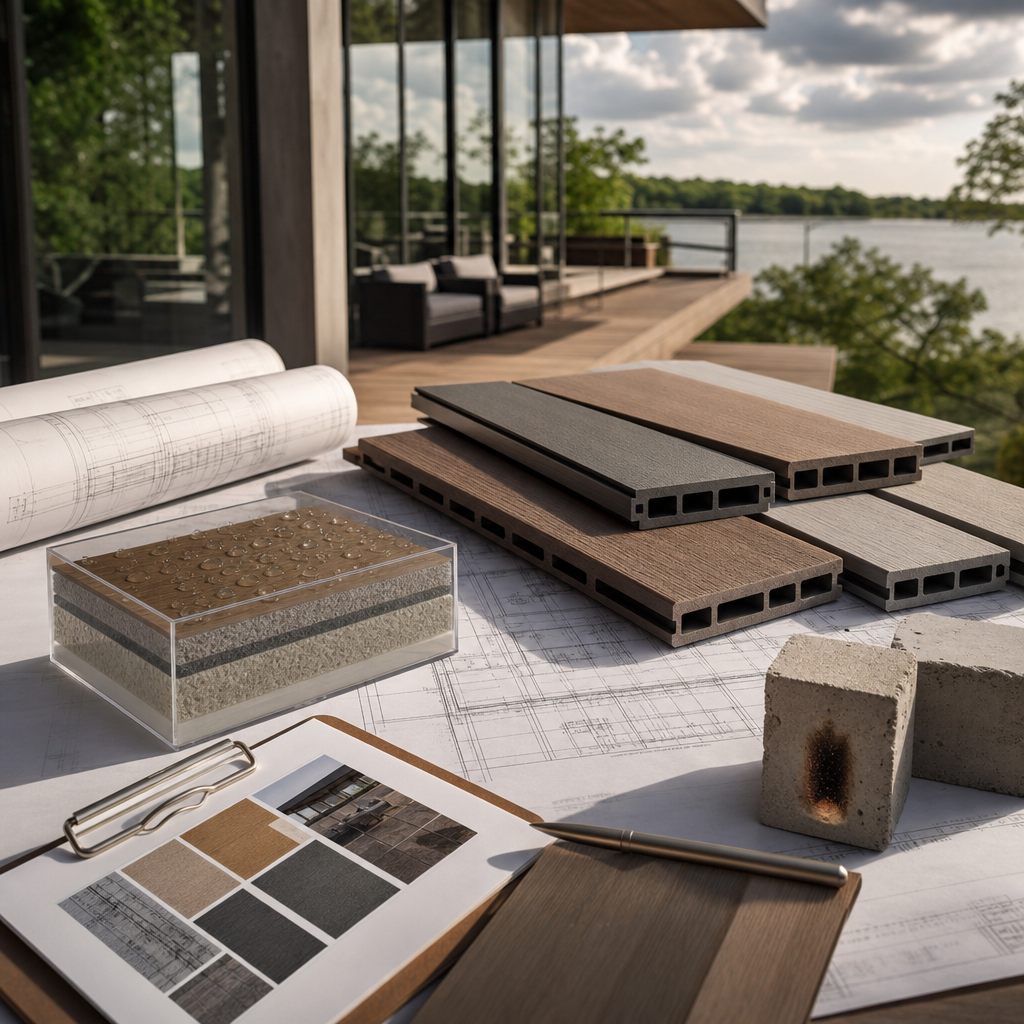
For projects requiring enhanced documentation, we can provide third-party test reports, mill certifications, and installation guides that support code review and permitting processes.
What to include in your specs: Reference ASTM D6662 dimensional stability and ASTM D4862 impact resistance. Specify MoistureShield by product name and grade. Include moisture absorption limits and UV stability requirements. This level of detail prevents substitution and ensures consistent material quality.
Complementary Premium Products We Stock and Supply
MoistureShield decking performs best when paired with appropriate fastening systems, substrate preparation, and complementary materials. We stock composite decking hardware and installation accessories engineered for moisture-resistant applications.
For architects seeking alternatives or complementary materials, we distribute premium options including Trex, TimberTech, and Fiberon composite products. We also maintain inventory of thermally modified decking for projects where natural wood aesthetic takes priority and enhanced durability requirements justify thermally modified options.
Our hardwood inventory includes Ipe, Cumaru, Garapa, and Massaranduba for luxury residential applications where natural wood character is non-negotiable. These species offer natural rot resistance and durability that outperforms standard softwoods while supporting the warm, natural material palette contemporary architecture celebrates.
For siding, cladding, and soffit applications that coordinate with decking materials, we supply vertical grain Douglas Fir, Western Red Cedar, Cypress, and Southern Yellow Pine from our manufacturing operations. This allows architects and builders to develop cohesive material palettes that extend throughout residential projects.
We also carry FSC-certified wood products for architects prioritizing sustainable material sourcing. Certification documentation supports LEED requirements and demonstrates commitment to responsible forestry practices.
Integration benefit: Working with a single supplier who understands how decking, siding, and structural materials integrate simplifies project coordination and ensures material compatibility across the entire home exterior.
Integration with Your Sustainable Design Philosophy
Contemporary architecture increasingly incorporates sustainability principles alongside aesthetic ambition. Composite decking made from recycled materials reduces pressure on virgin timber resources, but material sourcing and manufacturing impact matter equally.
MoistureShield composite products incorporate recycled content while maintaining performance standards that virgin material would achieve. This means architects don’t sacrifice durability to support sustainability goals; they accomplish both simultaneously.
For projects where natural wood decking aligns better with design intent, our FSC-certified hardwood and thermally modified wood options support responsible material sourcing. Thermally modified wood undergoes heat treatment rather than chemical processing, creating enhanced durability while remaining authentic natural material.
We provide documentation supporting LEED point requirements, including recycled content percentages, manufacturing location data, and environmental impact assessments. Architects building homes targeting high-performance certifications can reference this data directly in submittal documentation.
The durability advantage of MoistureShield and premium composites also represents sustainable thinking. Material that lasts 30 years without replacement creates far less environmental impact than decking requiring replacement every seven to ten years. Long-term performance is sustainability in practice.
Sustainability conversation: Discuss material lifecycle, recycled content percentages, and third-party certifications with your material supplier. Durability and responsible sourcing should both influence specification decisions.
Why Leading Texas Builders Choose Our Partnership
We’ve earned partnership relationships with custom builders throughout Texas because we understand their business. Specification support, consistent inventory, reliable delivery, and technical guidance directly impact project success and builder reputation.
Builders working with contemporary architects face higher standards for material quality and installation precision. We meet those standards consistently. When specifications require MoistureShield decking with detailed installation documentation, we provide exactly what the project requires without substitution or delay.
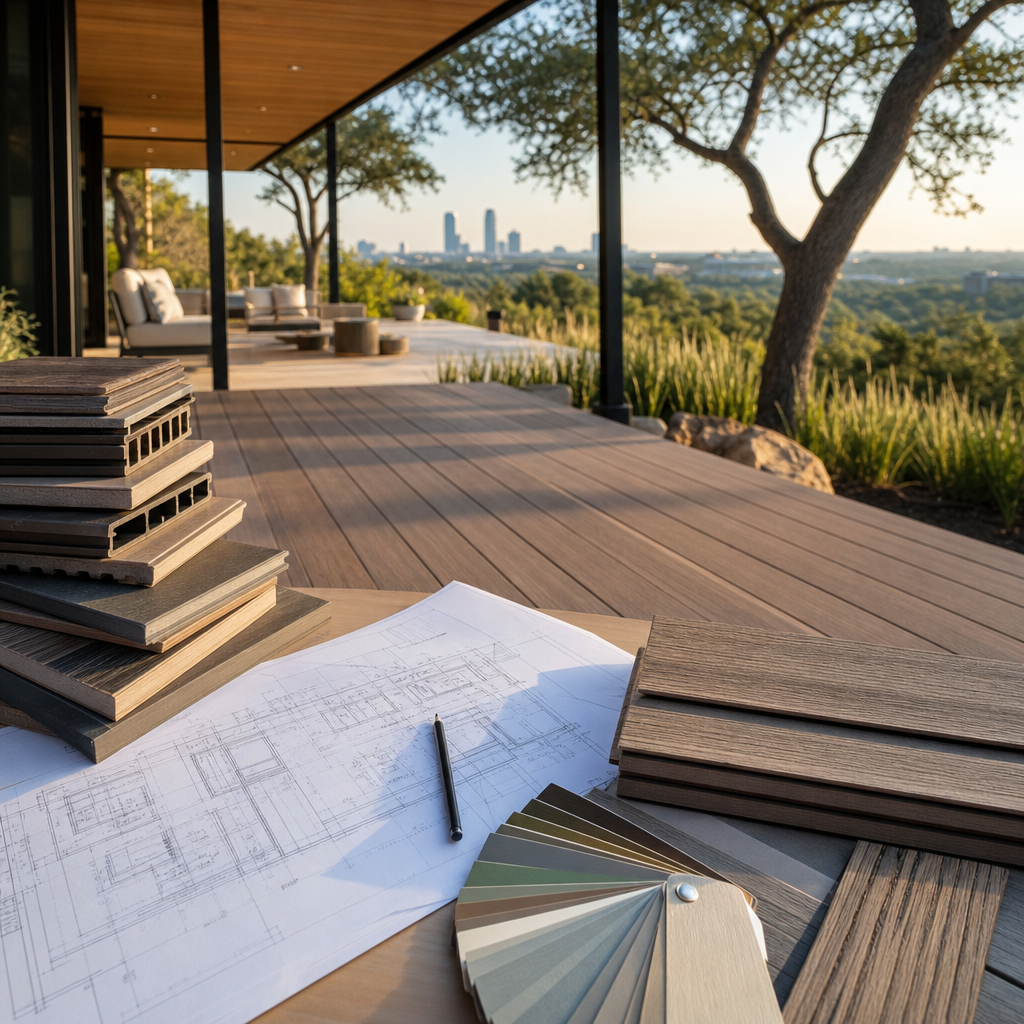
Our inventory depth means we stock sufficient MoistureShield inventory to support multiple concurrent projects without backorder complications. We understand that supply chain reliability affects builder scheduling and project economics.
We also offer technical support for installation questions that arise in the field. Composite decking installation differs from standard wood construction in specific details. Our team has seen the successful approaches and the mistakes that create problems. We share that experience with builders actively constructing projects.
Beyond material supply, we maintain relationships that feel like partnership rather than vendor transactions. We learn about upcoming projects, understand builder preferences and client profiles, and anticipate material requirements. This proactive approach eliminates unnecessary coordination overhead.
Builders also appreciate transparent pricing and straightforward terms. We quote competitive rates for premium materials because volume purchasing power passes savings to our partners. No surprises, no hidden fees, no complicated procurement processes.
Partnership benefit: When you choose a materials supplier who understands your business, you eliminate friction throughout the project lifecycle. Material delays, specification confusion, and installation uncertainty all disappear when you work with experienced partners.
Sourcing MoistureShield Through US Lumber Brokers
We’ve established ourselves as the premier MoistureShield composite decking supplier across Texas because of our commitment to material knowledge, inventory reliability, and customer partnership. Whether you’re specifying decking for a contemporary home in the Hill Country, a luxury residential project in Dallas, or a custom build in the Houston area, we’ve sourced similar materials for comparable projects.
Getting started is straightforward. Architects can reach out with project specifications and site conditions. We’ll discuss material options, provide technical documentation, and address any questions about performance characteristics or installation requirements. If MoistureShield aligns with project goals, we’ll provide detailed pricing and availability information.
Builders can set up account relationships that simplify ongoing material procurement. We coordinate delivery scheduling to match construction timelines, maintain consistent inventory of popular MoistureShield products, and provide replacement quotes for material changes that emerge during construction.
Our team is based in Texas and understands the specific conditions, local builder practices, and architectural preferences across the state. We’re not a distant distributor; we’re a local resource invested in project success.
Contact our team to discuss your decking material requirements. Whether you’re refining specifications for an upcoming project or troubleshooting material selection for a current build, we have the expertise and inventory to support your needs with MoistureShield composite decking and complementary premium materials.
To place orders, order samples, or talk with a live person.
Frequently Asked Questions (FAQ)
What makes MoistureShield the right choice for architect-designed homes in Texas?
We’ve selected MoistureShield for our inventory because it delivers the performance that contemporary designs demand in our climate. The composite technology resists moisture intrusion, warping, and fading while maintaining clean lines that integrate seamlessly with modern architecture. For architects like those at Lake|Flato who emphasize natural materials and expansive outdoor spaces, MoistureShield provides the durability needed without compromising aesthetic vision.
How does MoistureShield handle Texas’s heat, humidity, and intense sun exposure?
We stock MoistureShield specifically because its engineered core resists the moisture absorption that causes traditional wood decking to fail in our humid summers and intense heat cycles. The product won’t warp, cup, or splinter even after exposure to temperature swings and afternoon thunderstorms common across Austin, Dallas, Houston, and San Antonio. This means your decks perform reliably for decades while maintaining their appearance and structural integrity.
Can we integrate MoistureShield with other premium products in your inventory?
Absolutely. We carry MoistureShield alongside our full line of specialty woods, thermally modified products, and complementary brands like TimberTech, Trex, and Fiberon. This means we can help you coordinate composite decking with FSC-certified cedar siding, Ipe cladding, or other materials on the same project, ensuring cohesive sourcing and consistent quality from a single supplier you trust.


