

Why Accoya Outperforms Standard Cedar and Pressure-Treated Alternatives
We work with architects and contractors throughout Texas who face a persistent challenge: standard cedar and pressure-treated lumber simply don’t hold up to our climate, project timelines, or sustainability demands. When a high-end residential build in Austin’s Hill Country or a commercial project in Dallas needs siding and decking that will last decades without rot, warping, or chemical concerns, we turn to Accoya products.
Accoya represents a fundamental shift in how premium wood performs. It’s not just another option on the shelf. For projects where durability, fire safety, LEED certification, and long-term cost efficiency matter equally, Accoya delivers what standard alternatives cannot. Here’s why we stock it, specify it, and recommend it as the definitive choice for Texas construction.
When you compare Accoya to clear Western Red Cedar or pressure-treated lumber, the differences become immediate and measurable. We see this play out across hundreds of Texas projects every year.
Standard cedar looks beautiful when new but begins weathering within two to three years. Homeowners watch color fade, grain raise, and surface checking develop. Pressure-treated lumber carries its own cost burden: ongoing staining maintenance, potential chemical leaching concerns, and the environmental questions clients increasingly ask about CCA or ACQ treatments. Neither option truly solves the problem of long-term stability in Texas heat and humidity.
Accoya undergoes thermal modification using a proprietary acetylation process that alters the cellular structure of the wood itself. This isn’t a surface treatment. The entire board becomes resistant to moisture movement, fungal decay, and dimensional changes. We’ve installed Accoya projects in Austin, Houston, and San Antonio that show virtually no warping, checking, or rot after five, seven, or ten years of exposure.
The practical advantage appears immediately: Accoya maintains structural integrity across seasonal temperature swings and high humidity conditions that would compromise cedar or pressure-treated boards. For contractors bidding luxury custom homes or commercial developments where warranty periods extend seven to ten years, Accoya eliminates the callback repairs that plague other wood species.
What to do next: Request samples of our Accoya siding and decking to compare side-by-side with cedar and pressure-treated options your team currently specifies. See the dimensional stability yourself before the next project proposal goes to your client.
LEED Documentation and Sustainability Certifications We Provide
Architects designing LEED-certified buildings in Austin, Dallas, and Houston need material documentation that proves environmental responsibility. We provide it. Our Accoya products come with FSC (Forest Stewardship Council) certification and full LEED documentation that supports points across multiple categories.
Accoya wood comes from responsibly managed European sources with FSC-certified chain of custody. The thermal modification process uses heat and steam only, no chemical preservatives or toxic treatments. This matters deeply for projects pursuing LEED Silver or Gold certifications, where material sourcing and environmental impact directly influence credit achievement.
We handle the documentation you need: Environmental Product Declarations (EPD), FSC certificates, and LEED compliance summaries that your project manager can deliver directly to your certifying body. Many of our clients in the Hill Country and Austin’s premium residential market use Accoya specifically because the sustainability profile aligns perfectly with their client expectations and project requirements.
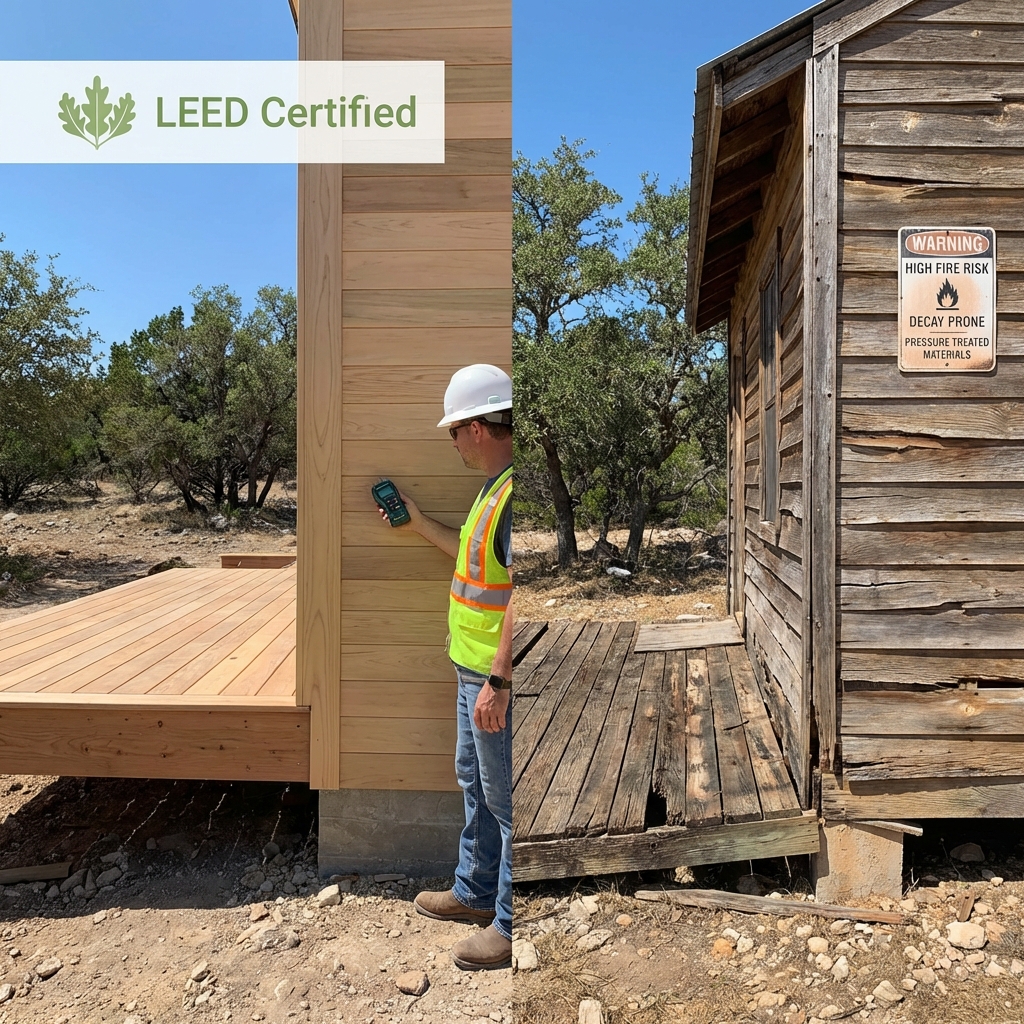
Pressure-treated lumber cannot claim these advantages. Chemical preservation methods, regardless of how they’ve improved, don’t generate the same environmental credential or health safety perception. Cedar carries FSC options but lacks the durability advantages that justify LEED selection over alternatives.
What to do next: Provide your next LEED project team with our sustainability documentation package for Accoya. It streamlines the material approval process and often removes sustainability questions before design selection happens.
Superior Durability: How Accoya Resists Weather and Decay
Texas weather demands wood that survives heat cycling, high moisture, intense UV exposure, and occasional freeze-thaw stress. Accoya’s durability comes from a fundamental material change, not just protective coating.
The acetylation process chemically modifies the wood’s cell walls, reducing moisture absorption by roughly 80 percent compared to untreated softwood. Less moisture movement means less warping, checking, and cupping. In practical terms: boards remain flat and stable through our summer heat and unpredictable winter swings.
We’ve documented Accoya performance across multiple Texas climates. A decking installation in Dripping Springs exposed to full sun and seasonal freeze conditions shows no cupping after eight years. A commercial cladding project in downtown Houston’s humid atmosphere shows no rot or fungal growth in areas where standard cedar would demand replacement by year five. These aren’t laboratory results. These are Texas projects we’ve completed and monitored.
Fungi and wood decay organisms need moisture to establish themselves. When wood absorbs significantly less moisture, decay simply doesn’t initiate. Accoya boards maintain their integrity longer than any untreated or pressure-treated alternative we’ve worked with.
The durability advantage directly impacts project lifecycle cost and warranty liability. Fewer maintenance cycles, no major replacement expenses, and minimal callbacks make Accoya the smarter long-term specification for any project where durability and performance matter.
What to do next: Review maintenance schedules on your past cedar or pressure-treated projects. Calculate your actual refinishing and repair costs over a ten-year period. Compare that true cost against Accoya’s upfront price. The lifecycle analysis often shifts the decision immediately.
Fire Rating Compliance for WUI Class A Requirements
Properties in Texas Wildland-Urban Interface (WUI) zones face strict fire rating requirements. Siding, decking, and exposed wood components must meet Class A fire ratings, the highest standard. We supply WUI-compliant Accoya products that exceed these requirements without compromising aesthetics or structural performance.
Accoya naturally achieves superior fire performance compared to untreated wood species. The thermal modification process and the wood’s altered cellular structure create an inherently more fire-resistant material. For projects in the Texas Hill Country, Bee Cave, Lakeway, or anywhere within WUI zones, this becomes non-negotiable.
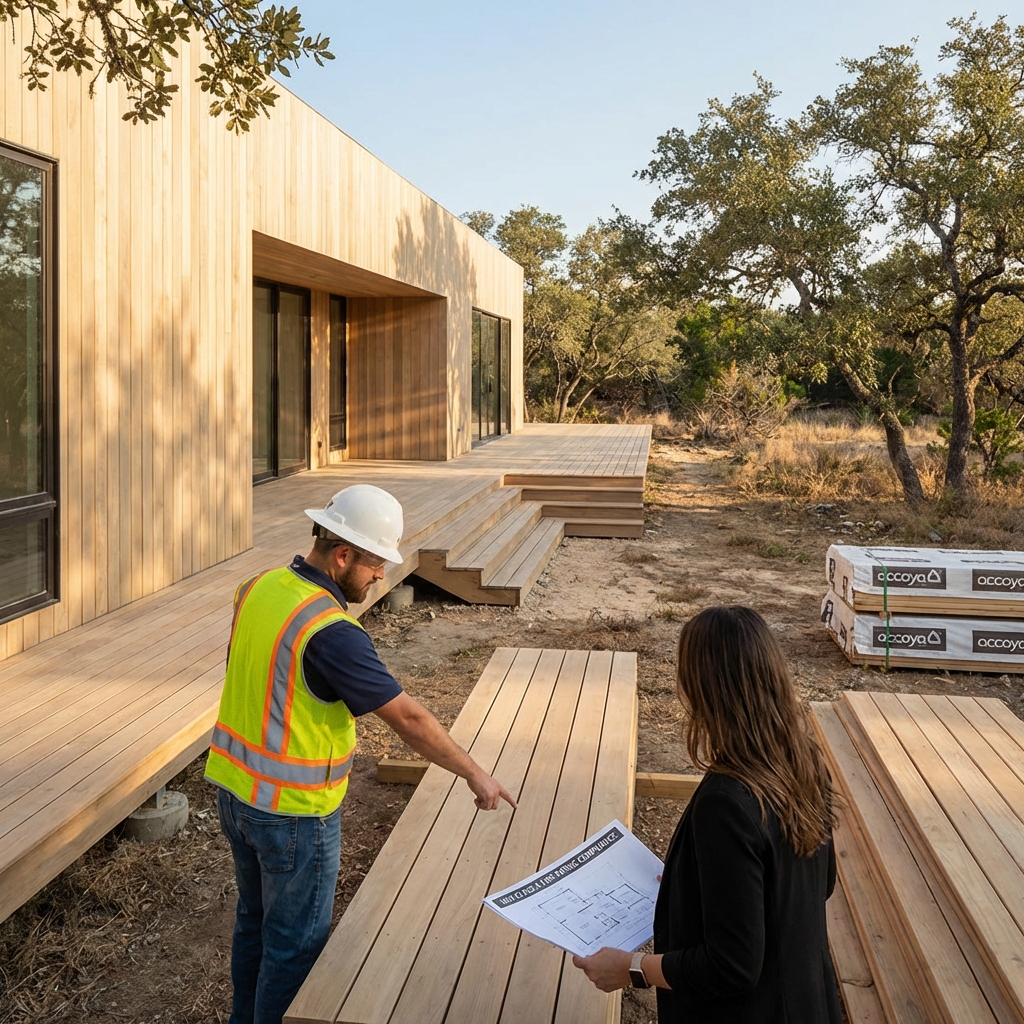
Building codes in Boerne, Kerrville, and other Hill Country communities now mandate Class A materials for visible wood elements on new construction and major renovations. We stock and supply WUI Class A approved Accoya products specifically configured to meet these local requirements. Your building department knows Accoya. Approvals move faster when you specify it.
Unlike untreated cedar, which requires expensive fire-retardant coatings that can degrade performance, Accoya achieves fire ratings through its material properties. The fire protection doesn’t wash away or degrade with weathering. It’s built into the board.
What to do next: Check your local building code requirements for your next WUI zone project. Call our team with your project specifics, and we’ll confirm exact Accoya specifications and fire ratings that meet your jurisdiction’s requirements. This prevents costly design delays or material substitutions mid-project.
Our Premium Accoya Inventory and In-Stock Availability
We maintain dedicated Accoya inventory across our Texas locations and fulfillment network. Thick stock of Accoya siding, Accoya decking, and Accoya cladding means your projects move forward without extended lead times that plague other premium wood suppliers.
Our inventory includes multiple profiles and grades configured for both residential and commercial applications. We stock:
- Accoya siding in various widths and configurations for traditional and contemporary aesthetic styles
- Decking boards in thicknesses optimized for residential and commercial load conditions
- Cladding profiles for commercial building envelope requirements
- Specialty trim and accessory pieces for design detailing
Because we distribute nationally and maintain Texas-specific stock levels, we can fulfill large commercial orders without the eight to twelve-week delays common from European mills. Your project timeline stays on track. Your contractor doesn’t face material delays that compress other work phases.
We also manage special ordering for custom dimensions or configurations not held in standard stock. Lead times remain competitive because of our direct relationships with manufacturing sources and our established inventory planning.
What to do next: Contact our sales team with your project scope and timeline. We’ll confirm current stock levels and delivery windows for your specific Accoya requirements. Knowing availability early prevents design compromises later.
Local Austin and Texas Project Approval Support
We’re based in Texas and we work directly with architects, building departments, and contractors throughout Austin, Dallas, Houston, San Antonio, and regional communities. This local presence matters when your project needs material approvals, building code verification, or specification support from someone who understands Texas-specific requirements.
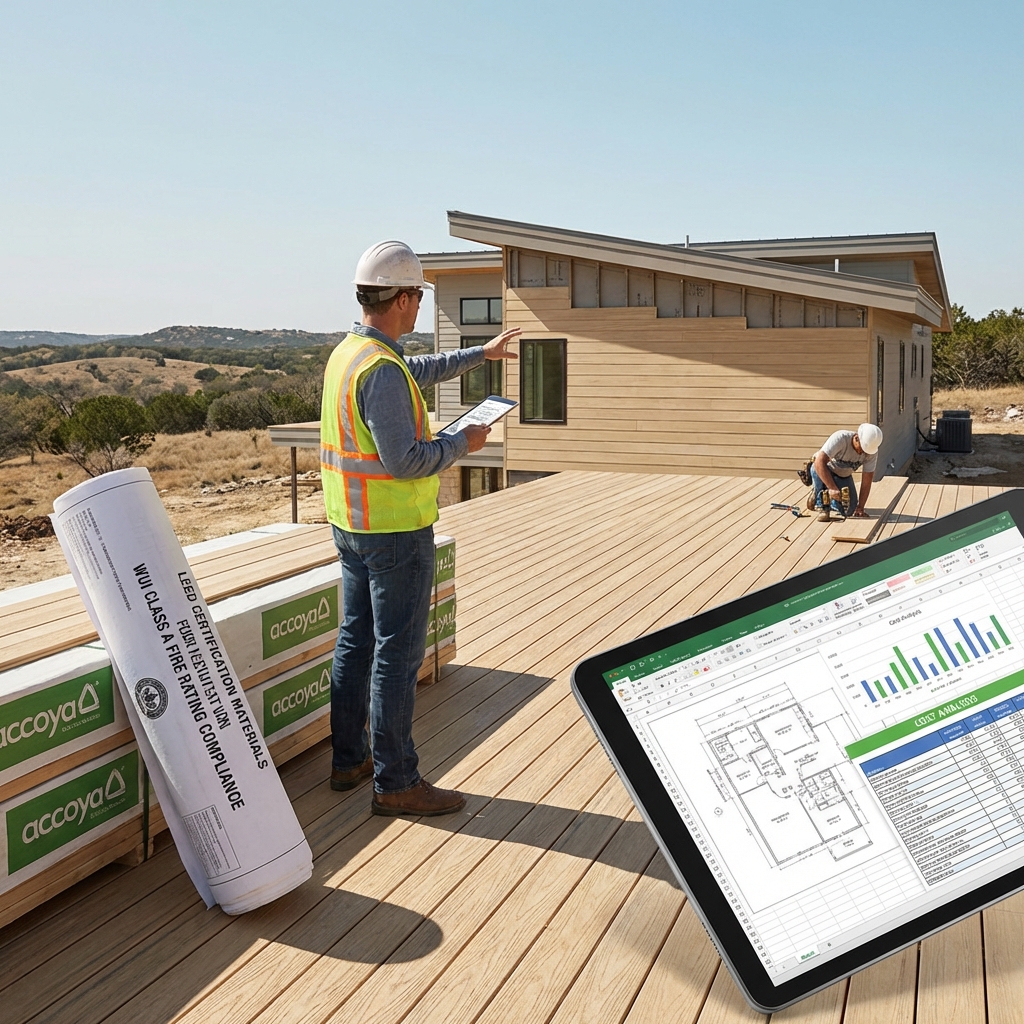
We provide technical documentation, fire rating certifications, and sustainability credentials formatted exactly as your local building department expects them. Projects in Austin’s urban core, Hill Country developments, and commercial zones across the state benefit from our direct relationships with code officials and our familiarity with local approval processes.
When your team needs to verify that Accoya products meet Boerne ordinances, WUI standards in Kerrville, or Austin City code requirements for cladding materials, we have the documentation and the experience to accelerate approval. We’ve walked similar projects through these processes. We know what departments require and what questions typically arise.
For commercial contractors managing multi-phase projects across different jurisdictions, having a local supplier who understands regional building requirements eliminates surprises and prevents costly delays during permit review or inspections.
What to do next: On your next project proposal, contact our team early in the design phase. We’ll provide material documentation, code verification, and approval support before your first plan submission. Early coordination prevents specification changes after plans are finalized.
Cost-Effective Solutions That Eliminate Long-Term Replacement Expenses
The upfront price of Accoya exceeds standard cedar, and we won’t pretend otherwise. But the lifecycle cost analysis almost always favors Accoya for projects where durability and low maintenance become priorities.
Consider a typical Austin custom home deck project. Cedar decking costs less initially but requires refinishing every two to three years to prevent weathering and surface degradation. Budget $3,000 to $5,000 per refinish cycle for material and labor across a 500-square-foot deck. Over ten years, you’re approaching $15,000 to $25,000 in cumulative maintenance costs. Add potential replacement of compromised boards, warranty claims for rot or warping, and the total cost of cedar ownership becomes substantial.
Accoya decking, installed correctly, needs virtually no maintenance. No refinishing. No stain reapplication. No board replacement due to decay. Over a ten-year period, your cost is the installation price, period. The lifecycle comparison typically shows Accoya delivering equal or better total cost of ownership while eliminating maintenance headaches and client callback risk.
For commercial projects where maintenance cycles interrupt building operations or require scaffolding access, the operational cost savings of Accoya become even more significant. We’ve had commercial clients specify Accoya on high-visibility cladding specifically because they eliminate the scaffolding costs associated with five-year refinishing cycles on cedar alternatives.
Warranty periods also matter. Projects that guarantee wood performance for seven or ten years become feasible with Accoya. The same warranty period on cedar creates unacceptable liability risk for contractors and building owners.
What to do next: Build a full lifecycle cost model for your next major siding or decking project. Include material cost, installation, maintenance labor, refinishing materials, and potential replacement cycles. Compare the total against Accoya’s upfront price plus minimal maintenance cost. Present that analysis to your client. The decision often becomes clear when you show true cost of ownership, not just initial material price.
We stand behind Accoya products as the premium choice for Texas construction because we’ve seen it perform where other materials fail. Whether your next project demands LEED certification, WUI Class A fire rating, Hill Country durability requirements, or simply the elimination of long-term maintenance costs, Accoya delivers the performance that justifies the specification. Contact our team to discuss your project requirements and get started with samples and documentation.
To place orders, order samples, or talk with a live person.


