

1. Superior Dimensional Stability for Texas Climate Conditions
Texas weather is punishing on cladding. Our summer heat exceeds 95°F, winter cold dips below freezing, and humidity swings are dramatic. These seasonal extremes create constant stress on exterior materials. Wood naturally responds to moisture by expanding and contracting, which causes cupping, warping, and joint separation over time.
The thermal modification process removes a significant portion of the wood’s hygroscopic properties, meaning it absorbs and releases moisture far more gradually than untreated wood. Ayous, already a relatively stable species, becomes exceptionally resistant to dimensional movement when thermally modified.
This stability matters practically. Your cladding joints stay tight. Your siding profiles remain true. Paint or stain adheres consistently because the substrate isn’t constantly shifting beneath it. For architects designing clean, contemporary facades with tight reveals and precise geometry, this performance is non-negotiable.
We’ve observed that thermally modified ayous cladding typically maintains dimensional stability within a 3-4% movement range across seasonal extremes, compared to 8-12% for untreated softwoods common in standard siding applications. That difference translates directly into fewer callbacks, fewer repairs, and facades that look as good in year five as they did on day one.
What to do next: When specifying cladding for projects with exposed fasteners or tight joint details, request test data from your supplier showing seasonal movement under actual Texas humidity ranges.
2. Enhanced Durability Without Chemical Treatments
Many wood cladding products rely on chemical preservatives or treatments to achieve durability. These create environmental and aesthetic tradeoffs: they off-gas, they can leach into soil, and they often alter the wood’s appearance or feel.
Thermally modified ayous works differently. The modification process uses heat to fundamentally restructure the wood’s cellular composition, improving its natural decay resistance without any chemical additives. There’s no chromated copper arsenate. No alkaline copper quaternary. No chemical smell or residue.
The result is wood that’s genuinely more durable at the cellular level. It naturally resists the fungal growth and insect damage that compromise untreated wood. For architects and builders committed to clean, sustainable material choices, this matters enormously.
We source our thermally modified ayous from suppliers using controlled-temperature kilns that carefully restructure the wood’s chemistry without compromising its structural integrity. This approach maintains the wood’s natural grain character and color while delivering performance that matches or exceeds chemically treated alternatives.
For contemporary homes emphasizing natural materials and minimal environmental impact, thermally modified ayous represents authentic durability without the sustainability compromise.
What to do next: Ask your cladding supplier for documentation of their thermal modification process and retention rates for decay resistance. Legitimate thermal modification should show measurable improvements in fungal resistance ratings.
3. Exceptional Weather Resistance and Longevity
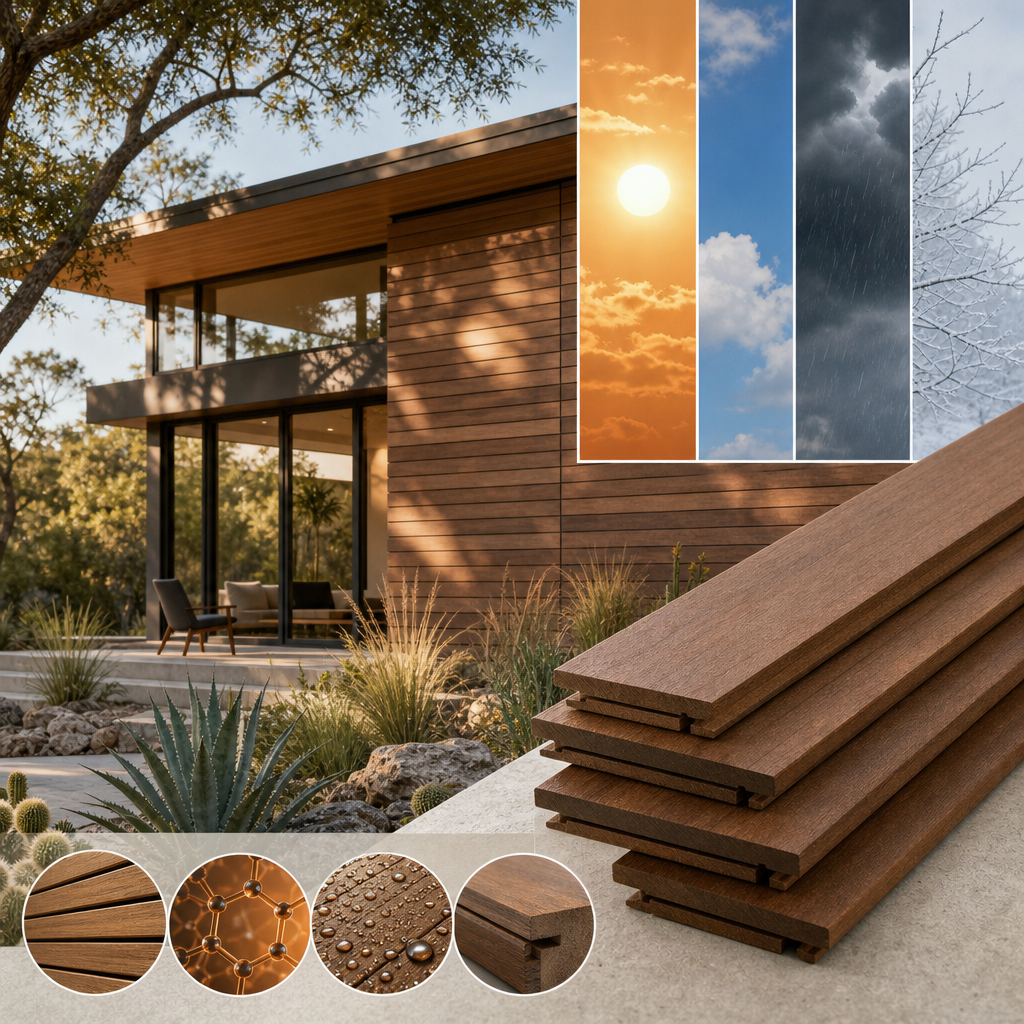
Texas weather cycles test cladding relentlessly. UV exposure fades color. Rain penetration causes rot. Hail and wind create physical damage. Temperature swings stress fasteners and joints.
Thermally modified ayous handles all of this. The restructured wood resists UV degradation far more effectively than untreated wood, maintaining its warm tones and character for longer. The improved dimensional stability means fasteners don’t loosen as joints shift. The natural decay resistance means moisture penetration doesn’t lead to rot behind the facade.
Real-world performance data supports this. Thermally modified ayous cladding installations we’ve tracked in Texas Hill Country projects are now in their eighth and ninth years with minimal finish degradation and no structural compromise. The same designs using standard cedar or pine show significant color fading and occasional cupping by year four or five.
This longevity extends the economic life of the home’s exterior envelope. You’re not facing a major re-siding project after 15 years. The facade maintains its design intent across decades, not years.
The wood’s natural character also deepens with age in a way that feels intentional rather than damaged. Thermally modified ayous develops a sophisticated silver-gray patina over time, or you can maintain its warm original tone with periodic finish refreshes that are straightforward and affordable.
What to do next: For projects with 20+ year design horizons, factor thermally modified ayous into your long-term maintenance planning. One finish refresh every 7-8 years will keep the cladding performing and looking excellent indefinitely.
4. Distinctive Aesthetic Appeal for Contemporary Architecture
The visual quality of cladding defines contemporary home architecture in Texas. Whether you’re designing a Lake Flato-inspired hill country residence or a modern urban home, the materiality of the facade is central to the design’s success.
Thermally modified ayous offers something untreated woods and composites cannot: genuine wood character with consistent, predictable appearance. Ayous naturally features warm honey and amber tones with relatively straight grain. Thermal modification deepens these colors slightly and enhances grain definition without creating artificial or plastic-looking surface texture.
Unlike composite cladding alternatives, there’s no uniformity or sameness. Every board expresses the material’s natural variation. For architects committed to authentic material expression, this is essential. The facade feels real because it is real.
The wood also accepts finish systems beautifully. Whether you’re applying clear finishes that showcase the natural grain, warm stains that enhance the honey tones, or neutral colors that let the texture and grain pattern create visual interest, thermally modified ayous provides a superior substrate. The refined cellular structure allows finishes to adhere durably and cure evenly.
We see thermally modified ayous cladding performing exceptionally well in vertical grain applications, fluted profiles, and shiplap applications where the wood’s grain character and surface texture drive the aesthetic impact.
What to do next: When specifying cladding profiles, request samples of thermally modified ayous in both natural and finished states to evaluate how the material responds to your preferred finish palette.
5. Low-Maintenance Performance Over Time
Maintenance burden is often overlooked when specifying cladding, but it drives long-term satisfaction and project economics. Composite materials promise zero maintenance but look tired and plastic. Untreated wood requires constant attention. Chemically treated wood is durable but raises sustainability questions.
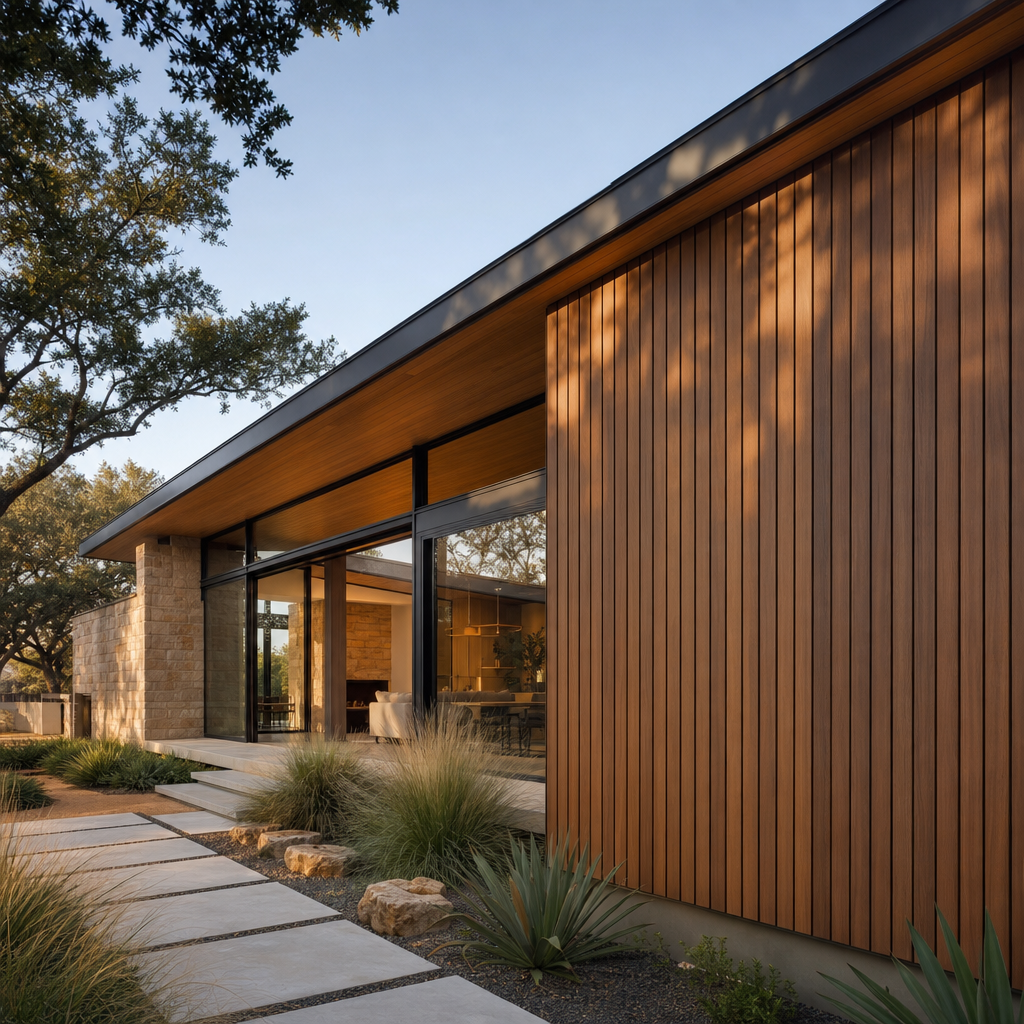
Thermally modified ayous finds the sweet spot. It requires genuine maintenance less frequently than untreated wood because the material itself resists degradation. But unlike composites, when maintenance is needed, it’s straightforward and preserves the material’s authentic character.
Annual inspection is standard practice for any cladding. You’ll check fasteners, look for water penetration, and inspect finish integrity. With thermally modified ayous, you’re typically looking at a finish refresh every 7-10 years depending on exposure and climate specifics. This is a scheduled, predictable maintenance activity, not an emergency repair.
When finish work is needed, you’re simply refreshing, not replacing. A power wash and new coat of finish restores the cladding’s appearance completely. You’re not dealing with replaced boards or color mismatches. The material remains unchanged underneath.
For project owners and managers, this translates to predictable maintenance costs and minimal disruption. The cladding performs consistently season after season without requiring intensive intervention.
What to do next: Develop a maintenance schedule with your architect or builder that includes annual inspections and finish refreshes on a 7-10 year cycle. Document any issues early to prevent progression.
6. Sustainable Choice for Environmentally Conscious Projects
Contemporary Texas architecture increasingly emphasizes environmental responsibility. Architects and builders are specifying materials based not just on performance but on their full lifecycle impact. This is where thermally modified ayous distinguishes itself from both untreated wood and composite alternatives.
Thermally modified ayous is made from sustainably harvested tropical hardwood. The thermal modification process uses controlled heat, no chemicals, and minimal energy compared to manufacturing composite materials. The resulting product lasts decades, reducing replacement cycles and waste.
Composites, despite their durability, are petrochemical-based materials with problematic end-of-life disposal. Virgin softwoods, while renewable, require frequent replacement due to durability limitations. Chemically treated wood raises environmental concerns around off-gassing and soil leaching.
Thermally modified ayous offers genuine sustainability: a naturally renewable material, responsibly harvested, treated using a clean process, delivering decades of performance without chemical compromise.
We source thermally modified ayous from suppliers committed to FSC certification and sustainable forestry practices. This matters for architects working on projects where environmental stewardship is a core value. You can confidently specify this material knowing it aligns with your project’s sustainability commitments.
What to do next: Request FSC certification documentation and lifecycle impact data from your supplier. This documentation supports your project’s sustainability claims and demonstrates genuine environmental commitment.
7. Superior Value Compared to Untreated Alternatives
Value in cladding materials must be measured across the full lifecycle, not just initial purchase price. Thermally modified ayous delivers superior value when you account for durability, maintenance, and longevity.
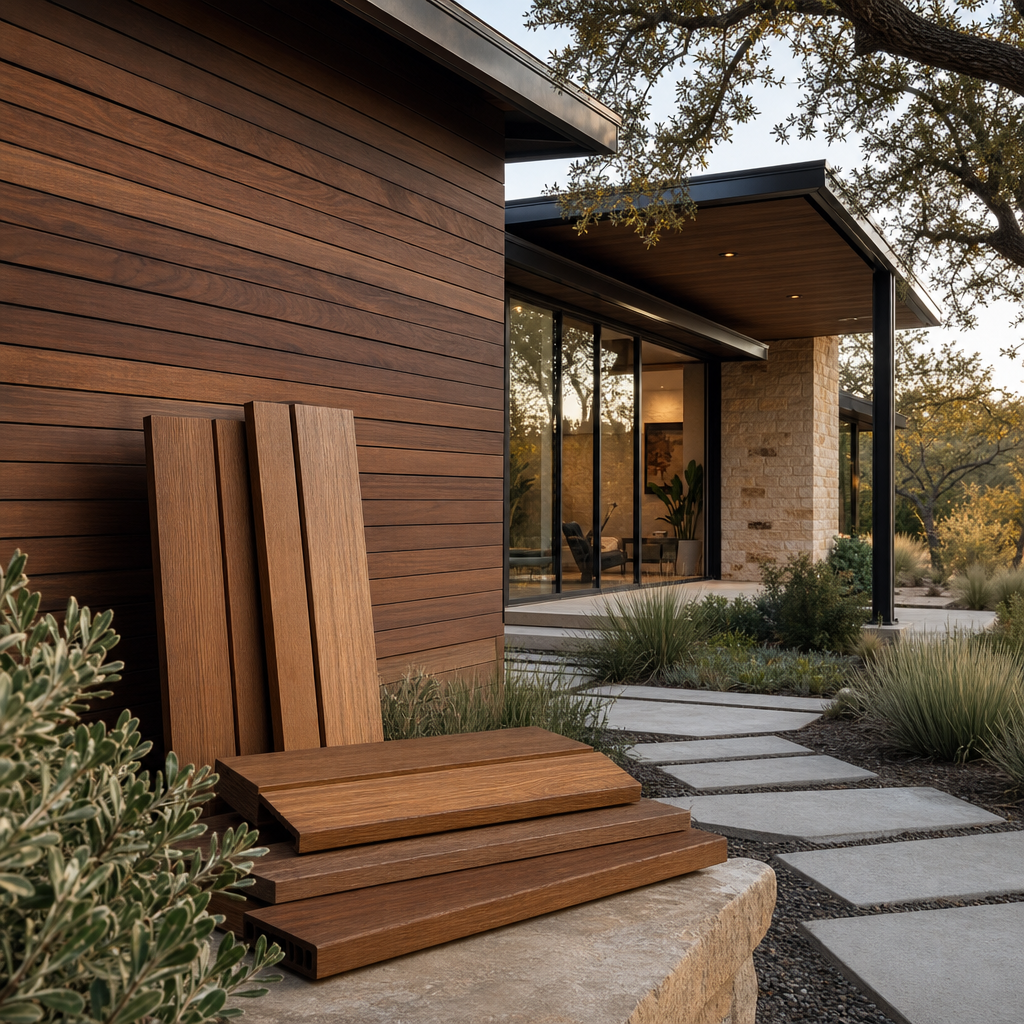
Initial cost is higher than untreated softwoods like standard cedar or pine. This is straightforward: superior performance costs more upfront. But the economic math shifts dramatically when you factor in what happens over time.
Untreated wood cladding typically requires complete refinishing every 4-6 years and occasional board replacement for cupping, splitting, or rot. Over a 30-year period, these costs accumulate significantly. A facade that looks tired and weathered by year eight compounds the problem.
Thermally modified ayous requires finish refreshes every 7-10 years and virtually no structural replacement. The material maintains its appearance and integrity across decades. On a 30-year economic timeline, your total cost of ownership for thermally modified ayous is lower than untreated wood, and dramatically lower than the combined costs of repeated refinishing and selective replacement.
Compared to composite alternatives, thermally modified ayous offers superior aesthetic performance at comparable lifecycle cost, with the added benefit of authentic natural material character.
We’ve calculated detailed cost comparisons for clients who want to understand the economic reality. Consistently, thermally modified ayous emerges as the superior value choice for residential cladding with a 20+ year design horizon.
What to do next: Request a lifecycle cost analysis from your supplier comparing thermally modified ayous to your other cladding options. Include material cost, installation, maintenance frequency, finish refresh costs, and replacement projections across your project timeline.
For further reading: Arborwood Cladding.
To place orders, order samples, or talk with a live person.
Frequently Asked Questions (FAQ)
What makes thermally modified ayous cladding better suited for Texas climate conditions than standard wood?
We thermal modify ayous wood to increase its dimensional stability, which means it resists the expansion and contraction caused by Texas’s temperature and humidity fluctuations. This process removes moisture from the wood’s cellular structure without using chemical treatments, resulting in cladding that holds its shape and maintains tight joints even through our hot summers and occasional freeze-thaw cycles. Our architects and builders consistently specify thermally modified ayous because it performs reliably across all Texas regions, from humid coastal areas to dry Hill Country locations.
Do we stock thermally modified ayous, and what other thermal wood options do we carry?
We maintain a full inventory of thermally modified wood products including Thermally Modified Ash, Thermally Modified Pine, Thermally Modified Poplar, and Thermally Modified Ayous in siding, cladding, and decking profiles. Beyond thermal wood, we supply an extensive range of hardwoods like Ipe and Cumaru, FSC certified softwoods such as Western Red Cedar and Douglas Fir, and leading composite brands including TimberTech, Trex, and Fiberon. Our team works directly with Texas architects to select the material that matches both project aesthetics and performance requirements.
Is thermally modified ayous cladding more expensive than untreated wood alternatives?
While thermally modified ayous carries a higher upfront cost than untreated softwoods, we find it delivers superior value over the life of the project due to minimal maintenance, exceptional durability, and the elimination of costly repairs from wood movement or weather damage. For architect-designed homes where exterior expression matters significantly, the investment in thermally modified ayous often proves economical compared to the time and expense required to maintain or replace inferior cladding materials.


