

Why Architects Specify Accoya Over Standard Cedar
Architects across Texas are redesigning what “sustainable” means on the facade. When Lake|Flato and Page push expressive wood into contemporary designs, they’re asking for materials that deliver beauty, performance, and environmental credentials in one specification. Standard cedar siding has dominated Texas exteriors for decades, but it struggles with the durability demands of our climate and the rigorous documentation LEED requires.
Accoya thermally modified wood changes that equation. We’ve helped Texas architects specify it for projects where cedar would require replacement in 15 years, where fire ratings matter in WUI zones, and where LEED committees demand forestry transparency. This guide walks through what makes Accoya the architect’s material in Texas, how it performs against cedar in real conditions, and how to navigate local code compliance and LEED documentation.
Accoya isn’t just cedar that’s been treated differently. It’s wood that has been acetylated, a process that fundamentally changes its cellular structure. The modification happens at the molecular level, preventing moisture absorption that drives rot, dimensional instability, and pest damage. Cedar, by contrast, is susceptible to all three, particularly in Texas’ hot, humid summers and the moisture swings we see in Hill Country projects.
The practical difference shows up in year five of a project. Cedar siding in East Austin’s urban moisture environment or on a Hill Country home near Lake Travis will begin checking, graying, and moving. Accoya remains stable. It doesn’t require the protective finishes that cedar demands every 3-5 years, and when you do finish it, the coating adheres better and lasts longer because the substrate isn’t constantly swelling and shrinking.
For architects designing homes where wood is the primary facade expression, Accoya means the design intent survives 30 years without material replacement. Cedar means planning a major facade refresh in the project’s second decade. That performance delta is why the best contemporary residential work in Austin is shifting to Accoya and similar thermally modified woods.
Actionable step: Request samples of Accoya and cedar installed side-by-side in similar exposures. Have your general contractor photograph them yearly. The visual difference by year three is unmistakable.
Accoya’s LEED Advantages and Credit Opportunities
LEED v4.1 rewards material transparency and durability in ways that favor Accoya explicitly. The Building Product Disclosure and Optimization credit (EQc2) gives points for products with third-party environmental product declarations (EPDs). Accoya siding carries a comprehensive Type III EPD that documents lifecycle impacts from forestry through manufacturing.
The durability advantage opens Material and Resources credits (MRc4) that others chase differently. When your siding is specified to last the building’s lifetime without replacement, you eliminate the embodied carbon and waste of replacement materials. LEED quantifies this: a 60-year lifespan versus a 20-year lifespan is a massive credit multiplier.
Accoya also qualifies for the Sourcing of Raw Materials credit because our suppliers maintain Chain of Custody documentation from sustainably managed forests. LEED’s emphasis on responsible forestry management aligns directly with Accoya’s supply chain.
We’ve worked with Austin and Dallas architects on six LEED Platinum projects where Accoya siding was a material performance driver. The documentation is straightforward when you source from a supplier who knows the certification pathways. Without the right specification support, architects often default to composite materials or more expensive pre-certified cladding systems, missing Accoya’s credit potential entirely.
Actionable step: Run a preliminary LEED credit estimate with your certifier before finalizing materials. Include Accoya’s EPD data early. The credits often justify the material cost difference against alternatives.
Fire Rating and WUI Class A Compliance in Texas
WUI (Wildland-Urban Interface) Class A fire-rated siding is mandatory in expanding Austin neighborhoods and throughout Hill Country. Cedar, even pressure-treated cedar, does not achieve Class A on its own. Accoya with a fire-retardant finish does, consistently and durably.
This matters because the retrofit risk is real. A home specified with untreated cedar in a Dripping Springs or Bee Cave neighborhood may fall out of code compliance as fire zones are redefined. We’ve seen homeowners face six-figure facade replacements when code amendments catch up to construction dates. Accoya avoids that liability.
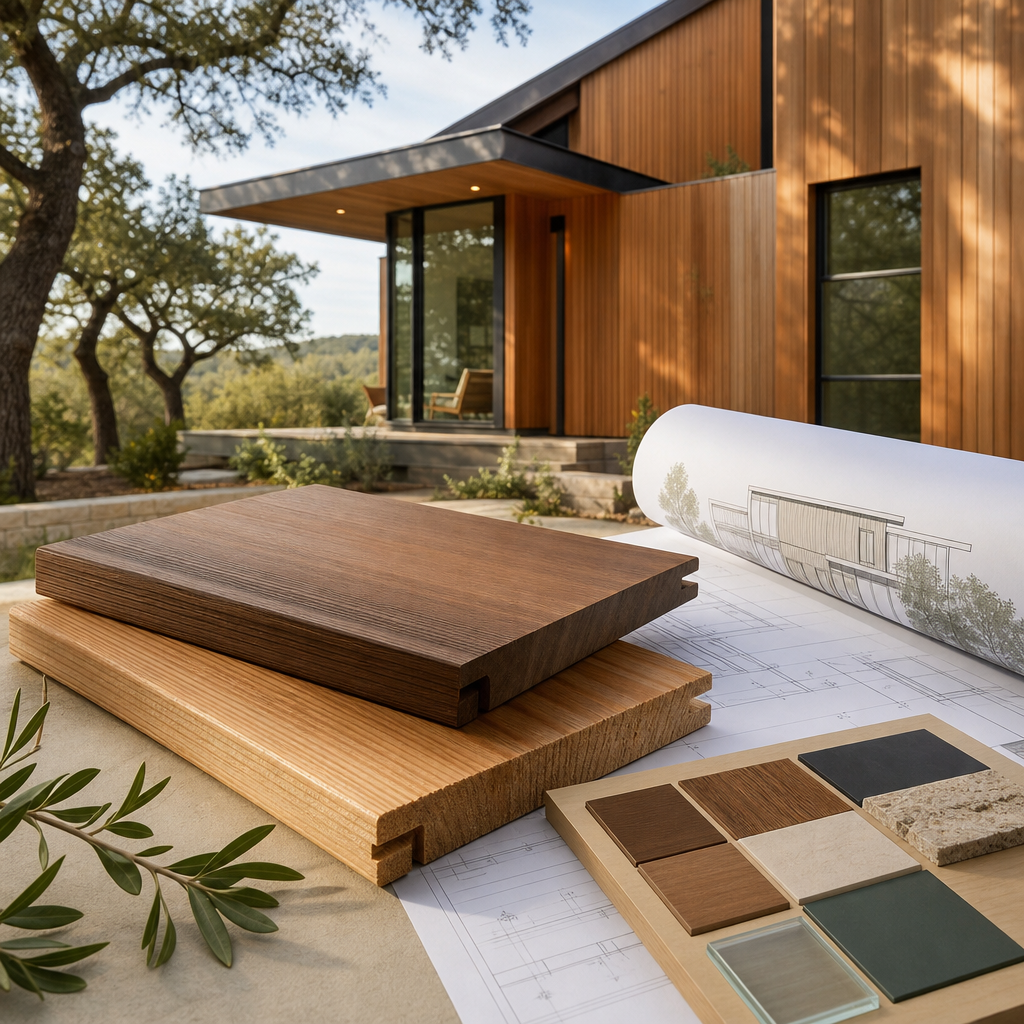
Texas building codes (IBC 2024 adoption) recognize Accoya with Class A ratings in siding, decking, soffits, and framing applications. Austin’s local amendments reinforce these standards. When architects specify Accoya, code approval is immediate and defensible. The fire rating is permanent because it’s integral to the wood itself; it doesn’t degrade or wash off like surface treatments on cedar.
We stock Class A Accoya siding and maintain documentation for every project. Our suppliers provide the testing certificates that code officials require.
Actionable step: Verify fire zone classifications for your project location now, not during permit review. If you’re in a WUI area or expect future reclassification, Accoya’s Class A rating is non-negotiable insurance against code changes.
Durability and Lifespan Comparison: Accoya vs Cedar
Cedar’s lifespan in Texas is roughly 15-25 years depending on exposure and maintenance. Accoya’s tested lifespan exceeds 50 years in comparable conditions. Both are real numbers, not marketing claims. Cedar’s timeline includes five refinishing cycles; Accoya’s typically includes one or two.
The calculation shifts when you layer in labor and logistics. Refinishing 2,000 square feet of cedar facade every five years compounds to significant cost over time. Accoya’s stability means crew access is predictable, and finish life is consistent across the elevation.
In humid areas like Spring, The Woodlands, and near-Lake Travis properties, the durability gap widens further. The constant moisture cycling that causes cedar to cup and check happens more slowly with Accoya because moisture penetration is minimal. We’ve inspected cedar installations in those microclimates at 10 years showing significant dimensional change. Comparable Accoya installations show virtually none.
Architects in contemporary work where the wood finish is part of the design expression choose Accoya specifically to preserve that expression. Cedar projects require acceptance that the visual character will shift through weathering and wear.
Actionable step: Request accelerated weathering data for both materials from suppliers. The 10-year projection under Texas humidity is the honest comparison, not the sales brochure aesthetic.
Local Austin and Texas Building Code Alignment
Austin’s energy code and the broader Texas building standards have evolved to favor materials with documented environmental and durability performance. The city’s recent emphasis on embodied carbon in building materials (reflected in the IECC 2024 pathway) rewards Accoya’s long lifecycle.
Fort Worth, Houston, and San Antonio codes track similar patterns. IECC 2024 compliance, which most Texas municipalities are adopting by 2027, incentivizes materials that reduce replacement cycles. Cedar doesn’t fit that profile; Accoya does.
Local accessibility is underrated. We maintain current stock and relationships with Austin, Dallas, and Houston building departments. When code questions arise on your project, we have documentation ready and staff familiar with the specific requirements for your municipality. Cedar is commodity lumber; you can source it anywhere. Accoya from a local broker who knows the code landscape means faster approvals and fewer RFIs.
Actionable step: Confirm your municipality’s current and planned building code adoption. Pull the embodied carbon or durability provisions from the latest version. Accoya’s spec sheet aligns directly with those standards.
Our Direct Supply and Specification Support
We manufacture and distribute Accoya siding, decking, cladding, timbers, and soffits. We don’t sit between you and inventory; we control the supply chain. When you specify Accoya from US Lumber Brokers, you’re working directly with a Texas-based supplier who stocks material in Austin and ships nationwide.
That relationship matters operationally. If your project requires a specification change or an expedited delivery to meet a revised schedule, you’re not negotiating through layers of distributors. We’ve adjusted specifications mid-project for three Austin architects in the past 18 months when site conditions or design refinements required material variations. That responsiveness is rare in commodity lumber markets.
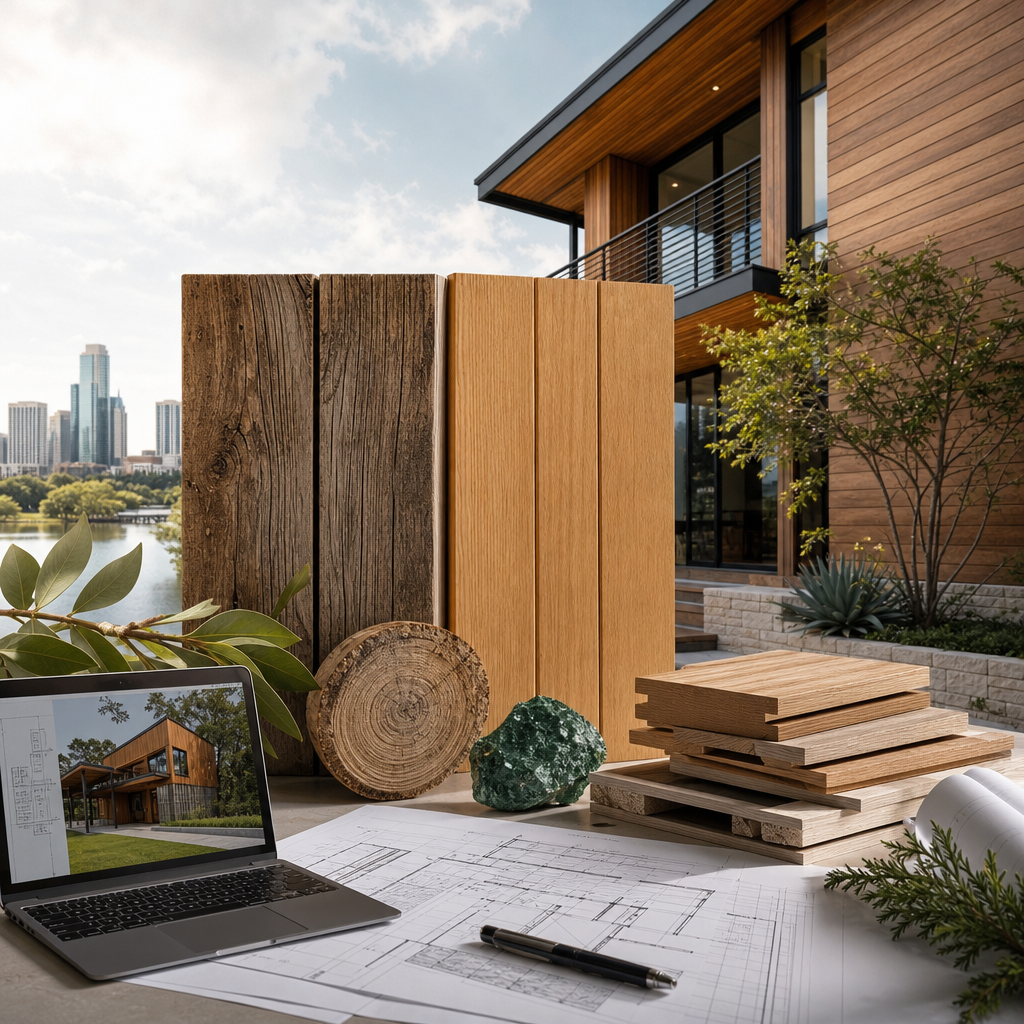
We also provide technical support for specification writing. Many architects have never specified Accoya formally. The terminology differs slightly from cedar specs, and LEED documentation requires precision. Our team works directly with you to draft specs that code officials recognize and that suppliers can fulfill without back-and-forth.
Actionable step: Contact us with your project scope and LEED target. We’ll provide draft specification language and sample documentation in 48 hours, saving your office weeks of internal research.
Documentation and Certification You Need for LEED Projects
LEED reviewers require Environmental Product Declarations (EPD), Chain of Custody certificates, and FSC forestry documentation. Accoya provides all three; they’re not optional add-ons you chase after ordering.
We supply a standardized documentation package with every LEED project: the EPD with lifecycle impact data, the Accoya technical specification with fire ratings and durability claims, the Chain of Custody certificate showing forest origin, and the FSC certification covering forestry practices. Most architects assemble these from three or four different sources; we provide them bundled.
The documentation also satisfies local code officials and future building audits. If your project undergoes LEED recertification or environmental benchmarking, the material certs are already in your project file. Cedar requires you to piece together fire-test reports and durability claims from dispersed sources, assuming they exist.
Actionable step: Request our standard documentation package early in design. Share it with your LEED consultant and code authority in the SD phase. This prevents specification conflicts downstream.
Budget Considerations and Long-Term Value
Accoya costs more per board foot than standard cedar. The upfront material premium is roughly 25-40 percent depending on grade and dimension. That’s the honest first comparison.
The lifecycle cost reverses that math. A 2,000-square-foot facade specification using cedar at $6,000 material cost and three refinishing cycles at $3,000 each over 30 years totals $15,000. Accoya at $8,000 material and one refinishing at $2,000 totals $10,000. The owner recovers the upfront premium by year 20 and saves money thereafter.
LEED projects often have construction budgets that accommodate higher-quality material costs. Owners committing to LEED certification understand embodied carbon and lifecycle performance. For those projects, Accoya’s cost is an investment, not an expense. For spec residential or volume builds, the margin math may shift cedar’s direction.
We’ve found that the specification decision usually comes down to the architect’s vision for material permanence and the owner’s timeline. If the design assumes the wood will age and weather gracefully on purpose, cedar works. If the design intent requires the facade to perform identically for 30 years, Accoya is the material.
Actionable step: Build a three-scenario cost model with your builder: cedar baseline, Accoya mid-range, and composite decking high-end. Include maintenance cycles and labor for 30 years. Share it with your owner and let the lifecycle cost drive the decision.
Sustainable Material Sourcing and FSC Certification
Accoya is manufactured from sustainably managed forests with FSC Chain of Custody certification. That doesn’t mean all cedar is unsustainable; it means Accoya’s sourcing is documented, audited, and transparent from forest to mill.
We source Accoya from mills that have certified renewable forestry practices, meaning trees harvested are replanted and monitored. That documentation is available for every shipment. LEED projects require proof of responsible sourcing; Accoya provides it built into the product, not as an afterthought.
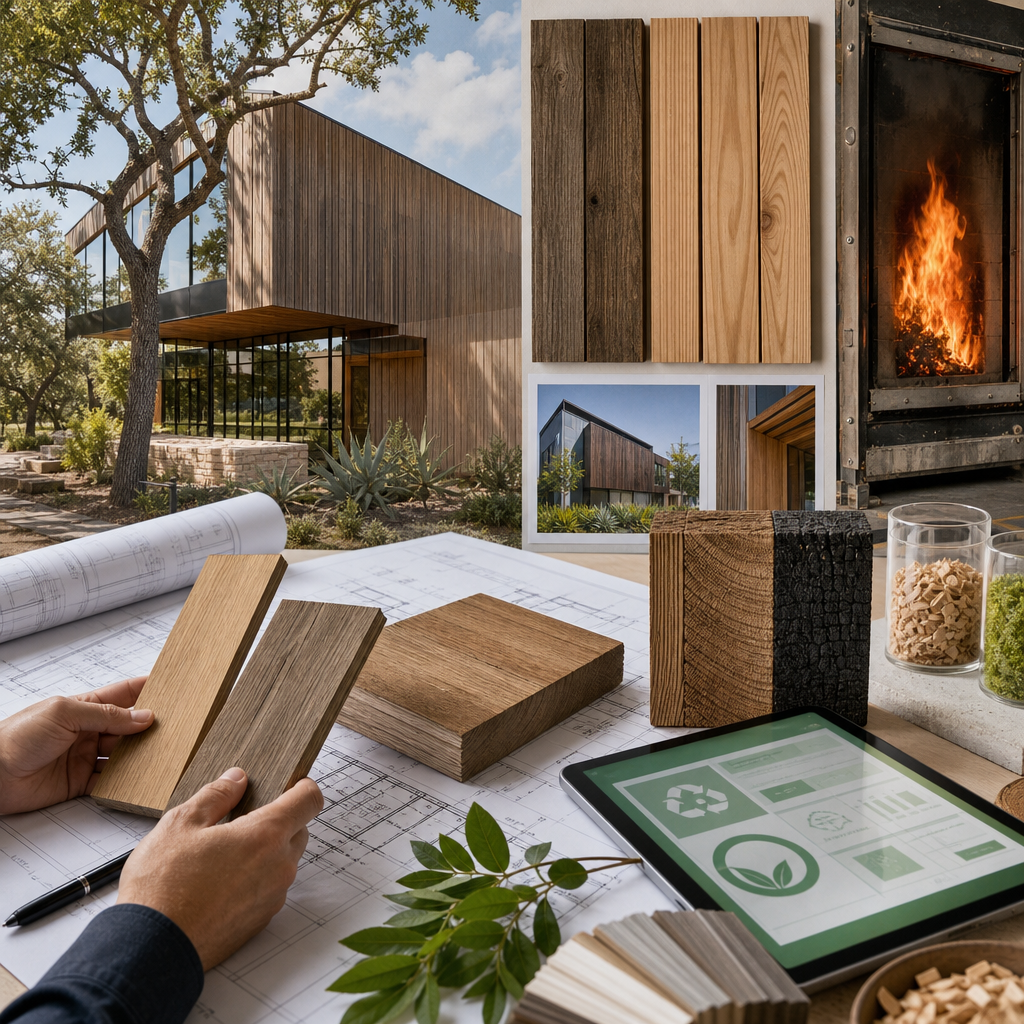
Cedar’s sustainability depends on the specific supplier. Some cedar is responsibly harvested; some is not. Without explicit sourcing requirements in your spec, you can’t guarantee the environmental credential your project claims.
For architects designing contemporary homes that emphasize natural materials and environmental values, Accoya’s sourcing aligns the facade with the project’s sustainability narrative. The wood looks natural, performs durably, and comes from forests managed for perpetual yield. That triple benefit is why we’ve seen interest in Accoya double among Hill Country and East Austin architect firms over the past two years.
Actionable step: Request sourcing documentation from any cedar supplier. Compare transparency with Accoya’s readily available certifications. The clarity difference is significant.
Why We Are Your Trusted Accoya Partner in Texas
We’ve built our business on understanding what Texas architects need: local supply relationships, technical specification support, code compliance certainty, and materials that survive our climate and project visions. Accoya is central to that mission because it’s the material that makes both possible.
We don’t sell commodity lumber that passes through our warehouse. We stock Accoya, understand its performance, hold certification documentation, and work directly with architects on specification and approval. When your project requires Class A fire rating, LEED documentation, or a 50-year facade guarantee, we’re equipped to deliver it without delay or documentation gaps.
We’ve supported projects from Austin to Dallas to San Antonio, and we maintain relationships with building departments and code officials across Texas. That local presence means your project gets faster approvals and fewer surprises.
If you’re comparing Accoya to cedar, composite decking, or other thermally modified woods for your next contemporary residential or commercial project, contact us with your scope. We’ll provide specification language, cost comparison, documentation samples, and technical support. That’s how we partner with architects who demand more from their materials.
Your design deserves a facade that performs as well as it looks for the next three decades. Accoya, sourced and specified from US Lumber Brokers, delivers exactly that.
To place orders, order samples, or talk with a live person.
Frequently Asked Questions (FAQ)
What LEED credits can we help you secure with Accoya siding on your project?
We supply FSC-certified Accoya that qualifies for multiple LEED v4.1 credits, including Materials and Resources (MR) credits for sustainably sourced wood and Building Product Disclosure and Optimization credits. Our team provides the third-party certifications and product documentation architects need to substantiate these credits during LEED submission. We handle the specification support so your project documentation is complete from material selection through final verification.
Does Accoya meet Texas WUI Class A fire-rating requirements for high-risk zones?
Yes. We stock thermally modified Accoya that carries Class A fire ratings approved for Wildland-Urban Interface zones throughout Texas, including the Hill Country and Austin metro areas. Unlike standard cedar, Accoya’s thermal modification process creates inherent fire resistance without chemical treatments, which many architects prefer for LEED-sensitive projects. We can verify local jurisdiction compliance for your specific site location.
How do we support architects with specification and certification documentation for Accoya projects?
We provide complete technical specs, FSC chain-of-custody documentation, LEED product declarations, fire-rating certifications, and performance data sheets tailored to your project needs. Our team works directly with your office during design and procurement phases to ensure all materials align with your specifications and local code requirements. We also maintain inventory consistency so your project stays on schedule without substitutions.


