

Why Houston Architects Need Fire-Rated Decking Solutions
Houston’s architectural renaissance demands materials that perform as beautifully as they look. Urban infill projects squeeze homes and commercial spaces into tighter quarters, where fire codes become non-negotiable and wood selection takes on new importance. We work with architects across Houston and beyond who refuse to compromise on the warmth and character of authentic wood, even when building codes require fire-resistant solutions.
The challenge is real: dense urban environments in Houston now require WUI (Wildland-Urban Interface) Class A fire ratings for exterior wood products in specific zones. But fire-rated doesn’t mean compromising on the natural aesthetics your designs demand. We’ve spent years sourcing and manufacturing fire-retardant wood decking and cladding that passes rigorous fire tests while maintaining the rich grain, warm tones, and tactile quality that define contemporary Texas architecture.
Houston’s urban core and expanding metropolitan areas face increasing fire code scrutiny, particularly in dense residential neighborhoods and commercial infill zones. Building officials now require Class A fire-rated materials for decks, siding, and outdoor structures in susceptible areas, even in neighborhoods far removed from traditional wildfire zones.
The pressure goes beyond code compliance. Insurance underwriters, lenders, and homeowners associations increasingly flag non-rated wood products as liability concerns. One architect we worked with discovered mid-project that their specified cedar decking wouldn’t clear the development’s fire rating requirements, forcing a costly redesign. Another faced a six-week delay waiting for compliant materials to be sourced from out of state.
We understand the tension. Your clients expect authentic wood’s warmth and craftsmanship. The building code expects fire resistance. Our role is eliminating that conflict by maintaining a ready inventory of fire-rated woods that deliver both.
The practical benefit: designing with fire-rated materials from day one prevents approval delays, eliminates substitution surprises, and lets you specify with confidence. This is especially critical in Houston infill projects where timelines compress and material availability directly impacts construction schedules.
What to do next: When scoping exterior wood elements for Houston projects, confirm fire-rating requirements with your local AHJ (Authority Having Jurisdiction) early. Building zones vary, and requirements change as codes update.
Understanding WUI Class A Fire-Rating Requirements
WUI Class A ratings come from ASTM E84 testing, which measures how wood products resist flame spread and smoke development. A Class A rating means the material achieves a flame spread rating of 0-25 and smoke development of 0-450. This is the highest fire-resistance classification for combustible materials.
The test itself is straightforward: a material sample gets exposed to intense heat in a tunnel furnace, and inspectors measure how far flames travel across the surface and how much smoke the material releases. Wood naturally burns, so untreated wood typically fails this test. Treated wood either has protective coatings applied or undergoes thermal modification at the cellular level.
What matters for your specifications: Class A rating applies to the finished material as it appears in your project. A fire-retardant coating on cedar looks and feels like cedar, but it’s engineered to resist ignition and flame spread. Thermally modified woods achieve fire resistance through heat treatment, which creates a fundamentally denser, less flammable material.
Houston building zones requiring Class A ratings typically include:
- Dense residential neighborhoods with homes closer than 30 feet apart
- Commercial infill areas with mixed-use development
- Specific high-risk zones designated by the Houston Fire Marshal
- Some HOA communities with stricter standards than municipal code
The rating doesn’t expire, but the certificate does. We maintain current ASTM E84 documentation for every fire-rated product we stock, and we provide this with every specification so your submittals sail through building review.
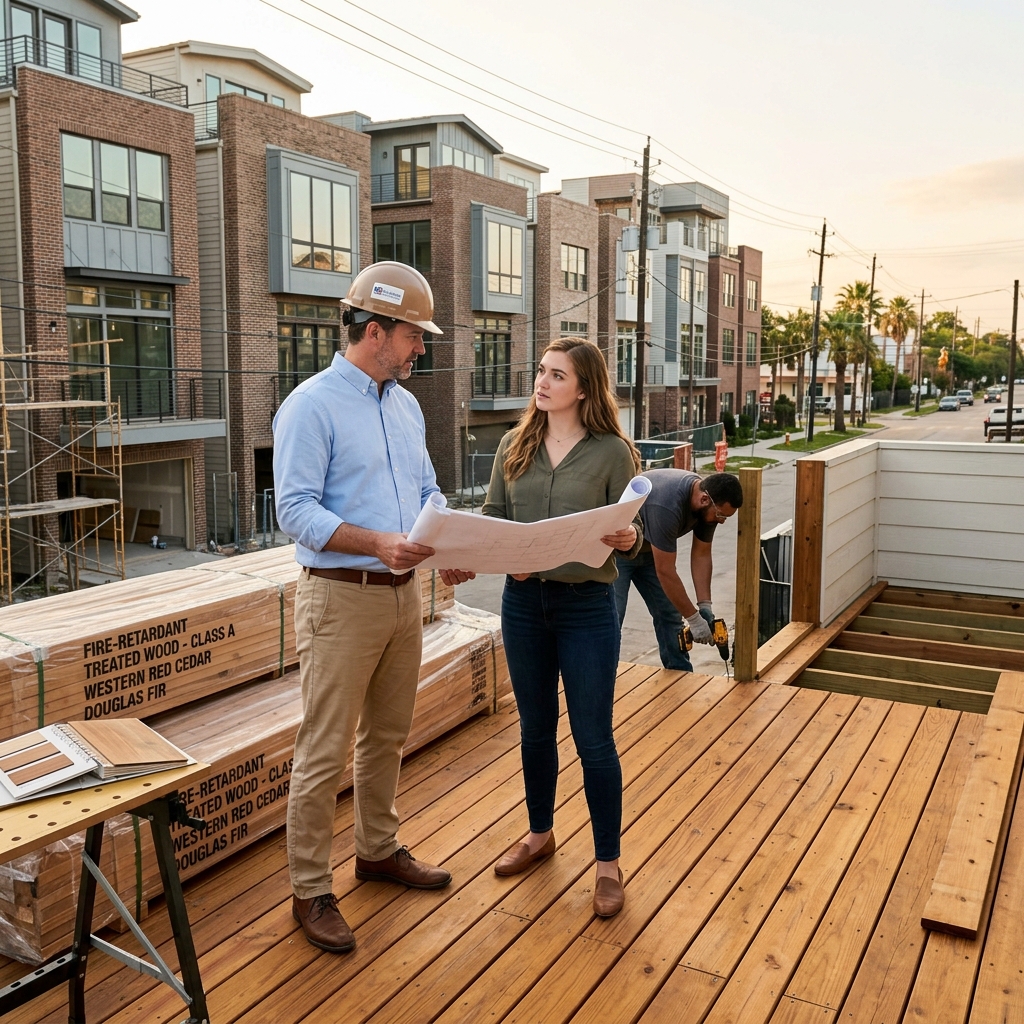
Your next step: Request current fire-rating certificates for any product you’re considering. Third-party documentation saves days during permit review.
Our Premium Fire-Retardant Wood Selection
We carry fire-rated versions of the species architects specify most often. Our inventory includes fire-retardant treated Clear and Vertical Grain Western Red Cedar, Douglas Fir, and Hemlock, all maintaining the visual character your designs require while meeting Class A standards.
Clear Grain Western Red Cedar fire-rated maintains the warm amber tones and tight grain that defines high-end residential work. Vertical Grain Douglas Fir delivers the bold grain lines and deeper color architects love for contemporary applications. Both are available in deck boards, siding, cladding, and trim.
Beyond traditional softwoods, we stock fire-rated hardwoods including tropical species like Ipe and Cumaru. These naturally dense woods can achieve Class A ratings with lighter treatment, preserving the rich chocolate and amber tones that distinguish luxury projects. The advantage: hardwoods age gracefully, developing authentic silvering rather than showing treatment degradation over time.
We’re also an approved supplier for Accoya decking, the acetylated wood product engineered for extreme durability and fire resistance. Accoya starts as sustainably harvested softwood, undergoes acetylation to achieve Class A fire rating without added chemicals, and delivers decades of performance with minimal maintenance. It’s increasingly specified for Houston urban infill precisely because it solves the code-compliance-plus-durability equation.
For projects prioritizing sustainability and transparency, we source FSC-certified fire-rated materials that document chain of custody from forest to jobsite. This matters for LEED projects and architects whose clients demand environmental accountability.
Actionable step: Request samples of fire-rated species in your intended finish. Testing performance in sunlight and touch is essential before final specification.
Thermally Modified Woods for Urban Applications
Thermally modified woods represent a different approach to fire resistance. Rather than applying surface treatments, thermal modification heats wood in a controlled oxygen-free environment, fundamentally altering its cellular structure. The result is denser, more stable wood that naturally resists decay, moisture absorption, and flame spread.
We distribute Thermally Modified Ash, Pine, Poplar, and Ayous, each bringing distinct aesthetic qualities to urban infill projects. Thermally Modified Ash offers deep chocolate tones with consistent grain, ideal for contemporary residential decks where color depth matters. Thermally Modified Pine delivers pale amber warmth with visual softness. Ayous, an African hardwood, provides golden-bronze tones and superior hardness alongside Class A fire performance.
The practical advantages for dense urban environments are significant. Thermally modified woods move less than traditional wood as humidity fluctuates. In tightly spaced Houston infill homes where decks attach directly to occupied spaces above, reduced movement means fewer callbacks for squeaking or shifting. Lower moisture absorption means faster drying after rain, critical for urban settings where covered decks and shade structures are common.
One consideration: thermally modified woods cost more than standard pressure-treated lumber but typically cost less than tropical hardwoods or heavily chemically treated products. For architect-specified projects in Houston’s premium infill market, the performance and durability ROI justifies the investment.
Next step: Compare thermally modified options for your specific application. Long-term stability gains often justify higher initial material cost.
Designing with Durability in Dense Urban Environments
Urban infill changes how wood weathers and performs. Homes built close together mean decks and exterior wood live in shadow longer, dry more slowly, and experience more thermal cycling. Spec materials accordingly.
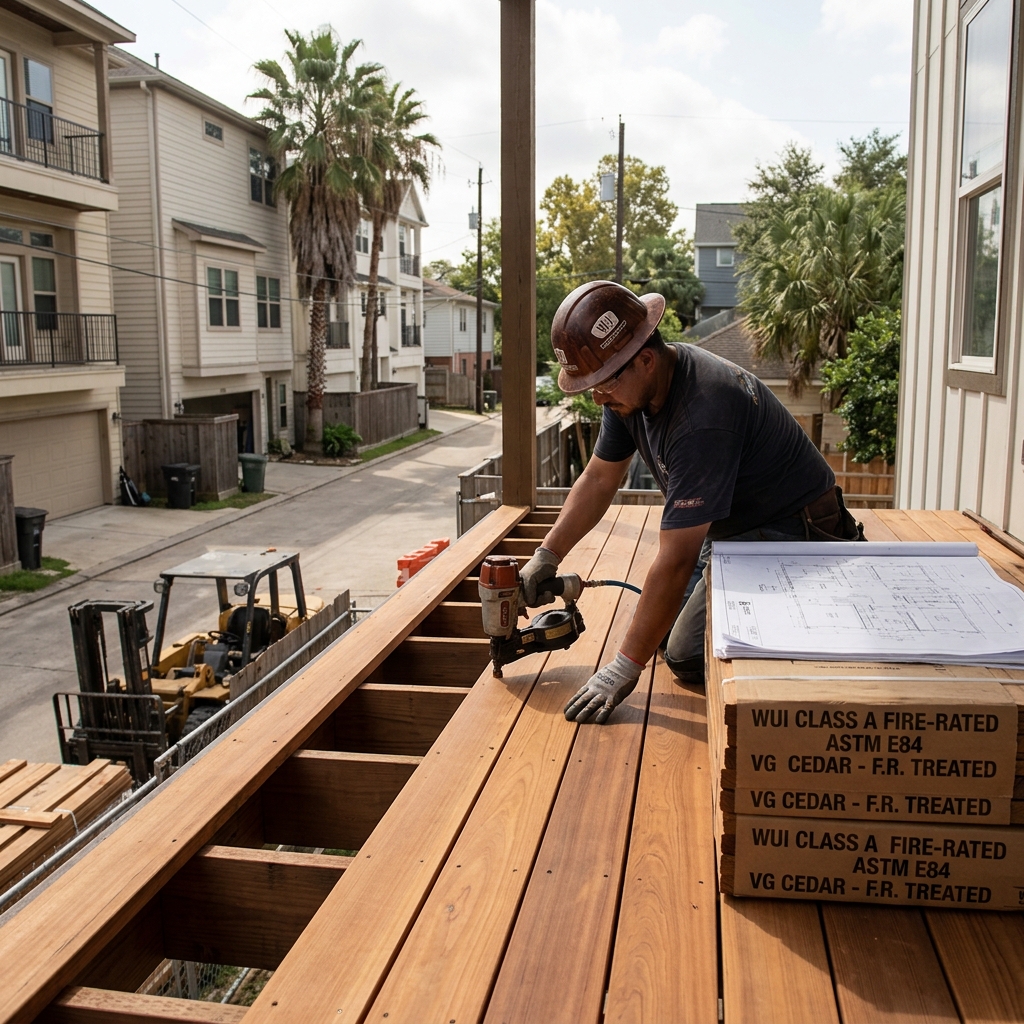
Fire-rated softwoods are excellent for design visibility but require maintenance discipline in urban settings. We recommend sealing fire-rated cedar and Douglas Fir every 18-24 months in Houston’s humid climate. The fire retardant treatment and the wood itself benefit from UV protection.
Fire-rated hardwoods and thermally modified woods require less intervention. Ipe and Cumaru age naturally to silvery-gray, developing authentic patina. Thermally modified woods hold their color longer and resist checking. Both are ideal for projects where minimal maintenance aligns with modern design philosophy.
Consider detailing carefully around tight urban conditions. Adequate ventilation under decks, flashing at building penetrations, and drainage management prevent moisture traps that compromise even the best materials. We’ve found that architects designing for tight urban lots often underestimate how much slower drainage works in dense shade, leading to moisture issues that could have been prevented with thoughtful grading and slope.
Also plan for thermal movement. Decking boards can expand and contract up to 1/8 inch across a 12-foot span as humidity shifts. Spacing, fastening strategy, and joist sizing all account for this. Fire-rated materials follow the same movement principles as untreated wood.
Actionable guidance: Develop a maintenance plan with your clients before material specification. Urban conditions often demand more upkeep than suburban installations.
How We Source and Supply Your Project
We manufacture fire-retardant treated wood products in our Texas facility and maintain standing inventory of fire-rated softwoods, hardwoods, and thermally modified products. This means we don’t source fire-rated materials from out-of-state suppliers with long lead times. Your project timeline stays predictable.
When you specify fire-rated materials with us, we handle the documentation. Current ASTM E84 certificates, mill certifications, FSC chain-of-custody documentation if required, and material safety data sheets all come standard. This speeds permit submittals and eliminates the back-and-forth with building departments that delays projects.
We also offer mill-direct customization. Non-standard widths, thicknesses, tongue-and-groove profiles, shiplap, and fluted wall slat paneling are available on fire-rated stock. Many architects appreciate this flexibility for contemporary details that distinguish their work.
For projects across Texas and nationwide, we coordinate delivery logistics. Local Austin, Dallas, Houston, San Antonio, and Hill Country projects benefit from direct delivery. Out-of-state shipments go via established freight partners with experience handling specialty wood products.
What to do: Reach out with your material list and project timeline. We’ll confirm availability, provide pricing, and deliver current certifications within 24 hours.
Real-World Applications in Houston Infill Development
Consider a recent East Austin infill project: a contemporary home on a 50-foot-wide lot with a second-story deck overlooking the street. The architect specified clear grain western red cedar for warmth and visual continuity with the interior finishes. The site fell in a zone requiring Class A decking. Rather than redesigning with unfamiliar materials, we supplied fire-rated clear grain cedar that delivered the exact aesthetic the design required, with current ASTM documentation included in the permit package. The project moved forward without substitution surprises.
Another example: a mixed-use infill in Houston’s Washington Avenue corridor. Ground-floor commercial space with residential above meant exterior wood elements faced both fire code scrutiny and high visibility. Thermally Modified Ash decking and cladding provided warm, sophisticated tones suitable for the building’s modern aesthetic while meeting Class A requirements and delivering superior weather resistance in the challenging urban microclimate.
A third scenario involved an architect whose design called for Ipe hardwood for a high-end residential deck. The client also wanted fire-rated materials. We specified fire-rated Ipe (treated to Class A while preserving the rich chocolate tones), which cost more than untreated Ipe but solved both requirements without compromising design intent.
These aren’t edge cases. Houston’s infill market increasingly demands fire-rated solutions, and smart architects now plan for this requirement rather than treating it as an afterthought.
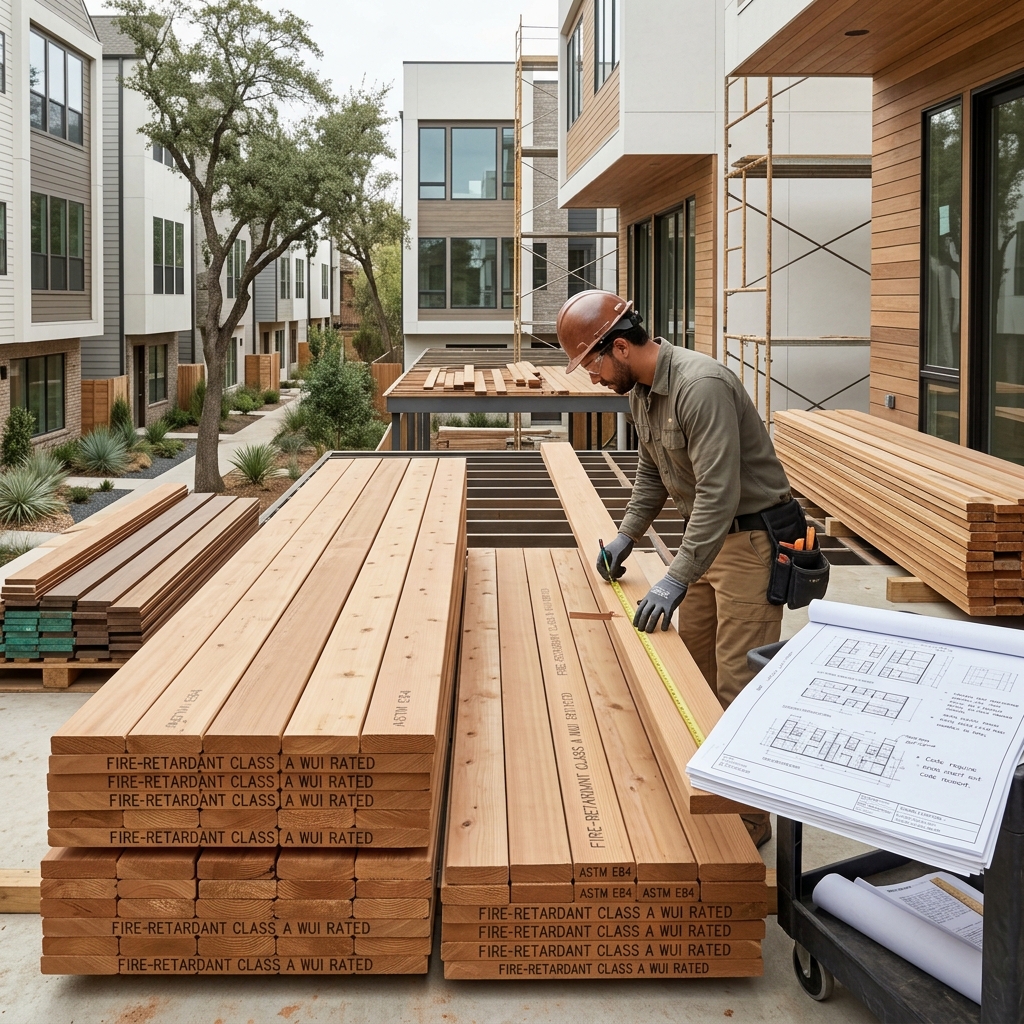
Working with Your Specifications and Timelines
We build flexibility into our process because every project timeline and specification differs. Some architects work months in advance and lock materials early. Others face compressed design schedules or discover fire-rating requirements during permitting.
We can accommodate both scenarios. For advance planning, we provide spec sheets, samples, and detailed technical documentation that integrate cleanly into your standard specifications. For urgent situations, we expedite certifications and arrange rapid delivery.
Communication is critical. Let us know your:
- Species and finish preferences
- Fire-rating requirements (confirm with local AHJ)
- Quantity and dimensions needed
- Project timeline and delivery location
- Any special milling or customization
We’ll provide firm quotes, availability confirmation, and delivery scheduling within one business day. We also assign a dedicated contact for your project, eliminating the hassle of working through multiple vendors for components and documentation.
Questions about fire-rating compliance, material performance in Houston’s climate, or specification alternatives? We’re here to advise. Our experience across hundreds of Texas residential and commercial projects gives us perspective on what works in Houston’s environment and what creates callbacks.
Start here: Contact us with your project details and material requirements. We’ll confirm what we have in stock, provide samples if helpful, and deliver the documentation your building department needs to move forward confidently.
To place orders, order samples, or talk with a live person.
Frequently Asked Questions (FAQ)
What WUI Class A fire ratings do we stock for Houston infill decking projects?
We supply a complete range of WUI Class A fire-rated wood products including thermally modified woods like Thermally Modified Ash and Pine, as well as premium hardwoods such as Ipe and Cumaru that meet these stringent requirements. Our inventory specifically addresses the wildland-urban interface standards that Houston’s dense development areas require, and we can provide documentation for all materials to ensure your project meets local codes.
How quickly can we deliver fire-retardant decking materials for time-sensitive Houston projects?
We stock extensive inventory at our Texas facility, which allows us to fulfill most orders within 2-3 weeks depending on specifications and project scope. For architects with tight timelines, we work directly with your timeline requirements and can coordinate custom manufacturing of specialty pieces if standard stock doesn’t meet your design specifications.
Why choose thermally modified wood over other fire-resistant alternatives for urban Houston applications?
Thermally modified woods like our Thermally Modified Ash and Poplar offer genuine wood aesthetics that resonate with contemporary architecture while delivering superior durability and fire resistance without chemical treatments. We source these products specifically because they align with sustainable design principles and perform exceptionally well in Houston’s humid climate, making them ideal for the modern infill projects your firm designs.


