

The Challenge of Fire-Rated Fencing in Texas Wildfire Zones
Texas wildfire risk isn’t theoretical for architects designing homes in the Hill Country, Central Texas, and beyond. Communities like Dripping Springs, Spicewood, and Kerrville sit in genuine Wildland-Urban Interface (WUI) zones where defensible space requirements have moved from recommendation to code mandate. Your clients are asking the right questions: can they use wood fencing in these areas at all, and if so, what specifications protect against ember intrusion and flame spread?
The reality is more nuanced than “no wood allowed.” Many jurisdictions haven’t banned wood fencing outright. Instead, they’ve adopted fire-rating standards that let architects specify wood materials where they perform predictably under fire exposure. This shift creates both opportunity and obligation for design professionals to understand the standards, source appropriate materials, and document specifications clearly.
We’ve worked with architects across Texas who refused to sacrifice the warm, textural qualities of wood fencing for defensible space requirements. The path forward requires knowing which woods qualify, how they’re tested, and which suppliers can reliably deliver certified products. That’s where practical specification knowledge becomes essential.
Understanding WUI Class A Fire Ratings and What They Mean
WUI Class A fire ratings don’t come from one universal standard; rather, multiple test methods converge on similar performance criteria. The most common reference points are ASTM E84 (Steiner Tunnel Test) and UL 1256 (Flame Spread and Smoke Development). Materials earning Class A status typically show:
- Flame spread rating of 0-25
- Smoke development rating of 0-450
- No flaming droplets or particles in the first 60 seconds
For fence pickets specifically, this means the material resists rapid flame propagation across its surface when exposed to ignition sources like wind-driven embers. It doesn’t mean the wood won’t burn entirely under sustained direct flame, but rather that it won’t accelerate fire spread to adjacent structures.
Local jurisdictions interpret these ratings differently. Some Texas municipalities require Class A for all exposed wood in the WUI zone. Others permit Class A materials only for specific applications like fencing, siding, or soffit. Always verify local building code adoption in your project location. A fence built to Class A standards in Austin may face different requirements than one in the Hill Country if that community has adopted stricter guidelines.
Why Wood Fence Pickets Matter in Contemporary Architectural Design
The architects we work with design homes that blur the boundary between indoors and outdoors. Expansive glass, natural materials, and thoughtful site relationships define the approach. A fence is never merely functional in this context; it’s part of the visual language of the home.
Horizontal slat fencing, vertical grain cedar pickets, or board-and-batten details ground modern homes in their landscape. These wood expressions create warmth and character that metal or composite alternatives struggle to match. Your clients are investing in bespoke architecture that deserves fencing that complements the overall design intention, not compromises it.
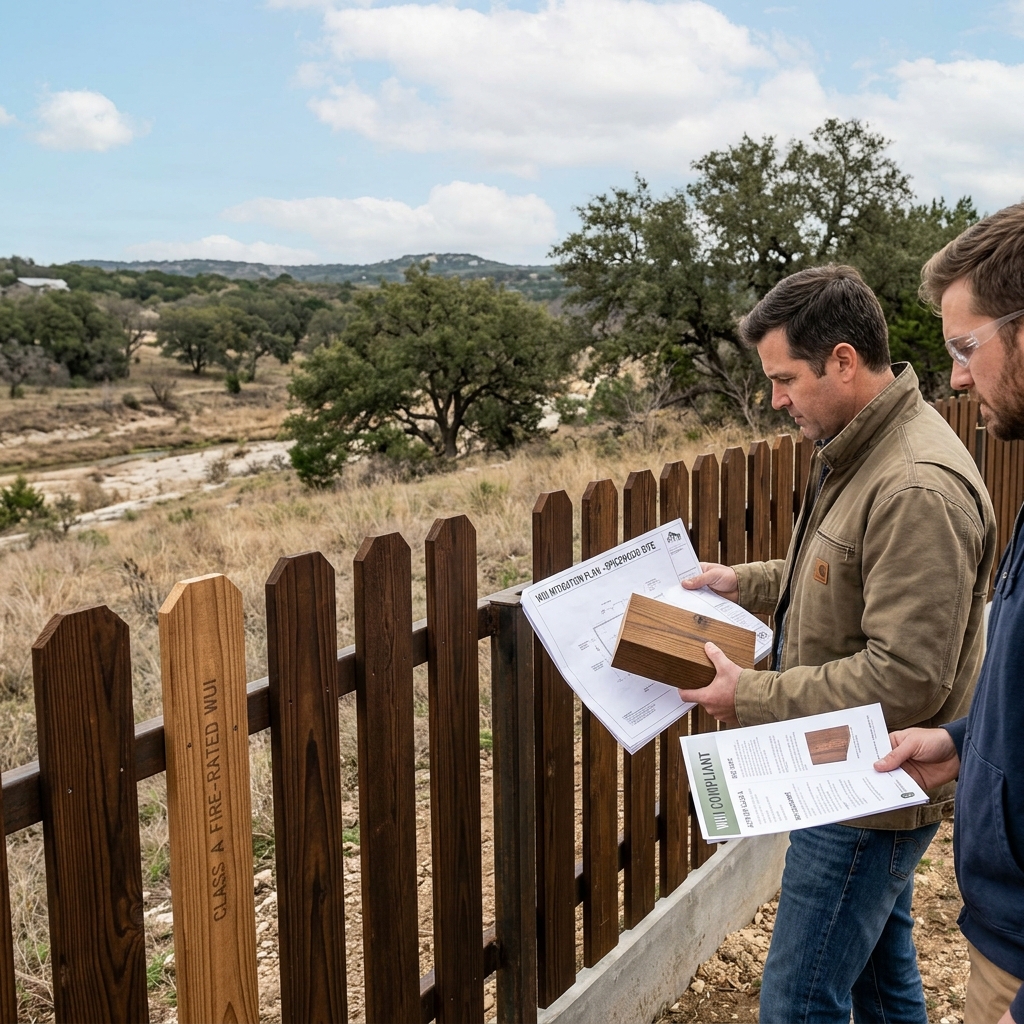
The challenge becomes material selection. Class A fire-rated wood products exist, but they’re not the same as standard lumber. Some undergo thermal modification. Others receive specialized coatings or treatments. Understanding how these modifications affect appearance, grain expression, and weathering characteristics ensures the finished fence aligns with your design vision.
Material Selection: Which Woods Meet Class A Standards
We stock multiple wood species and treatments that meet WUI Class A standards without sacrificing aesthetic performance. The selection depends on your specific design intent and local climate exposure.
Thermally Modified Woods naturally achieve Class A ratings through heat treatment that reduces moisture content and wood volatility. Thermally modified woods like Thermally Modified Ash and Thermally Modified Pine offer warm tones and excellent grain clarity. The thermal process darkens the wood subtly, creating richer color profiles than standard lumber. These materials weather beautifully and resist decay naturally.
Western Red Cedar and Douglas Fir treated with Class A fire retardant coatings remain viable options if your design calls for clearer grain and lighter finishes. Modern retardants have improved significantly; they no longer dull color or create chalky surfaces like older products. Application quality determines performance, so sourcing from experienced suppliers matters.
Accoya wood, an acetylated softwood, qualifies for Class A ratings in certain applications. Accoya wood offers dimensional stability and exceptional durability alongside fire performance. It accepts stain and finish beautifully, giving architects flexible design options.
For architects drawn to darker, dramatic aesthetics, tropical hardwoods like Ipe that have undergone Class A treatment provide visual impact. However, these typically require specialized fabrication and finishing, increasing lead times and cost.
Start by clarifying your design aesthetic, then match it to the material that delivers both performance and visual character.
How We Source and Supply Certified Fire-Rated Picket Options
We don’t stock commoditized lumber. We work directly with manufacturers and mills that produce verified, tested materials with documentation that stands up to code official scrutiny. Every Class A product we supply includes test reports, flame spread ratings, and application-specific guidance from the manufacturer.
Our sourcing process prioritizes consistency. A thermally modified picket from us today will match one ordered six months from now in color, grain, and fire performance. We maintain relationships with leading brands and FSC-certified producers, ensuring that your specifications translate reliably into the finished project.
We also handle the logistics of specialty materials. Some Class A-rated woods ship with lead times that surprise unprepared teams. We manage inventory planning so your project timeline stays on track without compromise on material quality or fire rating documentation.
When you specify through us, you’re not just buying lumber. You’re gaining access to technical support, verified certifications, and a supplier who understands how these materials perform in Texas climate and defensive space contexts.
Specification Guidelines for Architects and Builders
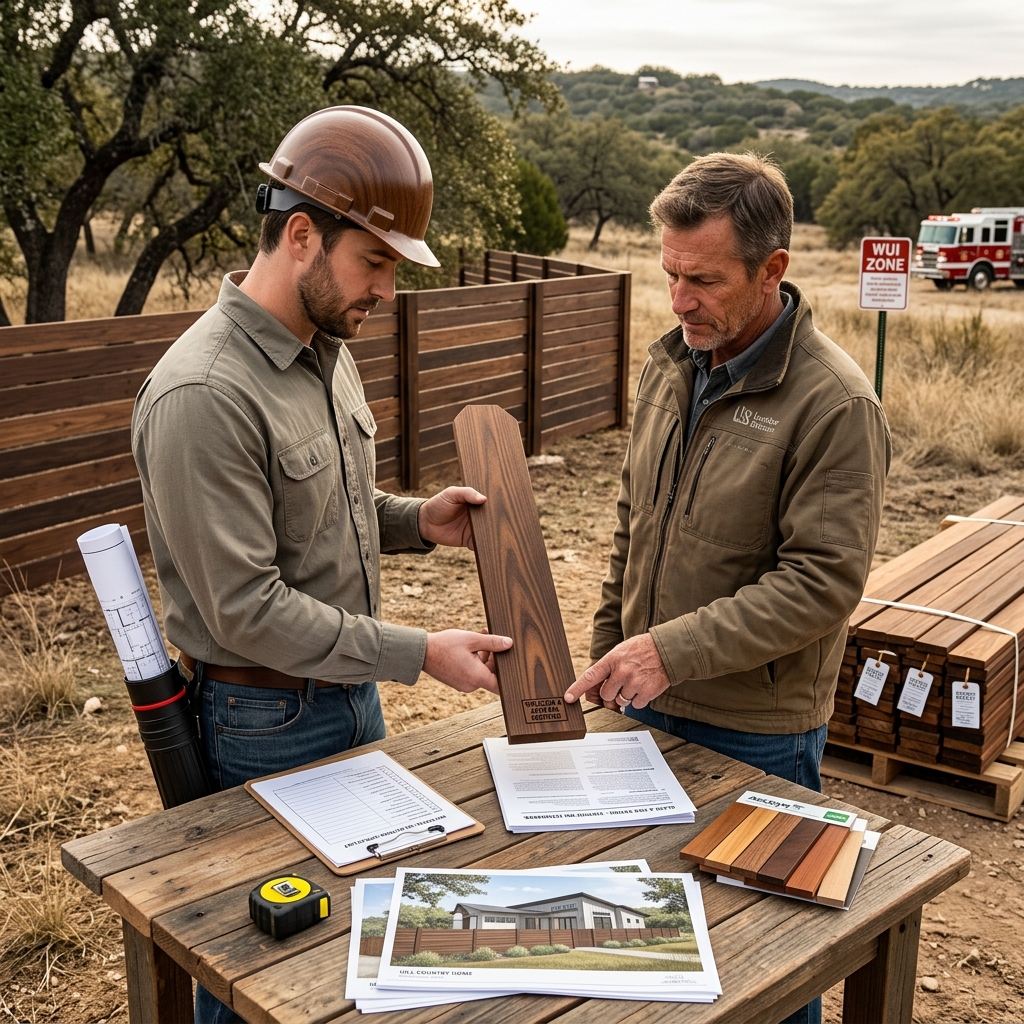
Clear specifications prevent site confusion and ensure inspectors approve what you’ve designed. Include these elements in your picket specifications:
- Material identification: Name the specific wood species or product (e.g., “Thermally Modified Ash fence pickets, 1×6 vertical grain”)
- Fire rating verification: Reference the specific ASTM or UL standard and required ratings (e.g., “ASTM E84 Class A, flame spread 0-25”)
- Finishing: Specify whether material ships finished, stain-only, or raw; note if field finishing is required
- Dimensional tolerance: Precise dimensions and moisture content expectations
- Fastening and details: Include attachment methods compatible with the specific wood species
Provide your fence fabricator and installer with sample materials so field crews understand the aesthetic target. A picket that arrives unfinished requires educated decisions on-site about stain selection and application method. Samples eliminate guesswork.
When obtaining bids, require suppliers to provide test reports and mill certifications as part of the quote. Price differences between Class A and non-rated materials are real, and transparent documentation helps builders justify those costs to clients.
Installation and Durability Considerations for Class A Products
Not all Class A-rated woods perform identically in the field. Thermally modified materials are extraordinarily stable, resisting warping and cupping that plagues standard lumber in Texas heat and humidity swings. They typically outlast coated conventional wood by years, though they do require periodic finish renewal like all exterior wood.
Fire retardant coatings on conventional lumber are durable but not permanent. Depending on the product and climate exposure, reapplication may be needed every 5-10 years. This ongoing maintenance commitment should factor into your design specifications and client expectations.
Installation technique affects performance. Proper spacing between pickets allows air circulation and drying, reducing rot risk and maintaining fire rating integrity. Fastening should accommodate the wood’s natural movement through seasonal moisture changes. Galvanized or stainless steel fasteners prevent corrosion staining on lighter woods.
Thermally modified woods and coated lumber both benefit from protective finish coats that enhance appearance and extend service life. We can advise on finish compatibility with each material type to ensure color development and weathering characteristics match your design intent.
Aesthetic Integration with Modern Texas Architecture
The best fire-rated fence disappears into the design. It doesn’t feel like a safety compromise; it feels like an intentional material choice that happens to perform well under fire exposure.
Contemporary Texas architecture often emphasizes warm wood tones and expressive grain. Thermally modified materials deliver this naturally. Their subtle darkening creates sophistication without looking artificially stained. Vertical grain Douglas Fir treated with Class A retardant offers crisp linear expression. Ipe delivers dramatic contrast for architects designing bold, sculptural outdoor spaces.
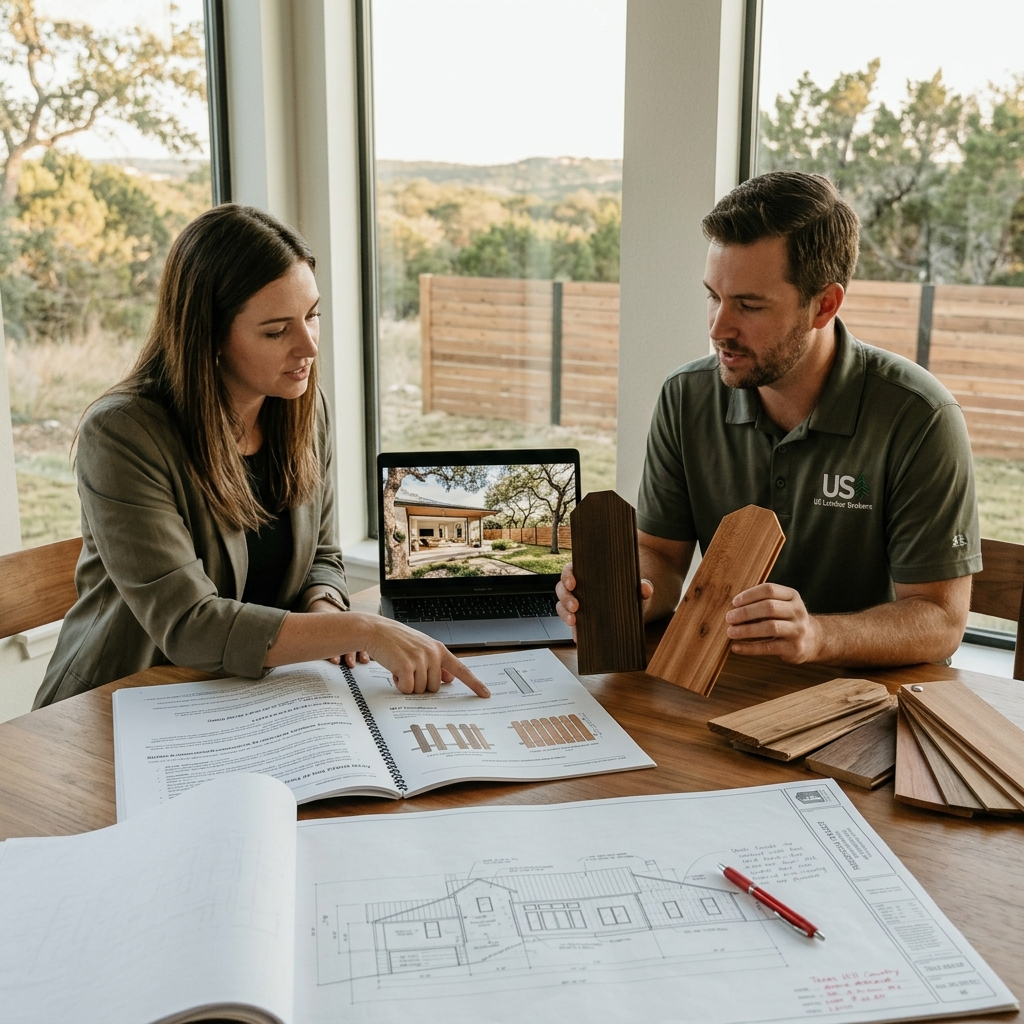
Fence height, picket spacing, and orientation all influence how the material reads in sunlight. Horizontal slats emphasize sightlines and landscape vistas. Vertical pickets create rhythm and texture. Fluted or recessed details catch shadow and add dimension. These design choices work beautifully with Class A materials, allowing your fencing to be both protective and poetic.
The key is working with a supplier who understands how material selection affects final appearance. Not every Class A option delivers the same aesthetic outcome, even when meeting identical fire ratings.
Working with Us on Your Project Specifications
We support architects through the specification process from concept to installation. Share your design intent, and we’ll recommend materials that meet fire ratings while delivering the visual character your project demands. We provide samples for design review, manage lead times so your schedule stays realistic, and deliver documentation that satisfies code officials.
Contact us at 737.260.7431 to discuss your next project’s fencing specifications. We serve architects across Texas with specialty wood products, fire-rated solutions, and the technical guidance that turns ambitious designs into built reality.
To place orders, order samples, or talk with a live person.
Frequently Asked Questions (FAQ)
What WUI Class A fire-rated wood products do we stock for fence pickets?
We maintain inventory of several wood species that meet WUI Class A standards, including thermally modified ash, pine, and poplar, along with naturally fire-resistant options like cypress and select southern yellow pine. Our stock also includes FSC-certified materials that satisfy both fire rating requirements and sustainability specifications. We can source additional certified options based on your project timeline and specifications.
How do we help architects specify fire-rated pickets for wildfire-prone Texas properties?
We provide detailed technical specifications and material datasheets so you can confidently include Class A-rated picket options in your construction documents. Our team works directly with your specifications to confirm material availability, lead times, and installation requirements before you finalize your plans. We also source products from established manufacturers, so you have reliable documentation for permit submissions and fire code compliance.
Can we supply fire-rated pickets for both residential and commercial projects across Texas?
We serve architects and builders throughout Texas with WUI Class A materials for residential custom homes, commercial properties, and mixed-use developments. Whether your project is in the Hill Country, Austin metro, Dallas, Houston, or anywhere in between, we stock or can source the fire-rated specifications your design requires. Our network lets us fulfill orders efficiently while maintaining the quality standards your architectural vision demands.


