

Understanding Houston’s Pool Deck Challenges
Houston’s pool deck demands are unforgiving. Between intense summer heat, relentless humidity, and occasional heavy rainfall, your material choice will determine whether your deck stays beautiful for decades or requires costly replacement within a few years. We work with architects and builders throughout the Houston area who understand that a pool deck is more than functional—it’s a design statement that frames the entire outdoor living experience.
This guide breaks down three premium materials we stock and recommend for Houston pools: thermally modified poplar, Ipe hardwood, and TimberTech composite. Each brings distinct advantages depending on your design vision, maintenance tolerance, and long-term budget.
Houston’s subtropical climate creates a triple threat for pool decks: extreme heat (regularly exceeding 95 degrees Fahrenheit in summer), near-constant humidity (averaging 70-80% year-round), and seasonal rainfall that can dump several inches in a single storm. Chlorine splash, UV exposure, and standing water accelerate material degradation.
Most standard pressure-treated lumber fails within 5-7 years under these conditions. Dimensional instability becomes visible quickly—boards cupping, warping, and splitting as they absorb and release moisture with seasonal humidity swings. This is why architects like those at Lake|Flato and Page deliberately select materials engineered to handle Houston’s specific climate rather than accepting inevitable compromise.
The right material not only survives but maintains its visual character. Whether you’re designing a warm, contemporary aesthetic with exposed wood grain or a sleek composite surface, material performance directly impacts whether your design intent remains intact year after year.
Why Material Selection Matters for Longevity
A pool deck isn’t just another exterior surface—it’s exposed to water, chemicals, intense UV radiation, and temperature fluctuations that few other residential materials endure simultaneously. The difference between a material that lasts 8 years and one that lasts 20 years isn’t cosmetic. It’s structural integrity, safety, and the financial difference between occasional maintenance and major replacement projects.
When we recommend materials to Houston architects and builders, we focus on three measurable criteria: dimensional stability (how much the material moves as moisture content changes), chemical resistance (tolerance for chlorine and salt), and UV durability (whether the surface deteriorates visually over time).
Many architects hesitate on material choices because they equate durability with generic-looking composite decking. That’s a false choice. The best Houston pool decks marry genuine durability with design authenticity—whether that means rich hardwood character, the subtle beauty of thermally modified wood, or the consistent appearance of engineered composites. Your material selection sets the tone for the entire outdoor room.
Thermo Poplar Decking Performance and Benefits
Thermally modified poplar represents a modern engineered solution that retains authentic wood character while delivering material stability that standard lumber cannot match. The thermal modification process heats the wood to approximately 400-450 degrees Fahrenheit without chemicals, fundamentally altering the wood’s cellular structure to improve dimensional stability and decay resistance.
For Houston applications, thermally modified poplar offers several distinct advantages:
- Minimal movement: The thermal process reduces moisture absorption by up to 60%, meaning less cupping, warping, and splitting during Houston’s humid summers and occasional dry periods
- Natural appearance: Unlike composite materials, thermally modified poplar retains authentic wood grain and patina, darkening gracefully over time to a sophisticated warm gray
- Workability: Easier to detail, profile, and finish than dense hardwoods, allowing architects to specify comb siding, fluted patterns, or custom edge profiles
- Cost efficiency: Positioned between standard lumber and premium hardwoods, making it accessible for larger deck areas
When we supply thermally modified decking, we’re providing material tested in climates as demanding as Houston’s. The thermal modification process increases the Janka hardness rating significantly compared to untreated poplar, improving surface durability against foot traffic and poolside wear.
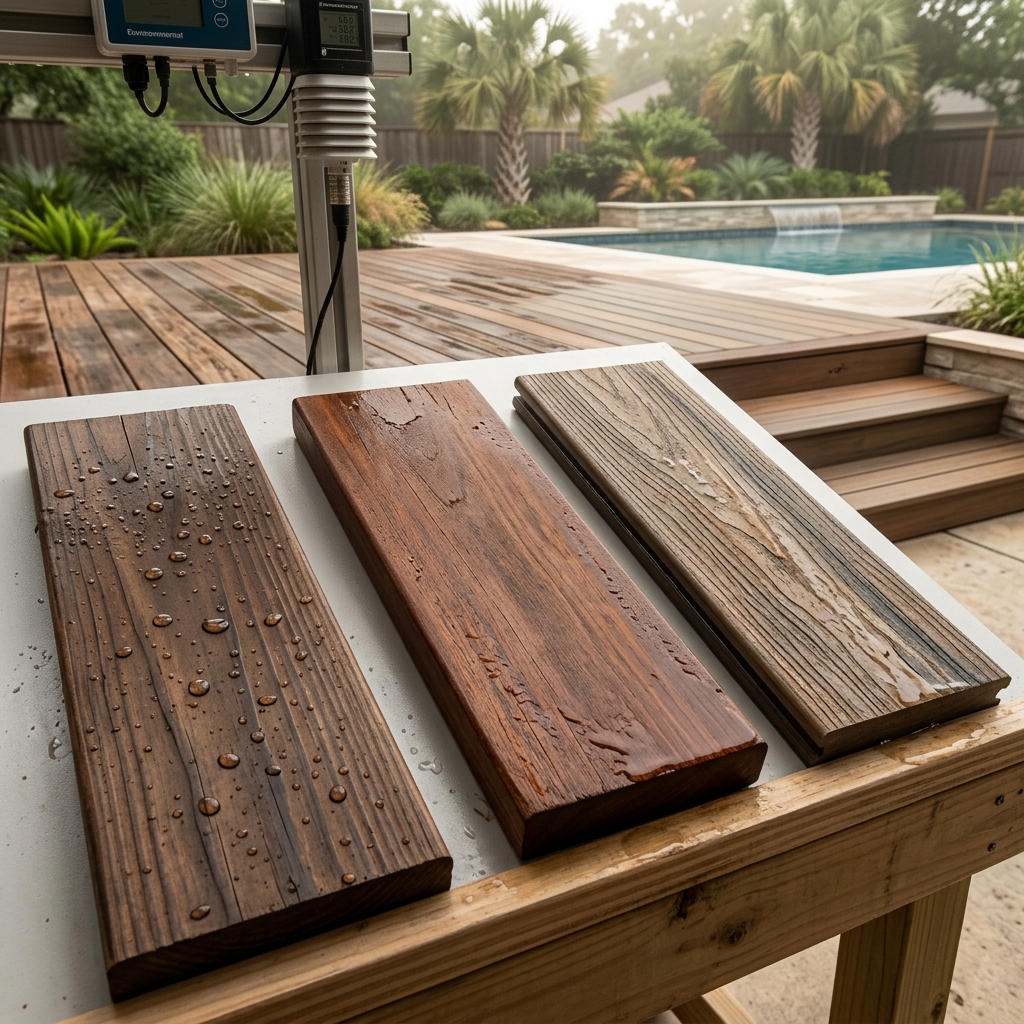
The primary consideration is maintenance: thermally modified wood still requires periodic sealing (typically every 2-3 years) to maintain its color and protect against UV graying. Architects who appreciate the evolving patina of real wood view this as a feature, not a liability.
Ipe Hardwood Decking Excellence and Durability
Ipe hardwood represents premium performance for architects seeking uncompromised material excellence. Sourced from Brazilian rainforests and FSC-certified through responsible harvesting, Ipe delivers dimensional stability and durability that outperform virtually every alternative material used in pool deck applications.
The numbers tell the story: Ipe rates 3,680 on the Janka hardness scale (compared to poplar’s approximately 500 and pressure-treated pine’s 900). This extreme hardness translates directly to pool deck resistance—virtually immune to denting, splintering, or wear from extended sun exposure and foot traffic.
Key Ipe advantages for Houston:
- Moisture immunity: One of the densest, most stable woods available, with minimal dimensional movement even in Houston’s extreme humidity swings
- Exceptional longevity: Properly installed Ipe decks regularly last 25-30+ years with minimal intervention
- Chemical resistance: Ipe’s natural density and oil content provide inherent resistance to chlorine and salt spray
- Visual authority: The deep golden-brown color and rich grain pattern create a distinctive, high-end aesthetic that deepens with age
We supply Ipe decking in both standard and vertical grain profiles, allowing architects to achieve their specific design vision. The material’s prestige is earned—Ipe is the material of choice for luxury resorts and high-end residential pools worldwide because it performs flawlessly under stress.
The realistic trade-off is installation complexity and cost. Ipe’s density requires specialized fastening systems and professional installation expertise. This isn’t material for weekend DIY projects, but for architects designing investment-grade homes, Ipe is often the definitive choice.
TimberTech Composite Decking Advantages
TimberTech composite represents engineered performance—wood fiber combined with polymer binders to eliminate the variables of natural wood while delivering visual warmth. For architects seeking zero-maintenance pool decking with predictable long-term performance, TimberTech delivers.
The material’s core strengths align directly with Houston’s climate challenges:
- Moisture immunity: Fully encapsulated construction prevents water absorption, eliminating warping, swelling, and decay regardless of humidity or rainfall
- Maintenance minimal: No sealing, staining, or periodic refinishing—simply occasional cleaning maintains appearance indefinitely
- Color stability: UV-stabilized pigmentation resists fading, maintaining consistent color over decades
- Safety: Composite surfaces remain cooler underfoot than dark hardwoods in direct summer sun, reducing scalding risk around pools
TimberTech also offers design flexibility. Available in wood-tone finishes that credibly mimic natural materials, the deck surface remains consistent season after season. For architects whose designs emphasize clean lines and minimal maintenance overhead, this material eliminates a significant long-term management burden.
The primary consideration is authenticity. While TimberTech looks convincingly like wood, it isn’t wood—and some architects and homeowners distinctly prefer genuine material character. Additionally, composite materials can feel plastic-like initially, though this softens as the material weathers.
Comparing Moisture Resistance and Maintenance
Houston’s humidity is the central variable. Here’s how each material responds to moisture challenges:
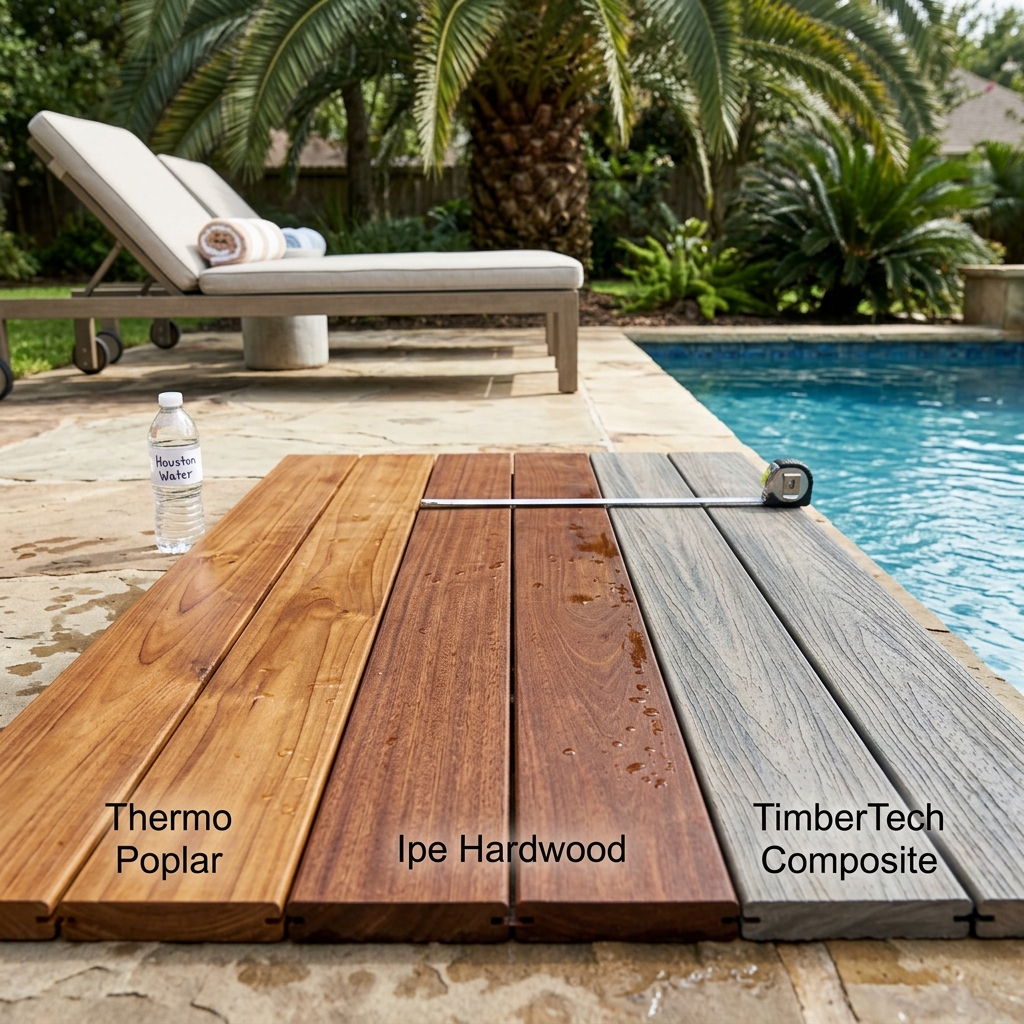
Thermally modified poplar absorbs moisture at roughly 40% the rate of untreated wood, but still experiences some dimensional movement. It requires sealing every 2-3 years and benefits from annual inspection for any weathering or finish breakdown. Budget approximately 4-6 hours annually for maintenance.
Ipe’s extreme density makes it virtually impervious to moisture absorption. Movement is negligible—typically less than 1% across the entire dimensional range. It requires minimal maintenance but benefits from annual cleaning and occasional oiling to maintain color vibrancy. Budget 2-3 hours annually.
TimberTech eliminates moisture-related maintenance entirely. The encapsulated structure prevents any water penetration. Maintenance consists of occasional power washing or bristle brushing to remove surface debris. Budget 1-2 hours annually.
For Houston’s climate, moisture resistance directly correlates with longevity. The material that moves least stays safest longest. Conversely, the material requiring least maintenance saves the most time and reduces the risk of deferred maintenance deteriorating performance.
Cost Analysis and Long-Term Value
Initial material cost tells only part of the story. Houston pool decks are long-term investments that should be evaluated across their full life cycle.
Thermally modified poplar typically costs $3-5 per linear foot installed, with moderate lifespan expectations of 15-20 years when properly maintained. Include periodic sealing and maintenance labor in your calculations.
Ipe hardwood typically runs $6-8 per linear foot installed, with realistic longevity of 25-30+ years and minimal maintenance requirements. While the upfront cost is higher, amortized annually, the per-year cost becomes competitive or superior to less durable materials.
TimberTech composite typically costs $5-7 per linear foot installed, with manufacturer warranties of 25-30 years and virtually zero maintenance. When you exclude all sealing, refinishing, and renewal labor over 30 years, the total cost of ownership often favors composite.
For architects designing for long-term value, the calculation isn’t material cost alone—it’s material cost divided by realistic lifespan, plus maintenance labor. Ipe and TimberTech, despite higher initial investment, deliver superior value across a property’s ownership horizon.
Climate Considerations for Houston Pools
Houston’s climate presents specific material stress factors that generalizations from temperate climates miss entirely.
Summer surface temperatures on dark materials can exceed 160 degrees Fahrenheit, accelerating UV degradation and potentially causing rapid finish breakdown on less-durable coatings. Ipe and TimberTech both resist this thermal stress; thermally modified poplar requires quality UV-protective finishes to maintain performance.
Humidity-driven mold and mildew are constant threats in Houston’s climate. All three materials resist fungal growth better than standard lumber, but TimberTech offers complete immunity due to its moisture impermeability. Ipe and thermally modified wood require occasional cleaning but resist mold colonization far better than untreated alternatives.
Hurricane-force winds and heavy rainfall create brief but intense stress periods. All three materials handle seasonal storms well, though proper fastening and installation become critical factors. Ipe’s weight and density provide inherent structural advantages; TimberTech’s flexibility actually distributes impact stress more effectively than brittle hardwoods in some scenarios.
Our Recommendation for Houston Architects
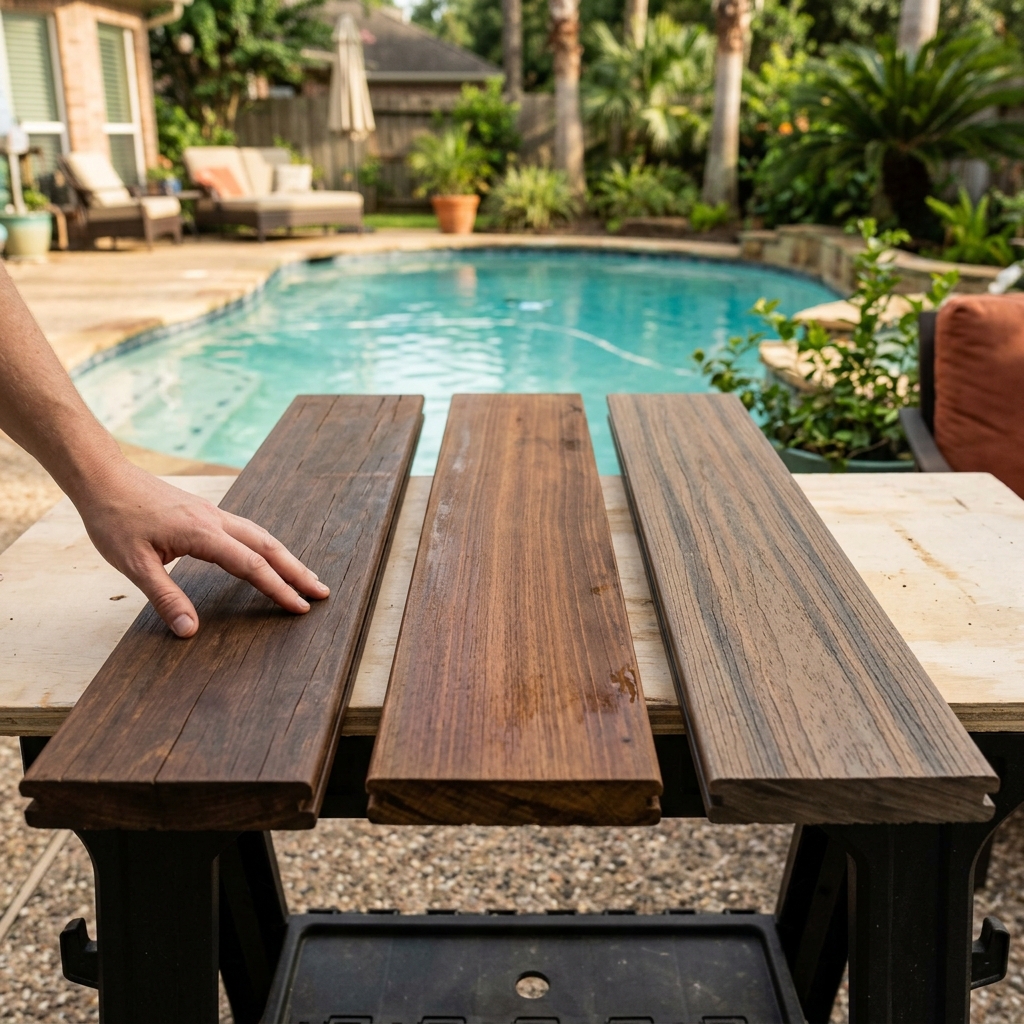
After working with Houston architects and builders for years, we’ve observed patterns in what works most successfully for this market.
For architects prioritizing authentic material character and visual distinctiveness, Ipe hardwood decking emerges as the preferred material. The initial investment yields a deck that deepens in character over decades, maintains structural integrity that rivals installation standards, and requires minimal intervention. Ipe aligns with the contemporary design philosophy that emphasizes genuine materials and timeless aesthetics rather than trendy finishes that age poorly.
For architects seeking performance without visual compromise but understanding budget constraints, thermally modified poplar delivers excellent value. It provides 80-90% of Ipe’s stability at 40-50% of the cost, maintains authentic wood appearance, and works beautifully in contemporary designs where subtle grain and evolving patina enhance the overall aesthetic.
For architects managing large deck areas where maintenance burden becomes genuinely problematic, TimberTech provides zero-maintenance performance that justifies the cost premium. The material’s consistency and durability support aggressive resale value protection, an important consideration in Houston’s competitive residential market.
Selecting Your Perfect Pool Deck Solution
Your pool deck material selection ultimately reflects your design philosophy and practical priorities. Three distinct materials serve three distinct valid approaches: Ipe for uncompromised durability and authentic character, thermally modified poplar for balanced performance and economics, and TimberTech for engineered reliability and minimal maintenance.
We stock all three materials in the depth and variety that Houston architects demand. Whether you’re detailing a residential retreat in the Hill Country, a contemporary home in Austin’s Tarrytown neighborhood, or a luxury estate anywhere across Texas, we provide expert guidance on material selection aligned with your specific design intent and climate realities.
The difference between adequate pool decking and exceptional pool decking isn’t luck—it’s material science applied thoughtfully to Houston’s specific climate demands. Contact us to discuss your project requirements, and we’ll connect you with material options engineered for success.
To place orders, order samples, or talk with a live person.
Frequently Asked Questions (FAQ)
What pool deck material do we recommend for Houston’s climate?
We recommend Ipe hardwood or thermally modified wood like Thermo Poplar for Houston pools because both handle our intense heat and humidity exceptionally well. Ipe offers superior longevity and natural beauty, while Thermo Poplar provides excellent moisture resistance at a lower price point. If you prefer minimal maintenance, our TimberTech composite decking delivers durability without the seasonal care requirements of natural wood.
How does moisture resistance differ between these three materials?
Ipe naturally resists moisture due to its dense grain structure, making it ideal for Houston’s wet environment. Thermo Poplar undergoes thermal modification to achieve similar moisture performance while remaining lighter and more workable for installation. TimberTech composites are engineered to resist moisture absorption entirely, though they require different maintenance approaches than natural wood products.
Which material offers the best long-term value for Houston homeowners?
We find that Ipe delivers the strongest long-term investment because it can last 25+ years with minimal replacement, offsetting its higher upfront cost. Thermo Poplar balances affordability with solid 15-20 year performance, making it excellent for budget-conscious projects. TimberTech suits those prioritizing low maintenance over raw durability, since composite materials typically need refinishing or replacement sooner than quality hardwoods.


