

Why Texas Architects Need the Right Decking Material
Your material choice shapes every aspect of a commercial project’s narrative. For contemporary architecture that emphasizes natural expression and craftsmanship, the decking material isn’t background detail, it’s design substance. When we work with Texas architects designing luxury residential and commercial spaces, material authenticity consistently ranks above cost consideration. The projects that command attention feature real wood that weathers beautifully, develops character over time, and aligns with the warm, human-scaled aesthetic that defines the best modern Texas architecture.
The stakes are higher in commercial applications. Your choice must balance visual impact with long-term performance under intensive use. A composite material might appear cost-effective initially, but it introduces compromises that sophisticated architects reject at the concept stage.
The Durability Challenge in Texas Climate
Texas weather presents a unique stress test for any exterior material. Summer heat regularly exceeds 100 degrees, humidity near the coast creates expansion-contraction cycles, and the transition zones between humid and dry climates accelerate material degradation. Half the state experiences significant freeze-thaw cycles; the other half battles UV intensity that would compromise lesser materials within seasons.
This isn’t theoretical concern. We’ve seen composite boards installed five years ago showing color fading, structural softening, and surface staining that owners now describe as permanent blemishes. Traditional softwoods like Pine or Fir struggle equally, warping and checking within two to three seasons. Commercial decks must endure thousands of footfalls monthly, poolside chemicals, and landscape runoff that accelerates deterioration in standard materials.
The material you select today determines whether your design appears maintained or abandoned within a decade.
Hardwood Decking: Natural Beauty with Performance
True hardwoods operate on a different performance tier. Species like Ipe, Cumaru, and Garapa possess density ratings that approach stone. These tropical hardwoods contain natural oils and structural characteristics that resist rot, insect damage, and UV degradation without chemical treatments. A hardwood deck installed properly performs for 25 to 40 years with modest maintenance, developing a silver-gray patina that enhances rather than diminishes visual appeal.
When we supply hardwood decking to commercial projects across Texas, architects consistently cite the authentic aging process as essential to their design intent. The material doesn’t fight time; it evolves with it. Ipe’s natural deep brown shifts to sophisticated gray tones. Cumaru’s warm amber develops dimensional character. This progression tells the story of genuine craftsmanship that homeowners and visitors intuitively understand and value.
Beyond aesthetics, hardwood decking performs under stress. The density of premium tropical species means boards resist denting from furniture, foot traffic, and weather exposure that would crater composite materials. High-traffic commercial applications require this structural integrity.
Composite Decking Limitations for High-End Projects
Composite materials exist to solve a specific problem: eliminating regular maintenance. That singular benefit carries substantial trade-offs that matter deeply in architectural applications.
Composite boards are fundamentally hollow structures engineered from recycled wood fiber and plastic polymer. This composition creates inherent vulnerability to heat expansion that hardwood simply doesn’t share. Boards expand and contract significantly under Texas temperature swings, creating visible gaps and alignment issues within months of installation. We’ve consulted on projects where composite decks installed in March showed obvious spacing problems by July.
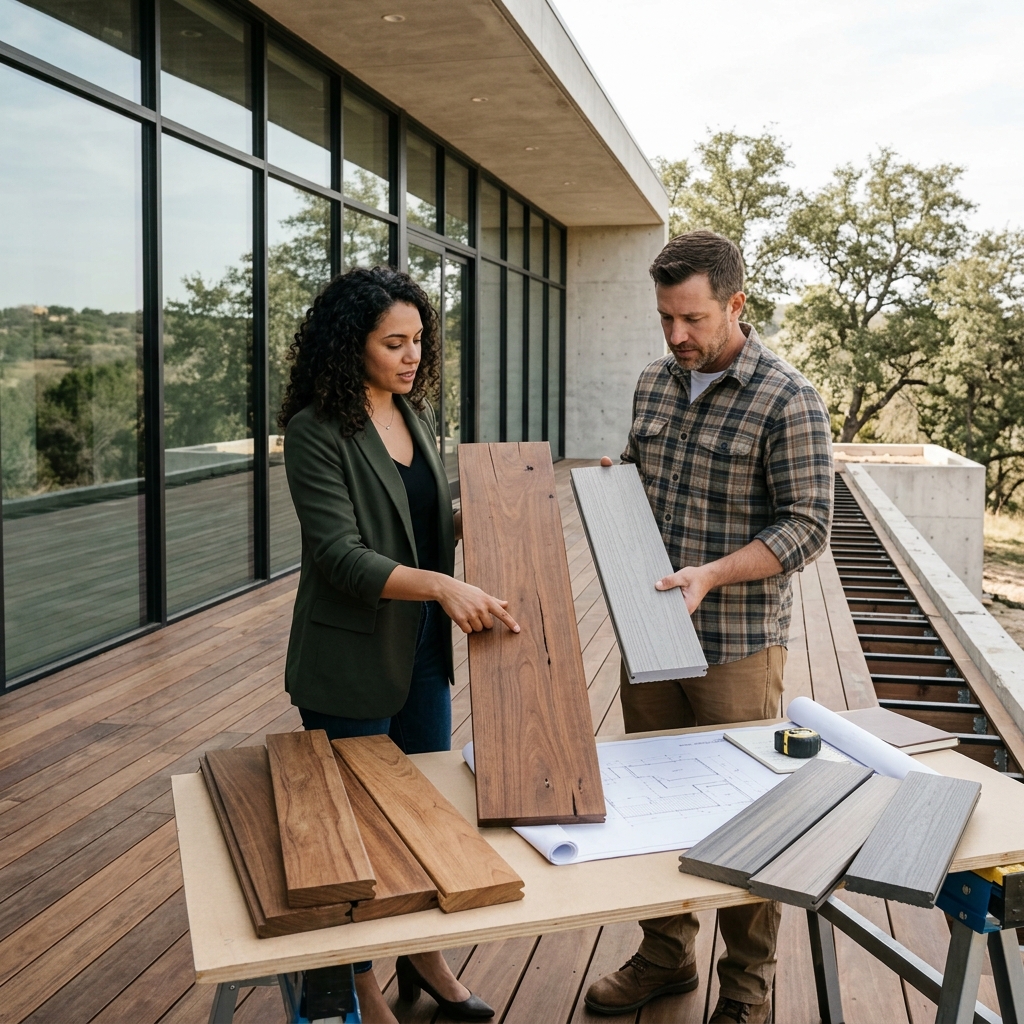
The material also collects surface buildup permanently. Dirt, algae, and mineral deposits embed into the porous plastic matrix in ways that don’t occur on hardwood. Regular power washing, which would restore a hardwood deck’s appearance, actually degrades composite boards, breaking down the wood fiber reinforcement. Architects designing clean-lined contemporary spaces find themselves managing brown stains and green growth that contradicts their design vision.
Most significantly, composite materials don’t age gracefully. The color fading isn’t patina; it’s degradation. High-end commercial projects demand materials that improve with time or at minimum maintain their character. Composite decking appears progressively cheaper as it ages.
How Our Premium Hardwoods Outperform Composites
We supply hardwoods specifically selected for commercial applications because their performance characteristics solve what composites cannot address. Density differences alone make the comparison stark: Ipe rates at approximately 3,680 Janka hardness; premium composites measure around 500-600. This means our hardwood decking resists denting, gouging, and surface damage at ratios where composites crumble under identical use conditions.
Our sourcing emphasizes species with proven performance in humid and hot climates. Cumaru, Garapa, and Massaranduba all contain natural compounds that resist fungal growth and insect penetration without surface treatment. Unlike composites that eventually harbor mold and algae, hardwood surfaces shed contaminants naturally. A hardwood deck remains beautiful with occasional cleaning and light maintenance; composite decks require chemical treatments and specialized care that compounds costs over time.
The thermal stability difference is equally important. Our hardwoods expand and contract minimally compared to composite materials. Installation gaps that appear in composite decks within seasons simply don’t develop in properly installed hardwood applications. This performance stability means your deck design remains true to your architect’s intent year after year.
Ipe and Tropical Hardwoods for Commercial Applications
For high-traffic commercial environments, Ipe decking represents the commercial-grade standard. This Brazilian hardwood is so dense that standard fastening methods fail; installers must pre-drill and use stainless steel hardware designed for tropical species. That installation requirement, while demanding, signals the material’s durability advantage. You don’t use specialized fastening methods for weak materials.
Ipe’s natural resistance to fire, rot, and termite damage makes it ideal for commercial deck applications where liability and longevity matter equally. High-end resort properties, hospitality venues, and luxury commercial developments specify Ipe because it performs without compromise. The material maintains structural integrity under foot traffic that would destroy softwood alternatives within years.
We also stock Cumaru and Garapa for architects seeking slightly lighter color tones while maintaining hardwood durability. These species offer warm aesthetic characteristics that work beautifully in contemporary designs emphasizing natural wood expression. All three share the essential advantage: they’re investments in permanence rather than replacements waiting to happen.
Fire-Rated and Thermally Modified Wood Solutions
For commercial applications in WUI (wildland-urban interface) zones or projects requiring Class A fire ratings, we supply treated hardwood options that satisfy code requirements without sacrificing natural character. Our thermally modified wood decking provides fire protection through heat treatment rather than chemical application, preserving the wood’s natural appearance and workability.
Thermally modified species including Ash, Pine, and Ayous undergo controlled heat treatment that reduces moisture content and increases fire resistance. This process doesn’t introduce chemical toxins or compromise the wood’s ability to age naturally. For architects designing commercially-viable projects in fire-prone areas, this represents a genuine solution that satisfies code while honoring design intent.
We maintain inventory of WUI Class A approved materials across multiple species and finishes. This means your project’s fire safety requirements don’t force compromise on material authenticity. You specify the wood your design demands; we ensure it meets your local fire code requirements.
Sustainability and FSC Certification Standards
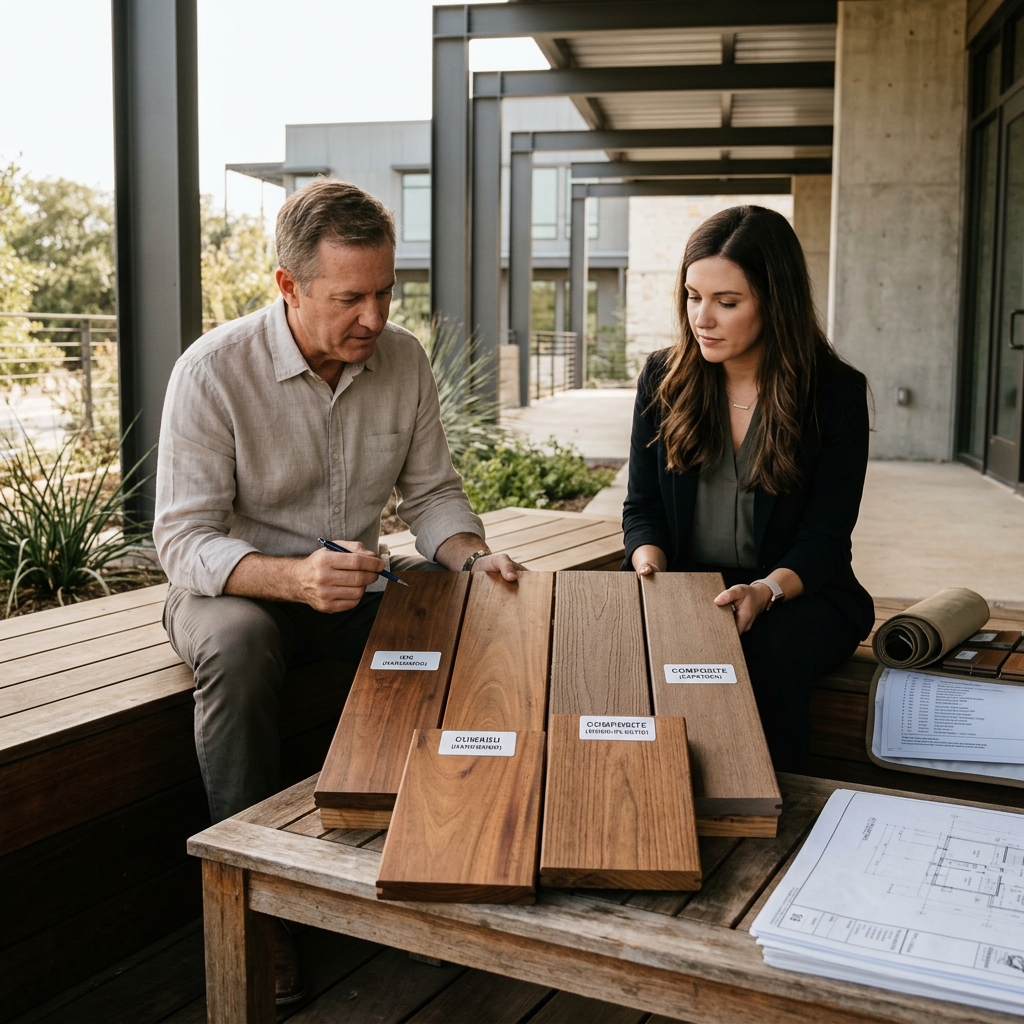
Commercial architecture increasingly reflects environmental responsibility as core value rather than marketing afterthought. We supply FSC-certified hardwoods that verify sustainable harvesting practices and forest management standards. When your project material carries legitimate certification, your design story includes authentic environmental stewardship.
FSC certification matters particularly for architects designing buildings intended to achieve LEED or similar sustainability credentials. Our certified hardwood sourcing provides documented proof of responsible forestry practices. Unlike composite materials that repurpose wood waste into plastic-polymer products, genuine hardwood harvesting maintains forest ecosystems and supports communities in timber-producing regions.
The durability advantage of hardwood creates a secondary sustainability benefit often overlooked: longevity eliminates replacement cycles. A composite deck typically requires replacement every 15-20 years. A hardwood deck often performs for three decades or more. Over a building’s lifecycle, hardwood represents far less material consumption and waste generation than alternatives that require periodic replacement.
Design Flexibility and Aesthetic Superiority
Contemporary Texas architecture celebrates authentic natural materials. Hardwood decking provides visual and textural richness that composite materials fundamentally cannot replicate. The grain variation, color depth, and three-dimensional character of genuine wood creates the warm, craft-forward aesthetic that defines the best modern design.
Your material options extend across color palettes and grain patterns. Clear vertical grain Douglas Fir offers clean, linear aesthetics. Western Red Cedar provides soft, refined character. Tropical hardwoods deliver rich, dimensional color. We source these materials in specifications that match your design intent precisely. That specificity, that ability to deliver exactly the material your architect envisions, simply isn’t available in standardized composite products.
Hardwood also accepts finishes, stains, and protective treatments that evolve with design preferences. If your building’s design direction shifts or maintenance requirements change, hardwood remains adaptable. Composite materials arrive pre-finished with limited customization, locking you into a single aesthetic interpretation indefinitely.
Real-World Performance in Texas Projects
We’ve supplied decking materials to commercial and luxury residential projects across Texas for over a decade. The pattern is consistent: hardwood installations from our inventory perform dependably through Texas weather cycles while requiring far less intervention than architects originally expected. Projects installed 10-15 years ago still exhibit the material characteristics that made them design choices initially.
Conversely, we’ve fielded consultation requests from building managers frustrated with composite deck performance. Surface staining, dimensional gaps, and aesthetic degradation emerge faster than expected. The cost savings from composite materials evaporate when addressing these issues through re-finishing attempts that ultimately fail.
The most telling observation: architects who specify our hardwoods initially recommend identical materials for subsequent projects. They’ve witnessed the performance advantage firsthand. The material investment justifies itself through predictable durability and aging that actually enhances design character.
Making Your Material Selection
The decision framework is straightforward: determine whether you’re optimizing for initial cost or long-term value. If your project timeline is five years with planned replacement, composite materials might function adequately. If you’re designing a commercial asset intended to appreciate and perform for decades, hardwood becomes not just an option but the essential choice.
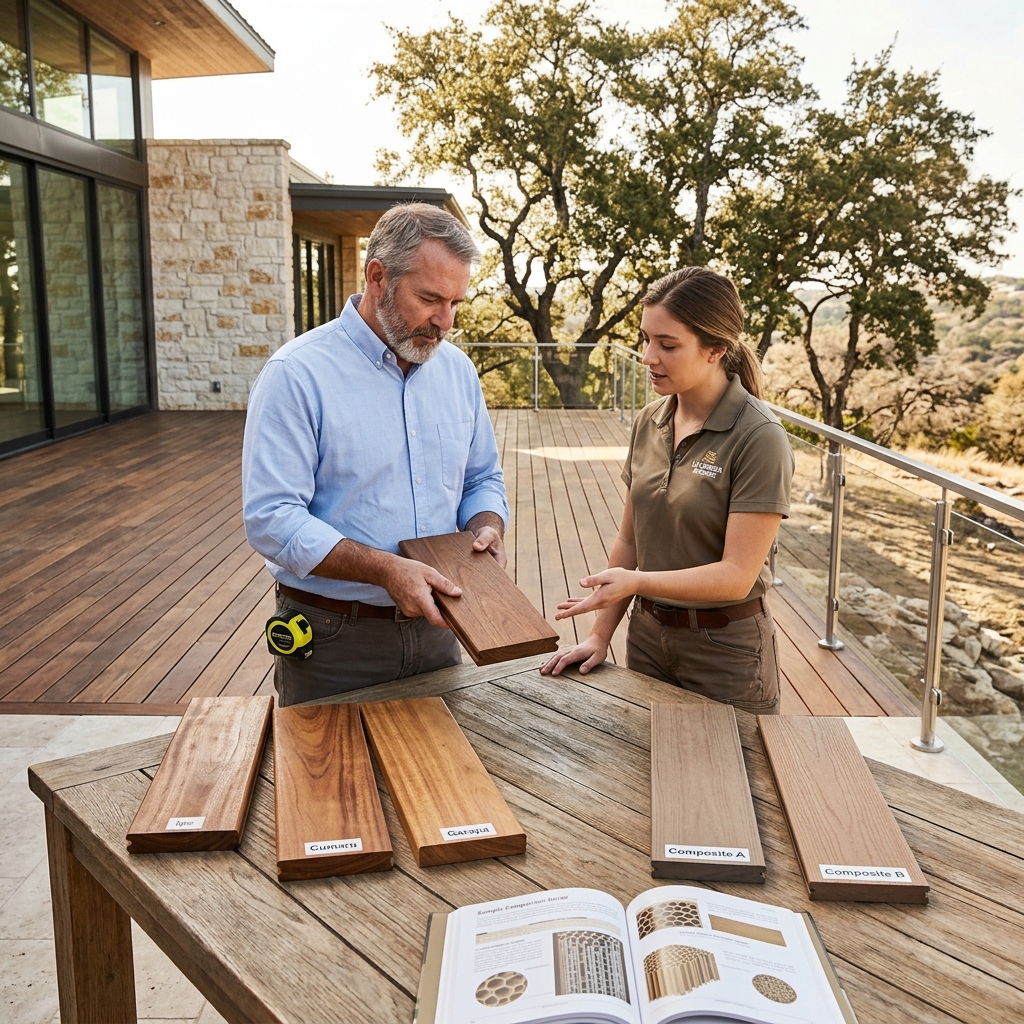
Evaluate your specific performance requirements honestly. High-traffic commercial applications demand hardwood. Humid environments expose composite material vulnerabilities. Fire code requirements narrow options toward treated or thermally modified species. Weather exposure intensity in your Texas location shapes longevity expectations differently.
Begin the material selection with exact specifications. Grain appearance, color tone, finish requirements, and maintenance expectations should all inform your initial inquiry. We work directly with architects to specify materials that align precisely with design intent and performance requirements. This collaborative approach ensures your material selections work across both aesthetic and practical dimensions.
Why Premium Hardwoods Remain the Definitive Choice
After examining the full scope, the conclusion is unambiguous: premium hardwoods outperform composite materials across every meaningful measure in commercial Texas applications. Superior durability, aesthetic authenticity, design flexibility, and genuine aging characteristics combine to create permanent value that composites cannot match.
We supply the hardwood species, certifications, and specifications that Texas architects specify for projects intended to endure and evolve beautifully. Our Ipe decking, thermally modified wood options, and sustainably-harvested tropical hardwoods address every requirement that sophisticated commercial architecture demands. When you select hardwood from our inventory, you’re choosing material that will perform reliably, age authentically, and continue reflecting quality craftsmanship for decades.
The best Texas commercial architecture deserves materials that match its ambition. Hardwood decking from US Lumber Brokers delivers exactly that foundation.
To place orders, order samples, or talk with a live person.
Frequently Asked Questions (FAQ)
What hardwoods do you recommend for commercial decking in Texas climates?
We stock premium tropical hardwoods specifically chosen for Texas commercial projects, including Ipe, Cumaru, Garapa, Massaranduba, and Tigerwood. These species deliver superior durability against our intense sun, moisture swings, and temperature extremes compared to domestic softwoods. We also offer thermally modified wood options like Thermally Modified Ash and Pine if you need a lighter aesthetic without sacrificing performance.
How do your hardwoods compare to composite decking for architect-designed projects?
Our hardwoods give architects the natural material expression and design flexibility that composites simply cannot match, while outperforming composites in durability and sustainability. Composites have limitations in color consistency, thermal movement, and the authentic wood character that defines contemporary Texas architecture. We source FSC-certified hardwoods and fire-rated Class A products, so you get both environmental responsibility and the performance specs required for high-end commercial applications.
Do you supply WUI Class A fire-rated decking products?
Yes, we maintain a complete inventory of WUI Class A fire-rated wood products for siding, cladding, decking, and other exterior applications. Our thermally modified wood and select hardwood lines meet Class A fire ratings, allowing architects to specify natural wood materials without compromising fire safety requirements in Texas commercial projects.


