

Why Selecting the Right Siding Supplier Matters for Your Projects
The choice of siding supplier directly impacts your project timeline, budget, and the long-term performance of the building envelope. When we work with architects and contractors across Texas, we see firsthand how the wrong supplier choice creates cascading problems: delayed deliveries, material quality inconsistencies, and specifications that don’t match project requirements.
Your siding material represents one of the largest visible investments on any commercial structure. It’s exposed to weather, UV exposure, and structural movement for decades. A supplier who understands both the technical requirements and the practical constraints of your timeline becomes an extension of your team rather than just a vendor.
We’ve built our business on the premise that knowing your specifications, lead times, and budget constraints upfront prevents costly mistakes later. Whether you’re sourcing premium clear cedar for a luxury Hill Country residence or fire-rated materials for a high-density commercial zone, having a partner who stocks what you need and understands why you need it makes the difference.
What to do next: Start conversations with potential suppliers early. Ask them about specific certifications, inventory depth for your exact grade and species, and typical lead times. Suppliers who can answer these questions confidently are better positioned to support your project.
Understanding Commercial Grade Wood Siding Standards and Certifications
Commercial siding requires more rigorous grading standards than residential applications. Clear and Vertical Grain (VG) ratings ensure that wood meets specific visual and structural criteria. Clear grade means the wood is virtually free of knots and defects, while Vertical Grain refers to the ring orientation, which improves stability and reduces cupping or warping.
When sourcing commercial-grade materials, you’ll encounter terms like FSC (Forest Stewardship Council) certification, which verifies sustainable harvesting practices. You may also need Class A fire ratings, which indicate the material meets specific fire-safety codes in certain geographic zones. Understanding these standards helps you specify correctly and avoid substitutions that could delay permits or inspections.
We maintain inventory across multiple softwood species, each with distinct properties. Western Red Cedar offers natural decay resistance and attractive grain. Douglas Fir provides superior strength and a tighter grain pattern. Hemlock delivers a uniform appearance at a competitive price point. Cypress naturally resists rot and insects. Southern Yellow Pine combines strength with availability across most of the United States.
The grade and species you select should align with your project’s exposure level, aesthetic requirements, and budget constraints. We help you navigate these choices by keeping common commercial grades in stock and explaining the trade-offs between appearance, durability, and cost.
What to do next: Review your project specifications for any grade requirements, fire ratings, or certification mandates. Document these early so your supplier can confirm availability before you’re under deadline pressure.
Our Premium Softwood Siding Selection for Commercial Applications
We stock an extensive inventory of premium softwoods specifically selected for commercial applications. Clear Western Red Cedar remains one of the most specified materials for high-end commercial projects across Texas. Its warm tone, dimensional stability, and natural preservatives make it ideal for exterior cladding where durability and aesthetics matter equally.
Vertical Grain Douglas Fir delivers a tighter grain pattern than standard Douglas Fir and superior dimensional stability. This makes it an excellent choice for large commercial facades where wood movement could create visible gaps or stress on fastening systems. The species is stronger than cedar, which can matter for applications where the siding carries structural loads.
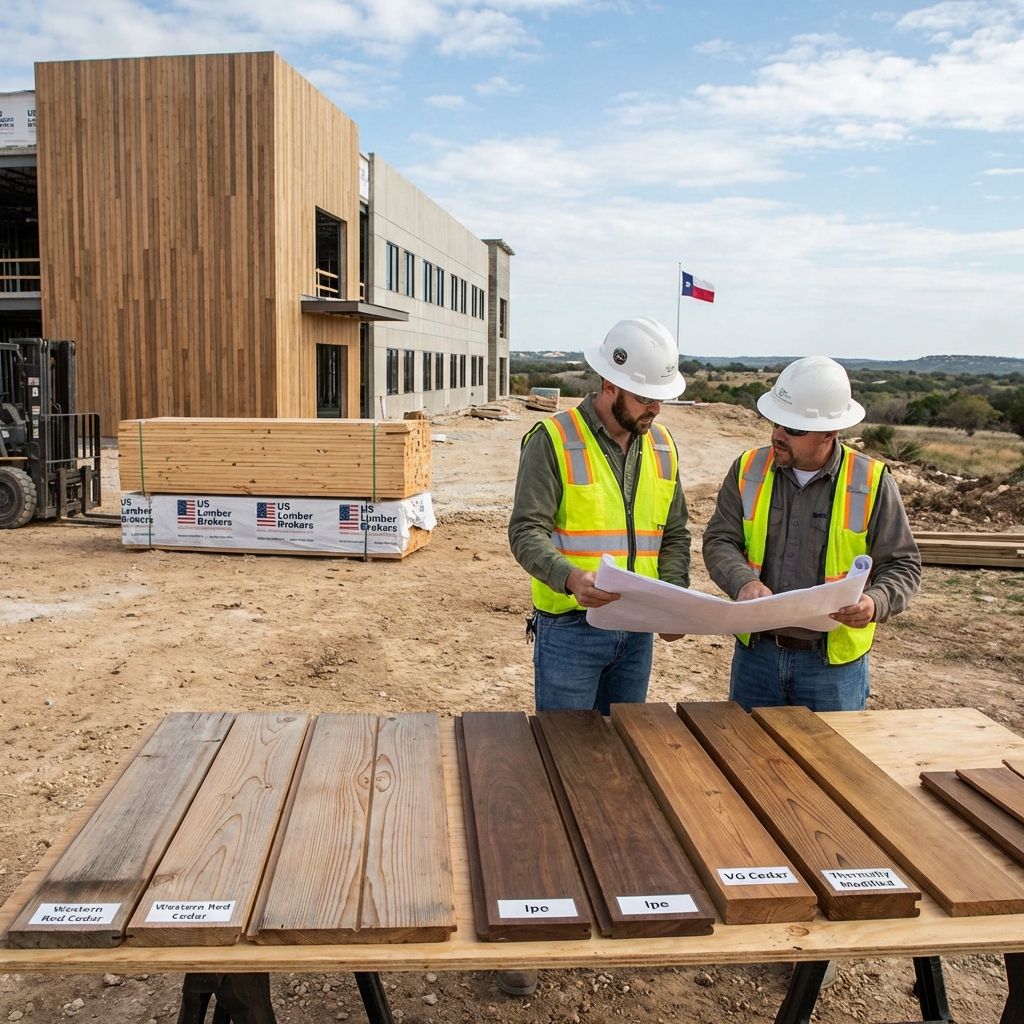
Hemlock and Yellow Cedar offer excellent alternatives when budget constraints matter. Hemlock provides a clean, light appearance and good paint-holding characteristics. Yellow Cedar offers natural decay resistance comparable to Western Red Cedar at varying price points depending on market conditions.
We keep these species available in multiple configurations: solid boards, tongue-and-groove profiles, shiplap, and vertical grain options. Whether you’re specifying 1-inch nominal thickness or custom dimensions, we can source or manufacture what your project requires.
What to do next: Request samples of your preferred species and grade. View them in the actual light conditions where they’ll be installed. Many contractors specify their primary choice but request mock-up approval before ordering material in full volume.
Hardwood and Tropical Species for High-Performance Exteriors
When commercial projects demand exceptional durability or distinctive aesthetics, hardwoods and tropical species deliver performance that softwoods cannot match. Ipe (also called Cumaru when sourced from a different region) offers hardness and density that resists denting, splintering, and decay. It’s commonly specified for high-traffic commercial decking and cladding in hospitality and resort environments.
Garapa provides similar hardness to Ipe with a lighter, warmer tone. Massaranduba offers deep color and extreme longevity. Tigerwood delivers distinctive striping and high decay resistance. These materials typically cost more than softwoods, but they require minimal maintenance and can last 25+ years in exposed conditions.
We stock these hardwoods in siding, cladding, and decking applications. They’re particularly valuable for commercial projects in high-moisture environments like the Texas Hill Country lakefront properties or high-salt-exposure coastal zones. The density and stability of these species mean they maintain their appearance and dimensions even in extreme weather cycles.
Hardwoods do require specialized fastening (pre-drilling to avoid splitting) and finishing considerations. We provide specification guidance and sourcing for appropriate hardware and finishes that complement these premium materials.
What to do next: If your project emphasizes durability and reduced maintenance over initial cost, request pricing and lead-time information for hardwood options. Many contractors find the long-term value proposition justifies the upfront investment.
Thermally Modified Wood Advantages for Durability and Sustainability
Thermally modified wood represents a significant advancement in wood durability without chemical treatments. The process heats wood to high temperatures in a controlled environment, fundamentally changing its cellular structure. The result is wood that resists moisture absorption, decay, and insect damage while remaining completely non-toxic and fully recyclable.
We supply Thermally Modified Wood Siding in Ash, Pine, Poplar, and Ayous. These modified species outperform their unmodified counterparts in dimensional stability and rot resistance. Thermally modified pine, for example, achieves performance levels comparable to naturally durable hardwoods but at a lower cost and with faster availability.
The sustainability angle matters increasingly to our commercial clients. Thermally modified wood uses raw materials that might otherwise be considered lower grade. The modification process adds value without chemical additives, creating a product that aligns with green building certifications and sustainable sourcing goals. Many projects pursuing LEED certification or similar environmental standards find thermally modified woods an excellent fit.
These materials work particularly well for commercial applications where maintenance budgets are constrained or where the building will be exposed to temperature and humidity cycling. The dimensional stability means fastener lines won’t open up over time, maintaining the weathertight envelope.
What to do next: Ask about thermally modified options for your next specification. If lifecycle cost matters more than initial material price, these products often deliver better overall value.
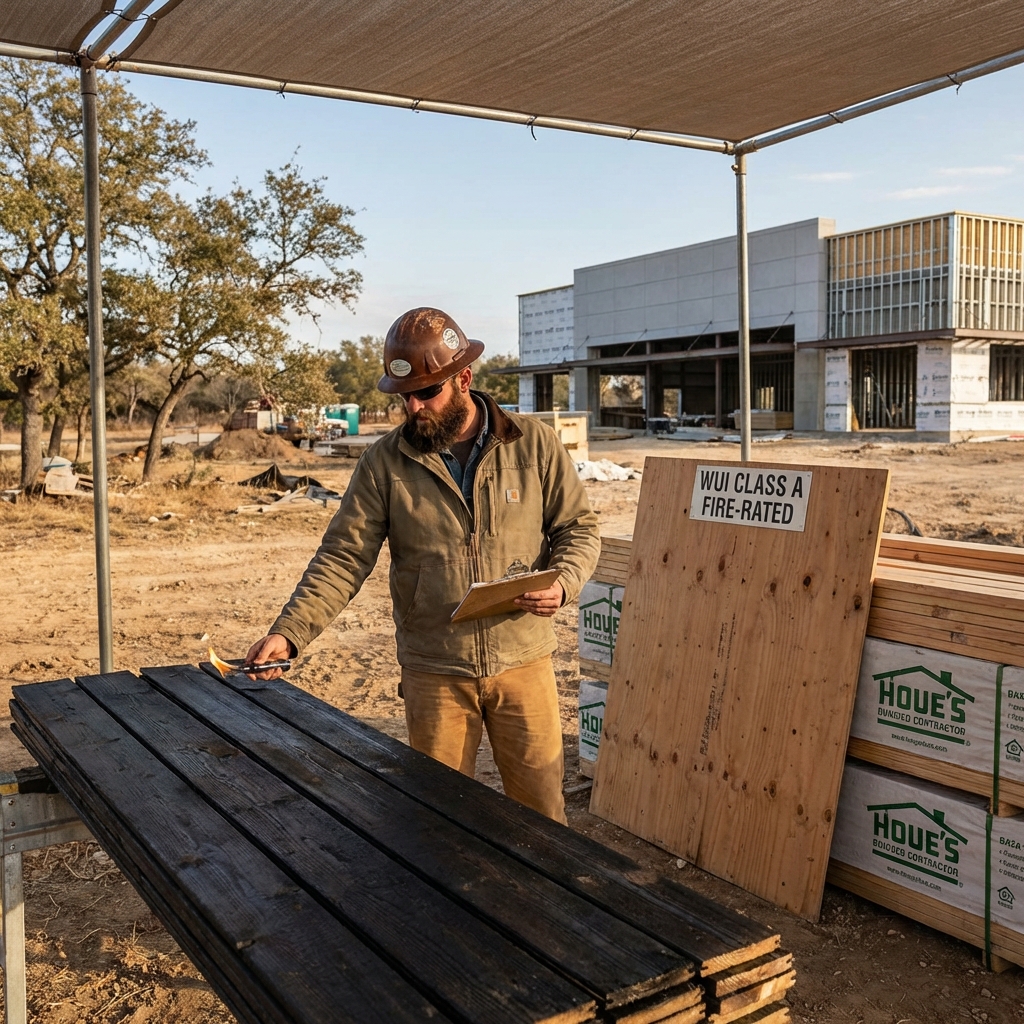
Fire-Rated WUI Class A Products for Protected Zones
Wildland-Urban Interface (WUI) Class A fire-rated wood products have become essential for commercial projects in California, parts of Texas, and increasingly across the western United States. These materials meet stringent fire-performance standards without compromising the natural appearance of wood.
We supply WUI Class A approved materials for siding, cladding, decking, fencing, framing, and pickets. These products undergo specific fire testing and meet codes for high-risk fire zones. Some materials achieve Class A ratings through proprietary treatment processes; others accomplish it through inherent density and species characteristics.
If your commercial project is in a WUI zone or a local jurisdiction requires Class A fire ratings, specifying materials that meet these standards from the outset prevents redesign requirements later. Permitting agencies increasingly scrutinize fire-rated material documentation. Having proper certifications and test reports from your supplier streamlines the approval process.
The cost premium for Class A rated materials varies depending on the species and treatment method. We help you evaluate options that balance fire performance with budget constraints and aesthetic requirements.
What to do next: Check with your local building department or fire marshal’s office to confirm whether WUI Class A materials are required or recommended for your project location. Early confirmation prevents specification changes mid-project.
Composite and Manufactured Siding Alternatives We Supply
We recognize that not every commercial project calls for solid wood. Composite and manufactured materials offer durability, minimal maintenance, and consistent appearance that appeal to many facility managers and property owners. We distribute TimberTech, Trex, and Fiberon products alongside our natural wood inventory.
These materials excel in environments where moisture exposure is extreme or where maintenance budgets are minimal. They don’t require painting or staining, they resist rot and insects inherently, and they’re often available in colors and textures that mimic natural wood while delivering engineered performance.
We stock Composite Siding in multiple profiles and colors. For projects where natural wood aesthetics matter but long-term maintenance concerns outweigh that preference, composites provide a practical compromise. Many commercial clients appreciate the consistency of manufactured materials: every board matches, color variation is minimal, and performance is predictable across the lifetime of the installation.
Composite materials also align well with sustainable building goals when manufactured from recycled content. Several manufacturers now produce composites using reclaimed plastic and wood fiber, creating a circular economy benefit.
What to do next: Request samples of composite materials that match your aesthetic goals. Compare the maintenance requirements, warranty terms, and lifecycle costs against solid wood alternatives. Many projects benefit from a hybrid approach: solid wood in visible focal areas and composites in areas where durability and low maintenance drive the decision.
How Our Texas-Based Inventory Reduces Project Timelines
Operating from Texas with distribution across all 50 states, we maintain strategic inventory levels that keep your projects moving. When you’re under deadline, waiting 8-12 weeks for material shipment from distant suppliers creates schedule pressure and cost overruns. We stock common commercial grades and species in quantities that allow us to fulfill orders within days rather than months.
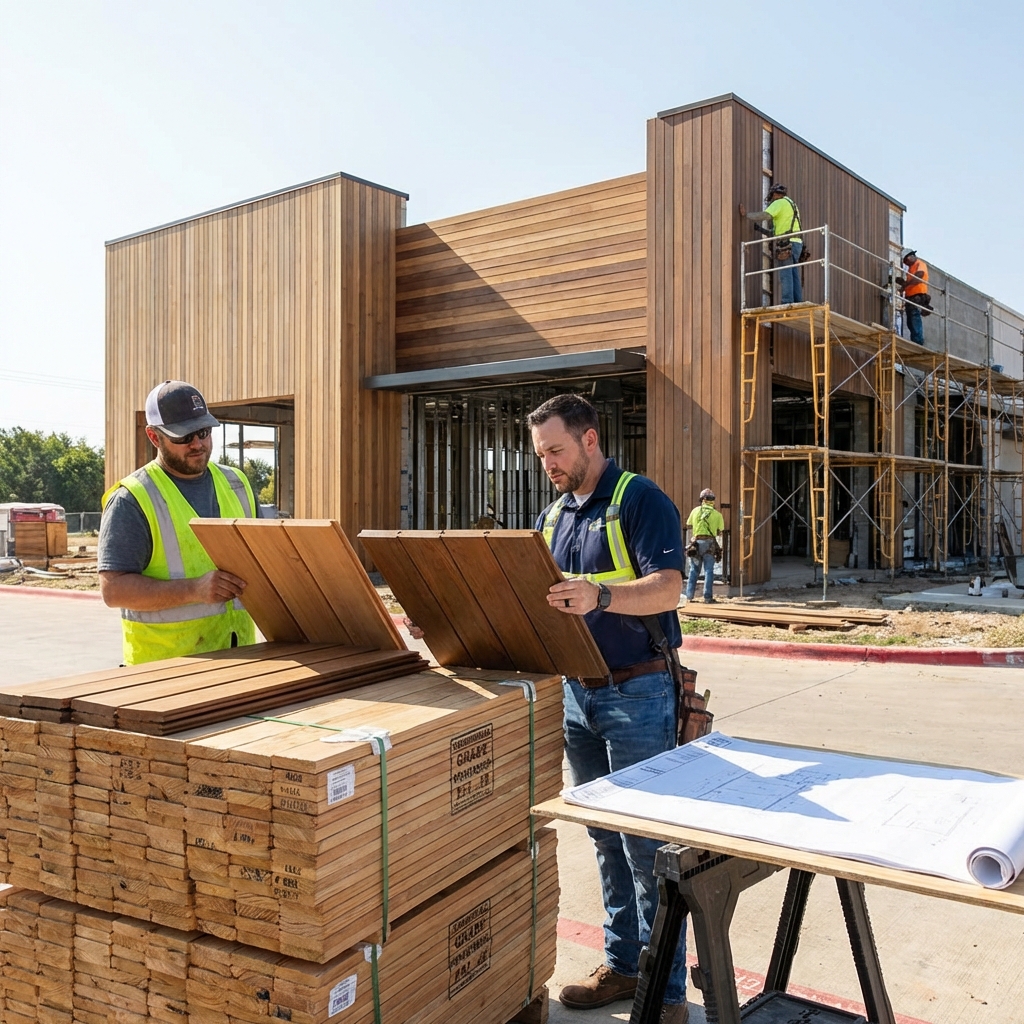
Our Austin-area facility serves the entire Texas market with particular depth in the Hill Country, Dallas, Houston, and San Antonio regions. If you’re building in Horseshoe Bay, Kerrville, Boerne, Dripping Springs, or surrounding communities, we can often deliver material faster than national suppliers. For out-of-state projects, our established distribution channels keep lead times competitive with local suppliers in other regions.
We invest in inventory management systems that give us real-time visibility into stock levels and allow us to reorder efficiently. This means when you specify a material, we can confirm availability and delivery timing within hours rather than days. For contractors managing multiple concurrent projects, this responsiveness directly impacts your ability to maintain schedule.
What to do next: Before finalizing specifications, confirm lead times directly with us for your exact grade, species, and volume requirements. Factor realistic delivery timelines into your project schedule. Knowing you have access to material quickly reduces the pressure to over-order or specify alternatives just because a vendor has stock.
FSC Certified and Sustainable Sourcing Practices
We prioritize sustainable sourcing because many of our commercial clients require it and because responsible forestry practices ensure long-term material availability. FSC (Forest Stewardship Council) certification verifies that wood comes from responsibly managed forests where harvesting practices maintain ecosystem health, wildlife habitat, and indigenous rights.
Our FSC certified wood products carry chain-of-custody documentation that tracks the material from forest to your project. This matters for commercial clients pursuing LEED certification, Living Building Challenge standards, or other environmental performance targets. Specifying FSC certified materials often provides points toward these certifications.
We source from suppliers who share our commitment to sustainable practices. This means maintaining relationships with mills that invest in reforestation, practice selective harvesting, and minimize waste. We’re transparent about sourcing origins and certifications because our clients deserve to know exactly what they’re specifying.
Sustainable sourcing doesn’t mean compromising on quality or performance. Our FSC certified materials meet the same grading standards and performance specifications as any material in our inventory. You’re simply adding environmental accountability to the sourcing story.
What to do next: If your project has environmental performance requirements, notify us early. We’ll specify FSC certified material throughout and provide the necessary documentation for your project team and certifying agencies.
Partnering with Us for Your Next Commercial Project
We’ve built our business around a simple principle: your success is our success. When you source material from us, you’re not just buying inventory. You’re gaining a partner who understands commercial construction timelines, specification requirements, and the practical constraints that come with real-world building projects.
Whether you need premium softwood siding, durable hardwoods, fire-rated materials, thermally modified wood, or composite alternatives, we stock what you specify and stand behind our product quality. Our team answers technical questions, sources hard-to-find materials, and works within your budget constraints.
We serve architects, project managers, and contractors across Texas and beyond. Many of our clients have built long-term relationships with us because we’ve proven reliable, knowledgeable, and responsive to their needs. We’d welcome the opportunity to discuss your upcoming commercial projects and demonstrate why our inventory depth, local presence, and industry expertise make a measurable difference.
Next steps: Reach out to our team with your project specifications, timeline, and budget parameters. We’ll provide detailed pricing, confirm availability, and establish a delivery schedule that supports your project timeline. Contact us through our website at https://www.uslumberbrokers.com/ to discuss your commercial siding requirements.
To place orders, order samples, or talk with a live person.


