

The Architect’s Challenge: Creating Cohesive Wood Design Systems
You’ve designed a home where warm wood tones flow seamlessly from the entry foyer through living spaces, and into the master suite. The vision is clear in your mind: continuous horizontal grain patterns, consistent warm undertones, and a material palette that feels intentional rather than assembled from disconnected suppliers. Yet when it comes time to source flooring, ceiling panels, and custom millwork, you face a fragmented marketplace where each vendor operates independently, delivering materials that don’t quite align aesthetically or structurally.
This is the core challenge we hear from architects working across Texas. Your design is holistic, but your supply chain often isn’t. White oak becomes the through-line, but sourcing it cohesively across multiple applications requires a partner who understands both your architectural vision and the technical specifications needed to execute it flawlessly.
What to do next: Define your white oak aesthetic upfront. Decide whether you want consistent grain direction, a specific grading standard (clear versus character), and thermal properties. This clarity makes sourcing and specification infinitely smoother.
Why White Oak Remains the Gold Standard for Contemporary Luxury Homes
White oak has earned its reputation in high-end residential design for three fundamental reasons: visual depth, structural reliability, and design flexibility.
The wood’s grain structure creates a rich, visually complex surface that photographs beautifully and ages gracefully. Unlike softer species, white oak develops a warm patina over time without becoming worn or dingy. Its color ranges from pale honey to deeper amber tones, giving architects room to play with lighting and design intent.
Structurally, white oak is dense and stable. Moisture movement is predictable, cupping and warping are minimal compared to softer alternatives, and it accepts both traditional and contemporary finishes equally well. Whether you’re specifying matte oil, satin polyurethane, or a bare hand-planed aesthetic, white oak delivers.
Perhaps most importantly, white oak works across applications. It performs equally as flooring, ceiling material, wall paneling, and built-in millwork. This consistency means you can carry a unified material language throughout an interior without compromising on performance in any single application.
Our Integrated White Oak Approach: Flooring, Ceilings, and Custom Millwork
We’ve developed white oak integrated packages specifically to solve the coordination problem. Rather than treating flooring, ceilings, and millwork as separate sourcing challenges, we source, grade, and prepare all three elements from the same white oak stock whenever possible. This means grain character, color variation, and wood movement patterns align across the entire interior.
Our process begins with your architectural specification. We review your design drawings, understand your aesthetic intent, and recommend a grading standard and grain direction that serves all three applications. We then allocate white oak from the same logs or consecutive harvest batches, ensuring consistency that independent sourcing simply cannot match.
The result is an interior where transitions between flooring and wall panels feel inevitable, where ceiling planes echo the wood’s character without standing apart, and where every millwork element reads as part of a unified system rather than an afterthought.
Premium Grading and Species Selection for Consistent Aesthetics
White oak comes in various grades, and the grade you select shapes the entire aesthetic direction. Understanding these distinctions prevents costly specification changes mid-project.
Clear grade features minimal knots and color variation. It reads clean, contemporary, and formal. This grade works beautifully in minimalist interiors or spaces where the wood plays a subtle supporting role.
Character grade includes small knots, mineral streaks, and modest grain variation. This is the sweet spot for most contemporary luxury homes, offering visual interest and authenticity without becoming busy or rustic.
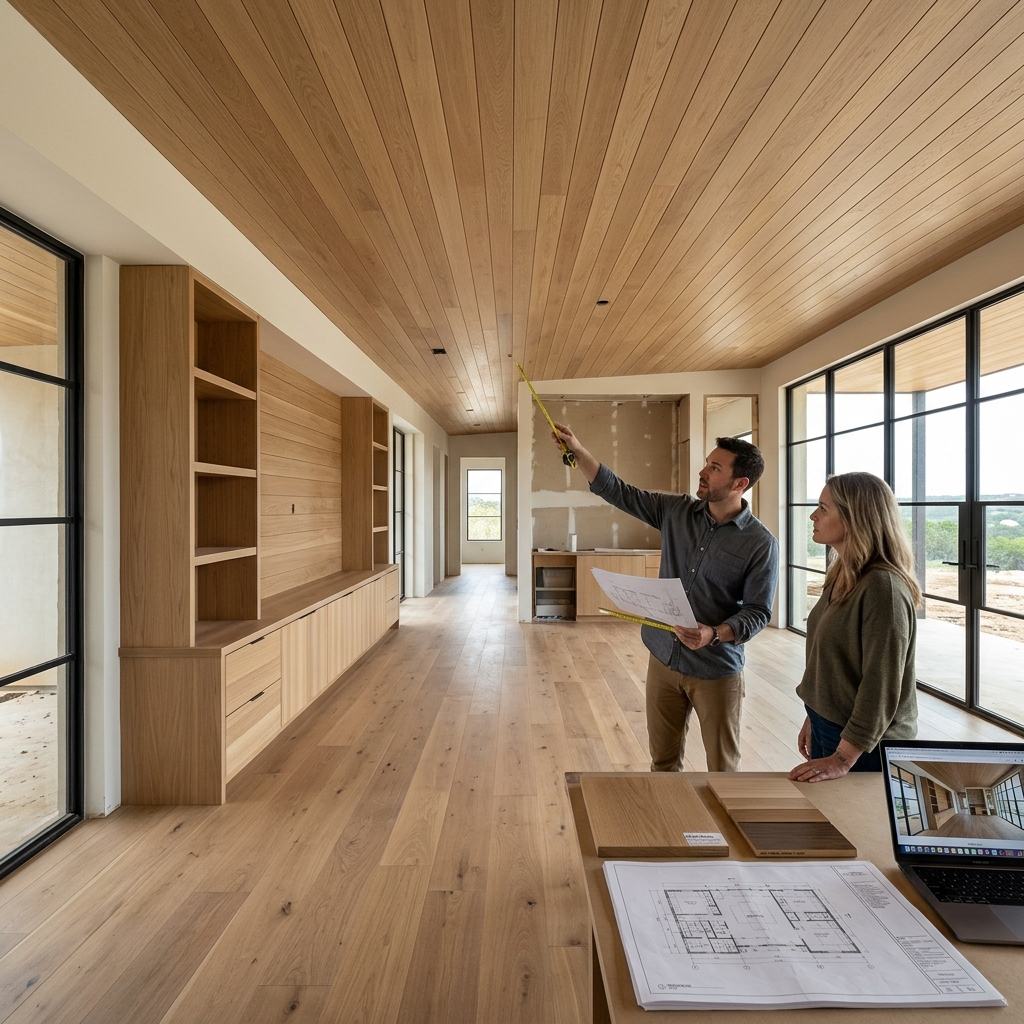
Hand-selected character combines carefully curated knots, color movement, and grain definition. This grade suits dramatic millwork installations, statement ceilings, or interiors where wood becomes a focal point.
The grading decision cascades across all three applications. We typically recommend the same grade for flooring and millwork to maintain aesthetic coherence, though ceiling panels can flex slightly depending on whether you want them to visually recede or anchor the space.
Action step: Request physical samples of each grade in the grain direction you’re specifying. View them in your actual space under your lighting conditions. This eliminates surprises during installation.
Sustainable Sourcing and FSC Certification for Conscious Design
Your clients increasingly expect that luxury comes paired with responsibility. We source our white oak through FSC-certified suppliers, ensuring that forests are managed sustainably and that labor practices meet rigorous standards. This certification carries real weight with conscious homeowners and aligns with the values that drive contemporary architectural practice.
FSC certification means the white oak in your flooring, ceilings, and millwork comes from responsibly managed forests where harvesting is balanced with ecosystem health. It’s not greenwashing; it’s traceable, third-party verified sourcing.
For projects where budget permits, we also stock thermally modified white oak alternatives that extend durability and expand design possibilities, particularly for outdoor applications or spaces where conventional white oak might face moisture or UV challenges.
Custom Millwork Solutions That Align with Your Architectural Vision
Custom millwork transforms white oak from a material into a design element. We manufacture wall paneling, built-in cabinetry, floating shelving, window reveals, and door frames in white oak, working from your detailed drawings to ensure every dimension, joint, and finish aligns with your intent.
Our millwork team understands grain matching. Whether you want book-matched panels on a feature wall or consistent vertical grain throughout a series of cabinet fronts, we plan the layout to maximize visual impact while minimizing waste. This level of planning requires time upfront but delivers results that generic millwork fabrication simply cannot.
We also accommodate both simple and complex joinery. Clean butt joints read modern and minimal. Mortise-and-tenon joinery adds craft and visual interest. Floating shelves with hidden steel brackets create the illusion that wood planes defy gravity. Your design vocabulary determines the approach.
White Oak Flooring Systems Built for Performance and Beauty
White oak flooring serves as the visual anchor for most luxury interiors. We offer several configurations depending on your aesthetic and performance requirements.
Solid 3/4-inch white oak is the traditional choice, offering maximum durability and the ability to sand and refinish multiple times over the home’s lifetime. It works beautifully in temperate Texas interiors where seasonal moisture swings are moderate.
Engineered white oak flooring, with a white oak veneer bonded to a plywood core, provides greater dimensional stability in environments where humidity fluctuates significantly. It still reads as authentic white oak and can be refinished (though with slightly less room for error than solid).
For projects where you want hand-scraped character or intentional distressing, we source reclaimed white oak or commission distressed finishes that feel organic rather than contrived.
Grain direction matters as much as grading. Running flooring perpendicular to windows maximizes the visual effect of light moving across grain patterns. Aligning flooring grain with your room’s primary axis creates visual flow and makes spaces feel larger.
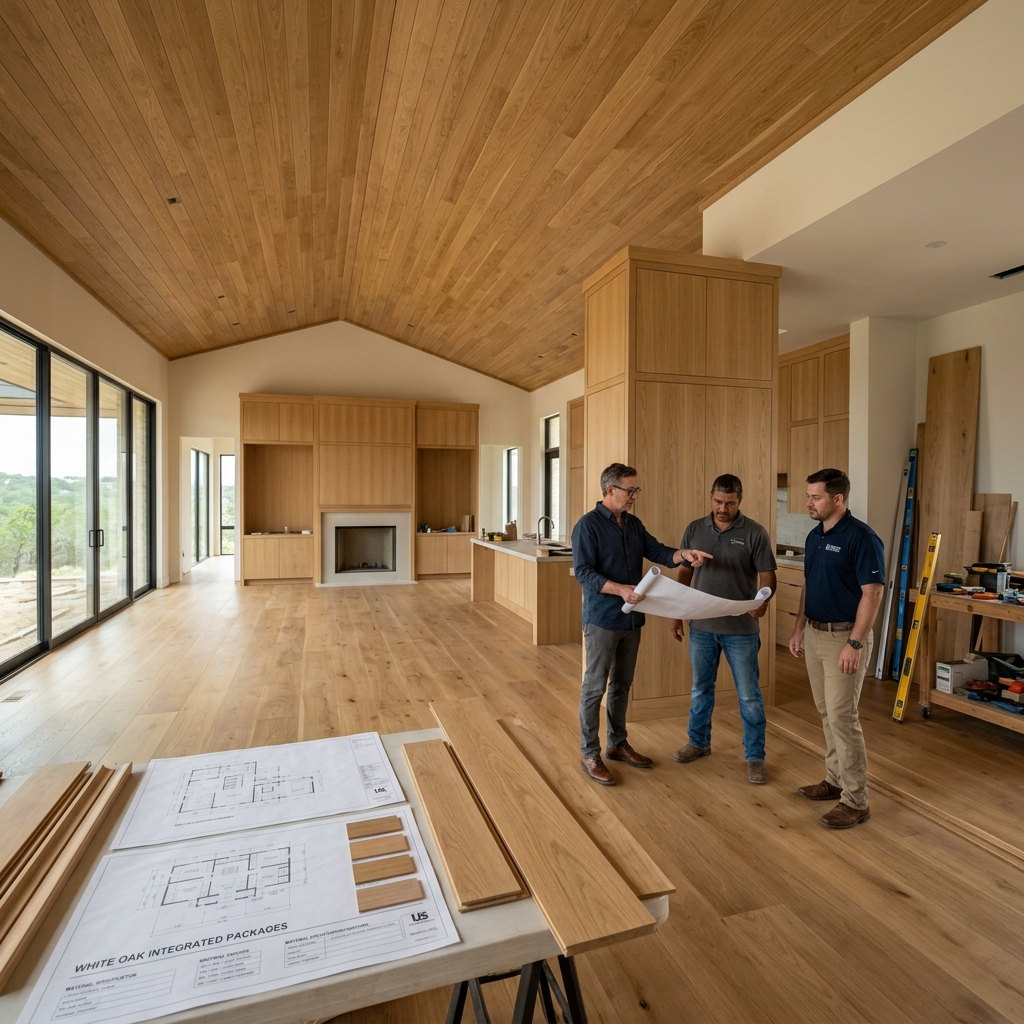
Coordinated Ceiling Panels That Unify Your Interior Spaces
Ceilings are too often treated as blank planes. White oak ceiling panels transform the fifth wall into a design asset while maintaining the material coherence that distinguishes thoughtful interiors.
We fabricate white oak ceiling systems in several formats. Individual tongue-and-groove boards create a linear, directional aesthetic that guides the eye. This works particularly well in long hallways or in spaces where you want subtle movement without visual drama.
Wider planks, sometimes stacked with deliberate shadow lines, read more substantial and modern. Varying plank widths across a ceiling adds rhythm and visual complexity while remaining architecturally disciplined.
We coordinate ceiling grain direction with flooring and millwork. If your flooring runs east-west, your ceiling might run north-south, creating a subtle visual tension that feels intentional. Or you might match grain direction for total continuity. The key is that these decisions emerge from your design intent, not from supply chain accident.
Thermal Modification and Durability Options for Long-Term Excellence
Standard white oak performs excellently indoors, but thermal modification expands its capabilities. Thermally modified wood undergoes controlled heating to reduce moisture movement and increase dimensional stability. The process also deepens the wood’s color slightly and can shift the grain’s visual character.
For spaces with significant humidity exposure, high sunlight, or where the architecture demands unusual performance requirements, thermally modified white oak is worth considering. It costs more than standard white oak but eliminates potential issues before they emerge.
We also offer pre-finished white oak options, where we apply hard-wearing lacquers or oils before the materials ship to your site. This reduces on-site finishing time and ensures a consistent factory-applied finish across all three applications.
From Specification to Installation: Our Partnership Process
Our engagement typically unfolds in four phases.
Phase one: Design review and specification. You provide drawings; we analyze aesthetic intent, recommend grading and grain direction, and build a preliminary specification package.
Phase two: Sampling and approval. We mill samples of your chosen grade and grain direction across all three applications, allowing you to evaluate the look under your actual lighting and design context.
Phase three: Production and quality control. Once approved, we source white oak from consistent batches, mill to exact dimensions, and inspect every board against your approved sample. We photograph material as it ships, providing documentation for your records.
Phase four: Coordination and installation support. We work with your general contractor and finish carpenters to ensure proper acclimation of materials on-site and to resolve any field questions that arise during installation.
This partnership model differs from transactional lumber sales. We’re invested in the success of your project because your reputation and ours are connected.
Real Examples: White Oak Systems in Award-Winning Texas Projects

A Hill Country residence designed in the Lake|Flato vernacular called for continuous white oak through entry foyer, great room, and master suite. Rather than source flooring from one vendor and millwork from another, we supplied all three applications from the same white oak stock. The result: grain patterns echoed through the space, color variation felt intentional, and the homeowner experienced the interiors exactly as the architect had envisioned them.
A modern contemporary home in West Austin specified clear-grade white oak flooring paired with character-grade millwork to create subtle visual hierarchy. The ceiling echoed the flooring’s grain direction, creating an interior where every element felt connected. The project won a regional architecture award, and the client specifically cited material continuity as central to the design’s success.
Another project in Horseshoe Bay used hand-selected character white oak throughout, creating rich visual drama tempered by consistent grain direction and finish. The boldness of the material choice elevated the entire interior and showcased the architect’s confidence in material expression.
Getting Started with Your White Oak Package
The first step is straightforward: reach out with your project drawings and a description of your aesthetic vision. We’ll review your architectural intent, recommend a grading and sourcing strategy, and provide a preliminary specification and timeline.
From there, we’ll move into sampling and detailed coordination. This process typically takes 4 to 6 weeks, giving you time to refine the material selection with full visibility into how all three applications will read together.
We serve architects across Texas and nationwide, and we understand the specificity required to bring contemporary wood-forward designs to life. White oak integrated packages represent our commitment to solving the coordination challenges that standalone suppliers cannot address.
Your design vision deserves a supply chain that matches its sophistication. Let’s build one together.
For further reading: Arborwood decking.
To place orders, order samples, or talk with a live person.
Frequently Asked Questions (FAQ)
Can you provide white oak materials that match across flooring, ceilings, and millwork?
Yes, we source and grade all our white oak inventory to maintain visual consistency across your entire project. We select from the same mills and cut batches that allow us to match grain character, color variation, and finish profiles whether you’re specifying flooring, ceiling panels, or custom millwork. This approach eliminates the common problem of mismatched wood tones throughout a home, which is critical for the cohesive, architect-driven designs your firm creates.
What makes your white oak suitable for both interior and exterior applications in Texas?
Our inventory includes thermally modified white oak and FSC-certified options that perform reliably in Texas’s heat and humidity fluctuations. We stock clear and vertical grain selections with proven durability records, and we can specify Class A fire-rated products when building codes or client preferences require them. We handle the technical specifications so you can confidently detail white oak without worrying about performance failures.
How do you work with architects through the specification and installation process?
We begin by understanding your design intent and material preferences, then provide detailed mill cuts, finish samples, and grading documentation before fabrication. Our team coordinates with your contractors during installation to ensure proper sequencing and quality control, and we remain available if specifications need adjustment based on site conditions. We see ourselves as an extension of your design process, not just a supplier.


