

Why Fluted and Comb Siding Matters for Architect-Driven Design
Fluted wood slat paneling and comb siding have become the signature detail in contemporary Texas architecture, and for good reason. These vertical expressions create depth, shadow play, and tactile warmth that flat surfaces simply cannot achieve. They’re not decorative afterthoughts; they’re structural design statements that command attention while maintaining the clean lines architects demand.
The pattern of flutes or combs catches light differently throughout the day, bringing movement and dimension to what could otherwise be a static exterior. For projects inspired by the warm modernism of Lake|Flato, this textural quality is essential. It satisfies the desire for natural materials without sacrificing the refined geometry that defines contemporary work. When executed with the right wood species and finish, fluted paneling becomes the centerpiece of a home’s identity rather than an accessory.
We’ve found that architects choose this approach specifically to blur the boundary between indoors and outdoors. A fluted wood wall on a loggia or entry pavilion creates a transitional space with visual continuity, anchoring the design intent from concept through completion. The texture invites touch and suggests craftsmanship, qualities increasingly valued in luxury custom homes across the Hill Country and beyond.
Understanding Fluted Wood Slat Paneling vs. Traditional Cladding
The key distinction lies in profile and visual hierarchy. Traditional horizontal cladding prioritizes weather protection and visual expansion; slat paneling prioritizes rhythm, shadow, and drama. Where conventional siding hides its purpose behind functional overlap, fluted panels make their presence architectural, turning the building envelope into part of the design language.
Fluted slats are typically milled with uniform channels running vertically, creating a columnar effect that draws the eye upward and emphasizes height. Comb siding features a more pronounced tooth pattern, often with deeper relief, delivering even stronger shadow definition. Both approaches preserve the grain and natural character of the wood itself; the pattern simply organizes and emphasizes it.
Installation method matters as much as milling. Fluted panels are often mounted edge-to-edge or with minimal reveal, requiring precise spacing and consistent finishing to maintain visual coherence. This demands craftsman-level installation, not standard framing crews. The payoff is a monolithic appearance that reads as intentional and refined, not just “wood on a wall.”
Traditional cladding, by contrast, overlaps for drainage and accepts slightly more tolerance in application. Both approaches require proper rain-screen detailing and vapor management, but slat paneling leaves zero room for error in those details. We work with architects and builders to engineer solutions that honor both the aesthetic vision and the performance requirements.
Our Premium Material Options for Slat and Comb Applications
We stock an extensive range of species specifically selected for paneling work. Each brings distinct grain character, durability profile, and color evolution. The choice shapes how the project ages, how it weathers if left natural, and how finishes interact with the wood surface.
Our inventory includes Clear and Vertical Grain Western Red Cedar, Yellow Cedar, Hemlock, Douglas Fir, Cypress, and Southern Yellow Pine for softwood applications. We also carry premium hardwoods including Ipe siding, Cumaru, Garapa, Massaranduba, and Tigerwood for projects demanding maximum durability. Thermally modified options span Ash, Pine, Poplar, and Ayous, delivering performance characteristics suited to specific climate demands.
Each species can be milled to custom flute profiles. We work with your specifications to ensure the paneling integrates seamlessly with your architectural vision. Vertical grain softwoods offer the warmest, most familiar aesthetic; hardwoods deliver performance in challenging exposures; thermally modified products bridge both worlds with enhanced stability and longevity.
Clear and Vertical Grain Softwoods for Authentic Expression
Clear and vertical grain Douglas Fir, Hemlock, and Cedar represent the gold standard for contemporary residential paneling in Texas. These species deliver the warm, light-filled quality that contemporary architecture demands. Vertical grain orientation means the growth rings stand perpendicular to the face, creating a fine, consistent line pattern that reads as refined rather than rustic.
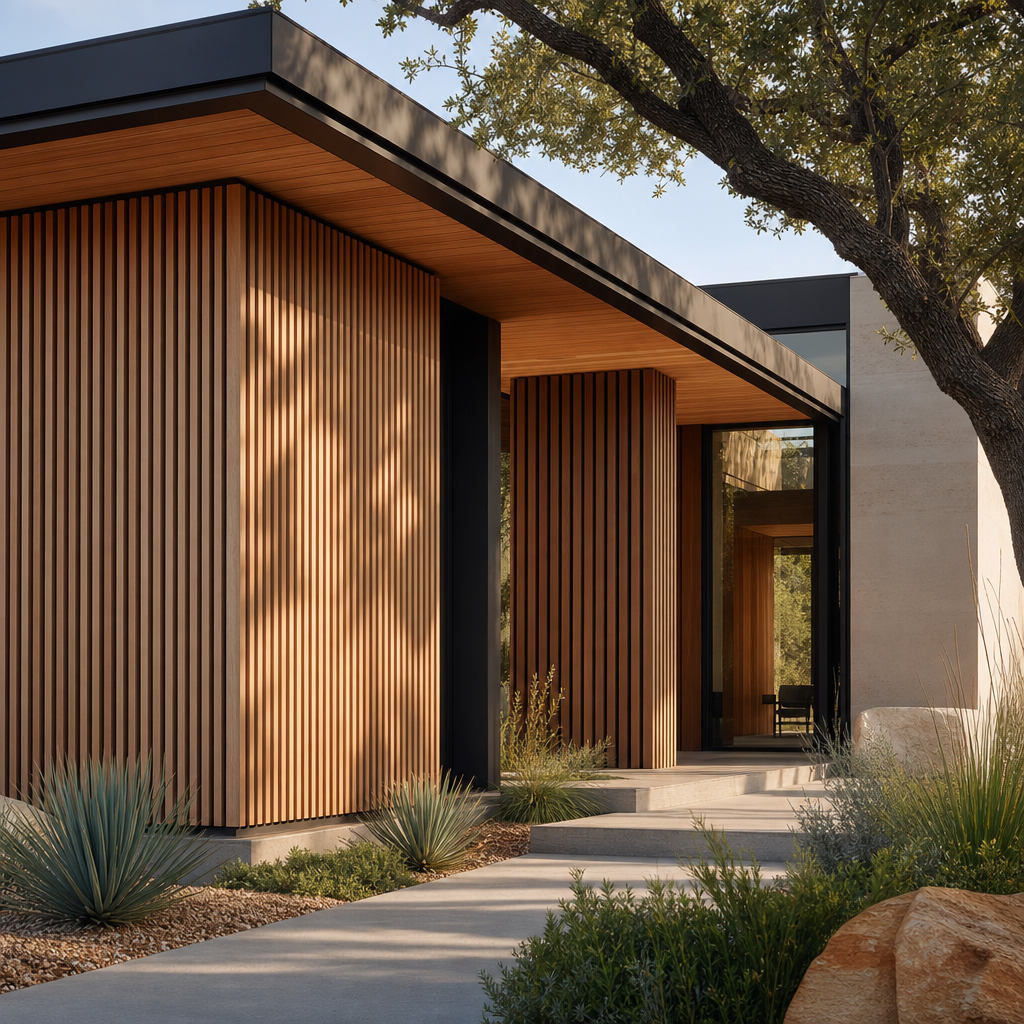
Douglas Fir offers strength and distinctive grain character, with warm honey tones that deepen beautifully over time. Western Red Cedar provides dimensional stability and natural rot resistance, making it an obvious choice for exterior applications. Clear grades eliminate knots and defects, allowing the fluting profile and grain direction to dominate visually.
The trade-off: these softwoods require maintenance. Natural finishes silver gracefully but demand periodic assessment. Clear penetrating stains protect the wood while preserving grain visibility. Some architects specify intentional weathering for certain exposures, creating a patina that tells the building’s environmental story. Others specify opaque finishes for consistency and reduced maintenance burden.
For a modern home in Dripping Springs or the Hill Country, vertical grain softwood paneling typically delivers the aesthetic architects envision at a competitive price point. The material feels authentic, ages naturally, and works beautifully with the expansive glass and open floor plans characteristic of contemporary design.
What to do next: Schedule a material consultation with our team to see samples in your specific climate exposure. We can model how different finishes perform in direct sun, shade, and high-moisture areas.
Hardwood Solutions for Durability and Visual Impact
Hardwoods like Ipe cladding command attention through sheer density and longevity. Ipe delivers Janka hardness ratings above 3,600, making it virtually maintenance-free for outdoor applications. Cumaru, Garapa, and Tigerwood offer similar performance with distinct color personalities.
Ipe presents deep chocolate tones with subtle striping; Tigerwood features bold orange and brown grain patterns; Garapa delivers golden warmth. When milled into fluted panels, hardwoods create an architectural statement far bolder than softwood equivalents. The depth of color and pronounced grain make every shadow cast by the flutes more dramatic.
The premium: hardwood paneling costs more to purchase and more to mill. Installation requires specialized fastening to avoid splitting and cracking as the material adjusts to humidity changes. But the payoff is a 30+ year lifespan with minimal intervention. For iconic homes designed to last generations, hardwood paneling justifies the investment.
We source FSC-certified hardwoods and partner with mill specialists experienced in fluted profile cutting. This ensures your panels achieve the exact proportions your architect specified without defect or variation.
Thermally Modified Woods for Performance and Sustainability
Thermally modified wood undergoes high-temperature treatment without chemical additives, fundamentally improving dimensional stability and decay resistance. Species like Thermally Modified Ash, Pine, Poplar, and Ayous rival softwood workability while performing more like hardwoods in terms of longevity.
The process removes much of the wood’s cell cavity moisture, preventing the swelling and shrinking cycles that cause checking and splitting. For fluted paneling, this means tighter joints and more consistent panel alignment over years of seasonal cycling. Thermally modified woods also develop rich chocolate tones naturally, creating an aesthetic bridge between clear softwoods and bold hardwoods.
These materials suit architects seeking sustainability credentials alongside performance. Thermally modified wood is often FSC-certified and requires no chemical preservatives, aligning with modern environmental standards. The cost positions between softwoods and hardwoods, making it accessible for larger paneling applications without enormous budget implications.
We stock thermally modified products specifically in milling thicknesses suitable for slat and comb profiles. The material works beautifully with both natural finishes and stains, developing a dignified patina that reads as intentional rather than accidental.
Fire-Rated Wood Products for WUI Compliance
Wildfire Urban Interface (WUI) zones across Texas increasingly require Class A fire-rated materials for exterior surfaces. We supply WUI-approved wood products specifically engineered for siding, cladding, decking, and paneling applications, allowing architects to specify authentic wood without compromising safety compliance.
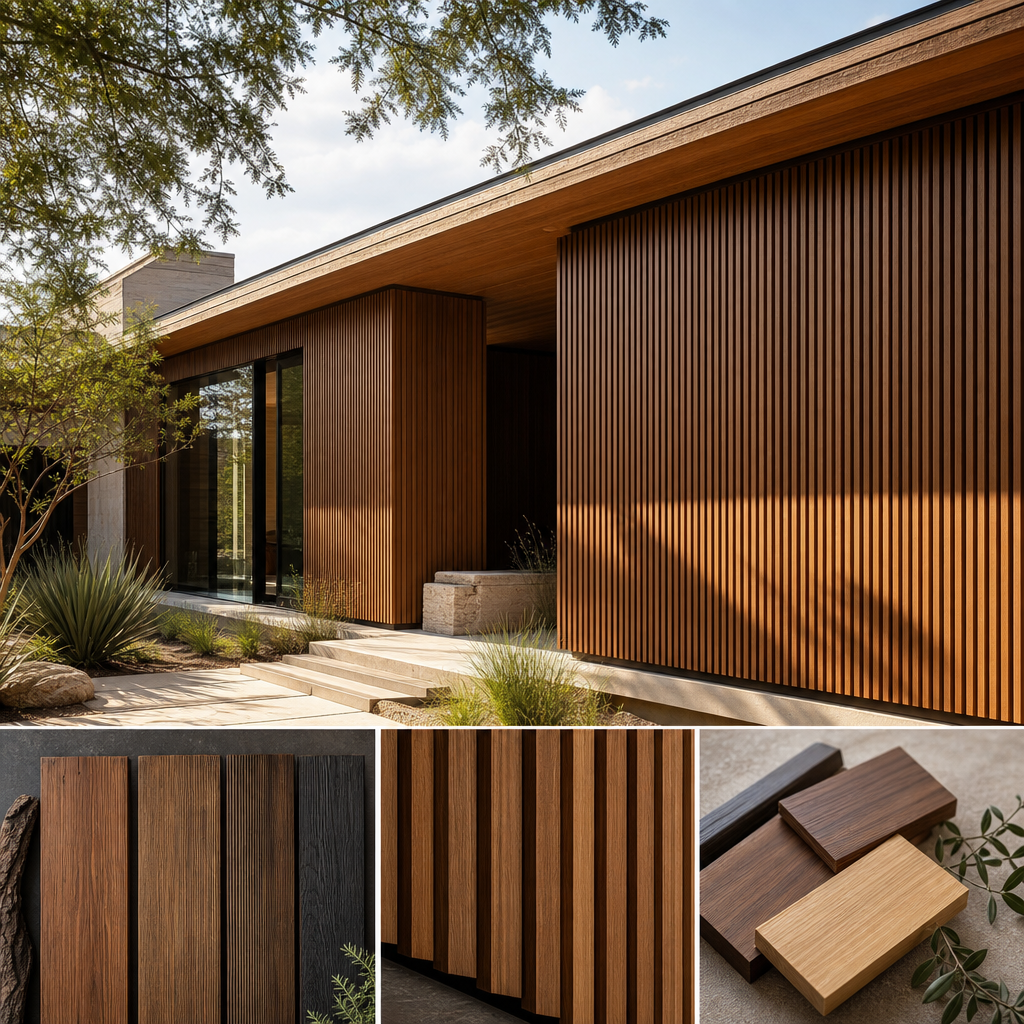
These products undergo proprietary treatment processes that maintain wood’s visual and tactile properties while meeting or exceeding fire performance standards. The treatment is integral to the product, not a surface coating that degrades over time. Class A ratings ensure the material performs reliably throughout the structure’s lifetime.
For projects in the Hill Country, Horseshoe Bay, and other WUI-prone areas, this isn’t a compromise; it’s a requirement. We engineer solutions that satisfy both aesthetic ambition and regulatory necessity, so your architectural vision doesn’t get watered down by building code requirements.
Actionable next step: If your project site falls within a WUI zone, contact us with your zip code and we’ll confirm which of our fluted paneling options meet local fire rating requirements.
Finishing and Detail Options That Elevate Design Intent
The finish transforms the wood and determines maintenance requirements for the life of the project. We guide architects toward solutions aligned with their design intent and the client’s willingness to maintain the surface.
Natural finishes preserve grain character and allow wood to develop a weathered patina. Clear penetrating stains offer modest UV protection while maintaining grain visibility. Opaque finishes hide grain but provide maximum weather protection and color consistency. Some architects specify matte finishes to minimize gloss and maintain the refined quality of contemporary design; others prefer subtle sheen for visual depth.
Detail decisions—how fluted panels terminate at corners, transition to different materials, and integrate with reveals and trim—multiply the impact of the paneling itself. A well-executed reveal at a fluted panel edge creates shadow lines that extend the visual play created by the fluting. Consistent mill marks and tooling across all panels signal intentionality and craft.
We work with architects on mock-ups and full-scale samples before final production. This catches any finish nuances or profile adjustments before committing to thousands of linear feet of material.
Real Texas Projects Showcasing Slat and Comb Paneling
We’ve supplied fluted paneling to custom homes and commercial projects across Austin, Dallas, Houston, and the Hill Country. A modern residence in Bee Cave combined clear vertical grain Douglas Fir fluted paneling with limestone and steel to create a warm, contemporary composition. The paneling formed the entry pavilion, drawing visitors upward through shadow play and grain direction.
Another project in Rollingwood specified thermally modified ash fluted panels across the exterior, paired with expansive glass that blurs indoor and outdoor living. The panels’ natural chocolate tones coordinated with stone foundation work while the fluting created depth at ground level and softer shadow patterns higher on the facade.
A commercial mixed-use project in East Austin used Class A fire-rated Ipe comb siding to satisfy WUI requirements while delivering bold, distinctive character impossible to achieve with conventional materials. The deep tone and pronounced grain made the building visually distinct while the comb profile created the dramatic shadow definition the architect demanded.
These projects demonstrate that fluted paneling and comb siding aren’t niche aesthetic indulgences; they’re legitimate design tools that deliver both visual impact and performance reliability.
Why US Lumber Brokers is Your Definitive Partner
We’re not just a lumber supplier; we’re architect-focused material specialists. Our team understands fluted paneling requirements at a depth most suppliers simply don’t match. We stock the full range of species and finishes suitable for slat and comb applications, from FSC-certified softwoods to premium hardwoods to thermally modified alternatives.
We mill custom profiles to your exact specifications, ensuring the paneling integrates seamlessly with your architectural language. We’ve engineered solutions for WUI compliance, high-moisture exposures, and demanding fire ratings. We’ve worked with architects on material pairings, finish selections, and mock-up protocols that prevent surprises during construction.
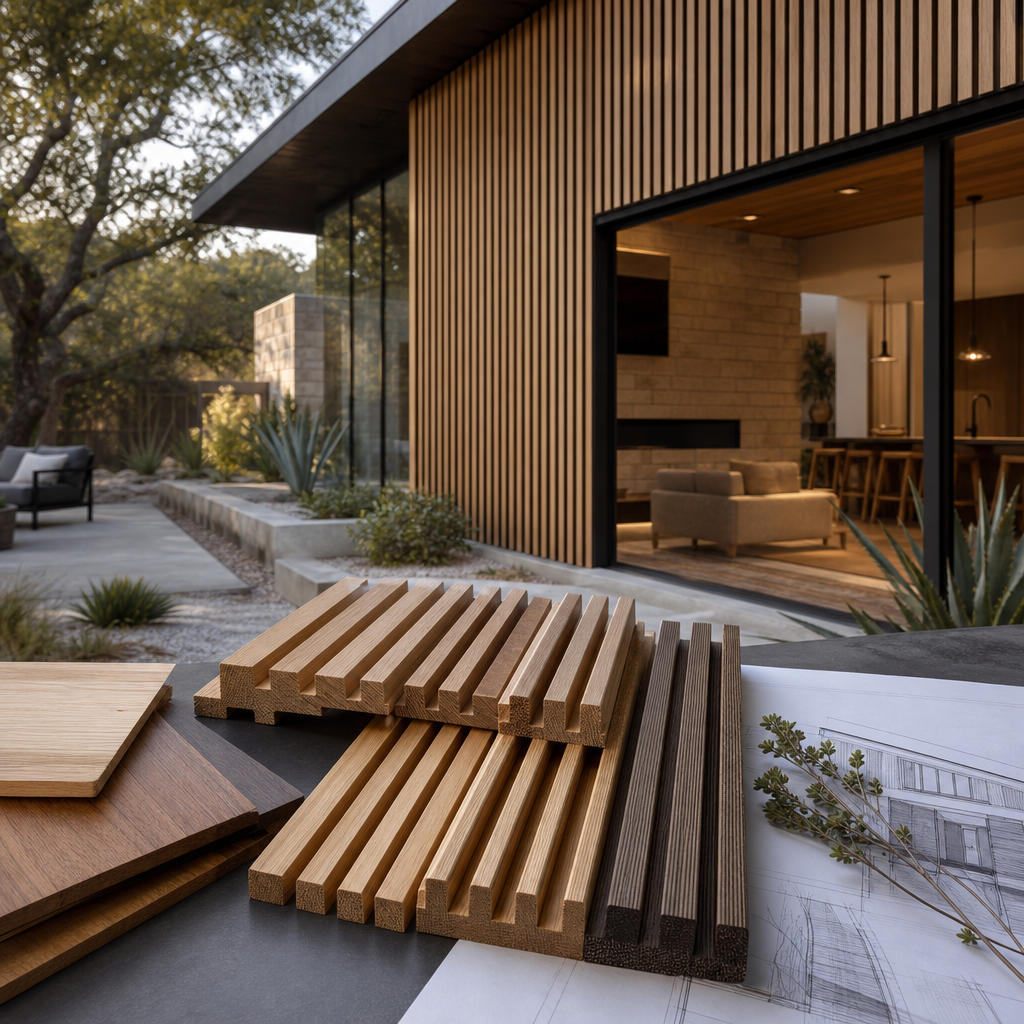
Our service areas span Austin, Dallas, Houston, San Antonio, the Texas Hill Country, and all 50 states nationwide. Whether your project requires local delivery and support or nationwide shipping, we have the infrastructure and expertise to serve you reliably.
Most importantly, we believe fluted paneling and comb siding deserve the level of specification rigor and material quality that define excellent contemporary architecture. We’re committed to providing exactly that.
Selection Guide: Choosing Your Ideal Paneling Solution
Start by defining your primary driver: aesthetic character, durability timeline, maintenance tolerance, or fire rating compliance. These factors shape material selection more than cost alone.
If warmth, grain character, and cost-effectiveness matter most, Clear or Vertical Grain softwoods deliver. If maximum durability and bold visual impact drive the decision, hardwoods like Ipe justify the premium. If you’re balancing performance with sustainability and moderate cost, thermally modified woods bridge the gap elegantly. If WUI compliance is mandatory, our fire-rated products ensure you never compromise on aesthetics for safety.
Next, consider finish strategy. Natural finishes demand periodic maintenance but offer the most authentic wood expression. Stains provide a middle path with moderate protection and grain visibility. Opaque finishes minimize upkeep but require careful selection to avoid looking plastic or overly painted.
Finally, engage on detail design early. How paneling terminates, transitions, and integrates with trim multiplies the impact of your material choice. A well-detailed fluted panel edge creates architectural lines; a poorly resolved corner undoes everything the paneling accomplishes.
We’re ready to walk through this process with you, provide samples in your climate zone, engineer solutions for your specific site conditions, and deliver material that honors your architectural vision from design intent through completed project. Contact our team to begin your material consultation.
To place orders, order samples, or talk with a live person.
Frequently Asked Questions (FAQ)
What wood species work best for fluted slat paneling in Texas architecture?
We recommend Clear and Vertical Grain Western Red Cedar, Douglas Fir, and Hemlock for their dimensional stability and visual character in slat applications. For architects seeking maximum durability and deeper aesthetics, our hardwood options like Ipe and Cumaru deliver exceptional performance. We also stock thermally modified species such as Ash and Pine, which offer superior stability and can be specified for fire-rated WUI compliance.
How do we handle fire-rated requirements for slat and comb siding projects?
We supply WUI Class A fire-rated wood products specifically manufactured for siding, cladding, and paneling applications across Texas. Our thermally modified wood inventory meets stringent fire ratings without compromising the authentic wood expression architects demand. We work directly with your project specifications to ensure all materials comply with local code requirements and deliver the performance you need.
Can you source fluted paneling and comb siding nationwide, or just in Texas?
We serve architects across all 50 states from our Texas base, though we maintain deep local expertise for Austin, Dallas, Houston, San Antonio, and Hill Country projects. Our direct manufacturing capabilities and established relationships with leading brands allow us to source, customize, and ship premium wood solutions wherever your projects are located.


