

1. Superior Density and Hardness for Long-Term Performance
Houston’s humidity, heat cycles, and intense UV exposure create a brutally unforgiving environment for outdoor decking. Standard softwoods like Southern Yellow Pine deteriorate within 5-7 years even with religious maintenance. Composite materials promise durability but sacrifice the warm, authentic wood aesthetic that defines modern architectural design. Cumaru sits at the sweet spot: a Brazilian hardwood that delivers genuine performance without compromise on the expressive wood character that architects like Lake|Flato have built their reputation around.
We’ve sourced and installed Cumaru decking across Houston, the Hill Country, and Austin for over a decade. It’s the material we reach for when clients demand both longevity and the architectural integrity that only real wood provides. Here’s why Cumaru genuinely outperforms its competitors in Texas climates.
Cumaru registers a Janka hardness rating of 2,350, placing it in the top tier of commercial decking materials. For context, that’s harder than Ipe (3,680) sits above it, but Cumaru’s density still exceeds most softwoods by a factor of 2.5 to 3. This density translates directly to resistance against foot traffic wear, dent resistance, and structural integrity over 20+ years.
Why density matters: A softer wood compresses under repeated footsteps, furniture weight, and weather cycles. Over time, surface checking (fine cracks) begins, then accelerates. Water works into those cracks, inviting rot and accelerating failure. Cumaru’s tight grain structure resists compression, keeping the surface intact through decades of use.
Houston’s climate adds an extra burden. Daily temperature swings between 90-degree afternoons and cooler nights create seasonal wood movement. A softer wood expands and contracts more dramatically, opening and closing micro-gaps that allow moisture penetration. Cumaru’s density stabilizes this movement, reducing the dimensional change that weakens weaker decking materials.
What to do next: Ask your decking supplier for Janka hardness ratings and long-term performance data. Most will hesitate to provide specifics. That’s a red flag. We publish ours because the numbers speak for themselves.
2. Exceptional Weather and Moisture Resistance in Humid Climates
Houston humidity hovers between 70-90% year-round, with afternoon thunderstorms dumping inches of water in hours. Most decking materials swell when wet, then shrink when they dry, creating cupping, warping, and surface instability. Cumaru’s closed-grain cellular structure resists moisture absorption at a fundamentally different level than cedar, hemlock, or even pressure-treated pine.
The key distinction: Cumaru’s natural oil content and wood chemistry repel water before it penetrates. You’re not fighting moisture entry; you’re preventing it at the cellular level. Compare this to softwoods that absorb moisture readily, swell, then check as they dry. Cumaru stays dimensionally stable regardless of Houston’s humidity swings.
Galveston and coastal Hill Country properties present even harsher conditions with salt air and higher moisture loads. In those environments, softwoods fail within 3-4 years. We’ve documented Cumaru installations in similar exposures lasting 15+ years with minimal degradation.
Actionable insight: Check for standing water on sample decks after rain. Poor moisture resistance shows up as dark staining, soft spots, or visible swelling. Cumaru sheds water cleanly and dries fast, which matters far more than sealer marketing promises.
3. Natural Rot and Insect Resistance Without Chemical Treatments
Cumaru contains naturally occurring extractives that protect it against wood-boring insects, fungi, and decay organisms. You get Class A durability without relying on chemical pressure treatments that leach over time and require regular reapplication.
This matters architecturally because clients increasingly question the sustainability and health implications of treated wood near living spaces. Cumaru sidesteps that conversation entirely. Its rot resistance is intrinsic, not imposed. The wood itself is the defense mechanism.
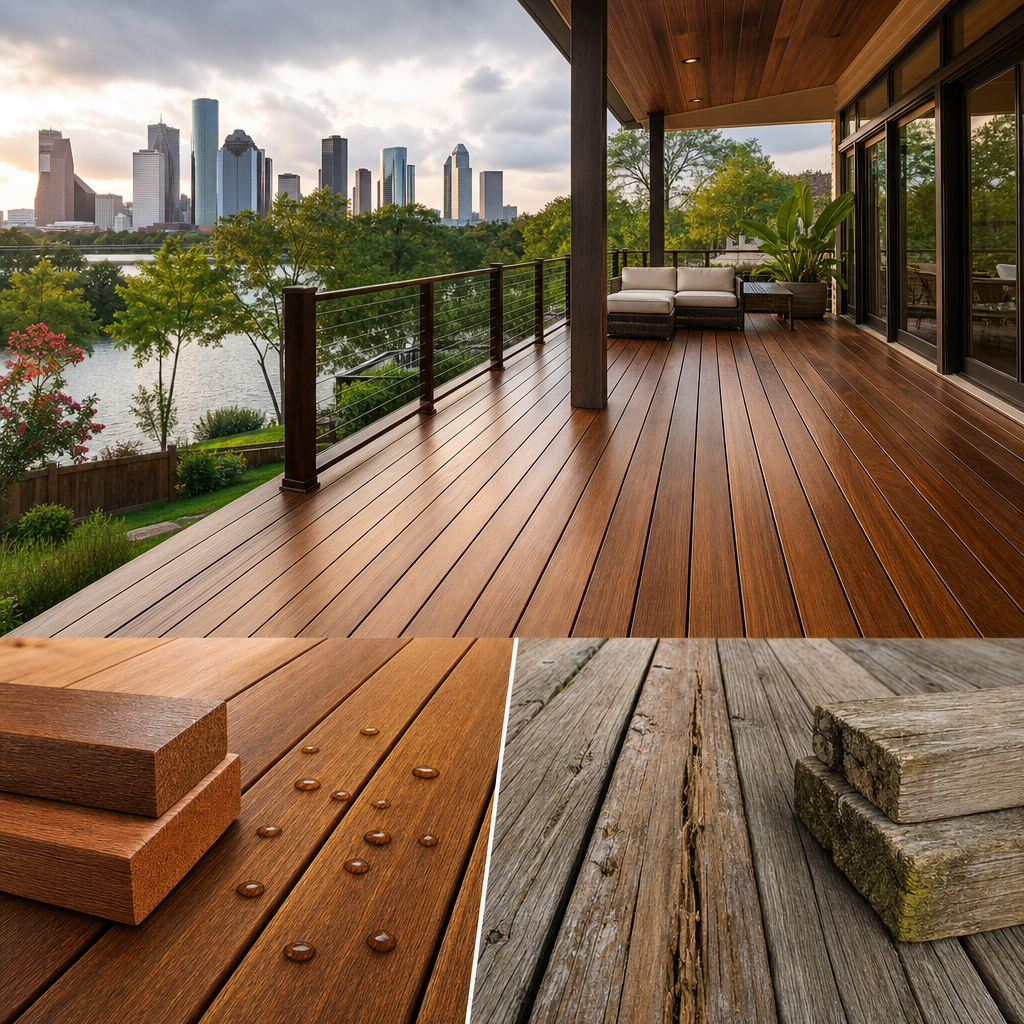
Houston’s termite and carpenter ant populations are aggressive. Softwoods under stress (which Houston’s humidity creates) become targets. Cumaru’s natural chemistry makes it an unattractive food source. Combined with its density, it simply doesn’t develop the soft, compromised wood that pests exploit.
Wood-boring beetles and fungal decay thrive in the high-moisture environment Houston decks experience. Cumaru’s extractive-rich composition actively resists these threats, which is why we see so few structural failures in properly installed Cumaru decks, even in the most challenging exposures.
Next step: Request documentation of rot resistance testing. Look for AWPA (American Wood Preservers’ Association) durability class ratings. Cumaru typically achieves Class 1-2 naturally, equivalent to pressure-treated softwoods without the chemical additives.
4. Color Stability and Aesthetic Appeal for Modern Design
Cumaru starts with rich golden-brown tones that deepen to warm chocolate hues as the wood ages. Unlike cedar or hemlock, which gray significantly within 2-3 years in Houston’s sun, Cumaru maintains its color integrity for 5-7 years before patina develops. And when it does silver, it moves gradually rather than fading to drab gray.
For architects designing spaces where warm wood tones are central to the aesthetic, this longevity matters immensely. A deck specified in a modern home design shouldn’t require complete refinishing every few years to maintain the intended aesthetic. Cumaru holds the architectural vision across the building’s life.
The visual difference shows up immediately on a project site. Softwood decks look tired after one summer in Houston heat. Cumaru decks photograph well, weather gracefully, and support the material narrative that high-end residential architecture depends on. This is about respecting the architect’s design intent, not settling for shortcuts.
Clients designing Dripping Springs or Horseshoe Bay homes specifically choose wood because they want that authentic material expression. Composites and treated softwoods undermine that vision. Cumaru preserves it.
Action item: Request color samples and ask to see installed projects that are 5+ years old. The aging pattern should be even and gradual, not patchy or prematurely grayed. This reveals whether the material is truly stable or just looks good short-term.
5. Low Maintenance Requirements Compared to Softwood Alternatives
Here’s where Cumaru’s long-term cost of ownership becomes obvious. Softwood decks demand sealing every 1-2 years, power washing annually, and repairs beginning around year 5. That cycle repeats until you’re replacing the entire deck by year 10-15.
Cumaru requires periodic cleaning and optional oiling if you want to maintain deeper color, but it doesn’t depend on sealer to survive. An unsealed Cumaru deck will weather naturally but remain structurally sound. An unsealed softwood deck becomes a maintenance nightmare and deteriorates quickly.
Over a 20-year lifespan, the labor and material cost of maintaining a softwood deck often exceeds the initial price difference between softwood and Cumaru. You’re not choosing Cumaru to save money upfront. You’re choosing it to save hundreds of hours of maintenance and thousands in repair costs downstream.
For architects specifying homes in Austin’s urban core or Hill Country properties where maintenance access is sometimes limited, this reliability becomes essential. The deck shouldn’t become a liability that distracts from enjoying the home.
Calculate your real cost: Total the sealer, labor, and repairs for a softwood deck over 20 years. Include power washing, board replacements, and potential structural repairs. Cumaru’s higher initial cost disappears when you factor in total cost of ownership.
6. Certified Sustainability and Environmental Responsibility
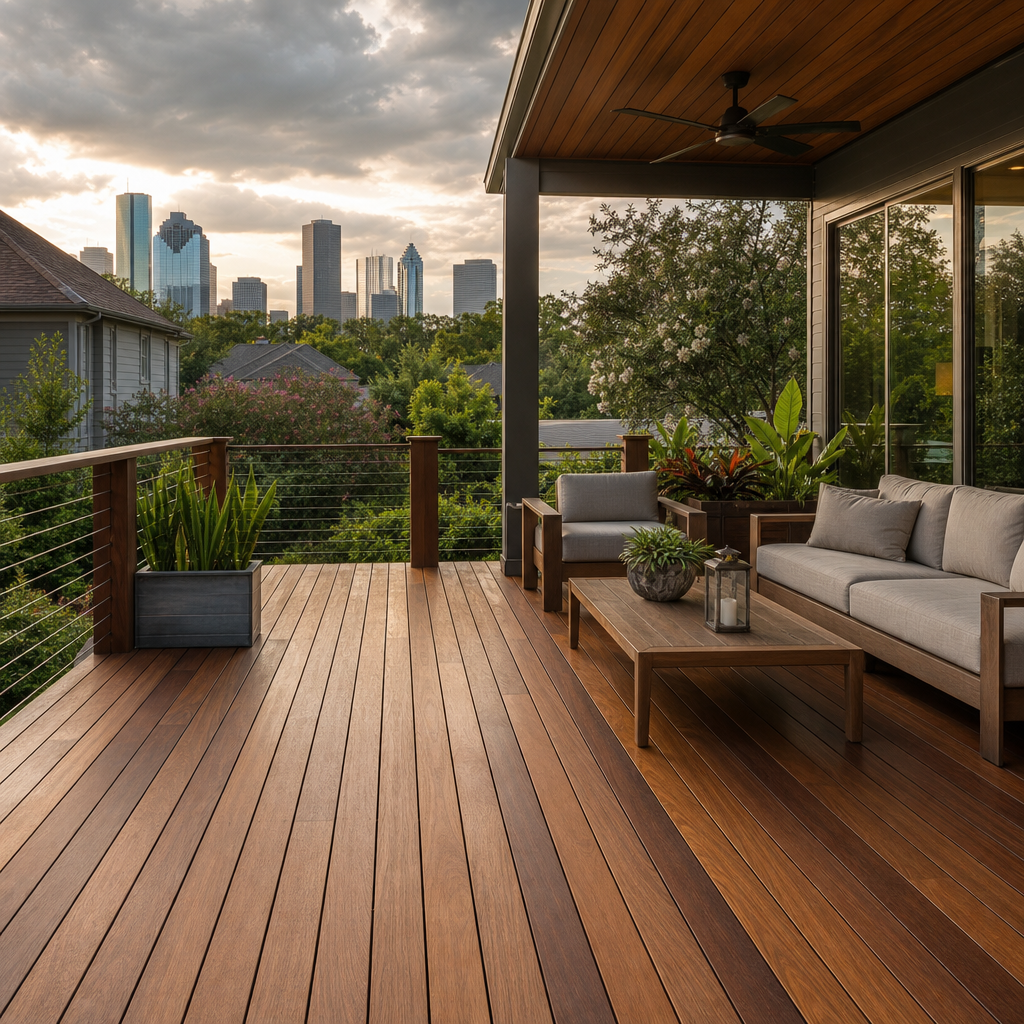
Cumaru comes from responsibly managed Brazilian forests and typically carries FSC certification, confirming sustainable harvest practices. It’s not just durable; it’s harvested with environmental accountability built into the supply chain.
Many architects specify tropical hardwoods with hesitation because of legitimate concerns about deforestation and habitat loss. FSC certification and transparent sourcing address those concerns directly. You’re using a material from forests managed for long-term productivity, not liquidated for short-term profit.
The durability piece amplifies the sustainability argument. A Cumaru deck lasting 25+ years requires no replanting cycle. A softwood deck that fails in 8-10 years means more frequent tree harvest, more material transportation, and more construction waste. Cumaru’s longevity is itself an environmental virtue.
We source our Cumaru exclusively from certified suppliers, which is why we can speak confidently about the environmental story behind the material. It’s not marketing. It’s supply chain transparency that modern architectural practices expect.
Verification step: Ask your supplier for FSC certificates or Chain of Custody documentation. Any broker worth partnering with provides this proactively. It’s the foundation of responsible material specification.
7. Why We Source and Stock Premium Cumaru for Texas Architects
We chose to stock Cumaru because it aligns with how architects in Texas actually work. You’re designing homes where warm, expressive wood is non-negotiable. You’re creating spaces where glass dissolves the boundary between interior and exterior, and the decking has to deliver both performance and beauty for decades.
Softwood suppliers and composite manufacturers sell commodities. We sell partnership. We maintain inventory of premium Cumaru in multiple profiles and thicknesses specifically because we work with architects who understand that material integrity matters. We don’t stock it once a year; we carry it year-round because your projects need it year-round.
Our team has installed Cumaru across Austin, Dallas, Houston, and throughout the Hill Country. We understand how it performs in local conditions. We know which installation details matter, which profiles work best for specific design intentions, and how to source consistent color and grain character across large orders.
When you specify Cumaru through us, you’re partnering with a supplier who has real experience with this material in Texas climates. We’re not middle-men hunting for inventory. We’re specialists who stock it because we believe in it.
Connect with us: Call 737.260.7431 to discuss your Cumaru specifications. We’ll review your project requirements and ensure you’re getting material that meets both your architectural vision and performance needs.
8. Installation Best Practices for Maximum Cumaru Decking Lifespan
Cumaru’s durability only materializes if installation respects the material’s specific requirements. Here are the non-negotiables:
Fastening and spacing: Use stainless steel or hot-dipped galvanized fasteners only. Standard steel fasteners will stain Cumaru’s surface and potentially cause checking around the fastener. Space boards 3/16″ to 1/4″ apart to accommodate seasonal wood movement and allow water drainage. Cumaru moves less than softwoods, but it still moves, and rigid spacing creates stress.
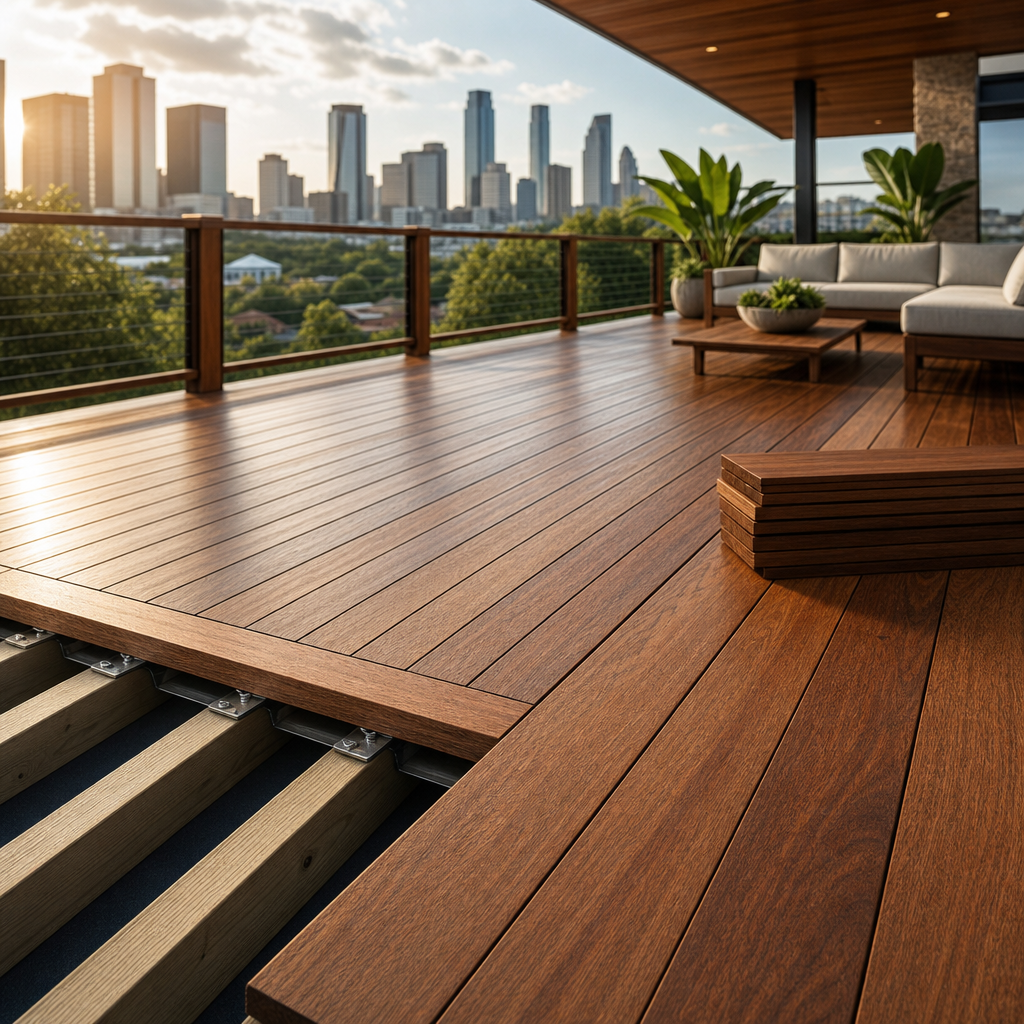
Substructure ventilation: Ensure air flows freely beneath the deck. Cumaru resists rot even in damp conditions, but standing water under the deck invites fungal growth and soft spotting. Properly ventilated substructures prevent moisture accumulation and extend both the decking and framing lifespan.
Fastener placement: Pre-drill fastener holes to prevent splitting, especially near board ends. Cumaru’s density means conventional screw-driving can cause checking. This adds labor upfront but prevents surface integrity issues that become visible within a year.
Ledger board attachment: Use flashing that creates positive water shedding away from the structure. This is where most deck failures originate. Water gets behind the ledger, and the home’s rim band becomes compromised. Cumaru doesn’t prevent this; proper flashing does.
Finishing options: Cumaru performs without sealing, but many architects specify light oiling (typically annually or every other year) to maintain deeper color during early years. If you choose to seal it, use finishes designed for tropical hardwoods and reapply on a schedule that respects the material’s specific chemistry.
Final requirement: Work with installers who have experience with high-performance hardwoods. A crew trained on pressure-treated softwoods will make costly mistakes with Cumaru. The material deserves craftsmanship.
We’ve documented our installation protocols and can connect you with experienced contractors across Texas who understand Cumaru’s requirements. The material is only as good as the installation, so this partnership matters.
Cumaru decking represents the pinnacle of outdoor hardwood performance in Houston climates and throughout Texas. Its density, moisture resistance, natural durability, and aesthetic integrity position it as the definitive choice for architects designing homes where wood expression is central to the design vision. We stock premium Cumaru because we work with practitioners who refuse to compromise on material quality or performance. Specify with confidence. We’ll ensure you have the material and expertise to execute your vision.
For further reading: IPE Decking.
To place orders, order samples, or talk with a live person.
Frequently Asked Questions (FAQ)
Why do we specifically stock Cumaru for Houston’s climate?
We source Cumaru because its exceptional density and natural rot resistance make it ideal for Houston’s humid, moisture-rich environment. Our experience working with Texas architects shows that Cumaru outperforms other tropical hardwoods in our region’s challenging conditions, requiring minimal maintenance while maintaining its structural integrity for decades.
What makes Cumaru require less upkeep than softwood decking?
Unlike softwoods that absorb moisture and demand regular sealing, our Cumaru decking naturally resists weathering without chemical treatments. We find that our clients spend significantly less on maintenance since the wood doesn’t rot, splinter, or require frequent refinishing to stay protected from Houston’s wet climate.
How do we ensure the Cumaru we supply meets sustainability standards?
We source our Cumaru from FSC-certified suppliers who practice responsible forestry, ensuring our inventory meets the environmental standards our architect clients expect. We’re committed to providing premium materials that don’t compromise the ecological values many of our projects are designed around.


