

Why Architects Choose Fluted Wood Paneling for Contemporary Spaces
Fluted wood wall panels have become a signature element in contemporary architectural design, especially among practices inspired by the modern regional aesthetic that Lake|Flato and Page have championed across Texas and beyond. The vertical grooves create a rhythmic visual language that transforms a simple wall into an expressive architectural feature without competing with the overall design intent.
Architects gravitate toward fluted systems because they solve a real problem: how to introduce warmth and tactile materiality into open, minimalist spaces. Rather than relying on texture alone, the fluted profile uses light and shadow to define depth. Morning light striking east-facing walls produces subtle striations; evening light from the west creates bold dramatic shadows. This dynamic quality means the wall never feels static, even in rooms with restrained color palettes.
The precision of modern fluted paneling also appeals to design practices committed to craftsmanship. Unlike random-width siding or informal board-and-batten approaches, fluted systems maintain consistent spacing and profile geometry, creating a refined, intentional aesthetic. This regularity pairs beautifully with expansive glass, polished concrete, and minimalist furnishings that characterize contemporary residential and commercial projects across Texas.
What to do next: If you’re considering fluted panels for an upcoming project, begin by evaluating your site’s solar orientation and primary viewing angles. This determines which light conditions will activate the fluted profile most dramatically.
The Challenge of Achieving Authentic Wood Expression in Modern Design
Specifying wood for high-performance modern architecture requires balancing competing demands. You need genuine wood character and warmth, but modern building codes, moisture control, and durability standards can push designers toward composite materials or heavily engineered solutions that feel generic.
Many architects in Texas face the same tension: clients want the authentic appearance and feel of natural wood, especially Clear and Vertical Grain cedar, hemlock, or Douglas fir. Yet standard lumber often exhibits variable grain, checking, cupping, and weathering that can compromise the clean aesthetic of contemporary design. Moreover, exterior wood requires regular maintenance to preserve appearance, which doesn’t align with the low-maintenance expectations of modern homeowners.
This is where precision specification becomes critical. Sourcing vertical grain material specifically for fluted applications ensures grain runs parallel to the grooves rather than against them, eliminating the visual discord of grain competing with the intentional fluted geometry. Similarly, choosing the right wood species for your climate and exposure reduces unpredictable movement and surface degradation.
The challenge intensifies when architects want to push beyond traditional materials. How do you achieve the visual and tactile warmth of wood while incorporating fire-rated performance or superior dimensional stability? Standard softwoods alone cannot address all these constraints simultaneously.
What to do next: During the specification phase, request samples of actual fluted profiles in your target species. View them in both natural and artificial light, and observe how grain orientation affects your perception of the fluted depth.
How Precision Fluted Systems Create Visual Depth and Light Play
Fluted wood wall panels are fundamentally about orchestrating light. Each groove acts as a thin shadow line, and the cumulative effect of dozens or hundreds of grooves creates a surface that reads as dimensionally complex rather than flat.
The magic happens in the proportions. A groove that is too shallow reads as texture; one that is too deep looks crude or cave-like. Precision fluted systems typically maintain groove depths between 3/8″ and 5/8″, with spacing that matches the depth ratio. This creates a visual rhythm that feels intentional without overwhelming the architecture. The best contemporary fluted walls have a quiet confidence; they command attention without demanding it.
Light behavior shifts throughout the day and with the seasons. A south-facing fluted cedar wall in Austin will show crisp shadow definition at sunrise and sunset, while midday light may soften the grooves into a gentle shimmer. This temporal quality gives fluted panels an almost kinetic presence. Architects often specify them in circulation spaces, thresholds, or accent walls where this dynamic character enhances the user experience.
Photographically, fluted panels are highly photogenic, which matters for architect portfolios and marketing materials. The pronounced shadow lines and grain visibility create compelling imagery, even in photographs taken under mediocre lighting conditions. This is one reason why award-winning contemporary homes increasingly feature fluted wall treatments as signature elements.
The material thickness also influences depth perception. Thicker panels (1.25″ to 1.5″) allow for deeper, more pronounced grooves that read more boldly at a distance. Thinner panels (0.75″) work beautifully in interiors where viewers stand closer and the subtle play of light suffices.
What to do next: Create a lighting mock-up in your project space. Even a 2’x4′ sample of fluted panels mounted at full scale, photographed under your site’s actual light conditions, will reveal how the system will perform in your specific context.
Our Premium Selection of Vertical Grain Woods for Architectural Projects
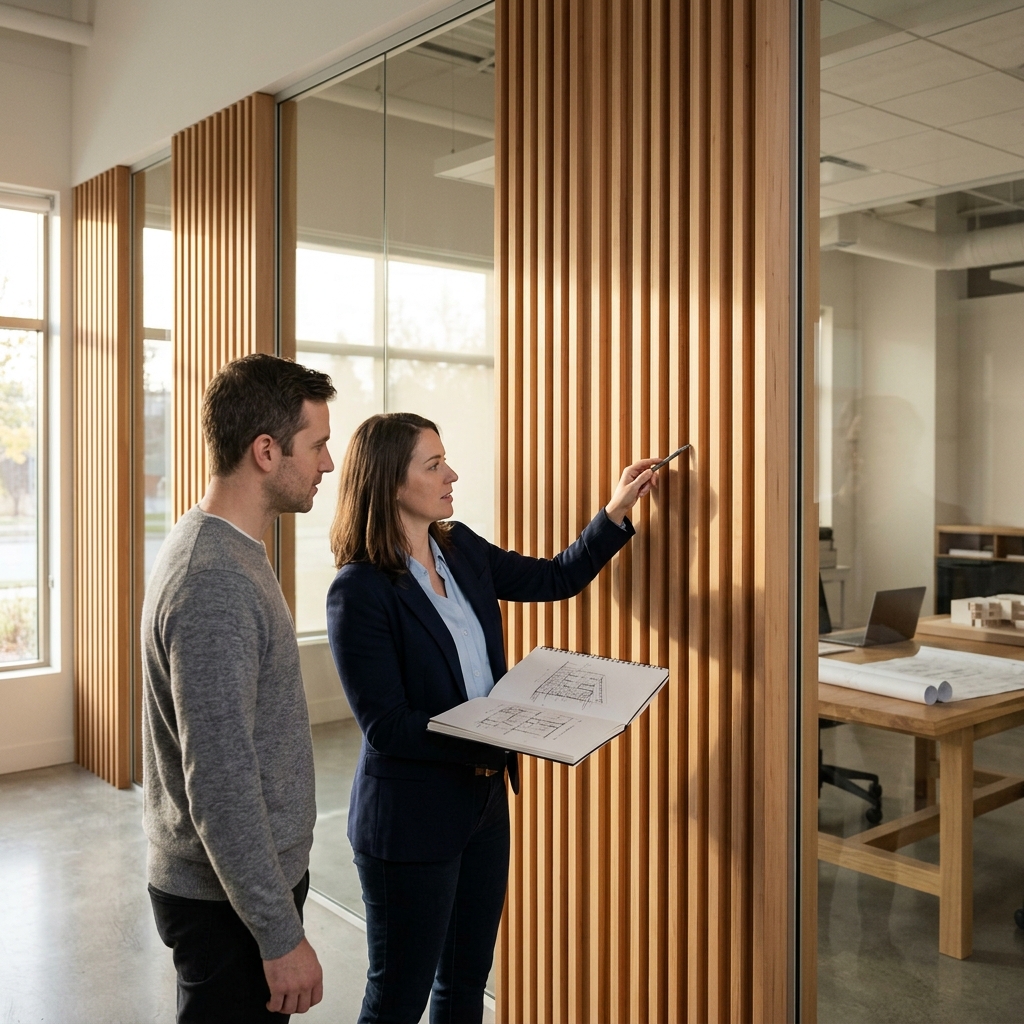
We supply Clear and Vertical Grain softwoods specifically selected for architectural applications where grain character and dimensional stability matter. Our vertical grain Douglas Fir, Western Red Cedar, and Hemlock come from mills that understand how grain orientation affects both aesthetics and performance.
Clear grades eliminate knots and defects that can interrupt the visual continuity of fluted profiles. Vertical grain orientation ensures growth rings run perpendicular to the surface, producing tighter grain lines that are less prone to cupping, twisting, or splitting. For architects designing fluted systems, this is non-negotiable. The fluted profile is only as effective as the material’s visual cleanliness and dimensional stability.
Beyond traditional softwoods, we stock premium hardwoods suited to contemporary interior fluted applications. Ipe decking and cladding bring density and natural fire resistance. Cumaru and Garapa offer warm honey tones that complement minimalist interiors while delivering superior durability. For architects seeking distinctive character with performance, these hardwoods solve problems that standard lumber cannot address alone.
Our selection includes species with varying grain expression. Cedar offers fine, even grain with subtle color variation. Douglas Fir displays more pronounced grain lines and warmer amber tones. Hemlock presents finer grain and lighter color, favoring architects who want understated wood expression. Each species performs differently in fluted applications, and the choice should align with your design intent and long-term maintenance expectations.
What to do next: Request samples of vertical grain material from each species you’re considering. Observe grain direction and spacing under the same lighting conditions where your fluted panels will be installed.
Thermally Modified and Sustainable Options for High-Performance Interiors
Thermally modified wood represents a breakthrough for architects seeking genuine wood warmth without the maintenance burden of traditional exterior wood or the synthetic appearance of composite materials. By heating wood to temperatures between 390-480°F in an oxygen-free environment, thermal modification alters the wood’s cellular structure, improving dimensional stability and decay resistance without adding chemicals.
Thermally Modified Wood Siding in species like Ash, Pine, and Poplar delivers color-shifted tones ranging from warm chocolate browns to rich amber hues. These colors are inherent to the wood, not applied, so they age gracefully and develop character over time rather than peeling or fading. For fluted wall panels, thermally modified options perform exceptionally well because the reduced moisture movement means grooves stay crisp and grain remains stable.
We also offer FSC-certified materials for practices committed to environmental stewardship. FSC certification verifies that wood comes from responsibly managed forests where biodiversity, indigenous rights, and sustainable harvesting practices are prioritized. Many contemporary architects and their clients view this verification as essential to project integrity.
Thermal modification and FSC certification are not mutually exclusive. We source thermally modified ash and other species from suppliers maintaining both certifications, allowing you to specify authentic wood with both performance and environmental credentials.
The environmental case for fluted wood panels is straightforward: wood sequesters carbon, requires minimal processing energy relative to composites or metals, and delivers sensory qualities that manufactured materials cannot replicate. For architects designing consciously, this matters.
What to do next: Compare the lifecycle environmental impact of your proposed fluted system against alternative materials. Request documentation of FSC certification for any specified wood products, and verify thermal modification specifications (target temperature and duration).
Installation Considerations for Fluted Wall Panel Systems
Precision fluted panels demand careful installation planning. Improper handling or assembly can compromise the visual integrity of the system and lead to callbacks or warranty disputes.
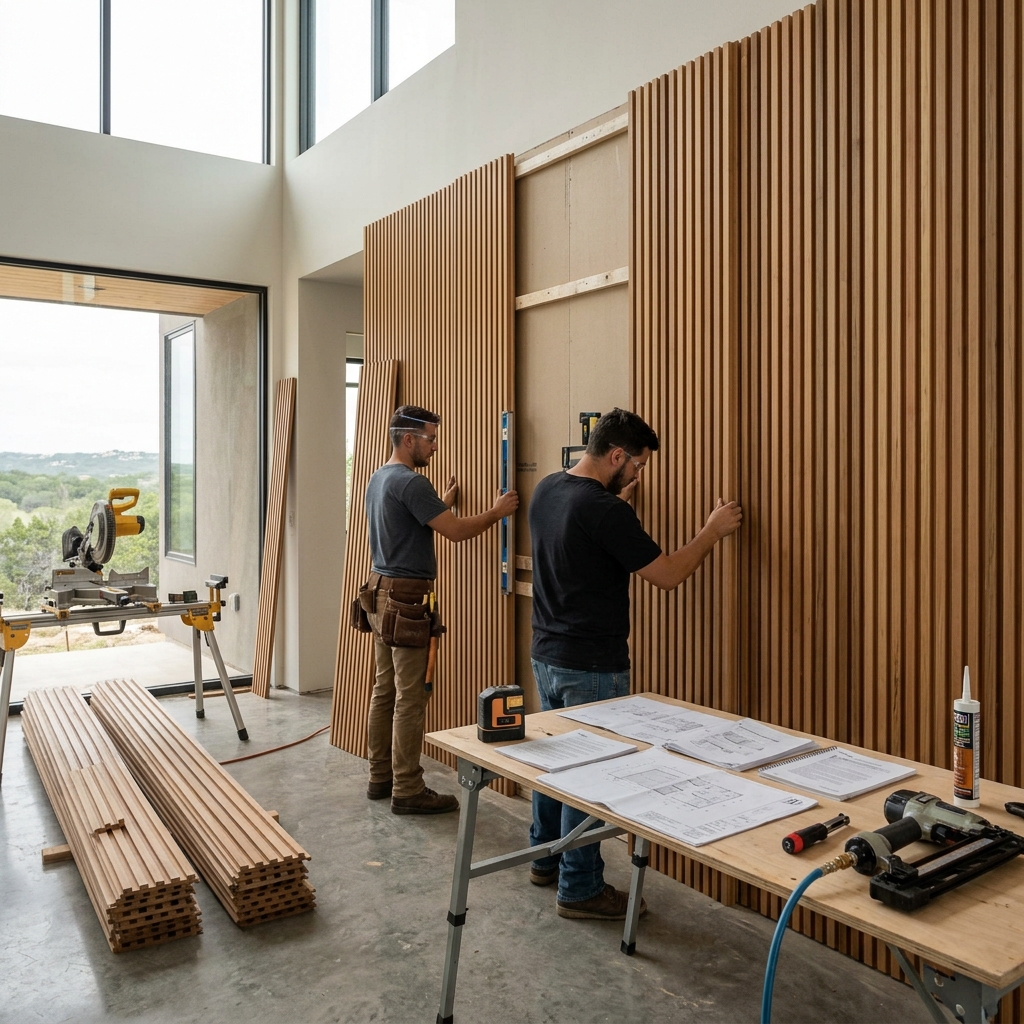
Substrate preparation is foundational. Fluted panels must be installed over structurally sound, appropriately dimensioned backing that can accommodate seasonal wood movement. This typically means furring strips or structural sheathing that allows for cross-grain movement without binding. For exterior applications, moisture barriers and ventilation gaps are essential; interior applications still require careful attention to preventing moisture accumulation behind the panels.
Grain direction matters at installation. If you specify vertical grain material for a reason, the installer must understand that grain orientation relative to the fluted grooves is not arbitrary; it’s integral to the design intention. A qualified installer will lay out material to confirm grain runs the intended direction before cutting and securing panels.
Fastening systems should be concealed whenever possible. Surface-mounted fasteners interrupt the visual flow of fluted profiles, reducing the elegance of the system. Pocket-screwing, toe-nailing, or using brad nails with careful fill-and-finish work maintains the intended aesthetic.
For thermally modified and hardwood species, expansion and contraction rates differ from traditional softwoods. Installation guidelines must account for these differences. Douglas Fir and Cedar move more than thermally modified Ash or Ipe, requiring different spacing and fastening strategies.
Edge details and transitions warrant special attention. How fluted panels meet ceilings, windows, corners, and other architectural elements can either integrate seamlessly or feel awkward. Custom mill work to transition fluted profiles to standard trim details is often justified by the enhanced visual result.
What to do next: Develop detailed installation specifications with your builder or installer before material procurement. Include substrate requirements, fastening methods, grain direction confirmation, and expansion-gap protocols specific to your chosen wood species and climate.
Design Flexibility Across Residential and Commercial Projects
Fluted wood wall panels perform brilliantly in both residential and commercial contexts, though the design strategy and material selection often differ.
In residential settings, fluted paneling typically appears as accent walls in primary living spaces, bedrooms, or powder rooms where the dynamic interplay of light can be appreciated up close. Warm vertical grain cedar or thermally modified ash in a residential great room creates an enveloping atmosphere that blurs the boundary between interior and exterior, especially when adjacent to expansive glass. Guest houses, home offices, and spa-like bathrooms benefit equally from the warmth and sophistication of fluted wood walls.
Commercial applications lean toward larger surface areas and higher-traffic environments. Hotel lobbies, corporate offices, and hospitality venues use fluted panels to convey craftsmanship and intentionality. Because fluted systems are inherently architectural, they work well in spaces designed for public experience and lingering. The visual complexity of the fluted profile prevents a large wall of wood from reading as monotonous, even in minimalist color schemes.
Retail and gallery environments increasingly feature fluted wood paneling as backdrop for merchandise or art. The subtle shadow play provides visual interest without competing with displayed objects. The material warmth also influences buyer psychology, encouraging a sense of quality and care.
The modular flexibility of fluted systems allows adaptation to unconventional geometries. Sloped ceilings, curved walls, and irregular spatial conditions can all incorporate fluted panels through custom mill work. This adaptability makes fluted systems viable even for complex contemporary projects with sculptural architectural intentions.
What to do next: Consider the user experience and viewing distance when specifying fluted panels. Interior applications viewed up close may benefit from finer grooves; large public spaces viewed from distance can accommodate bolder profiles.
Durability and Maintenance of Fluted Wood Wall Treatments
The durability profile of fluted wood panels depends significantly on species, finish, and environmental exposure. Clear and Vertical Grain softwoods like cedar and Douglas Fir will weather and develop patina over time if left unfinished. For many contemporary projects, this silver-grey weathering is intentional and visually compelling. Interior applications rarely require finishing and virtually never require ongoing maintenance.
Exterior fluted walls introduce higher performance demands. Moisture, UV exposure, and thermal cycling can degrade unfinished softwoods within a few years if the installation fails to allow proper drying. This is why substrate ventilation is critical; standing moisture behind fluted panels will accelerate decay regardless of wood quality.
Thermally modified wood provides genuine durability advantages. The reduced moisture movement means panels stay dimensionally stable, grooves remain crisp, and fasteners don’t loosen from wood movement. Thermally modified exterior panels, if properly detailed, can maintain appearance and integrity for 15-25 years with minimal maintenance. Some architects consider them “set and forget” systems, which appeals to clients seeking low-maintenance luxury.
Hardwoods like Ipe and Cumaru offer natural decay resistance rivaling composite materials, with the authentic aesthetics of wood. These materials require no chemical preservatives and age beautifully. Their high density and hardness actually improve over time as the wood tightens.
For finished fluted panels, whether interior or exterior, the finish durability often exceeds the wood durability. Quality exterior finishes (high-grade solid stains or paints) can extend the service life of softwood panels significantly. Interior clear finishes or oils are largely protective, preserving wood color and patina while reducing wear from dust and handling.
What to do next: Specify a finishing or weathering plan alongside your fluted panel specification. Clarify whether unfinished weathering or maintained finish is the intended aesthetic, and ensure your builder understands the implications for long-term appearance.
Working with Our Team to Specify Your Perfect Wood Solution
Specification for fluted wood wall systems is collaborative. We work closely with architects, builders, and designers to ensure material selection aligns with design intent, performance requirements, and constructability constraints.
The process typically begins with a design discussion: What is the primary viewing angle? How will light interact with the panels throughout the day and season? What performance requirements exist (fire rating, moisture exposure, durability)? What budget parameters apply? These questions shape the recommendation toward specific species, grades, and finishing approaches.
Sample provision is critical. We can supply full-scale fluted panel samples in your target species and thickness, installed on representative substrate and photographed under actual project light conditions. Seeing material in context, rather than in a showroom under artificial lighting, often reveals nuances that influence final specification.
Material procurement planning requires lead-time realism. Premium vertical grain material, FSC-certified stock, and thermally modified species are not always in commodity-level inventory. Engaging us early in the design phase ensures material availability aligns with construction scheduling.
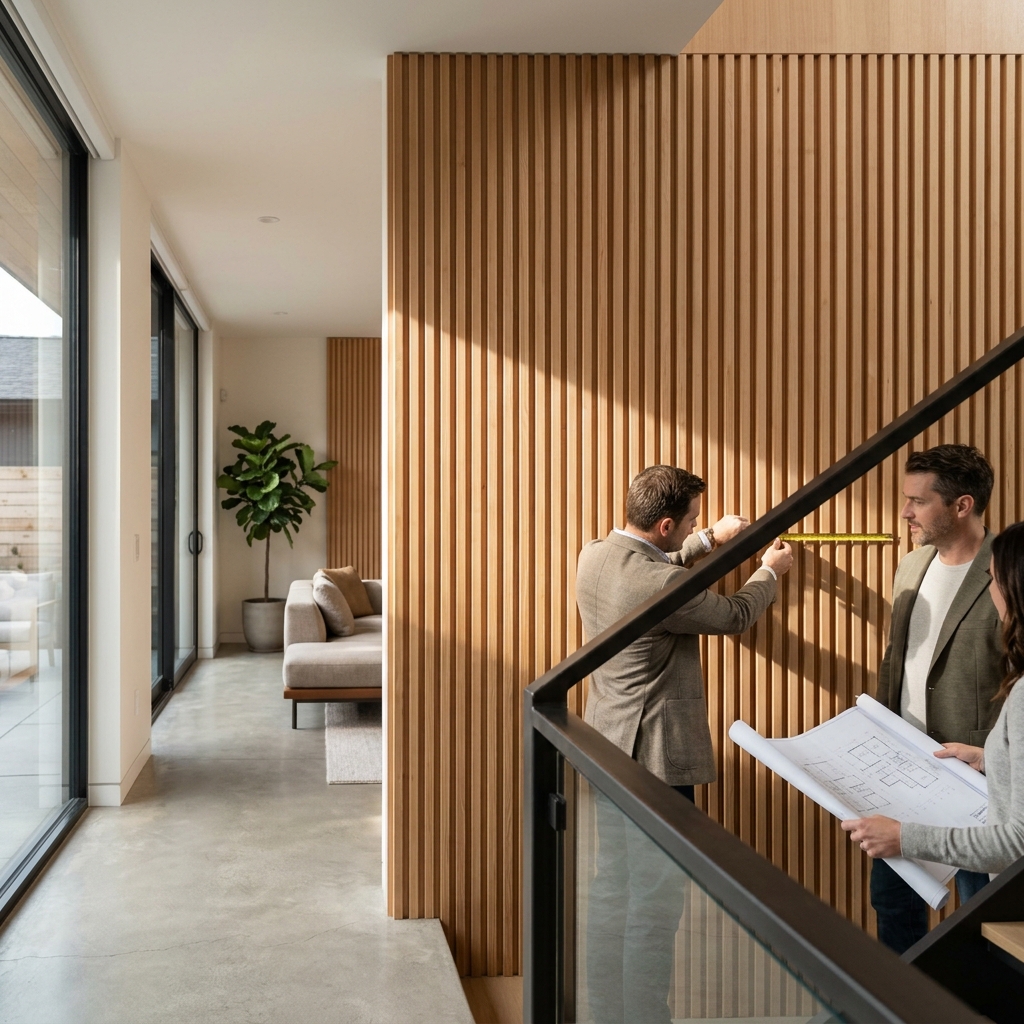
Mill custom work often adds value. If your fluted panel geometry is non-standard or requires custom transitions to other details, we can coordinate with mills to produce exactly what your design demands. This is especially important for projects with custom profiles or unusual angles.
Installation support is available. We maintain relationships with experienced builders and installers familiar with precision wood paneling systems. If your contractor needs guidance on substrate prep, fastening strategies, or material acclimation, we can facilitate that conversation.
What to do next: Reach out to our team with your project details, target timeline, and initial material preferences. We’ll provide samples and a preliminary specification package tailored to your specific design and performance requirements.
Portfolio Examples of Fluted Paneling in Award-Winning Designs
Contemporary residential and commercial projects across Texas increasingly feature fluted wood wall systems as signature architectural elements. While we cannot speak to other firms’ specific installations, we can note that award-winning contemporary homes consistently leverage fluted panels in entry spaces, great rooms, and bedroom accent walls where the light-responsive character of the system creates memorable spatial experiences.
Hospitality projects have embraced fluted wood paneling as a way to signal craftsmanship and intentionality. Boutique hotels, wellness retreats, and high-end restaurants use fluted systems to create sophisticated, warmth-infused environments that photograph beautifully and create positive guest impressions.
Residential projects in the Texas Hill Country, Horseshoe Bay, and the greater Austin area demonstrate the versatility of fluted systems across climate and design contexts. From modern residences in Dripping Springs to luxury homes in Tarrytown and Downtown Austin, architects are specifying fluted cedar, thermally modified ash, and hardwood paneling to achieve distinctive, architect-driven interiors.
Commercial office environments in Dallas, Houston, and Fort Worth use fluted panels in lobby spaces, executive suites, and collaborative areas. The material warmth reduces the institutional feel common in commercial architecture, while the visual complexity maintains visual interest across large walls.
The consistency of fluted paneling across diverse project types and locations confirms its value as an architectural tool. When specified thoughtfully and installed with precision, fluted wood walls deliver character, durability, and design distinction that other materials struggle to match.
What to do next: Review portfolio images of completed projects featuring fluted wood paneling. Identify which design contexts and material choices most closely align with your project vision, then discuss those references with our team.
—
At US Lumber Brokers, we supply the premium materials and expertise needed to realize fluted wood wall designs with confidence. Whether you’re specifying Clear and Vertical Grain cedar, thermally modified ash, hardwood species, or FSC-certified sustainable options, we partner with architects to deliver material that meets aesthetic intent and performance demands. Contact us to discuss your project and request samples tailored to your specific application.
To place orders, order samples, or talk with a live person.
Frequently Asked Questions (FAQ)
What wood species do we recommend for fluted wall panels in contemporary homes?
We typically specify Clear or Vertical Grain Western Red Cedar, Douglas Fir, Hemlock, or Cypress for our fluted systems because they machine cleanly and showcase the grain patterns architects want. For higher-performance applications, we offer thermally modified options like Thermally Modified Ash or Pine, which provide enhanced stability and durability without compromising the visual expression of the fluting. Our team can help you select based on your project’s specific aesthetic and performance requirements.
How do fluted wood panels perform in Texas climates, and what maintenance should we expect?
Our fluted systems handle Texas humidity and temperature swings well, especially when we specify thermally modified woods that resist movement and warping. We recommend a maintenance approach that matches your design intent: clear finishes showcase the wood’s natural character but require periodic resealing, while pigmented or natural weathering finishes develop a patina that many architects appreciate. We can provide detailed care guidelines during the specification phase so you know exactly what your owner will need to maintain the installation long-term.
Can we integrate fluted paneling with other materials on the same project?
We absolutely design fluted systems to work alongside glass, metal, and composite elements, which is how we approach most contemporary work with our architect partners. Our team handles the technical details of transitions and specifications so your fluted wood walls integrate seamlessly with the rest of your material palette. We’ve worked through these details on everything from residential feature walls to commercial installations, so we can anticipate coordination challenges before they happen.


