

Why Sauna Wood Selection Matters for Architectural Projects
For architects designing contemporary luxury homes across Dallas and Central Texas, sauna specification isn’t a detail to delegate. The right wood material drives both performance and aesthetic impact. A sauna interior defines the entire sensory experience: how heat distributes, how moisture resists wood degradation, and whether the visual warmth of natural grain becomes a design feature or a maintenance liability.
We understand that your high-end residential projects demand materials that perform as beautifully as they look. Sauna wood isn’t commodity lumber. It must withstand repeated thermal cycling, high humidity, and temperature swings that would compromise standard construction timber. The wood you select either becomes a lasting signature element of the home or a source of callbacks and costly repairs within five years.
Your client’s sauna is often the most intimate space in a modern luxury home. Material selection sets the tone for whether that investment feels like a thoughtful sanctuary or a regrettable upgrade.
The Challenge: Finding Durable, Aesthetically Refined Sauna Materials
Most architects working in Texas face the same friction point: standard lumber simply fails in sauna environments. Untreated softwoods warp, crack, and eventually rot when exposed to the 150-190-degree Fahrenheit heat and 40-60% humidity that characterize sauna use. Cedar and hemlock are traditional choices, but untreated domestic options lack the dimensional stability needed for long-term performance.
The alternative materials on the market come with tradeoffs. Tropical hardwoods like Ipe offer durability but arrive with sustainability questions and sourcing complexity. Composite products eliminate wood entirely, losing the warmth and grain character that define contemporary architectural vision. Mid-range suppliers push whatever inventory moves fastest, not what actually performs best in a thermal environment.
Your deeper challenge: finding a supplier who stocks genuinely architect-grade sauna wood, understands thermal performance specifications, and can deliver consistent quality across multiple project phases.
Our Thermally Modified Wood Advantage for Sauna Applications
We’ve built our sauna wood selection around thermally modified timber, and this choice directly addresses the performance gap that trips up most projects. Thermal modification is a non-chemical heat treatment that fundamentally alters wood cell structure, improving dimensional stability and moisture resistance without synthetic coatings or chemical preservatives.
Thermally modified wood shrinks and swells less than untreated softwood. It resists fungal growth and insect damage naturally. It won’t check, warp, or cup at the rates that make standard cedar and pine problematic in sauna interiors. For architects, this means specifying a material that performs reliably across the 20-30 year lifespan of a luxury home.
We distribute thermally modified wood products specifically engineered for high-moisture applications. Our inventory includes Lunawood, Thermory, and our own thermally modified ash, pine, and poplar selections, each chosen for sauna performance and visual character.
Lunawood and Thermory: Understanding the Leading Options

You’ve likely heard both names in sauna specification conversations. Lunawood, manufactured in Finland, offers thermally modified spruce and pine in narrow profile boards. Thermory, also European, brings thermal ash and pine with broader visual variation and deeper color options. Both carry strong technical credentials and architect recognition.
Where these products differ is in grain expression and color range. Lunawood delivers subtle, uniform appearance suited to minimalist contemporary spaces. Thermory’s thermal ash shows richer grain character and warmer tones that resonate with architects seeking material expressiveness. Neither is objectively superior; the choice depends on your design direction and client preference.
Our advantage: we stock both options, plus alternatives that often cost less while delivering equivalent performance. Speak with us about your specific aesthetic goals rather than defaulting to the most recognizable names in the market.
How Our Thermally Modified Ash Outperforms Standard Alternatives
Thermally modified ash represents our flagship sauna specification. Native ash wood, thermally treated through controlled heating, becomes substantially more stable than its untreated state. The treatment darkens the wood slightly, revealing warm honey and chocolate tones that complement contemporary design sensibilities. Unlike standard ash, which can move significantly with humidity, thermally modified ash maintains dimensional consistency.
For Dallas architects accustomed to working with warm wood tones in living spaces, thermally modified ash translates that aesthetic directly into the sauna environment. The grain remains visible and character-rich, avoiding the bland uniformity that bothers architects who value material authenticity. It’s also FSC certified in many of our product lines, addressing sustainability specifications without compromise.
Standard alternatives like untreated white pine will cost less upfront but deteriorate faster, creating warranty and satisfaction issues. Thermally modified ash costs more initially but eliminates the guesswork and provides transparent, predictable long-term performance.
Thermal Modification Benefits for Sauna Environments
The technical benefits of thermal modification compound in sauna applications where performance pressure is highest. The treatment increases wood density and hardness, improving resistance to scratching and surface damage from use. It reduces water absorption, meaning the wood resists moisture penetration that normally triggers mold, rot, and structural failure.
Thermally modified wood also performs better at temperature extremes. When a sauna cycles from 160 degrees to ambient room temperature, untreated wood experiences stress that opens checks and surface cracks. Thermally modified timber handles these swings with minimal movement, preserving smooth, splinter-free surfaces that matter in a barefoot space.
The treatment is permanent and doesn’t degrade over time. You’re not relying on surface sealers that require maintenance or eventually break down. The material protection is built into the cell structure itself.
Our Sauna Wood Range: Cedar, Pine, Poplar Excellence
Beyond thermally modified ash, we stock a complete sauna wood range suited to different aesthetic directions and budget profiles. Clear grain Western Red Cedar, both thermally modified and traditional treatments, delivers the classic sauna aesthetic with warm, honey-colored grain. Vertical grain options eliminate the flat sawn appearance that some architects find visually weak.
Thermally modified pine offers affordability with solid performance, particularly where architects want lighter wood tones or subtle grain expression. Thermally modified poplar serves contemporary minimalist designs where uniformity and neutral tone matter more than grain character. Each option stabilizes in a sauna environment far more effectively than untreated equivalents.
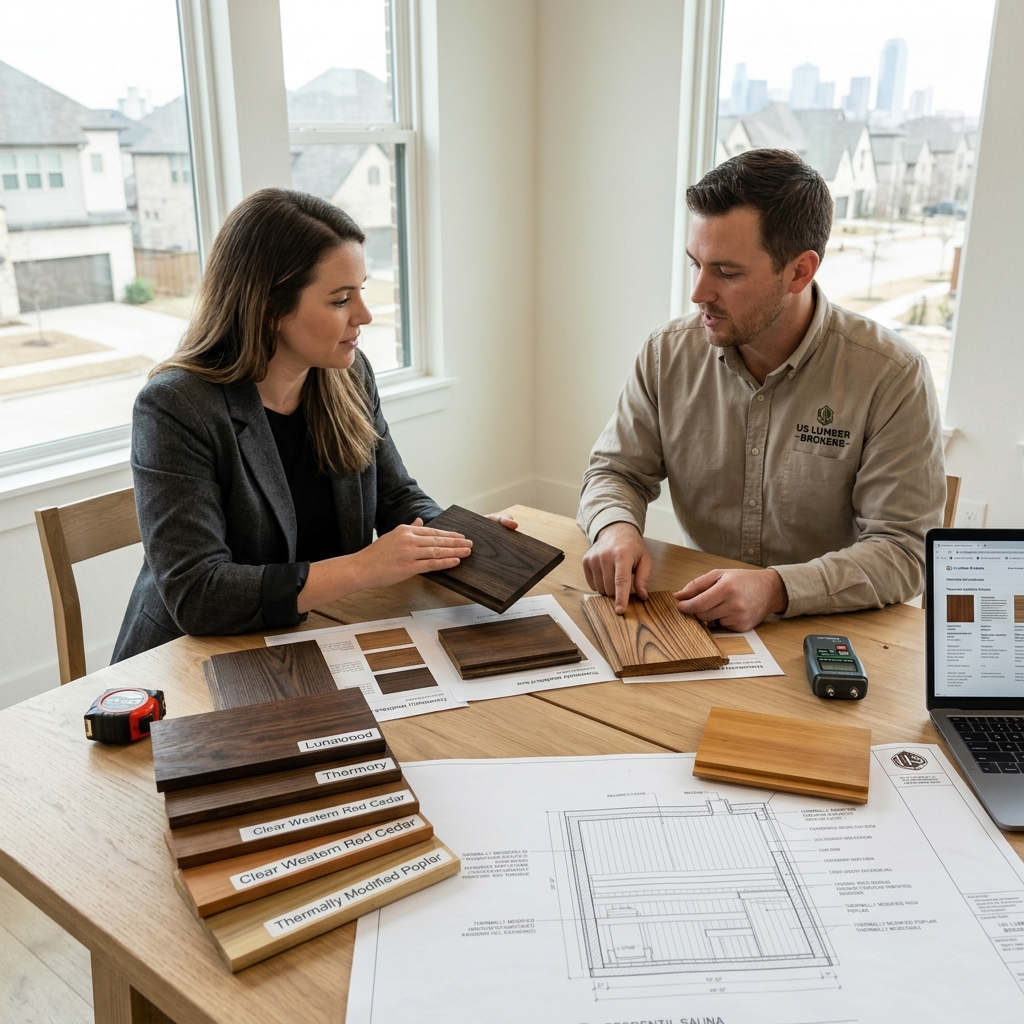
We can help you narrow the choice based on your specific design intent: are you emphasizing material warmth as a design feature, or minimizing visual clutter to let architectural form dominate? That conversation determines whether you specify ash, cedar, pine, or poplar.
Fire Rating and Safety Standards We Meet
Building codes for luxury homes in Texas increasingly specify fire-rated materials in interior spaces. Our sauna wood selection includes WUI Class A fire-rated options that meet or exceed current safety standards without requiring additional chemical treatment. This matters particularly in Central Texas regions where wildfire risk influences municipal code requirements.
Class A rating ensures minimal smoke development and flame spread under standardized fire testing. Our thermally modified products maintain these ratings without compromising the authentic wood character that defines contemporary design. You can specify premium sauna materials that satisfy both aesthetic and safety requirements simultaneously.
Design Flexibility: Color, Grain, and Texture Options
Contemporary architecture relies on material honesty and subtle variation. Our sauna wood portfolio offers multiple grain and color options rather than forcing a single aesthetic. Vertical grain profiles eliminate flat sawn appearance, supporting the clean-lined design language that influences firms like Lake|Flato. Quarter-sawn selections provide more uniform grain character for minimalist spaces.
Color ranges span from pale honeycomb in lighter thermally modified pine to deep chocolate tones in thermally modified ash. Edge-matched selections maintain grain continuity across wall surfaces, while random-width profiles introduce subtle visual rhythm. These aren’t trivial choices; they directly influence whether the sauna reads as warm sanctuary or generic installation.
We can source samples and color-matched board runs to match your specific design vision before full project procurement.
Why Dallas Architects Choose Our Sauna Wood Solutions
Dallas architects specify our sauna wood because we eliminate the sourcing friction that typically accompanies thermal projects. We stock architect-grade inventory in consistent quality, rather than special-ordering and managing lead times. We understand contemporary design intention and can recommend materials that align with your aesthetic vision, not just performance specifications.
We’re also locally based in Texas, reducing complexity around material availability and project management. When you need samples, replacements, or consultation during installation, we’re accessible rather than coordinating across regional or national suppliers.
Most importantly, we specialize in premium wood materials rather than treating sauna products as a sideline. Our team has installed experience, understands failure modes, and can address design challenges with authority rather than general contractor assumptions.
Installation and Longevity Considerations
Thermally modified wood requires proper installation practices to realize its performance benefits. Adequate ventilation behind wall cladding prevents moisture accumulation that can compromise the material. Fastening strategies matter: stainless steel hardware prevents corrosion that can mar wood surfaces. These aren’t complex requirements, but they separate successful long-term projects from callbacks.
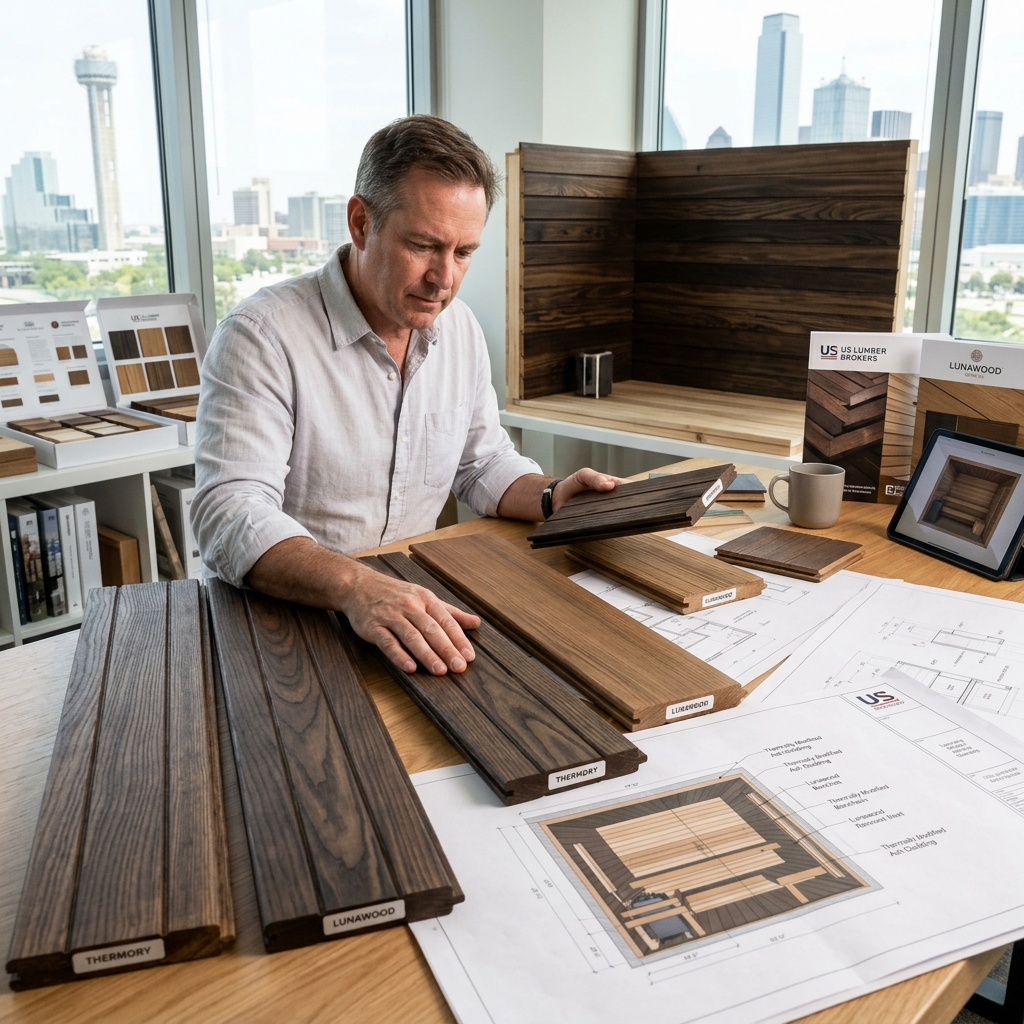
We provide installation guidance and material specifications that architects can pass to builders. Our experience with dozens of sauna projects across Texas has clarified best practices that ensure 20-30 year longevity. Properly installed thermally modified sauna wood won’t require replacement during the home’s active lifespan.
Standard untreated wood typically requires restoration, refinishing, or replacement within 10-15 years in sauna service. Thermally modified material eliminates that maintenance cycle entirely, providing genuine long-term value despite higher initial material cost.
Selecting the Right Sauna Wood for Your Project
The path forward is straightforward: determine your design aesthetic (warm grain expression versus minimalist uniformity), clarify your performance requirements (standard WUI codes versus additional fire rating), and specify accordingly. Thermally modified wood across our product range solves the core problem that standard lumber creates in sauna environments.
We recommend starting with sample selection. Seeing how our thermally modified ash, cedar, and pine appear in actual interior light conditions clarifies whether subtle tones or pronounced grain becomes your design signature. That tactile, visual confirmation prevents specification mistakes that cost time and credibility.
Contact us at 737.260.7431 to discuss your upcoming sauna project. We’ll help you navigate material selection with the specificity that high-end residential architecture demands, and deliver consistent, performance-proven material that your clients will appreciate for decades. Our thermally modified wood selections represent the definitive approach to premium sauna specification in Texas because they combine architectural character with honest durability that survives the thermal environment without compromise.
To place orders, order samples, or talk with a live person.
Frequently Asked Questions (FAQ)
What thermally modified woods do we recommend for sauna applications?
We stock Thermally Modified Ash, Pine, and Poplar specifically engineered for the demanding moisture and temperature fluctuations inside saunas. Our thermally modified selections outperform standard lumber because the heat-treatment process permanently alters the wood’s cellular structure, eliminating the warping and cupping issues architects typically encounter with untreated materials. These products maintain dimensional stability while delivering the aesthetic warmth your designs require.
How do our sauna woods meet fire safety requirements for commercial and residential projects?
We supply WUI Class A fire-rated wood products suitable for both residential and commercial sauna installations, ensuring your projects comply with local building codes across Texas. Our certified inventory includes materials tested and approved for high-performance environments where safety standards are non-negotiable. We can verify specific fire ratings and certifications for your project’s jurisdiction during the specification phase.
Why should architects specify our thermally modified options over cedar or other traditional sauna materials?
While we carry premium Clear and Vertical Grain Western Red Cedar and other softwoods, our thermally modified woods offer superior durability in extreme heat and humidity without the maintenance demands cedar requires. We’ve found that architects choosing our modified ash and pine experience fewer callbacks related to dimensional movement, discoloration, or mold susceptibility. Your designs stay true to intent for the life of the structure rather than requiring refinishing or replacement.


