

The Challenge: Selecting the Right Wood Siding Profile for Your Texas Project
Choosing between fluted and comb wood siding profiles isn’t just a cosmetic decision. We work with architects and contractors across Texas who face this selection regularly, and the choice directly impacts your project’s long-term performance, maintenance requirements, and visual impact.
The decision hinges on several practical factors: how the profile sheds water in our intense Texas sun and occasional heavy rains, how it ages over time, what maintenance schedule your client will accept, and whether the aesthetic aligns with the project vision. Get this wrong, and you’re managing callbacks, warranty issues, or worse, structural concerns that could have been prevented.
We’ve built our business by helping designers navigate exactly this kind of decision with clarity and precision. Our specialty is providing the right wood profile for your specific application, not pushing inventory.
What to do next: Assess your project’s exposure level (how much direct sun and rain it receives) and your client’s maintenance comfort level before moving forward.
Understanding Fluted Wood Siding: Aesthetic and Performance Benefits
Fluted profiles feature vertical grooves running the length of the board, creating bold shadow lines and pronounced texture. The grooves are typically rounded or slightly beveled, allowing water to flow predictably down the channels without pooling.
We stock fluted siding in vertical grain Western Red Cedar, Douglas Fir, and Hemlock. The dimensional consistency of vertical grain wood makes fluted profiles perform better than flat-grain alternatives because the grain structure remains stable across seasonal moisture changes.
Fluted siding excels at:
- Creating dramatic visual depth on large facades
- Directing water away from the board surface itself
- Maintaining consistent appearance across multiple board widths
- Reading as distinctly contemporary or modern
The trade-off is that flutes require careful installation and occasional cleaning. Debris accumulation in the grooves is manageable but worth acknowledging. On projects where the client expects minimal maintenance or the site sits in a dusty area (common in Hill Country developments), this becomes a real consideration.
Actionable takeaway: Specify fluted profiles for high-visibility facades where the dramatic shadow lines justify the maintenance conversation with your client upfront.
Understanding Comb Wood Siding: Design Versatility and Durability
Comb profiles, also called comb siding, feature closely spaced parallel grooves that create fine horizontal or vertical lines depending on board orientation. The grooves are shallower than fluted designs, producing subtle visual interest rather than bold shadow patterns.
Comb Siding works exceptionally well for projects requiring a refined, understated aesthetic. We supply comb siding in our full range of specialty woods including Clear and Vertical Grain Cedar, Cypress, and thermally modified options. The shallow groove profile sheds water effectively while presenting minimal surface complexity.
Comb siding advantages include:
- Subtle, sophisticated appearance that doesn’t compete with other design elements
- Lower debris accumulation due to shallower grooves
- Better compatibility with transitional and traditional architectural styles
- Easier cleaning and maintenance intervals
- Superior performance in sheltered locations or mid-story applications
The visual effect is understated elegance. Rather than making a bold statement, comb siding supports the overall design while adding craft and texture.
Actionable takeaway: Choose comb profiles for mixed-use facades or when the siding should enhance rather than dominate the architectural expression.
Profile Aesthetics: How Fluted and Comb Siding Transform Building Facades
We’ve installed both profiles on comparable residential and commercial projects across Austin, Dallas, and Houston. The visual transformation is striking, even when using the same wood species.
A modern residence in West Austin wrapped in fluted Cedar reads sharp and intentional. The same Cedar in comb profile on a neighboring contemporary home feels warmer and less severe. Neither is objectively better, but the psychological impact differs substantially.
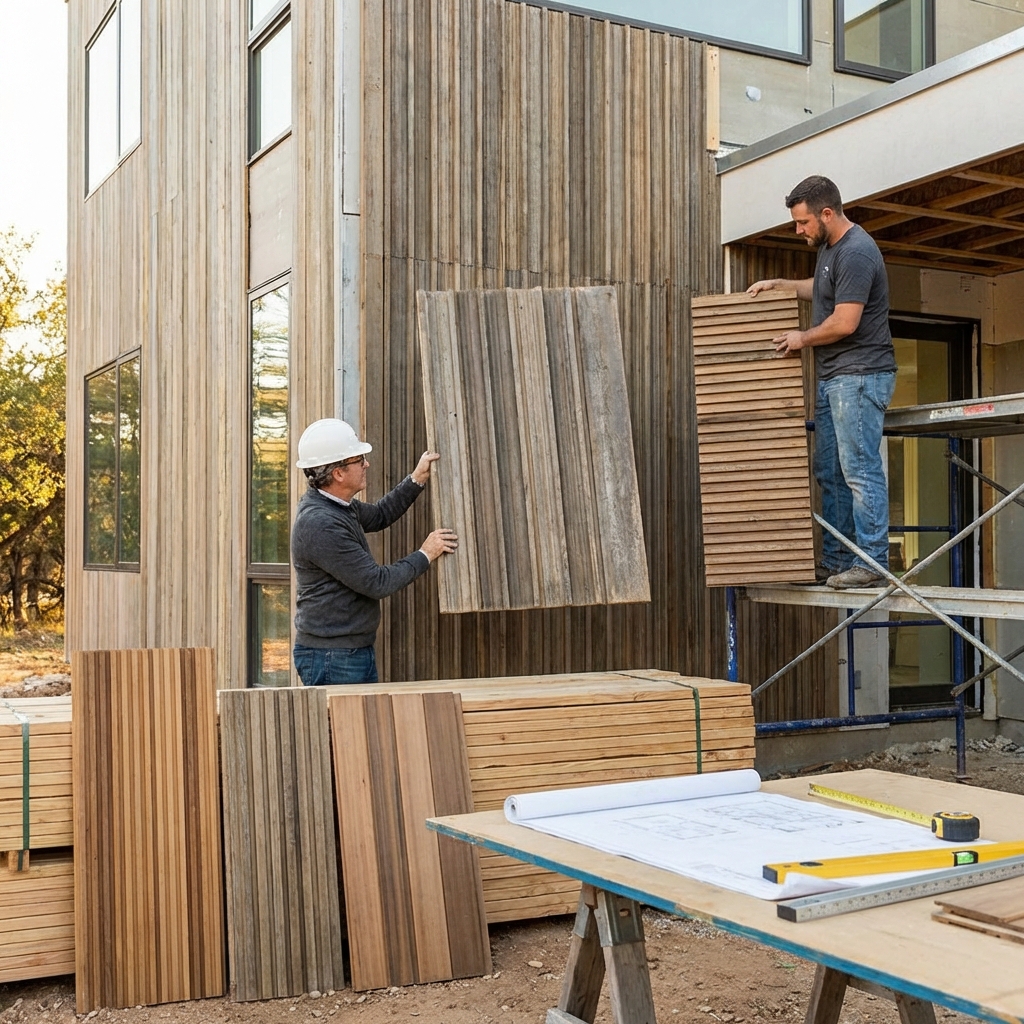
Fluted profiles work brilliantly on:
- Accent walls and feature facades
- Projects with significant height (the profiles gain visual power across vertical surfaces)
- Buildings emphasizing geometric or contemporary design language
- Situations where you want the material itself to be the statement
Comb profiles excel on:
- Full-wrap applications where siding serves as background
- Blended material compositions (mixing siding with stone or metal)
- Historic district projects requiring contextual sensitivity
- Commercial applications where the facade must remain professional and timeless
Wood species choice amplifies these effects. Fluted Cypress in a Houston commercial project creates entirely different visual language than fluted Douglas Fir. We help architects consider both profile depth and wood character together.
Actionable takeaway: Request sample boards in full sun and shade conditions on your actual project site before finalizing specifications. Visual impact changes dramatically with light direction and intensity.
Weather Resistance and Maintenance: Performance in Texas Climate
Texas presents specific challenges: intense UV exposure, temperature swings from freezing to 100+ degrees, occasional severe weather, and humidity variations that stress wood profiles differently than milder climates.
Our vertical grain materials resist checking and cupping better than flat-grain alternatives. But profile selection also matters significantly for weather durability.
Fluted profiles shed water more aggressively because grooves channel moisture directionally. This is advantageous on south and west-facing elevations where water sheeting matters most. However, groove interiors experience slower drying cycles if debris accumulation occurs. We recommend fluted profiles primarily on well-ventilated surfaces without overhangs trapping moisture.
Comb profiles with shallower grooves dry faster overall. The reduced groove depth means less opportunity for water trapping, making comb siding more forgiving on covered areas, soffit applications, or east-facing exposures where drying conditions are less ideal.
Our thermally modified wood products (Thermally Modified Ash and Pine) outperform standard lumber in both profiles by achieving greater dimensional stability and natural decay resistance. The thermal modification process essentially bakes the wood, reducing moisture movement that causes checking and warping.
For extreme weather resistance, we also stock WUI Class A fire-rated wood products suitable for both profiles. These are essential for Hill Country and Spicewood properties in designated fire zones.
Actionable takeaway: Specify thermally modified wood if your project requires maximum durability with minimal maintenance, or choose comb profiles for sheltered applications where simpler geometry performs better over time.
Why Our Premium Wood Selection Outperforms Standard Options
Standard commodity lumber suppliers typically offer either fluted or comb in limited species and grades. We’ve built our inventory around the principle that profile selection should precede supplier selection, not follow it.
We manufacture our own specialty profiles in vertical grain Western Red Cedar, Douglas Fir, and Hemlock. This means we control quality from log selection through finishing. We source additional profiles through trusted specialty mills rather than accepting whatever inventory a general distributor pushes.
The result: We can specify profiles in exact wood species your architect requires, rather than compromising on material. That Cypress comb siding for your Dripping Springs project? We source it directly. Clear grain Douglas Fir fluted for your commercial application? We manufacture it.
Our FSC-certified inventory ensures your project meets sustainability requirements without requiring last-minute sourcing swaps. We also maintain deep inventory in thermally modified and Class A fire-rated products, reducing lead times on premium specifications.
Actionable takeaway: Consult with us during design development rather than at specification finalization, so profile and material selection happen together rather than sequentially.
Our Certified Sustainable Materials and Specialty Wood Inventory
We understand that premium projects increasingly require certified sustainable materials. Our FSC-certified wood products meet third-party verification for responsible forestry practices. This matters for commercial clients, LEED projects, and sophisticated residential customers who care about sourcing.
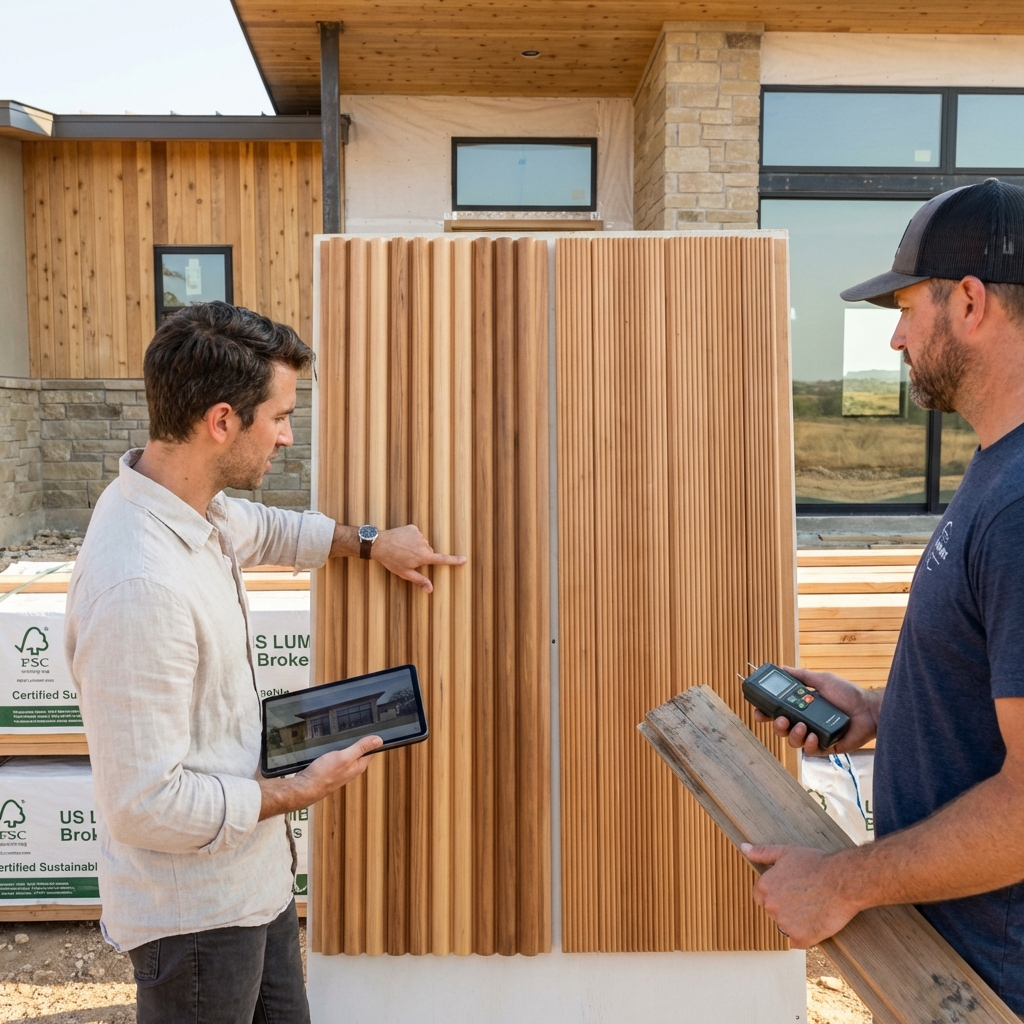
Beyond standard certifications, we stock thermally modified wood options that reduce reliance on chemical treatments. Thermally Modified Ash, Thermally Modified Pine, and Thermally Modified Poplar provide natural durability enhancement through heat treatment rather than preservatives.
We’re also approved suppliers for Accoya siding and decking, a premium thermally modified product commanding higher performance across all weather resistance metrics.
Our hardwood inventory includes Ipe siding and decking, plus Cumaru, Garapa, Massaranduba, and Tigerwood for architects requiring extreme durability or specific visual characteristics. These materials work beautifully in both fluted and comb profiles.
We additionally stock composite alternatives including TimberTech, Trex, and Fiberon when projects require wood-like aesthetics with minimal maintenance. These don’t replace wood siding but often make sense as complementary materials for trim, fascia, or soffit applications.
Actionable takeaway: Request our inventory list early in design to confirm material and profile availability before issuing final specifications to contractors.
Customization and Availability: Direct Access to Premium Profiles
We don’t stock profiles speculatively and hope architects specify them. Instead, we work backwards from your project requirements. Need 5/4 x 8 comb siding in Clear grade Hemlock? We can produce it. Looking for fluted Cedar in a non-standard dimension for a heritage renovation? We problem-solve it.
Our direct manufacturing capability means faster lead times than sourcing through national distributors. We serve projects across all 50 states, but our Texas presence (Austin, Dallas, Houston, San Antonio, and surrounding regions) allows us to expedite local deliveries and accommodate changes through project phases.
We maintain relationships with premium mills and specialty suppliers that general lumber yards can’t access. Your specification doesn’t need to compromise around what’s currently on inventory shelves.
We also manage custom milling for unique applications. Architects have specified 3/4″ fluted Cedar for soffit systems, or comb profiles in non-standard spacing for heritage conservation work. These aren’t standard requests, but they’re exactly the kind of work we handle regularly.
Actionable takeaway: Share your full material specification and dimensional requirements with us 8-10 weeks before your contractor needs delivery. This timeline allows us to coordinate directly with mills and manage lead time predictability.
Cost Efficiency Through Direct Supply Relationships
Direct relationships with mills and specialty suppliers reduce middleman markups that inflate pricing through standard distribution channels. We pass this efficiency to you without sacrificing quality or material selection.
We’ve found that architects often assume premium specialty profiles command premium pricing. While specialty wood has real material costs, the markup differential between us and general distributors is substantial enough to shift project economics.
On a typical commercial project sourcing comb siding through multiple distributors, you’ll encounter supply chain markups at each tier. Our direct mill relationships eliminate those layers.
Volume pricing applies not just to single species but across our diverse inventory. Your project might use fluted Western Red Cedar for primary facades, comb Cypress for transitions, and Ipe accents for high-wear details. We coordinate pricing across these materials as a package rather than treating them as separate line items.
We’ve also structured our operations to accommodate projects of varying scales. A 5,000 board-foot residential addition receives the same attention and efficiency we apply to 50,000 board-foot commercial developments.
Actionable takeaway: Request a material takeoff estimate directly from us during schematic design. The pricing insight often influences final specification decisions in your favor.
Installation Considerations and Project Timeline Management
Both fluted and comb profiles have distinct installation requirements that impact project timeline and labor costs.
Fluted siding requires precise spacing and alignment because groove shadows emphasize any inconsistency. Installation typically moves slightly slower than standard flat-board applications. Contractors need experience with profile-specific fastening to avoid splitting the grooves or creating visible fastener lines. We provide installation guidance and recommend pre-bid site consultations when contractors are unfamiliar with our profile specifications.
Comb siding installs faster because shallow grooves tolerate slightly wider spacing tolerances without visual consequence. Installation labor costs typically run lower than fluted applications for comparable board footage.
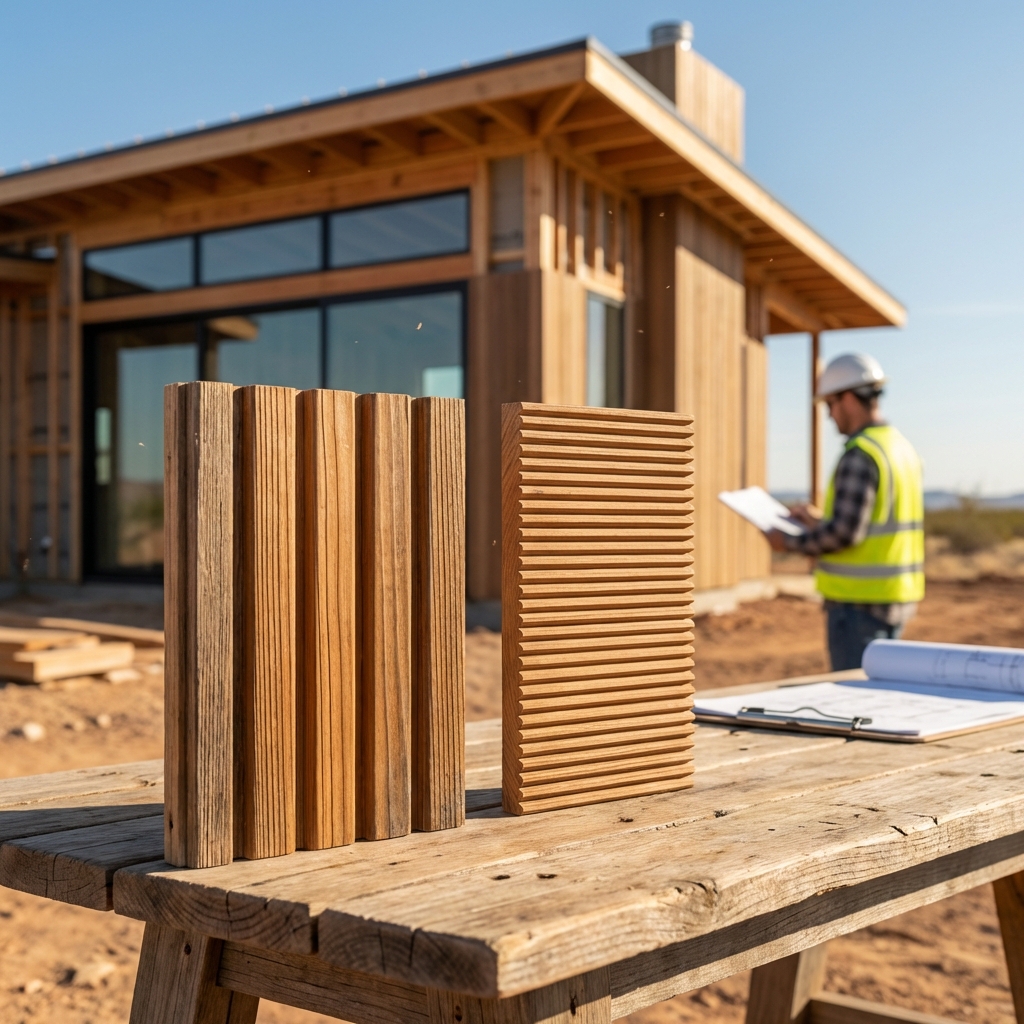
Both profiles benefit from proper ventilation behind the siding. We provide specification details and can connect contractors with installers experienced in our materials.
We’ve observed that project success hinges partly on contractor experience with specialty profiles. We maintain a list of vetted installers across our service areas who understand profile-specific details. Architects sometimes discover their preferred contractor lacks experience with fluted or comb installations. We bridge that gap by providing technical support and installer recommendations.
Actionable takeaway: Factor 2-4 weeks of additional installation schedule when using fluted profiles compared to standard flat board, and confirm your contractor’s experience before issuing subcontract documents.
Why Architects and Contractors Choose US Lumber Brokers
We’ve built relationships across Texas and nationally because we operate differently from commodity lumber suppliers. Architects and contractors choose us because:
We solve specification problems rather than just fulfilling purchase orders. When a designer specifies something challenging, we find the solution rather than deflecting to what’s readily available.
Our inventory reflects what working architects actually specify, not inventory we hope to move. We carry vertical grain specialty woods, thermally modified products, FSC certifications, and Class A fire-rated materials because premium projects require them.
We provide transparent guidance on profile performance and material behavior across Texas climate conditions. Our team includes experts who understand wood movement, weather resistance, and aesthetic implications of various choices.
We stand behind our materials and maintain relationships with installers who execute these products correctly. Your project isn’t complete when material ships; our commitment extends through installation and performance.
Our direct manufacturing gives us flexibility that national distributors can’t match. Custom dimensions, urgent lead times, and material adjustments happen regularly without the bureaucracy of corporate supply chains.
Actionable takeaway: Connect with our team early in your design process. We’re most valuable during specification development, not during material procurement scrambles.
Make Your Selection: Our Recommendation for Your Next Project
Both fluted and comb profiles perform excellently when specified correctly for the right applications. The choice isn’t about one being objectively superior but about matching profile characteristics to your project’s specific conditions and aesthetic vision.
Choose fluted siding when:
- Your facade design emphasizes bold geometry and contemporary expression
- The surface receives excellent sun exposure and drying conditions
- Your client accepts moderate maintenance conversations
- Visual impact and dramatic shadow lines serve the overall design
Choose comb siding when:
- The profile should enhance rather than dominate the design statement
- Sheltered locations or complex facade compositions require subtle texturing
- Maintenance simplicity is a project priority
- Traditional, transitional, or commercially timeless aesthetics guide your vision
Regardless of profile selection, specify vertical grain material, request FSC certification if your project requires it, and consider thermally modified wood for superior durability across Texas weather conditions. Avoid flat-grain commodity lumber for premium applications; the performance difference justifies material cost premiums.
We stock both profiles in the wood species and grades your specifications require. We also manufacture profiles in custom dimensions when standard offerings don’t fit your design. Our thermally modified and Class A fire-rated options address specialized requirements without requiring project specification revisions.
Your next step is straightforward: share your preliminary material specifications and project timeline with our team. We’ll confirm availability, provide transparent pricing, and connect you with experienced installers who understand profile-specific installation details.
We’ve spent years building inventory and relationships specifically to support architects and contractors who demand premium materials and precise specification fulfillment. Fluted versus comb siding is one choice among many we help you navigate with clarity and confidence.
Contact us today to discuss your project specifications and material requirements. We’re ready to support your vision with the exact products and expertise your architecture deserves.
To place orders, order samples, or talk with a live person.


