

The Challenge of Selecting Commercial Decking Materials
Every commercial project faces the same critical decision: which decking material will deliver the aesthetic, durability, and financial performance your clients expect? We work with architects and project managers across Texas and nationwide who wrestle with this choice daily.
The stakes are real. A poorly selected deck material can lead to premature failure, costly repairs, safety concerns, and client dissatisfaction. High-traffic commercial spaces demand materials that withstand constant foot traffic, weather exposure, and seasonal temperature swings. Meanwhile, luxury residential projects require authentic visual appeal that justifies premium pricing.
Your choice fundamentally shapes the project timeline, maintenance obligations, and long-term cost structure. Understanding the trade-offs between natural hardwood and composite options isn’t optional—it’s essential to delivering projects that perform and satisfy.
Why Material Choice Impacts Project Success and Budget
Material selection ripples through every phase of your project. From initial budgeting and client approval through installation and post-completion maintenance, your decision determines resource allocation and client expectations.
Natural hardwoods offer unmatched aesthetic authenticity and warmth that clients recognize and value. However, they demand climate monitoring, periodic sealing, and seasonal maintenance. Composite materials provide predictable performance and minimal upkeep, but require careful specification for high-traffic scenarios and may not satisfy clients seeking traditional wood character.
Consider budget realities: a lower initial material cost can evaporate if maintenance becomes intensive or if premature deterioration forces replacement years earlier than planned. We’ve seen projects where composite decking proved more economical over ten years despite higher upfront costs, and conversely, projects where quality hardwood proved the smarter long-term investment.
The decision also affects scheduling. Hardwood installation sometimes requires onsite acclimatization and careful environmental control. Composites generally allow faster installation with fewer weather-dependent variables. Your project timeline may influence which material makes practical sense.
Hardwood Decking: Authentic Beauty With Performance Demands
Natural hardwood delivers visual warmth and sophistication that composite materials cannot replicate. Hardwood graining, color variation, and tactile richness create the authentic outdoor living experience clients expect from premium projects.
We supply multiple hardwood species tailored to different performance requirements:
- Ipe decking offers exceptional hardness and natural rot resistance, ideal for high-traffic commercial applications and poolside environments
- Cumaru provides warm red-brown tones with strong durability comparable to Ipe
- Garapa delivers lighter aesthetics with solid performance and moderate maintenance needs
- Massaranduba brings deep chocolate tones and forest certification credentials
- Tigerwood offers distinctive striping and character marking for visually distinctive projects
Hardwoods require honest conversations with clients about maintenance realities. Seasonal expansion and contraction are normal. Ultraviolet exposure gradually mellows the color, which many clients appreciate as patina but some view as fading. Regular sealing—typically annually or biennially depending on climate and exposure—protects the wood and maintains appearance.
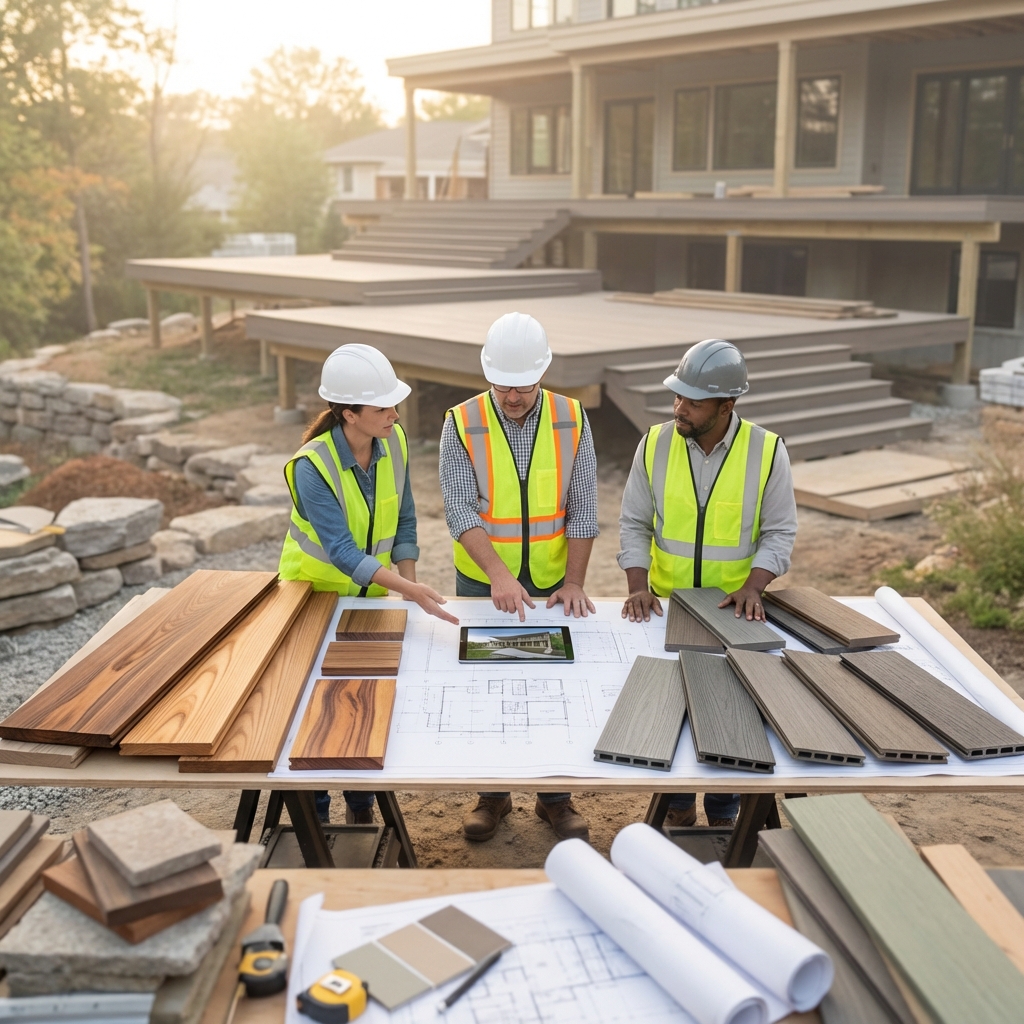
For commercial applications in high-traffic zones, hardwood remains viable but demands realistic maintenance planning and client education. We provide specifications and maintenance guidance so your clients understand what sustainable performance looks like.
Thermally Modified and Exotic Hardwoods We Supply
Thermally modified wood represents a middle ground between traditional hardwoods and composites. We stock thermally modified ash, pine, poplar, and Ayous—materials that have been heat-treated to improve stability, durability, and resistance to decay.
Thermal modification works by removing moisture from wood through controlled heating, fundamentally altering its cellular structure. The result: wood that resists moisture absorption better, maintains dimensional stability across seasonal changes, and requires less aggressive maintenance than traditional hardwoods.
For commercial projects where clients want authentic wood character without intensive upkeep, thermally modified products offer compelling value. They deliver natural wood aesthetics with improved performance characteristics. Costs fall between standard softwoods and exotic hardwoods, making them accessible for budget-conscious premium projects.
We also supply FSC-certified exotic hardwoods that combine environmental responsibility with superior performance. These options appeal to clients seeking sustainable sourcing without compromising on durability or beauty.
TimberTech and Composite Options for High-Traffic Areas
Composite decking options like TimberTech, Trex, and Fiberon solve specific commercial challenges that natural wood cannot address.
Composite materials combine wood fibers and plastic binders to create products engineered for consistency and low maintenance. High-traffic commercial applications benefit from composite durability: no splinters, minimal staining, resistance to mold and mildew, and negligible seasonal movement. Maintenance typically involves periodic cleaning—no sealing, staining, or repairs.
For hospitality settings, multi-family residential complexes, and commercial facilities with heavy foot traffic, composites deliver predictable performance year after year. Clients appreciate the aesthetic variety (composites now convincingly mimic natural wood grain) without the maintenance burden.
The trade-off is authenticity. Composites feel different underfoot and lack the visual depth of natural wood grain. Some clients accept this readily; others view it as a compromise. Understanding your client’s priorities determines whether composite works for their project.
Our Comprehensive Approach to Commercial Decking Solutions
We don’t recommend materials generically. We listen to your project requirements, client expectations, budget parameters, and maintenance tolerance before suggesting solutions.
Our process starts with understanding your constraints: Is this a high-traffic commercial environment or an upscale residential retreat? Does your client prioritize authentic wood aesthetics or predictable, minimal-maintenance performance? What’s the climate exposure and shade pattern? What’s the realistic maintenance timeline and budget?
We maintain comprehensive inventory across hardwood, softwood, thermally modified, and composite categories specifically so we can match materials to project realities rather than forcing projects into limited product lines. If your specification calls for specific performance characteristics, we either stock it or source it.
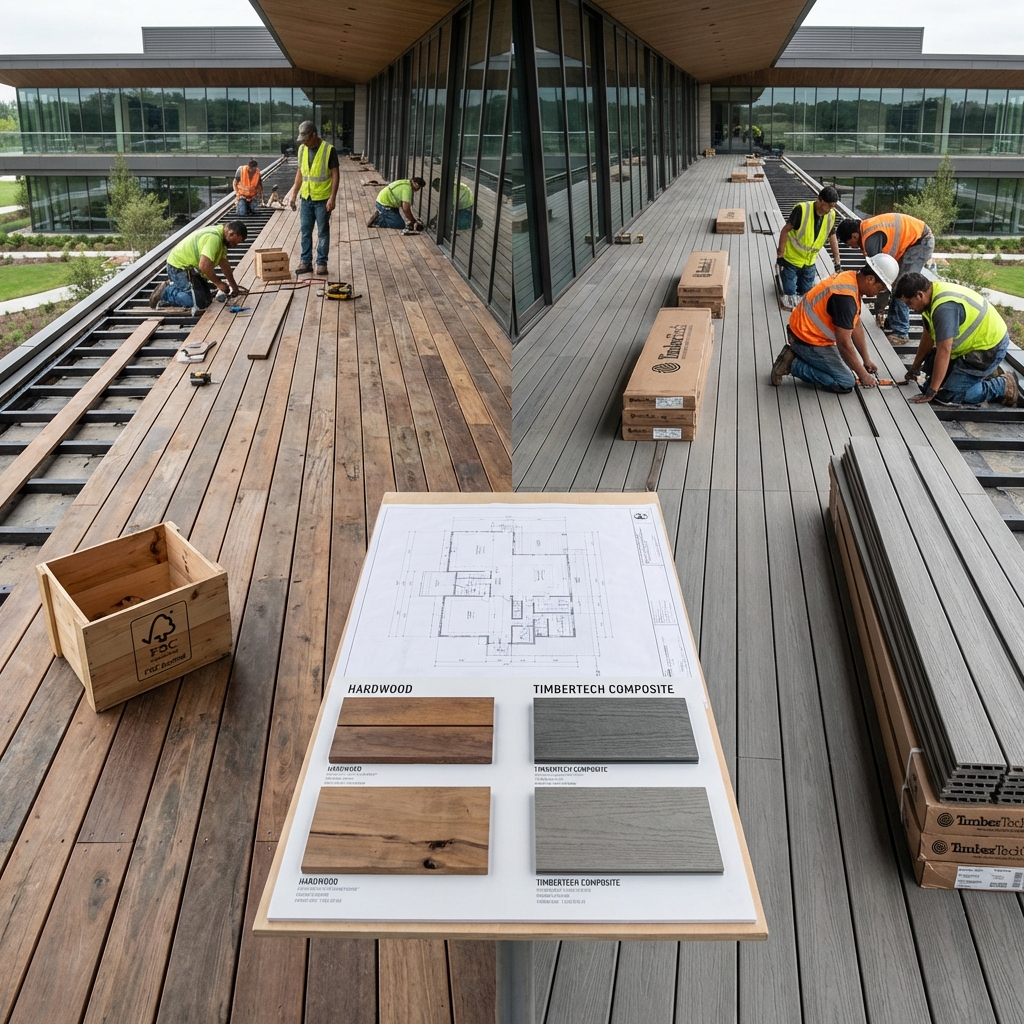
We also provide technical support: wood movement calculations, moisture content guidance, installation methodology, and maintenance protocols that help your teams execute properly and set client expectations correctly.
FSC Certified and Sustainable Wood Options
We recognize that many commercial projects—particularly those seeking LEED certification or corporate sustainability credentials—require responsibly sourced materials. We maintain FSC-certified inventory across multiple wood species so clients can verify sustainable sourcing without compromising on performance.
FSC (Forest Stewardship Council) certification tracks wood from forest management through distribution, ensuring responsible harvesting practices and ecosystem protection. For architects and builders who specify environmental responsibility, FSC certification provides third-party verification that materials meet rigorous sustainability standards.
Our thermally modified and hardwood selections include FSC-certified options, allowing you to deliver both performance and environmental credibility. This matters increasingly for commercial projects where client values and corporate responsibility align with material selection.
Installation and Maintenance Considerations for Each Material
Installation methodology varies significantly between material types, and improper installation undermines even premium products.
Hardwood decking requires attention to moisture content before installation, proper fastening to accommodate wood movement, and ventilation underneath to prevent moisture trapping. Climate-controlled onsite acclimation (2-7 days depending on species and conditions) prevents cupping and gapping after installation.
Composite materials require different approaches. Fastening patterns accommodate thermal expansion differently. Ventilation requirements differ. Using hardwood installation practices on composite materials, or vice versa, creates problems regardless of material quality.
Maintenance demands differ equally. Hardwood needs periodic sealing (typically annual or biennial), occasional sanding to refresh surface appearance, and prompt attention to any damage. Composites need regular cleaning and occasional spot repair but no sealing or staining.
We provide installation specifications and maintenance guidelines for every material we supply. Sharing these with your installation teams and clients prevents misunderstandings and ensures performance that justifies material investment.
Cost Analysis: Initial Investment vs. Long-Term Value
Upfront material costs tell only part of the financial story.
Premium hardwoods like Ipe cost more initially than standard softwoods or composite materials. However, over fifteen to twenty years, their durability and longer lifespan can result in lower total cost of ownership than composites requiring replacement midway through that timeline.
Conversely, composite decking costs more upfront but eliminates sealing, staining, and repair costs that accumulate with hardwoods. For facilities with tight maintenance budgets or limited staff, that predictability carries real financial value.
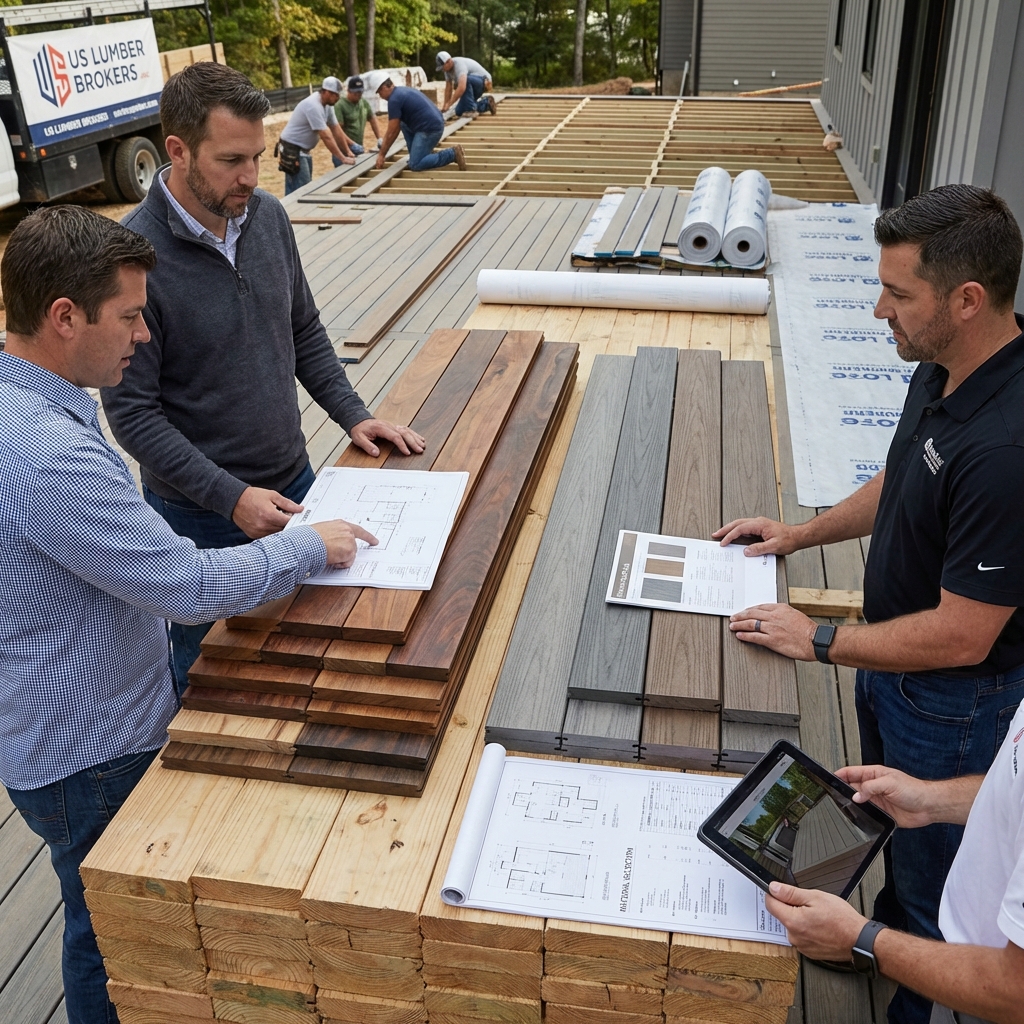
Thermally modified materials often provide the best value balance: costs less than exotic hardwoods, requires less maintenance than traditional softwoods, and outlasts budget-grade materials significantly. For commercial applications with moderate-to-heavy traffic, thermally modified woods frequently emerge as the best financial choice when you account for maintenance and longevity.
Build these analyses into your project proposals so clients understand why certain material recommendations make financial sense over their intended use timeframe.
Why Commercial Contractors Choose US Lumber Brokers
We’ve built relationships with commercial contractors across Texas and nationwide because we stock what you specify and provide the technical guidance that turns specifications into successful projects.
We don’t push inventory toward clients. We listen to project requirements and source materials accordingly, whether that’s premium hardwoods, proven composite brands, or specialty thermally modified products. If we don’t stock exactly what your project needs, we source it reliably because we maintain supplier relationships that prioritize quality and availability.
Our team understands commercial applications. We know the difference between residential decking needs and high-traffic commercial environments. We’ve worked with projects requiring WUI Class A fire-rated materials, hurricane-resistant specifications, and environmental certifications. That experience means we ask the right questions and catch specification gaps before they become field problems.
Specifications and Certifications for Your Project Requirements
Premium commercial projects increasingly demand specific certifications and performance documentation. We maintain inventory and can source materials meeting various standards:
- WUI Class A fire-rated wood products for high-risk fire zones
- FSC-certified hardwoods and softwoods for sustainable sourcing credentials
- Thermally modified products certified for durability and stability
- Composite materials with specific performance ratings and warranties
- Specialty certifications including termite resistance, moisture resistance, and structural grades
When specifying materials for your commercial projects, clarify certification requirements early. Different projects demand different certifications, and material availability varies. We help identify which certifications genuinely matter for your application and which represent unnecessary cost additions.
Getting Started With Your Commercial Decking Project
Ready to move forward? Contact us with your project specifications and requirements. Share details about the application (high-traffic commercial, residential luxury, specific environmental exposure), client priorities (aesthetics versus maintenance, budget parameters), and any special certifications required.
We’ll recommend material options with transparent cost and performance comparisons, help you refine specifications, and provide installation guidance that sets your project up for success. Our goal is delivering materials that perform, satisfy clients, and simplify your project execution.
Call us at 737.260.7431 or visit our website to explore our complete inventory of hardwood, composite, and specialty decking materials. We’re here to support commercial contractors across the country with premium materials and the technical guidance that turns specifications into exceptional projects.
To place orders, order samples, or talk with a live person.


