

Understanding WUI Class A Fire Safety Standards and Why They Matter for Your Projects
Austin’s wildland-urban interface (WUI) zone demands construction materials that perform under extreme conditions. If you’re managing a project in the Austin area, the Texas Hill Country, or anywhere across our service region, WUI Class A fire ratings aren’t optional—they’re essential for permits, insurance compliance, and genuine safety. We’ve spent years sourcing and supplying the exact woods that meet these demanding standards, and we want to show you why material selection matters more than most builders realize.
WUI Class A is the highest fire-safety rating a material can achieve. It means a wood product has passed rigorous testing protocols including the ASTM E84 flame spread test, where materials are exposed to direct flame under controlled conditions. A Class A rating indicates a flame spread rating of 0-25 and a smoke development rating of 0-450. This isn’t marketing language—it’s measurable performance.
For Austin and surrounding areas, WUI Class A compliance directly affects building code eligibility, insurance rates, and neighborhood approval for residential or commercial work. Architects and contractors know that choosing non-compliant materials creates project delays, expensive retrofits, or outright rejection. We work with builders who understand this reality.
Our approach is straightforward: we stock only woods and wood products that either meet Class A ratings inherently or have been treated to achieve them. This removes guesswork from your material sourcing and keeps your timelines on track. When you specify a product from us, you’re specifying certainty.
Action: Before your next project estimate, verify WUI zoning requirements with your local Austin building department. We can then match you with compliant materials immediately.
Clear Western Red Cedar: Our Premium Fire-Rated Softwood Solution
Clear Western Red Cedar is one of the few softwoods that naturally achieves Class A fire ratings without chemical treatment. We source vertical grain and clear grade Western Red Cedar specifically chosen for both aesthetic appeal and fire performance. It’s the gold standard for siding, cladding, and soffit applications where clients expect refined appearance alongside safety.
What makes Clear Western Red Cedar stand out is its density and resin content. These characteristics give it inherent fire resistance while maintaining the warm, natural aesthetic that high-end residential and commercial projects demand. Architects love specifying it because they don’t sacrifice design vision for compliance.
We’ve seen Clear Western Red Cedar used across luxury custom homes in Horseshoe Bay, Dripping Springs, and the Tarrytown area. Contractors consistently report easier installation, minimal callbacks on finish work, and client satisfaction on both aesthetics and fire performance.
Cedar does require proper finishing to maintain its rating. We recommend discussing finish schedules with your project team—stain and protective coatings play a role in sustained Class A performance over time.
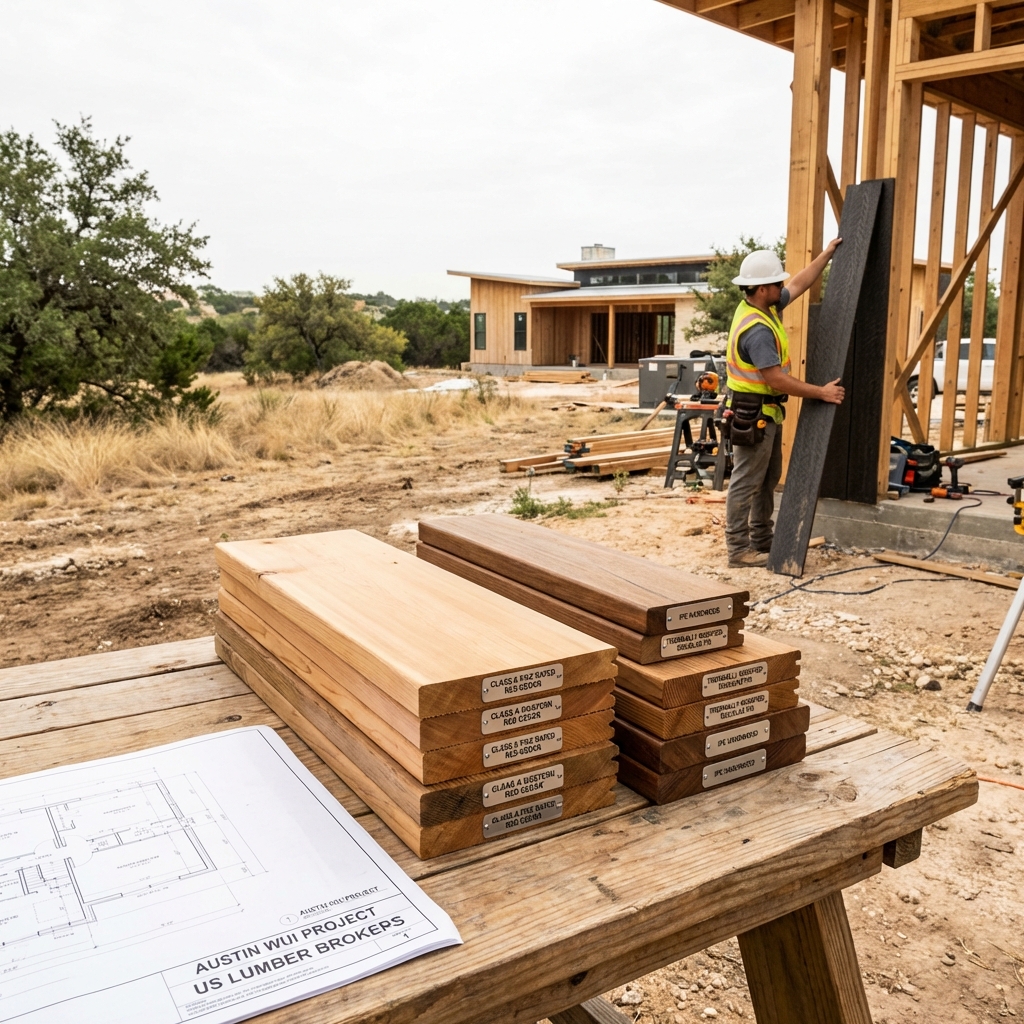
Action: Request material samples and fire test documentation directly from us. We provide complete certification paperwork with every order.
Douglas Fir Class A Wood: The Strength and Safety Combination Builders Choose
Douglas Fir isn’t naturally Class A, but we supply thermally modified and fire-treated Douglas Fir that achieves these ratings while maintaining the structural strength that heavy timber and framing applications demand. This matters for projects where you need Class A performance in load-bearing or structural siding applications.
Douglas Fir’s density and structural integrity make it ideal for thick cladding systems, accent walls, and architectural timber features. When treated properly through our thermal modification processes or approved fire-treatment methods, it delivers both safety and performance.
Commercial contractors working on office buildings, retail spaces, and institutional projects often prefer Douglas Fir because it bridges the gap between cost efficiency and premium fire safety. We’ve supplied fire-rated Douglas Fir to Houston, Dallas, and San Antonio projects where budgets required careful material selection.
The key difference between standard Douglas Fir and our Class A versions is the treatment method. We only work with manufacturers and processes that maintain wood integrity while achieving fire ratings.
Action: If your project requires structural cladding, ask us specifically for fire-rated Douglas Fir options. We’ll connect you with technical specifications and installation guidance.
Thermally Modified Wood Products: How We Deliver Superior Fire Resistance
Thermal modification transforms wood at a cellular level by heating it to high temperatures in a controlled, oxygen-free environment. This process creates Class A fire-rated wood without chemical additives. We stock Thermally Modified Siding in Ash, Pine, Poplar, and Ayous—each offering distinct aesthetic and performance profiles.
The advantage is significant: thermally modified woods achieve Class A ratings while maintaining natural appearance, dimensional stability, and workability. They won’t leach chemicals or require special finishing protocols. For architects concerned with sustainability and material purity, thermal modification is the answer.
Thermally modified Ash delivers a sophisticated gray tone that ages beautifully. Modified Pine offers warm, refined aesthetics. Ayous brings lighter coloring with excellent durability. Each can be installed as siding, cladding, or decking and will maintain Class A performance across weather cycles.
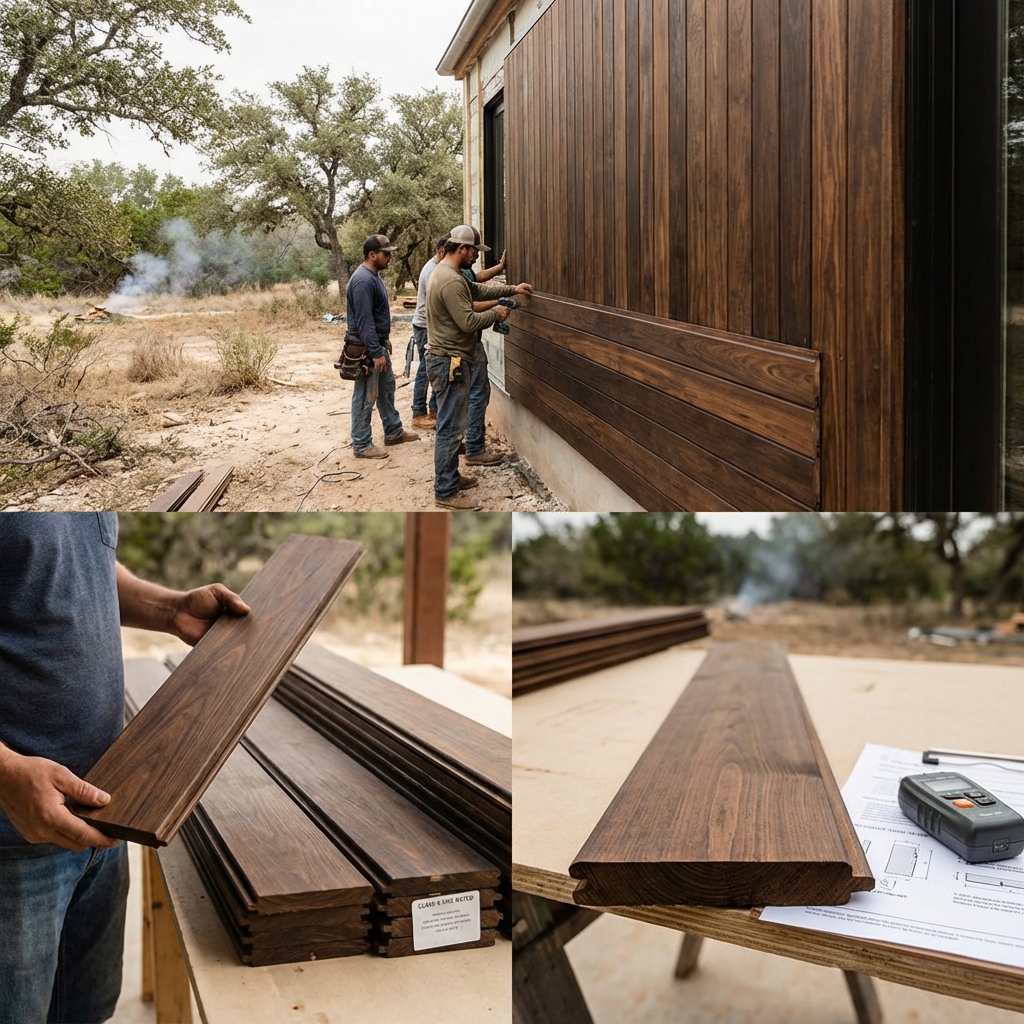
We’ve specified thermally modified products for residential projects in East Austin, West Austin, and the Hill Country where clients prioritize both fire safety and design authenticity. Performance has been consistent across several seasons of exposure.
Action: Order a thermal modification sample kit to compare aesthetic options. Live with the appearance before committing to production quantities.
Hardwood Options for Fire-Safe Applications: Ipe and Cumaru Performance
Hardwoods like IPE Cladding don’t inherently achieve Class A ratings, but they excel in specific fire-safe applications where their extreme density and durability offset other considerations. Ipe and Cumaru are engineered hardwoods that resist fire spread while providing unmatched longevity in exterior applications.
Ipe’s Janka hardness rating of 3,680 means it resists impact, abrasion, and environmental degradation that would damage softer woods. For decking, architectural features, or high-traffic commercial applications, Ipe delivers performance that lasts decades with minimal maintenance. Its dense structure naturally slows flame spread compared to standard softwoods.
Cumaru offers similar density with slightly different color characteristics—richer browns and natural variation that appeals to luxury residential work. Both hardwoods are appropriate for applications where Class A compliance is required alongside extreme durability demands.
The trade-off is cost. Hardwoods command premium pricing. We recommend hardwoods for focal point applications, high-wear areas, or projects where the aesthetic and durability investment justifies the expense. For full-envelope siding on standard projects, softwoods typically deliver better value.
Action: Use hardwoods strategically. Specify Ipe or Cumaru for visible architectural features or high-use areas, and pair them with thermally modified softwoods elsewhere.
WUI Class A Cladding and Siding: Creating Beautiful Fire-Protected Exteriors
WUI Class A cladding and siding isn’t about choosing ugly, industrial materials. It’s about selecting from a refined palette of options that happen to meet fire safety standards. Our inventory includes vertical grain cedar, thermally modified woods in multiple species, composite options from TimberTech and Trex, and carefully sourced hardwoods—each offering distinct visual profiles.
Clear Western Red Cedar siding delivers classic, refined aesthetics. Thermally modified Ash creates contemporary neutrals. Composite products from our brand partners offer low-maintenance alternatives with integrated fire ratings. The point is variety without compromise.
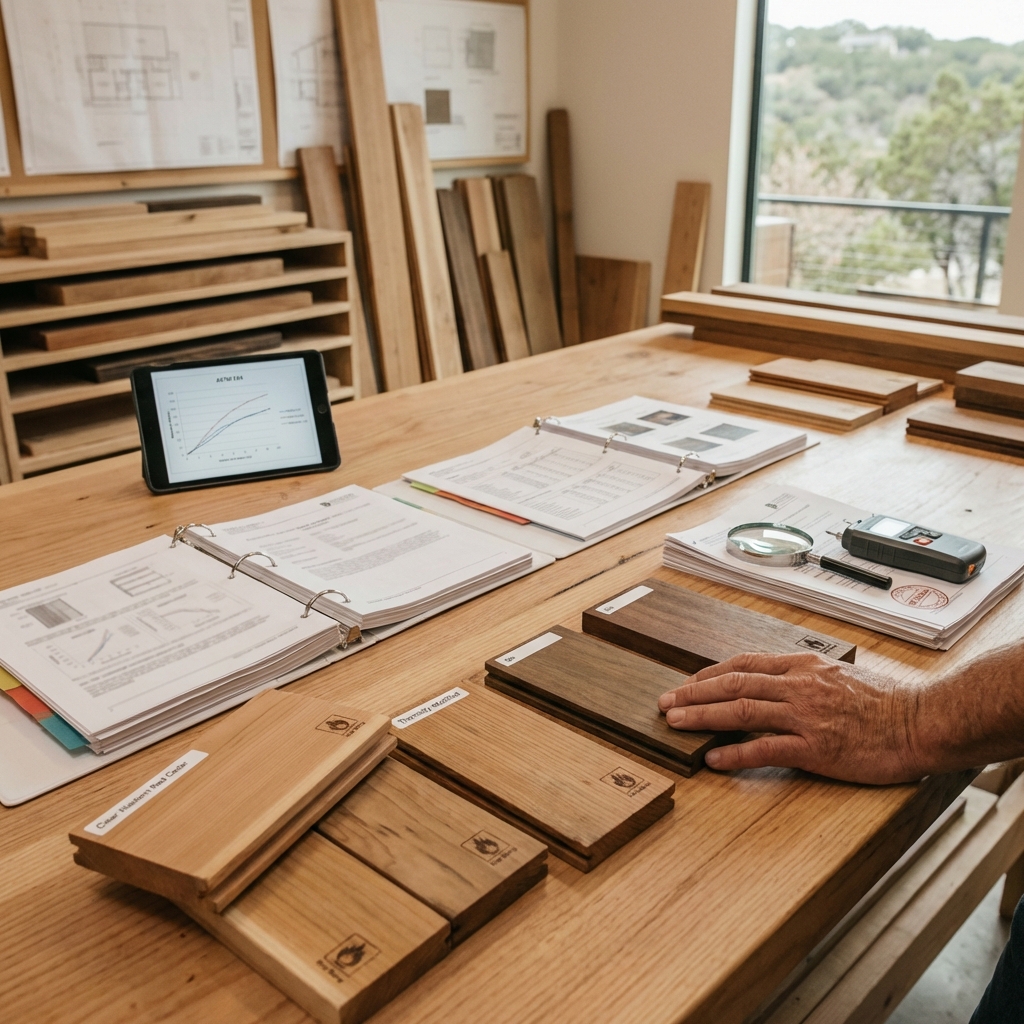
Installation and finishing matter as much as material selection. Proper detailing at transitions, adequate ventilation behind cladding systems, and specified finishes all contribute to sustained Class A performance. We work with contractors who understand these details, and we’re available to discuss installation protocols with your team.
For Austin-area projects, we’ve successfully specified full cladding systems that pass WUI inspections while delighting architects and homeowners. The visual result looks premium, not over-engineered.
Action: Request a full exterior siding specification that includes material, finish schedule, and installation details. We provide this level of documentation as standard practice.
Our Comprehensive Testing and Certification: Why Our Woods Exceed Industry Standards
Every product we supply carries complete fire-test documentation. We source from manufacturers whose facilities conduct ASTM E84 testing in certified laboratories, and we maintain copies of all test reports. This means when you specify a product from us, you’re specifying verified performance—not assumptions or marketing claims.
We also prioritize FSC-certified sources wherever possible. FSC certification means your materials come from responsibly managed forests, supporting environmental stewardship alongside safety and performance. For architects and contractors who care about sustainable sourcing, we deliver both.
Our relationships with premium manufacturers—Arbor Wood, Tantimber, TimberTech, and Trex—ensure we’re offering current products tested to current standards. Building codes evolve. Test methods improve. We stay current so your projects don’t use outdated materials.
We maintain inventory depth specifically to serve complex projects with multiple product specifications. When you need Clear Western Red Cedar siding, thermally modified cladding, hardwood accents, and composite trim all in one project, we coordinate sourcing, quality control, and delivery to keep your timeline predictable.
Action: Request a compliance package for your next project. Include test reports, material certifications, and technical specifications in your project documentation from day one.
We understand that fire safety, code compliance, and aesthetic vision don’t exist in separate categories. Your projects deserve materials that deliver all three. Our inventory, certifications, and technical knowledge exist specifically to make that possible.
Start your next project by reaching out with your WUI zone requirements and design intent. We’ll match you with the right materials, provide complete documentation, and stand behind the performance.
To place orders, order samples, or talk with a live person.


