

Why Architects Choose Specialized Millwork Partners
Architects designing distinctive homes and commercial spaces need more than a standard lumber supplier. You need a partner who understands the language of modern contemporary design, respects material expression, and can execute your vision with precision.
Specialized millwork partners bring expertise that commodity suppliers simply don’t offer. We work closely with architects who, like Lake|Flato and Page, use wood as a primary design language. That means understanding how vertical grain cedar performs in full sun, knowing which hardwoods develop character over time, and recognizing when thermally modified wood solves both aesthetic and durability challenges.
When you choose a dedicated millwork supplier, you gain access to inventory curated for high-end residential and commercial projects. You also get experienced guidance on material selection, customization options, and realistic timelines. This relationship matters especially in Texas, where climate, building codes, and design expectations create unique requirements.
What to do next: Before your next project brief, identify which materials define your design language. Bring that clarity to your millwork partner so they can propose solutions aligned with your aesthetic.
The Challenge of Sourcing Premium Materials for Distinctive Projects
Finding the right wood for a distinctive project isn’t straightforward. Generic suppliers stock commodity grades and limited species. Custom work demands materials that match both performance requirements and design intent.
Consider a modern contemporary home in the Texas Hill Country. The architect specifies vertical grain Douglas fir for exterior cladding to emphasize natural grain patterns. Clear grade. Consistent color. Sustainable sourcing preferred. A typical supplier can’t fulfill this without significant delay and compromise. They lack inventory depth, don’t stock specialty grades, and struggle with coordination across multiple product categories.
Add to that the Texas regulatory landscape. WUI (Wildland-Urban Interface) Class A fire-rated materials are now essential in high-risk zones. Some hardwoods and thermally modified products qualify; most don’t. You need a supplier who maintains approved inventory and understands code compliance.
Another challenge: lead times. A custom home timeline can’t absorb a three-month wait for material sourcing. Architects expect their suppliers to maintain depth across multiple species, grades, and formats so that when design decisions are finalized, materials are ready.
What to do next: When sourcing materials, ask your supplier about inventory depth, not just order-to-delivery capability. Real partnerships are built on stock, not special orders.
Our Comprehensive Custom Millwork Approach
We’ve built our business around the principle that architects need reliability, choice, and expertise working as one system. Here’s how we approach custom millwork:
We maintain substantial inventory across premium softwoods, hardwoods, thermally modified species, and engineered alternatives. This depth means you’re not choosing from a limited palette; you’re working with genuine options that serve different design and performance goals.
Our manufacturing operation allows true customization. Want vertical grain cedar resawn to a specific thickness? Hardwood siding in a custom profile? Thermally modified ash with a particular finish? We handle this in-house, eliminating coordination delays and ensuring quality control at every step.
We provide clear communication on what’s in stock, what’s available with lead time, and what requires manufacturing. This transparency helps you plan realistic project timelines and avoid surprises during construction.
Our team speaks both design and material science. We can discuss grain character and aesthetic intent, then translate those into specific species, grades, and processing specifications. That dual fluency prevents costly misalignments between design intent and delivered material.
FSC Certified and Thermally Modified Wood Options We Provide
Sustainability and performance go hand-in-hand in contemporary architecture. Many architects now specify FSC-certified materials as a standard practice. We stock a full range of FSC-certified softwoods including clear and vertical grain Western Red Cedar, Hemlock, and Douglas Fir.
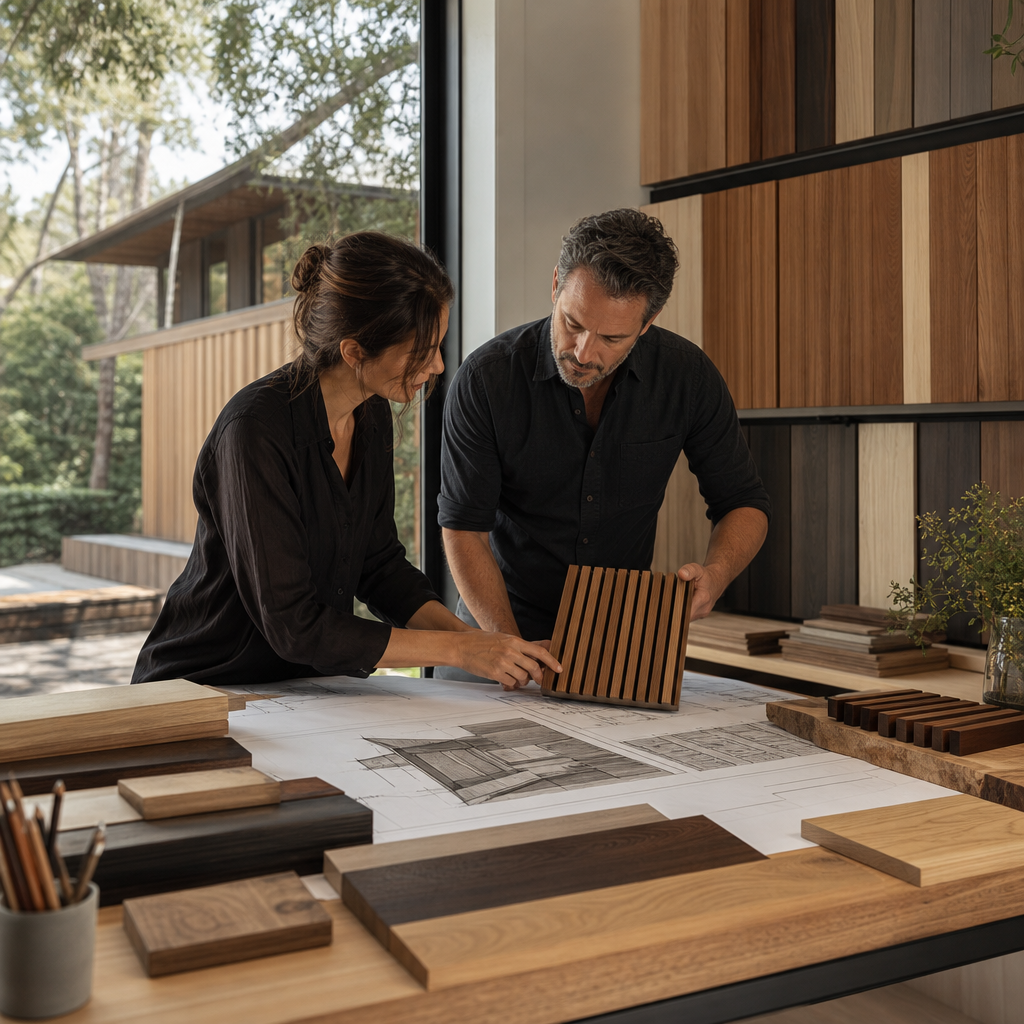
FSC certification means the wood comes from responsibly managed forests, verified through rigorous third-party audit. For architects seeking LEED points or simply committed to sustainable practice, FSC materials strengthen project credentials without aesthetic compromise.
Thermally modified wood represents another frontier in performance-driven material selection. This is wood that’s heat-treated to enhance stability, durability, and weather resistance. We supply Thermally Modified Ash, Pine, Poplar, and Ayous in siding, decking, and cladding formats.
Why consider thermally modified options? They resist checking and warping better than untreated counterparts. They’re more stable in wet or humid conditions. They take stain and finish beautifully. For architects working in climates with seasonal swings or specifying wood in traditionally difficult environments, thermally modified species eliminate many durability concerns while maintaining authentic wood character.
Thermally modified decking is particularly popular in residential projects, where deck performance directly affects homeowner satisfaction. The material outperforms standard softwoods in our Texas climate without the chemical footprint of pressure treatment.
What to do next: Consider thermally modified wood for exposed horizontal surfaces or high-wear applications. It’s a material choice that bridges design vision and practical durability.
WUI Class A Fire-Rated Solutions for Texas Compliance
Wildland-Urban Interface zones across Texas present real fire risk, and building codes now reflect that reality. Class A fire-rated materials are becoming standard specification for siding, cladding, decking, fencing, and framing in affected areas.
Not all wood qualifies as Class A fire-rated without treatment or engineering. We stock pre-approved WUI Class A products that meet or exceed Texas code requirements. This means architects can specify wood as a primary material in high-risk zones without rethinking the design.
Our inventory includes Class A options in both softwoods and hardwoods. This flexibility allows you to maintain material consistency and aesthetic intent while achieving code compliance. You’re not forced to pivot to composite or metal cladding unless that’s your design choice.
The advantage of working with a supplier who maintains WUI-approved inventory: no last-minute scrambling for documentation, no surprise code conflicts during construction, and no need to negotiate with inspectors about material suitability. The paperwork is already in place.
What to do next: For any project in a WUI zone, confirm fire-rating requirements with the local AHJ early and specify materials accordingly. It’s a straightforward compliance issue when addressed upfront.
Hardwood Species for High-End Residential and Commercial Work
Hardwoods bring warmth, character, and permanence to contemporary design. We stock a curated selection of tropical and domestic hardwoods specifically chosen for architectural applications.
Ipe delivers unmatched durability for exterior decking and siding. Its density and rot resistance make it ideal for projects where material will live outdoors for decades. The warm chocolate tones and fine grain develop beautiful patina over time.
Cumaru and Garapa offer similar durability with slightly different color palettes. Cumaru leans toward golden amber; Garapa presents warmer, more variable tones. Both are sustainable harvests from well-managed forests and FSC-certified.
Massaranduba and Tigerwood bring distinctive character to accent applications. Tigerwood’s striping is dramatic; Massaranduba’s density rivals Ipe while offering softer tones. These species work beautifully in cladding or as design accents where their visual impact strengthens the overall composition.
For interior applications, we maintain inventory of hardwoods suitable for custom millwork, trim, and feature walls. The range allows architects to source primary structural materials and finish details from a single, coordinated supplier.
What to do next: Request samples of hardwood species in your preferred finish. Live with the material for a few days to understand how color and grain character interact with natural light in your design context.
Vertical Grain Softwoods and Engineered Wood Alternatives
Vertical grain softwoods are the standard language of contemporary architecture in the Pacific Northwest and increasingly across Texas. The tight, uniform grain pattern is deeply aesthetic and highly functional.
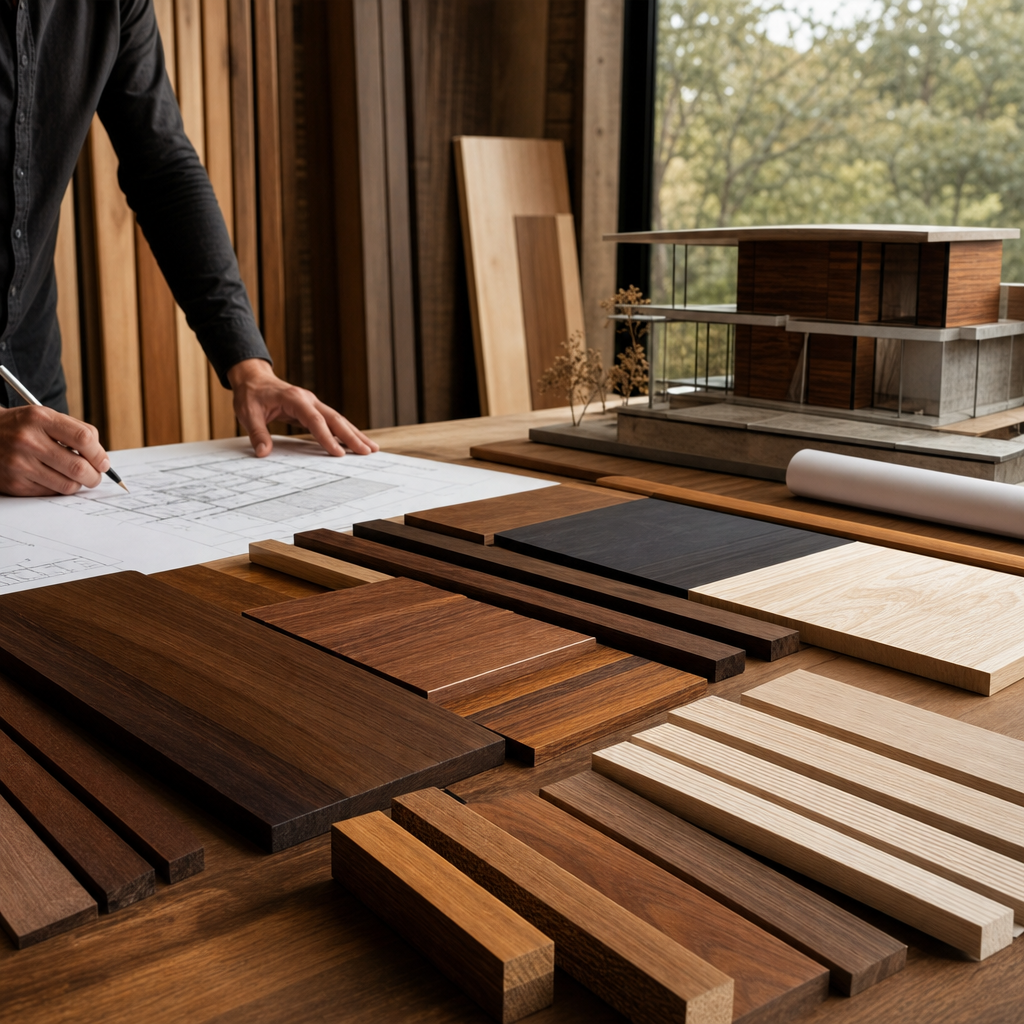
We maintain substantial inventory of clear and vertical grain Douglas Fir, Western Red Cedar, and Hemlock. These are the materials that define the warm, naturally expressive look that characterizes the best modern homes. Vertical grain Douglas Fir in particular has become a signature material for architects seeking authentic wood character without exotic sourcing.
The performance benefits are real: vertical grain wood exhibits superior dimensional stability and weathers more uniformly than flat grain alternatives. For exterior cladding, this translates to fewer callbacks and longer-term material integrity.
We also stock engineered alternatives including composite decking and siding from TimberTech, Trex, and Fiberon. These products serve different project goals. Composite decking eliminates the maintenance requirements of solid wood while delivering consistent appearance. For residential projects where the owner wants low maintenance, engineered alternatives often provide the best solution.
The key is choice. You might specify vertical grain cedar for the main residence but composite decking for a pool terrace where ease of maintenance is primary. Our inventory spans both approaches, so you’re not limited to a single category.
What to do next: If you’re designing a first-time wood exterior, start with vertical grain Douglas Fir or clear Western Red Cedar. These materials are proven performers and deliver the authentic aesthetic that defines contemporary architecture.
Our Manufacturing Capabilities and On-Site Customization
Standard inventory takes you most of the way. True partnership requires manufacturing flexibility for the final 20 percent of project-specific requirements.
Our in-house manufacturing operation handles milling, resawing, profiling, and finishing. If your design calls for vertical grain cedar resawn to a specific dimension, we do that. If you need hardwood in a custom profile, that’s manufactured here. Want thermally modified ash with a particular stain finish, ready to install? We coordinate that without adding third-party variables.
This in-house capability eliminates coordination gaps that plague multi-vendor project structures. One source of responsibility, one quality standard, one point of contact for problems or adjustments. It’s particularly valuable when design decisions evolve during construction. We can accommodate reasonable changes quickly without spawning vendor disputes or timeline delays.
We also offer on-site support. When materials arrive, our team can advise on storage, handling, and installation best practices. If field conditions suggest a material adjustment, we can discuss options and source alternatives without delay.
What to do next: During the design phase, schedule a consultation to discuss which elements require custom manufacturing. This clarity helps us maintain realistic timelines and allows for efficient production planning.
How We Support Your Design Vision from Concept to Completion
Partnership with a specialty millwork supplier works best when collaboration starts early. By the time construction drawings are finalized, material decisions should already be vetted for feasibility, timeline, and cost.
We engage with architects during preliminary design. You bring aesthetic intent and performance requirements; we bring material options, sourcing reality, and manufacturing timeline constraints. This conversation prevents late-stage surprises. A material you love might have a 12-week lead time, or a manufacturing detail might be simpler (and more cost-effective) than initially imagined.
During design development, we provide samples and documentation. You can live with material samples in natural light, verify finish characteristics, and confirm the aesthetic translates to three dimensions. We provide technical specifications, sustainability documentation, and fire-rating certifications so your specifications are clear and defensible.
During construction, we become a resource. The general contractor has questions about material handling; we clarify. The owner wants a slight variation during framing; we assess feasibility and turn around guidance quickly. Materials arrive; we verify quality and coordinate any issues directly with the site.
This structured engagement doesn’t add cost; it eliminates cost. Problems are prevented rather than solved. Timelines are realistic rather than optimistic. Quality is consistent rather than variable.
What to do next: Introduce your millwork supplier during 30 percent design, not 100 percent. Early collaboration is where real value compounds.
Real-World Applications: Siding, Cladding, Decking, and Beyond
Understanding how our materials perform in real projects clarifies the possibilities. Here are applications we see regularly across Texas architecture.
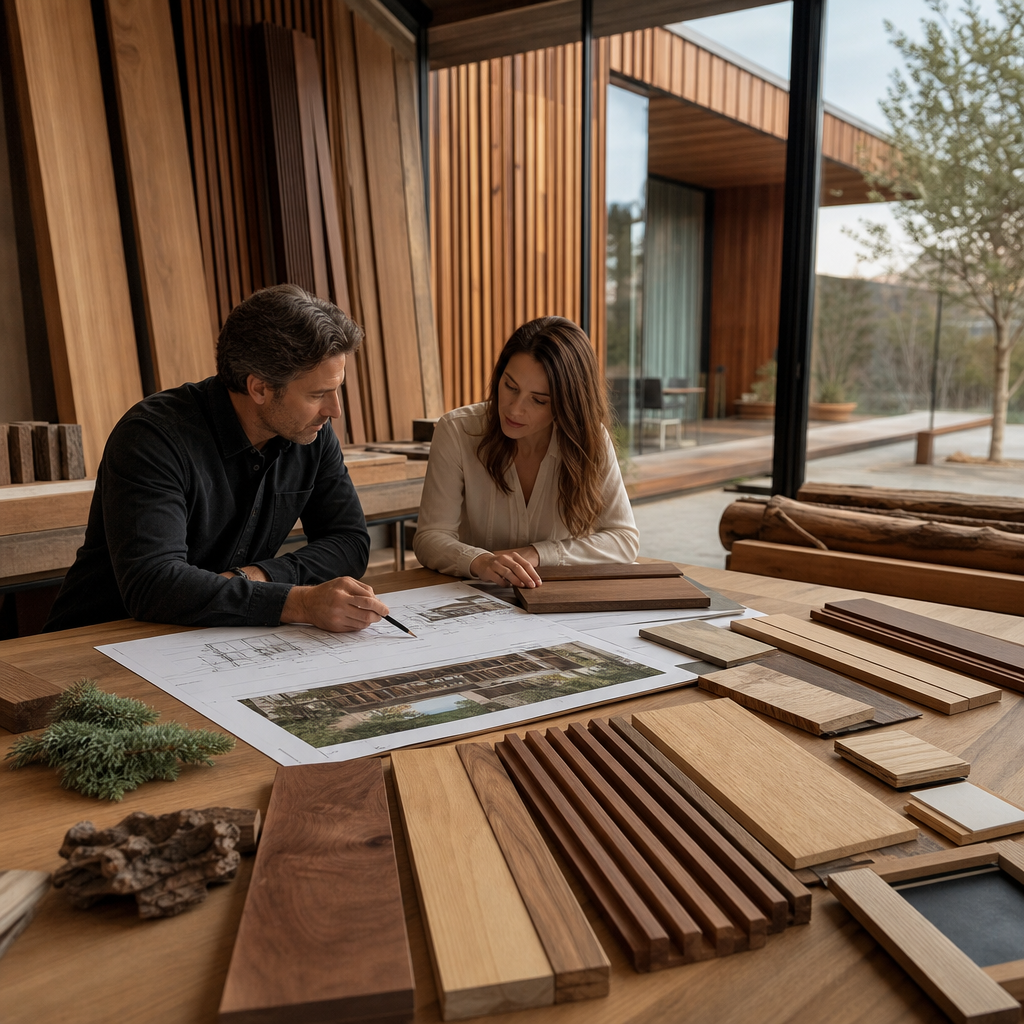
Exterior cladding is the most visible canvas. We supply the materials that define warm, contemporary residences: vertical grain Douglas Fir siding in clear and natural finishes, Western Red Cedar cladding in both smooth and textured profiles, and thermally modified ash for projects where color variation is intentional. Each material choice carries different character and maintenance expectations.
Hardwood siding and cladding bring deeper color and permanence to accent applications. A feature wall in Ipe or Tigerwood becomes a design anchor. These materials age gracefully and gain character with time, unlike materials that fade or weather uniformly.
Decking spans the full spectrum from composite alternatives for low-maintenance residential settings to Ipe for high-end installations designed to last 50 years. Thermally modified options fill the middle ground, delivering performance above standard softwood without the cost and sourcing complexity of tropical hardwood.
Interior applications include custom millwork, feature walls, ceilings, and trim. Here, hardwoods really shine. The warmth and grain character of carefully selected hardwood elevates entire spaces. We can source coordinated materials for primary structure and finish details, ensuring aesthetic consistency throughout.
What to do next: For your next project, identify one primary material and one accent material. This focused approach simplifies sourcing while allowing for meaningful visual hierarchy.
Partnership Benefits: Quality, Sustainability, and Timeline Certainty
Choosing to work with a specialized millwork supplier delivers three primary benefits that compound across a project lifecycle.
Quality starts with inventory. We maintain substantial stock of premium-grade materials because demand from architects justifies that investment. You’re not waiting for material to be sourced; you’re selecting from what’s already here, vetted, and ready. This depth also means we can accommodate the inevitable field adjustments without delays.
Sustainability is built into sourcing. We prioritize FSC-certified softwoods and responsibly harvested hardwoods. We stock thermally modified alternatives that extend material life and reduce long-term waste. We can document sourcing and environmental impact for architects pursuing green building credentials. Sustainability isn’t an add-on; it’s our standard practice.
Timeline certainty comes from partnership clarity. When you know what’s in stock, what has standard lead time, and what requires manufacturing, you can plan realistically. No surprises at critical construction milestones. No scrambling to source alternatives mid-project. We’ve built our business on the principle that architects need to trust their material supplier’s timelines.
We serve architects across Texas and all 50 states, from Austin to Dallas, Houston to San Antonio, and the Hill Country communities where contemporary design thrives. We understand the local building codes, the climate challenges, and the design language that defines architecture in this region.
What to do next: Schedule a conversation with our team about your next project. Bring your design intent and material preferences; we’ll bring options, expertise, and a commitment to making your vision real.
To place orders, order samples, or talk with a live person.
Frequently Asked Questions (FAQ)
What wood species do we recommend for architects seeking both durability and distinctive aesthetics?
We specialize in sourcing premium options tailored to your design vision. For softwoods, our Clear and Vertical Grain Western Red Cedar, Douglas Fir, and Hemlock deliver the warm, expressive wood character that defines contemporary Texas architecture. When our clients need superior durability and rich coloration, we stock hardwoods like Ipe, Cumaru, and Garapa, plus thermally modified species such as Thermally Modified Ash and Pine that offer enhanced stability without sacrificing natural beauty.
Can we accommodate custom millwork on tight project timelines?
Our Texas-based manufacturing facility allows us to produce custom profiles, dimensions, and finishes without the delays typical of national suppliers. We work directly with your team throughout the process, making adjustments as design details evolve, so your specifications are built right the first time rather than requiring costly field modifications.
Do we stock fire-rated wood products that meet Austin and Texas building codes?
Yes, we maintain inventory of WUI Class A fire-rated wood products for siding, cladding, decking, and framing that comply with Texas wildfire standards. This allows us to deliver compliant materials quickly rather than forcing you to source from out-of-state vendors or compromise your material selections during the specification phase.


