

Why Architects Choose Between Fiber Cement and Natural Wood
When designing a home for Central Texas, the choice between fiber cement and natural wood siding shapes everything from the project’s visual identity to its long-term performance and maintenance demands. We work with Austin-area architects daily who face this exact decision, and the answer rarely comes down to a single “best” material. Instead, it depends on your design intent, the home’s exposure, and how much tactile authenticity matters to your vision.
This guide walks through the real differences architects need to weigh, with practical insights we’ve gained from sourcing and installing both fiber cement solutions like James Hardie and premium natural wood products across Texas.
Fiber cement and natural wood represent fundamentally different philosophies. Fiber cement is a composite of Portland cement, cellulose fibers, and sand that delivers engineered consistency and predictable performance. Natural wood brings warmth, grain expression, and that unmistakable textural authenticity that defines modern architect-driven design.
The tension isn’t new, but it’s intensifying. Architects in the Lake Flato and Page traditions emphasize natural materials that age visibly and create genuine dialogue between the building and its environment. That aesthetic often points toward wood. Simultaneously, fiber cement manufacturers have solved legitimate durability concerns in humid climates, making the material genuinely viable for Texas weather.
Your choice hinges on three questions: How does this material serve your design narrative? Will the building’s location and exposure demand engineered durability? What maintenance story are you willing to tell the homeowner?
The right answer requires understanding what each material actually delivers on those fronts.
Durability and Weather Resistance: How They Compare in Texas Climate
Texas weather is deceptive. Austin and surrounding areas face seasonal extremes: intense summer UV, afternoon thunderstorms with horizontal rain, humidity spikes that encourage mold growth, and occasional freeze-thaw cycles that catch builders off guard. How do these materials perform?
Fiber cement doesn’t rot, splinter, or warp. James Hardie and similar products maintain dimensional stability through moisture swings. This is their genuine strength. In high-moisture zones, under soffits, or where water spray hits repeatedly, fiber cement simply endures without the ongoing vigilance wood requires. The material can last 30 years with minimal degradation.
Natural wood, when properly detailed and maintained, performs exceptionally well in Texas climate. However, it demands respect. Western Red Cedar and Cypress are naturally rot-resistant and handle humidity better than many expect, but they still need annual inspection, prompt sealing when finish wears, and careful flashing at vulnerable transitions. Thermally modified wood products like Accoya actually outperform traditional cedar in moisture stability and rot resistance while retaining authentic wood grain and finish-ability.
The real difference emerges over 10 years. Fiber cement requires less intervention but shows its engineered nature if finish fails. Wood ages visibly but, with attentive care, develops character that fiber cement cannot match.
Your decision should reflect how much ownership involvement you’re designing into the home’s lifecycle.
Aesthetic Expression and Design Flexibility for Modern Architecture
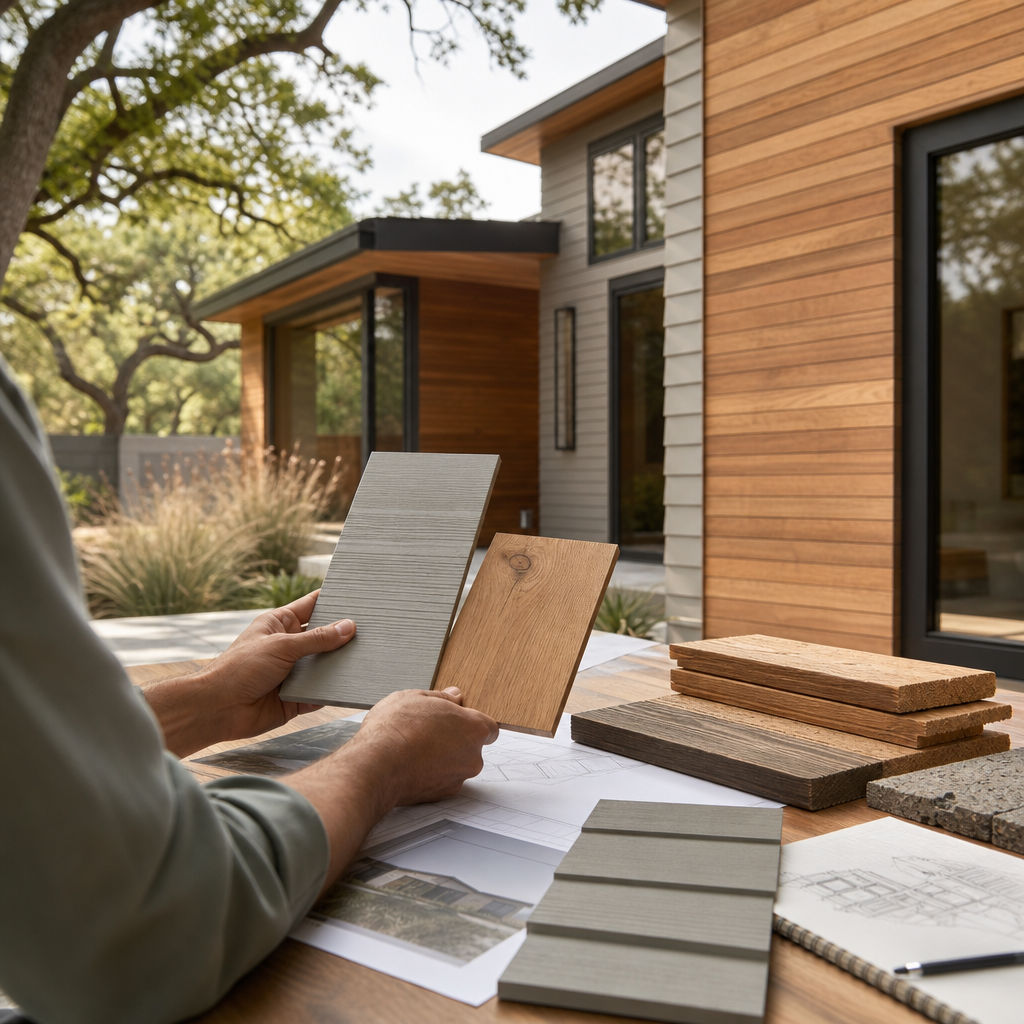
This is where philosophy matters more than engineering. Fiber cement accepts paint and maintains color consistency. It can mimic wood texture, though architects familiar with genuine material generally detect the difference. James Hardie offers dimensional products that approximate vertical grain aesthetic, but the surface quality differs fundamentally.
Natural wood speaks differently. When you specify Clear Grain Western Red Cedar or thermally modified ash siding, you’re designing material expression into the facade. Each board contributes individual character through subtle grain variation, knots, and heartwood tones. This is what creates the warm, light-filled interiors that blur indoor-outdoor boundaries in contemporary Texas homes.
Cladding profiles for modern facades matter enormously. The gap detail, reveal depth, and board layout compound material choice into full aesthetic commitment. A nickel-gap profile in thermally modified Ash reads entirely differently than the same profile in fiber cement, even though both are technically viable.
For architects seeking distinctive, memorable interiors where materials express intention, natural wood remains unmatched. For clean minimalism where color control and absolute weatherproofing matter more than tactile authenticity, fiber cement delivers.
Long-Term Maintenance Requirements and Lifecycle Costs
Fiber cement costs less initially but carries hidden labor expenses. Installation requires special blades, skilled cutting, and careful fastening to avoid cracking. Over 30 years, you’ll repaint every 7-10 years and address occasional caulk failure. Total lifecycle cost often approaches or exceeds natural wood when labor is factored honestly.
Natural wood siding demands more frequent attention but less of it per cycle. Annual inspection, touch-up sealing on worn areas, and prompt caulking at transitions keep properly detailed cedar or thermally modified wood viable for 40+ years. The key: detail matters enormously. Poor flashing or insufficient overhangs turn wood siding into a liability. Excellent detailing makes it bulletproof.
We recommend budgeting maintenance conversations into your design presentation. If the homeowner expects “install once, never think about it again,” fiber cement aligns better with that expectation. If they understand that wood ages beautifully and respond well to seasonal attention, natural wood is economically sound.
The real cost advantage goes to whoever specifies materials that match maintenance reality.
Fire Rating and Safety Performance in WUI Areas
For Austin homes, particularly those in Hill Country subdivisions and WUI (Wildland-Urban Interface) zones, fire rating is non-negotiable. This changes the equation substantially.
Fiber cement is inherently Class A rated. It contributes zero fuel to fire and requires no additional treatment. This is straightforward and permanent.
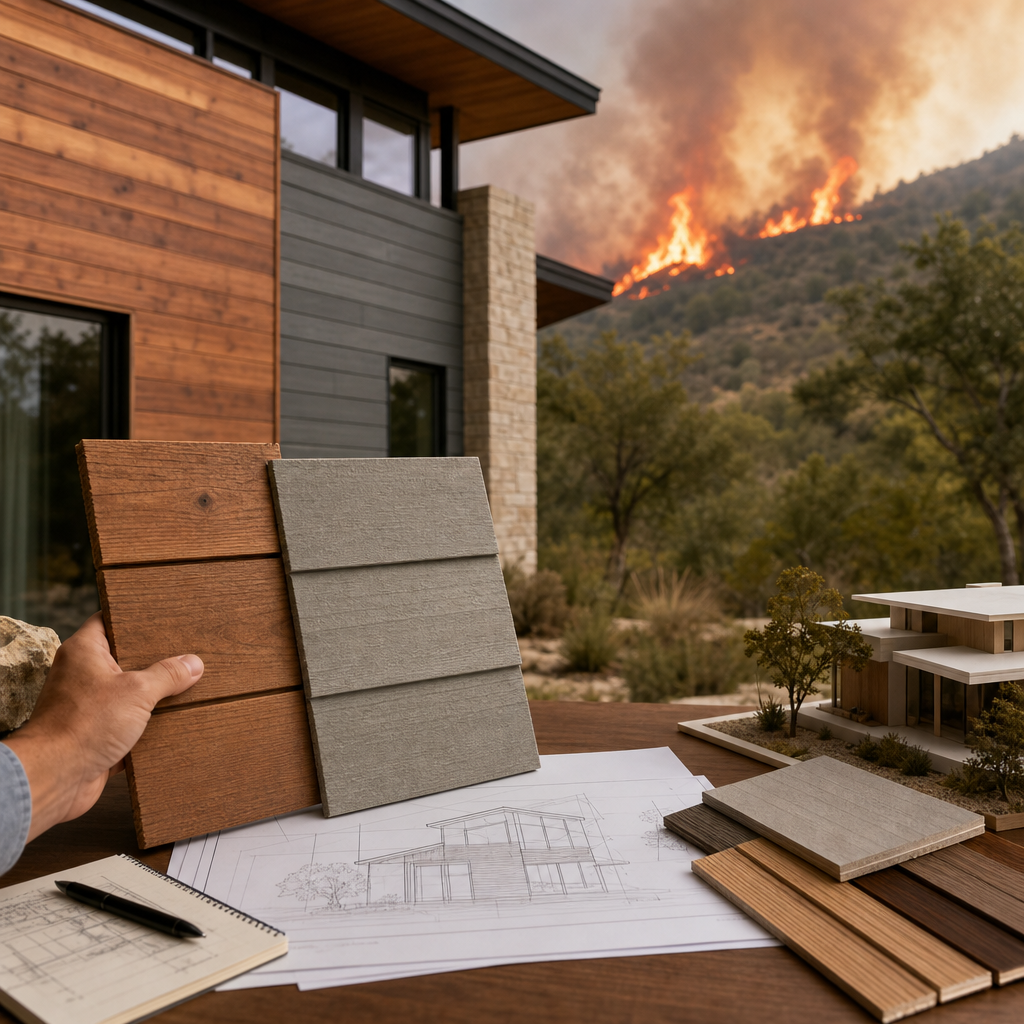
Natural wood requires thermal modification or specialized fire-retardant treatment to achieve Class A ratings. Thermally modified wood products like modified Ash and Pin are genuinely Class A fire-rated; the heat treatment alters the wood’s cellular structure to resist ignition. These products preserve wood’s aesthetic while delivering fire safety. Alternatively, untreated softwoods can receive fire-retardant applications, though these require periodic reapplication.
For architects designing in regulated WUI areas like portions of the Texas Hill Country or Spicewood, specifying WUI Class A-approved wood products isn’t a limitation. Our inventory includes thermally modified wood siding that meets all safety requirements while delivering the authentic material expression your design demands.
Know your local codes early. This constraint often resolves the fiber cement vs. wood question immediately, but it doesn’t necessarily eliminate natural wood as an option.
Our Advantage: Sourcing Premium Natural Wood and Fiber Cement Solutions
We source and distribute both material families because architect-driven design sometimes demands one, sometimes the other, and occasionally both in concert.
For natural wood, we supply Clear and Vertical Grain Western Red Cedar, Yellow Cedar, Hemlock, Douglas Fir, Cypress, and Southern Yellow Pine in siding, cladding, decking, and timber applications. We also stock premium hardwoods including Ipe, Cumaru, Garapa, and Massaranduba. Critically, we maintain inventory of thermally modified ash, pine, and Ayous products that meet fire-rating requirements while preserving wood character.
For fiber cement, we’re an authorized distributor of James Hardie products and other established brands. We handle sourcing, logistics, and technical specification support so your project timeline isn’t disrupted.
What distinguishes our approach: we don’t advocate for one material ideology. We specify based on your design intent, the building’s location, maintenance expectations, and safety requirements. For an architect whose design hinges on authentic wood expression in a non-WUI residential setting, we’ll source the right cedar and detail it properly. For a commercial facade in a fire-sensitive area or where maintenance-free performance is essential, we’ll specify fiber cement confidently.
This clarity serves your project better than material evangelism.
Working with Specialists Who Understand Architect-Driven Design
The material choice is only half the equation. Installation quality and supplier knowledge determine whether your specification actually performs and looks right on site.
We work closely with architects throughout Central Texas, Hill Country, and beyond because we understand that your material selections carry design intent. When you specify a nickel-gap profile in Vertical Grain Douglas Fir, we know that detail matters. When you need Class A fire-rated wood, we source products that meet code without compromising aesthetic. When you’re comparing fiber cement options, we connect you with technical resources that explain performance honestly.
This partnership approach prevents field substitutions, surprise cost overruns, and aesthetic disappointments. We coordinate with your general contractor, address questions early, and maintain specification integrity from design through installation.
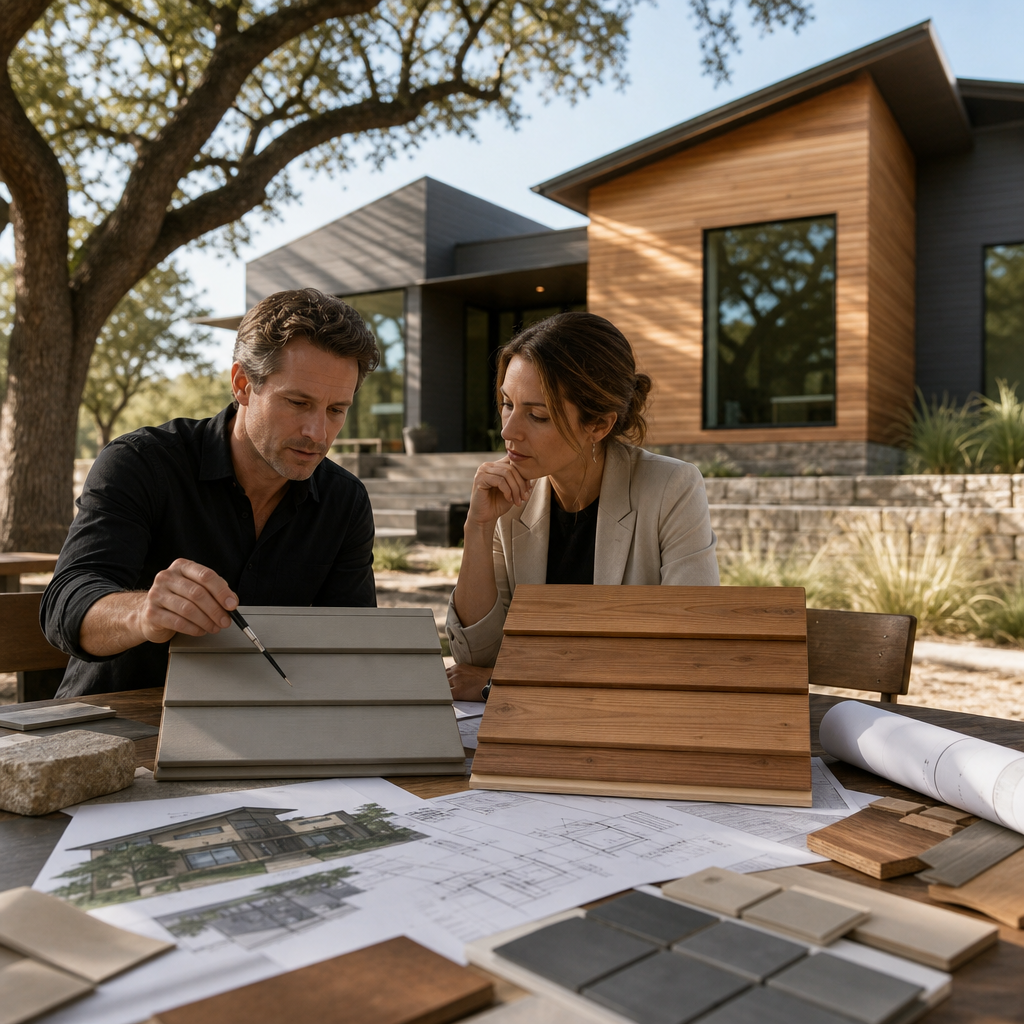
For architects managing multiple projects across Austin, Dallas, Houston, and beyond, having a specialty wood supplier who speaks your language reduces friction significantly.
Making Your Final Selection with Expert Guidance
Choose fiber cement when your design prioritizes engineered durability, minimal maintenance expectations, color consistency, or fire safety in a footprint where wood thermal modification isn’t justified. It’s a legitimate, professional choice that delivers what it promises.
Choose natural wood when your design narrative centers on authentic material expression, when the building’s exposure and detail design support proper performance, and when the homeowner understands and embraces gentle aging. Thermally modified wood products expand this option to include fire-rated applications without aesthetic compromise.
The decision isn’t actually between materials. It’s between design philosophies and maintenance stories. Make that choice deliberately, then specify accordingly.
We’re here to support either path with expertise, quality inventory, and the technical collaboration that architect-driven projects deserve. Contact us to discuss your next project, and we’ll walk through the specific considerations your design demands.
To place orders, order samples, or talk with a live person.
Frequently Asked Questions (FAQ)
What wood species do we recommend for modern architectural siding in the Austin area?
We primarily stock Clear and Vertical Grain Western Red Cedar, Yellow Cedar, Hemlock, Douglas Fir, Cypress, and Southern Yellow Pine for contemporary designs that emphasize natural material expression. For architects seeking tropical hardwoods, we carry Ipe, Cumaru, Garapa, Massaranduba, and Tigerwood. We also distribute thermally modified wood products like Thermally Modified Ash and Pine, which offer enhanced durability while maintaining the authentic wood aesthetic that architect-driven projects demand.
How do we compare natural wood siding to fiber cement options for WUI-rated applications?
We source both FSC-certified natural wood and leading fiber cement brands like James Hardie, and we understand that WUI Class A fire-rated projects often require careful material selection. Natural wood siding we supply can be treated to meet Class A standards, while fiber cement inherently offers excellent fire resistance without treatment. We work with you to evaluate performance requirements, maintenance tolerance, and design intent to determine which material serves your specific project goals.
Can we supply materials for the full scope of an architect-designed home exterior?
Yes, we provide comprehensive sourcing across siding, cladding, decking, soffits, timbers, and fencing in both natural wood and composite options. Our inventory includes premium brands like Trex, TimberTech, and Fiberon alongside our specialty wood products, allowing us to meet integrated design specifications from foundation to roofline in a single partnership with our company.


