

Why Texas Architects Choose Premium Wood Siding Over Alternatives
Texas architects designing contemporary homes face a fundamental challenge: sourcing exterior materials that deliver both visual warmth and structural longevity while honoring their design intent. Standard vinyl or fiber cement falls short when your vision calls for authentic wood grain, natural texture, and the subtle color evolution that only real wood provides. The answer isn’t to compromise on aesthetics or durability. It’s choosing premium wood siding engineered for the Texas climate and specified with the precision architects demand.
We’ve worked with leading firms across Austin, Dallas, Houston, and beyond to understand exactly what makes a siding material perform in their hands. This guide reveals why premium wood siding outperforms alternatives for architect-designed homes and how to specify the right products for your next project.
Premium wood siding wins on three fronts that matter most to architects: visual authenticity, design flexibility, and environmental integrity.
Vinyl and composite materials can’t replicate the depth, character, and warmth of real wood. When light hits vertical grain cedar or thermally modified ash at different times of day, the material comes alive in ways that photograph beautifully and age with purpose. Architects working in the Lake|Flato and Page traditions understand that natural materials are essential to creating spaces that feel connected to place.
From a specification standpoint, premium wood offers vastly more options. You can choose grain direction, thickness, profile, and finish to align with your exact design intent. A board-and-batten wall in clear vertical grain western red cedar creates a different emotional impact than the same geometry in ipe hardwood. That flexibility is rarely available in standardized composite products.
Beyond aesthetics, FSC-certified and sustainably sourced wood aligns with the values many architects prioritize. Building with certified materials proves commitment to responsible forestry and climate-conscious design.
What to do next: Start by identifying which design priorities drive your material choice: Is it the visual warmth? The sustainability story? The durability demands of a specific climate zone? This clarity shapes which product family best serves your project.
What Sets Cambium Wood Apart for Modern Architecture
Cambium wood represents a breakthrough in how architects can specify exterior cladding without sacrificing durability. This thermally modified wood undergoes a proprietary heating process that removes the moisture wood naturally absorbs, making it exceptionally stable, rot-resistant, and dimensionally consistent across seasons.
For contemporary designs emphasizing clean lines and precision joinery, cambium wood eliminates the movement and warping that plague standard lumber. Joints stay tight. Proportions remain exact. This stability matters intensely when your design relies on perfect alignment between mullions, cladding courses, and glass planes.
The material also weathers beautifully, developing a sophisticated silver-gray patina over time if left unfinished, or accepting stains and finishes with superior color retention compared to untreated wood. Architects appreciate that the material doesn’t demand constant maintenance to age gracefully.
We stock cambium wood in multiple species and profiles specifically because architects tell us it bridges the gap between high performance and authentic aesthetics. It performs like a composite but reads and ages like real wood.
What to do next: If you’re specifying siding for a project with tight tolerances or complex joinery, request samples of thermally modified options alongside your traditional cedar. Notice how the material accepts finishing and how stably it holds detail.
Our Selection of Premium Siding Options for Architect-Designed Homes
Our inventory spans the full spectrum of premium wood siding, allowing you to align material choice with design strategy, climate exposure, and durability requirements.
Clear and vertical grain western red cedar delivers warm honey tones and soft grain character. It’s lightweight, works beautifully with hand-applied finishes, and offers the aesthetic that defines contemporary Texas architecture. We supply it in multiple profiles: smooth boards, fluted paneling, and board-and-batten configurations.
Yellow cedar provides tighter grain structure and slightly more pronounced color, reading slightly more formal than its western red counterpart. It finishes with exceptional clarity and accepts stains consistently across boards.
Douglas fir offers deeper grain expression and warmer undertones, ideal for projects seeking dramatic wood character. Its strength makes it suitable for structural applications where siding doubles as load-bearing cladding.
Hemlock delivers a refined, understated appearance with minimal grain, perfect for designs emphasizing color saturation through finish rather than wood character.
We also carry southern yellow pine for projects prioritizing warm golden tones and substantial visual presence, plus cypress for its inherent rot resistance and unique figure.
What to do next: Request a material board of 3-4 species in your preferred profile. View them in full sun and shade at your site. Observe how grain direction, color, and surface texture align with your design vision before finalizing specifications.
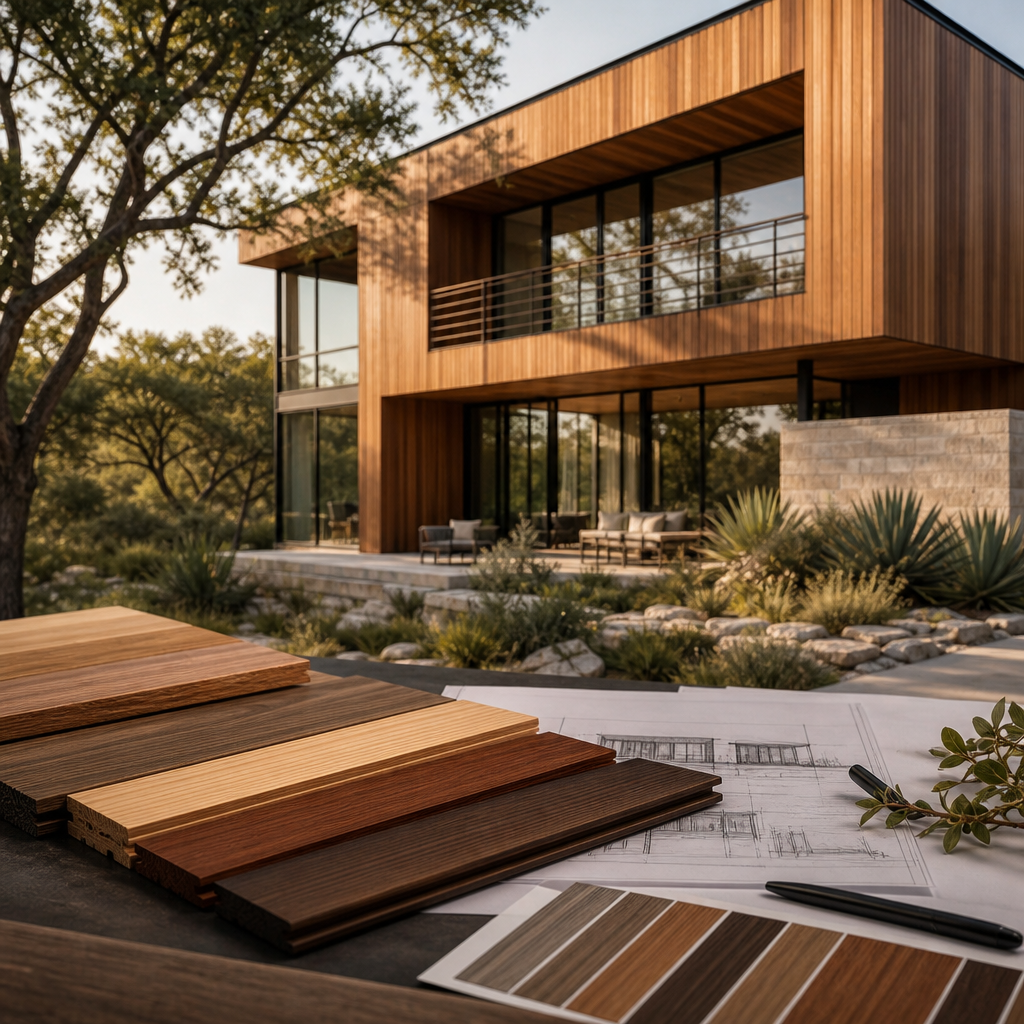
Cedar and Hemlock Solutions for Light-Filled Interiors
Cedar and hemlock serve different roles in contemporary architecture, and understanding those differences shapes specification decisions.
Clear western red cedar works exceptionally well as an interior cladding material in light-filled spaces. Its warm, honey undertones reflect light beautifully and create the sense of natural warmth that architects in our region prioritize. For designs featuring expansive glass and minimal interior walls, cedar cladding becomes part of the material story, visible from entry through the entire volume of the home.
Hemlock serves a different purpose. Its subtle grain and neutral palette recede visually, allowing other design elements to dominate. In projects where wood cladding is secondary to glass or architectural form, hemlock provides textural richness without visual competition.
Both materials accept clear finishes that preserve their inherent color, or matte tinted finishes that allow architects to introduce specific color while maintaining wood grain visibility. This flexibility makes them ideal for designs where the material palette is carefully calibrated.
The key difference in performance: cedar naturally resists decay, while hemlock requires more consistent finishing maintenance. For interior applications, this distinction matters less. For soffits or covered exterior surfaces, it becomes critical.
What to do next: If your design features interior wood cladding as a primary material, source full-height samples and view them with your proposed interior finishes and lighting scheme. The interaction between wood color and your paint selections will drive your final choice.
Thermally Modified Wood: Durability Meets Contemporary Design
Thermally Modified Wood Siding has fundamentally changed how architects approach longevity without sacrificing aesthetics. By heating wood at controlled temperatures without chemicals, the modification process removes cellular water content, making the material far more stable and resistant to decay and insect damage.
Thermally modified ash brings a sophisticated medium-gray palette and fine grain structure. It weathers to a deeper silver-gray and performs exceptionally well in full sun exposure without checking or warping.
Thermally modified pine offers warm peachy-brown undertones and responds beautifully to transparent finishes that enhance grain figure.
These materials excel in projects demanding 30+ year durability with minimal maintenance. They’re also ideal for designs where the siding will age naturally without refinishing. The material’s inherent stability allows for larger format boards or creative joinery that standard lumber can’t support.
For architects designing in fire-prone regions of Texas, we also stock WUI Class A fire-rated thermally modified products that meet the most stringent exterior fire requirements while maintaining aesthetic integrity.
What to do next: Evaluate whether your project benefits from the superior dimensional stability thermally modified products provide. If your design relies on tight joinery, large format boards, or a naturally-aged weathered aesthetic, these materials justify their premium cost through decades of performance.
Hardwood Siding for Distinctive Architectural Expression
When architects want siding that makes a statement, hardwood species provide unmatched visual drama and longevity. Ipe, cumaru, garapa, massaranduba, and tigerwood aren’t just exotic. They’re high-density, naturally rot-resistant, and capable of expressing sophistication and craft at a level standard softwoods can’t match.
Ipe delivers dense chocolate-brown color with dramatic grain that darkens beautifully over time. Its extreme hardness and durability make it appropriate for siding that will experience weather exposure and age gracefully for 50+ years without refinishing.
Tigerwood brings warm amber tones with naturally occurring black grain striping. It’s the most visually distinctive hardwood option and commands attention as a primary design element.
Cumaru and garapa offer warm golden-tan palettes with tighter grain and slightly more refined appearance than ipe. They’re ideal for projects seeking hardwood’s durability and longevity with a more understated aesthetic.
The trade-off is cost and installation complexity. Hardwood siding requires precision milling and installation expertise. But for signature projects where the exterior material becomes part of the home’s architectural identity, hardwood delivers unmistakable quality.
What to do next: Consider hardwood siding for design-driven elements: accent walls, primary facades, or architectural features that justify premium specification. Use softer woods for less visible or less-exposed conditions to manage project budgets strategically.
How Our Products Compare to Standard Building Materials
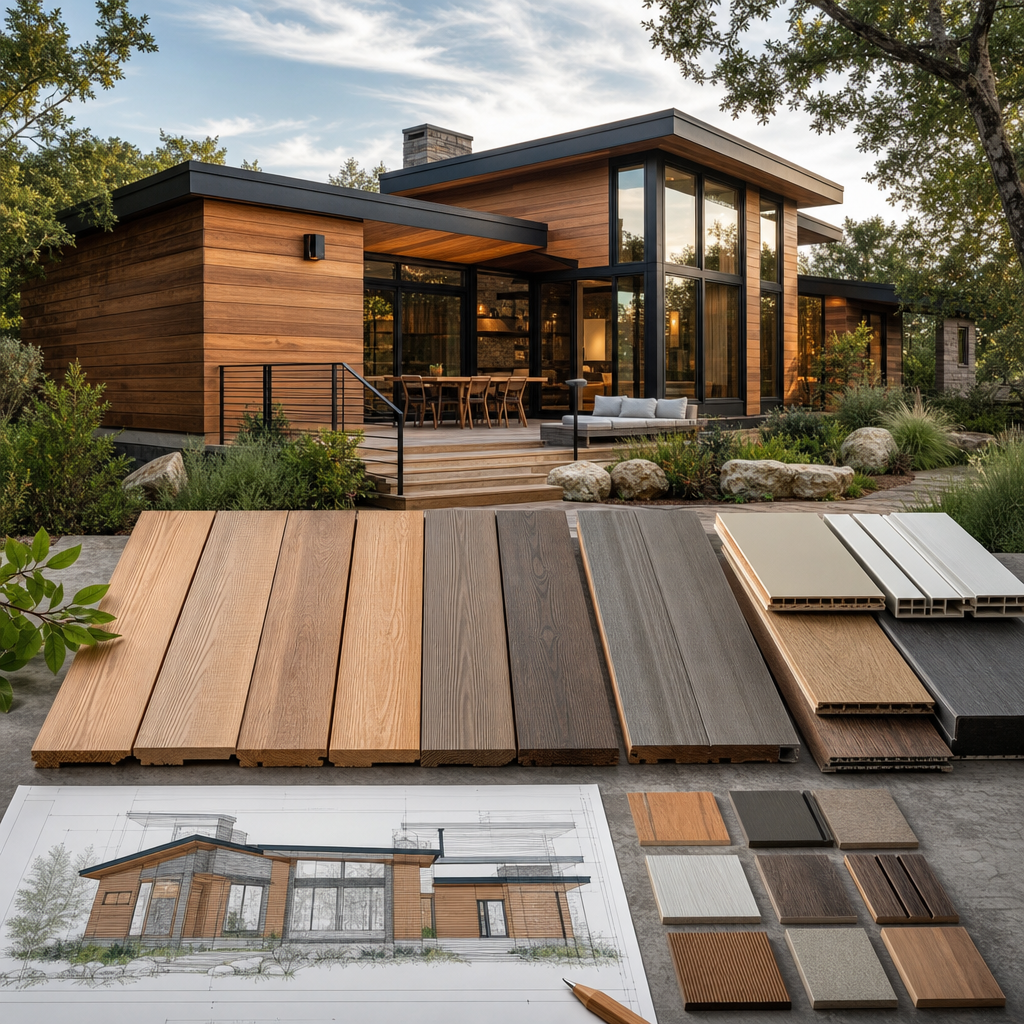
The difference between premium wood siding and standard alternatives comes down to durability, maintenance, and design authenticity.
Vinyl siding offers low maintenance and cost efficiency. It won’t rot or splinter. But it fails on three counts: it dents and fades under Texas sun, it can’t be repaired (you replace entire sections), and it reads as utilitarian rather than intentional. Architects universally avoid it in designs intended to last and impress.
Fiber cement delivers better durability than vinyl, but it’s heavy to install, can’t be stained to achieve wood character, and costs nearly as much as real wood while looking distinctly artificial under close inspection.
Composite materials like TimberTech and Trex excel for decking applications where foot traffic and water exposure demand engineering resilience. For vertical siding applications, they lack the visual nuance and material authenticity that contemporary architecture demands. We stock leading composite brands for clients who prioritize low maintenance on specific applications, but we consistently recommend real wood for primary cladding.
Premium wood siding costs more initially but delivers unmatched longevity, superior aesthetics, design flexibility, and genuine sustainability. Over 40 years, the cost-per-year comparison overwhelmingly favors real wood, especially when you account for the visual and functional integrity loss associated with replacing vinyl or composite siding midway through a home’s lifecycle.
What to do next: Calculate the 30-year cost comparison for your primary siding application using real wood versus composite alternatives. Include refinishing costs for wood, replacement costs for composites, and the property value impact of authentic material choices. The math strongly favors premium wood.
Sustainability and FSC Certification in Your Specifications
Architects committed to responsible design increasingly specify FSC-certified wood products. FSC certification means the wood comes from responsibly managed forests where harvesting practices maintain ecosystem health, worker welfare, and community benefit.
We distribute only FSC-certified and responsibly sourced wood products. This certification applies across our selection: cedar, hemlock, douglas fir, cypress, and our entire hardwood inventory. It’s built into our sourcing standards, not an add-on option.
For projects targeting LEED certification or seeking to document sustainable material choices, FSC documentation is essential. We provide full chain-of-custody documentation for every product shipment, allowing architects and builders to credibly substantiate material claims.
Thermally modified wood products add another sustainability dimension. Because the modification process uses only heat and no chemical treatments, it allows wood species with shorter growth cycles to perform like naturally decay-resistant tropical hardwoods. This means you can specify thermally modified ash or pine and achieve the longevity of ipe without the carbon footprint of tropical shipping.
What to do next: Confirm FSC certification requirements early in your specification process. Request documentation at the time of material selection so it’s available for permit submittal and project certification documentation.
Integration with Modern Glass and Natural Material Designs
Contemporary Texas architecture, as practiced by leading regional firms, emphasizes the dialogue between natural materials and expansive glass. Wood siding plays a critical role in this conversation, providing warmth and tactile richness that glass cannot.
The most successful contemporary homes treat wood cladding and large-format glass as equal design partners. Wood soffit and fascia framing the perimeter of massive glass walls creates visual containment and shadow line articulation. Interior wood cladding visible through glass walls extends the material warmth into interior volumes. Exterior wood siding grounding the glass volumes creates a sense of weight and permanence.
This integration demands material consistency and precision joinery that only premium wood specifications support. Standard lumber variations would create visual discord with the pure geometry of modern glass installations.
We recommend viewing sample integrations of your siding material adjacent to your actual glass and hardware selections. The interplay between wood color, grain direction, glass reflectivity, and metal framing creates the final aesthetic. Small changes in finish color or grain direction can shift the entire design impact.
What to do next: Request full-scale mockups showing your siding material, glass specification, and frame hardware together in similar sun exposure to your site. This investment in verification typically costs $500-1500 and prevents tens of thousands in specification adjustments after construction begins.
Why US Lumber Brokers Is Your Definitive Siding Partner
We’re not a general lumber yard stocking commodity materials. We’re a specialty supplier and manufacturer focused exclusively on premium products for architect-designed projects across Texas and nationwide.
Our difference comes from deep expertise in wood species performance in the Texas climate. We understand how western red cedar ages in Hill Country sun exposure versus Dallas humidity. We know which hardwoods perform consistently in coastal applications near San Antonio versus inland projects in Austin. This isn’t theoretical knowledge. It’s built from 20+ years of specifications, installations, and long-term performance observation.
We maintain inventory across the full spectrum of premium wood options. When you specify with us, you’re not choosing from what’s in stock today. You’re accessing our established supply relationships with mills throughout North America and certified sustainable sources globally. If your project demands a specific species, grade, or profile, we source it reliably and deliver it on schedule.
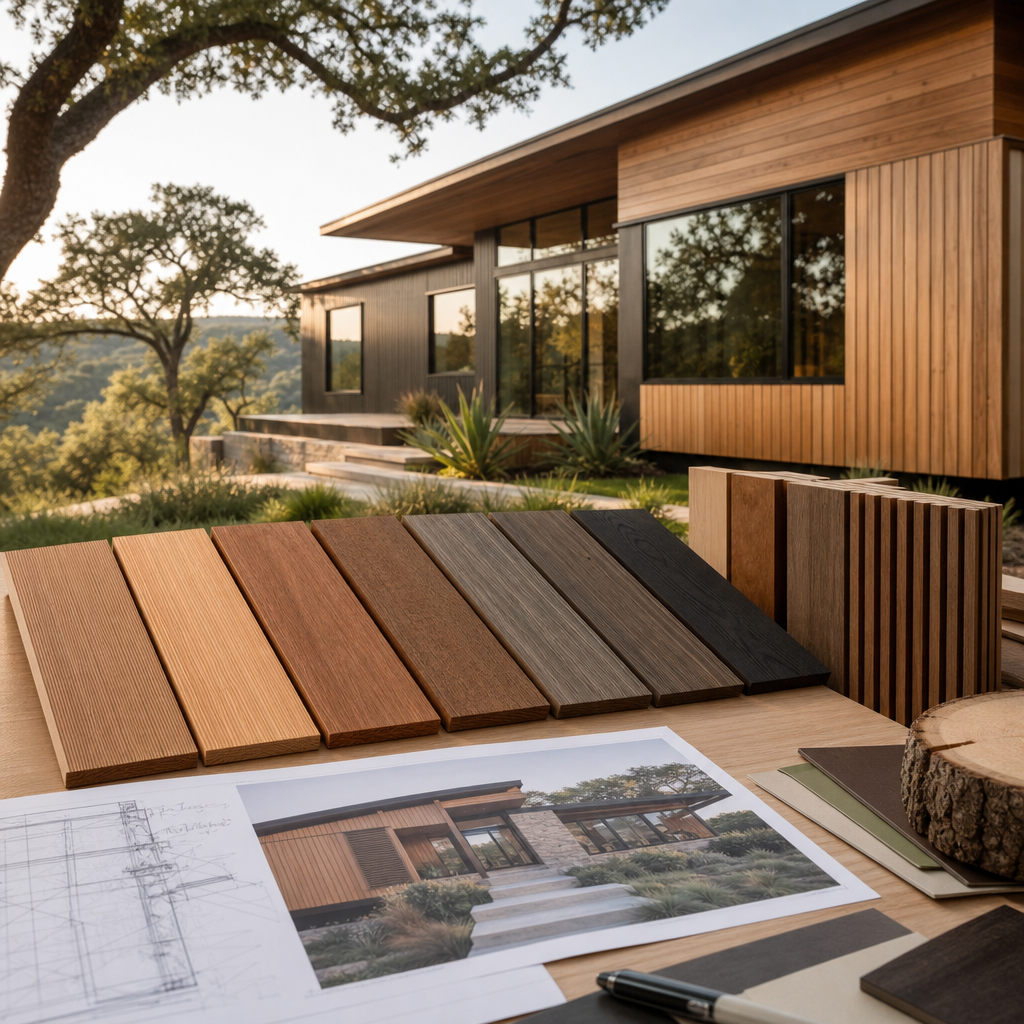
We also manufacture custom profiles and specialty products. If your design requires a unique board profile, fluted configuration, or combined siding solution, we produce it to your exact specifications rather than forcing your design to fit standard inventory.
Beyond product quality, our team includes staff with direct architecture background and building science expertise. We translate your specifications into procurement reality, flag potential performance issues before they become problems, and deliver technical documentation that builders and inspectors need.
What to do next: Schedule a consultation with our team early in your design development. Share your concept drawings, climate exposure conditions, and aesthetic priorities. We’ll recommend products and profiles aligned with your actual project requirements rather than pushing our largest-inventory items.
Implementation Guide: From Specification to Installation
Moving from material selection to successful installation requires clarity at every stage.
Start your specification with a detailed siding schedule that includes: species, grade, profile, finish system, joint treatment, and fastening method. This schedule becomes your procurement document and your quality control reference during construction.
Request full-height mockups from your contractor using actual project materials, installed methods, and on-site conditions. Mockups reveal finish color consistency, grain character, joint appearance, and how weather exposure affects the material over the initial weeks. Budget mockup costs as part of your specification process, not as a change order later.
Specify installation by experienced crews familiar with your chosen material. Pressure-treated lumber installation differs significantly from hardwood installation differs from thermally modified product installation. Contractor experience with your specific material drives success.
Establish a maintenance plan at project completion. Even premium wood benefits from periodic inspection and finish maintenance. A clear maintenance schedule keeps your investment visually and structurally sound for decades.
What to do next: Draft your siding specification now with exact product names, grades, and finish systems. Share it with your contractor for a constructability review before permit submittal. This simple step prevents costly revisions and installation delays.
Transforming Your Vision Into Enduring Architecture
Premium wood siding doesn’t just protect the envelope. It’s the material that transforms architectural vision into enduring reality. When architects specify thoughtfully and build with precision, wood siding becomes the visual and tactile foundation of homes that age beautifully, perform reliably, and feel authentically connected to the place they occupy.
We’re here to support that mission. Whether you’re designing in clear western red cedar, thermally modified ash, or distinctive hardwood, we provide the expertise, inventory, and quality assurance that architect-designed projects demand. The projects that matter most aren’t built with commodity materials and standard approaches. They’re built with premium products, specified with intention, and installed by teams committed to craft.
Partner with us to bring your architectural vision to completion. Contact our team with your project requirements and let’s discuss how premium wood siding becomes the defining feature of your design.
To place orders, order samples, or talk with a live person.
Frequently Asked Questions (FAQ)
What wood siding options do we recommend for contemporary architecture that emphasizes natural materials?
We stock premium softwoods including Clear and Vertical Grain Western Red Cedar, Hemlock, Douglas Fir, and Cypress that deliver the warm, expressive aesthetic modern architects seek. For architects wanting enhanced durability without compromising design intent, we offer thermally modified woods like Thermally Modified Ash and Pine, plus hardwood options such as Ipe and Garapa that provide distinctive character for signature facades. Our inventory ensures you have architect-grade materials that perform in Texas’s climate while maintaining the natural material expression your designs require.
Are your wood products suitable for WUI-rated fire zones in the Austin area?
Yes, we supply WUI Class A fire-rated wood products for siding, cladding, decking, and other exterior applications. We understand that many contemporary homes in areas like Lake Travis, Dripping Springs, and the Texas Hill Country sit in wildfire zones, so we maintain inventory of compliant materials that meet code without sacrificing the natural wood aesthetic that defines your project vision.
How does our sourcing support your project specifications for sustainability?
We distribute FSC-certified wood products throughout our inventory, allowing us to support your sustainability commitments on architect-specified projects. Our selection of responsibly sourced materials means your designs align with environmental standards while maintaining the material authenticity and performance your work demands.


