

Why Premium Wood Siding Specifications Matter for Your Projects
Getting your wood siding specification right from the start saves us all headaches down the line. When architects and contractors work with premium thermally modified products like Ambara and Ayuso, the stakes are higher because the investment is substantial and the aesthetic expectations are exacting. A vague material callout or incomplete installation guidance can lead to callbacks, warranty disputes, and projects that don’t perform as intended.
We’ve seen projects stall because specifications didn’t account for regional moisture swings, or installations failed because the substrate prep didn’t match the material’s requirements. The technical details matter because they determine whether your siding will expand and contract predictably, resist moisture intrusion, maintain its color and finish, and last for decades without failure.
Quality wood siding specifications create a shared understanding between your team, our supply chain, and the installers in the field. They reduce back-and-forth conversations, minimize material waste, and give you confidence that what arrives on the job site will perform as promised.
Common Specification Mistakes We Help Contractors Avoid
The most frequent error we encounter is underspecifying substrate and ventilation requirements. Contractors will call for premium Ambara or Ayuso siding but then pair it with inadequate air gaps or improper housewrap. Thermally modified wood still needs to breathe, even though it’s more stable than standard softwoods.
Another pitfall is leaving moisture content tolerances ambiguous. We’ve had projects where the siding arrived at the site, was stored improperly for two weeks, and then installed with elevated moisture levels. The material then shrinks as it dries in place, creating gaps and cupping. Our specification process always includes clear storage and acclimation protocols.
Third-party finish specifications are often overlooked. While Ambara and Ayuso can be left unfinished, many projects call for stains or sealers. Mismatched finish products can trap moisture or peel prematurely. We recommend specifying finishes that are compatible with the wood’s thermal modification properties.
One more common mistake: assuming Class A fire ratings without confirming the product and installation method. Not all thermally modified siding products automatically qualify for WUI Class A ratings, and installation technique matters. We help you confirm exact compliance before materials are ordered.
Actionable step: Request a pre-specification checklist from your supplier that covers substrate, ventilation, moisture management, finish compatibility, and local code requirements.
Understanding Ambara and Ayuso: Key Technical Differences
Ambara and Ayuso are both thermally modified softwoods, but they come from different base materials and have distinct performance characteristics. Understanding these differences helps us match the right product to your climate and project goals.
Ambara is thermally modified poplar, known for its light color and dimensional stability. It has excellent moisture resistance after thermal modification and moves less with humidity changes than untreated poplar. Ayuso is thermally modified ash, which offers slightly more hardness and a different aesthetic grain pattern. Both products achieve similar reductions in moisture absorption, but Ayuso’s denser base structure gives it marginally better wear resistance in high-traffic applications or harsh weather zones.
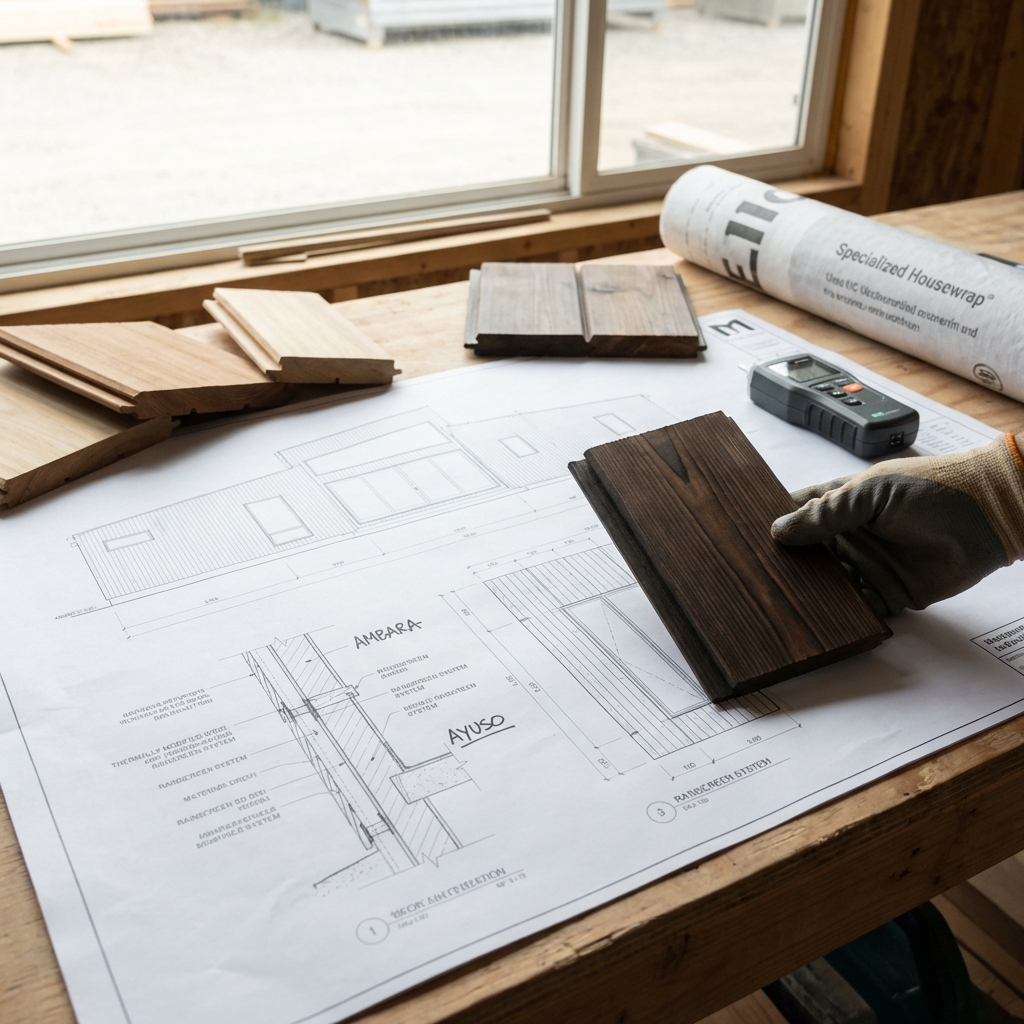
For Texas applications, the choice often hinges on aesthetic preference and durability priorities. Hill Country and Hill Country luxury homes favor Ambara’s subtle grain and lighter palette. Coastal and high-sun exposures benefit from Ayuso’s slightly darker, more stable characteristics under UV stress.
Technical specifications differ in swelling/shrinkage rates, fastener pull-through potential, and finishing response. We provide detailed mill test data for both products, and we recommend that your specifications include moisture content at delivery (typically 10-12% for our shipments) and reference the exact grade and quality standard from the manufacturer.
Moisture Management and Climate Considerations for Thermally Modified Wood
Thermally modified wood products like Ambara and Ayuso significantly reduce moisture uptake compared to untreated wood, but they are not impervious to humidity. Our Texas climate, with summer humidity near the coast and dry seasons in the Hill Country, requires thoughtful vapor management.
The thermal modification process closes the wood’s cellular structure, reducing its ability to absorb liquid water and slowing moisture vapor transmission. However, specifications must still require proper ventilation behind the cladding. We recommend a minimum 1-inch air gap with open weave housewrap, not closed-cell barriers that trap condensation.
In humid climates like Houston and Dallas, we emphasize drainage plane design. Water should shed quickly from the siding surface down the sheathing and out through base flashing. Capillary breaks at the foundation are non-negotiable to prevent wicking moisture into the base of the wall.
Acclimation is another critical detail. When thermally modified siding arrives at the job site, it should be stored under cover for 7-14 days before installation, allowing the wood to reach equilibrium with the local ambient humidity. We include acclimation requirements in every specification we develop, and our delivery paperwork includes handling instructions.
For projects in the drier Hill Country or Spicewood, moisture management is less urgent, but substrate ventilation remains important. Temperature swings can still drive moisture into the wall cavity if air sealing is too tight.
Proper Installation Sequencing and Substrate Requirements
Installation sequencing matters as much as material selection. We specify the order: weather barrier first, then flashing at all penetrations and transitions, then the siding itself.
The sheathing substrate should be rated for the load and environment. We typically specify plywood or OSB with proper edge support and bracing. For premium projects, some architects prefer fiberboard or gypsum sheathing for their thermal properties, but these require different fastening strategies. Your specification should call out the exact sheathing product and thickness.
Fastening is another critical detail. Ambara and Ayuso respond well to stainless steel or hot-dipped galvanized fasteners sized for the siding thickness. We recommend ring-shank or spiral-shank nails to resist pull-through as the wood ages. Specifications should include fastener spacing, typically 16 inches on-center for cladding applications, and deeper penetration into substrate (1.5 inches minimum).
Flashing design prevents water intrusion at window openings, where siding meets brick or stone, and at roof lines. We specify flashing materials and integration method in writing, often with callouts or detail drawings. Improper flashing is the leading cause of hidden moisture damage in wood-clad buildings.
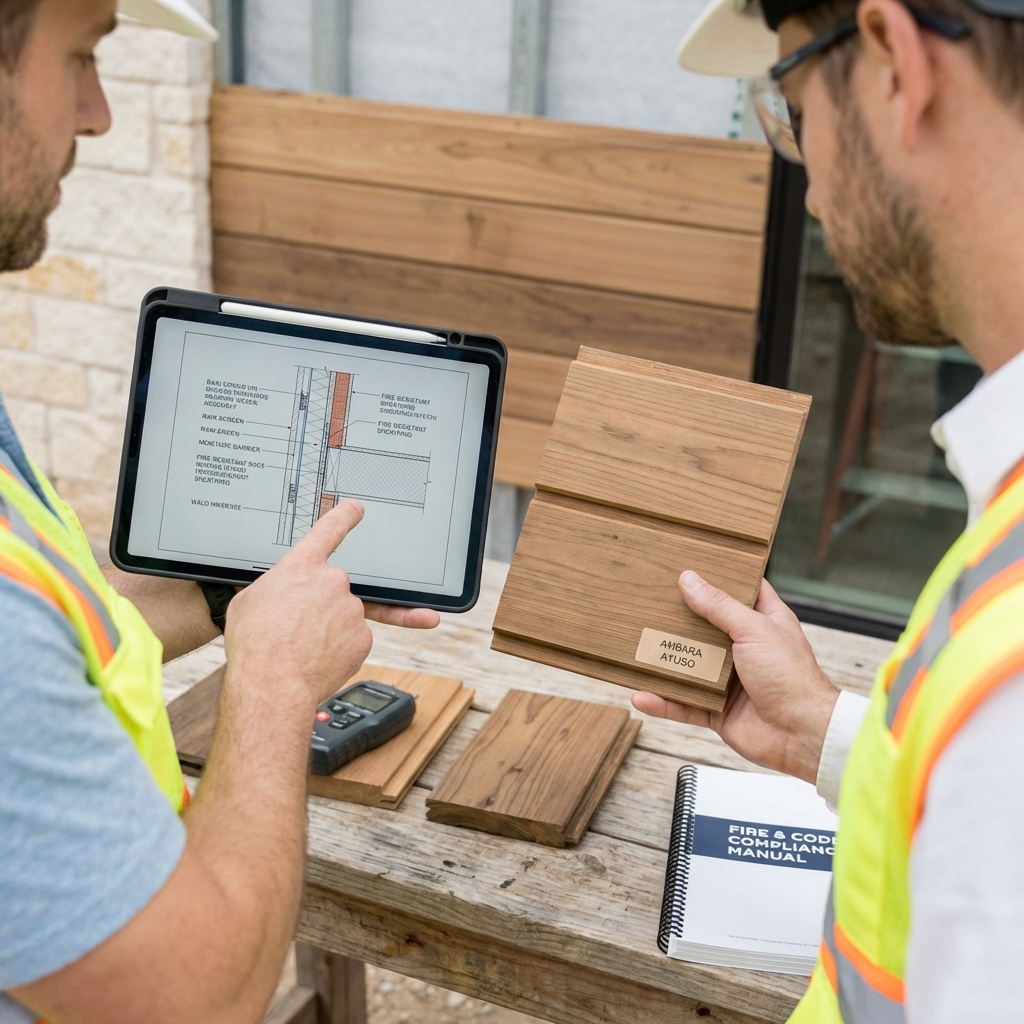
Fire Rating and Code Compliance for Your Region
Texas building codes and Austin City specific requirements have evolved significantly, and we stay current with what’s required in each jurisdiction. Many premium residential and commercial projects now specify WUI Class A fire-rated products, especially in the Hill Country, where wildfire risk is a planning factor.
Not all thermally modified siding automatically qualifies as Class A. Some require intumescent sealers or specific installation methods. Our Ambara and Ayuso products, when properly specified and installed per manufacturer guidelines, meet Class A standards, but we recommend that your specification explicitly require mill testing documentation and third-party certification.
Some municipalities in Texas now mandate Class A materials for all new exterior cladding. Others apply the requirement only to high-risk zones. Our role is to help you confirm what your local authority having jurisdiction actually requires, then call it out clearly in the specification. Discovering after material delivery that your choice doesn’t meet code is costly.
We also flag fire-stopping requirements at band boards, eaves, and wall penetrations. Thermally modified wood doesn’t change those requirements, but the specification should reference fire-blocking standards applicable to your specific project location.
How We Support Your Project from Specification to Delivery
Our approach begins with understanding your project scope, location, timeline, and aesthetic goals. We work with your architect or your procurement team to develop a material schedule that covers grade, profile, finish, and moisture content at delivery.
We then provide detailed technical data sheets for Ambara or Ayuso, including test results for dimensional stability, fire rating, and moisture behavior under the conditions your building will experience. This data becomes part of your specification package and supports value engineering conversations if needed.
Once specifications are finalized, we manage the supply chain. We coordinate mill production timing so material arrives when your project is ready for installation, not weeks early when storage and acclimation become problematic. We track shipments and confirm that delivery documentation includes moisture content testing and mill certifications.
If questions arise during installation, our team is available to support field adjustments or clarifications. We’ve helped contractors troubleshoot flashing details, fastener questions, and finish application challenges directly from the job site.
Quality Control and Material Consistency Standards We Maintain
Material consistency is a foundational expectation for premium siding products. We work exclusively with mills that maintain strict grading standards and quality control protocols.
Every shipment of Ambara or Ayuso from our inventory undergoes moisture content testing before it leaves our facility. We use pin-type and digital meters to confirm that material meets the 10-12% range we specify. Material outside that range is held for further drying or acclimatization.
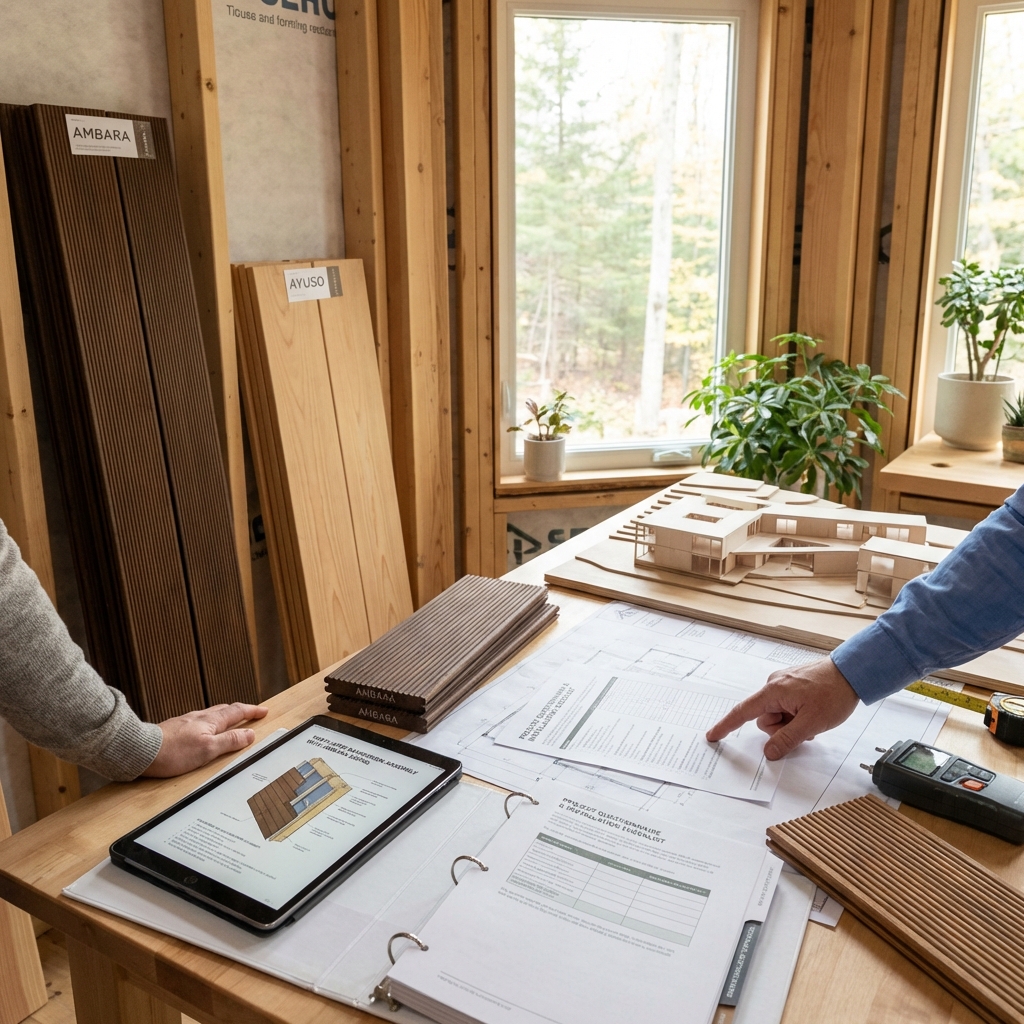
Grade consistency is equally important. We specify Clear or Select grades depending on the project aesthetic and budget. All material is visually inspected for defects, excessive knots, or manufacturing flaws that would compromise appearance or performance. Pieces that don’t meet grade standards are segregated and offered separately or returned to the mill.
We maintain detailed records of mill certifications, including FSC certification for customers who require sustainable sourcing documentation. When a project requires third-party auditing or documentation, we provide test reports and mill certificates that stand up to inspection.
Cost Optimization Without Compromising Performance
Premium thermally modified siding costs more than standard pressure-treated lumber, but the lifecycle value often justifies the investment. We help contractors optimize costs by being precise about where premium materials are truly needed.
For example, Ambara and Ayuso work exceptionally well on all elevations, but if budget is tight and the project has a protected north elevation, we might recommend a durable cedar or hemlock alternative for that side and reserve the thermally modified product for south and west exposures where UV and moisture stress is highest.
Finish specifications also affect total cost. Leaving Ambara or Ayuso unfinished (they’ll silver naturally) reduces cost. Applying a clear penetrating sealer is mid-range. Full pigmented stains cost more but offer color consistency and additional UV protection. Your specification should align finish choice with budget and performance expectations.
We also help optimize material ordering by calculating exact linear footage needed, accounting for waste and future field adjustments. Over-ordering increases carrying costs; under-ordering creates delays and additional shipping. Our takeoff process is detailed to minimize waste.
Getting Your Specification Right: Our Expert Consultation Process
Our specification consultation begins with a project questionnaire. We ask about building location, elevation exposure, structural substrate, planned finishes, timeline, and code requirements. We also ask about your past experience with wood siding and any specific concerns or preferences your team has.
Based on your answers, we recommend Ambara or Ayuso with supporting technical justification. We then provide a specification draft that covers material grade, dimensions, profile, finish, moisture content at delivery, substrate and ventilation requirements, fastening protocol, and installation sequencing.
We schedule a review call with you, your architect, and any contractors on the team to walk through the specification and answer questions. This collaborative step catches ambiguities early and builds consensus around material choices and installation approach.
Once the specification is approved, we issue a quotation that references the finalized document. This ensures that what you purchase matches exactly what was specified. We also prepare a delivery schedule and acclimation protocol specific to your project timeline.
Ready to specify Ambara or Ayuso siding with confidence? Contact our team at US Lumber Brokers. We’ll review your project, develop a detailed specification, and ensure your material arrives on schedule and performing exactly as intended. Reach out today for a consultation.
To place orders, order samples, or talk with a live person.


