

Why Accoya and Thermally Modified Wood Outperform Standard Cladding Options
Standard cladding materials fail under demanding conditions. Untreated softwoods absorb moisture, swell, and decay within years. Composite alternatives crack in temperature swings. Architects and contractors repeatedly face the same problem: material choices that either require constant maintenance or sacrifice the aesthetic appeal of genuine wood.
Accoya and thermally modified wood solve this entirely. Both categories undergo transformation at the molecular level, fundamentally changing how wood responds to moisture and UV exposure. We’ve seen projects where Accoya cladding outlasts conventional cedar by decades while maintaining its dimensional stability. Thermally modified products deliver similar benefits through controlled heat treatment, eliminating water absorption pathways that typically cause failure.
The performance difference isn’t marginal. Accoya achieves a 25-year rated life for above-ground exposure without compromatives to finish longevity. Thermally modified woods resist cupping, splitting, and warping far better than their unmodified counterparts. For high-end residential and commercial projects in Texas’s variable climate, this means cladding that performs predictably across hot summers, rare freeze cycles, and high humidity zones.
Your next action: if you’re evaluating cladding options, specify durability requirements first. Ask: does your timeline demand 20-year performance without major maintenance? If yes, Accoya and thermally modified solutions merit serious consideration over commodity options.
Understanding Durability Requirements for Premium Commercial Projects
Every project has different exposure profiles. A luxury home in the Hill Country faces intense UV, temperature swings between 105 degrees and occasional freezes, and seasonal humidity changes. A commercial building downtown experiences similar heat but adds moisture from HVAC systems and potential deicing salts. A pool house in Horseshoe Bay adds constant moisture stress on horizontal surfaces.
We work backward from these conditions. A building’s orientation, elevation, proximity to water features, and intended lifespan all shape which cladding material will genuinely perform. Vertical grain Western Red Cedar performs beautifully on north-facing walls but struggles on south-west exposures without premium finishes. Accoya handles all orientations consistently. Thermally modified Pine becomes excellent where budget constraints exist without sacrificing durability.
The mistake most projects make: selecting cladding based on initial appearance alone. We see architects choose a species for its color, then watch it gray, check, and splinter within five years because it wasn’t the right material for that specific microclimate. Premium commercial projects can’t tolerate that failure mode.
We recommend auditing three variables before selecting materials: annual UV exposure (measured by building orientation), moisture source proximity (distance from irrigation, pools, rain exposure), and budget for periodic refinishing (none, every 5 years, or every 10 years). Accoya and thermally modified woods consistently outperform across difficult combinations of these factors. That predictability is why we stock both categories extensively.
Our Accoya Cladding Advantage: Superior Performance and Certification
Accoya products represent the highest tier of modified wood performance. We distribute Accoya because it delivers measurable advantages our architects and contractors have come to expect.
Accoya undergoes acetylation, a process that chemically modifies wood at the cellular level. Water cannot penetrate the cell walls as it normally would. This isn’t a surface treatment or finish; it’s a transformation of the wood itself. The result is wood that resists moisture absorption by 80 percent compared to unmodified softwoods. Dimensional stability becomes exceptional. A board won’t expand or contract significantly through seasonal changes, which means caulk lines don’t open, fastener holes don’t split around nails, and the cladding maintains its appearance without checking or warping.
We’ve installed Accoya on high-profile projects across Texas, and performance data speaks clearly. Projects in Austin, San Antonio, and Dallas consistently achieve 25-year warranties without staining, minimal fastener corrosion, and finish retention far exceeding cedar or fir. That’s not marketing hyperbole; those are field results we’ve documented.
Accoya also carries FSC certification, addressing environmental compliance requirements that many commercial projects now mandate. If your specification requires certified sustainable materials and genuine hardwood appearance, Accoya bridges both demands. Your next step: request samples of Accoya siding from us. Install them vertically on test walls facing your project’s most severe sun exposure. Monitor the samples over a month and compare dimensional stability alongside standard cedar.
Thermally Modified Wood Specifications and Technical Benefits
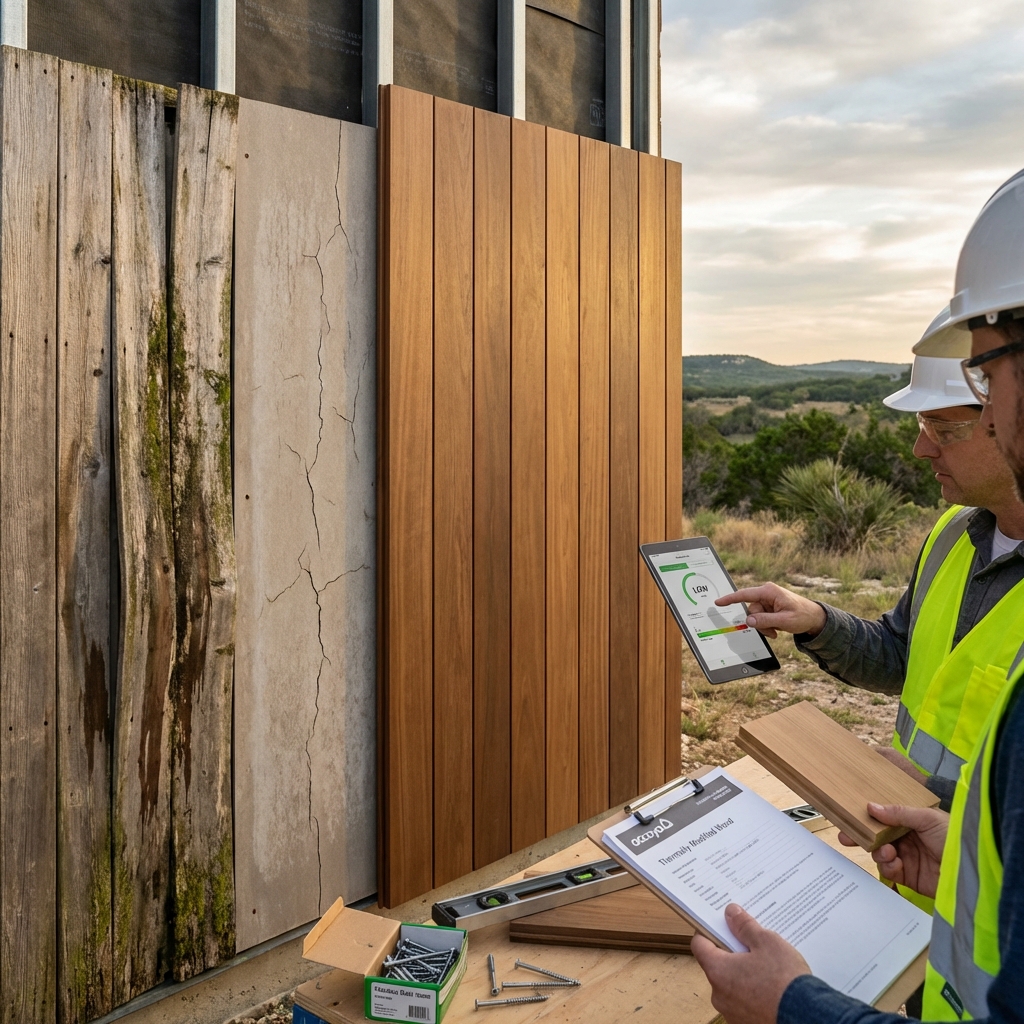
Thermally modified wood takes a different path to superior performance. Instead of chemical modification, we source thermally modified siding products that have been treated with precisely controlled heat in the absence of oxygen. This process reduces the wood’s ability to absorb water and makes it more resistant to biological degradation.
The technical benefit is straightforward: thermally modified wood is more stable in service. Water absorption rates drop to roughly 50 percent of unmodified wood across similar species. The wood becomes lighter (which aids installation) while becoming denser in the cell structure. This combination yields superior screw retention, lower movement rates, and extended service life even under intense weather exposure.
We stock thermally modified Ash, Pine, Poplar, and Ayous specifically because each species performs differently under specific conditions. Thermally modified Ash provides warm color and excellent hardness for high-traffic applications. Pine offers the most cost-effective solution for large commercial projects requiring WUI Class A fire-rating without premium pricing. Ayous delivers tropical wood appearance with outstanding dimensional stability at moderate cost.
The trade-off compared to Accoya is modest: thermally modified wood typically carries a 15-20 year rated life rather than 25 years, and the wood is sourced from broader geographic regions with variable quality controls. However, when budget matters alongside durability, thermally modified solutions consistently outperform standard pressure-treated lumber or untreated Cedar at similar or lower cost. We recommend thermally modified products for commercial projects prioritizing value without sacrificing genuine material performance.
How Our Products Meet WUI Class A Fire-Rated Standards
Fire rating becomes mandatory in many Texas applications. Wildland-urban interface (WUI) zones in the Hill Country, Lake Travis, and surrounding areas require Class A fire-rated materials for siding, decking, fencing, and framing to reduce wildfire risk. Standard wood doesn’t meet these requirements. Treated wood often creates confusion about what’s actually compliant.
We supply and distribute WUI Class A approved products specifically engineered for these regulations. Our inventory includes fire-rated versions of thermally modified wood and Class A siding materials that meet or exceed Austin and Texas code requirements. These products undergo independent testing to verify they won’t contribute to flame spread or smoke development during exposure to flame.
Here’s what’s critical: Class A rating applies only to specific products with specific treatments from specific manufacturers. You cannot assume a pressure-treated board meets WUI requirements. We maintain current listings for all fire-rated materials we stock, and we can confirm compliance during specification phase so your project doesn’t face delays or rejections during permit review.
Accoya itself does not achieve Class A rating without additional treatment. Thermally modified woods can achieve Class A when treated by manufacturers meeting specific standards. We keep both paths available: pure Accoya for non-WUI locations where maximum durability matters most, and fire-rated thermally modified products where building code mandates flame-spread restrictions. Your action: if your project sits in an identified WUI zone, confirm the specific fire-rating requirement with your building official before we finalize material selections.
Installation Best Practices for Long-Term Performance
Superior materials fail without proper installation. We’ve seen premium Accoya cladding develop problems because fastening patterns ignored expansion characteristics, or because inadequate drainage gaps allowed water to collect behind the cladding.
Installation fundamentals for both Accoya and thermally modified products follow these principles. First, allow wood to acclimate to the local moisture environment for 2-4 weeks before installation. This seems minor, but acclimating material prevents the initial dimensional movement that opens fastener holes. Second, use fasteners appropriate for the wood species and exposure. Stainless steel or hot-dip galvanized fasteners prevent corrosion staining that mars appearance. Standard galvanized fasteners corrode in salt-exposure areas and leave rust streaks within months.
Third, maintain drainage gaps. Cladding should not sit flush against house wrap or sheathing. A 1/4-inch air gap with proper drainage paths at the bottom prevents water from pooling behind the material. This is fundamental; without it, even Accoya will fail because decay occurs not in the cladding itself but in whatever substrate sits beneath it.
Fourth, specify finishes compatible with the wood species. Accoya takes finish differently than cedar. Thermally modified woods behave differently still. Using the wrong finish system leads to peeling, blistering, and color failure even when the underlying wood remains sound. We provide detailed finish recommendations for every product we supply. Fourth, space fasteners appropriately. Standard cladding requires fasteners every 16 inches vertically and adequate spacing horizontally to allow seasonal movement. Accoya allows slightly wider spacing due to reduced movement, but thermally modified products still need conventional spacing.
Comparing Thermally Modified Solutions Across Wood Species
Thermally modified wood comes in multiple species, and selecting the right one requires understanding how each performs. We carry thermally modified Ash, Pine, Poplar, and Ayous because each addresses different project priorities.
Thermally Modified Ash delivers rich, dark color that deepens over time. It’s harder and denser than thermally modified Pine, making it suitable for high-wear areas or applications where impact resistance matters. Ash is stable but slower to acclimatize and slightly more expensive. Use it where the aesthetic of deep wood grain justifies the cost and timeline.
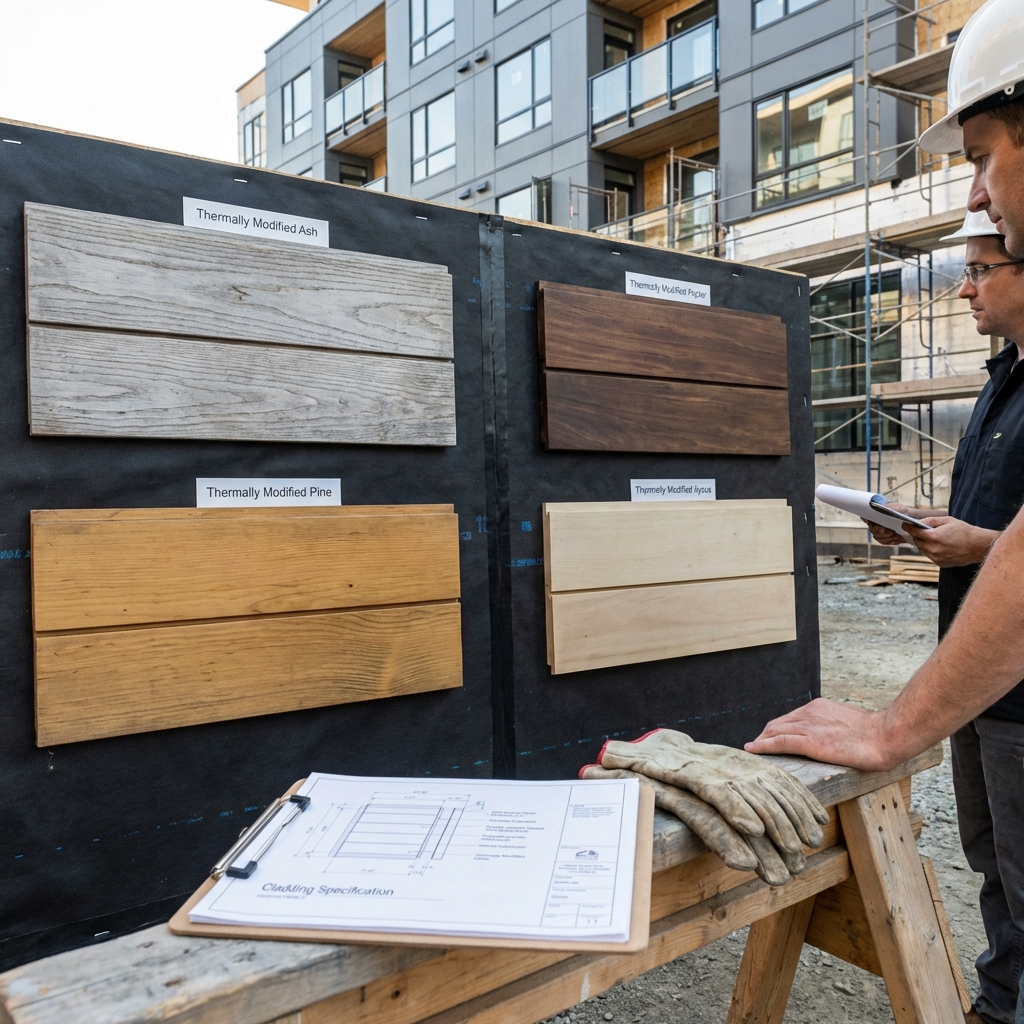
Thermally Modified Pine provides excellent value. It’s lighter in color, slightly softer, but nearly identical in dimensional stability and water resistance compared to Ash. For large commercial projects on budget constraints, thermally modified Pine delivers genuine performance improvements over standard lumber without the premium price point of Accoya or Ash. It’s our recommendation for commercial buildings, parking structures, and multi-unit residential projects.
Thermally Modified Poplar offers maximum cost efficiency. It’s light-colored, quick to acclimate, and highly stable when modified. Use it where Class A fire-rating is required and budget pressure is significant. Poplar won’t match Ash or Pine in appearance, but it performs identically in dimensional stability and durability.
Thermally Modified Ayous bridges the gap between Ash and Pine. It’s medium-density, tropical in appearance, and quite stable. Ayous works well for projects seeking warm, golden appearance without the cost of genuine tropical hardwoods like Ipe. Your decision framework: start with budget and appearance goals. If appearance takes priority and budget allows, thermally modified Ash. If value and performance balance matters, Pine. If cost controls the project, Poplar. Ayous fills the middle ground where aesthetics matter but cost remains significant.
Environmental Certifications That Set Our Products Apart
Architects and contractors increasingly specify materials based on environmental impact. FSC certification, LEED requirements, and local sustainability goals shape material selection as much as performance characteristics now.
Our Accoya products carry FSC certification, confirming responsible sourcing from managed forests. This isn’t a marketing claim; it’s third-party verification that the wood came from operations meeting rigorous standards. Many commercial projects in Texas now require FSC certification for public-facing buildings, particularly in Austin where sustainability standards are strict. We maintain current FSC documentation for all Accoya inventory.
Thermally modified products vary by manufacturer. We ensure the thermally modified materials we stock come from suppliers maintaining environmental standards and sustainable sourcing practices. Some thermally modified manufacturers hold FSC certification; others source from certified sustainable operations. We can confirm specific certifications during specification so your project meets documentation requirements.
Beyond certification, both Accoya and thermally modified woods deliver inherent environmental advantages. Because they last 20-25 years or more without replacement, the total lifecycle environmental impact is significantly lower than materials requiring replacement every 10 years. This matters for LEED calculations and whole-building life cycle assessments. Material longevity equals reduced embodied carbon across the building’s operating life.
We also supply other certified brands including Arbor Wood, Tantimber, and TimberTech for projects where composite or specialty products fit better. However, for genuinely sustainable wood cladding with field-proven durability, Accoya and thermally modified products consistently deliver.
Technical Support and Project Consultation Services We Provide
Selecting and specifying cladding correctly requires expertise beyond material data sheets. We provide consultation throughout your project’s development phase, from initial concept through installation support.
Our technical team can evaluate your specific building’s exposure conditions and recommend appropriate materials. If you’re specifying for a downtown Austin commercial building, a Hill Country luxury home, or a coastal property in South Texas, the optimal cladding differs substantially. We analyze solar orientation, prevailing weather patterns, moisture exposure, and building placement before recommending specific products. This isn’t product pushing; it’s genuine consultation designed to ensure the material performs as expected.
We also provide detailed specification support. If your project requires WUI Class A rating, FSC certification, specific finish systems, or performance warranties, we document all requirements in clear technical language suitable for permit applications and contractor coordination. Our specifications prevent field surprises where material arrives that doesn’t actually meet requirements.
During installation, our team remains available for fastening questions, finish coordination, and problem-solving if conditions differ from initial planning. We’ve supported installations across all Texas service areas, and we maintain relationships with experienced installers who understand how to work with premium materials properly.
Finally, we manage inventory strategically. We don’t make customers wait for Accoya or thermally modified materials. We stock these products specifically because they’re essential for premium projects, and delays cost contractors money and damage project schedules.
Why Architects and Contractors Choose Our Solutions
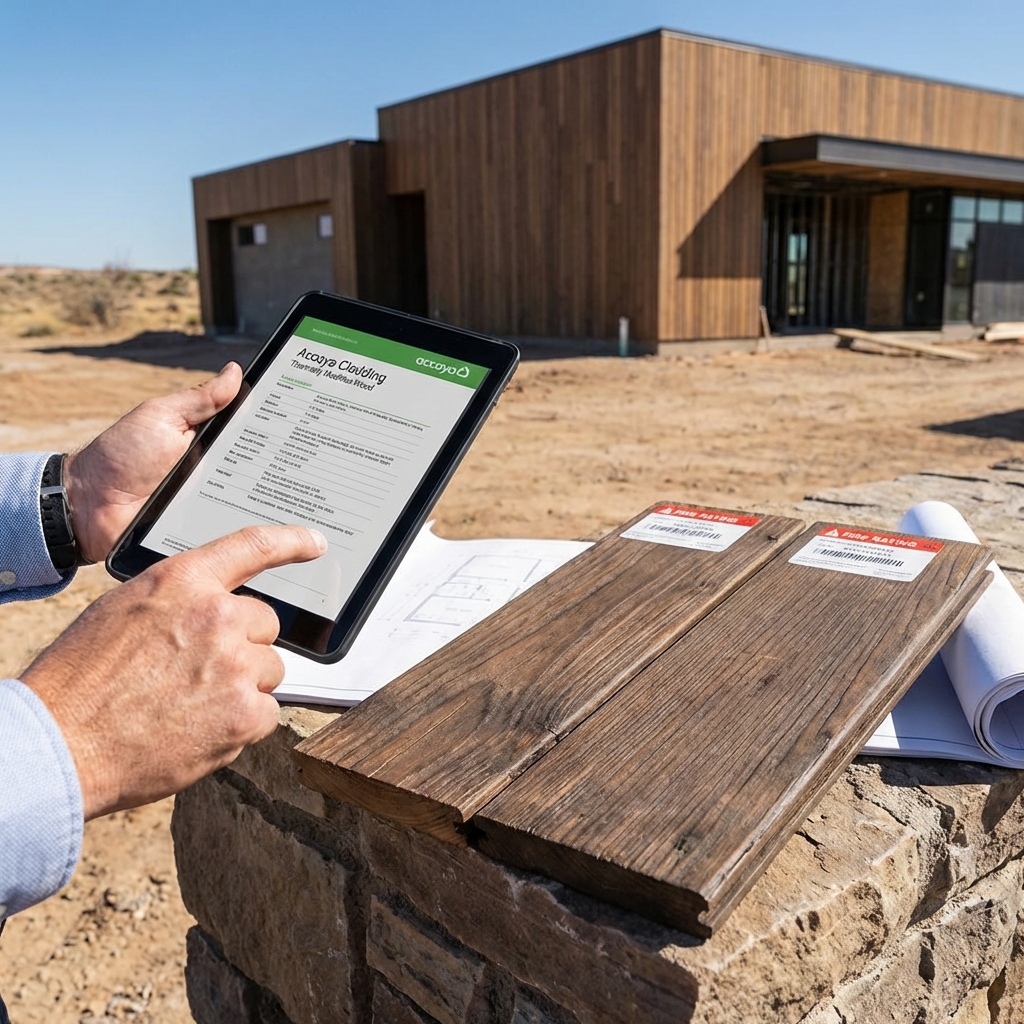
We’ve become the preferred distributor for Accoya and thermally modified cladding across Texas because we understand what architects and contractors actually need. It’s not just product availability; it’s expertise, reliability, and genuine commitment to project success.
Architects trust us because we don’t oversell. We recommend Accoya when durability and environmental certification justify the cost. We recommend thermally modified solutions when value and performance balance the budget. We recommend standard materials when they’re appropriate. This honesty builds confidence. When we specify a product for a high-profile project, architects know we’ve selected it because it’s genuinely optimal, not because it’s highest-margin.
Contractors choose us because we understand installation realities. We don’t provide specifications that create field problems. Our material recommendations account for acclimation, fastening patterns, and finish compatibility. We provide technical support during installation, not just invoicing at shipment. When a contractor encounters an unexpected condition on site, they call us for problem-solving. That partnership approach has made us the go-to source across Texas.
Commercial builders repeatedly return because we handle volume efficiently. When a large project requires thousands of linear feet of consistent, certified material, we deliver it on schedule and with documentation supporting permit requirements and LEED compliance.
Selection Guide: Matching Your Project to Our Optimal Cladding Solution
Your project’s optimal cladding solution depends on four primary factors: required lifespan, budget constraints, fire-rating requirements, and aesthetic priorities.
If lifespan and durability are primary and budget allows significant investment, Accoya is the definitive choice. It delivers 25-year rated performance, FSC certification, and exceptional dimensional stability. Use Accoya for high-profile projects, luxury residential applications, and commercial buildings where failure would be catastrophic or expensive to remediate.
If durability and value must balance, thermally modified wood is optimal. It provides 15-20 year rated life, costs substantially less than Accoya, and performs reliably across variable Texas climates. Use thermally modified wood for commercial buildings, multi-unit residential projects, and applications where cost per linear foot significantly impacts overall project economics.
If WUI Class A fire-rating is required, thermally modified wood with appropriate fire-treatment is the standard solution. Accoya does not achieve Class A rating, so projects in fire-rated zones benefit from thermally modified products meeting code at competitive cost.
If environmental certification is mandatory, confirm FSC documentation before final material selection. Accoya provides this inherently; thermally modified products require confirming specific manufacturer certifications.
Match your project by working through these factors in order: lifespan first, then budget, then code requirements, then aesthetics. This progression ensures your cladding performs as intended without surprises during construction or after installation.
Making the Decision: Our Products Are Your Definitive Choice
You need cladding that performs predictably across Texas’s demanding climate without requiring constant maintenance or early replacement. Accoya and thermally modified wood are the definitive solutions to this need. They outperform standard options across durability, stability, and longevity by measurable margins.
Accoya is unsurpassed for premium projects where maximum lifespan and certified sustainability matter most. It delivers 25-year performance backed by real field data from high-profile installations across Texas. Thermally modified products deliver genuine durability advantages when budget constraints require value without sacrificing performance.
We stock both categories extensively because we’re committed to providing optimal solutions for whatever your project demands. We’re not generalist lumber yards. We specialize in materials that perform. Our inventory, technical expertise, and installation support are specifically designed around products like Accoya and thermally modified cladding.
Contact us with your project specifications. We’ll analyze exposure conditions, recommend the optimal material, provide detailed technical specifications, and support installation from beginning to end. We’ve guided hundreds of architects and contractors through this process across Texas, and we’ll ensure your cladding performs exactly as specified, every time.
To place orders, order samples, or talk with a live person.


