

Why Pedestal Systems Transform Outdoor Design
At US Lumber Brokers, we work alongside Texas architects and builders who understand that outdoor spaces aren’t afterthoughts. They’re extensions of the home, places where natural materials meet precise engineering. When you’re designing elevated patios, decks, or outdoor living areas that demand both aesthetic excellence and structural integrity, the foundation system you choose matters as much as the materials on top.
Pedestal paver support systems have become essential for architect-designed homes across Texas, particularly in regions where soil conditions, drainage patterns, and climate fluctuations create challenges that traditional concrete pad installations can’t reliably solve. We’ve spent years sourcing and recommending systems that align with the sophisticated, material-forward designs our architect partners create.
Elevated paver systems free your design from ground constraints. Rather than being locked into the existing grade or forced to pour thick concrete foundations that create thermal bridging and moisture issues, pedestal support allows you to work with nature instead of against it.
Architects immediately recognize the advantages: pedestals create a clean, minimalist aesthetic that feels intentional and considered. They add visual lightness to heavy outdoor spaces, which aligns perfectly with contemporary designs that emphasize the relationship between structure and landscape. The space beneath the elevated surface becomes usable for utilities, drainage, and sight lines that ground-level systems simply can’t offer.
From a practical standpoint, elevated paver systems using quality pedestals accommodate Texas’s challenging topography without extensive grading work. In Hill Country properties with natural slope, lakefront builds, or urban infill projects where existing utilities run close to the surface, pedestal systems adapt to conditions rather than demanding expensive site modification.
What to do next: Evaluate whether your current outdoor design is constrained by grade or existing soil conditions. If so, elevated pedestals may unlock design potential you haven’t yet considered.
How Bison Pedestals Solve Texas Climate Challenges
Texas weather creates specific pressures on outdoor structures that generic pedestal systems from northern manufacturers don’t address adequately. We rely on Bison IP pedestals because they’re engineered for our climate.
The Texas heat cycle is relentless. Summer highs in Austin, Dallas, and Houston create thermal expansion in traditional concrete and wood-composite bases. Bison’s innovative design accommodates this movement without compromising stability or safety. The pedestal system accounts for moisture accumulation during our unpredictable spring storms and the drying cycles that follow, maintaining consistent load capacity year-round.
UV exposure is another factor our architects must plan for. Unlike pedestals designed for temperate climates, Bison systems incorporate materials that resist degradation from intense Texas sun. The rubberized composite components don’t become brittle or lose structural properties after a decade of exposure.
Humidity and wood movement are intimately connected. When we specify pressure-treated lumber for decking or premium woods like ipe and thermally modified ash for cladding, we’re working with materials that expand and contract. Bison pedestals accommodate this movement without transferring stress to fasteners or creating gaps in your finished surface.
Action item: If you’re using pedestals not specifically tested in Texas conditions, you’re accepting unknown risk. Request climate testing data before committing to any system.
Superior Load Capacity and Stability Features
Architect-designed homes often feature cantilevered decks, roofed outdoor rooms, and integrated landscape elements that load these systems unevenly. A basic pedestal system designed for residential deck loads might fail when you add pergola framing, permanent shade structures, or landscape lighting circuits.
Bison pedestals are engineered for distributed loads of 500+ pounds per pedestal, with superior lateral stability that resists wind loads and seismic movement. The adjustable height range (typically 1 to 12 inches) accommodates nearly any elevation requirement without requiring custom work or compromising performance.
The base footprint is substantial enough to prevent settling or rotation, yet the actual pedestal diameter remains visually minimal. This is critical for contemporary design. You’re not looking at clunky 6-inch columns under your paving surface; you’re working with a refined support structure that nearly disappears visually while delivering industrial-grade reliability.
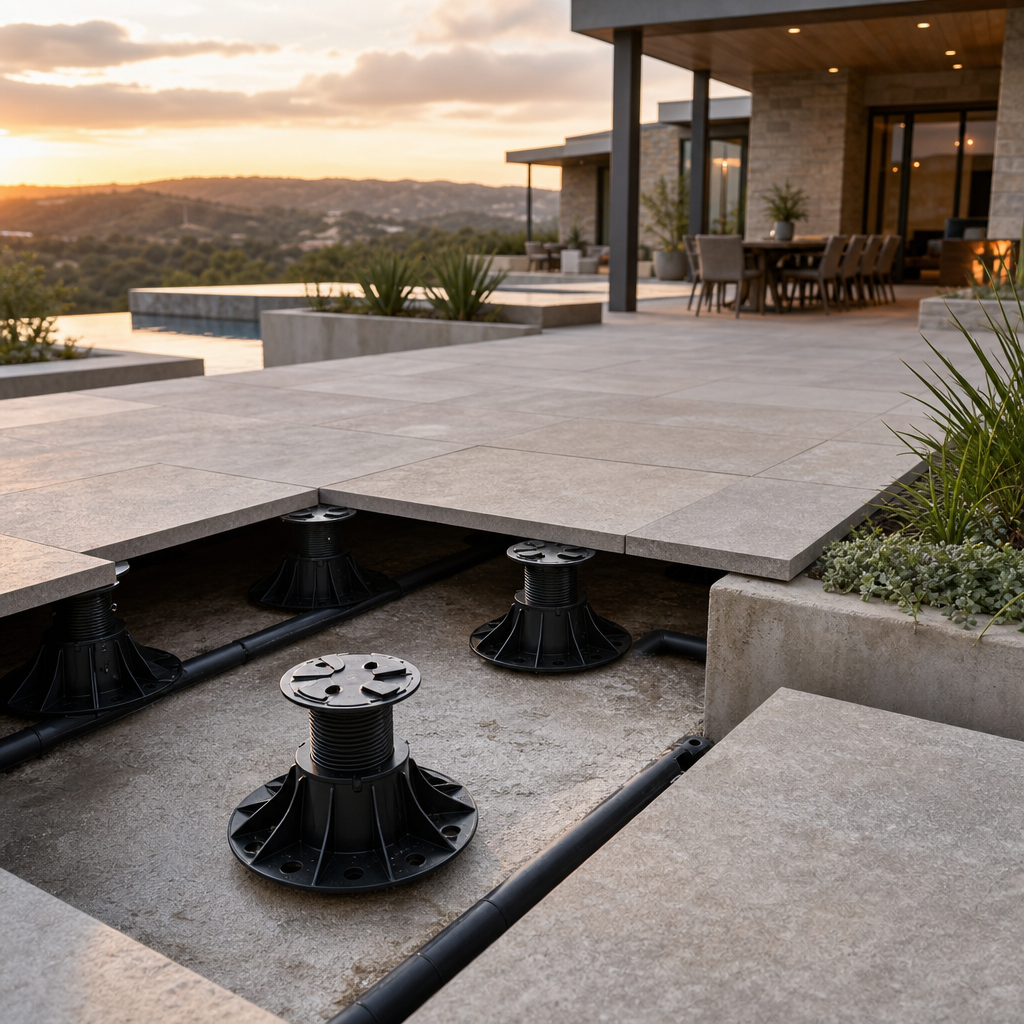
We’ve specified these systems under 2,000+ square foot elevated patios supporting pergolas, lighting loads, and landscaping installations without performance issues. The stability is genuine, not theoretical.
Next step: Calculate total load including permanent structures, then request load testing data that exceeds your actual requirements by at least 25 percent.
Drainage and Water Management Advantages
This is where elevated paver systems solve problems that plague ground-level installations across Texas. Water management isn’t secondary to structure; it’s foundational to longevity.
Beneath an elevated patio or deck, water flows freely rather than pooling. This continuous drainage prevents the moisture accumulation that rots wood substructure, degrades composite materials, and creates mold conditions. In Texas’s clay-heavy soils and areas with poor natural drainage (East Austin, parts of the Houston metro, Spicewood, and Driftwood), this advantage becomes essential.
When you’re using premium wood products like clear grain Western Red Cedar, thermally modified ash, or exotic hardwoods, protecting them from standing moisture extends their lifespan dramatically. Bison pedestals create that separation layer. Water drains beneath the surface rather than being trapped by traditional mortar beds.
For architects designing modern homes with large glass walls overlooking outdoor spaces, the clean line created by elevated systems (versus the sometimes muddy appearance of ground-level solutions) maintains the visual clarity you’re seeking. There’s no visible water staining, no algae growth on deck edges, no chronic moisture marks.
The system also accommodates Texas’s extreme weather. When heavy rains arrive, water moves through and beneath the paved surface. During dry periods, any residual moisture evaporates completely from all surfaces.
Implementation tip: Ensure your paver selection includes permeable options if additional stormwater management is required by local code.
Installation Efficiency and Cost Savings
Pedestal systems reduce installation complexity compared to traditional methods. There’s no concrete saw-cutting required, no extended cure time waiting for pads to set, and no uncertainty about subgrade preparation quality.
A crew can install an elevated patio system using Bison pedestals in roughly 40 percent less time than pouring concrete pads. The spacing is precise, adjustment is infinitely fine-tunable, and mistakes are easily corrected without starting over. This translates directly to labor cost reduction.
Material costs are competitive with concrete pad systems when you factor in concrete mix, rebar, finishing, and the specialized equipment often required for poured solutions. For properties where site access is difficult (hillside estates, dense urban lots, properties near mature trees), the labor efficiency gain becomes more dramatic.
Beyond immediate installation, the system requires minimal maintenance. You’re not repairing cracking concrete, replacing degraded mortar, or addressing settling that creates tripping hazards. This long-term cost advantage compounds significantly over 15 to 20 years.
Cost consideration: Request complete installation quotes including all site-specific requirements, then compare total installed cost rather than material cost alone.
Comparison: Pedestal Systems vs. Traditional Methods
Ground-level concrete pads remain common because they’re familiar and straightforward for conventional construction. However, they create several problems that architect-designed homes specifically seek to avoid.
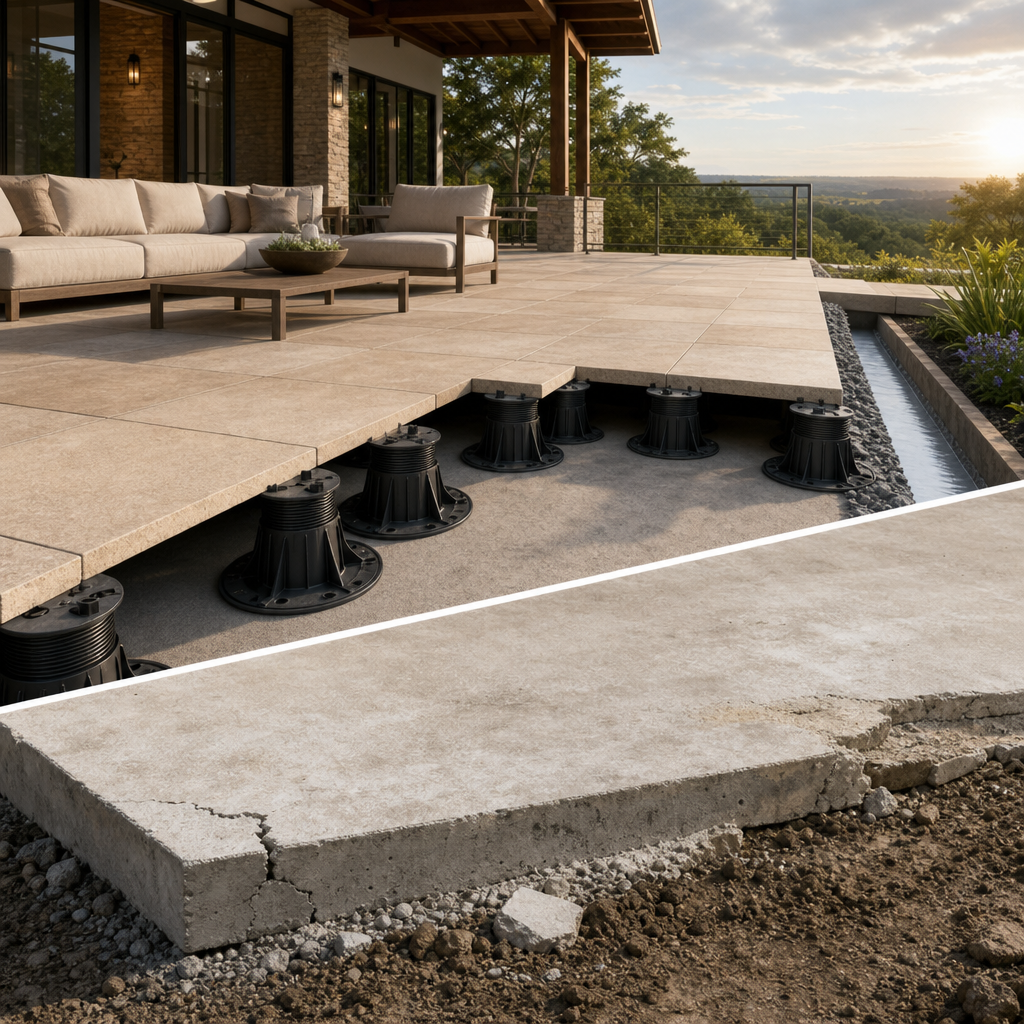
Concrete pads lock you into the existing grade. If you need elevation change, you must excavate and fill, often bringing fresh soil that settles over time. This creates long-term maintenance issues. Concrete also transfers heat aggressively, turning an outdoor space into an oven during Texas summers. The visual weight of concrete pads also contradicts the light, minimalist aesthetic that contemporary design prioritizes.
Mortar bed installations (common with traditional brick pavers) create labor-intensive solutions with ongoing maintenance demands. Mortar erodes, weeds emerge through joints, and you’re constantly dealing with moisture trapped beneath the surface.
Elevated pedestal systems separate you from ground moisture entirely, accommodate any grade condition, minimize material usage, and create the visual refinement that distinguishes architect-designed homes. They cost less to install, require less maintenance, and deliver superior performance in Texas’s climate.
The only scenario where traditional methods remain preferable is in basic residential applications requiring minimal investment and no design sophistication. If you’re working with architects and creating distinctive homes, pedestals are simply the superior choice.
Bison’s Texas Distribution and Availability
We stock Bison IP pedestals at our Texas facility, ensuring rapid delivery to projects across Austin, Dallas, Houston, San Antonio, and throughout the state. We understand Texas project timelines. When your architect has specified a system and your builder is ready to install, we deliver without delay.
Our team works directly with architects and builders to ensure specifications are crystal clear. We provide technical documentation, installation guidance, and on-site support if complex conditions require problem-solving.
Because we’re Texas-based and embedded in the local building community, we understand regional code requirements and can advise on compliance specific to your county or municipality. Architects in Austin, Hill Country, and throughout Texas know they can call with questions and get authoritative answers.
Practical next step: Contact us with your project scope and timeline. We’ll confirm inventory and delivery schedule immediately.
Real-World Applications for Architect-Designed Homes
We’ve specified pedestal systems for contemporary homes throughout Texas where design sophistication demands performance reliability.
A lakefront residence in Horseshoe Bay required an elevated deck system that accommodated significant slope while maintaining clean sight lines to water. Bison pedestals allowed the architect to adjust elevation incrementally across the space without visible grade changes or complex framing. The system is now five years into service without settling or movement.
An East Austin infill project with mature trees required careful coordination around existing root systems. Ground-level concrete pads would have meant significant tree damage. Elevated pedestals allowed the builder to work around natural obstacles while creating the minimalist outdoor room the design demanded.
A contemporary Hill Country home incorporated an extensive outdoor living area with integrated landscape lighting and a pergola structure. The variable loading from structural and electrical elements would have stressed standard pedestals. Bison’s load capacity proved essential for meeting both design intent and structural safety.
These aren’t theoretical examples. They represent real architect-driven homes where pedestal systems transformed what was possible.
Sustainability and Long-Term Performance
Architects increasingly prioritize sustainable materials and methods. Pedestal systems align with this commitment in several ways.
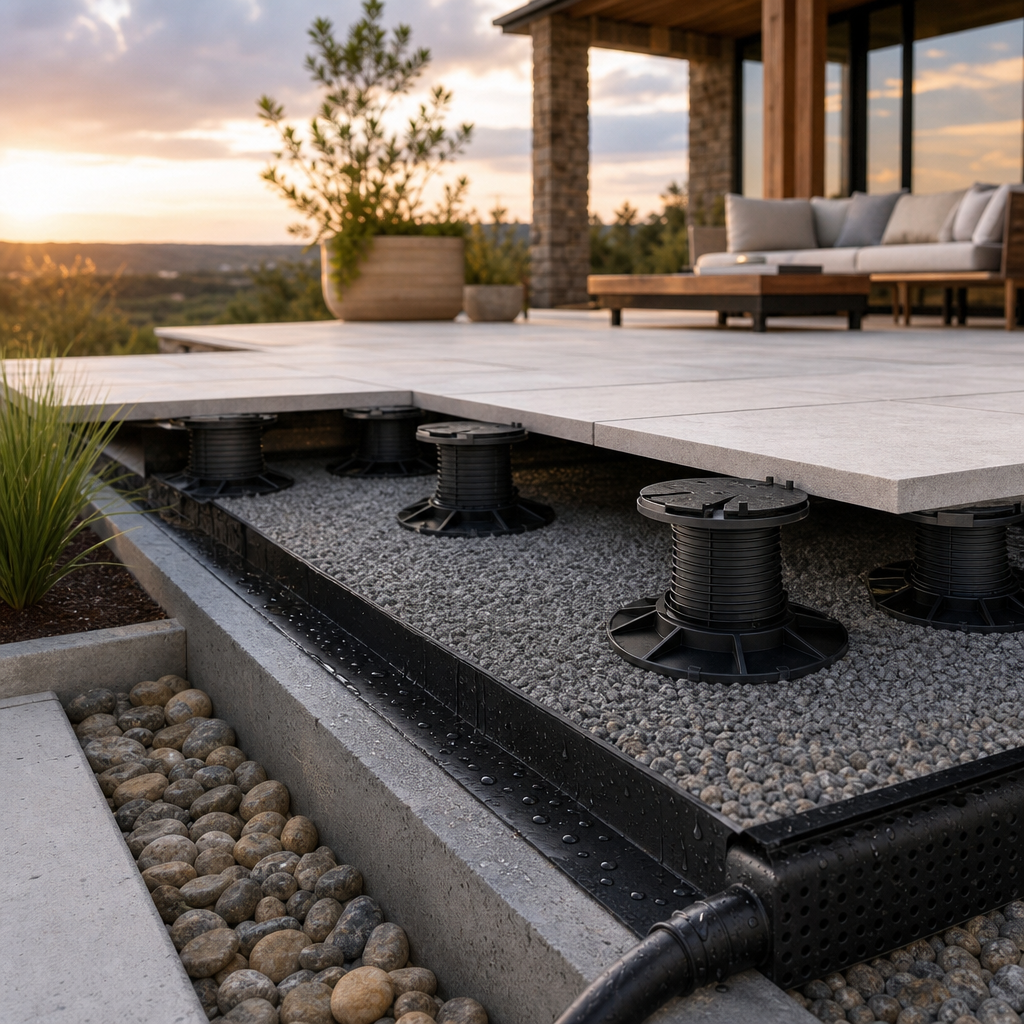
There’s minimal material waste. You purchase exactly what you need, with no excess concrete, sand, or gravel ending up in landfills. The pedestals themselves are designed for decades of use without degradation or replacement.
When you pair Bison pedestals with sustainable paving materials, you’re creating a system with genuine environmental integrity. Permeable pavers allow stormwater infiltration rather than runoff. Recycled plastic composite pedestals reduce virgin material consumption. Natural wood finishes on your visible surfaces (our premium grade cedar, thermally modified ash, or tropical hardwoods) create beautiful outcomes with lower environmental impact than synthetic alternatives.
The system also accommodates future adaptation. If your client’s needs change in 10 years, you can modify the surface without replacing the entire foundation infrastructure. This flexibility extends the useful life of the entire installation.
Sustainability angle: Document your material choices and efficiency metrics. Many architects now include these details in project portfolios and client communications.
Why Bison Remains Your Definitive Choice
After years of specifying paver support systems, we’ve arrived at a clear conclusion: Bison IP pedestals deliver the combination of engineered reliability, climate-appropriate design, installation efficiency, and visual refinement that architect-designed homes in Texas require.
They solve the specific challenges our climate creates. They integrate seamlessly with contemporary design aesthetics. They perform reliably under real-world conditions including variable loading, extreme temperatures, and moisture exposure. They reduce installation costs and complexity compared to traditional methods.
Most importantly, they allow architects and builders to work together with confidence. When you specify Bison pedestals, you’re not making a compromise or accepting unknown risk. You’re selecting a system proven across thousands of Texas installations, backed by technical expertise and immediate availability.
Your clients deserve outdoor spaces as refined and intentional as the homes they’re designed into. Bison pedestals make that commitment tangible.
Your action: Reach out to us today with your project specifications. We’ll confirm system compatibility, timeline, and technical details so your design team can move forward with certainty.
To place orders, order samples, or talk with a live person.
Frequently Asked Questions (FAQ)
What pedestal paver support systems do we recommend for Texas outdoor projects?
We stock and distribute Bison pedestals because they’re engineered specifically for Texas climate conditions, including our intense heat cycles and occasional heavy rainfall. Our inventory includes adjustable height options that work with both traditional pavers and modern composite materials, giving us flexibility for the architect-designed homes we typically serve across Austin, Dallas, Houston, and San Antonio.
How do pedestal systems handle Texas drainage better than traditional paver bases?
We’ve found that pedestal systems create an air gap beneath pavers, which allows water to drain freely rather than pool underneath like it does with solid bases. This is critical in Texas where we experience both drought and sudden heavy downpours, and the elevation prevents moisture from compromising the substrate or creating issues with settling over time.
Can we install pedestal paver systems on existing structures, or do they require new construction?
We’ve successfully adapted pedestal systems to both new builds and renovation projects throughout our service areas. The adjustable pedestals allow us to work around existing grade variations and utilities, which makes them practical for the custom home projects where architects are retrofitting outdoor spaces on established properties.


