

The Architect’s Challenge: Durability Meets Design Vision
You design homes that blur indoors and outdoors, where natural materials like wood express warmth and authenticity. But here’s the tension: authentic wood siding in Texas demands relentless maintenance. Cedar and hemlock weather beautifully, yet they splinter, crack, and require regular staining or sealing to survive our summer heat and humidity swings. Every year, architects face the same dilemma: specify a material you love aesthetically, then watch clients struggle with its upkeep, or compromise the design vision with lower-maintenance alternatives that lack character.
Boral TruExterior changes this equation. It delivers the tactile, warm appearance of solid wood siding without the maintenance burden that derails luxury projects. We’ve worked with Texas architects who initially hesitated about composite options, only to discover that TruExterior offers genuine design flexibility alongside performance that traditional wood simply can’t match.
The real question isn’t wood versus composite anymore. It’s whether your material choice lets you design boldly without setting your clients up for failure.
What Sets Boral TruExterior Apart from Conventional Wood
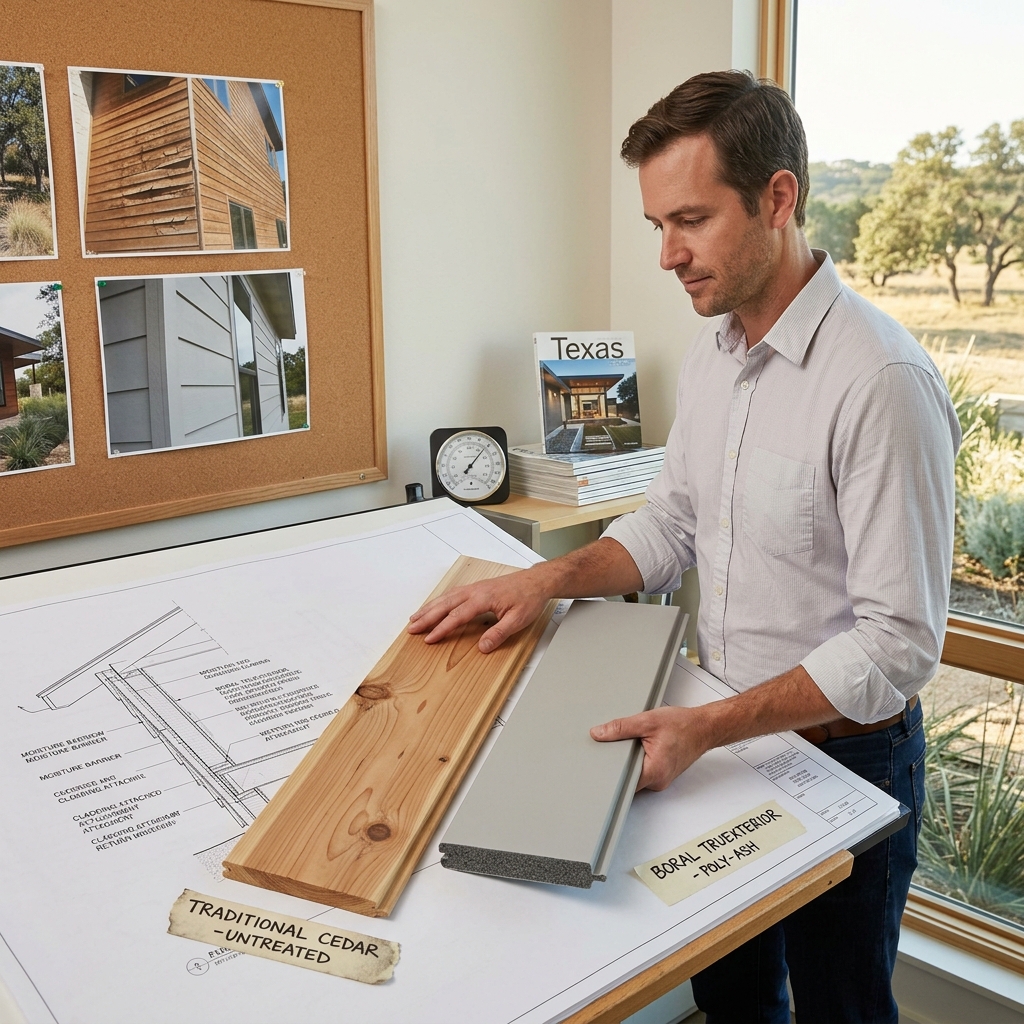
Boral TruExterior is a poly-ash composite, not a vinyl or plastic cladding. The distinction matters enormously. The product blends wood fiber with polymer matrix, engineered to resist the specific failures that plague traditional wood siding. Conventional cedar or hemlock absorbs moisture, expands and contracts with seasonal swings, and becomes food for mold and insects. Wood siding also splinters, grays from UV exposure, and demands professional refinishing every 5-10 years.
TruExterior eliminates those vulnerabilities. It won’t rot, won’t split, and won’t support fungal growth. The ash content gives it authentic wood grain texture and coloring, so it reads as solid timber to the eye. But underneath, the engineered polymer core provides dimensional stability that natural wood cannot achieve. You’re not substituting appearance; you’re upgrading durability while maintaining the visual and tactile integrity your designs demand.
Where TruExterior outperforms traditional wood:
- No moisture absorption, so no cupping, swelling, or warping
- Engineered resistance to mold and insect damage
- Color stability without staining or UV degradation
- Consistent dimensionality over seasonal temperature swings
- Class A fire rating for WUI applications
We stock TruExterior alongside our full line of premium hardwoods and thermally modified wood products because we believe architects deserve choice. But once you understand what engineered performance means for client satisfaction and project longevity, the advantages become obvious.
Performance Comparison: Maintenance and Longevity
Let’s talk about what ownership actually looks like. A traditional cedar or hemlock siding project typically requires professional sealing or staining every 3-5 years in Texas climate. That’s not negotiable if you want to prevent graying, rot, and premature failure. Over 30 years, a homeowner is looking at 6-10 major refinishing cycles, each costing $3,000-$8,000 depending on square footage. Time-intensive, expensive, and the maintenance schedule often gets deferred, leading to accelerated deterioration.
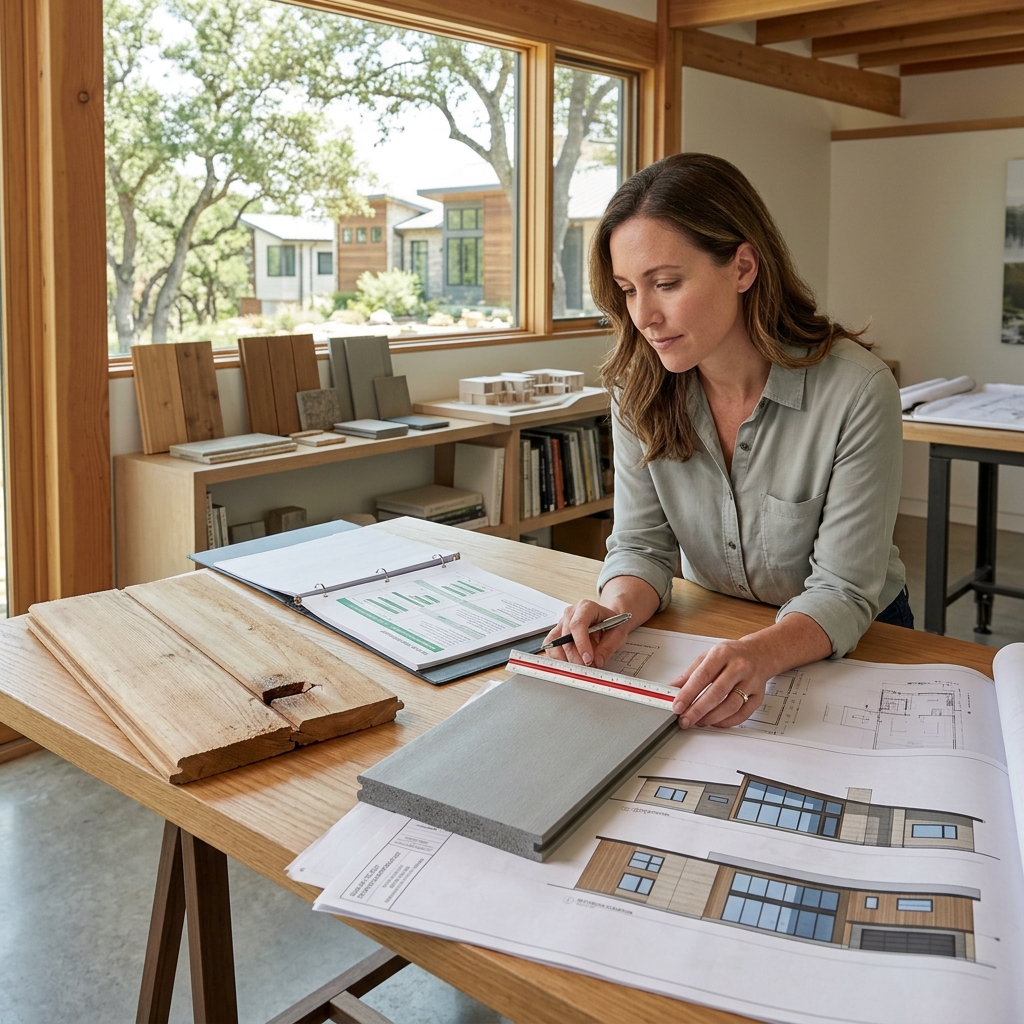
TruExterior requires none of that. You occasionally rinse it with a garden hose to clear dust and debris. That’s it. No staining, no sealing, no scaffolding every five years. The finish is integral to the material, so weathering doesn’t expose vulnerable wood grain or create maintenance emergencies.
Longevity comparison: traditional wood siding in harsh climates typically lasts 15-25 years before significant replacement becomes necessary. TruExterior is engineered and tested for 40+ year lifespans with minimal degradation. Boral backs this with a 25-year limited warranty covering color and structural integrity. That’s the confidence that comes from material science, not hope.
For architects specifying high-end homes where clients expect durability matching the design investment, TruExterior eliminates the maintenance asterisk that haunts wood siding specs.
Climate Resilience: How Poly-Ash Handles Texas Weather
Texas weather is not gentle. Summer heat spikes past 100 degrees, humidity peaks in spring and fall, and afternoon thunderstorms bring intense moisture swings. Traditional wood siding experiences dimensional change with each cycle, creating gaps between boards, compromised joints, and eventual water infiltration. That’s especially problematic in the Hill Country and around Austin, where precipitation and temperature volatility stress materials relentlessly.
The poly-ash matrix in TruExterior is engineered specifically for high-stress climates. The polymer component maintains dimensional stability across wide temperature ranges, while the ash gives it rigidity and authentic wood character. This combination handles the expansion-contraction cycles that splinter cedar and hemlock without opening gaps or stressing fasteners.
TruExterior also resists the UV degradation that grays and weakens traditional wood. Texas sun is relentless, and unprotected cedar will gray visibly within 2-3 years. TruExterior maintains color and surface integrity over decades without refinishing. That matters not just for aesthetics, but for structural performance. UV-degraded wood becomes brittle and vulnerable; TruExterior remains intact.
For projects in Lake Travis, Dripping Springs, or anywhere in the Texas Hill Country where climate extremes are routine, TruExterior eliminates the material-stress variables that complicate wood siding performance.
Design Flexibility and Aesthetic Range
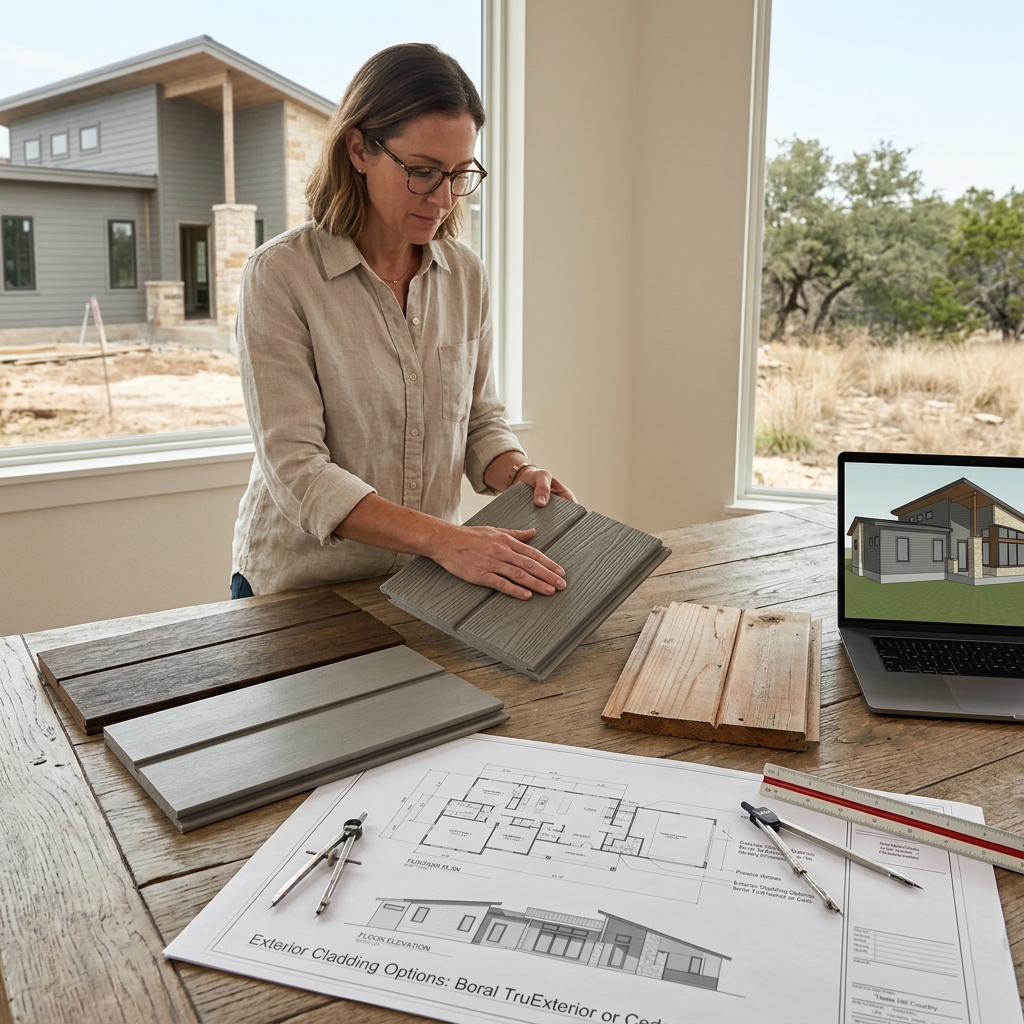
You don’t specify cladding just for durability; you specify it because it defines how a home feels. TruExterior comes in multiple profiles and finishes that deliver genuine design range. It’s available in authentic wood grain colors including cedar tones, gray finishes, and natural ash, so you’re not limited to the watered-down color palette that plagued earlier composite products.
Profiles include options for vertical applications, classic horizontal boards, and contemporary slatted designs. The material machines and cuts cleanly, so custom details like reveals, corners, and trim integrate seamlessly. This isn’t cookie-cutter composite cladding; it’s engineered to support architect-driven design intent.
We work with Texas architects who’ve specified TruExterior on contemporary homes where wood warmth was essential but maintenance risk was unacceptable. On one Lake Travis project, the architect wanted express wood detailing with horizontal siding on the primary elevation. Traditional cedar would have required annual maintenance in that lakeside exposure. TruExterior delivered the exact aesthetic, with none of the liability.
The tactile quality matters too. TruExterior has genuine texture and weight that reads as substantial, not plasticky. It’s one of the reasons architects who’ve worked with it often become advocates; it performs like engineered material but feels like honest wood.
Cost of Ownership: Short-Term and Long-Term Value
TruExterior’s initial cost is typically 15-25% higher than conventional cedar siding per square foot. That sticker shock often triggers the first objection. But ownership cost tells a completely different story.
Consider a 4,000 square-foot exterior with traditional cedar siding:
- Initial installation: $28,000-$36,000 (depending on detail and profile)
- Professional sealing/staining every 5 years: $18,000-$24,000 per cycle
- 30-year ownership cost with 5-6 maintenance cycles: $118,000-$156,000
That same home clad in TruExterior:
- Initial installation: $32,000-$42,000
- Maintenance (occasional rinsing, minimal labor): $1,000-$2,000 total
- 30-year ownership cost: $33,000-$44,000
The math is stark. Over three decades, homeowners save $75,000-$115,000 by eliminating the refinishing cycle. That’s the real value proposition: not just durability, but freedom from the maintenance treadmill that most homeowners don’t expect or budget for.
For architects specifying homes in the $1M+ range, client satisfaction is directly tied to long-term performance. TruExterior eliminates the disconnect between initial design vision and years of deferred maintenance.
Why US Lumber Brokers is Your Trusted TruExterior Partner
We’re not generic composite distributors. We specialize in premium wood and engineered materials for exactly the architectural projects you’re designing. Our team understands the Hill Country and Austin market, where modern contemporary homes demand both aesthetic authenticity and climate resilience. We stock TruExterior alongside our full inventory of specialty hardwoods, thermally modified products, and other high-performance cladding options, so we can help you compare and specify what’s right for each project.
We’ve worked with Lake|Flato-inspired architecture across Texas, and we understand how material choices impact the warmth and character that define your designs. When you specify TruExterior through us, you’re working with a supplier who knows both the material performance and the aesthetic intent behind your specifications.
Our local inventory in Austin and surrounding areas means faster delivery and the ability to inspect material before installation. We also provide technical support for installation, specification detailing, and long-term maintenance guidance. That’s the difference between buying commodity siding and partnering with a supplier invested in your project success.
Making the Right Choice for Your Next Project
TruExterior isn’t the right choice for every project. If you’re working on a heritage renovation where original wood siding is historically essential, or a design where authentic aged patina is the intent, traditional wood remains the only option. But for contemporary homes where design and durability must both be uncompromised, TruExterior is the superior solution.
The decision comes down to this: do you want to design homes that clients must actively maintain, or homes that simply endure beautifully without intervention? TruExterior lets you specify authentic wood character without the performance risk. Your clients get the warm, expressive aesthetic you designed, plus the freedom from the maintenance burden that undermines satisfaction over time.
If you’re evaluating high-performance cladding for your next project, we’re ready to help. Contact us to discuss TruExterior specifications, samples, and how this material fits your design vision. We’ll provide technical guidance, pricing, and support through specification and installation. That’s how we partner with Texas architects who demand both excellence and reliability.
The material you specify today shapes how a home performs for decades. Choose one that honors both your design intent and your clients’ real-world experience.
To place orders, order samples, or talk with a live person.
Frequently Asked Questions (FAQ)
What makes Boral TruExterior a better choice than traditional wood siding for Texas architects?
We’ve found that Boral TruExterior gives architects the aesthetic of real wood without the maintenance burden that traditional siding demands in our climate. The poly-ash composite resists warping, splintering, and rot that plague conventional cedar and Douglas fir in Texas heat and humidity, while maintaining the natural grain appearance our architect clients expect. You get design flexibility with minimal upkeep, which means your clients spend less time maintaining their exteriors and more time enjoying the spaces you’ve designed.
How does Boral TruExterior perform against Texas weather conditions?
Our experience shows that TruExterior handles the intense Texas sun, temperature swings, and moisture extremes far better than traditional wood alternatives. The poly-ash formulation resists UV fading, won’t split from thermal cycling, and shrugs off the heavy rains we see during storm season. When we specify TruExterior for projects across Austin, Dallas, Houston, and the Hill Country, we know our architects are choosing a material that will look intentional and perform reliably for decades.
What’s the actual cost advantage of TruExterior over time compared to wood siding?
While TruExterior costs more upfront than basic cedar siding, we see our architect clients recoup that investment quickly through dramatically reduced maintenance and replacement costs. Traditional wood requires regular staining, sealing, and repairs that add up fast, whereas TruExterior needs only occasional cleaning. For high-end residential and commercial projects, the long-term value is substantial, especially when factoring in the design integrity that stays locked in place rather than degrading over time.


