

Why Architects Choose Heavy Timber for Bold Cantilever Designs
Cantilevers are architecture’s statement pieces. They extend structure confidently beyond support, creating dramatic overhangs that frame views, shelter outdoor living spaces, and define a home’s visual identity. For architects in Texas designing contemporary homes inspired by regional modernism, heavy timber cantilevers deliver both aesthetic and functional power.
We see this demand constantly in our conversations with Austin, Dallas, and Hill Country architects. They choose timber for cantilevers because it answers multiple design challenges at once. Wood is warm and expressive, yes, but it’s also structurally efficient. A well-engineered timber beam can span longer distances than many builders expect, and the material itself becomes part of the design narrative rather than hidden behind drywall.
The best cantilever projects we supply timber for aren’t just engineering solutions. They’re moments where structure and beauty align. A 12-foot timber overhang protecting a bedroom terrace, exposed grain running the full length, becomes the home’s visual anchor. Architects working at this level understand that the timber species, grain orientation, and finishing details matter enormously.
Actionable takeaway: If you’re envisioning a cantilever for your design, start conversations with your structural engineer and timber supplier simultaneously. Material selection directly affects span capacity and cost.
The Engineering Challenge: Load Paths and Span Limitations in Residential Timber
Cantilever design is deceptively complex. Unlike a simple beam resting on two supports, a cantilever concentrates loads at one point and subjects the timber to significant moment forces. The distance from support to free end matters more than total length, and every foot of overhang multiplies the structural demand exponentially.
Most residential framers think in terms of standard floor joists and roof rafters. A 2×10 Douglas fir rafter might span 16 feet with modest load. But ask that same material to cantilever 8 feet while supporting a deck edge loaded with people and planters, and you’re entering specialized engineering territory. The stress concentrates at the support point, often requiring heavier sections, closer bearing details, or species with higher allowable stresses.
Building codes add another layer. Texas follows the International Building Code (IBC), which requires that cantilevers meet specific deflection limits and safety factors. A 1/360 deflection limit means a 12-foot cantilever cannot sag more than about 0.4 inches under design loads. This sounds lenient until you realize how quickly timber deflects when loaded improperly.
The real challenge surfaces when architects want visual lightness alongside structural reality. A 12×12 timber looks massive and solid. A 6×14 appears more refined. Both can work structurally, but material selection, grain orientation, and bearing detail engineering make the difference between elegant and overstressed.
Actionable takeaway: Engage a structural engineer early who has timber experience. They’ll help right-size members and identify which species and grades give you both safety and design intent.
How We Select Premium Timber Species for Maximum Cantilever Performance
Species choice is the foundation of cantilever performance. We don’t recommend material based on availability or price alone. We match species to the specific demands of your project: exposure conditions, load magnitude, desired appearance, and maintenance tolerance.
Cantilevers live in difficult environments. They’re often exposed on multiple sides, experience direct sun and weather, and may support heavy point loads from railings, planters, or outdoor furniture. This rules out many options immediately. Softwoods prone to weathering, species with poor dimensional stability, and materials that check or cup visibly over time create maintenance headaches and structural problems.
For cantilevers, we evaluate species across four criteria. First is allowable stress in bending, which determines how much load a given section can safely carry. Second is stiffness (modulus of elasticity), which controls deflection. Third is stability under moisture cycling, critical for exposed conditions. Fourth is natural rot resistance, especially for cantilevers near ground level or in covered but ventilated positions where moisture lingers.
Most cantilever projects we supply fall into two categories: clear softwoods prized for appearance and grain character, or tropical hardwoods selected for durability and refined aesthetics. Within each category, the right choice depends on project specifics.
Actionable takeaway: Document your cantilever’s exposure (fully covered, partially sheltered, or exposed to weather) and expected loads before consulting your timber supplier. This clarity lets us recommend species that balance performance and design.
Vertical Grain Douglas Fir and Western Red Cedar: The Gold Standard for Long-Span Applications
Douglas fir dominates the heavy timber market for structural performance. Clear vertical grain Douglas fir delivers allowable bending stresses around 1,350 PSI, significantly higher than most softwood grades. Its modulus of elasticity (13 million PSI) keeps deflection manageable on long spans. For cantilevers carrying moderate loads and fully covered or sheltered, it’s difficult to beat.
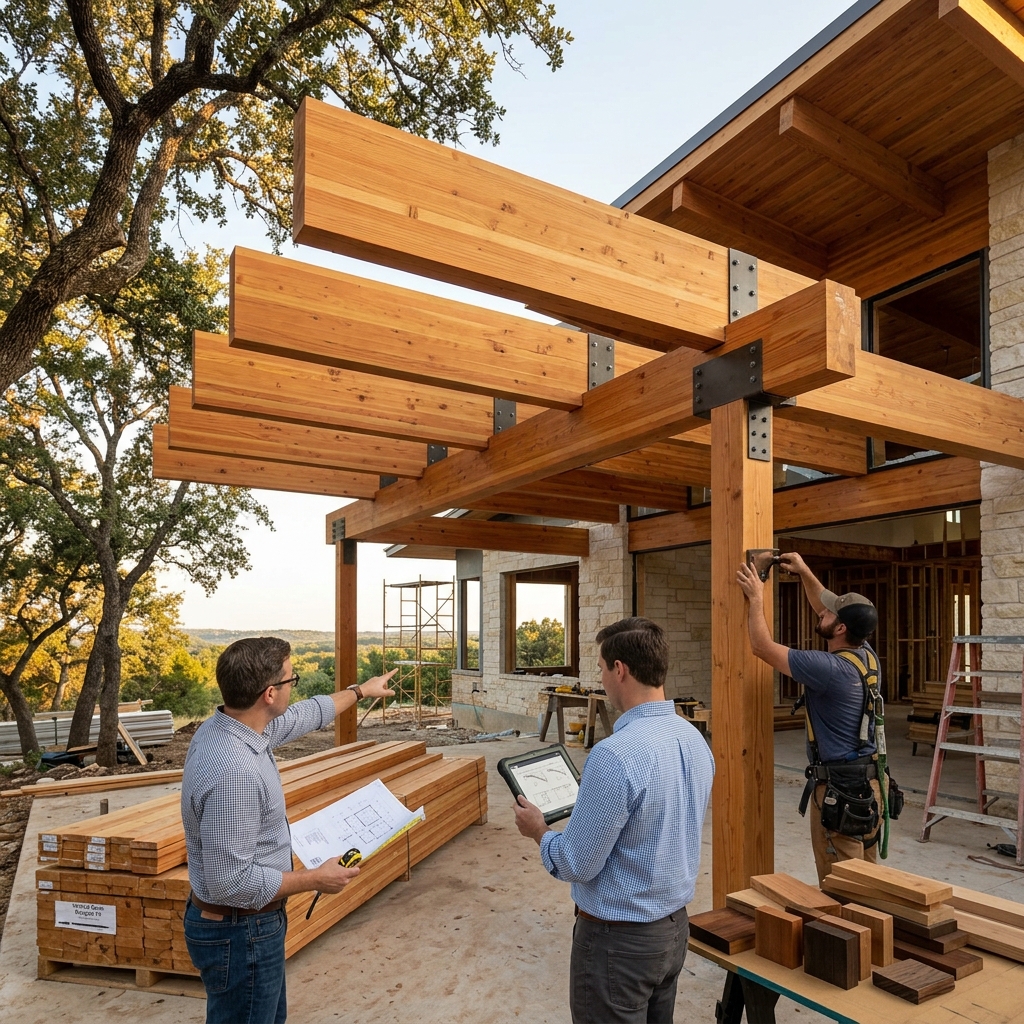
We specify vertical grain specifically because growth rings run nearly parallel to the board face. This orientation resists cupping and checking better than flat-sawn material. On a cantilever visible from inside the home, flat-sawn Douglas fir will eventually show surface checks and weather unevenly. Vertical grain material ages gracefully, weathering to a uniform silvery tone if left unfinished.
Western Red Cedar offers a different value proposition. Its allowable stresses run lower than Douglas fir (around 1,000 PSI), so you may need slightly heavier sections for equivalent load carrying. But cedar’s natural beauty, rich warm color, and superior rot resistance create a finished appearance that requires no stain. The wood continues to weather naturally if exposed, or you can finish it to maintain warm amber tones that define modern Texas architecture.
Both materials machine cleanly, accept fasteners without splitting, and provide the visual warmth contemporary architects seek. The choice between them often comes down to exposure condition and desired final appearance. Full coverage with interior visibility? Douglas fir clarity with a natural or light finish shows grain beautifully. Exposed to weather? Cedar’s durability and patina justify the cost premium.
Actionable takeaway: Request samples of both species finished the way your architect envisions. See how each looks in your specific lighting and against your interior materials before committing to long-span beams.
Thermally Modified Wood: Enhanced Durability for Exposed Cantilever Conditions
Thermally modified wood represents a significant advancement for cantilever applications, particularly where exposure is higher or maintenance tolerance is lower. The process involves heating wood to 212-266 degrees Fahrenheit in a controlled, oxygen-free environment. This alters the wood’s cellular structure, improving dimensional stability and rot resistance without chemical treatment.
For cantilevers that extend beyond covered areas or receive weather exposure, thermally modified woods deliver measurable advantages. They absorb less moisture, move less with seasonal humidity changes, and resist fungal decay far better than untreated softwoods. A thermally modified Douglas fir or ash cantilever won’t crack or cup the way standard material might after years of sun and rain cycling.
We stock thermally modified ash, pine, poplar, and Ayous in sizes suitable for cantilever work. Thermally modified ash is particularly popular for visible applications because it combines improved durability with pale, contemporary coloring that suits modern interiors. The grain pattern remains expressive, and the material finishes beautifully with modern coatings.
The trade-off is cost. Thermally modified material runs 20-40% higher than standard softwood, depending on species. But when you’re building a signature home where a cantilever is a key design feature, that premium buys you visual confidence for decades. The material won’t degrade noticeably, finish coatings last longer, and the owner faces fewer maintenance surprises.
Actionable takeaway: Consider thermal modification if your cantilever will be partially exposed, visible from outside, or in a high-humidity region like Hill Country or near lakes. The durability justifies the cost on statement pieces.
FSC-Certified Hardwoods Like Ipe: Strength Without Compromise
When cantilevers demand maximum strength, longest lifespan, and most refined appearance, we turn to Ipe siding and other FSC-certified tropical hardwoods. Ipe delivers allowable bending stresses around 2,100 PSI, approximately 55% higher than clear Douglas fir. This means shorter sections can span the same distance, creating visual elegance impossible with softwood.
An Ipe cantilever 8×10 can carry loads that would require a 10×14 Douglas fir. That dimensional reduction creates a refined look, reduces visual mass, and maximizes interior space or sight lines. For luxury projects where every proportion matters, this structural efficiency translates directly to design quality.
Ipe also offers uncompromising durability. The wood resists decay naturally, requires no chemical treatment, and performs beautifully in fully exposed conditions. A cantilever extended over a pool deck or exposed to salt spray in coastal applications, or in humid Hill Country microclimates, becomes maintenance-free with Ipe. It won’t rot, check, or deteriorate over the life of the home.
The aesthetic character deserves mention too. Ipe displays rich chocolate-brown tones with dramatic grain patterns that deepen over time. It’s visually distinctive, immediately signaling quality and intention. For architects designing homes as collectors’ pieces, the material reinforces that commitment.
We source our Ipe and complementary hardwoods like Cumaru, Garapa, and Tigerwood from FSC-certified operations, ensuring sustainable forestry and supporting the long-term health of tropical ecosystems. Your material choice reflects your values.
Actionable takeaway: Ipe makes sense when cantilever exposure is significant, visual prominence is high, or performance must be guaranteed for 50+ years. The material cost is higher, but lifecycle cost is often lowest.
Designing Cantilevers That Meet IBC Code Requirements and Architect Specifications
Code compliance and architectural vision can feel at odds. They shouldn’t. Good structural engineers translate design intent into safe, code-approved details that satisfy both aesthetics and safety.
Texas projects follow the IBC, which specifies deflection limits, safety factors, and connection requirements for cantilevers. A residential cantilever typically cannot deflect more than 1/360 of its span under live load. That 12-foot cantilever must not sag more than about 0.4 inches when loaded. Connection design at the support point must develop full strength of the cantilever beam, typically requiring bolted or embedded connections rather than simple nail fastening.
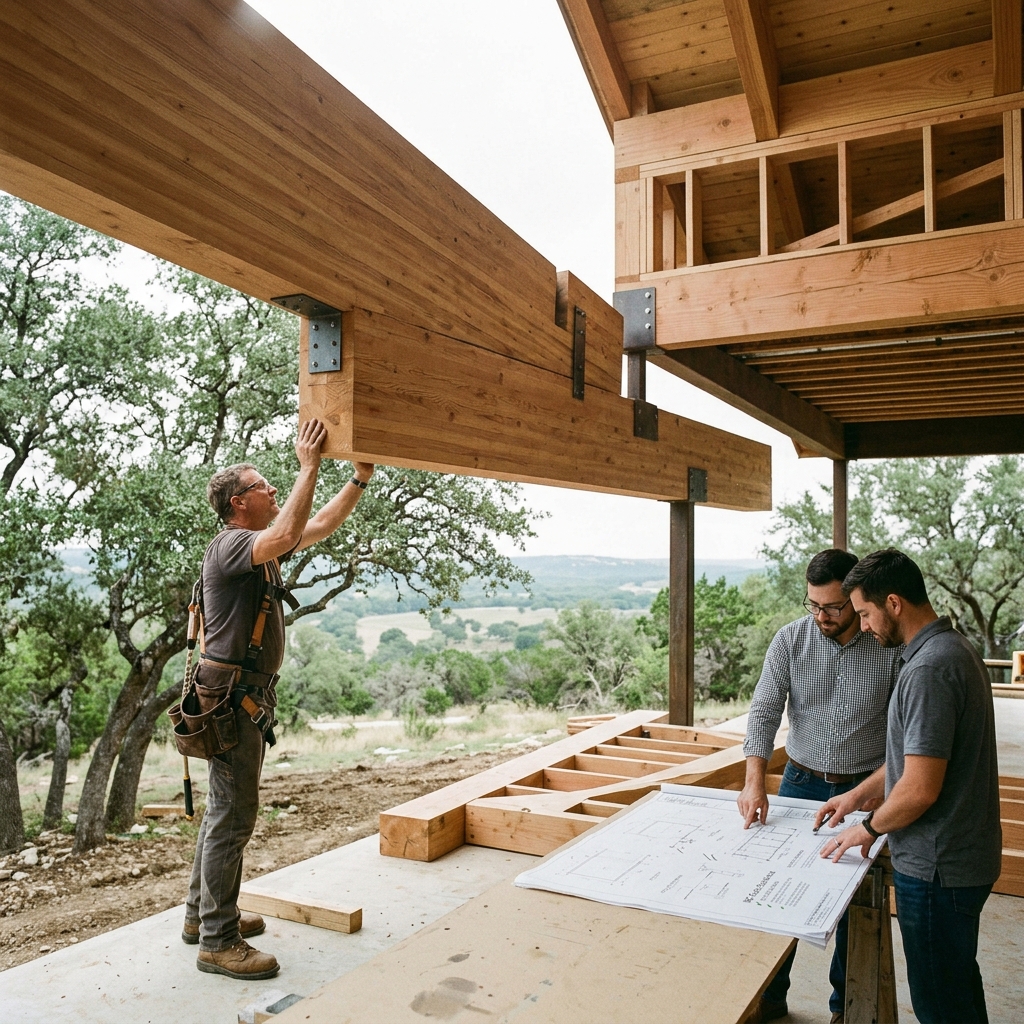
The engineer’s job is translating these requirements into buildable details. A Douglas fir cantilever might require 2x bolts at 12 inches on center, specific bearing plates, and possibly reinforcing strapping. An Ipe cantilever might use fewer, larger fasteners spaced wider apart. The structural logic remains identical; the implementation differs.
We’ve found that early coordination between architect, engineer, and timber supplier produces the best outcomes. The engineer runs load calculations and recommends species and sizing. We confirm that recommended sizes are available, cost-effective, and appropriate to the exposure. The architect confirms the final sizing works with the design vision. This three-way conversation prevents delays and expensive redesigns during construction.
Actionable takeaway: Have your structural engineer specify material tolerances, grade requirements, and finishing criteria in construction documents. This clarity prevents costly misunderstandings during material procurement.
Our Supply Advantage: Same-Day Access to Engineered Timber Stock Across Texas
Large cantilevers often delay projects. Custom milling, grade selection, and logistics create weeks of lead time. We’ve invested in substantial inventory specifically to serve Texas architects and builders with urgent needs.
Our stock includes vertical grain Douglas fir and Western Red Cedar in the larger sections cantilevers require. We carry thermally modified timbers ready to finish. Our Ipe inventory includes the specialty sizes that tropical hardwood cantilevers demand. For projects across Austin, Dallas, Houston, San Antonio, and throughout the Texas Hill Country, Lake Travis, and Hill Country communities like Boerne, Kerrville, and Dripping Springs, we can typically source material same-day or next-morning.
This isn’t just convenience. It accelerates permitting conversations with architects and engineers who want to confirm material availability before finalizing designs. It reduces stress on builders managing multiple subcontractors. And it eliminates the panic of discovering that your specified 10×14 clear Douglas fir has an 8-week lead time when you’re two weeks from framing.
We also manage milling services. Custom profiles, specialized cuts, and finishing preparation can happen in our shop, arriving ready for installation rather than requiring site work.
Actionable takeaway: Call us early in the design phase with your cantilever specifications. We’ll confirm availability, discuss pricing, and identify any sourcing challenges while you still have design flexibility.
From Hill Country Retreats to Lake Travis Waterfront Homes: Our Cantilever Projects
Over years of supplying timber to Texas architects and builders, we’ve seen cantilever applications that showcase the range of possibilities. A contemporary retreat in the Hill Country featured a 10-foot Douglas fir cantilever extending from the main structure, sheltering a bedroom terrace while framing views toward Barton Creek. The vertical grain material was finished natural, allowing the grain to become an interior design feature visible from the master suite.
A Lake Travis waterfront home required a 12-foot Ipe cantilever extending over the deck edge, creating a shaded gathering space while expressing the owners’ commitment to durable, low-maintenance materials. The tropical hardwood’s rich color contrasted beautifully with the home’s limestone and glass.
In Dallas, a luxury residential project used multiple cantilevers at different scales. Douglas fir for semi-sheltered overhangs, thermally modified ash for exposed soffits. Each material was chosen for its specific exposure and visibility role, creating a cohesive timber expression across the exterior.
These projects share common threads. Architects designed with timber character in mind, engineers validated the structural logic, we sourced appropriate materials promptly, and builders executed clean details that honored the design intention. When all four elements align, the result is a home where structure becomes poetry.
Actionable takeaway: Review completed cantilever projects in your region. If architects and builders describe our material quality and reliability positively, you’re working with a supplier who understands your standards.
Why Custom Home Builders Partner With Us for Complex Timber Specifications
Custom builders working with discerning architects choose suppliers who reduce risk and simplify communication. When a builder’s reputation depends on executing architectural specifications precisely, material sourcing becomes critical.
We earn partnership relationships by understanding what architects expect and what builders need. Architects expect material matching their drawings exactly: grade, species, dimension, and finish specification. Builders expect reliable availability, consistent quality, and honest advice when specification might need adjustment for practical reasons.
This means we engage directly with architectural specifications, flag potential issues early, and propose solutions collaboratively. If an architect specifies a particular species for a cantilever but the lead time is 12 weeks and the builder needs material in 3, we discuss alternatives that preserve design intent. If code interpretation raises questions, we facilitate conversations with structural engineers.
We also manage the details that prevent job site conflicts. Mill orders are tracked precisely. Grading is confirmed. Moisture content is appropriate to the application. Finish preparation (if specified) is completed in our shop, reducing site variables.
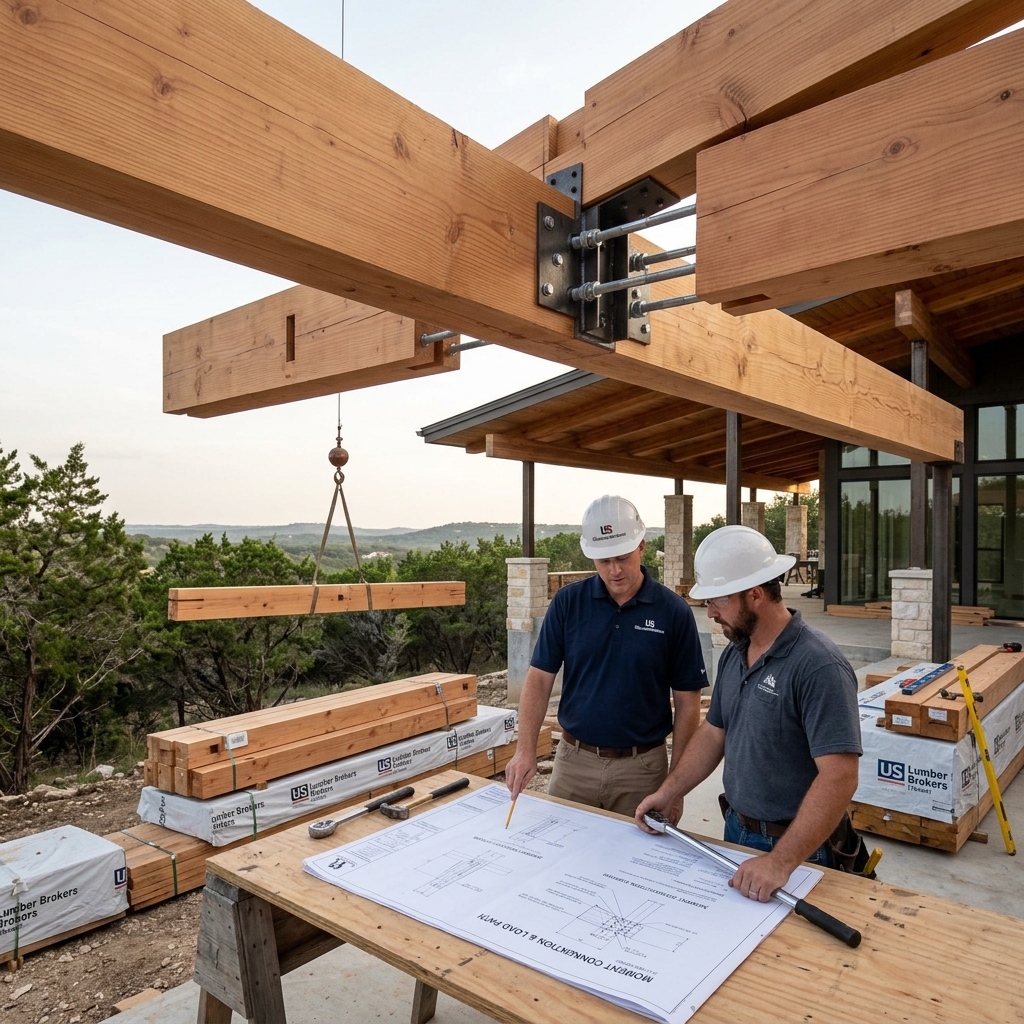
Actionable takeaway: Choose a timber supplier who communicates directly with your architect. Clear information flow between all parties prevents misunderstandings and accelerates projects.
Creating Seamless Integration Between Timber Structure and Modern Interior Design
A well-designed cantilever isn’t merely structural. It becomes an interior design feature, visible from living spaces, and integrated into the visual story the architect is telling.
Contemporary Texas architecture emphasizes natural materials and the play of light. An exposed timber cantilever, finished thoughtfully, complements stone, glass, and clean architectural lines. The key is considering how material, grain orientation, and finish work with surrounding surfaces.
We work with architects on finish specifications because the same timber can look entirely different depending on treatment. A clear coat preserving natural grain and color creates one aesthetic. A natural weathered finish creates another. Careful stain color selection can warm or cool the timber’s presence in a space.
Detailing matters equally. How the timber meets the exterior wall, connects to steel support, or transitions into the interior ceiling affects both appearance and performance. Clean reveal details, thoughtful fastener placement, and appropriate flashing all contribute to the finished result.
Actionable takeaway: Include your timber supplier in finish specification conversations. We can advise on how different coatings, stains, and weathering patterns will affect your material’s appearance over time.
Your Partner in Bringing Cantilever Visions to Reality
Heavy timber cantilevers represent the intersection of structural confidence and architectural beauty. Designing them well requires accurate engineering, appropriate material selection, reliable sourcing, and thoughtful detailing.
We’re here to support that process at every stage. Whether you’re exploring feasibility in early design, validating specifications with your engineer, sourcing material quickly, or problem-solving during construction, our expertise and inventory serve your project.
Reach out with your cantilever specifications, timeline, and vision. We’ll confirm material availability, discuss species and sizing options, and answer technical questions. For Texas architects and builders designing homes where timber is the primary visual and structural expression, we’re the partner who understands your standards and delivers accordingly.
Call us at 737.260.7431 or visit us online to discuss your project specifics.
To place orders, order samples, or talk with a live person.
Frequently Asked Questions (FAQ)
What species do we recommend for cantilevers that need to perform in exposed conditions like Lake Travis waterfront homes?
We typically specify Vertical Grain Douglas Fir for its exceptional strength-to-weight ratio and long-span capability, paired with Western Red Cedar when architects prioritize the aesthetic warmth of natural wood grain. For maximum durability in moisture-heavy environments, we source thermally modified wood products like Thermally Modified Ash or our FSC-certified Ipe hardwoods, which resist checking and cupping better than standard lumber over the long term. Each species choice depends on your structural engineer’s load calculations and the exposure conditions your design will face.
How quickly can we source engineered timber stock for complex cantilever specifications across Texas?
We maintain inventory across our Texas locations including Austin, Dallas, Houston, and San Antonio, so most projects requiring premium softwoods like hemlock, cypress, or Douglas Fir can ship same-day. For hardwoods like Cumaru, Garapa, or Massaranduba, we typically deliver within 48 hours given our direct relationships with specialty mills. Since we both supply and manufacture, we can also custom-mill specific dimensions or grades if your engineer’s calculations call for materials beyond standard stock.
Do we carry fire-rated wood products suitable for WUI Class A requirements in cantilever designs?
Yes, we stock a complete line of WUI Class A fire-rated wood products for siding, decking, and structural framing that meet current IBC codes for high-fire-risk areas throughout Texas. We can specify these materials in the same premium species architects prefer for cantilevers, so you don’t compromise on structural performance or design expression to meet fire safety mandates.


