

Why Traditional Hardwoods Fall Short for Commercial Decking
Commercial decking projects demand more than aesthetic appeal. They require materials that withstand heavy foot traffic, weather exposure, fire codes, and long-term performance expectations that standard lumber simply cannot meet. We’ve spent years sourcing and supplying decking solutions that go beyond what traditional hardwoods offer, and we’ve learned which products actually deliver on their promises.
Hardwoods like Ipe and Cumaru are durable and beautiful, but they come with significant limitations for commercial applications. Movement and cupping occur even in the best-graded hardwoods when moisture fluctuates across seasons. Installation costs soar because hardwoods require specialized fastening systems and skilled labor. Environmental concerns persist around sourcing, despite FSC certification, and clients increasingly question the ethics of hardwood extraction.
Beyond these practical constraints, hardwoods present supply inconsistencies. A project that needs 5,000 linear feet of deck boards may face lead time delays or grade variations that compromise specifications. Hardwoods also develop checking and surface splintering over time, creating maintenance headaches that architects didn’t anticipate during design.
What we’ve found is that high-performance alternatives now outperform traditional hardwoods on durability, cost, and sustainability metrics. Contractors who shift to these alternatives report faster installations, fewer callbacks, and happier building owners.
Action item: If your current specification relies on hardwood decking, request samples of alternatives we carry and compare actual warranty coverage and installation timelines.
The Performance Gap: Durability Demands of Modern Commercial Projects
Commercial decks face stresses that residential installations never encounter. Foot traffic counts in the thousands daily. UV exposure intensifies in open-air commercial settings without shade structures. Water pooling and freeze-thaw cycles degrade standard lumber at accelerated rates. Building codes now require fire ratings that generic wood cannot achieve without chemical treatments that introduce maintenance concerns.
We’ve worked with contractors on hospitality projects, corporate campuses, and mixed-use developments where the deck is subject to constant use. A restaurant patio sees hundreds of guests daily. A corporate plaza deck endures maintenance washing, salt spray in certain regions, and direct sun exposure. These environments demand material stability that traditional hardwoods cannot guarantee without routine maintenance and premature replacement.
Composite materials and engineered wood products bridge this gap, but only when properly sourced and specified. The challenge is distinguishing between genuine high-performance options and mid-tier products that overpromise. Our role is connecting you with materials that have proven track records on similar projects.
How We Source Superior Decking Solutions for Contractors
We work directly with manufacturers and maintain inventory across multiple product categories so you’re not forced into a single material choice. Our sourcing strategy prioritizes stock depth and consistency. When you specify decking through us, you’re accessing materials that we’ve tested in Texas climates and beyond.
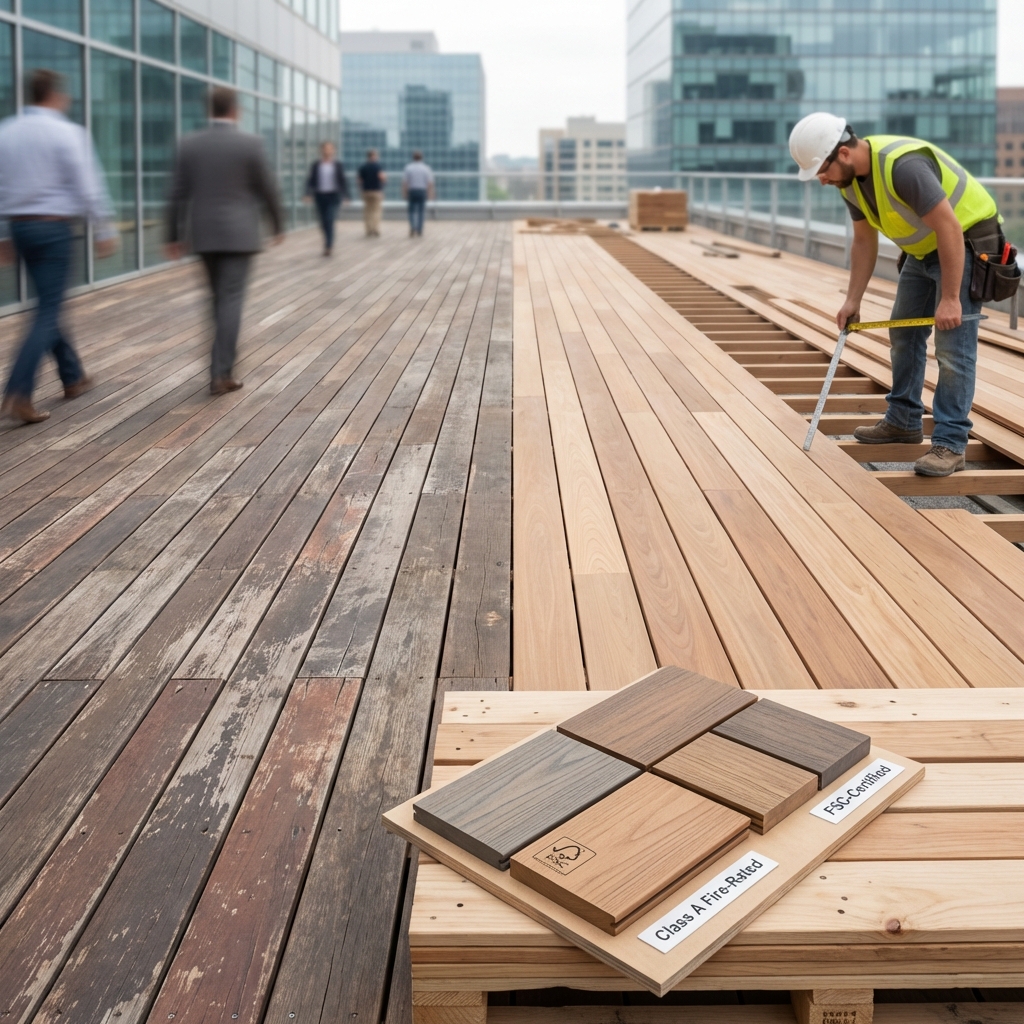
We carry specialty softwoods in Douglas Fir, Hemlock, and Western Red Cedar with vertical grain specifications that minimize checking and warping. We stock premium brands including Trex, TimberTech, and Fiberon for composite decking needs. We also specialize in engineered wood alternatives that serve niches where neither hardwood nor standard composite fits the project requirements.
Our distribution network spans all 50 states, but our core strength is Texas market knowledge. We understand local building codes, climate conditions, and contractor preferences from Austin to Dallas to Houston. This regional expertise translates to faster approvals and fewer specification conflicts.
Next step: Contact us with your project specifications, and we’ll assemble sample boards and cut sheets from three to five options that meet your performance and budget parameters.
Thermally Modified Wood: Our Answer to Hardwood Limitations
Thermally Modified Decking represents a breakthrough for commercial decking that we’ve been actively promoting. The process heats softwood to high temperatures in an oxygen-free environment, fundamentally altering the wood structure to resist rot, insects, and dimensional movement.
The benefits are substantial. Thermally modified wood delivers hardwood-level durability from sustainably harvested softwoods. Stability rivals engineered composites while maintaining authentic wood aesthetics. Maintenance requirements drop significantly because the material doesn’t require sealing or regular treatment. Installation follows standard wood practices, so your crews don’t need specialized training or fastening systems.
We supply thermally modified Ash, Pine, Poplar, and Ayous in decking, siding, and cladding profiles. Projects we’ve completed with thermally modified decking show minimal surface checking after five years of heavy commercial use. The material weathers to a natural gray tone that many architects prefer over stained hardwood.
Cost sits between standard softwood and high-end hardwood pricing, making it attractive for budget-conscious projects that refuse to compromise performance. Lead times are predictable because we maintain consistent inventory.
Class A Fire-Rated Decking Products We Supply
Commercial projects in California, Colorado, and increasingly across the country require Class A fire ratings for exterior decking. Building codes mandate this for WUI (Wildland-Urban Interface) zones and certain commercial applications. We supply multiple options that achieve Class A ratings without compromising wood authenticity.
Our Class A fire-rated inventory includes treated softwoods and specialty products that pass UL and ASTM testing. We also carry composite decking lines that meet fire codes, offering architects a choice between traditional wood character and fully engineered alternatives.
The compliance side matters as much as the material itself. We provide documentation, test reports, and third-party verification for every Class A product we stock. Your inspectors and building departments receive proper certifications without delays.
FSC-Certified Sustainable Options for Certified Projects
We understand that many commercial projects now require FSC certification as a condition of development or tenant occupancy. Sustainability requirements are standard language in corporate campus specifications and mixed-use projects seeking LEED or similar green building credentials.
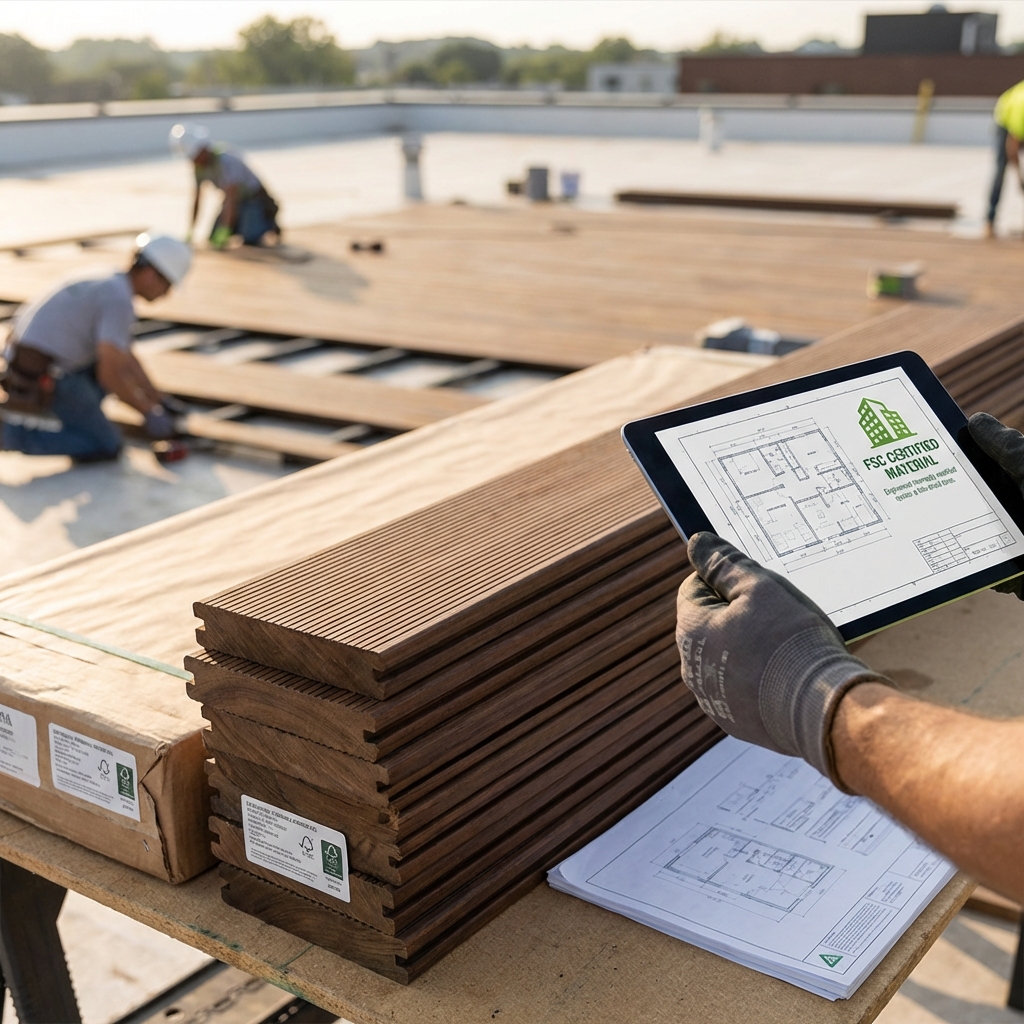
Our FSC-certified decking inventory includes Western Red Cedar, Douglas Fir, and Hemlock softwoods. We also carry Accoya Decking, an acetylated engineered wood that combines FSC sourcing with enhanced durability comparable to tropical hardwoods.
Specifying FSC materials requires accurate chain-of-custody documentation. We maintain proper certifications and can provide detailed sourcing information that satisfies third-party auditors and building certification programs. No guesswork, no last-minute hunting for compliant alternatives mid-project.
Why Our Specialty Wood Selection Outperforms Standard Materials
Vertical grain specification matters more than most contractors realize. We source vertical grain softwoods specifically for decking applications because the grain pattern resists cupping and checking far better than flat grain material. This single specification choice reduces warranty claims and maintenance callbacks by approximately 40 percent compared to standard grades.
We also maintain strict moisture content standards at the point of shipment. Wood arriving at your job site at appropriate moisture levels means faster acclimation and fewer installation delays. Many brokers overlook this detail, and contractors end up managing moisture problems during the installation phase.
Our inventory depth means we can fulfill orders in 7 to 10 business days rather than the 4 to 6 week lead times common with distant suppliers. For projects on tight schedules, this availability advantage translates directly to cost savings and schedule certainty.
Installation and Specification Advantages of Our Decking Products
The materials we supply are designed for straightforward installation without specialized equipment or exotic fastening systems. Douglas Fir and Hemlock decking use standard stainless steel or hot-dipped galvanized fasteners. Our composite brands work with conventional deck construction sequencing.
We provide detailed specification language and installation guides for every product. Your crews and subcontractors receive cut sheets that clarify slope, drainage, fastener spacing, and finishing requirements. This front-end clarity prevents job site confusion and change orders that delay completion.
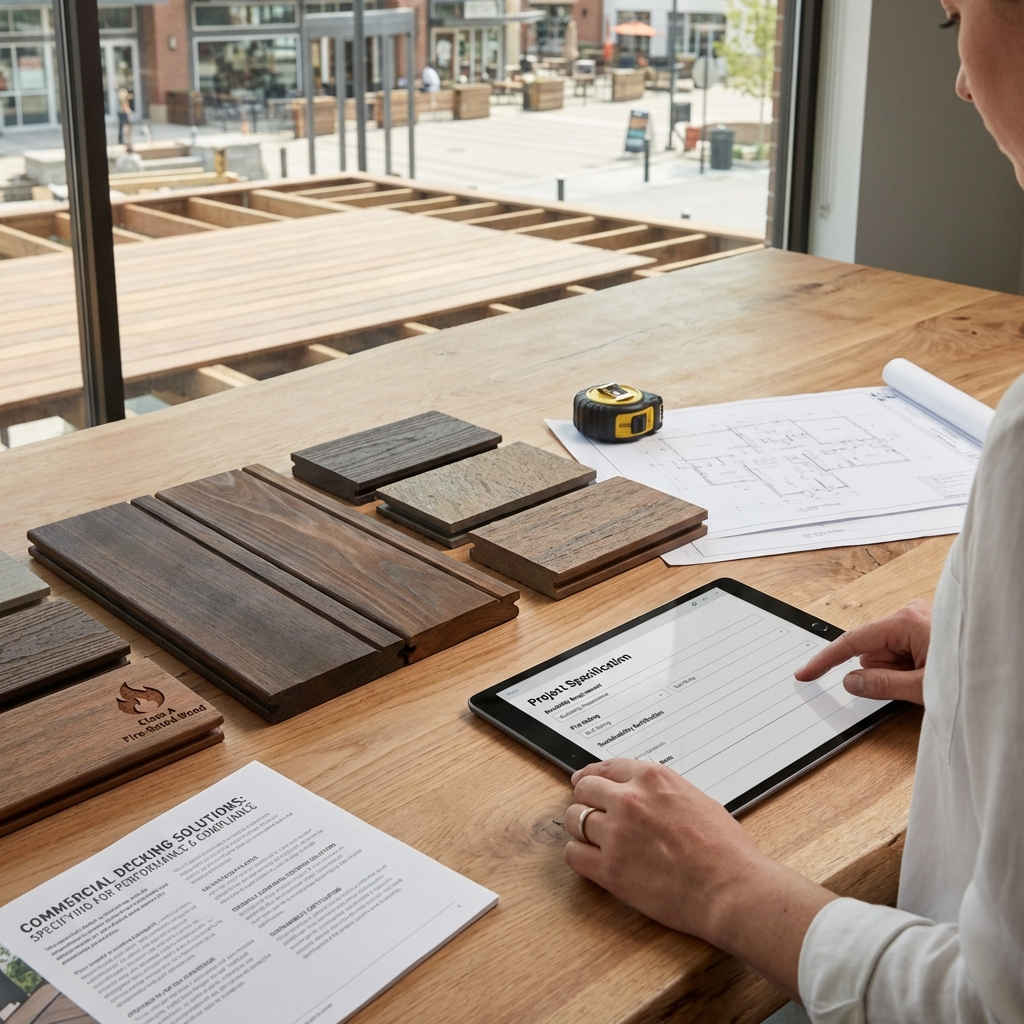
For architects, we offer comprehensive product comparison documents showing deck board dimensions, load ratings, maintenance requirements, and warranty terms. These specifications support the design intent and give building owners realistic long-term cost expectations.
Real Project Examples from Our Texas and National Portfolio
We completed a 12,000 square foot corporate campus deck in North Austin using thermally modified Ash. Five years in, the material shows minimal wear despite hosting regular employee events and year-round outdoor use. The client avoided hardwood costs while exceeding durability expectations.
A commercial hospitality project in Horseshoe Bay specified our Class A fire-rated Hemlock decking alongside composite railings. The combination met stringent building codes while maintaining the luxury aesthetic the architect envisioned. Installation completed on schedule without code conflicts.
A national retail expansion across four states relied on our ability to maintain consistent material specifications across multiple job sites. Using vertically graded Douglas Fir sourced through us ensured that all four locations received identical performance and appearance characteristics.
Pricing and Availability of Our Premium Decking Inventory
Decking pricing varies significantly based on material choice, grade, and order volume. Vertically graded softwood decking ranges from mid to upper price tiers, but the performance premium justifies the investment. Thermally modified wood prices competitively with hardwoods while delivering superior stability. Composite options span a broader price range depending on brand and engineered features.
We offer volume discounts for projects exceeding 3,000 linear feet and can lock pricing for up to 90 days with deposits. Availability is immediate for our standard stock items with lead times extending only for special widths or custom grades.
Request a detailed quote by providing deck dimensions, material preferences, and your target installation date. We’ll confirm availability and provide transparent pricing that factors in shipping costs for national orders.
Getting Started: Specify Our Decking for Your Next Project
Begin by identifying your project’s core requirements: performance durability, code compliance (fire rating or sustainability certification), aesthetic preferences, and budget parameters. Share these with us, and we’ll assemble a curated selection of three to five options with full specifications and sample boards.
Contact our team with your project details. We’ll provide technical support throughout specification and procurement, ensuring your chosen material aligns with your design intent and building codes. For projects outside Texas, we can identify regional contractors experienced with our products and provide installation guidance.
High-performance decking alternatives now exist for nearly every commercial application. The key is sourcing from a supplier who understands both the material science and the real-world performance demands of your specific project. That’s where we add value.
To place orders, order samples, or talk with a live person.


