

The Challenge: Creating Durable, Architect-Worthy Rooftop Terraces in Dallas Heat
Dallas architects designing contemporary luxury homes face a unique constraint: rooftop terraces must deliver the aesthetic warmth of natural wood while withstanding intense sun exposure, temperature swings, and the structural demands of elevated spaces. The vision is clear—expansive outdoor rooms that blur indoor-outdoor boundaries with expressive wood surfaces and unobstructed views. The reality is harder. Standard materials fail quickly under Dallas conditions, forcing compromises that undermine design intent.
At US Lumber Brokers, we work with Texas architects who refuse to settle. They specify materials that match their design vision and perform flawlessly for decades. Ipe decking has become the material of choice for rooftop terraces across Dallas, Fort Worth, Austin, and beyond. It delivers the warmth and character of natural wood without the maintenance burden or performance failures that plague softer species in high-sun environments.
The challenge isn’t just durability. It’s balancing structural requirements, fire codes, thermal comfort, and architectural expression simultaneously. Rooftop terraces sit at the intersection of multiple building systems, and material selection affects everything from pedestal system design to maintenance protocols.
Why Standard Wood Fails on Elevated Outdoor Spaces
Cedar and pressure-treated lumber look beautiful initially, but they struggle on rooftop decks for three fundamental reasons: moisture cycling, UV degradation, and thermal movement.
Cedar and similar softwoods absorb and release moisture with seasonal changes. On a rooftop, where sun exposure is constant and airflow surrounds the deck, this cycling accelerates dramatically. Wood swells, shrinks, cups, and warps. Within two to four years, boards that started pristine develop checking, splintering, and structural gaps. Maintenance becomes relentless: sanding, sealing, restaining. Many architects have watched these decks deteriorate and sworn off natural wood entirely.
UV radiation breaks down lignin, the natural binder in wood fiber. Unprotected cedar grays out and becomes brittle. Even with quality sealers, reapplication every 18 to 24 months is necessary on south-facing rooftop decks in Dallas. The thermal stress compounds the problem. Surface temperatures on a dark-stained cedar deck can exceed 140 degrees in July heat, creating massive differential expansion between the sun-exposed top and shaded underside.
Pressure-treated lumber resists rot but amplifies these other problems. The chemical treatment adds weight, and the wood’s density means it absorbs sealers unevenly. Sun-bleaching is even more pronounced. Thermal cupping becomes severe, making the deck unsafe and uneven.
Composite decking, while lower-maintenance, lacks the warmth, grain variation, and tactile quality that define contemporary architecture at the level we serve. Architects consistently reject it for visible rooftop applications because it reads as plastic, not craft.
Ipe Decking: The Hardwood Solution for Dallas Rooftop Performance
Ipe decking solves these problems through fundamental material properties. Ipe is a tropical hardwood from Brazil with a density around 65 pounds per cubic foot—roughly four times denser than cedar. This density resists moisture penetration, minimizes swelling and shrinkage, and prevents checking and cupping.
The wood’s natural oils and tight grain structure provide inherent UV protection that lasts years beyond what sealers alone can achieve. A properly finished ipe deck maintains its rich chocolate brown color and grain character far longer than softwoods. Many of our clients report minimal color change over 10+ years with light maintenance.
Ipe is also Class A fire-rated in all configurations, meeting the stringent fire codes required for rooftop decks in dense urban areas. This eliminates the need for fire-retardant treatments that degrade wood appearance and feel.
From a structural standpoint, ipe’s density makes it extremely stiff, supporting longer spans with less deflection. On rooftop applications, this translates to decks that feel solid and stable underfoot, with minimal movement or bounce. Architects value this responsiveness; it’s part of the sensory experience of the space.
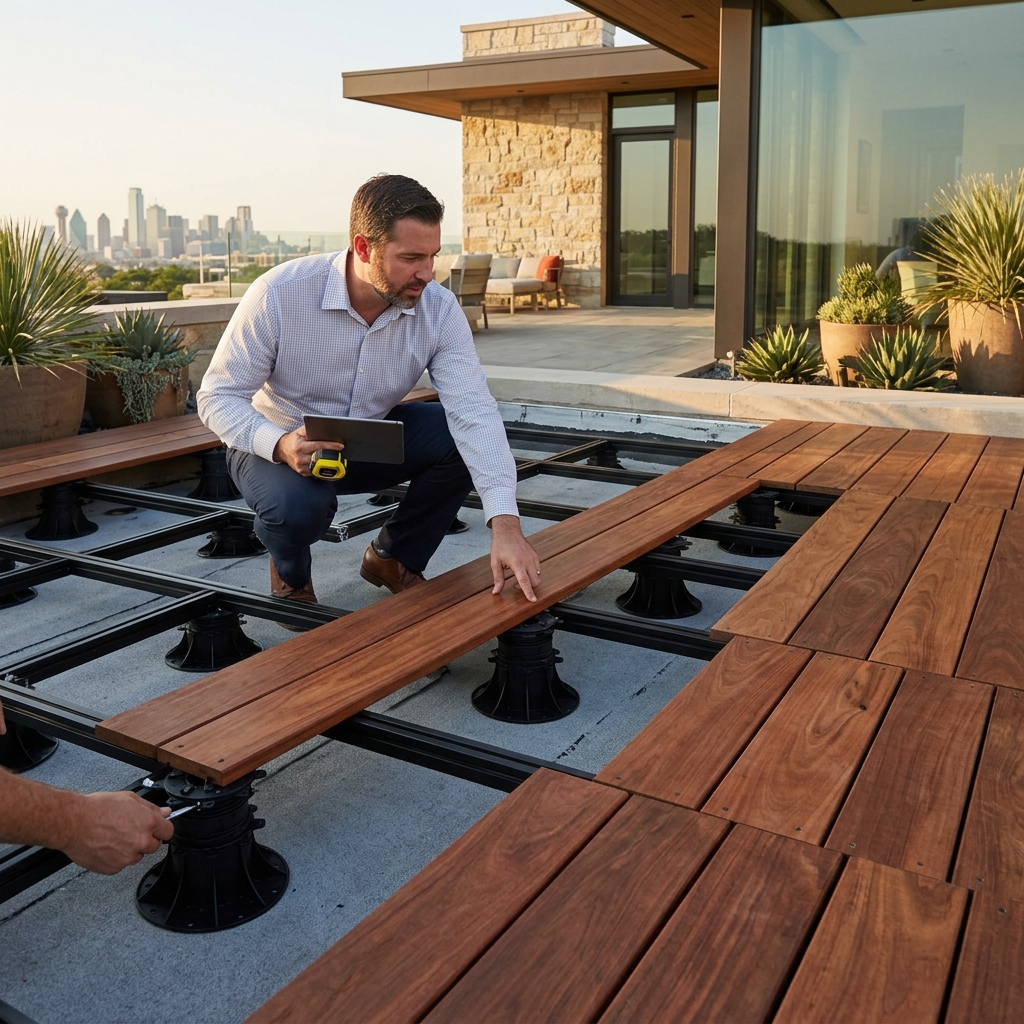
We stock clear ipe in standard widths and can mill custom profiles. For rooftop terraces, we typically recommend 6/4 (1.5 inch) thickness for strength and visual presence. The wood’s warm, complex grain catches light differently throughout the day, reinforcing the connection to natural materials that defines contemporary residential design.
Pedestal System Advantages for Rooftop Installation and Maintenance
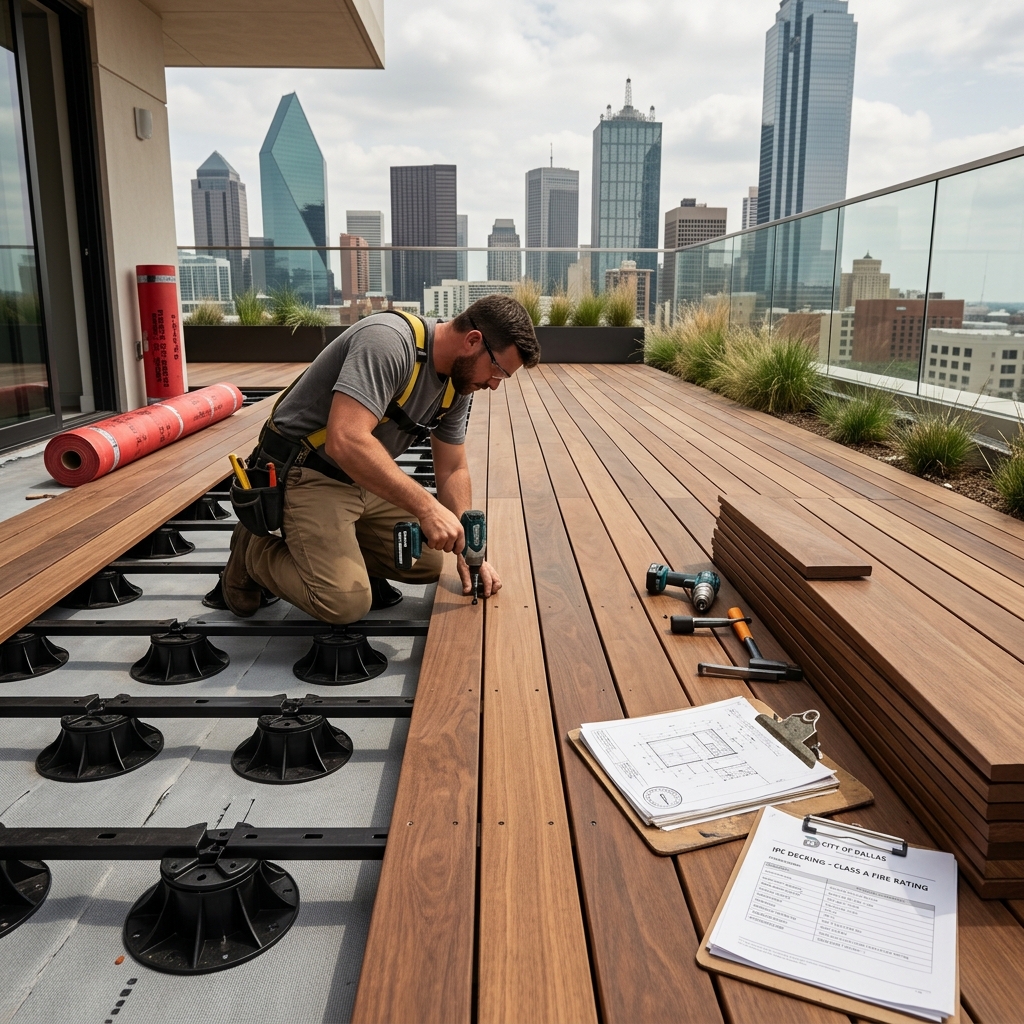
Rooftop decks require pedestal systems rather than joists directly attached to the roof membrane. Pedestals elevate the deck structure above the roof, protecting the waterproofing layer and allowing airflow underneath.
Ipe’s weight and stiffness are tremendous advantages here. Because ipe is so dense, you can use wider pedestal spacing than with softwoods or composites, reducing the total number of supports required. Fewer pedestals mean easier installation, lower material costs, and less structural penetration through the roof.
The pedestal system also simplifies long-term maintenance. You can access and inspect the roof membrane without disturbing the deck. If a roofing repair is needed in 15 years, you remove the ipe boards, work on the roof, and reinstall the same boards. The ipe won’t have degraded to the point where replacement is necessary. With cedar, the roof work would likely coincide with full deck replacement anyway.
Spacing, slope, and drainage are configured during design. Most rooftop decks in Dallas incorporate 1/8 inch per foot slope to direct water toward integrated drainage. Ipe boards are milled flat and tight, so water doesn’t pond between boards. Airflow underneath prevents moisture accumulation, and the wood dries rapidly after rain.
Designing for Form and Function: How Ipe Elevates Architectural Vision
Contemporary architecture emphasizes material authenticity. The ipe deck isn’t hidden under deck stain or obscured by maintenance schedules. It’s an honest expression of a beautifully dense, durable material.
Ipe’s color and grain offer sophisticated aesthetic range. Clear ipe displays warm chocolate tones with dramatic grain variation. You can specify edge grain (quarter-sawn) for straighter lines and subtler grain, or flat-sawn for bolder grain character. We work with architects to mill custom widths and lengths, creating compositions that feel intentional rather than off-the-shelf.
The material’s warmth complements the expansive glass, warm-toned interior materials, and light-filled spaces that define contemporary Texas residential design. An ipe rooftop terrace becomes an extension of the home’s interior language, not a disconnected add-on. During design phases, we provide samples that architects can evaluate in their specific project context, ensuring material selection aligns with vision.
Ipe also takes custom detailing well. Chamfered or rounded edges soften line weight. Spacing variations create rhythm. Integration with steel, glass, or native stone is seamless because ipe’s density and finish quality feel engineered, not rustic.
Fire Rating and Building Code Compliance for Urban Dallas Projects
Urban rooftop decks in Dallas fall under stringent fire code provisions. Decking materials on roofs must be Class A fire-rated, or the entire deck assembly must meet Class A criteria.
Untreated ipe is naturally Class A fire-rated, eliminating the need for chemical fire retardants. This is significant. Fire retardant treatments, while effective, can darken wood, affect finish quality, and create handling or disposal considerations. We supply ipe specifically selected and tested for Class A compliance, so architects can specify the material with confidence that building officials will approve it.
We work with contractors and designers to document fire ratings early in the design process. Providing test reports and compliance certificates prevents delays during permit review. On larger projects, we coordinate directly with the design team and code consultants to ensure specification clarity.
Thermal Properties: How Ipe Stays Cool Underfoot in Texas Sun
Surface temperature is a practical consideration on rooftop decks. In Dallas summer heat, lightly stained cedar can become uncomfortably hot. Ipe’s thermal properties are superior.
Ipe’s density and tightly packed grain structure mean less solar heat penetrates the wood. Surface temperatures on ipe are typically 10-15 degrees cooler than on cedar under identical sun conditions. The wood doesn’t become uncomfortably hot to walk on barefoot, even in mid-afternoon July.
The thermal stability also reduces cupping and warping. Cedar and other softwoods experience wild differential expansion as the sunny surface heats while the shaded underside stays cooler. Ipe’s density minimizes this differential, so the deck remains flat and stable throughout the day’s temperature swings.
We’ve installed ipe terraces in Austin, San Antonio, and throughout the Texas Hill Country. Clients consistently report that the decks remain comfortable and safe without requiring reflective coatings or other thermal management strategies. This performance benefit reinforces ipe’s value in high-sun applications.
Integration with Contemporary Architecture and Sustainable Design Goals
Architects committed to sustainability often hesitate about tropical hardwoods, assuming environmental impact outweighs performance benefits. We work exclusively with FSC-certified ipe suppliers, ensuring responsible forest management and verifiable supply chains.
FSC certification means the timber comes from well-managed forests where environmental protection, worker rights, and community benefits are actively monitored. The certification covers chain of custody, so you can trace your ipe from the forest to the rooftop terrace.
From a sustainability standpoint, ipe’s longevity is the strongest argument. A deck built with ipe in 2026 will likely still be performing flawlessly in 2050. A cedar deck installed in 2026 will require replacement by 2030, generating waste and requiring new material sourcing. The life-cycle environmental impact of a 50-year ipe deck is dramatically lower than repeated replacements of softer materials.
We also supply thermally modified wood products and Accoya decking, alternative options that meet sustainability and performance requirements. Accoya is acetylated softwood, offering outstanding durability and dimensional stability with lower environmental impact than tropical hardwoods. For architects prioritizing North American sourcing, we discuss these alternatives during specification development.
Our Supply and Installation Support for Rooftop Terrace Projects
We serve Texas architects and builders across all 50 states with consistent quality and expertise. For rooftop terrace projects, we provide more than material supply. We deliver specification support, design collaboration, and installation guidance.
During design phases, we work with architects to confirm material availability, review sizing and span calculations, and provide samples for aesthetic evaluation. We maintain direct relationships with ipe mills and suppliers, so custom orders and large projects receive priority. We’ve shipped ipe decking to Dallas penthouse projects, Austin Hill Country residences, and luxury developments throughout Texas.
For installation, we coordinate with your contractor to ensure proper handling, fastening, and finishing. Ipe requires carbide-tipped saw blades and pre-drilled fastener holes to prevent splitting. We provide documentation and guidance to ensure your installer understands these requirements. On larger projects, we’ve worked directly with installation teams to oversee quality.
We also stock complementary materials. Ipe railing balusters, ipe soffits, and ipe cladding allow you to extend the material’s warmth throughout a rooftop design. Integration across multiple elements reinforces material expression and creates cohesive architectural language.
Maintenance Strategies That Preserve Beauty Year After Year
Ipe requires less maintenance than cedar, but strategic care preserves its appearance and extends its life.
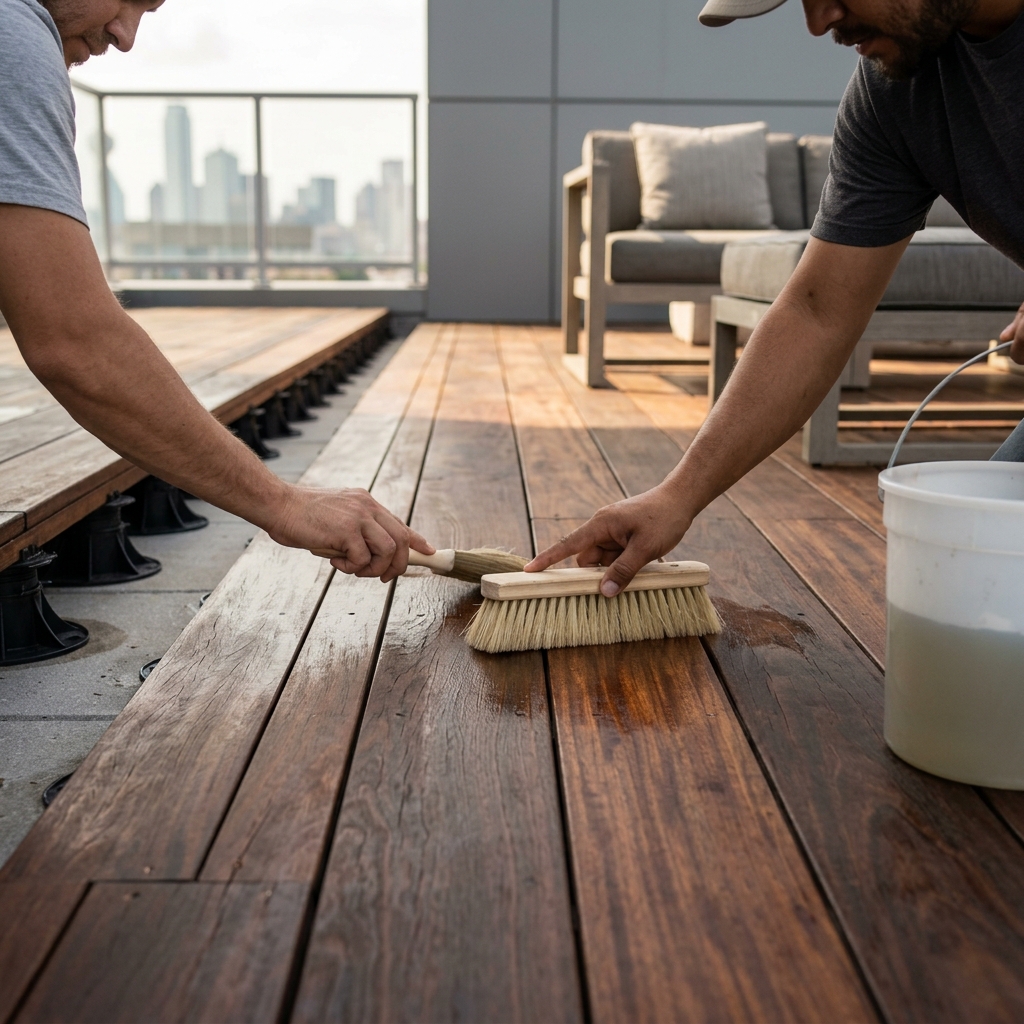
Year one, light cleaning with a soft-bristle brush and mild soap removes construction dust and allows the wood to weather naturally. Avoid pressure washing initially; the force can raise grain and damage surface character. After the first season, a single coat of clear penetrating sealer locks color and protects against UV. We recommend sealers specifically formulated for ipe, not generic deck stains.
Subsequent maintenance is minimal. Every two to three years, a light cleansing and sealer reapplication keeps the wood vibrant. This routine takes a weekend, not weeks of sanding and restaining. Many of our clients report that their ipe decks have required only two sealer applications over 10 years.
For stains or organic growth, gentle scrubbing and a mild oxalic acid cleaner restore appearance without damaging wood. We provide maintenance guidance specific to your project and climate zone, so your homeowner understands the simple protocol that keeps the terrace beautiful.
The investment in ipe pays dividends not just in structural durability, but in predictable, manageable maintenance that doesn’t undermine the beauty that inspired the specification.
Rooftop terraces in Dallas demand materials that deliver on both architectural vision and engineering reality. Ipe decking is that rare material: genuinely beautiful, genuinely durable, and genuinely low-maintenance. We’re here to help you specify it with confidence. Contact us to discuss your project, request samples, or coordinate with your design team. We’ve worked on dozens of rooftop terraces across Texas and understand the unique requirements these spaces demand.
To place orders, order samples, or talk with a live person.
Frequently Asked Questions (FAQ)
Why does standard pressure-treated lumber fail on Dallas rooftop terraces?
Standard pressure-treated lumber simply can’t handle the intense thermal cycling and UV exposure that rooftop installations demand. We’ve seen these materials cup, crack, and splinter within just a few years because they absorb and release moisture constantly in elevated exposures. Ipe’s density and stability make it far superior for these demanding applications where your terrace is exposed to direct sun, temperature swings, and zero ground-level moisture buffering.
How do pedestal deck systems simplify rooftop maintenance and longevity?
Pedestal systems create an air gap beneath your decking, which lets us manage water drainage, thermal expansion, and access to structural elements without compromising the finished surface. We recommend pedestals for rooftop projects because they eliminate pooling, reduce wood-to-membrane contact that causes deterioration, and give architects the flexibility to install utilities and perform maintenance without disturbing the deck itself. The elevated design also means your Ipe stays cooler underfoot since air circulates freely underneath.
What fire rating and building code requirements apply to Dallas rooftop decks?
We supply WUI Class A fire-rated wood products specifically engineered to meet Dallas and Texas urban building codes for elevated outdoor spaces. Our inventory includes both untreated and thermally modified options that satisfy fire safety requirements while maintaining the aesthetic your design demands. We work directly with architects to verify compliance before your project breaks ground so there’s no surprises during permitting or inspection.


