

Why Long-Length Douglas Fir and Ipe Matter for Texas Architects
When you’re designing a home that bridges interior and exterior spaces through expressive wood, the species you choose affects everything: the visual warmth of the final aesthetic, the timeline for delivery, the structural performance during Texas summers, and ultimately whether your client’s vision becomes reality or a costly compromise.
Long-length Douglas Fir and Ipe represent two fundamentally different approaches to architectural wood specification. Douglas Fir, a vertical-grain softwood native to the Pacific Northwest, delivers the warm, tight-grained character that aligns with the contemporary minimalist sensibility we see in firms like Lake|Flato. Ipe, a Brazilian hardwood, offers unmatched density and longevity for exposed decking and cladding in demanding climates.
The choice isn’t academic. Architects across Texas—from Austin’s Hill Country estates to Dallas’s modern residential developments—face real pressure: produce stunning, durable wood-forward designs on realistic timelines with materials actually available. That’s where we come in. We maintain deep inventory of both long-length Douglas Fir and premium Ipe stock, and we understand the performance requirements that distinguish architect-led projects from standard construction.
Comparing Grain Structure and Aesthetic Expression
Douglas Fir’s vertical grain creates that distinctive tight, linear appearance your clients expect from high-end contemporary homes. The grain runs parallel, minimizing cupping and warping while producing a refined, directional look when used for siding or cladding. Light plays across vertical grain differently than flat-sawn material, emphasizing the wood’s natural depth without appearing rustic.
Ipe presents a completely different visual story. Its grain is tighter and more complex, often darker (a rich chocolate-brown that weathers to silvery-gray), and the wood itself is substantially denser. Where Douglas Fir feels warm and approachable, Ipe reads as bold and sculptural. It doesn’t pretend to lightness or minimalism; it announces itself as a premium, high-performance material.
For architects designing spaces where wood is a primary visual element, this distinction matters enormously. If your design language emphasizes clean lines, pale or medium tones, and organic warmth, Douglas Fir’s vertical grain delivers that message effortlessly. If you’re specifying a statement deck or feature cladding where durability and visual weight matter as much as aesthetics, Ipe commands attention and performs accordingly.
We stock both in long lengths (up to 20+ feet for specific cuts), which lets you minimize joints on large-scale applications. Fewer joints mean cleaner sight lines and stronger visual continuity—details that separate architect-driven work from developer-standard projects.
Durability and Weather Resistance in Texas Climate
Texas presents a specific environmental challenge: intense summer heat, occasional extreme cold snaps, significant UV exposure, and humidity that swings seasonally. Douglas Fir handles this reasonably well when properly detailed. The wood is moderately durable (typical lifespan 10-15 years for exposed applications without additional treatment) and resists checking better than many softwoods. However, it requires regular maintenance—sealant refresh every 2-3 years, and careful detailing to prevent water penetration.
Ipe, by contrast, is naturally durable for 25+ years in exposed Texas conditions. Its extreme density (roughly twice as dense as Douglas Fir) resists checking, splitting, and UV degradation. It doesn’t require the same maintenance cycle, and it actually improves visually as it ages, developing a silvery patina that many architects find sophisticated.
The trade-off is straightforward: Douglas Fir demands active stewardship; Ipe demands installation expertise upfront but minimal ongoing attention. For architect-designed homes where clients expect low-maintenance performance, Ipe’s performance envelope justifies the higher initial material cost.
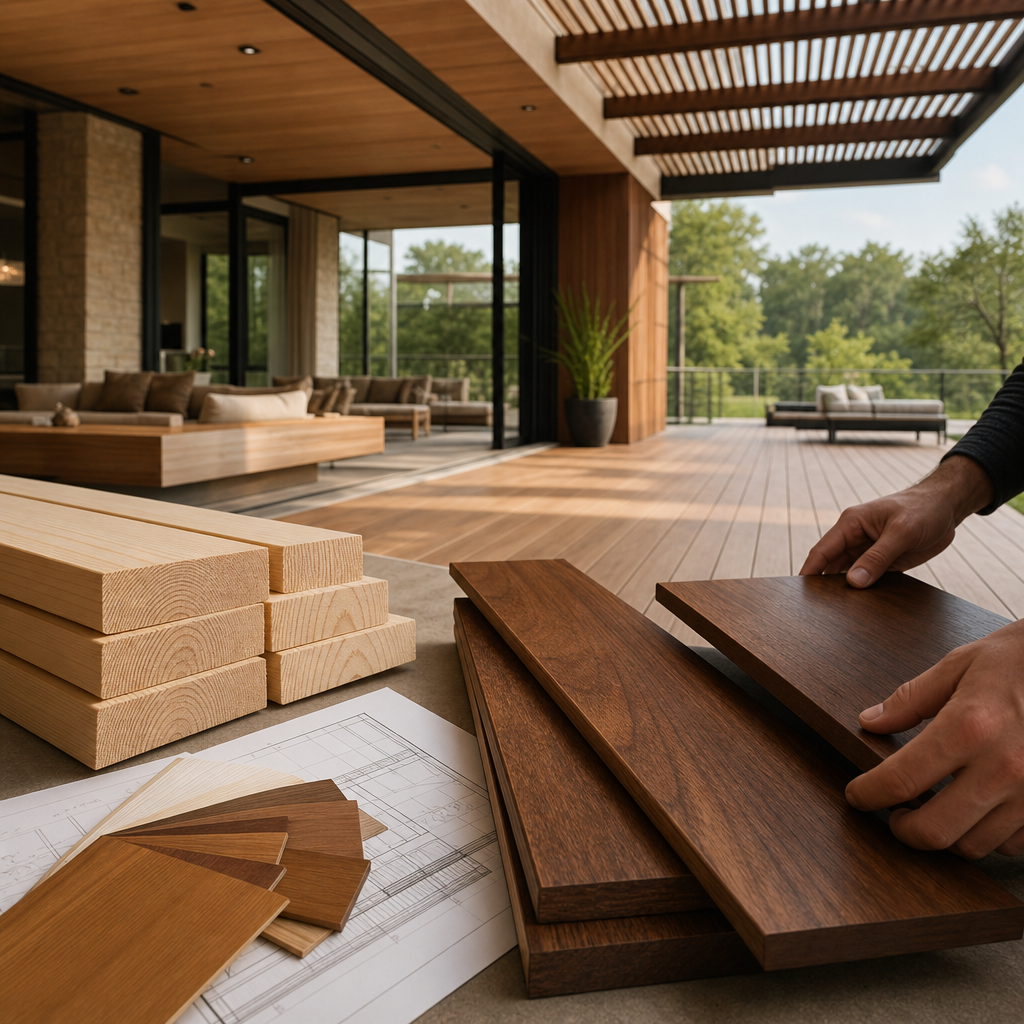
If you’re working in fire-prone regions of Texas Hill Country or designing for a client who values set-and-forget durability, Ipe’s performance advantage is material to your specification decision.
Availability and Statewide Delivery Capabilities
Here’s where many architects encounter their first real problem: specialty wood availability in Texas is inconsistent. Long-length Douglas Fir requires planning; standard suppliers stock short pieces suited to production building, not custom architecture. Ipe availability fluctuates based on import schedules and pricing volatility.
We maintain consistent inventory of long-length Douglas Fir (Vertical Grain and Clear grades) and premium Ipe stock across our Texas operation. We deliver statewide—from Austin and Hill Country locations to Dallas, Houston, San Antonio, and everywhere in between. That matters when your project timeline is tight and your specifications are specific.
Our statewide distribution means you’re not hunting suppliers or accepting material substitutions. We understand architect specifications precisely and source accordingly. When you specify 6×8 long-length vertical grain Douglas Fir for soffit applications or 2×10 Ipe decking in clear grade, we deliver what you specified, not what happened to be available.
Cost Efficiency and Project Budget Considerations
Douglas Fir costs 40-60% less than Ipe on a per-board-foot basis. For a 500-square-foot deck or large cladding application, that difference can amount to $3,000-$8,000 in material cost. For residential projects where budgets are predetermined, that math shapes decisions.
Ipe’s higher cost reflects its longevity and performance advantages. Over 20+ years, the cost-per-year of decking actually favors Ipe once you factor in maintenance labor and sealant refresh cycles. But that lifecycle calculation only applies if your client understands and accepts the upfront investment.
We work with architects to right-size material choices to project budgets and client expectations. If a client has genuine budget constraints, Douglas Fir delivers aesthetic quality and reasonable durability at a more accessible price point. If the design emphasizes durability and low maintenance, Ipe’s premium cost is justified and communicable to clients as part of the overall value proposition.
Our role is transparent: specify the material that fits the project’s actual needs, not the one that sounds better.
Sustainability and Certification Standards
Both materials offer FSC-certified sourcing (important for architects working with environmentally conscious clients). Douglas Fir harvests from responsibly managed Pacific Northwest forests and regenerates quickly. Ipe is harvested from Brazilian rainforests with documented sustainable management practices—though this remains a conversation point with clients focused on carbon footprint.
We stock FSC-certified long-length Douglas Fir, meeting the certification requirements for LEED-specified projects. Our Ipe inventory is sourced from suppliers with proven sustainable forestry documentation.
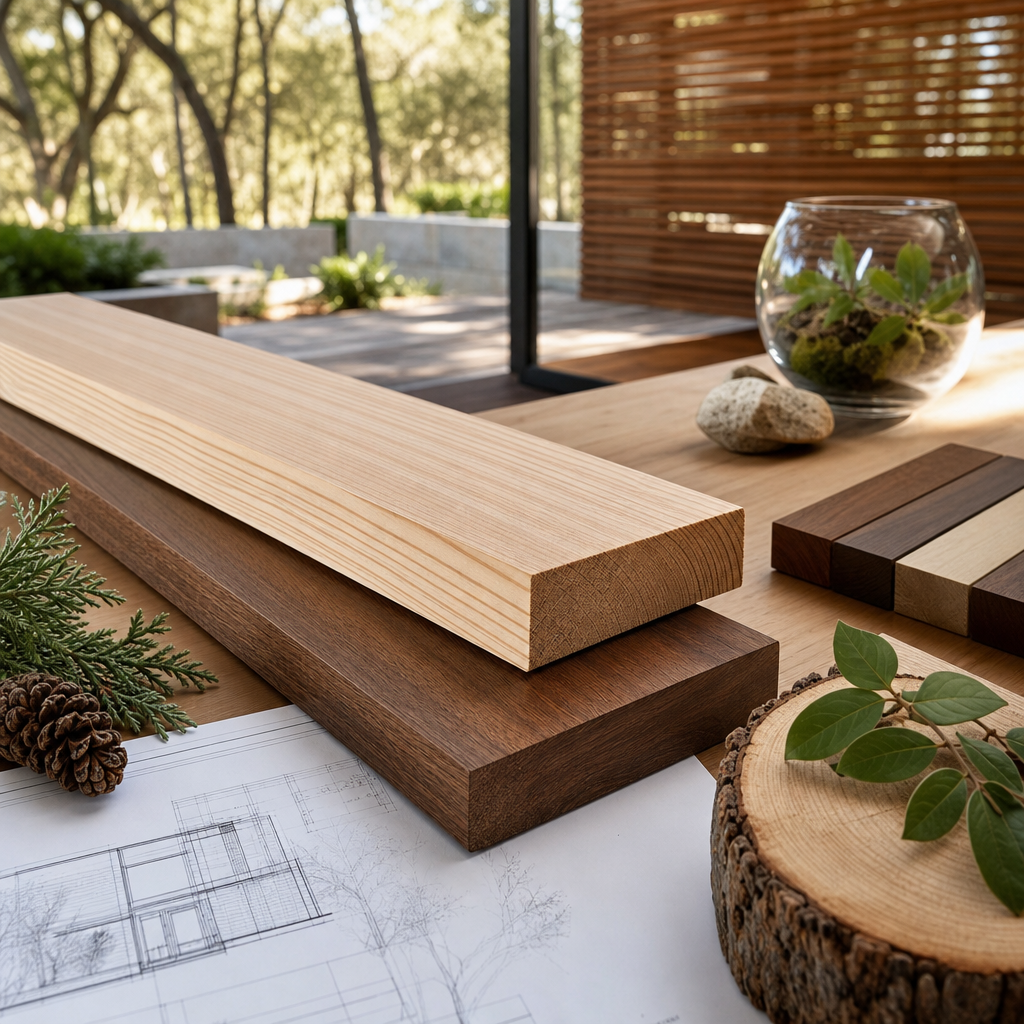
If your project requires thermally modified wood for enhanced stability and lower environmental impact, we also supply Thermally Modified Ash, Pine, and Poplar—material classes that deliver dimensional stability and durability comparable to natural hardwoods, but with simpler supply chains and lower cost.
Fire Rating Performance for Class A Requirements
Texas fire codes, particularly in WUI (Wildland-Urban Interface) zones like much of Hill Country, require Class A fire-rated wood products for exterior applications including siding, decking, and fencing. This is non-negotiable and often a surprise to architects designing in these regions.
Neither untreated Douglas Fir nor untreated Ipe meet Class A requirements. We supply fire-rated versions of both species—material that’s been pressure-treated or chemically modified to achieve Class A performance without compromising the aesthetic quality you’ve designed. The treatment process is transparent to your visual intent; the wood looks and feels identical to untreated material.
For projects in fire-rated zones, our WUI-approved inventory ensures you’re specifying materials that pass inspection and deliver the architectural expression your design demands.
Installation Requirements and Architect Specifications
Douglas Fir, being softer and lighter, is faster and less expensive to install. Standard fastening, conventional framing details, and straightforward on-site handling make it accessible to typical construction teams. Many builders are comfortable with Douglas Fir installation; fewer are expert with Ipe.
Ipe’s density requires specific installation protocols: pre-drilling to prevent splitting, stainless steel or hot-dipped fasteners (regular fasteners corrode in Ipe), and contractor familiarity with the material’s working properties. Installation labor runs 25-40% higher than Douglas Fir. Your general contractor needs proven experience; otherwise, costs and timeline suffer.
We provide detailed installation specifications with every Ipe order and can recommend contractors with documented Ipe experience across Texas. That guidance prevents costly on-site issues and protects the material investment.
Our Statewide Logistics and Inventory Advantage
We don’t broker materials; we stock them. That distinction matters operationally. When your project hits a timeline acceleration or you need material substitutions on short notice, inventory availability determines whether you adapt your design or your delivery slips.
Our distribution across Texas—with service areas spanning Austin, Dallas, Houston, San Antonio, Hill Country, and beyond—means local availability and realistic delivery windows. We manufacture long-length Douglas Fir to custom specifications and maintain deep Ipe stock from our supply partnerships.
For architect-driven projects where material quality and availability directly impact project reputation, we’re a statewide resource, not a speculative supplier.
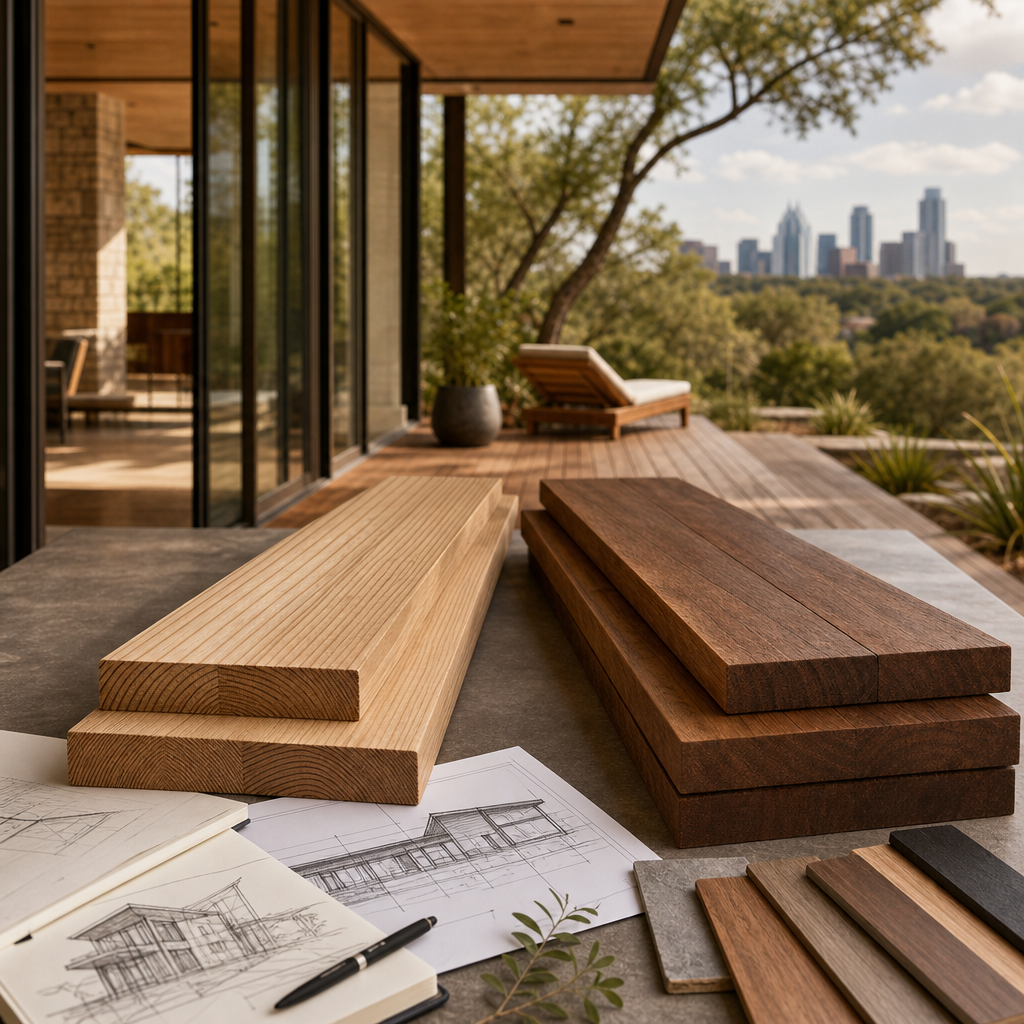
Why We Win for Discerning Texas Architects
You’re designing homes where wood is visual and structural language. Every aesthetic decision reflects intentional specification. That demands a supplier who understands architecture, maintains genuine inventory depth, and provides transparent guidance on performance trade-offs.
We do all three. We’re not a commodity lumber yard or a regional broker hunting materials. We’re a specialty supplier built explicitly for architect specifications—vertical grain Douglas Fir, premium Ipe, thermally modified alternatives, fire-rated solutions, and FSC-certified options. We stock long lengths to minimize joints. We deliver across Texas on architect timelines. We recommend material choices based on your design intent and budget reality, not our profit margin.
When you specify long-length Douglas Fir or Ipe with us, you’re working with a partner who delivers exactly what you designed, when you need it, with installation guidance that protects your reputation. That’s why Texas architects building distinctive homes turn to us.
Contact us to discuss your project specifications. We’ll help you right-size material choices to design intent, budget, and performance requirements.
For further reading: Accoya decking.
To place orders, order samples, or talk with a live person.
Frequently Asked Questions (FAQ)
What’s the best choice between long-length Douglas Fir and Ipe for my Texas residential project?
We recommend long-length Douglas Fir when your design emphasizes warm grain expression and natural character, especially for vertical grain applications where architects want that linear aesthetic. Ipe delivers superior durability and weather resistance if your project faces intense sun exposure or moisture challenges, though it requires specialized installation equipment. The right choice depends on whether your priority is architectural expression or maximum longevity in our Texas climate.
Can you supply both materials with the specifications my architectural plans require?
We stock premium long-length Douglas Fir in clear and vertical grain profiles, plus a full hardwood inventory including Ipe, Cumaru, Garapa, and Massaranduba in siding, decking, cladding, and timber sizes. We also carry FSC-certified options and WUI Class A fire-rated products that meet stringent Austin and statewide codes. Our team works directly from your specifications to ensure we source exactly what your designs call for, whether that’s specific grain patterns, lengths, or fire ratings.
Do you deliver throughout Texas, and how quickly can you fulfill custom orders?
We serve all 50 states with statewide Texas delivery covering Austin, Dallas, Houston, San Antonio, Hill Country, and every region in between. Our combination of in-stock inventory and direct manufacturing relationships allows us to turn around custom orders efficiently without compromising on material quality or your project timeline.


