

Why Architects Choose Walnut for Statement Wall Design
Walnut commands attention in contemporary design for reasons that go beyond aesthetics. Its deep, chocolate-brown tones create visual warmth without feeling heavy, making it ideal for open-concept spaces where natural light plays a starring role. For architects designing modern homes across Austin, Dallas, and Hill Country, walnut bridges the gap between raw material authenticity and refined elegance.
The wood speaks to a design philosophy that values honest materials. When a homeowner steps into a room anchored by a walnut accent wall, they’re experiencing architecture that doesn’t hide its materials behind finishes. That transparency resonates with the contemporary ethos that defines Texas high-end residential work. Walnut also photographs exceptionally well, which matters for architects building their portfolio and reputation.
From a practical standpoint, walnut’s grain structure is forgiving. Vertical grain patterns, movement, and natural color variation feel intentional rather than flawed, allowing designers to embrace the material’s authentic character without worrying about perfect uniformity.
Next step: If walnut aligns with your project vision, understanding where it comes from and how it performs in Texas climates becomes critical.
Understanding Walnut’s Aesthetic and Performance Benefits
Walnut’s color palette shifts subtly based on light exposure and finishes applied. Fresh-milled walnut runs lighter, then deepens over time as UV rays penetrate the surface. This natural evolution creates a living quality that homeowners appreciate, though architects must educate clients about this reality upfront.
The wood’s density runs between 600-900 janka, depending on species and origin. American black walnut, the most common choice for interior accent walls, offers stability without the brittleness that plagues softer woods. It machines cleanly, accepts stains beautifully, and holds fasteners securely during installation.
Durability depends on finish selection and location. Interior accent walls benefit from water-resistant topcoats and UV-protective sealers. In humid Texas climates, particularly near water features like Lake Travis or Horseshoe Bay, moisture control becomes non-negotiable. Walnut performs well indoors with proper protection, though exterior applications demand more aggressive interventions than the wood naturally provides.
Movement is manageable. Walnut’s radial shrinkage averages 5.2%, meaning properly dried and finished material stays relatively stable across seasonal humidity swings. Still, architects should specify thicker stock (5/4 or 8/4) for accent walls to minimize visible cupping or warping.
Actionable insight: Partner with suppliers who can verify kiln-dry specifications and provide moisture content certificates before delivery.
The Challenge of Sourcing Premium Walnut in Texas
Finding truly premium walnut in Texas presents real friction. Most commercial lumber yards stock construction-grade material that works fine for framing but falls short for visible accent walls. They prioritize inventory turnover over quality curation, leaving architects to hunt for specialty suppliers.
Pricing volatility adds another layer. Walnut availability fluctuates seasonally and annually based on harvest conditions in the Midwest and appalachian regions where it grows. Texas doesn’t produce significant walnut stock, meaning all premium material requires out-of-state sourcing and long lead times.
Then there’s the consistency problem. Not all walnut sold as “premium” meets the standards architects expect. Clear grades vary, with some suppliers accepting mineral streaks, sapwood blending, or color inconsistency that sophisticated clients notice immediately. Building strong relationships with suppliers who maintain rigorous grading standards becomes essential.
Custom projects often demand matched grain sets, vertical grain orientation, or specific color ranges. Finding inventory that satisfies these parameters usually requires advance planning and direct broker relationships rather than shopping standard retail stock.
Our Curated Selection of Walnut and Premium Wood Products
We’ve built our business around solving exactly this problem. Our inventory includes premium walnut in multiple grades and thicknesses, sourced from mills that understand architect-level specifications. We maintain stocks of clear walnut suitable for accent wall applications, and we work directly with mills to source special orders for matched sets or specific grain patterns.
Beyond walnut, our selection encompasses the full spectrum of hardwoods that serve contemporary Texas design. Our inventory includes Ipe, Garapa, Cumaru, Massaranduba, and Tigerwood for projects where tropical hardwoods align with the design vision. Each carries distinct color and grain characteristics that create distinctly different moods in space.
We also stock FSC-certified options for architects prioritizing sustainability without aesthetic compromise. Certification doesn’t change the material’s performance or beauty, but it satisfies clients who want transparency about sourcing practices.
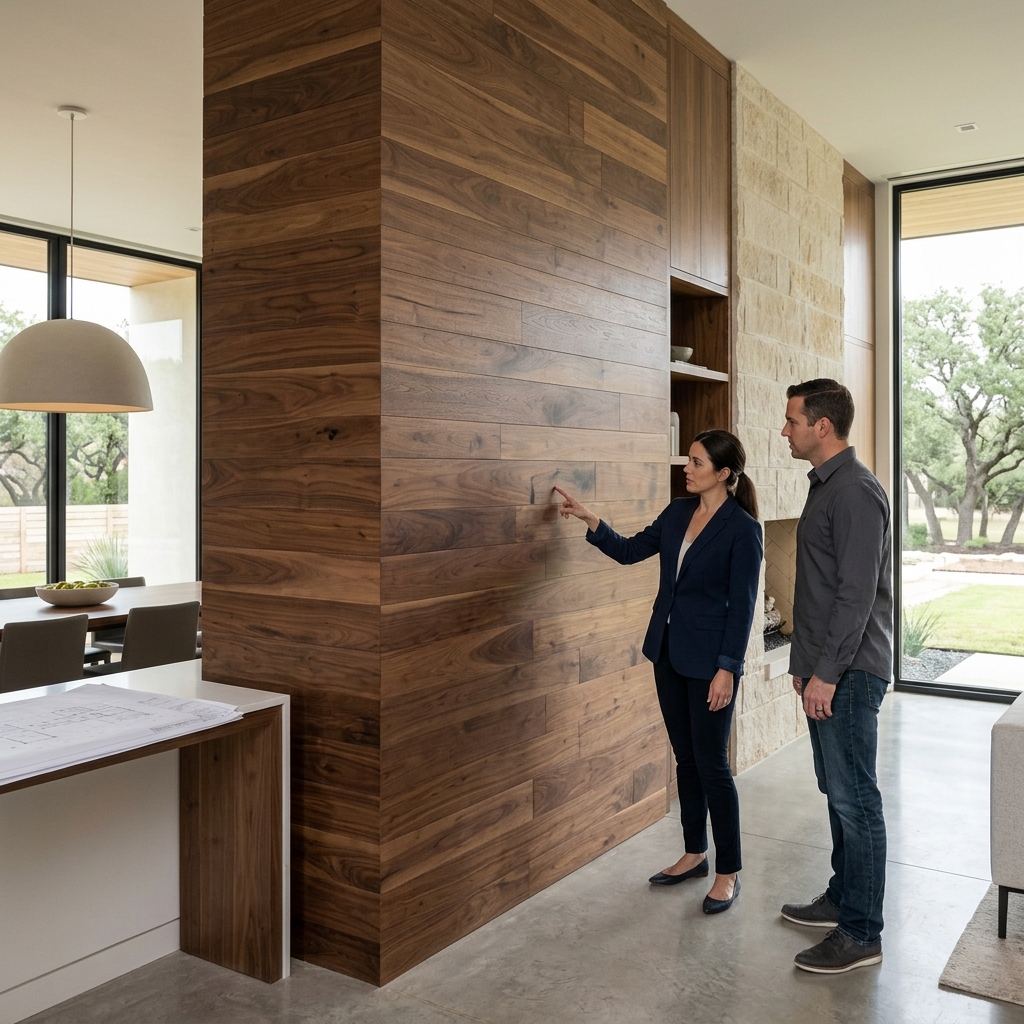
Our role as both supplier and advisor means we help architects navigate tradeoffs early. If walnut’s availability or budget doesn’t align with project timelines, we’ll recommend alternatives that deliver similar aesthetic impact. That honest guidance builds trust and prevents mid-project surprises.
What to do next: Reach out with your specifications, timelines, and budget. We’ll pull available inventory and discuss custom sourcing options.
Alternative Hardwoods: When Walnut Meets Your Project Needs
Sometimes walnut isn’t the right answer. Budget constraints, availability windows, or design evolution may point toward alternatives that deliver similar warmth and sophistication.
Cumaru and Garapa offer comparable color depth with Brazilian heritage and natural durability. They’re harder than walnut, which matters for high-traffic accent walls or applications where scratch resistance matters. Pricing typically sits slightly lower than premium walnut, and they’re often available with shorter lead times.
Tigerwood delivers dramatic striping and golden undertones that feel contemporary rather than traditional. It’s denser than walnut but machines well and accepts finishes that emphasize its distinctive grain pattern. Design-forward architects often specify tigerwood when they want walnut’s warmth plus visual drama.
For projects emphasizing minimalism and lighter palettes, we can source premium ash and other domestic hardwoods that provide structure without walnut’s visual weight. These work beautifully in spaces with abundant natural light where architects want accent walls to recede slightly while still anchoring the design.
The key principle: every hardwood we recommend has passed architect scrutiny and performed in actual Texas homes. We’re not suggesting alternatives to maximize margin; we’re offering options that solve real design problems.
Thermally Modified Wood Options for Enhanced Durability
If your project calls for walnut-adjacent aesthetics with enhanced performance characteristics, thermally modified wood options deserve serious consideration.
Thermally modified ash, pine, and poplar deliver deep, sophisticated color through heat treatment rather than natural pigmentation. The process drives out moisture and tightens grain structure, creating wood that outperforms untreated material in challenging climates. For Texas homes experiencing temperature swings and humidity variations, this matters.
Thermally modified materials accept stains beautifully, allowing architects to customize color while maintaining the authenticity of real wood. They’re lighter in weight than many hardwoods, simplifying installation on non-structural accent walls. They also resist mold and rot better than untreated softwoods, which extends lifespan in humid environments.
The aesthetic range spans from deep chocolate tones that rival walnut to lighter, warm grays that feel Scandinavian and contemporary. Cost-wise, thermally modified material typically undercuts premium walnut while delivering comparable visual sophistication and superior durability.
We work with leading thermally modified suppliers including Thermally Modified Wood Siding specialists to source material that meets architect specifications. The key advantage: consistent color, predictable performance, and availability that walnut often can’t match.
Integrating Walnut Accent Walls with Contemporary Architecture
Successful walnut accent walls don’t exist in isolation. They need to integrate with the broader architectural language of the space.
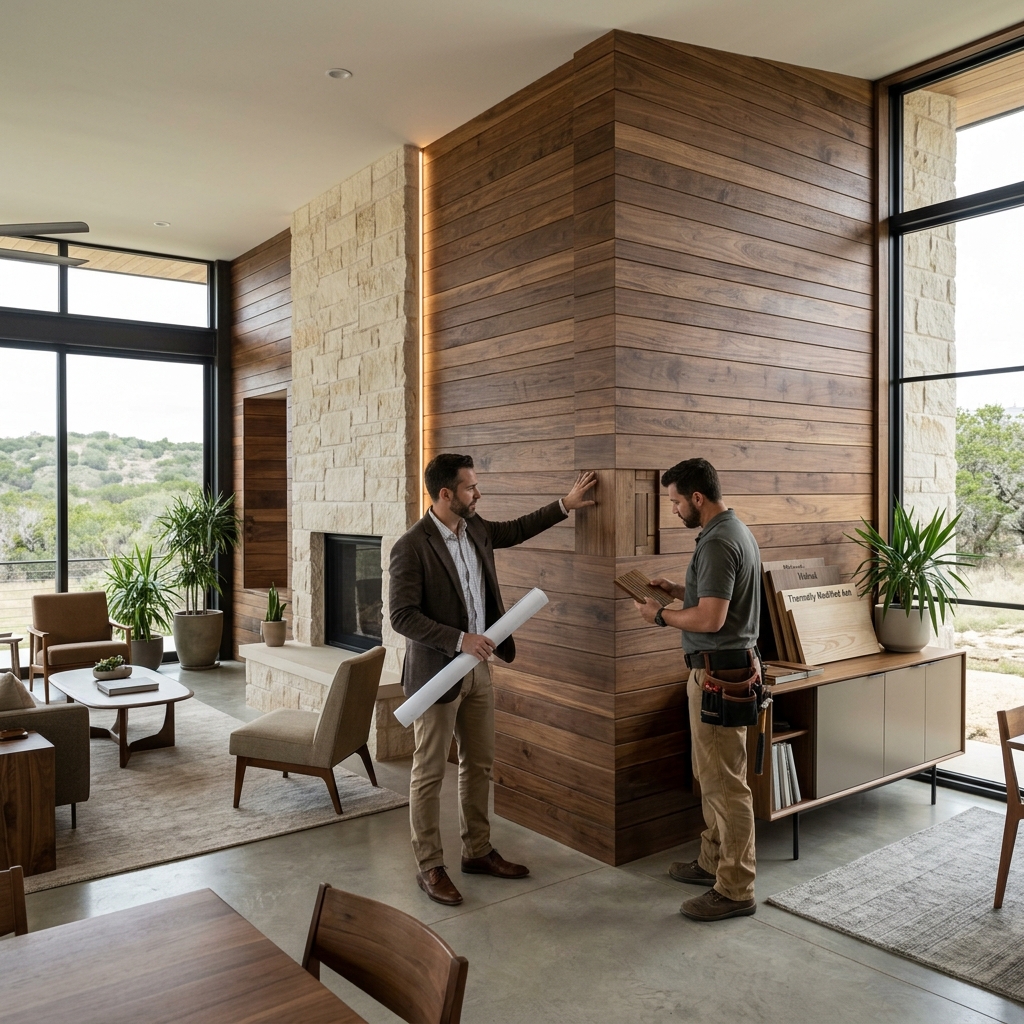
In contemporary Texas homes, walnut works best when paired with materials that echo its warmth: white oak millwork, light-neutral walls, polished concrete floors, or white plaster ceilings. The contrast between the walnut’s depth and surrounding lightness creates visual poetry without clashing.
Glass integration matters enormously. Architects like Lake|Flato have mastered the art of positioning walnut walls to capture golden hour light, creating subtle movement across the grain as sun angles shift throughout the day. This dynamic quality elevates walnut from static backdrop to living design element.
Scale and proportion require careful consideration. A full wall of walnut in a residential space can feel overwhelming. Partial walls, feature wall sections, or walnut accents combined with complementary materials usually deliver more sophisticated results than full coverage.
Material sequencing shapes perception. Walnut used as a primary accent in an entry sets a warmer tone for the entire home compared to walnut reserved for a secondary bedroom or office. Architects must think about the journey through space and how walnut placement guides that experience.
Design Strategies for Maximizing Impact and Light
Walnut’s beauty depends on light quality. North-facing walls with limited direct sun can feel dead and flat, while south and west-facing walls come alive as sunlight activates the grain.
Vertical grain orientation amplifies the effect. Running grain vertically elongates sight lines and emphasizes ceiling height, making spaces feel more generous. Horizontal grain patterns feel grounded and calm but require stronger lighting to avoid appearing dull.
Finish selection shapes light interaction dramatically. Matte or satin finishes feel contemporary and diffuse light softly, while satin-to-semi-gloss creates subtle reflectivity that catches light without appearing plastic. We recommend avoiding high-gloss finishes on accent walls unless the design explicitly calls for architectural drama.
Lighting design should account for walnut placement. Uplighting at wall bases, integrated linear LED systems, or careful window positioning ensures the material reads at its best throughout the day. An architect who designs walnut walls without considering lighting strategy will see their vision underperform.
Color surrounding the walnut amplifies or dampens impact. Crisp white walls beside walnut create maximum contrast and drama. Warm creams or light grays soften the transition and feel more restful. Neither approach is superior; the choice depends on the emotional tone the architecture aims for.
Actionable step: Develop detailed lighting plans and view material samples at different times of day before finalizing specifications.
Installation Considerations for High-End Applications
Getting walnut accent walls right during construction requires precision and forethought.
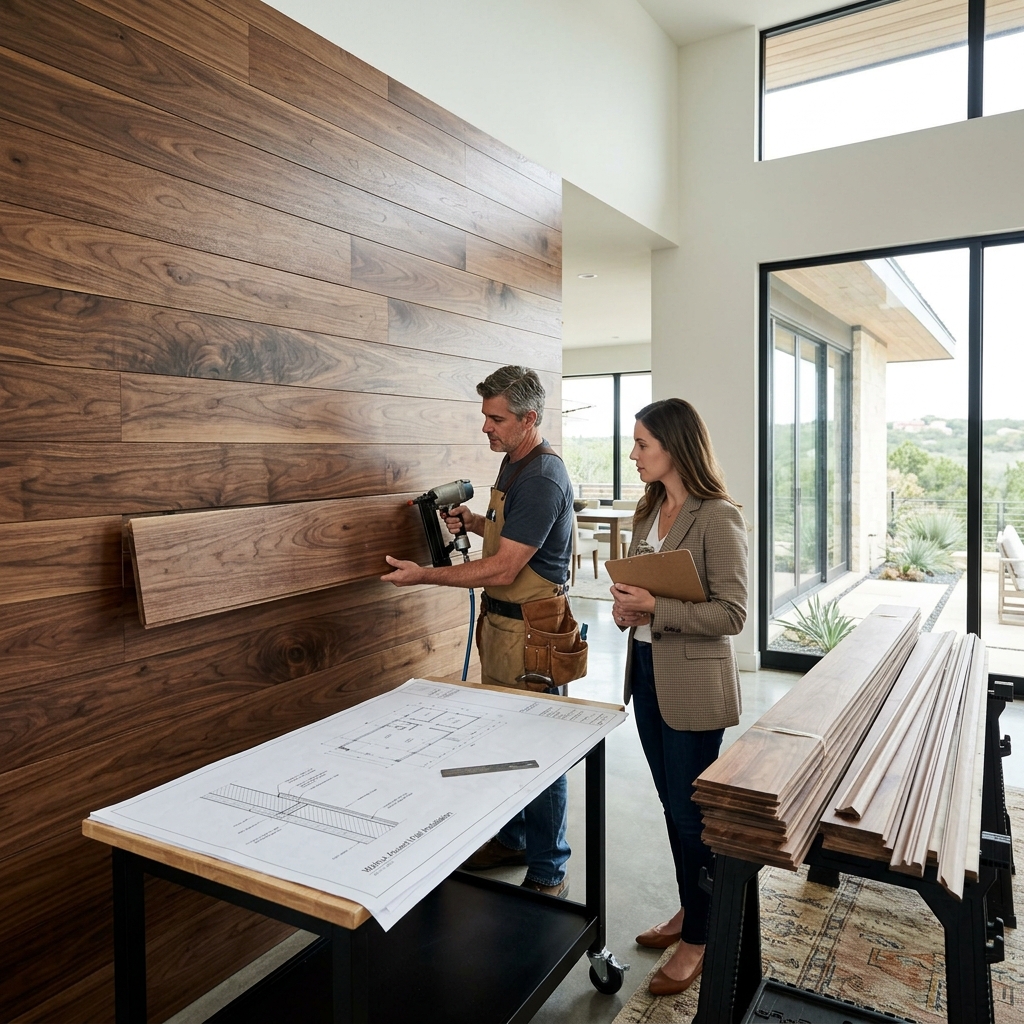
Substrate preparation is foundational. The wall must be flat, properly framed, and adequately braced to prevent racking. Any underlying movement will translate to visible gaps or misalignment at joints and corners. We recommend oversizing fasteners and using stainless steel or coated hardware to prevent rust staining on walnut’s light interior color.
Moisture barriers must sit between framing and walnut. Texas humidity demands this protection, especially in kitchens, bathrooms, or near exterior walls. Without proper moisture management, walnut will absorb ambient humidity and move, creating visible gaps and compromising finishes.
Acclimation periods matter. Walnut material should sit on-site for 7-14 days before installation, allowing it to reach equilibrium with the space’s humidity. Rushing installation invites movement-related problems weeks or months into the project’s life.
Finishing happens best in controlled environments. On-site staining and sealing introduces variables like dust contamination, humidity fluctuations, and temperature swings that affect quality. Pre-finishing at the mill or a controlled facility produces superior results, though this requires longer lead times and clear specification communication.
Joinery and fastening strategies should anticipate wood movement. Traditional woodworking techniques like floating panels or slotted fastener holes allow the material to move seasonally while maintaining visual integrity. This matters for architectural authenticity and long-term performance.
Fire-Rated Solutions Without Compromising Elegance
Texas building codes and increasing fire risk in Hill Country properties make fire-rated materials increasingly relevant. The challenge: most fire-rated coatings compromise the aesthetic walnut architects love.
We supply WUI Class A fire-rated wood products that maintain visual character while meeting stringent fire performance requirements. These materials have undergone rigorous testing and maintain certifications that satisfy building officials and insurance carriers.
The aesthetic tradeoff is minimal compared to earlier generations of fire-rated treatments. Modern intumescent coatings don’t necessarily obscure grain or feel like plastic finishes. Selecting material from suppliers who prioritize both fire performance and visual quality makes a real difference.
For projects in high-fire-risk zones like Dripping Springs, Driftwood, or Spicewood, discussing fire-rated options early in design prevents painful mid-project changes. Building your fire strategy into the architectural narrative rather than treating it as a compliance afterthought produces better outcomes aesthetically and functionally.
Some architects specify non-wood accent walls in fire-prone areas, choosing metal or mineral composites instead. That’s a valid approach, but it eliminates the warmth and material authenticity that define contemporary Texas architecture. Fire-rated hardwoods offer a middle path that doesn’t sacrifice design vision for safety.
Why Texas Architects Partner With Us for Wood Selection
We’re not a generic lumber yard scaling generic products. We understand the aesthetic language of contemporary Texas architecture because we work with architects who speak it fluently.
Our inventory is curated, not shelf-stabilized. We maintain stock of premium materials because we know architects will need them, and we source special orders because we recognize when standard inventory doesn’t serve a particular vision.
Our team includes people who can discuss wood selection in terms architects understand: grain orientation, color development, seasonal movement, moisture behavior, integration with other materials. We speak the language of design intention, not just product specs and pricing.
We’ve installed our material in homes across Austin, Dallas, San Antonio, Hill Country, and beyond. We understand local humidity patterns, building practices, and the specific challenges of wood installation in Texas climates. That experience translates to realistic advice that prevents costly mistakes.
Finally, we stand behind our sourcing. When we recommend walnut, we’ve verified quality before it ships. When we suggest alternatives, we’ve tested them in actual applications and can speak to real-world performance. That accountability matters when architects stake their reputation on material selection.
Moving Forward: Bringing Your Walnut Wall Vision to Life
The path from design concept to installed reality requires clear communication and realistic planning. Start by reaching out with your project scope, timeline, and aesthetic vision. We’ll discuss walnut’s viability, explore alternatives if needed, and develop a sourcing and installation strategy that sets you up for success.
Bring material samples to your space and observe them at different times of day. The walnut you love in the showroom might feel different under your specific light conditions, and we want that discovery to happen before orders are placed.
If lead times are tight or availability is constrained, let’s discuss thermally modified alternatives or complementary hardwoods that can deliver similar aesthetic impact on your schedule. Flexibility usually produces better outcomes than forcing walnut into unrealistic timelines.
We’re here to be your technical partner and material curator. Whether you’re designing a signature home in Horseshoe Bay, a contemporary urban residence in Downtown Austin, or a sophisticated retreat in the Texas Hill Country, we’ll help you source and install wood materials that honor your architectural vision and perform beautifully for decades.
Reach out today, and let’s talk through your walnut accent wall project. We’ll make sure every detail, from initial specification through final installation, reflects the care and expertise your design deserves.
To place orders, order samples, or talk with a live person.
Frequently Asked Questions (FAQ)
What makes walnut wood a preferred choice for luxury accent walls in modern Texas homes?
We select walnut for high-end projects because of its distinctive grain patterns, rich chocolate tones, and sophisticated appearance that complements contemporary design. Walnut’s natural durability and stability make it ideal for interior accent walls, and it works beautifully with the expansive glass and clean lines that characterize modern Texas architecture. Its versatility allows architects to create warm, inviting spaces while maintaining the refined aesthetic their designs demand.
Do you stock thermally modified wood alternatives if solid walnut doesn’t fit a project’s performance or budget requirements?
We absolutely carry thermally modified options including Thermally Modified Ash and Thermally Modified Poplar that deliver similar visual warmth and sophistication to walnut while offering enhanced durability and dimensional stability. These alternatives perform exceptionally well in Texas’s climate conditions and provide excellent fire-rated solutions when needed for WUI Class A compliance. We can help you evaluate which material best serves your specific project parameters without sacrificing the luxury aesthetic you’re pursuing.
How do we ensure your walnut accent walls meet both fire code requirements and design intent?
We supply WUI Class A fire-rated wood products for cladding and siding applications, so you can achieve the elegant walnut look while satisfying building codes in fire-prone areas. Our team works directly with architects to source materials that balance performance specifications with your vision for the space. We’ll help you navigate installation requirements and finishes that maintain both safety compliance and the sophisticated appearance your custom home deserves.


