

Why Central Texas Climate Demands Specialized Cedar Care
Central Texas brings its own distinct challenges to wood cladding. The intense summer heat, seasonal humidity swings, and occasional freeze-thaw cycles demand a proactive maintenance approach for premium cedar installations. If you’ve invested in SiooX treated vertical grain cedar for your contemporary home or commercial project, understanding how to protect that investment ensures it stays beautiful and performs as intended for decades.
We work with architects and builders across Texas Hill Country and the greater Austin area who choose vertical grain cedar specifically for its refined aesthetic and durability. SiooX treatment represents a significant advancement in wood preservation, but like any natural material in a demanding climate, it benefits from informed, season-specific care.
Central Texas humidity and temperature extremes create conditions that accelerate weathering in untreated wood. Summer temperatures regularly exceed 95 degrees, and the dry season can shift rapidly into moisture-laden spring months. This cycling stresses wood fibers, leading to checking, warping, and color shift if the material isn’t properly protected.
Vertical grain cedar is inherently more stable than flat grain alternatives, but even superior wood needs protection from UV degradation and moisture penetration. The region’s occasional freeze-thaw events, though less severe than northern climates, still pose risks to exposed grain ends and joints where water can accumulate.
SiooX treatment addresses these vulnerabilities by creating a durable protective layer, but that layer requires maintenance. Unlike composite cladding, real wood needs periodic attention to sustain its performance and appearance. Architects working in the contemporary wood-forward aesthetic know this investment upfront and plan accordingly.
Actionable takeaway: Schedule your first inspection 6-12 months after installation to establish a baseline condition and identify any areas needing early intervention.
Understanding SiooX Treatment Technology and Its Benefits
SiooX is a proprietary wood treatment system that combines resin infusion with advanced surface protection. The process hardens the wood surface while maintaining its breathability, allowing moisture to regulate naturally without trapping water inside the fiber structure. This is fundamentally different from traditional paint or varnish, which can seal moisture in and cause delamination.
The treatment resists UV fading far more effectively than uncoated cedar, preserving the wood’s natural color longer. It also creates a harder surface that better resists scratches, weathering, and microbial growth. For high-end residential and commercial applications in Central Texas, these qualities justify the investment.
However, SiooX treatment is not permanent. Environmental exposure gradually breaks down the protective layer. In Texas’s intense sun and variable humidity, you can expect the surface protection to require refreshing every 4-7 years, depending on exposure direction and local microclimate conditions. South and west-facing surfaces typically need attention sooner than north-facing walls.
Understanding these expectations helps you plan maintenance budgets and understand why your cedar cladding might show subtle color shift or need refinishing sooner than you’d anticipate. It’s not a product failure; it’s the natural lifecycle of a premium material in a challenging climate.
Seasonal Maintenance Schedule for Texas Properties
Spring (March-May): After winter, inspect for any damage from freeze-thaw cycles. Clean surfaces with gentle pressure washing (under 1500 PSI) to remove accumulated pollen and dust. Check joints, flashings, and transitions where water can pool. This is also the ideal season for any necessary repairs or re-coating work before summer heat arrives.
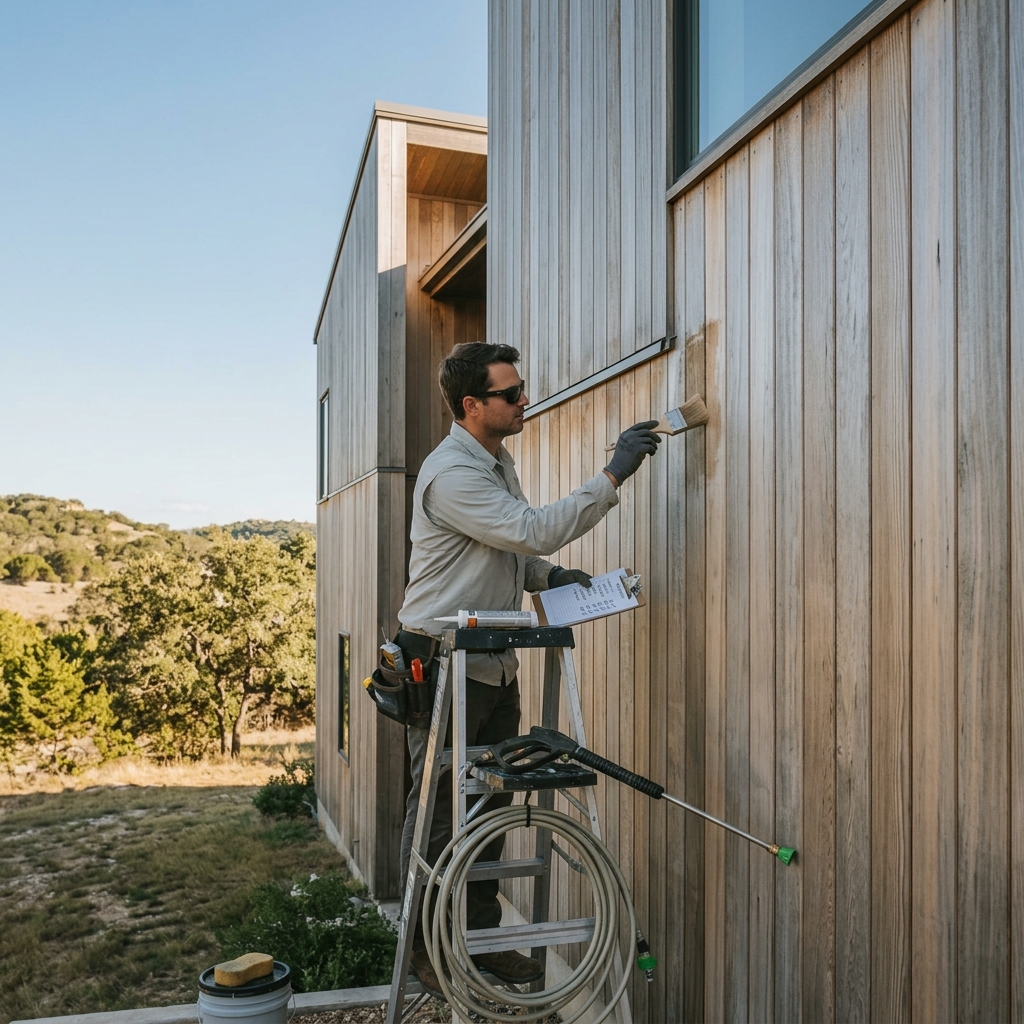
Summer (June-August): Focus on monitoring for UV damage and color shift on south and west exposures. While the intense sun can fade the finish, it also keeps surfaces dry. Schedule inspections rather than maintenance during peak heat. Avoid power washing in direct sunlight, which can damage the wood fibers.
Fall (September-November): As humidity decreases, inspect for any checking or cracking that may have developed. This season offers ideal conditions for refinishing or retreating cedar surfaces. Temperatures and humidity levels support proper curing of protective coatings. Begin planning any spring maintenance by documenting problem areas.
Winter (December-February): Monitor freeze-thaw conditions, particularly on northern exposures where frost persists longer. Keep gutters and drainage clear to prevent water from pooling against your cladding. This low-activity season is ideal for planning the following year’s maintenance calendar.
Cleaning and Inspecting Your Cedar Surfaces
Proper cleaning removes contaminants without damaging the wood or the protective finish. Begin with visual inspection from grade level, looking for color variations, surface checking, or mold growth. Many architectural details on contemporary homes make visual inspection important; spotting problems early prevents larger repairs.
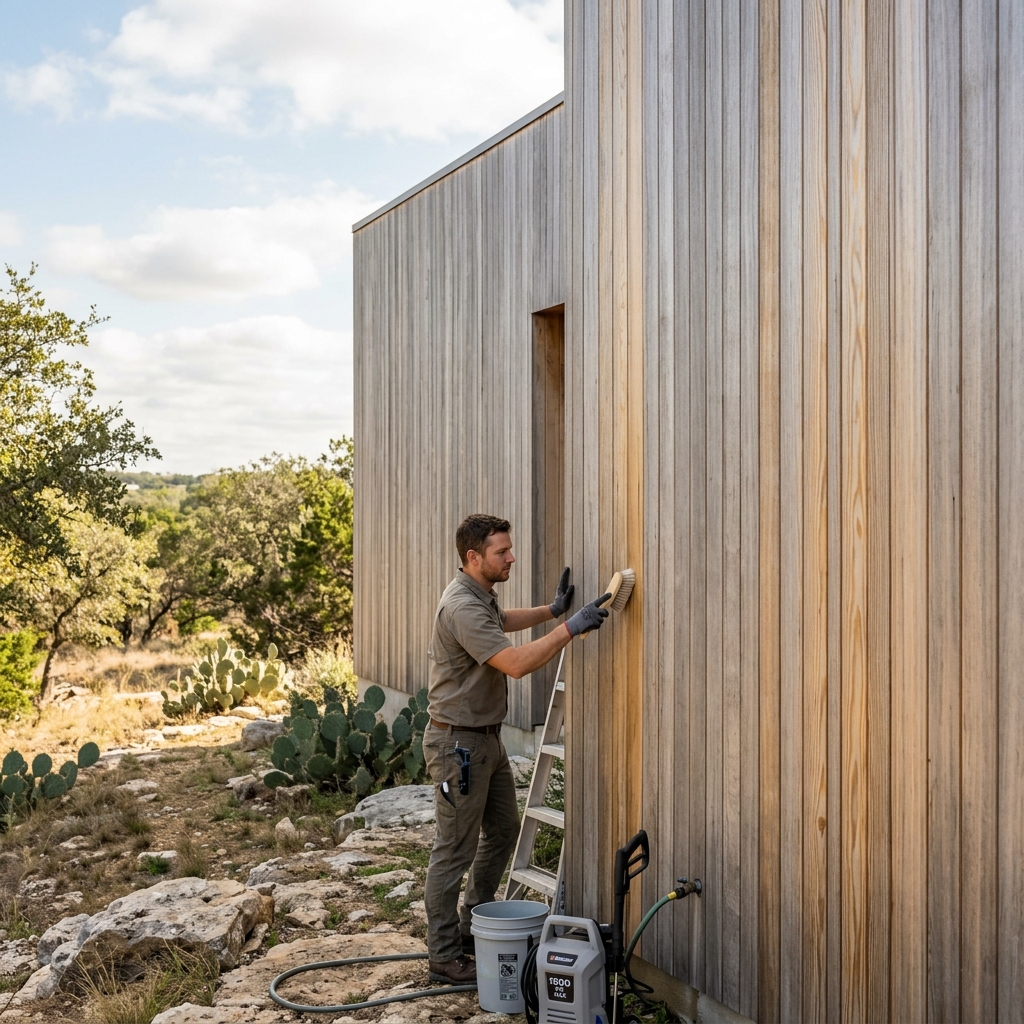
For cleaning, use a soft-bristle brush with water-based solutions or specialized wood cleaner products. Pressure washing can work but requires expertise; excessive pressure damages wood fibers and can strip treatment. If using pressure equipment, stay below 1500 PSI and maintain a 12-inch distance from the surface. Never use bleach-based cleaners, which can cause uneven color changes and damage the wood.
Document your inspection findings photographically if possible. This creates a record of condition over time and helps inform maintenance decisions. If you notice areas where the finish is becoming transparent or color is fading noticeably, these are signals that retreat is approaching.
Next step: Create a simple spreadsheet tracking inspection date, location, conditions noted, and any work completed. This becomes invaluable when planning future refinishing schedules.
Protecting Cedar from Central Texas Heat and Humidity
The intense Texas sun generates heat that can accelerate finish degradation, but moisture is equally damaging. Unlike northern climates with extended dry winters, Central Texas can experience rapid humidity swings even in summer as thunderstorms roll through. These cycles stress wood fibers and can weaken the bond between protective coatings and the wood surface.
Ensure proper drainage around your cedar cladding. Water should move away from the wall, not collect at the base. Contemporary home designs often incorporate minimal overhangs, which means cladding receives direct sun and rain exposure. Working with specialists who understand wood cladding during design ensures adequate protection at transitions and penetrations.
Ventilation behind cladding is critical. If your installation includes air space behind the cedar, ensure vents aren’t blocked by construction debris or landscape features. This gap allows moisture behind the cladding to dry, preventing rot development that would be invisible until serious damage occurs.
If your project includes hardwood species like Ipe or Cumaru, note that these materials respond differently to Central Texas conditions than cedar. Tropical hardwoods expand and contract less dramatically, but they still benefit from similar protection principles.
Preventing Common Damage in Hill Country Environments
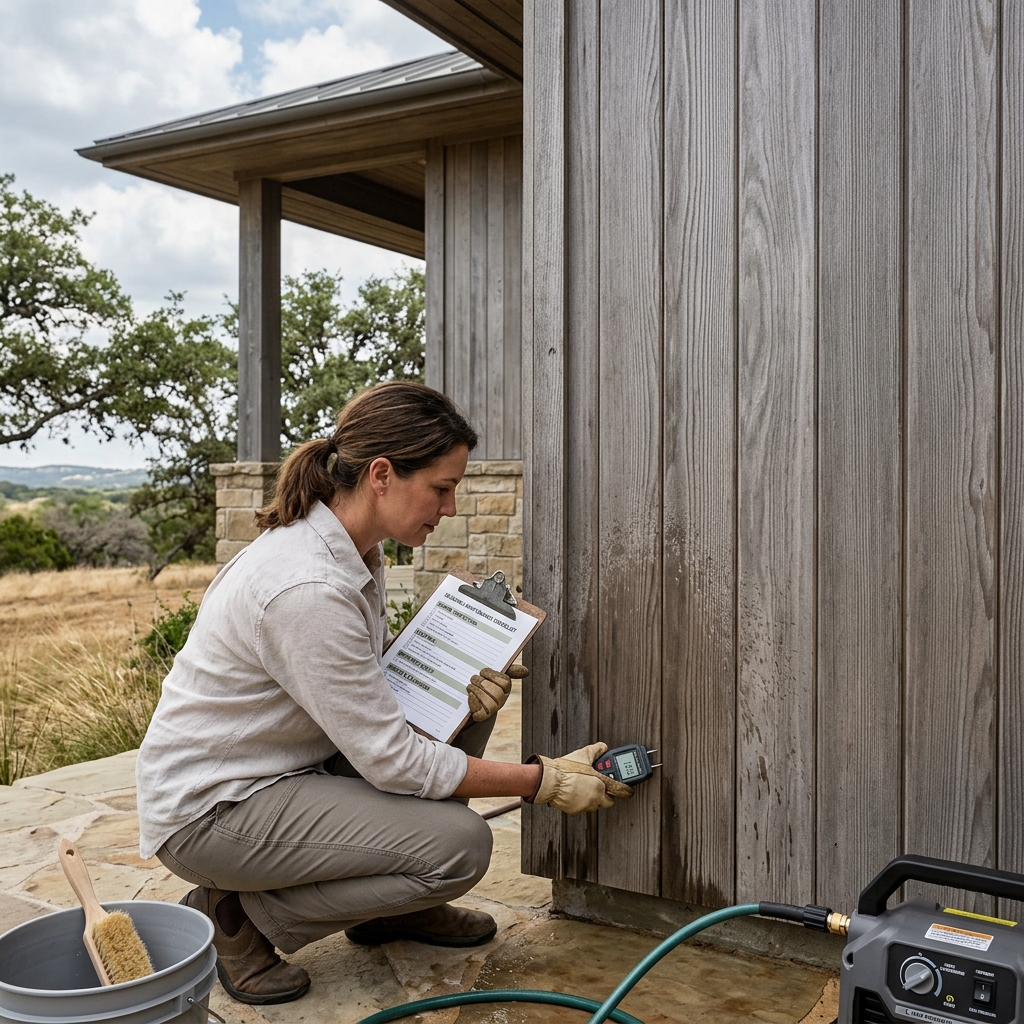
Hill Country properties often experience more dramatic microclimates than areas closer to Austin proper. Higher elevation, tree coverage, and proximity to water features create conditions where damage develops faster in some locations. Cedar cladding on north-facing Hill Country homes may retain moisture longer than south-facing exposure, accelerating finish breakdown.
Check for mold and mildew growth, particularly in shaded or poorly ventilated areas. Early intervention with appropriate cleaners prevents spores from establishing. In contrast, south and west-facing surfaces are more likely to experience sun damage and color fading.
Inspect all joints, flashing, and transitions quarterly. These areas are where water penetrates if the protective finish fails. Horizontal surfaces accumulate debris and standing water; these need the most frequent inspection and maintenance. If your cladding includes exposed fasteners or comb details, ensure they’re not collecting water or debris.
Common problem areas to monitor:
- Bottom edges where cladding meets ground or deck surfaces
- Around windows and doors where different materials meet
- Roof transitions and gutter connections
- Areas beneath overhanging vegetation
When to Refinish or Retreat Your Cedar
Color fading alone doesn’t necessitate refinishing, but it’s an early signal that the protective coating is breaking down. If you can see the wood grain texture becoming more prominent or notice chalky residue when rubbing the surface, these indicate UV damage to the finish layer.
In Central Texas, expect to retreat or refinish SiooX treated cedar every 4-7 years on exposed surfaces. North-facing areas may extend to 8-10 years, while south-west exposures might need attention at year 4. Rather than waiting for obvious damage, plan proactively based on your specific installation’s exposure.
Retreating involves cleaning the surface thoroughly, assessing remaining finish integrity, and applying new protective coating. This is far simpler and more cost-effective than refinishing, which typically requires stripping the old finish completely. A professional assessment can determine which approach makes sense for your particular surfaces.
If you notice significant checking, splintering, or color loss across large areas, these indicate the finish has substantially failed. At that point, refinishing rather than simple retreat may be the appropriate choice to restore both protection and aesthetic performance.
Working with a Specialized Wood Supplier for Replacements
Sometimes sections of cedar cladding require replacement due to damage or deterioration. Using the wrong replacement material compromises the visual continuity and durability of your installation. We work with architects throughout Central Texas who specify vertical grain cedar for its unique characteristics; replacement sections must match the original material properties and aesthetic.
When replacement is necessary, having a reliable specialist sourcing material ensures color and grain consistency. Arborwood Cladding represents one of the premium vertical grain options we supply, available in Clear and Vertical Grain Western Red Cedar specifically selected for architectural applications.
Work with a supplier who stocks inventory throughout the year and understands the difference between commodity cedar and premium architectural-grade material. This ensures replacement sections match your original installation rather than creating visual discontinuities that compromise your home’s design integrity.
If you’re working through an architect or builder, they likely have an established relationship with a specialized supplier. If you’re managing maintenance independently, sourcing from specialists who understand SiooX treatment and vertical grain cedar ensures replacement material is properly treated and graded.
Long-Term Investment in Premium Cedar Cladding
SiooX treated vertical grain cedar represents a meaningful investment in material quality and aesthetic performance. Unlike composite cladding that requires little maintenance but eventually needs replacement, well-maintained cedar improves with age. The subtle color development that occurs over time creates a patina that adds character contemporary designs specifically celebrate.
In Hill Country and greater Austin contexts, where natural materials are central to architectural identity, cedar cladding justifies its maintenance requirements. The warmth, texture, and livingness of real wood cannot be replicated by composite alternatives. Properties featuring vertical grain cedar consistently command higher values and demonstrate stronger aesthetic aging than alternatives.
Your maintenance program should be viewed as protecting and preserving an asset rather than managing an ongoing burden. Seasonal attention, timely inspection, and planned refinishing ensure your cedar cladding continues delivering the visual and performance results that drove the original specification decision.
We’re here to support your cedar cladding project from specification through long-term maintenance. Whether you’re sourcing replacement material, need guidance on specific damage concerns, or want to discuss protective coating options for your existing installation, our team understands Central Texas conditions and the demands placed on premium wood materials in this climate.
Ready to ensure your cedar is properly maintained? Contact us at 737.260.7431 to discuss your project specifics and get recommendations tailored to your home’s unique exposure and location.
To place orders, order samples, or talk with a live person.
Frequently Asked Questions (FAQ)
How often should we inspect our SiooX treated vertical grain cedar siding in Central Texas?
We recommend inspecting your cedar surfaces twice yearly – once before summer heat peaks and again after our intense humidity season ends. During each inspection, we suggest checking for any gaps in the SiooX finish, moisture penetration at joints, and signs of mold or discoloration that indicate the treatment may need refreshing. Our customers typically find that catching issues early prevents costly damage from our Hill Country weather patterns.
What’s the difference between cleaning and refinishing SiooX treated cedar?
Cleaning removes surface dirt and mold without affecting the protective treatment underneath, which we recommend doing annually with appropriate wood-safe cleaners. Refinishing becomes necessary when the SiooX treatment itself breaks down and no longer repels water effectively – typically every 5-7 years depending on sun exposure and weather intensity. We can assess your specific cedar’s condition and recommend which service your cladding actually needs rather than unnecessary work.
Where can we source replacement cedar pieces if sections of our siding need repair?
We stock vertical grain western red cedar and other premium options in the same grades and cuts as original installations, so your repairs match seamlessly. We work directly with our customers to pull samples from existing installations and match everything from grain patterns to finish treatments, ensuring your repaired sections blend with the rest of your cladding rather than standing out.


