

Why Architects Choose Nickel Gap Over Traditional Cladding Methods
Nickel gap interior boards have become the signature detail in contemporary residential design across Texas and beyond. The refined spacing between vertical boards creates a clean, sophisticated linear aesthetic that distinguishes architect-driven homes from conventional construction. We work with Texas architects and builders who understand that this detail isn’t decorative—it’s structural design that shapes how light, shadow, and material come together.
Traditional board-and-batten or shiplap methods feel dated to modern practitioners. Nickel gap detailing offers something different: intentional negative space that becomes a design element itself. The thin gap (typically 1/4 inch to 1/2 inch) between each board allows architects to express the seams as linear shadows rather than hiding them under battens or overlapping coverage.
Architects favor nickel gap for several practical reasons. The spacing reduces wood movement issues since each board can expand and contract independently without binding. Installation becomes more forgiving because slight variations in board width or wall dimension don’t require shimming or filler strips. From a design perspective, the consistent grid of lines creates optical depth and movement across interior surfaces that flat, seamless cladding cannot achieve.
We’ve found that architects choosing nickel gap are thinking about how the system performs over time. Unlike methods that rely on caulk or hidden fasteners to maintain appearance, the nickel gap design actually improves with minor wood movement. The gaps remain visible and intentional rather than opening into unsightly cracks.
Actionable takeaway: Before specifying your interior cladding system, ask yourself whether the detail should emphasize honest material expression or conceal the wood’s natural behavior. If your design values both, nickel gap belongs in the conversation.
The Visual Power of Consistent Linear Spacing in Contemporary Homes
Walk through a well-executed nickel gap interior and you’ll notice how the eye follows the lines across walls and up cathedral ceilings. The repetitive vertical spacing creates rhythm. When light hits from the side, the gaps cast subtle shadows that give dimensional depth to what could otherwise read as flat walls.
This linear quality works particularly well in open-plan interiors where wood walls define spaces without closing them off. The transparency of the grid—you can see through and around the gaps—keeps the material from feeling heavy. In Texas homes with soaring ceilings and expansive glass, nickel gap wood interiors actually enhance the sense of volume rather than diminishing it.
The consistency matters enormously. A 1/4-inch gap maintained across 40 feet of wall creates a different visual experience than a 1/2-inch gap. The tighter spacing reads as more refined and detailed; wider spacing feels bolder and more graphic. We advise clients to view samples at full scale in their specific light conditions. What reads beautiful in a showroom with even overhead lighting may feel different in a south-facing room with strong directional sun.
Contemporary homes inspired by Lake|Flato’s work demonstrate this principle perfectly. The architects use wood as both primary structure and finished surface, and nickel gap detailing allows the wood grain and species character to remain the focus while the joints disappear into a quiet, organized rhythm.
How Nickel Gap Boards Create That Signature Modern Aesthetic
The mechanics are straightforward, but execution determines whether the result feels sophisticated or amateur. Each board sits independently on wall framing with consistent spacing maintained by shims or spacers during installation. Fasteners (typically stainless steel or hidden screws) secure each board without drawing attention to themselves.
The signature aesthetic emerges from three factors working together. First, the material itself: clear grain wood species with visible figure and tone variation. Second, the precision of spacing: maintaining that gap as an intentional design gesture rather than a construction gap. Third, the finish: typically matte or satin that reads as natural rather than glossy or overly protected.
We supply nickel gap boards in multiple wood species, each contributing distinct character. Vertical grain Douglas fir delivers dramatic linear patterns with warm honey tones. Clear Western Red Cedar brings softer, finer grain. Thermally modified woods offer stability and deeper, more uniform coloring. The choice shapes whether your interior reads as warm and traditional-modern or cool and minimalist-contemporary.
The nickel gap system also allows architects to express wood movement honestly. Rather than fighting natural expansion and contraction, the design accommodates it. Over years, slight seasonal variation in board width won’t cause splitting, cupping, or visible stress in the system.
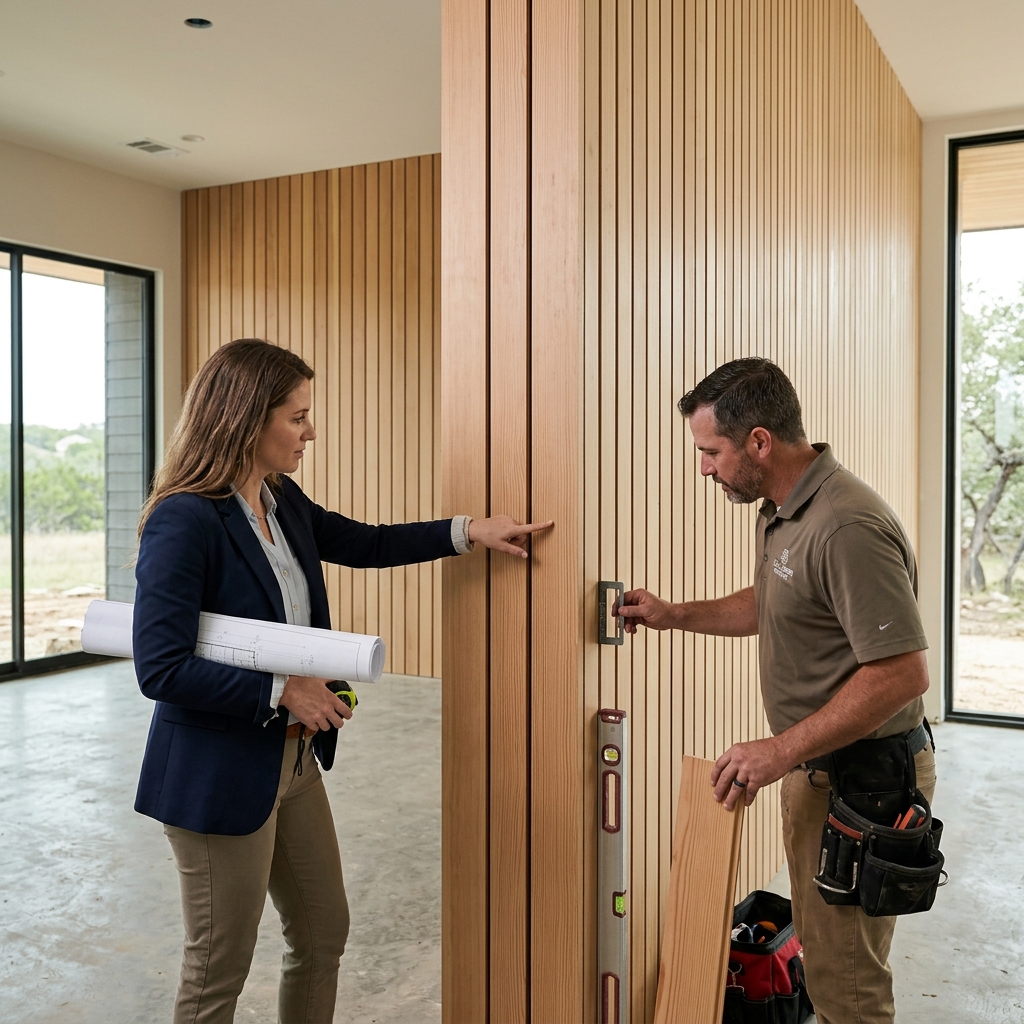
Material Selection: Choosing the Right Wood Species for Your Design Vision
Wood species choice drives both aesthetic and performance outcomes. Each species brings specific grain character, color range, and stability to nickel gap interiors.
Vertical Grain Douglas Fir creates bold linear patterns that dominate the visual field. The pronounced growth rings read as distinctly contemporary when used in nickel gap spacing. Color ranges from pale honey to medium amber, with minimal variation between boards when properly sorted. This species works beautifully in modern homes where the wall treatment becomes a primary design feature.
Clear Western Red Cedar offers finer, more consistent grain with warmer peachy tones. The grain is less dramatic than Douglas fir, which means the focus stays on the linear spacing itself rather than the wood figure. Cedar’s natural stability and pleasant scent make it ideal for bedrooms and living spaces.
For maximum stability and deeper coloring, thermally modified wood species like Thermally Modified Ash or Thermally Modified Pine deliver color similar to aged heartwood with superior dimensional stability. These products resist cupping and warping, which matters in homes with significant seasonal humidity variation.
We also stock exotic hardwoods for architects seeking warmer, richer tones. Ipe and Cumaru bring deep chocolate and amber colors that read as distinctly luxurious. These species are denser and more stable than softwoods but require specialized installation expertise.
Your selection should balance aesthetics, budget, performance requirements, and long-term maintenance expectations. Request samples in your actual spaces under your actual light conditions before finalizing specifications.
Our Premium Nickel Gap Board Options and Specifications
We manufacture and supply nickel gap boards in multiple profiles and species combinations. Our vertical grain softwoods come in standard widths (typically 3-1/4, 5-1/4, and 7-1/4 inches) with consistent milling that ensures gaps remain tight and even throughout installation.
For architects specifying clear, defect-free appearance, we source Premium grade Douglas fir and Western Red Cedar with tight grain and minimal color variation. Our Arborwood Cladding line includes pre-finished options that reduce on-site work while maintaining design intent.
We also supply thermally modified products that combine stability with design flexibility. These come in narrower widths (2-1/4 through 5-1/4 inches) that create finer linear patterns than traditional softwoods. The deeper, more uniform coloring reads as distinctly contemporary.
Hardwood nickel gap boards in Ipe, Cumaru, and Garapa are available through special order with extended lead times. These materials require stainless steel fasteners and expert installation but deliver unmatched durability and color richness for high-end residential projects.
We provide detailed specifications including moisture content, allowable defects, fastener requirements, and finish recommendations for each product line. Our team works directly with architects and builders to confirm that material specifications align with your design vision and budget constraints.
Installation Precision: Why Proper Spacing Matters for Your Design Intent
The nickel gap detail only reads as intentional if spacing remains consistent. Installation requires patience, proper tools, and attention to detail that separates skilled carpenters from adequate ones.
Professional installers use spacers between each board to maintain consistent gaps. Shim spacers (typically wooden or composite) are cut to your specified gap width and removed after fasteners are set. This approach ensures uniformity across large wall areas, even if the framing is slightly out of plumb.
Fastening strategy matters. Stainless steel screws set at consistent depth prevent fastener heads from protruding or sitting below the surface. Hidden fastening systems (screws driven through the edge of each board into the previous one) eliminate visible hardware entirely, though they require more labor and expertise.
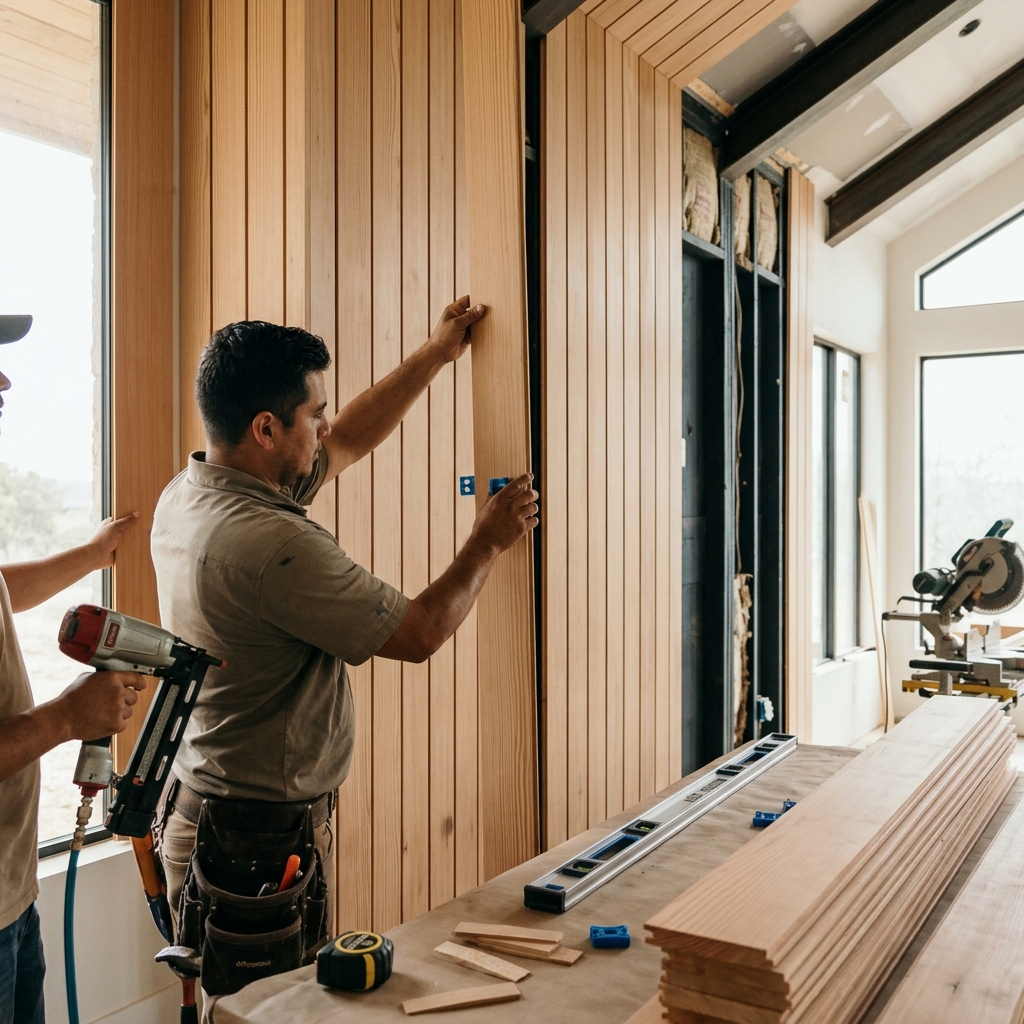
Proper spacing also demands attention to wall condition. Framing must be flat within 1/4 inch over 8 feet, and any sheathing must be securely attached before boards go up. Moisture barriers and ventilation requirements vary based on your climate zone and whether boards are interior or exterior.
We recommend specifying installation by carpenters experienced with nickel gap systems. The detail is precise enough that even modest inconsistency undermines the aesthetic. Builders and architects we work with typically budget for installation costs that reflect this precision requirement.
Sustainable and Fire-Rated Nickel Gap Solutions We Supply
Architects increasingly specify fire-rated wood products for interior applications, particularly in commercial mixed-use projects and high-value residential work. We supply WUI Class A fire-rated wood products including siding, cladding, and interior boards that meet stringent fire safety standards while maintaining the nickel gap aesthetic.
Thermally modified woods naturally offer improved fire performance compared to untreated softwoods. The thermal treatment process removes volatile compounds that fuel rapid combustion, resulting in slower flame spread and lower smoke development. For nickel gap interiors in fire-critical applications, thermally modified boards provide both design authenticity and performance compliance.
FSC-certified wood products are available across our softwood and hardwood lines. For architects committed to verifiable sustainability, we source from responsibly managed forests and maintain complete chain-of-custody documentation. FSC certification adds modest cost but demonstrates genuine environmental stewardship rather than marketing claims.
We also partner with suppliers offering pre-finished sustainable options that reduce on-site chemical exposure and waste. These systems accelerate installation timelines while meeting LEED and other green building program requirements.
Actionable takeaway: Confirm fire-rating and sustainability requirements early in design development. Some jurisdictions have specific codes for interior wood applications, and material lead times for certified products can extend project schedules.
Real Project Examples: Nickel Gap Applications in Texas Architectural Work
Contemporary Texas homes demonstrate the versatility of nickel gap detailing across diverse design contexts.
A modern lakeside residence in Horseshoe Bay features nickel gap Douglas fir spanning a two-story great room. The vertical grain pattern creates visual movement that complements expansive glass walls overlooking the water. The architect specified 1/4-inch gaps to emphasize the linear quality without overwhelming the space. Seasonal humidity variation from the lake environment is handled gracefully by the gap design, preventing the cupping and checking that would occur in conventional board-and-batten systems.
A contemporary limestone and cedar home in the Hill Country near Boerne uses nickel gap Western Red Cedar on interior accent walls. The softer grain and warmer tone balance the stark geometry of the stone. The project demonstrates how nickel gap works as an accent detail rather than a dominant feature, defining specific spaces within an open plan while maintaining visual connectivity.
A Fort Worth urban residence incorporates thermally modified ash nickel gap boards in a primary living wall. The deeper, more uniform coloring creates a sophisticated, almost walnut-like appearance while the stability and performance characteristics exceed traditional hardwoods. The project shows how modern materials expand design possibilities beyond conventional species choices.
These examples illustrate that nickel gap detailing adapts to different architectural voices, from warm contemporary to cool minimalist, depending on species selection, gap width, and scale of application.
Working With Us: Your Partner in Realizing Architect-Driven Nickel Gap Designs
We’ve worked with Texas architects and builders for years, and we understand the demands of precision specification and material consistency that nickel gap projects require. Our process begins with detailed conversations about your design intent, performance requirements, and budget parameters.
We supply materials, but we also provide specification support. Our team reviews architect drawings to confirm that material specifications are buildable and that sourcing timelines align with project schedules. For complex projects, we coordinate directly with job site carpenters to ensure installation meets design intent.
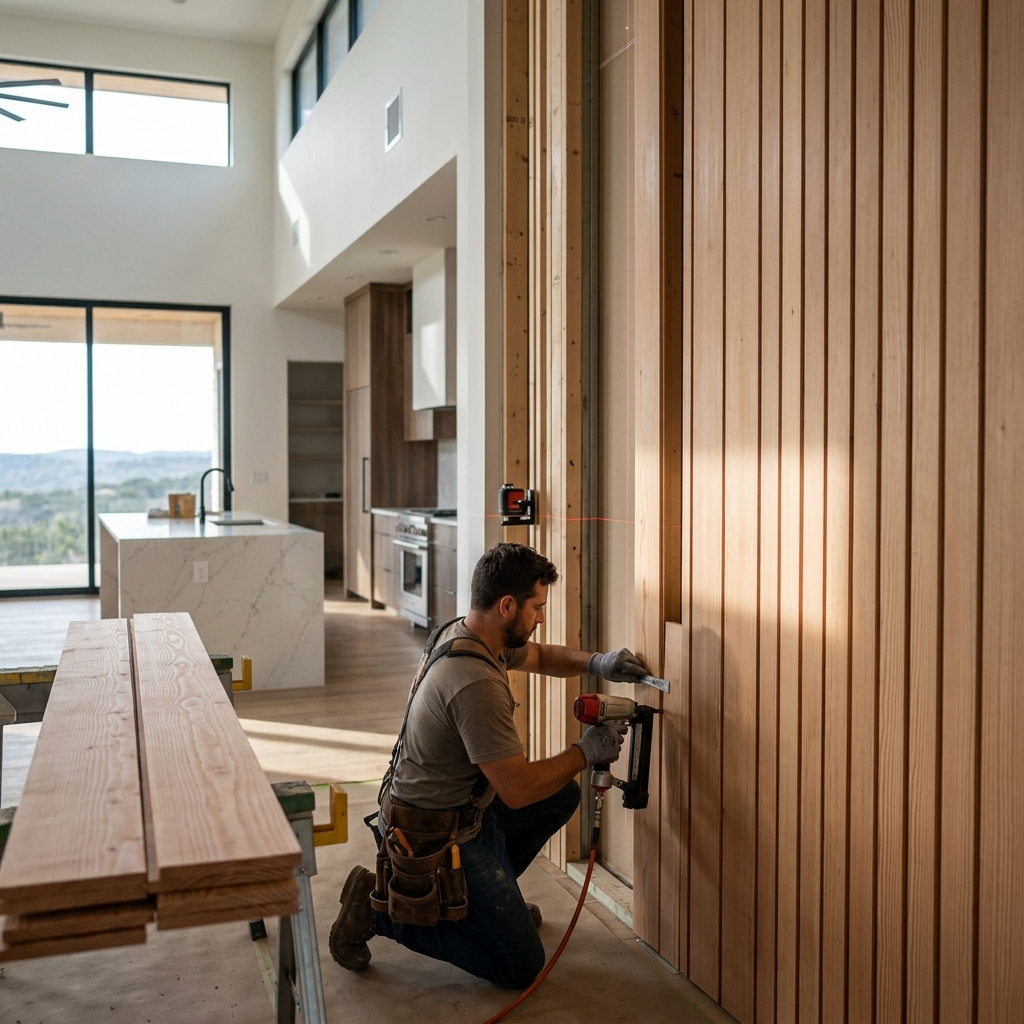
We maintain inventory of premium vertical grain softwoods, thermally modified products, and select hardwoods ready for immediate shipment across Texas and nationwide. Custom orders for specific dimensions, finishes, or species are handled efficiently without compromising quality standards.
Our expertise extends to material troubleshooting. If a project encounters unexpected moisture conditions or framing challenges, we help architects and builders develop solutions that maintain design intent while addressing real-world constraints.
Reach out with your project scope, preliminary drawings, and design direction. We’ll provide material samples, detailed specifications, and honest guidance about what’s achievable within your budget and timeline.
Maintenance and Longevity of Nickel Gap Interior Board Systems
Interior nickel gap systems built with quality materials and proper installation perform beautifully for decades. Unlike exterior siding that endures weather cycles, interior boards face minimal stress and shouldn’t require refinishing or major maintenance.
Wood interior surfaces naturally develop patina over time. Color may deepen slightly and grain may become more pronounced as dust and air currents leave subtle marks. This evolution is part of the material’s character, not a failure. Many homeowners and architects prefer the aged appearance to the uniformity of new wood.
Seasonal movement continues throughout the wood’s life, but proper nickel gap spacing accommodates this gracefully. The gaps actually serve as visual evidence that the system is working as designed—the wood is breathing without causing problems.
Dusting and occasional mild cleaning are appropriate maintenance. Avoid harsh cleaners that strip natural finishes. If boards were specified with penetrating oil finishes (common for interior work), periodic reapplication preserves color and protects the grain. Unfinished boards develop character naturally and require no active maintenance.
The nickel gap system’s greatest advantage emerges over time: honest material expression that improves rather than degrades with use. Twenty-year-old nickel gap interiors rarely require restoration or repair. They simply look like well-loved wood, which is exactly the point.
To place orders, order samples, or talk with a live person.
Frequently Asked Questions (FAQ)
What wood species do we recommend for nickel gap interior boards in contemporary homes?
We stock multiple species tailored to architect specifications, with Clear and Vertical Grain Western Red Cedar and Douglas Fir being our most popular choices for interior applications. For architects seeking superior durability and distinct visual character, we also supply Thermally Modified Ash and our premium hardwood options like Cumaru and Garapa. The right species depends on your design intent, budget parameters, and whether you’re prioritizing acoustics, fire rating, or specific grain patterns.
How critical is installation precision when we’re specifying nickel gap boards for your projects?
Proper spacing is non-negotiable for achieving the linear aesthetic you’re designing toward. Even minor inconsistencies in the nickel gap (typically 1/4 inch to 1/2 inch) compound visually across large wall surfaces and undermine the clean, contemporary look clients expect. We provide detailed installation specifications with each order and recommend working with installers experienced in precision spacing techniques to honor your design vision.
Do we carry Class A fire-rated nickel gap products for commercial or high-performance residential applications?
Yes, we supply WUI Class A fire-rated wood products suitable for interior nickel gap applications in projects with specific fire safety requirements. Our thermally modified wood lines and select species options meet these standards while maintaining the visual integrity of your design. We can advise on which combinations work best for your particular project requirements and building codes.


