

Why Architects Choose Poplar for Interior Millwork
Poplar has earned its place in high-end residential design for one fundamental reason: it delivers a blank canvas that accepts paint flawlessly. When you’re designing clean-lined contemporary homes where trim serves as architectural detail rather than ornament, poplar’s uniform grain structure and fine texture make it the logical material choice.
Architects working in the modern contemporary style appreciate poplar because it holds sharp edges and maintains dimensional stability across wide boards. Unlike pine, which can telegraph grain through paint, or harder species that resist planing to ultra-smooth finishes, poplar machines cleanly and sits flat season after season. This means the crisp reveals and shadow lines you’ve drawn on your elevations stay crisp.
The material also works across the full range of trim applications: base trim, crown molding, wall paneling, window casings, and built-in shelving. We’ve shipped poplar trim for everything from minimalist floating shelves in Hill Country modern homes to elaborate board-and-batten wall treatments in contemporary farmhouse designs throughout Texas.
What to do next: If you’re specifying trim for a project with multiple paint finishes or complex built-in millwork, poplar should be your starting point for comparison.
The Problem With Inferior Trim Materials in Modern Homes
We see too many projects compromised by trim material choices made for the wrong reasons. Builders selecting lower-grade pine to save 15 percent inevitably face callbacks: cupping, raised grain telegraphing through paint, knots that bleed stain through primer, and movement that creates gaps at miters and joints.
Lower-grade softwoods also contain more variable grain structure. This means some boards plane to a silky surface while adjacent boards in the same shipment remain slightly rough. When you’re painting and applying multiple coats across 500 linear feet of crown molding, this inconsistency compounds into visible texture variation in the final finish.
Another common mistake: specifying paint-grade lumber without confirming actual grade standards with the supplier. “Paint grade” means different things to different mills. Without explicit defect limits and moisture specifications, you’re gambling on material that may work beautifully on one project and frustrate your finish carpentry on the next.
Contemporary design doesn’t forgive material shortcuts. Clean lines make flaws obvious. A single gap at a corner joint or a subtle wave in a long wall run becomes architectural criticism rather than a detail oversight.
How Poplar Delivers Superior Paint-Grade Performance
Poplar’s technical properties make it ideal for applications where the paint finish is the final architectural statement. The wood has a density and hardness that sit between softwoods like pine and hardwoods like oak, giving it the best of both worlds: it planes to an exceptionally smooth surface yet accepts paint adhesion with minimal primer coats.
The grain structure is naturally fine and uniform. Poplar grown in cooler climates (which we prioritize for our inventory) has tighter growth rings and less dramatic color variation between heartwood and sapwood. This uniformity means primers can seal evenly, reducing the number of coats needed to achieve a flawless finish.
Poplar also exhibits excellent dimensional stability. Moisture movement is predictable and minimal, especially when compared to pine. For architects specifying built-in wall paneling or floor-to-ceiling trim applications, this stability translates to fewer callbacks and tighter joints over time.
We source poplar with moisture content between 8 and 12 percent, precisely kiln-dried to match interior environments. This controlled moisture prevents the post-installation movement that causes paint to crack or joints to separate.
What to do next: Confirm moisture specifications with any trim supplier. Poplar delivered at 15 percent moisture or higher will move after installation, undoing finish carpentry precision.

Our Curated Selection of Premium Poplar Stock
Our poplar inventory is purpose-selected for architectural trim applications. We don’t stock commodity-grade poplar. Instead, we maintain stock specifically graded for paint-finish trim: clear and select grades with tight knot limits and virtually no defects that would telegraph through paint.
We carry poplar in standard thicknesses (4/4 and 8/4 rough) and mill custom profiles for projects requiring non-standard moldings. If you need a specific crown profile, base detail, or wall paneling dimension, we can produce it in small quantities without minimum order penalties.
Our poplar is sourced from mills that prioritize grain uniformity and color consistency. We rotate inventory regularly to ensure material age doesn’t introduce moisture variability. Every board is inspected for surface quality before it reaches our stock shelves.
For architects specifying built-in shelving or integrated wall treatments, we can machine edge-banding details, rabbet joints, or specialized profiles that integrate seamlessly with contemporary design intent.
Grade Standards and Specifications We Guarantee
When you specify poplar from us, you’re getting material to documented standards. Our premium paint-grade poplar meets FPL (Softwood Lumber Bureau) Select grade or better, which means:
- Knots limited to 1 inch diameter or smaller, no more than two per linear foot of face width
- No shake, split, or check defects visible on working surfaces
- Wane limited to shallow edges only, maximum depth 1/8 inch
- Uniform creamy white color throughout, no significant grain runout
We provide mill certificates documenting moisture content, species verification, and defect limits. For projects with strict finishing specifications, we can arrange pre-finish inspection before delivery.
Standard widths range from 4 to 12 inches, with custom widths available. We mill random length boards or specific lengths to minimize waste on your job site. This attention to specification detail reduces finish carpentry time and material waste.
Sustainability and FSC Certification in Your Trim Choices
Poplar is an excellent choice for architects committed to sustainable forest products. The species grows rapidly and regenerates quickly after harvest, making it one of the most renewable softwood options available.
We prioritize FSC-certified poplar in our inventory whenever possible. FSC certification means the wood was harvested from responsibly managed forests with documented environmental and social standards. For architects designing homes where material honesty and sustainability are design principles, FSC-certified trim adds credibility to your specification.
Poplar also leaves a smaller carbon footprint than shipped hardwoods. Because we source much of our poplar regionally, transportation distances are minimal compared to specifications requiring materials from other regions or countries.
When specifying trim materials, sustainability can be part of your design narrative. Contemporary homes with clean lines and natural materials already emphasize material authenticity. FSC-certified poplar reinforces that commitment.
Real-World Applications: Poplar in Contemporary Design
We’ve supplied poplar trim for contemporary homes across Hill Country, Austin, and San Antonio that demonstrate the material’s versatility. Board-and-batten wall treatments in living areas combine 1×12 poplar boards with 3/4-inch batten strips, creating shadow lines that shift throughout the day. Painted soft white or subtle gray, these applications become architectural details rather than mere finishes.
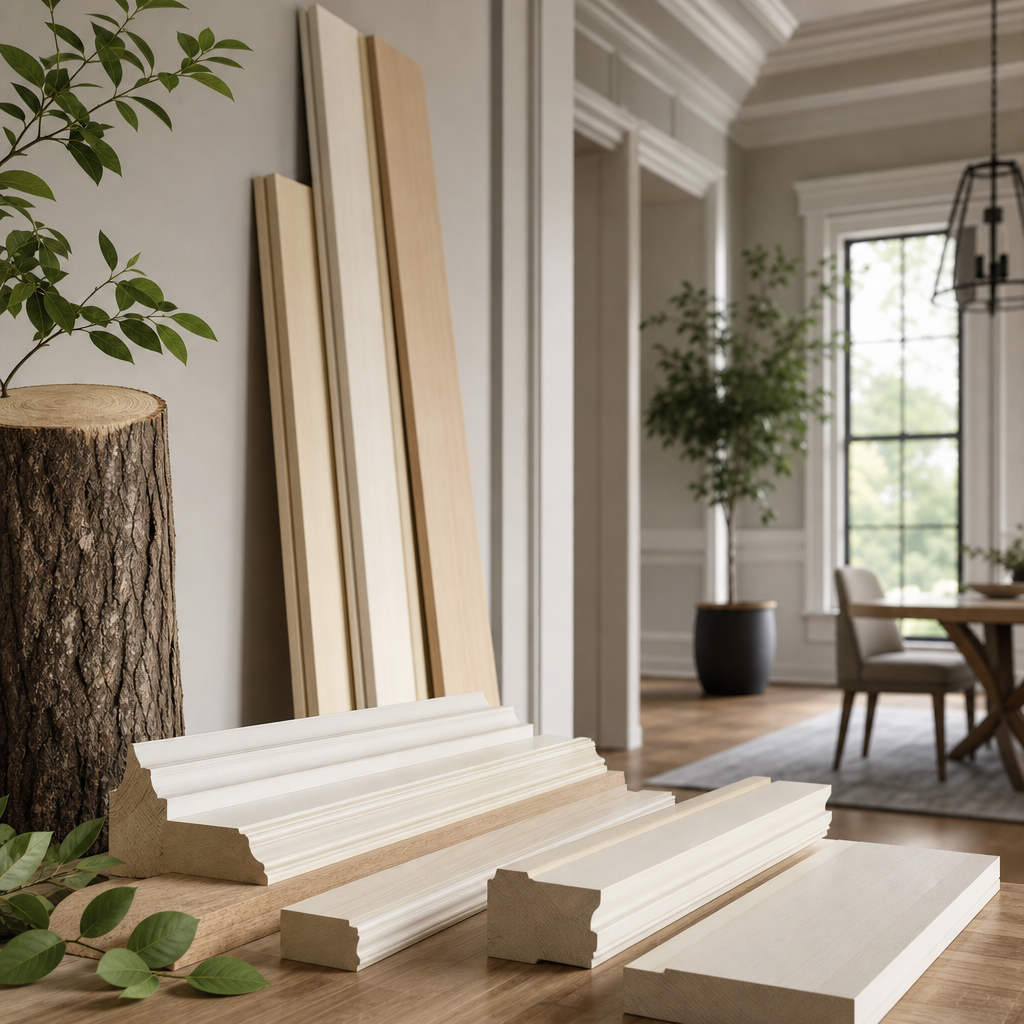
Floating shelving systems for libraries and media walls use 2-inch-thick poplar shelves with minimal brackets, emphasizing the purity of form. The clean grain accepts paint or stain evenly, creating visual continuity across wall-length installations.
Interior window casings and reveals use poplar for clean, sharp shadow lines that frame expansive glass walls. In homes where indoors and outdoors blur through large openings, the crisp shadow line of poplar trim provides visual containment without visual weight.
Built-in cabinetry and shelving around fireplaces, media walls, and living spaces all benefit from poplar’s stability and paint-finish quality. Doors, face frames, and reveal details stay crisp and gap-free over years of seasonal change.
Working With Our Team to Specify Your Project
Our team understands architectural specification language and timber logistics. When you’re developing construction documents, we can review your trim schedules and provide detailed cutting lists, material takeoffs, and delivery phasing that works with your construction timeline.
We work directly with architects to confirm profile availability, discuss grain orientation for specific applications, and recommend secondary structural solutions if your design calls for trim details that exceed standard lumber capabilities.
For complex millwork, we offer shop drawings and can arrange samples showing your specified stain or paint color on actual material. This eliminates finish surprises on site and builds confidence with your builder and clients.
Our turnaround on custom mill work runs 2-3 weeks for standard profiles, allowing time within typical construction scheduling. Rush orders are possible with advance notice.
What to do next: Start conversations early. Bring your timber schedules to us before you’re deep in drawings. This prevents late-stage material substitutions that compromise your design intent.
Finishing Options and Paint Preparation Best Practices
Poplar accepts both oil and latex paint finishes beautifully. For contemporary design, we typically recommend latex paints with modern finish options: matte, eggshell, or soft-sheen, depending on the trim application and desired light reflection.
Proper paint preparation begins on site with sanding. Poplar arrives planed smooth, but construction dust, handling marks, and minor surface roughness benefit from 150-grit sanding after installation. This ensures paint adhesion and eliminates telegraphing of construction residue through the finish.
Use quality exterior or interior primers appropriate to your paint system. One coat of primer is typically sufficient on poplar due to the wood’s uniform surface, but confirm primer recommendations with your paint manufacturer.
Allow 24-48 hours between primer and finish coats for proper cure. This waiting period prevents the common problem of finish-coat adhesion failure, which occurs when primer hasn’t fully hardened.
For trim that will face high handling (like base trim in commercial or public residential spaces), consider semi-gloss or satin finishes, which withstand wear and are easier to clean. For architectural trim meant primarily for visual effect, matte finishes typically provide the contemporary aesthetic architects prefer.
Why Texas Architects Partner With US Lumber Brokers
We’re Texas-based specialists in premium softwoods and hardwoods for residential and commercial projects. Our team includes timber experts who speak the language of specification and understand how material selections translate to installed reality.

Unlike national lumberyards that stock commodity products, we curate inventory specifically for architectural applications. We carry premium poplar alongside vertical-grain Douglas fir, clear Western Red Cedar, and thermally modified species for projects requiring material diversity. This means you can consolidate trim and specialty wood specifications with a single, local supplier.
We maintain relationships with regional mills and sustainable forestry operations, giving us quality control and availability that national suppliers can’t match. When you need poplar with specific moisture content, grain orientation, or FSC certification, we can deliver it with documentation that satisfies construction standards.
Our service reaches throughout Texas and all 50 states. Architects from Austin to Dallas, San Antonio to Houston work with us to develop timber specifications for residential, commercial, and luxury custom projects. About US Lumber Brokers covers our full service scope.
Next Steps: Getting Your Poplar Trim Specifications Right
Start by gathering your trim schedules and determining the full scope of paint-grade materials needed. List any custom profile requirements or millwork details that exceed standard dimensional lumber.
Request samples from us in your specified paint color or stain finish. Seeing actual material under the lighting conditions of your design helps confirm the aesthetic direction and builds confidence with your builder and clients.
Provide us with delivery schedules and any phasing requirements. Coordinating material delivery with construction sequencing prevents storage challenges and ensures your trade contractors receive material at the right time.
Finally, ask us about specifications and certifications. If FSC certification, moisture documentation, or defect limits are project requirements, we can provide them with formal mill certificates. These details matter in residential projects where you’re designing homes that withstand scrutiny and satisfy architects’ standards for quality.
Contact us to discuss your poplar trim specifications. We’ll review your project scope, provide material recommendations, and ensure your trim selection supports the clean, contemporary aesthetic that defines modern Texas residential design.
To place orders, order samples, or talk with a live person.
Frequently Asked Questions (FAQ)
Why do we recommend poplar for paint-grade trim over other softwoods?
We choose poplar for our paint-grade trim because it offers the finest, most consistent grain structure among readily available softwoods, which means it accepts paint finishes with exceptional smoothness and detail retention. Poplar’s stability and minimal movement during seasonal changes prevent the cracking and warping that plague inferior trim materials in modern homes. When our architects specify poplar, they’re getting a material that performs reliably across Texas’s variable climate while delivering the crisp millwork details their designs demand.
What grade standards do we guarantee on our poplar stock?
We maintain strict C and Better grading on all our paint-grade poplar inventory, which means our material meets the exacting specifications that architect-driven projects require. Our team personally selects stock to minimize defects and ensure consistent workability across your entire project scope. We provide detailed specifications and can source specialty widths and thicknesses to match your exact millwork requirements.
How does FSC certification factor into our poplar sourcing?
We prioritize FSC-certified poplar because our architect partners value both material performance and environmental responsibility in their designs. Our certified inventory gives you documented proof of sustainable forestry practices without compromising the paint-grade quality your project needs. We understand that architects building for lasting impact want to specify materials they can stand behind ethically and practically.


