

Why Standard Decking Fails in Extreme Weather and Heavy Use
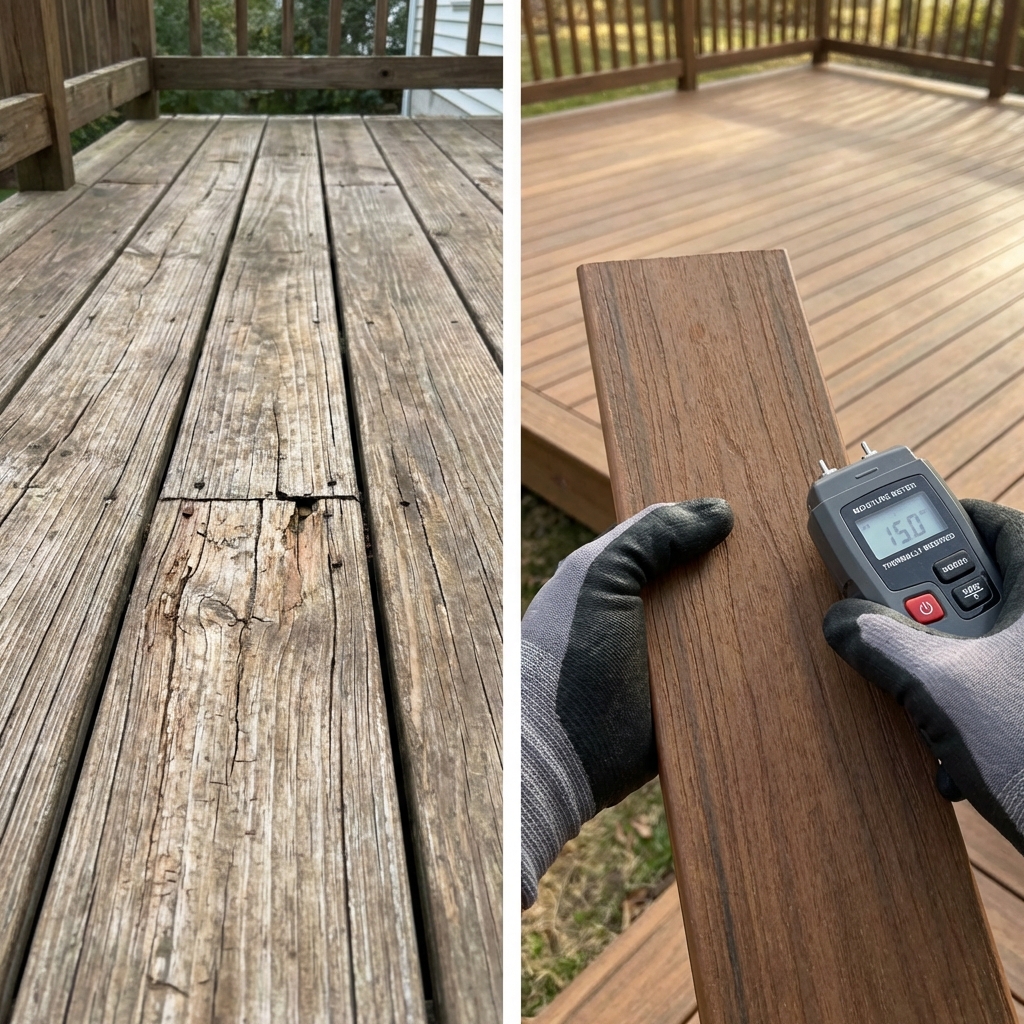
Standard pressure-treated lumber and untreated softwoods face relentless challenges in Texas’s climate. Our contractors tell us the same story repeatedly: decks built with conventional materials begin showing cupping, checking, and color degradation within three to five years. High humidity, intense UV exposure, and temperature swings from 100-degree summers to occasional freezes create stress cycles that traditional wood simply cannot withstand long-term.
Standard decking also suffers from biological attack. Fungal decay, insect damage, and mold colonization are accelerated by moisture retention in porous wood fibers. When you combine Texas heat with periodic rainfall and shade areas that stay damp, untreated or minimally treated wood becomes a liability. We’ve seen clients spend thousands on premature replacement because they underestimated these environmental pressures.
Chemical preservatives used in pressure-treated lumber offer some protection, but they don’t address the fundamental weakness: wood’s natural tendency to absorb and release moisture. This movement is what causes cupping, warping, and joint failure. For projects requiring durability beyond ten years, or for clients who won’t tolerate seasonal maintenance, standard decking creates long-term expense and frustration.
What to do next: If your current decking shows signs of warping, color fading, or soft spots, it’s time to evaluate a more resilient approach for your next project.
What Sets Thermally Modified Decking Apart
Thermally modified wood undergoes a controlled heat treatment process that fundamentally alters the wood’s cellular structure. We source products that are heated to temperatures between 160 and 230 degrees Celsius in an oxygen-free environment. This process chemically modifies the wood without adding synthetic chemicals.
The result is wood that resists moisture absorption far more effectively than untreated or pressure-treated material. Lower moisture uptake means dramatically reduced movement, swelling, and checking. The wood becomes denser, harder, and more resistant to fungal decay and insect damage. We’ve documented that thermally modified decking maintains dimensional stability across seasonal humidity changes that would destabilize conventional lumber.
This approach also delivers aesthetic stability. Colors remain consistent year after year because the wood is less reactive to UV exposure and moisture cycling. Many of our clients appreciate that thermally modified decking ages gracefully without the aggressive graying or color shift common in standard pressure-treated products.
The trade-off is straightforward: thermally modified wood costs more upfront, but the lifespan and minimal maintenance requirements offset the investment over 15 to 20 years. For luxury residential projects and high-traffic commercial applications, this is the decking material that performs.
Actionable takeaway: Compare lifecycle costs, not just initial material prices. Calculate your maintenance budget over 20 years, and thermally modified decking often delivers better total cost of ownership.
Our Thermally Modified Decking Inventory and Product Range
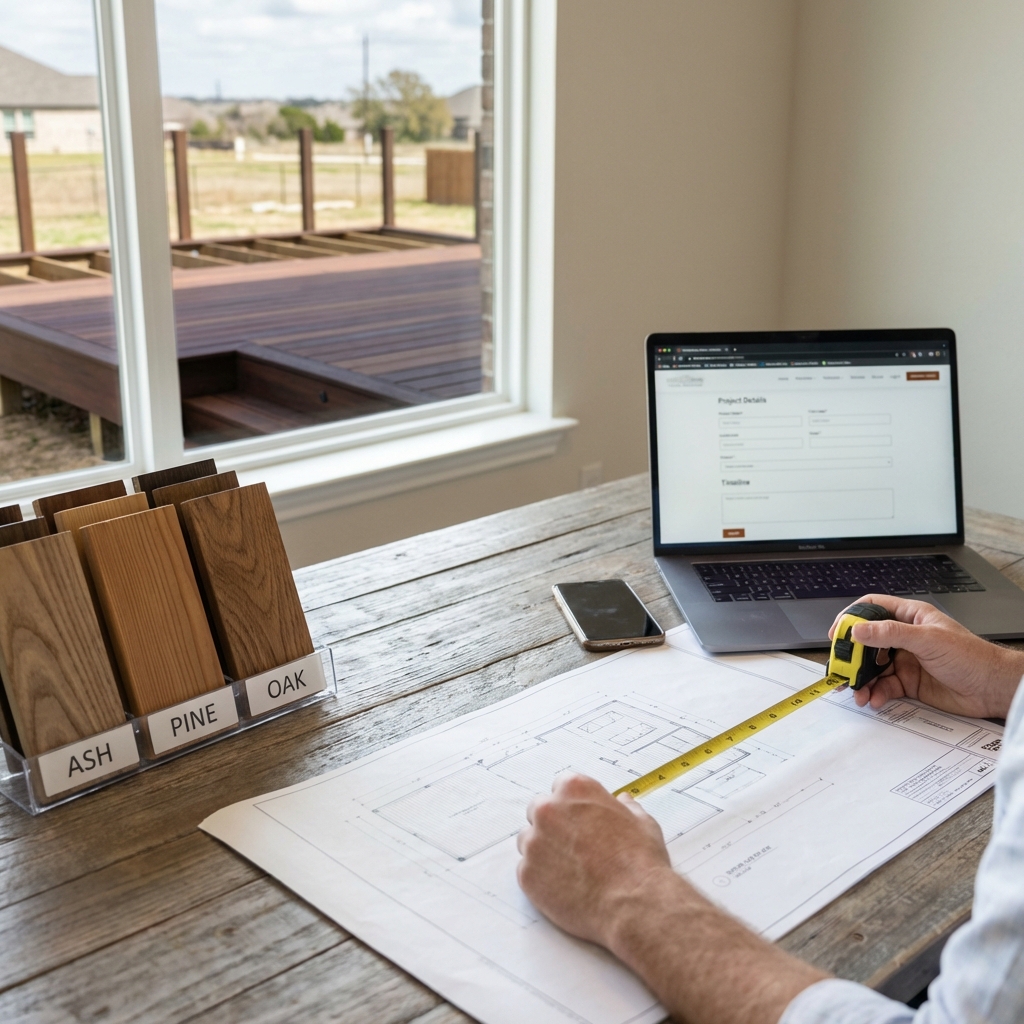
We maintain a deep inventory of thermally modified decking products tailored to different project requirements. Our thermally modified ash delivers a contemporary light grain appearance with excellent hardness and stability, making it ideal for urban residential decks and modern commercial installations.
Thermally modified pine offers a warm, familiar aesthetic with robust performance characteristics. It’s cost-effective compared to hardwoods while maintaining superior durability compared to standard pressure-treated pine. Many contractors use it as a bridge solution for clients who want thermal modification benefits without premium hardwood pricing.
Thermally modified poplar provides a refined, lighter appearance suitable for contemporary design specifications. We also stock thermally modified ayous, which appeals to architects seeking specific color profiles and sustainability credentials for high-end residential projects.
Beyond these products, we partner with leading manufacturers who specialize in thermal modification. Our team can source specific dimensions, grades, and finishes to match your project specifications. Whether you need 2×6 decking boards, structural timbers, or custom milling, we work directly with suppliers to deliver what your project demands.
We also carry complementary products from brands like TimberTech and Trex for projects where composite or hybrid solutions make sense, though we recommend thermally modified wood first for purists and performance-focused clients.
Performance Benefits You Get From Our Products
Dimensionally stable thermally modified decking means fewer callbacks and warranty claims. We hear from contractors that their labor costs drop significantly because joints remain tight, fasteners don’t work loose, and decks don’t develop squeaks or movement issues. This stability translates directly to client satisfaction and your reputation.
Rot and insect resistance extends the service life dramatically. Because the wood’s cell structure is altered, fungal spores and wood-boring insects find thermally modified material inhospitable. We’ve worked with projects in wet environments, shaded areas, and high-humidity zones where standard decking would fail within eight years. Thermally modified products consistently perform for 20-plus years with minimal intervention.
Low maintenance burden appeals to residential clients and reduces operational costs for commercial installations. You won’t need power washing, staining, or sealing cycles every two to three years. A simple rinse and occasional cleaning keeps thermally modified decking looking sharp. This appeals strongly to property managers overseeing multiple commercial decks.
UV resistance and color stability mean the deck maintains its finished appearance without aggressive fading. Year five looks nearly identical to year one, which matters for luxury residential projects where aesthetic consistency is expected.
Fire performance is another advantage. Many of our thermally modified products meet or exceed Class A fire ratings, valuable for WUI (Wildland-Urban Interface) applications across Texas and western states. We specifically stock products certified for high-fire-risk zones, which has become a competitive advantage for contractors serving Hill Country and mountain communities.
Certifications and Sustainability Standards We Maintain
We prioritize FSC-certified and responsibly sourced thermally modified wood products. Our inventory meets Forest Stewardship Council standards, ensuring the timber comes from well-managed forests with transparent supply chains. This matters to architects and project managers who incorporate sustainability into their project specifications.
The thermal modification process itself is environmentally sound. No chemical preservatives are added, and the waste heat from the process can be harnessed for energy efficiency in manufacturing. This resonates with projects pursuing LEED certification or other green building standards.
Our suppliers maintain third-party certifications documenting performance claims. When we specify thermally modified ash or pine for your project, we provide certification documentation verifying dimensional stability, decay resistance, and fire ratings. This protects you and your clients against performance liability.
We stand behind our products with technical support and performance guarantees. Our team can walk you through product selection, installation requirements, and long-term maintenance recommendations. This partnership approach sets us apart from transactional lumber suppliers.
Applications for Residential and Commercial Projects
Residential applications range from primary deck structures to pergolas, siding, cladding, and fencing. We serve high-end Austin residential projects where thermally modified wood creates architectural statements in Hill Country, Dripping Springs, Boerne, and Spicewood properties. The material works beautifully in modern designs and complements traditional aesthetics equally well.
Luxury custom homes frequently specify thermally modified decking because owners expect 25-year durability without visual degradation. Architects appreciate the material’s clean lines, minimal checking, and stable dimensions that integrate seamlessly with high-end finishes.
Commercial applications include hospitality decks, resort installations, restaurant patios, and multi-family residential structures. Property managers value the reduced maintenance burden and the professional appearance that persists year after year. We’ve supplied thermally modified decking to commercial projects throughout Dallas, Houston, San Antonio, Fort Worth, and Austin.
High-traffic applications like boardwalks, observation decks, and pool surrounds benefit from the hardness and slip-resistance characteristics of thermally modified wood. These environments generate significant foot traffic, and the durability of modified wood prevents wear patterns that compromise aesthetics and safety.
Installation and Maintenance Best Practices
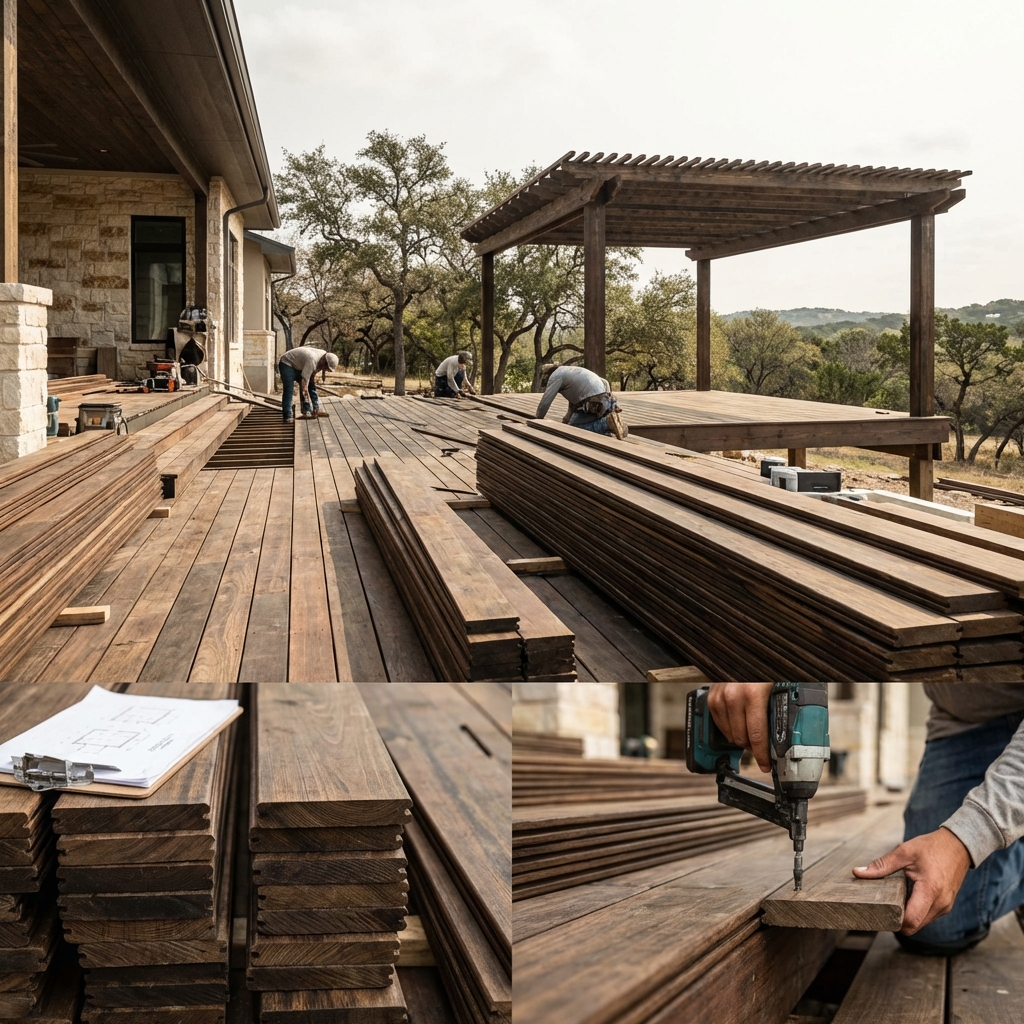
Proper installation maximizes the performance benefits we’ve built into thermally modified decking. We recommend allowing the material to acclimate for 24 to 48 hours at the job site before installation. Even though thermally modified wood has reduced moisture movement, allowing acclimation prevents any initial expansion issues.
Use stainless steel or composite fasteners. Standard galvanized fasteners can stain thermally modified wood and create corrosion issues. Many contractors also prefer screw fasteners over nails because they provide superior holding power and allow for future adjustments without splitting.
Spacing and ventilation matter. Leave appropriate gaps between boards to allow air circulation and any residual moisture movement. Ensure adequate clearance between the deck structure and ground to prevent moisture pooling and shade-related decay issues.
Maintenance is minimal but worthwhile. A annual cleaning with mild detergent and water keeps the surface fresh. If the deck is in a shaded, high-moisture environment, occasional inspection for mold or algae growth is prudent, though thermally modified wood resists both far more effectively than standard lumber.
We don’t recommend staining or sealing thermally modified decking unless you want to alter the color for aesthetic reasons. The thermal modification process doesn’t require protective coatings to deliver its performance benefits. This simplicity appeals to clients seeking low-maintenance solutions.
Why Texas Contractors Choose US Lumber Brokers
We’ve built our reputation on deep inventory, reliable supply, and technical expertise. When you specify thermally modified decking for a project, we ensure the material arrives on schedule in the grades and dimensions you ordered. No substitutions, no surprises.
Our team understands the regional climate and application requirements specific to Texas. We’re not a national catalog supplier with generic recommendations. We’ve worked on projects in Hill Country’s challenging weather, humid coastal zones near Houston, and the intense UV exposure of the Hill Country and San Antonio regions. This experience translates into better product recommendations for your specific project conditions.
We maintain relationships with leading thermally modified wood manufacturers, which means we access new products and innovations faster than competitors. If a project requires a specific thermal wood variant or certification, we source it efficiently.
Our pricing reflects volume purchasing power without sacrificing quality. We work with contractors and architects on project budgets while refusing to compromise on material standards. This balance of value and integrity has earned us repeat business across Texas for over two decades.
Geographic Service Areas and Distribution Network
We serve the entire state of Texas and all 50 states nationwide. Our primary service territory includes Austin, Dallas, Houston, San Antonio, and the surrounding metropolitan areas. Within the Austin region, we work regularly with projects in the Hill Country, Horseshoe Bay, Kerrville, Boerne, Dripping Springs, Driftwood, Spicewood, East Austin, West Austin, Rollingwood, Bee Cave, Lakeway, Lake Austin, and Lake Travis.
Dallas and Fort Worth projects benefit from our rapid distribution network. We stock inventory in strategic locations to minimize lead times and freight costs. Houston and The Woodlands projects tap into our Gulf Coast supply chain, and San Antonio clients receive dedicated service from our South Texas team.
Even for out-of-state projects, we handle full logistics. We’ve supplied thermally modified decking to projects in California, Colorado, and throughout the Northeast. Our distribution relationships ensure consistent product availability regardless of location.
Getting Started With Your Decking Project
Contact us with your project specifications, dimensions, and timeline. We’ll recommend the right thermally modified wood product and provide a detailed quote and timeline. For large commercial projects, we schedule a consultation to understand your performance requirements, budget constraints, and aesthetic goals.
We provide technical documentation, installation guidelines, and performance certifications for your project files. Our team is available to answer questions during installation and afterward.
Bring your next decking project to us. Whether you’re specifying thermally modified ash for a contemporary Austin residence, developing a commercial hospitality deck, or planning a high-performance installation in challenging environmental conditions, we have the inventory, expertise, and commitment to deliver results that exceed expectations.
Reach out today to discuss your decking material requirements. We’re ready to help build something that lasts.
To place orders, order samples, or talk with a live person.


