

The Challenge of Achieving Authentic Wood Character in Contemporary Texas Homes
Contemporary architecture demands a particular balance that many builders struggle to achieve: the warmth and authenticity of natural wood without sacrificing the clean lines and structural integrity that define modern design. Architects across Texas are increasingly drawn to expressive wood interiors that bring character to open-concept spaces, yet sourcing materials that perform reliably in our climate presents real obstacles.
The central tension is this: mass-produced panels often feel synthetic or fail to showcase the visual richness that justifies their use. At the same time, solid wood systems can warp, cup, or check in response to Texas humidity fluctuations and temperature swings. Clients expect durability alongside aesthetics, and specifications that don’t account for moisture movement, finish longevity, and installation technique create costly callbacks.
When we work with architect-designed homes, we consistently hear the same concern: “How do we specify wood interiors that will look exceptional for decades without becoming a maintenance nightmare?” The answer lies in understanding how tongue and groove wall systems can deliver both the visual impact architects envision and the performance Texas homeowners need.
Next step: Evaluate whether your current material suppliers are providing guidance on moisture dynamics and seasonal wood movement for interior applications.
Why Tongue and Groove Systems Deliver Superior Architectural Expression
Tongue and groove (T&G) systems excel where butt-jointed or overlapped panels fall short. The mechanical interlock creates an essentially seamless appearance that frames wood grain and color variation as intentional design features rather than construction evidence. This is particularly important in modern interiors, where visual clarity matters.
The design advantages are practical and visual simultaneously. T&G joints accommodate wood movement without telegraphing seasonal shifts through obvious gaps or misalignment. From across a room, the eye registers a unified vertical or horizontal rhythm rather than individual planks. In open-concept spaces common to contemporary Texas homes, this creates a stronger visual anchor.
Material options within T&G profiles offer flexibility in expression. Vertical grain softwoods display tight, linear grain patterns that read as restrained and sophisticated. Flat grain variants introduce broader color ranges and dramatic figuring, ideal for accent walls or feature spaces. Hardwoods like Ipe or Cumaru bring richness and bold grain movement suited to library areas, master suites, or transitional spaces.
We’ve specified T&G systems across residential, commercial, and luxury custom projects throughout Texas, and the consistent feedback is that the system elevates perception of quality immediately upon entry. The continuous line of the joint becomes part of the design language rather than a functional necessity.
Next step: Consider running a sample installation in a secondary space to evaluate how T&G profiles interact with your lighting design and color palette.
Material Selection for High-Performance Interior Applications
Interior wall systems must balance visual performance with practical durability. Unlike exterior cladding, interior T&G experiences stable temperatures and no direct weather exposure, but it encounters daily humidity fluctuations, potential water incidence near kitchens and baths, and finish wear from ambient light.
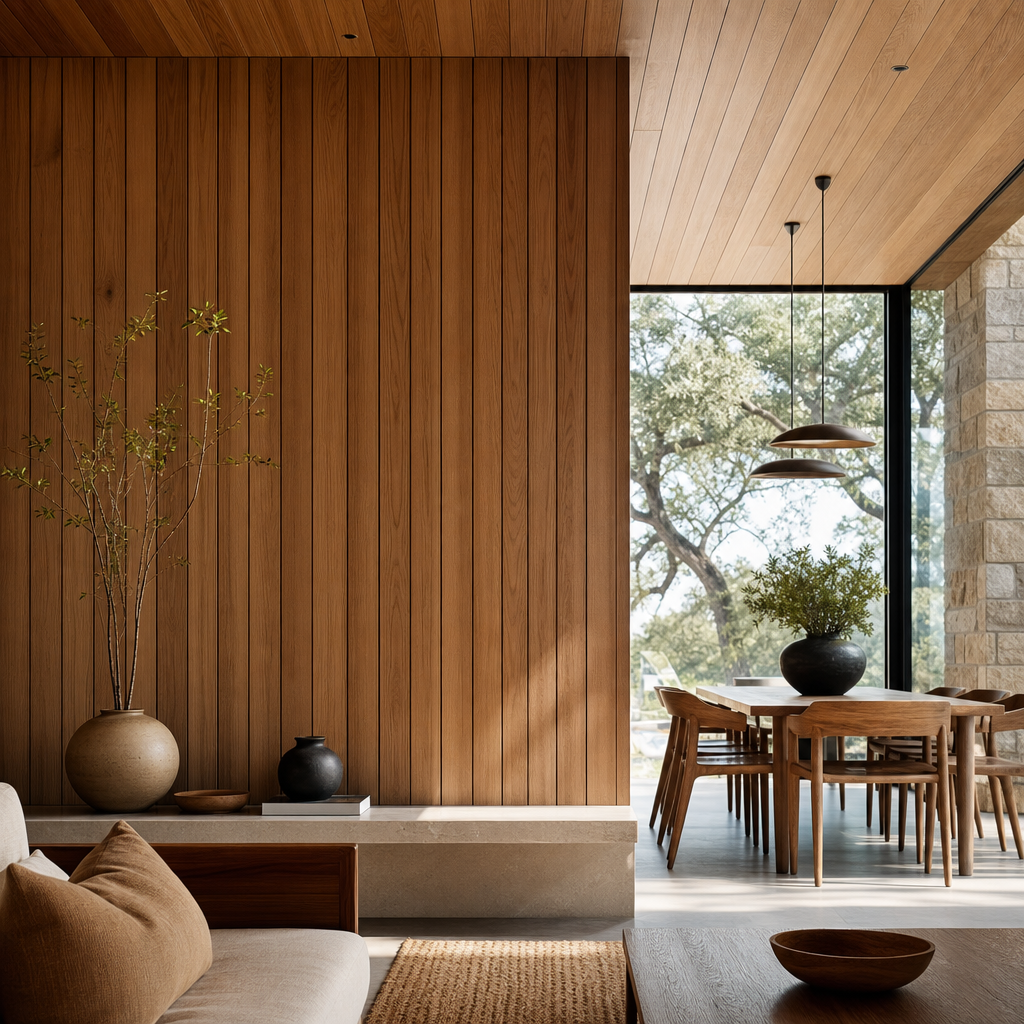
Softwood options remain the standard for most residential interiors. Douglas Fir delivers strong grain character with excellent dimensional stability. Western Red Cedar offers lighter color and pleasant aroma, though grain visibility is subtler than fir. Hemlock provides a neutral canvas that accepts stain or clear finishes equally well. For architects prioritizing straightforward modern aesthetics, these species offer proven performance at reasonable cost.
Hardwoods address a different design intention. When a space calls for visual drama and durability in high-traffic areas, Ipe delivers exceptional hardness and rich brown tones. Cumaru and Garapa offer warm, golden grain patterns that photograph beautifully and withstand heavy use. Tigerwood introduces striped figuring that serves as a design statement on its own.
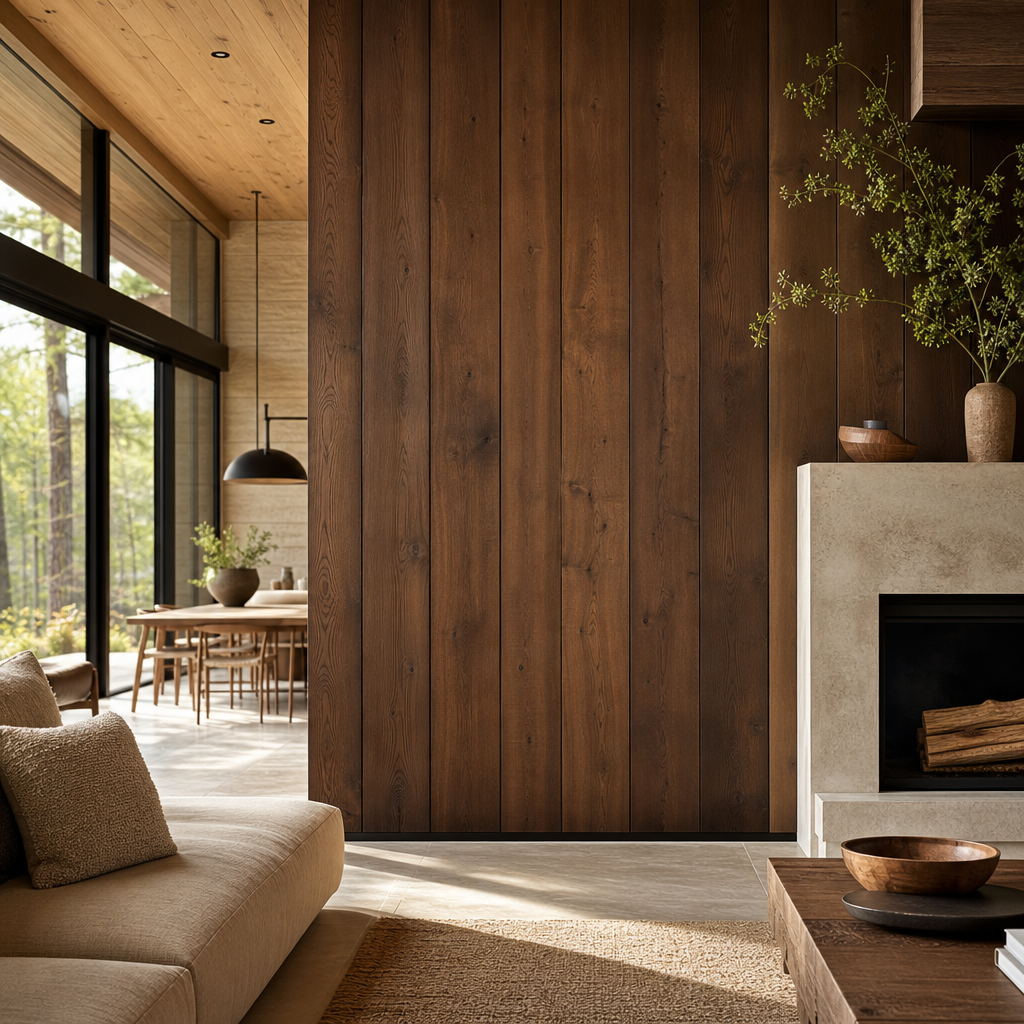
The material choice directly influences your finish strategy, installation timeline, and long-term maintenance expectations. A Douglas Fir T&G system with clear coat requires periodic refinishing; Ipe with natural aging requires only occasional cleaning. Neither approach is superior—the choice depends on the architect’s vision and the homeowner’s maintenance commitment.
Next step: Request sample sets of your preferred species in both vertical grain and flat grain to evaluate grain character and color under your project’s actual lighting conditions.
Specifying Clear and Vertical Grain Options for Visual Impact
Vertical grain lumber presents a strong linear aesthetic that aligns naturally with contemporary design language. The grain runs predominantly parallel to the board face, creating optical continuity across multiple planks. This visual uniformity appeals to architects seeking restraint and order.
Specifying vertical grain requires particular attention. Not all lumber suppliers maintain consistent vertical grain inventory, and mixing sources can result in visible inconsistency across wall systems. We maintain dedicated vertical grain stock in Douglas Fir, Hemlock, and Western Red Cedar specifically for architect specifications where visual continuity is essential.
Clear grade (free of knots) amplifies the impact of vertical grain. A wall of clear vertical grain Douglas Fir creates clean visual rhythm without distraction, making it ideal for feature walls or spaces where the material itself is the primary architectural statement. This specification is more expensive but delivers the high-end aesthetic contemporary architects expect.
Flat grain alternatives serve different purposes. Broader grain patterns and natural color variation introduce visual complexity suited to rustic contemporary or transitional designs. Many architects alternate clear vertical grain on primary walls with figured flat grain as accent treatments, creating layered visual interest.
The choice between clear and figured, vertical and flat, fundamentally affects how the space reads architecturally. We’ve seen architects shift entire design directions based on grain character samples, so material selection deserves the same intentional attention as structural decisions.
Next step: Specify samples of your intended species in both clear vertical grain and figured options; live with them in your project space for at least one week before committing to production orders.
Thermally Modified Wood Advantages for Interior Durability
Thermally modified wood has become increasingly relevant for interior applications, particularly in areas where moisture stability and rot resistance matter. The thermal modification process alters the cell structure of softwoods like Pine, Ash, and Poplar, making them behave similarly to naturally durable hardwoods.
Modified wood resists moisture-induced movement more effectively than unmodified softwoods, reducing the seasonal gapping that concerns architects specifying T&G in variable climates. The process also improves dimensional stability in kitchens, bathrooms, and laundry areas where humidity fluctuates more dramatically than other interior spaces.
We stock Thermally modified wood siding in Ash, Pine, and Poplar, all available in T&G profiles. These materials deliver hardwood-like performance at softwood pricing, which significantly improves project economics when specifying durable interior systems across larger square footage.
The visual appearance shifts with thermal modification. Colors tend toward amber and golden tones that warm with time and UV exposure. Grain becomes slightly more pronounced as lignin degrades during processing. These characteristics suit contemporary interiors exceptionally well, creating natural aging patterns that many architects deliberately specify.
For high-humidity zones like bathrooms and kitchens within luxury homes, thermally modified T&G offers peace of mind that unmodified softwoods cannot. The material performs without requiring sealants in non-immersion applications, maintaining clean lines and authentic wood appearance.
Next step: Consider thermally modified wood for any T&G applications adjacent to water sources or areas subject to humidity swings; the modest material premium eliminates long-term performance risk.
Installation Standards and Structural Considerations
Proper T&G installation determines whether your material investment delivers as specified. The system must accommodate wood movement, maintain tight joints, and integrate with surrounding structural and mechanical systems.
Acclimation precedes everything. Lumber delivered to a project must equilibrate to the building’s ambient humidity for seven to ten days before installation. Failure to acclimate results in movement after installation as wood adjusts to its final moisture condition. We provide detailed acclimation guidance with every material order to ensure this step isn’t overlooked.
Fastening methodology matters significantly. T&G planks require blind nailing through the tongue to conceal fastener heads, maintaining visual continuity. Screws outperform nails for holding power, particularly in hardwood systems where nail withdrawal is a genuine concern. Fastener spacing and substrate preparation directly influence whether joints remain tight or open over months and years.
Moisture barriers behind T&G protect structural cavities while allowing vapor transmission. The specific barrier strategy depends on whether the T&G is applied to studs, sheathing, or existing wall surfaces. Vapor-open membranes in cold climates differ from those appropriate for Texas’s hot-humid conditions.
Expansion gaps at perimeters, around windows, and at ceiling/floor interfaces accommodate seasonal movement without telegraphing as design flaws. A competent installer understands why these gaps exist and sizes them appropriately for the species and application.
Next step: Verify that your installation contractor has previous T&G experience and can articulate their specific approach to acclimation, fastening, and expansion management before material delivery.
Finishing and Maintenance for Long-Term Performance
Material selection and installation determine potential; finishing delivers durability and visual performance. For T&G interior systems, the finish serves both aesthetic and protective functions.
Clear finishes showcase wood color and grain while requiring periodic maintenance. Water-based polyurethane offers clarity without yellowing and cures quickly for faster installation completion. Oil-based polyurethane provides warm amber tone that develops patina over decades but requires longer dry times between coats. Both systems require refinishing every seven to ten years in high-traffic areas.
Stained finishes allow color customization while maintaining wood character. Modern matte and satin sheens suit contemporary aesthetics better than traditional gloss. Hybrid water-based stain-and-finish systems simplify logistics and reduce VOC exposure during application.
Natural or weathered finishes eliminate ongoing refinishing obligations. Many architects specify unfinished hardwoods like Ipe that develop silver-gray patina naturally. Thermally modified woods similarly age beautifully without intervention. These approaches require only occasional cleaning and eliminate scheduling concerns around refinishing.
The finish choice communicates maintenance expectations directly to homeowners. Transparent finishes imply that wood character will remain visible and primary; natural finishes suggest the material will evolve over time. Setting clear expectations during design prevents surprises during occupancy.
Next step: Include finish specifications and touch-up provisions in your project specifications to clarify long-term maintenance responsibility between builder and homeowner.
Sustainability and FSC Certification in Your Specifications
Contemporary architecture increasingly incorporates sustainability not as an afterthought but as a core design principle. FSC-certified wood systems align material specifications with environmental values that matter to discerning clients.
FSC certification verifies that wood originates from responsibly managed forests where harvesting respects ecosystem function and worker welfare. For architects accustomed to specifying sustainable materials across projects, FSC certification on interior T&G systems demonstrates consistency of values throughout the built environment.
We maintain FSC-certified inventory across our softwood and hardwood lines, allowing architects to specify premium T&G systems with documented environmental provenance. The certification premium is modest when incorporated into material budgets early, and it eliminates sourcing complications late in projects.
Beyond certification, material origin matters for transparency and supply reliability. We source directly from mills throughout North America and beyond, maintaining relationships that ensure consistent material quality and availability. This direct involvement means we can provide architects with documentation and sourcing details that generic material suppliers cannot.
Specifying sustainable materials also positions projects favorably for green building certifications like LEED, which many Texas architects pursue to distinguish their work and improve marketability.
Next step: Request FSC documentation for any materials specified as sustainable or environmentally responsible; confirmation should come with your initial quote, not discovered during production ordering.
Why We Are Your Preferred Texas Supplier for Architect-Driven Projects
We understand the specific demands of architect-designed homes in Texas. Our inventory reflects those demands directly: vertical grain softwoods, thermally modified systems, specialty hardwoods, and comprehensive finishing supplies all maintained in stock rather than special-ordered through distribution networks that lack expertise.
Our relationships with mills allow us to source and stock materials that mass-market suppliers simply won’t carry. When an architect specifies Clear and Vertical Grain Western Red Cedar in T&G profile, we don’t hunt for inventory or apologize about lead times. We deliver material ready for immediate acclimation and installation.
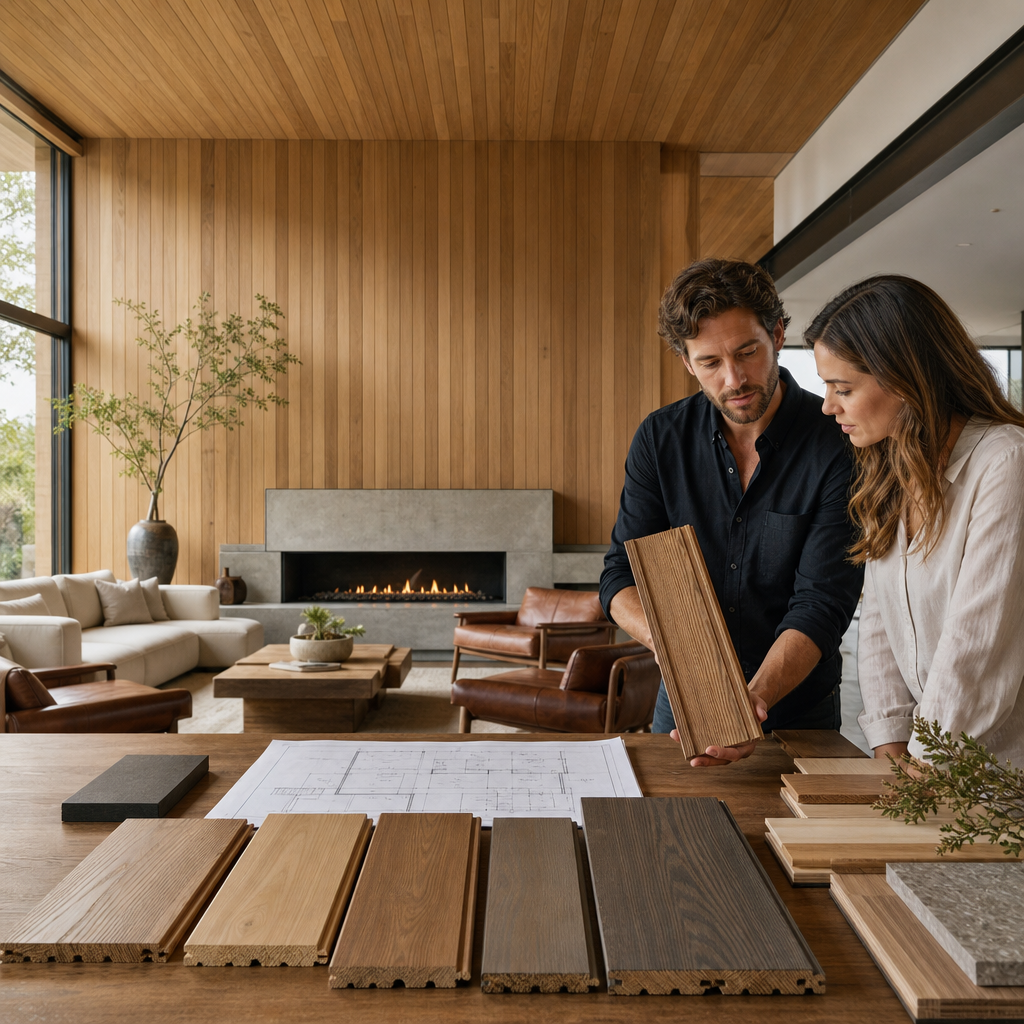
We’ve worked with Texas architects whose designs prioritize authentic wood character and clean modernist lines. We understand that specification language must be precise, that samples matter more than digital images, and that performance details that seem trivial during specification meetings become critical during occupancy.
Our team provides technical guidance throughout your project: acclimation protocols, installation methodology, finish selection, and long-term maintenance expectations. We’re available to coordinate with builders, resolve material questions during installation, and help troubleshoot if performance concerns arise.
When you specify T&G wall systems for contemporary Texas homes, you need a supplier who stocks what you’re asking for, understands how it performs in our climate, and stands behind the material from specification through project completion. That’s exactly what we deliver.
Next step: Contact us with your material requirements and project timeline. We’ll provide sample sets, technical documentation, and pricing based on the specific T&G specifications your design demands.
To place orders, order samples, or talk with a live person.
Frequently Asked Questions (FAQ)
What tongue and groove profiles do we stock for architect-specified interior applications?
We manufacture and supply tongue and groove systems in Clear and Vertical Grain Western Red Cedar, Douglas Fir, Hemlock, and Cypress, along with thermally modified options like Ash, Pine, and Poplar. Our vertical grain selections deliver the visual consistency and directional character that contemporary design demands, while our hardwood options including Ipe and Cumaru provide durability for high-traffic interior spaces. We also carry FSC-certified materials to support your sustainability specifications.
How do thermally modified woods perform in interior wall applications compared to traditional options?
Thermally modified woods we distribute offer superior dimensional stability and resistance to cupping or warping, which is critical for tongue and groove systems where tight joinery matters. They also resist moisture fluctuation better than untreated softwoods, making them ideal for climate-controlled modern interiors where wood movement can compromise the precision fit architects expect. The process doesn’t require chemical treatments, so you’re specifying a genuinely sustainable material for interior applications.
Can we supply materials that meet both your design vision and building code requirements for Texas projects?
We work directly with Texas architects on specification requirements and can provide WUI Class A fire-rated products when codes demand them for siding, cladding, and interior applications. Our inventory includes FSC-certified options and leading composite alternatives from brands like TimberTech and Trex if your project calls for hybrid solutions, and we maintain stock across multiple wood species so you’re never compromised on material choice.


