

Why Architects Choose Premium Wood Siding for Commercial Projects
Architects committed to contemporary design understand that material selection shapes both aesthetic impact and long-term performance. Wood cladding delivers what glass and steel alone cannot: warmth, natural variation, and a human-scaled expression that resonates with occupants and visitors alike.
When we work with Texas architects designing commercial and residential projects, we see a consistent pattern. They’re drawn to wood not for nostalgia, but for its structural honesty and visual depth. A thermally modified cedar or hardwood exterior creates shadow play and patina that composite alternatives simply cannot replicate. Beyond appearance, wood siding offers proven durability when properly specified, backed by decades of performance data across diverse climates.
The challenge lies in choosing the right species and modification process for your specific environment and fire rating requirements. That’s where premium options like Ambara and Ayuso enter the conversation. These materials represent the convergence of aesthetic ambition and engineered durability, allowing you to design with confidence rather than compromise.
Action step: Begin your material selection by defining three requirements: your project’s fire rating (WUI Class A, Class B, or standard), the climate zone and expected moisture exposure, and your preferred grain pattern and finish direction. This clarity streamlines specification conversations with your supplier.
Understanding Ambara and Ayuso: Performance Beyond Aesthetics
Ambara and Ayuso are thermally modified hardwoods engineered to exceed the performance envelope of untreated species. Thermal modification subjects wood to controlled heat treatment without chemicals, fundamentally altering the wood’s cellular structure to improve stability and resistance to decay and insect activity.
Ambara delivers a warm, medium-brown tone that deepens naturally over time. Its grain structure is refined and consistent, making it ideal for contemporary applications where visual continuity matters. Ayuso offers a paler, more neutral palette with slightly varied grain that complements both minimalist and textured architectural expressions. Both materials machine cleanly for precision milling and accept finishes predictably.
What distinguishes these species from standard softwoods is their dimensional stability. Unlike untreated cedar or hemlock, thermally modified Ambara and Ayuso resist cupping, twisting, and checking across seasonal humidity swings. For commercial facades that demand long service intervals and minimal maintenance, this stability directly reduces callbacks and replacement costs.
We source both materials to exacting standards, ensuring consistent moisture content (typically 8-12%) at delivery and supply them in the profile configurations your design demands: flush siding, comb-grain, fluted panels, or architectural timbers.
Action step: Request sample boards of both Ambara and Ayuso from your supplier, allowing 2-3 weeks of outdoor exposure before final selection. This real-world preview reveals how each material weathers and ages in your specific regional climate.
Superior Durability and Climate Performance
Texas commercial projects face moisture intrusion from summer thunderstorms, humidity fluctuations in coastal regions, and intense sun exposure across the Hill Country and beyond. Thermally modified wood handles these stressors with confidence.
The thermal modification process increases the wood’s biological durability rating to Class 1-2 (equivalent to naturally durable heartwood species like teak). This means Ambara and Ayuso resist fungal decay and insect tunneling without pesticide treatment. In practical terms, a properly detailed thermally modified cladding system can deliver 20-30 year service intervals with minimal intervention, compared to 10-15 years for untreated softwoods in humid environments.
Climate performance also relates to dimensional movement. Thermally modified wood exhibits 30-50% less moisture-driven expansion and contraction than untreated equivalents. For commercial facades with tight reveals, standing seams, or integrated metal flashing, this stability prevents the stress cracks and fastener pop-out that plague standard siding in dynamic moisture conditions.
Dallas humidity combined with occasional drought periods tests material resilience. Ayuso and Ambara respond to these cycles without the pronounced surface checking or cupping that can develop in conventional cedar or hemlock over just 3-4 years of exposure.
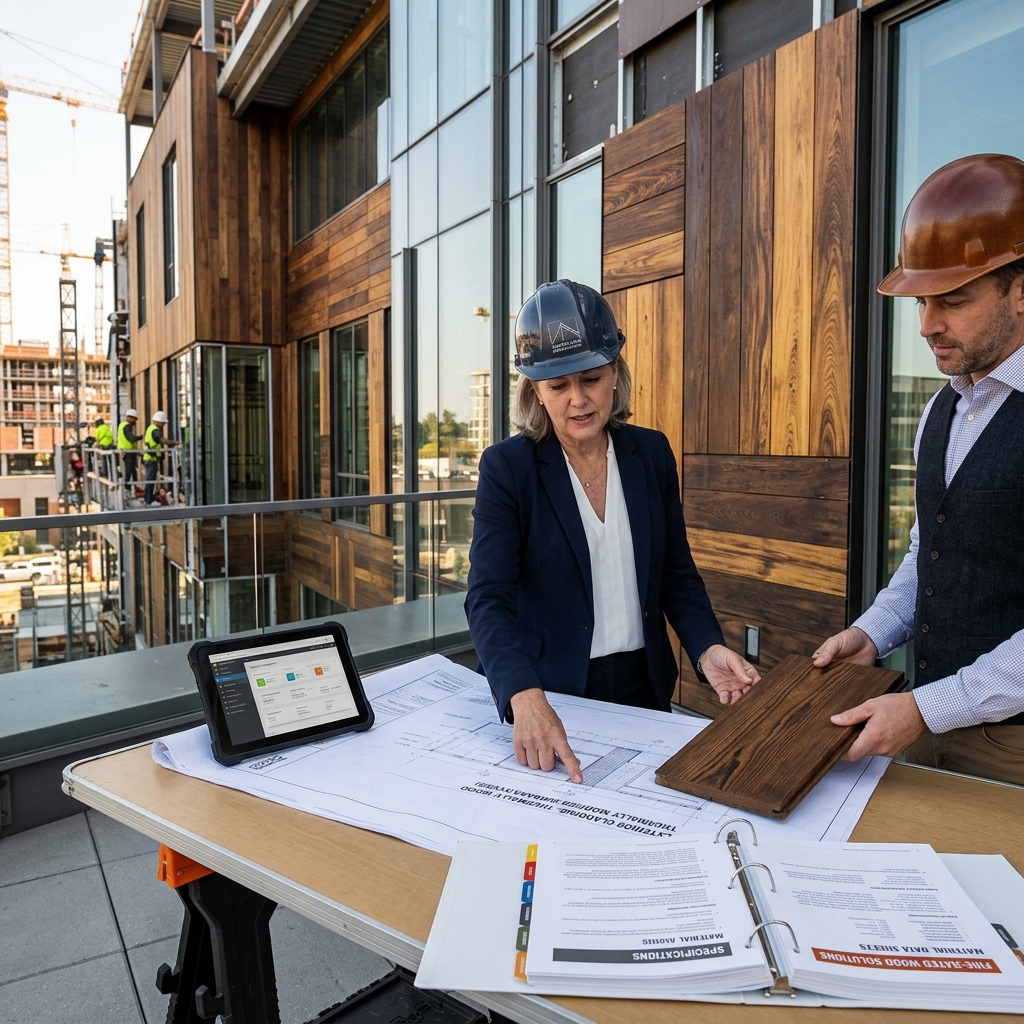
Action step: Specify a rainscreen cavity (minimum 1 inch) behind your Ambara or Ayuso cladding, paired with permeable, moisture-resistant sheathing. This assembly allows vapor transmission while preventing liquid water contact with structural elements, maximizing the durability advantage of your wood choice.
Fire-Rated Solutions for WUI Compliance
Projects in Wildland-Urban Interface zones across central and north Texas require Class A fire-rated exterior materials. Standard wood siding does not meet this requirement without chemical treatment that many architects reject on sustainability grounds.
We supply WUI Class A approved wood products that meet the stringent flame spread and smoke development criteria established by building codes. These materials undergo intensive testing to demonstrate they resist rapid flame propagation and minimize smoke generation when exposed to radiant heat and ignition sources.
Ambara and Ayuso can be sourced in fire-rated configurations when fire performance is required. This approach preserves your wood aesthetic while satisfying code officials and insurance carriers without relying on visible, applied fire-retardant treatments that degrade over time and alter wood color.
For projects in Dripping Springs, Spicewood, or other WUI-adjacent communities, specifying fire-rated wood cladding removes a significant permitting friction point and can accelerate project approvals. Architects increasingly pair Class A wood with metal flashing, non-combustible soffits, and tempered glazing to create visually cohesive, code-compliant facades.
Action step: Early in your design phase, verify your project’s fire rating zone with the local AHJ. Once confirmed, we can recommend whether standard thermally modified Ambara/Ayuso serves your needs or whether WUI Class A specifications are necessary, and provide the accompanying test documentation your architect and contractor will need.
Thermal Modification Technology Explained
Understanding thermal modification demystifies why these materials outperform untreated alternatives across humidity and temperature swings. The process heats wood to 350-450 degrees Fahrenheit in an oxygen-controlled kiln, typically for 24-48 hours, without chemical additives or pressure.
This heat alters the wood’s hemicelluloses, the compounds responsible for moisture absorption and dimensional movement. By reducing hemicellulose content, thermal modification improves the wood’s ability to resist water penetration while maintaining structural integrity. The result is wood that absorbs and releases moisture more slowly, minimizing the stress that drives cupping, twisting, and fastener failure.
Beyond moisture behavior, thermal modification darkens wood slightly and increases its hardness. These secondary benefits enhance durability against foot traffic, scratching, and UV degradation. A thermally modified siding system requires no special detailing; standard installation practices apply, but the material’s inherent stability eliminates many of the compensation measures required for untreated softwoods.
Architects working with us often appreciate that thermal modification represents a non-toxic performance enhancement. It aligns with LEED and Declare Label commitments while delivering measurable durability gains. The energy required for thermal modification is modest compared to chemical treatment processes or synthetic alternatives.
Action step: Request technical documentation from your supplier detailing the thermal modification parameters (temperature, duration, wood source) for Ambara and Ayuso. Consistent processing yields consistent performance; verify that your material comes from a certified, quality-controlled facility.
Sustainable Sourcing and FSC Certification
Architects committed to environmental stewardship expect transparent sourcing. We supply FSC-certified Ambara and Ayuso from responsibly managed forests that meet rigorous ecological and social standards.
FSC certification verifies that wood originates from forests managed for long-term productivity, biodiversity conservation, and respect for indigenous and community rights. For architects specifying materials for institutional or commercial clients with corporate sustainability mandates, FSC documentation provides proof of responsible sourcing and supports LEED v4.1 Material and Resources credits.
Thermally modified wood, in particular, aligns with circular economy principles. Because thermal modification extends service life without chemical additives, less frequent replacement reduces overall material demand and carbon footprint. A 25-year-lasting thermally modified cladding system generates fewer lifecycle impacts than a 12-year untreated alternative requiring midlife replacement.
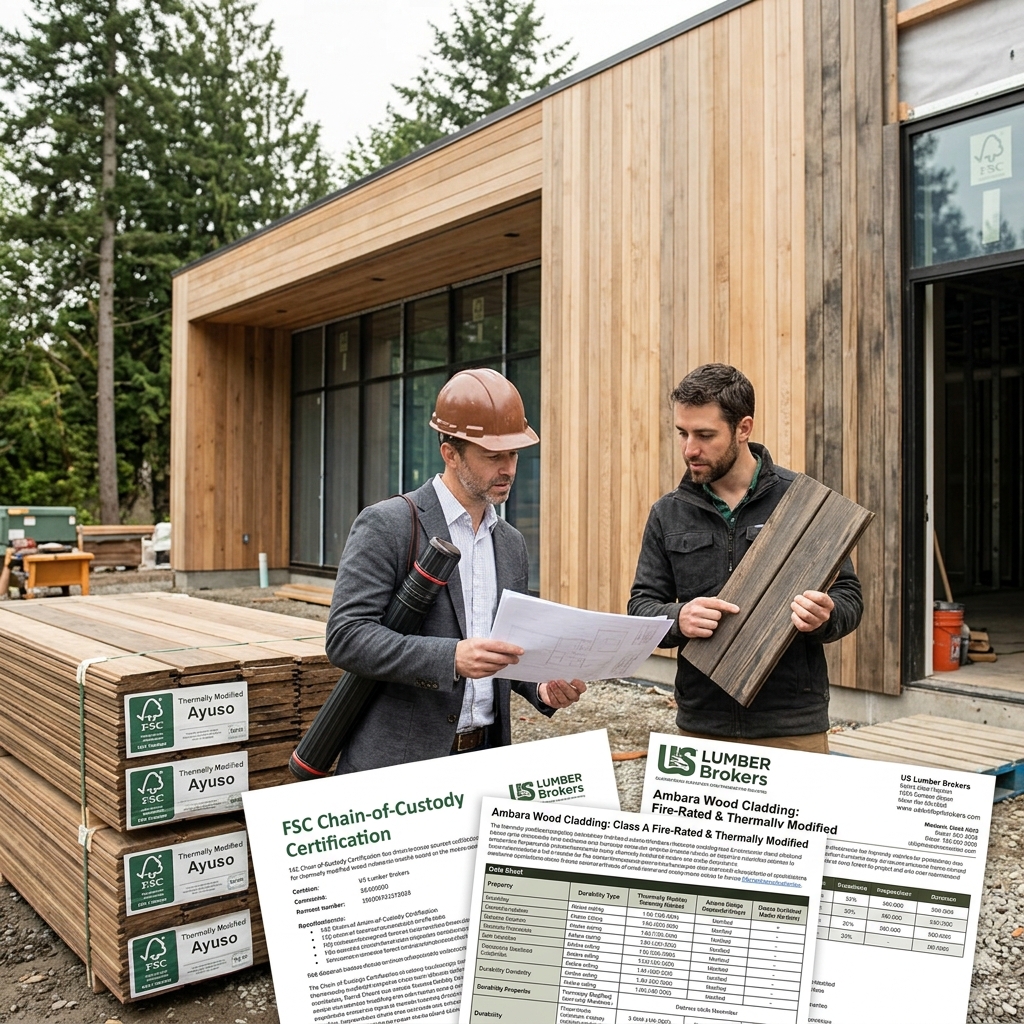
We maintain chain-of-custody documentation for all FSC materials we supply, enabling architects to include confident sustainability statements in project narratives and client communications.
Action step: Request an FSC certificate and chain-of-custody documentation for any Ambara or Ayuso order. This paperwork supports your LEED submission and project publicity, and ensures you’re sourcing from verified sustainable sources.
Design Flexibility for Contemporary Commercial Spaces
Thermally modified wood cladding expands your design palette without sacrificing performance. Ambara’s warm brown tone works beautifully as a standalone accent or in mixed-media facades pairing wood with metal, stone, or stucco. Ayuso’s neutral profile complements minimalist composition and draws attention to architectural form rather than material texture.
Contemporary commercial design increasingly embraces wood at larger scales. Thermal modification enables continuous cladding runs across full facade heights without the movement joints or color variation that untreated materials demand. This design freedom allows you to compose elevations with cleaner proportions and fewer visual interruptions.
Both materials accept finishes ranging from clear matte sealers that reveal natural grain to opaque stains that unify color while preserving wood texture. Oil-based and water-based options perform differently across Texas climates; we advise on finish selection during specification to ensure long-term aesthetic consistency.
For commercial projects where maintenance budgets are tight, natural weathering provides an alternative aesthetic. Ambara and Ayuso develop a distinguished gray patina over 3-5 years when left unfinished, a quality that appeals to architects designing for landmark permanence rather than perpetual newness.
Action step: Develop a 10-year facade maintenance protocol early in your design process. Specify finishes, cleaning schedules, and touch-up procedures that your client can realistically sustain. Thermally modified wood’s dimensional stability makes this planning achievable without expensive surprises.
Our Comprehensive Specification Support
We recognize that material selection is only the first step. We provide architects with detailed specification language, installation drawings, and performance documentation that move projects smoothly from design to construction.
Our team supplies cut samples, color-matched finish mockups, and detailed CAD details showing flashing, fastening, and cavity preparation. When questions arise during construction, we’re available to clarify specification intent and troubleshoot site-specific conditions. This support reduces change orders and ensures your design intent survives the translation to built form.
We also stock Ambara and Ayuso in the profile and dimension combinations contemporary design demands: flush-grain siding, vertical grain cladding, architectural timbers for soffit and beam expressions, and custom milling for unique applications. Our Texas location and nationwide distribution network means shorter lead times and reliable delivery.
For architects across the state—from Austin to Dallas to Houston and beyond—we understand regional climate diversity and code variations. This localized expertise informs our specification recommendations and ensures materials arrive site-ready for immediate installation.
Action step: Schedule a specification consultation with our team early in your design development phase. Share your project’s climate zone, fire rating requirements, and aesthetic direction. We’ll prepare preliminary material recommendations and timeline estimates.
Installation Best Practices and Longevity
Material quality means little without proper installation. Thermally modified Ambara and Ayuso demand standard best practices: a rainscreen cavity, moisture-resistant sheathing, appropriate fastening, and ventilation that prevents moisture accumulation.
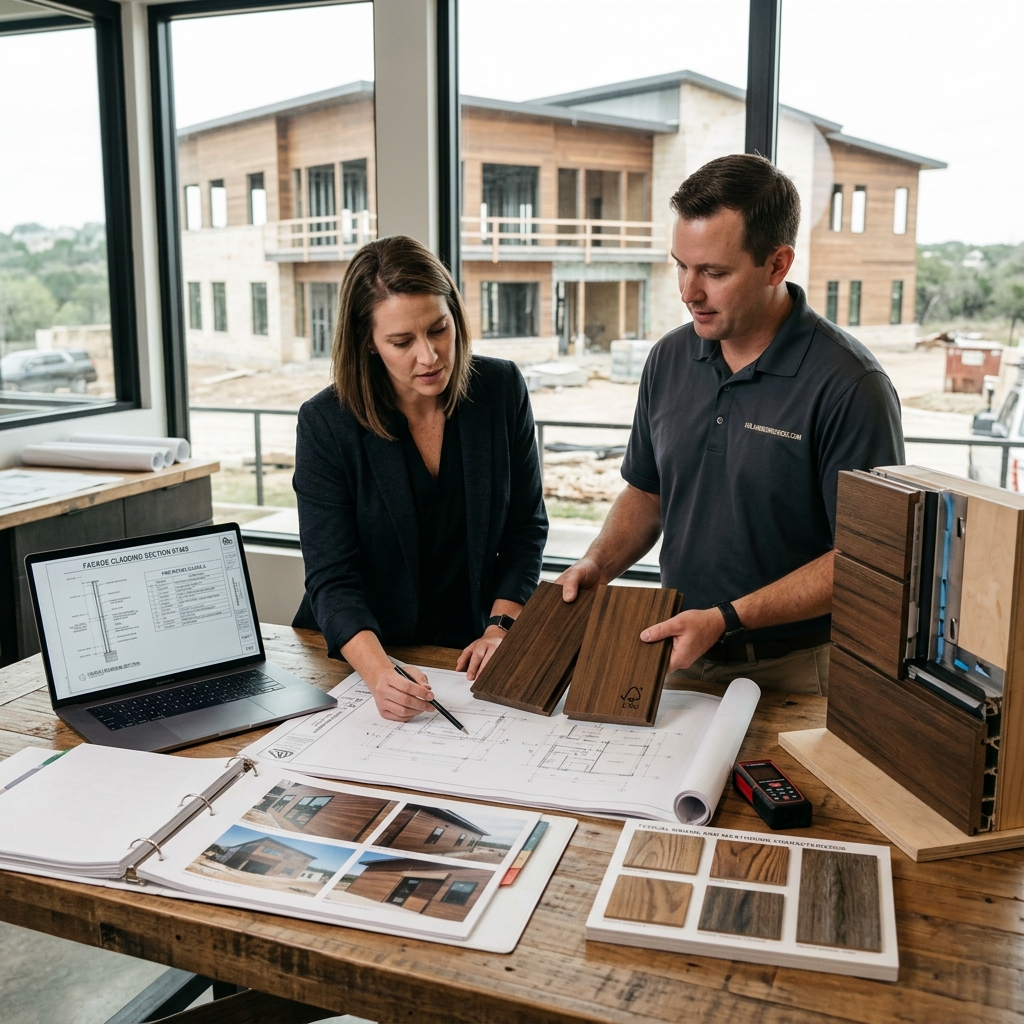
The material’s dimensional stability simplifies installation compared to untreated softwoods. Installers need not gap boards excessively for seasonal movement, and fastening patterns can be tighter without risk of splitting or buckling. However, flashing details remain critical. Flashings must direct water outboard and downward; any detail allowing water intrusion behind cladding will compromise longevity regardless of material durability.
We recommend specifying that your general contractor or specialty cladding subcontractor has prior thermally modified wood experience. While the installation is not exotic, familiarity with rainscreen assembly and understanding of the material’s reduced movement characteristics prevent costly field improvisation.
Proper fastening is non-negotiable. Stainless steel or hot-dipped galvanized fasteners prevent corrosion staining and dimensional distortion. Avoid standard mild steel fasteners; they compromise appearance and structural performance over time.
Action step: Include installation supervision and material inspection in your contract. Require your contractor to photograph the rainscreen assembly and flashing details before cladding installation. This documentation proves due diligence and protects all parties if performance questions arise years later.
Partnering with US Lumber Brokers for Your Next Project
Selecting Ambara or Ayuso wood siding is a commitment to durability, aesthetic expressiveness, and responsible material stewardship. These materials perform best when sourced from a supplier who understands architectural design intent and provides comprehensive technical support through specification, procurement, and construction.
At US Lumber Brokers, we’ve spent years building relationships with architects across Texas and the nation. We understand that contemporary commercial design demands materials that are simultaneously beautiful, durable, and responsibly sourced. Thermally modified hardwoods align perfectly with these values.
Whether you’re designing a boutique hotel in the Hill Country, a corporate office in downtown Austin, or a mixed-use development in Dallas, we’re equipped to supply Ambara, Ayuso, and complementary materials at the quality and scale your project demands. Our inventory includes a complete range of thermally modified options, FSC-certified softwoods, and Class A fire-rated products for WUI compliance.
Contact our specification team to request samples, technical documentation, and pricing for your next project. We’ll work collaboratively to ensure your material selections enhance both design and performance.
To place orders, order samples, or talk with a live person.
Frequently Asked Questions (FAQ)
What makes Ambara and Ayuso wood siding better than standard thermally modified wood for commercial projects?
We source Ambara and Ayuso because thermal modification fundamentally alters the wood’s cellular structure, delivering superior dimensional stability and rot resistance without chemical treatments. These materials outperform standard thermally modified options in high-moisture environments and withstand the thermal cycling common in Texas commercial architecture. For architects specifying exterior cladding on demanding projects, we’ve found these products maintain their performance characteristics across decades of exposure.
Can we specify Ambara and Ayuso siding for WUI Class A fire-rated requirements?
Yes, we stock WUI Class A fire-rated versions of both products for siding, cladding, and other exterior applications. Our inventory meets the stringent fire performance standards required in high-risk wildfire zones throughout Texas. When you’re designing in areas with Class A requirements, we can provide certified documentation and specifications to support your building code compliance.
How do we support architects during the specification and installation phases?
We provide comprehensive specification assistance including detailed material documentation, installation guidelines, and performance data tailored to your project requirements. Our team works directly with architects to ensure proper detailing for moisture management, fastening systems, and finishing schedules. We also maintain relationships with experienced installers throughout Texas who understand the nuances of high-performance wood cladding installation.


