

Why Ipe Decking Demands Superior Fastening Solutions
IPE decking represents one of the most durable and visually striking choices for outdoor spaces in Texas. Its rich chocolate-brown tones and exceptional hardness make it ideal for modern contemporary homes that celebrate natural materials and craftsmanship. However, this premium hardwood’s density and character demand fastening systems that match its quality.
Unlike softer woods that forgive installation shortcuts, Ipe requires precision. The wood’s tight grain structure makes pre-drilling essential, and the fasteners themselves must resist both corrosion and the significant seasonal movement that occurs in our Texas climate. A standard stainless steel screw simply won’t deliver the performance that architects and builders expect from a material this refined.
Hidden fastener systems address this reality. They eliminate visible screw heads that would mar Ipe’s aesthetic while simultaneously providing superior holding power and weather protection. For architects designing contemporary homes where every detail matters, this approach transforms decking from a functional element into a seamless design feature.
Actionable takeaway: If you’re specifying Ipe for a project, budget for hidden fastener systems from the start. The investment protects your material investment and delivers the clean lines modern design demands.
The Problem With Traditional Fasteners on Ipe
Surface-mounted fastening creates multiple challenges when working with Ipe. First, visible screw heads interrupt the visual flow that architects intentionally create with premium hardwood. A beautifully detailed deck loses its elegance when dotted with metal fasteners catching sunlight and creating visual noise.
Second, traditional screws struggle with Ipe’s extreme hardness. Even stainless steel fasteners can snap during installation if you’re not careful, and the wood’s density means fasteners can loosen over time as the material naturally shrinks and expands with seasonal changes. Texas heat cycles magnify this problem significantly.
Third, exposed fastener heads become water collection points. Rain sitting on a screw head creates a localized corrosion zone, and moisture penetrating around the fastener can eventually compromise the board’s integrity. After a few Texas summers and winters, you’ll notice discoloration around every visible fastener.
Traditional solutions also make refinishing problematic. When you need to sand and reseal your deck, those screw heads become obstacles that damage your equipment and create uneven surfaces. Hidden fastener systems eliminate all these friction points.
How Hidden Fastener Systems Preserve Ipe Beauty
Hidden fastener systems work by securing the deck board from underneath or along the edges, keeping all hardware completely out of sight. The fasteners remain protected from weather while the Ipe’s natural grain pattern and color remain the focal point. This approach aligns perfectly with contemporary architectural vision that emphasizes material integrity and honest design.
We offer several system types, each suited to different installation scenarios. Face-fastening systems use specially designed clips that hold boards in place while fasteners seat below the board’s surface. Under-fastening systems thread fasteners through the substructure, allowing boards to sit cleanly on top. Some systems combine both approaches for maximum security and versatility.
The visual difference is striking. A hidden fastener deck maintains the uninterrupted wood surface that contemporary architects prize. Clients notice it immediately, and the deck photographs beautifully without reflective distractions. More importantly, the fastening system’s invisibility means the Ipe’s character becomes the true design element, exactly as intended.
Beyond aesthetics, these systems allow natural wood movement. Ipe expands and contracts with humidity changes, and quality hidden fastener systems accommodate this movement without creating buckling or squeaking. The material breathes, the fasteners flex, and your deck remains stable and silent.
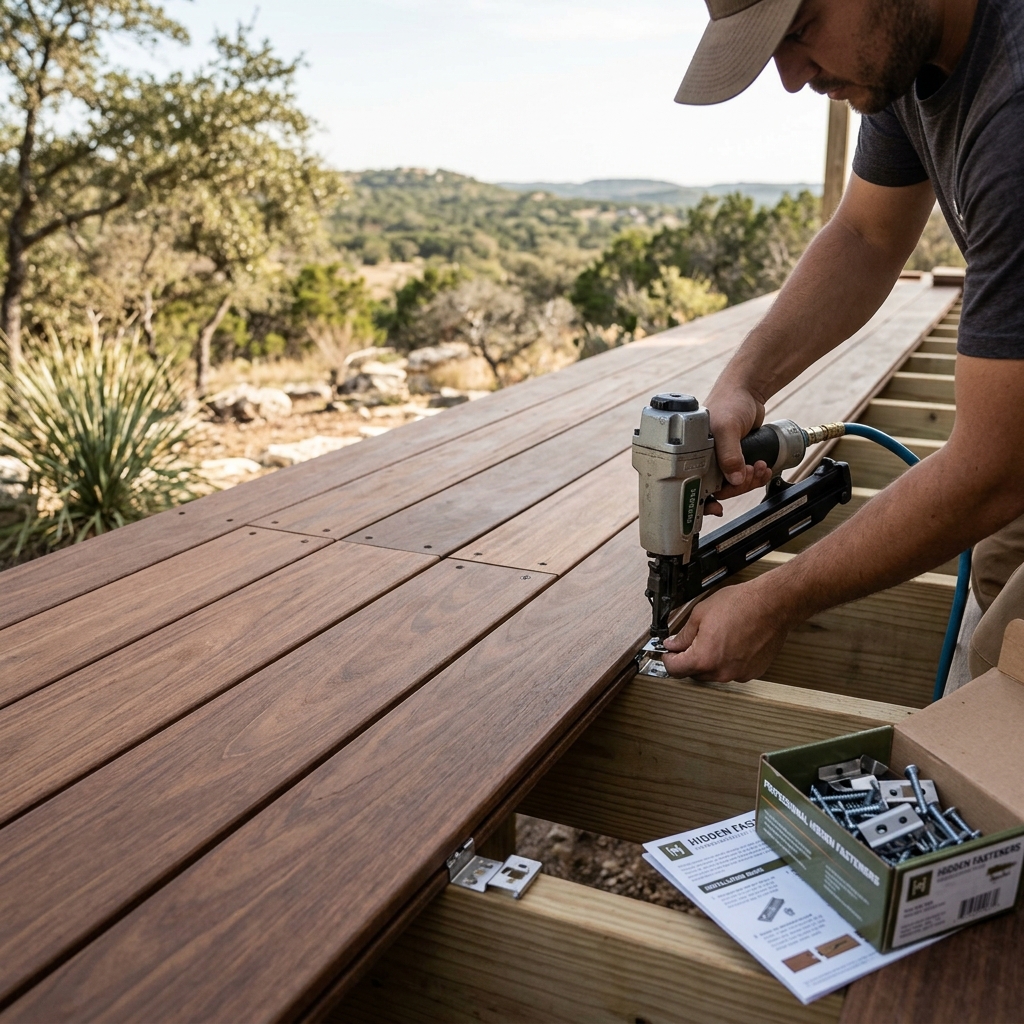
Our Complete Hidden Fastener Selection for Texas Projects
We stock and recommend systems engineered specifically for premium hardwoods like Ipe. Our inventory includes stainless steel and composite hidden fastener clips that pair with corresponding fastener grades. We carry solutions for both new construction and retrofit applications where you’re replacing failed conventional fastening.
For most Texas projects, we recommend 316-grade stainless steel fasteners paired with our premium composite clips. This combination resists the salt-laden air that affects some inland Hill Country properties while maintaining flexibility in our variable climate. The composite clips won’t corrode themselves, preventing the staining that can occur when metal clips bleed onto light-colored wood.
We also stock hardened steel systems for builders who prefer maximum holding power, though these require careful corrosion protection. Our fastener selection includes screw lengths matched to common Ipe board thicknesses and substructure depths, eliminating guesswork during installation.
Every system we recommend carries documentation showing load ratings and installation specifications. We provide this information because architects and builders need to verify that their fastening approach meets local building codes and project specifications. We won’t ask you to guess whether a system is suitable for your application.
What to do next: Bring your deck plans to us. We’ll review your specific board dimensions, substructure details, and climate exposure to recommend the exact fastening system your project needs.
Installation Best Practices for Optimal Performance
Proper installation determines whether your hidden fastener system delivers decades of performance or fails within a few years. The first critical step involves pre-drilling every fastening point. Ipe’s hardness demands this regardless of fastener quality, and it prevents splitting that weakens both board and fastener.
Follow the fastener manufacturer’s spacing requirements exactly. These specifications account for wood movement and load distribution. Spacing too far apart creates deflection; spacing too close concentrates stress and can cause splitting. Most systems recommend 12-16 inch spacing along the board length, with specific patterns for clip placement.
Climate considerations drive another best practice: leave adequate gaps between boards for expansion. Texas heat causes Ipe to expand noticeably, and you need clearance to accommodate this movement without boards crowding together. The system you choose should specify exact gap requirements based on local humidity ranges.
Substructure preparation matters equally. Ensure all joists are straight, properly spaced, and stable before beginning fastening. A bowed joist will transfer that curve to your boards regardless of fastener quality. We recommend inspecting and shimming the substructure as your first installation step.
Finally, verify that fasteners seat completely according to the system’s specifications. Some hidden fastener systems require a specific depth for the fastener head, and under or over-driving affects the system’s ability to accommodate wood movement. Quality impact drivers with adjustable clutches give you this control.
Why Architects Choose Our Fastening Systems
Architects specify our solutions because we’ve invested in understanding both the material and the design intent. Ipe demands respect, and that respect starts with fastening systems engineered for hardwood’s actual behavior, not generic assumptions.
Our team has worked with architects throughout Texas, from contemporary Lake|Flato inspired designs to custom homes in the Hill Country and Horseshoe Bay. We understand that these projects often specify Ipe specifically because of its visual character, and a fastening system that detracts from that character fails the design regardless of its technical performance.
We also provide detailed specifications and support. When an architect needs to verify that our system meets code requirements or load specifications, we deliver that documentation without delay. When a builder questions spacing or installation sequencing, we’re available to clarify and confirm. This level of support prevents installation problems and keeps projects on schedule.
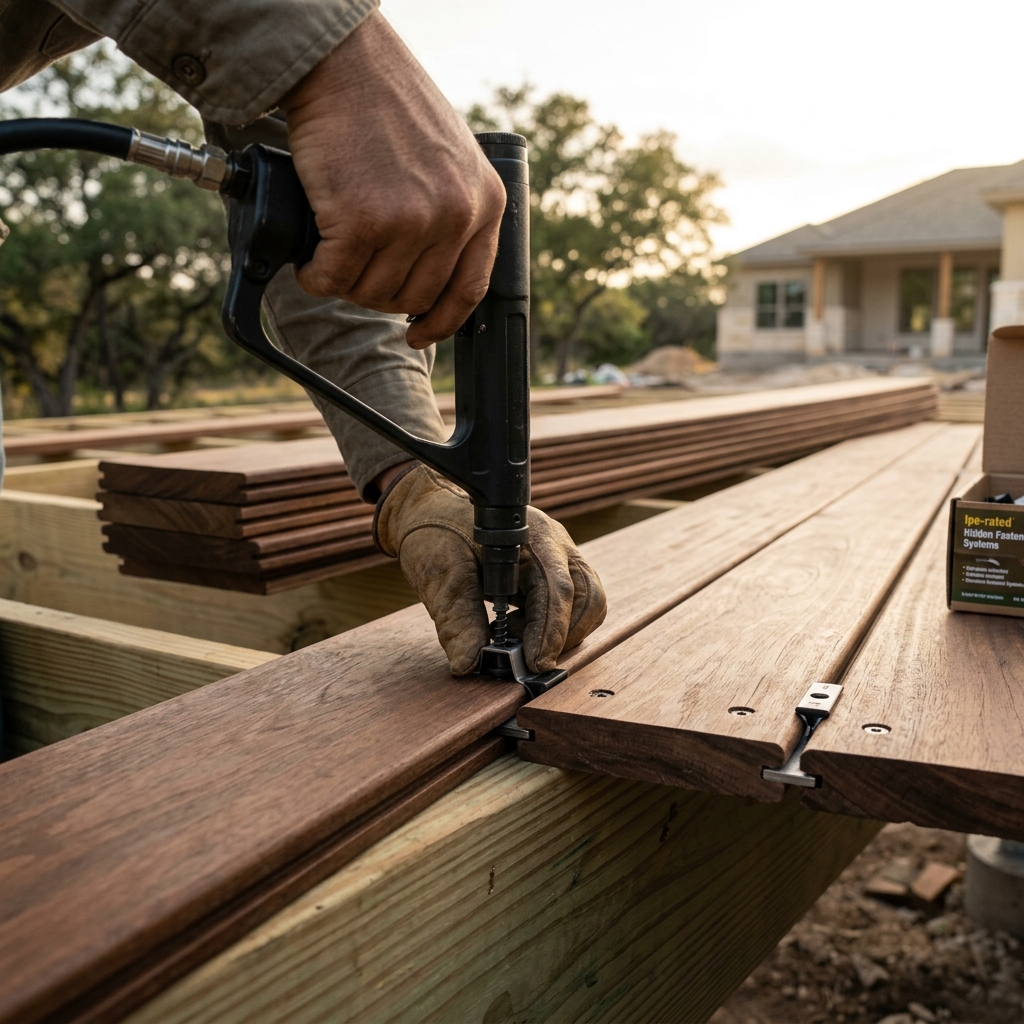
Beyond product, we offer material expertise. Ipe behaves differently than domestic softwoods, and our fastener selection reflects this reality. We don’t recommend generic hardware solutions for premium materials, and architects appreciate working with a supplier who understands these distinctions.
Durability and Weather Resistance in the Texas Climate
Texas weather creates specific challenges for deck fastening. Summer temperatures regularly exceed 95 degrees, winter freezes still occur despite our reputation for mild weather, and we experience significant humidity swings that cause wood movement. Hidden fastener systems designed for this climate must handle all these variables.
Stainless steel fasteners resist rust in our environment, but the specific grade matters considerably. 316-grade stainless outperforms 304-grade in areas exposed to salt or minerals, which affects Hill Country properties near limestone-heavy soils. We recommend 316-grade as the standard for permanent outdoor installations.
Wood movement in Texas is substantial. A deck board can expand almost a quarter-inch across its width during summer humidity peaks, then contract as we transition toward winter. Your fastening system must allow this movement without binding or creating stress that causes splitting. Quality hidden fastener systems incorporate slots or flexibility designed for exactly this range of motion.
The Texas sun also matters. UV exposure degrades fastener seals and composite materials over time. Our recommended systems use materials proven to resist 10-plus years of direct sunlight without significant degradation. If your deck receives full south-facing exposure, we’ll recommend fastener covers or finishes that extend this durability further.
Moisture management prevents the corrosion and wood degradation that shortens deck life. Fasteners that sit above the board surface collect water, while hidden fasteners remain protected. This simple principle explains why hidden fastener systems consistently outperform surface-mounted approaches in our humid climate.
Comparing Hidden Fastener Options for Your Project
Choosing between hidden fastener systems requires understanding your specific application. Face-fastening systems work excellently for new construction where you’re building the deck from scratch. These systems secure boards with clips mounted to the joist tops, creating an efficient installation process that builders appreciate.
Under-fastening systems suit retrofit situations where you’re replacing an existing deck or want maximum design simplicity. These systems thread fasteners up through the substructure, allowing boards to sit cleanly without visible hardware. Installation requires more precision, but the aesthetic payoff satisfies discerning architects.
Combination systems offer flexibility for complex layouts. If your deck incorporates curves, varied board widths, or areas where standard spacing doesn’t work, a combination approach lets you mix fastening methods while maintaining hidden hardware throughout.
Cost varies by system type and fastener grade. Stainless steel fasteners cost more than galvanized alternatives, but their longevity in Texas eliminates replacement expenses and the disruption that comes with failing fasteners. We recommend viewing fastener selection as a long-term investment rather than an initial cost.
Load ratings matter for decks that will support significant traffic or structures. Verify that your chosen system’s rating exceeds your project’s expected loads. Building code officials increasingly scrutinize deck fastening, and documentation of proper system selection protects both your project and your liability.
Our Expertise in Ipe Decking Solutions
We’ve built our reputation on understanding Brazilian woods like Ipe at every level. We don’t just stock materials; we invest in knowledge about how these woods behave during installation and throughout their service life. This expertise extends to every component, including fastening systems.
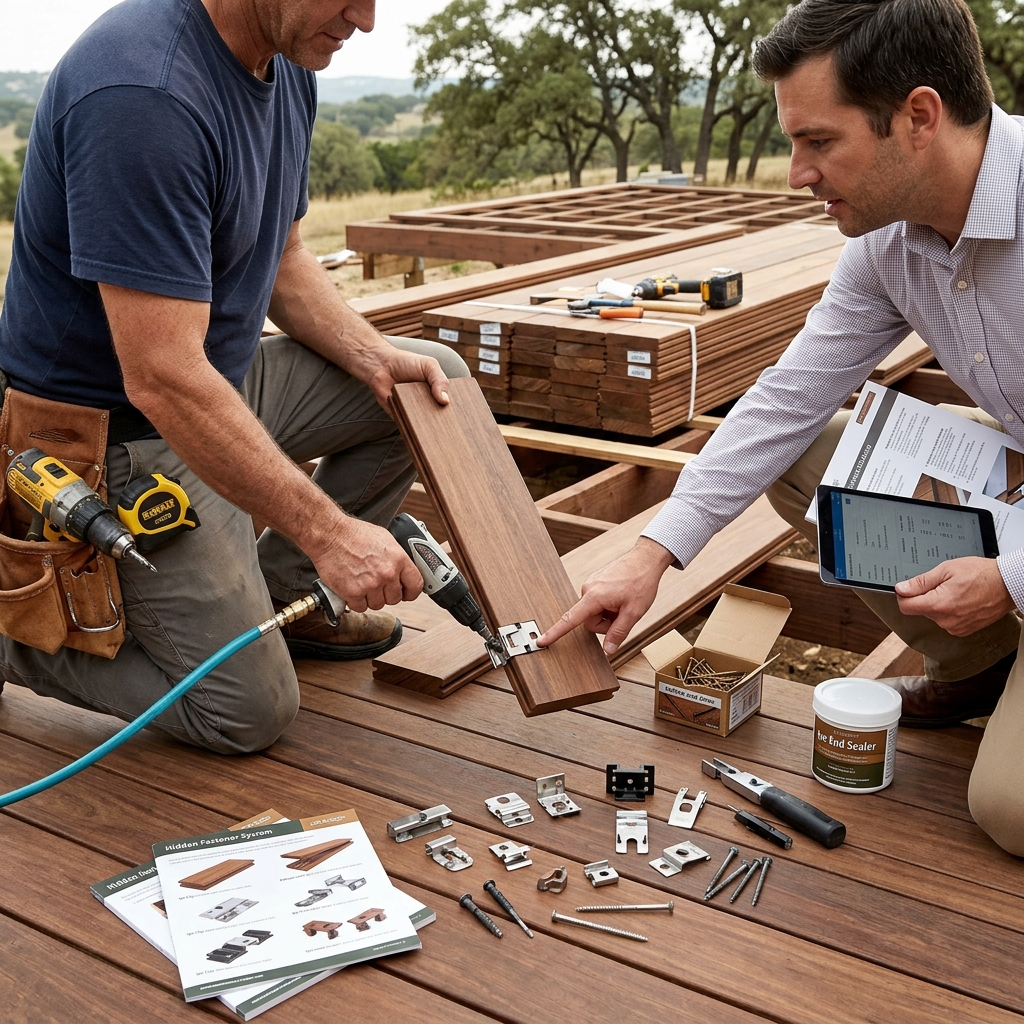
Our selection of Ipe from leading suppliers gives us access to premium material that deserves premium fastening. We work with architects and builders who demand the best, and that demands a supply partner who understands both aesthetic and technical requirements. We’ve solved countless fastening challenges across Texas, from complex Hill Country installations to large-scale commercial projects.
We also maintain relationships with fastener manufacturers and system designers. When new products emerge or questions arise about performance in specific conditions, we research these thoroughly before recommending them. Your project benefits from our ongoing investment in current knowledge.
Beyond product expertise, we understand project timelines and logistics. We stock common fastener sizes and systems locally, reducing delays and ensuring your installation schedule stays on track. For specialized applications, we coordinate directly with manufacturers to get what you need when you need it.
Getting Started With Your Ipe Deck Project
The best time to specify fastening systems is during the design phase, not after material arrives on site. Contact us with your deck specifications, and we’ll recommend the exact fastening system that matches your Ipe boards, substructure details, and architectural vision. Bring board dimensions, joist spacing, and any special requirements like load ratings or code considerations.
We’ll provide detailed specifications, installation guides, and samples if you want to evaluate physical hardware before committing. Our team answers questions about spacing, pre-drilling, gap requirements, and any concerns that arise during planning. This upfront clarity prevents installation surprises and keeps your project moving efficiently.
For projects already in progress, we can evaluate existing conditions and recommend retrofitting solutions. If you’re dealing with fastener problems on an existing Ipe deck, we’ll diagnose the issue and specify the correction that restores both safety and appearance.
Reach out today, and let’s ensure your Ipe decking receives the fastening system it deserves. Premium material demands premium solutions, and we’re here to deliver exactly that for your Texas project.
To place orders, order samples, or talk with a live person.
Frequently Asked Questions (FAQ)
What makes hidden fastener systems better than traditional fasteners for Ipe decking?
We recommend hidden fastener systems for Ipe because they eliminate the visual distraction of screws or nails while protecting the wood from moisture infiltration at fastening points. Traditional fasteners create dark spots and potential water entry paths that compromise both the aesthetic appeal and longevity of your deck. Our hidden systems keep the beautiful grain of your Ipe fully visible while maintaining structural integrity through the Texas climate’s heat and humidity cycles.
Which hidden fastener systems do we carry for Ipe projects?
We stock multiple options tailored to different project requirements, including stainless steel clips, composite fastening systems, and specialized hardware designed specifically for hardwoods like Ipe. Each system we offer has been selected based on its performance in Texas conditions and compatibility with Ipe’s density and dimensional stability. Our team can help you select the right fastening approach based on your deck’s location, design preferences, and budget.
How do hidden fasteners perform in Texas weather conditions?
We’ve found that quality hidden fastener systems withstand Texas heat, moisture, and UV exposure significantly better than exposed fasteners because they protect the fastening points from direct weathering. Stainless steel components resist corrosion from intense sun and occasional freeze-thaw cycles, while the fasteners remain hidden and protected beneath the deck surface. We always recommend fasteners rated for coastal or high-moisture environments if your project is near water features like Lake Travis or in humid areas around Houston.


