

Why Texas Architects Choose Thermally Modified Wood for Modern Facades
We work with architects across Texas who are designing homes that demand both visual warmth and structural integrity. Thermally modified wood siding has become the material of choice for these professionals because it delivers what natural wood promises without the complications that often derail luxury projects.
The appeal runs deeper than aesthetics. Architects selecting thermally modified wood are solving a real design constraint: how to feature authentic wood facades in a climate that challenges conventional lumber. Texas heat, humidity swings, and intense UV exposure can make untreated wood facades deteriorate faster than most homeowners expect. Thermally modified wood answers this by strengthening the material from within, not through chemical treatments, while preserving the tactile warmth and grain character that defines contemporary Texas architecture.
This approach aligns perfectly with the design philosophy we see in award-winning local firms. The material allows architects to maximize visual continuity between interior and exterior spaces, using wood tones and textures that feel intentional rather than compromised by practical limitations.
Next step: If you’re specifying facade materials for an upcoming project, consider requesting samples in your preferred wood species to evaluate color depth and grain expression before finalizing selections.
The Problem: Finding Durable, Sustainable Wood Materials for High-Performance Design
Modern custom homes in Texas face a genuine material challenge. Standard wood siding and cladding, while beautiful, requires either frequent maintenance or chemical preservatives that conflict with sustainability goals. This creates tension between the architect’s vision and the builder’s reality.
The core issues we see repeatedly:
- Natural softwoods (cedar, hemlock, fir) weather unpredictably in Texas humidity and heat, requiring regular staining or replacement cycles.
- Chemical-treated lumber introduces toxicity concerns that sophisticated clients increasingly reject.
- Composite alternatives deliver durability but sacrifice the authentic wood character that defines high-end contemporary design.
- Fire-rated wood treatments often compromise workability or create surface appearance issues.
- Sourcing genuinely sustainable lumber in the volumes needed for large facade projects remains difficult.
Architects working on luxury homes cannot compromise on either durability or design integrity. The material must perform for decades while looking intentional, not tired. This is where thermally modified wood bridges the gap that conventional options cannot.
How Thermally Modified Wood Solves Durability Without Compromising Aesthetics
Thermally modified wood undergoes a controlled heat treatment process that fundamentally alters the wood’s cellular structure, increasing density and reducing moisture movement. This isn’t a surface coating or chemical infusion; the transformation happens throughout the material.
The result is wood that:
- Resists cupping, warping, and checking across extreme temperature and humidity cycles
- Naturally resists decay and insect damage without chemical preservatives
- Maintains dimensional stability far superior to conventional lumber
- Develops rich, deepened color that ages beautifully rather than graying or deteriorating
- Remains fully workable with standard tools and techniques
- Complies with fire-rating requirements without surface treatments
For architects, this means the wood facade you specify actually performs as designed. The aesthetic character deepens over time rather than degrading, and the material remains structurally sound across the lifetime of the home.
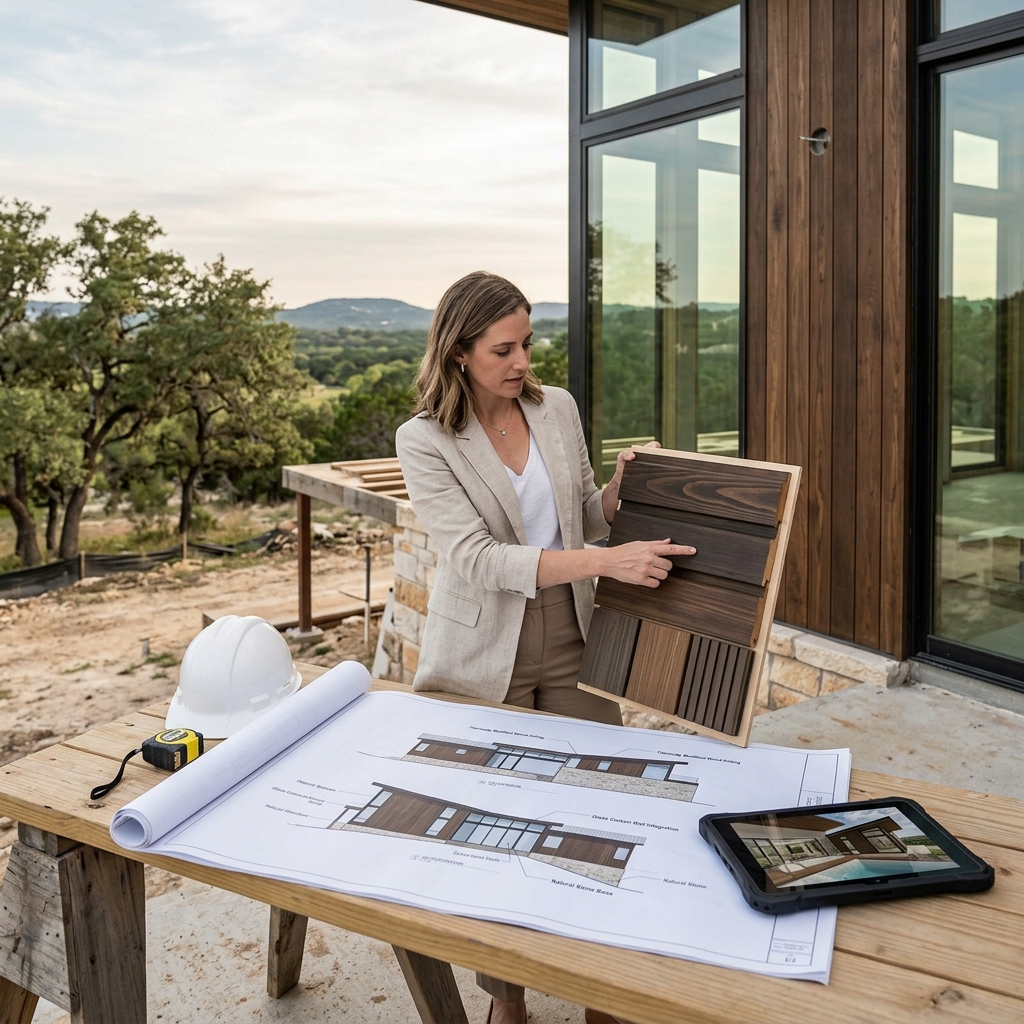
We work regularly with builders executing complex facade designs in thermally modified wood. The feedback is consistent: the material cuts back-and-forth field callbacks related to warping or weathering issues that plague conventional wood systems.
Our Thermally Modified Wood Collection: Premium Options for Luxury Projects
We supply an extensive range of thermally modified products tailored to contemporary design specifications. Our inventory includes Thermally Modified Ash, Thermally Modified Pine, Thermally Modified Poplar, and Thermally Modified Ayous, all available in siding, cladding, and decking profiles suited to architect-specified details.
Each species brings distinct character to luxury projects:
- Thermally Modified Ash: Rich chocolate tones with pronounced grain, exceptional for dramatic soffits and accent cladding
- Thermally Modified Pine: Warm, even coloration with subtle grain; ideal for large seamless facade expanses
- Thermally Modified Poplar: Lighter palette with refined grain; excellent for contemporary designs emphasizing brightness and openness
- Thermally Modified Ayous: Pale honey tones that deepen naturally; versatile for both warm and contemporary minimalist contexts
We also stock Arborwood Cladding alongside our full range of thermally modified hardwoods including Cumaru, Garapa, and Massaranduba for decking and accent applications.
All materials arrive at the job site ready for installation without additional treatment, simplifying project scheduling and reducing on-site logistics complexity. We coordinate directly with builders to ensure delivery aligns with construction sequencing.
Performance Specifications: Fire Rating, Stability, and Longevity
Thermally modified wood decking systems and siding meet WUI Class A fire ratings for high-risk areas across Texas, a critical requirement in Hill Country and wildland interface zones. This eliminates the false choice between aesthetic wood facades and fire-rated protection.
The stability metrics speak to the material’s engineering advantage:
- Dimensional movement typically 50-70% less than untreated softwoods across seasonal humidity cycles
- Moisture equilibrium maintained even in fluctuating Texas climates
- Decay resistance equivalent to naturally durable tropical hardwoods
- Expected service life of 20-30+ years without maintenance beyond occasional cleaning
For architects specifying large glass-to-wood transitions or detail-intensive facade designs, this stability matters. Warping or movement creates visual discontinuity and can compromise the precision that distinguishes custom architecture from standard construction.
We provide full technical documentation, moisture testing data, and fire-rating certificates for every project. Builders and their structural engineers can specify thermally modified wood with confidence in both the material’s performance and its documented compliance with local codes.
Integration with Glass and Natural Materials: Creating Seamless Indoor-Outdoor Spaces
The contemporary Texas architecture you’re designing often centers on visual and spatial continuity between interior and exterior environments. Thermally modified wood facades create this continuity with an authenticity that composites cannot match.
Consider a common scenario: a modern home with expansive glass walls opening onto a wood-clad exterior, with warm wood tones visible from inside. That visual warmth matters. It creates the psychological sense of natural material enclosure that clients are investing in high-end custom homes to experience. Thermally modified wood maintains this tactile authenticity while withstanding direct weather exposure without degradation.
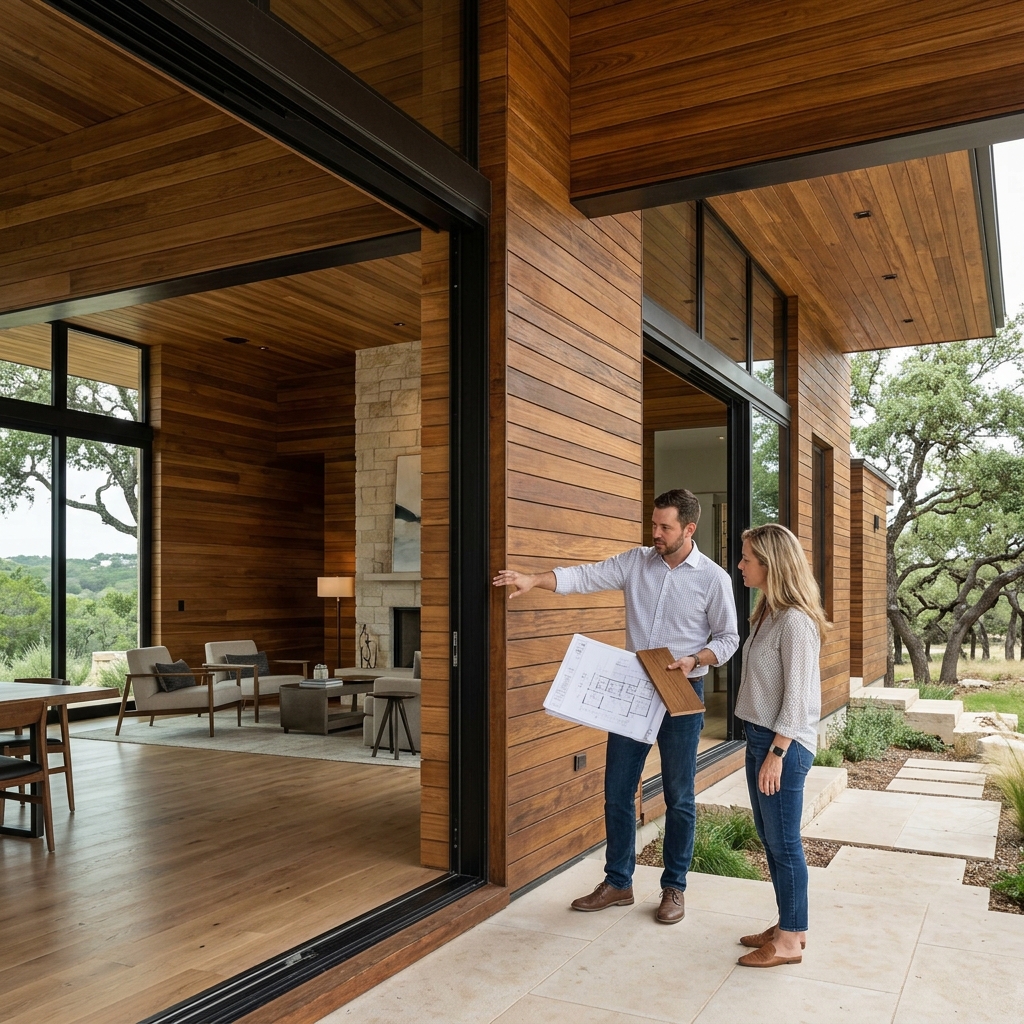
The material also coordinates seamlessly with other natural elements you likely specify:
- Stone and stucco base elements; the wood sits naturally against mineral textures
- Copper or weathered metal accents; the wood tones complement oxidized metals beautifully
- Native landscaping; wood cladding reinforces the connection to regional character
- Large expanses of glass; the wood frame weathers predictably, maintaining visual clarity
We help architects think through facade layering, creating depth through thermally modified siding and cladding systems that enhance rather than compete with your glass-forward design intent.
Sourcing and Sustainability: FSC Certified and Environmentally Responsible
Your clients expect transparency about material sourcing and environmental impact. We supply FSC certified thermally modified wood products, ensuring responsible forest management practices and full chain-of-custody documentation.
The sustainability advantage runs deeper than certification:
- Thermal modification extends material lifespan dramatically, reducing replacement cycles and embodied carbon impact
- The process requires no chemical preservatives, eliminating toxicity concerns for residents and builders
- Thermally modified wood sequesters carbon throughout its service life
- We source from responsibly managed forests across North America and internationally, depending on your species requirements
- The processing itself uses waste heat and renewable energy where possible
For architects whose clients prioritize environmental responsibility (which is increasingly standard for luxury custom homes in Texas), this positions your material specifications as both beautiful and defensible from a sustainability perspective.
Real-World Applications: Thermally Modified Wood in Contemporary Texas Homes
We’ve supplied thermally modified wood cladding and siding for high-end residential projects across Austin, Dallas, Houston, and throughout the Hill Country. The applications reveal how architects are using the material to solve specific design challenges.
One recent Hill Country project used Thermally Modified Ash for a full facade system on a glass-and-wood modern home, creating bold vertical grain expression that ages beautifully as the wood deepens. Another Downtown Austin residence specified Thermally Modified Pine for extensive soffits and screen elements, maintaining clean horizontal lines without the warping that would have compromised the design’s precision.
In Dripping Springs and Spicewood, we’ve seen Thermally Modified Ayous used for decking transitions that flow visually from interior wood flooring to exterior decking, creating seamless material continuity that enhances the indoor-outdoor design intent.
These projects worked because the material was specified to solve specific design problems, not selected as a default option. Your material choices should always connect to your design narrative.
Working with US Lumber Brokers: From Specification to Installation Support
We partner with architects and builders from the specification phase through project completion. Our process ensures your material selections align with design intent and project logistics.
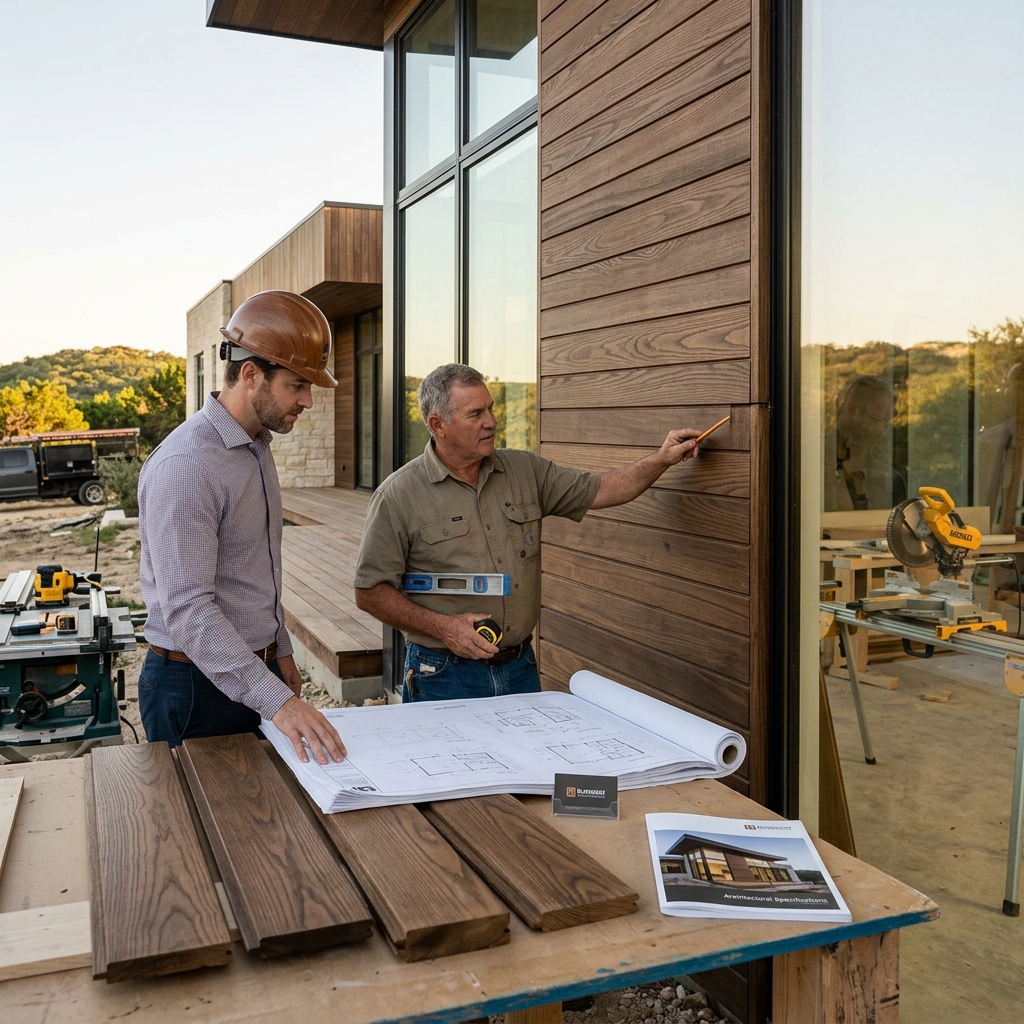
Here’s how we typically work with architects:
- Design consultation: We review your facade details and help refine profiles, finishes, and species selections to maximize aesthetic and performance outcomes
- Sample coordination: We send samples in your chosen species and profiles so you can evaluate color depth, grain expression, and surface character
- Technical documentation: We provide fire ratings, moisture data, durability testing, and all specifications needed for code compliance and builder confidence
- Material management: We handle sourcing, logistics, and delivery coordination to ensure materials arrive sequenced for efficient construction
- On-site support: Our team is available to address any field questions during installation
We’re not a commodity supplier. We specialize in serving architects who are designing custom homes that demand precision in both material selection and execution. Your specifications matter to us because they define how the final building will look and perform.
Why Architects Trust Our Expertise for Custom Home Projects
We’ve spent years working specifically with Texas architects and their builders, understanding the material demands of contemporary design in this climate. We stock the depth of inventory, maintain relationships with premium suppliers worldwide, and invest in the technical knowledge that architects expect.
When you specify materials through us, you’re working with people who understand thermally modified wood not as a product, but as a design tool that solves real problems in high-end residential architecture. We know the fire-rating requirements across different Texas jurisdictions. We understand how these materials work with the glass-forward design approaches that define contemporary Texas architecture. We maintain direct relationships with premium sources for FSC certified materials, hardwood cladding, and specialty products that may not be readily available through standard building supply channels.
For architects designing custom homes in Austin, Dallas, Houston, San Antonio, the Hill Country, or anywhere across Texas, we’re the reliable partner who can turn material specifications into finished facades that perform and age beautifully for decades.
Contact us with your next project’s material requirements. We’ll help you specify thermally modified wood siding and cladding systems that align with your design vision while delivering the durability and performance that sophisticated clients expect.
To place orders, order samples, or talk with a live person.
Frequently Asked Questions (FAQ)
What thermally modified wood products do we stock for facade projects?
We carry a comprehensive range of thermally modified materials specifically suited for architectural applications, including Thermally Modified Ash, Pine, Poplar, and Ayous in siding, cladding, and decking profiles. All our thermally modified inventory meets the durability and fire-rating requirements that architects specify for high-performance Texas projects, and we can source additional species based on your design specifications.
Can we supply WUI Class A fire-rated wood for residential facades in Austin and surrounding areas?
Yes, we stock and distribute WUI Class A approved wood products suitable for siding, cladding, decking, and fencing throughout Austin, the Hill Country, and all of Texas. We understand the fire-safety requirements for residential construction in our region and maintain inventory of pre-approved materials so your projects meet local and state codes without delays.
How do we support architects from specification through material delivery?
We work directly with your team from the initial material selection through final delivery, providing detailed specifications, samples, and technical documentation for your construction drawings. Our expertise in sourcing FSC-certified and performance-grade materials means we can help you meet both your aesthetic vision and the performance requirements your designs demand.


