

Why Decking Material Choice Matters for Your Project Budget
Your decking material decision shapes far more than aesthetics. It determines maintenance cycles, replacement timelines, and total project costs over 15-20 years. We work with architects and contractors across Texas who face this choice constantly, and the right answer depends on your specific priorities and site conditions.
A budget-conscious approach means looking beyond the sticker price. Materials that cost less upfront often demand expensive repairs within five years. Conversely, premium materials may feel costly initially but deliver dramatically lower long-term expenses. Understanding the full financial picture helps you defend your material selection to clients and stakeholders.
The Central Texas climate, with its intense summer heat, occasional freeze-thaw cycles, and moderate moisture swings, stresses decking materials differently than coastal or northern regions. Your choice should account for how these environmental factors affect performance and longevity.
What to do next: Before selecting a material, identify your project’s expected lifespan, annual maintenance budget, and climate exposure. These three factors determine which option delivers genuine value.
Understanding TimberTech Composite Construction and Performance
TimberTech composites blend wood fiber and plastic polymers into boards that resist rot, splintering, and insect damage. We stock TimberTech because it offers reliable performance for clients who prioritize minimal maintenance and consistent appearance over decades.
The composition matters. TimberTech boards contain roughly 50-55% wood fiber and 45-50% polyethylene and polypropylene. This blend creates dimensional stability and resistance to moisture absorption that natural wood cannot match. The plastic component protects the wood fiber from the conditions that cause natural decking to fail.
Performance characteristics include:
- No rotting, splintering, or termite damage
- Color fading occurs gradually but remains subtle
- Minor surface damage from impacts cannot be sanded out
- Thermal expansion and contraction in extreme Texas heat (less pronounced than wood, but notable)
- Typically maintains appearance for 15-20 years with minimal intervention
TimberTech products perform well in Austin’s hot, dry summers and handle freeze-thaw cycles better than wood alone. The boards won’t cup, twist, or warp as natural materials do when moisture levels fluctuate seasonally.
What to do next: Request samples of specific TimberTech profiles you’re considering. Observe them in direct sunlight and note the color tone. Composites do fade, and seeing real samples in your lighting conditions matters more than marketing photos.
The Strengths of Premium Hardwood Decking Materials
We supply premium hardwoods including IPE decking, Cumaru, Garapa, and Massaranduba. These materials deliver natural beauty and durability that composite alternatives cannot replicate. Hardwood decking ages gracefully and can be refinished, sanded, and restored to near-original condition even after 20+ years.
Brazilian hardwoods possess extreme density and natural oils that resist rot, insects, and weathering. Ipe density exceeds 3.5 on the Janka hardness scale, making it harder than most steel tools. This density means splinter resistance, dimensional stability, and resistance to surface damage that compromises appearance.
Natural wood decking offers tactile warmth underfoot, traditional appeal, and the ability to repair visible damage through sanding or refinishing. A scratched or weathered Ipe deck can be restored to showroom condition. A scratched composite deck cannot recover its original finish.
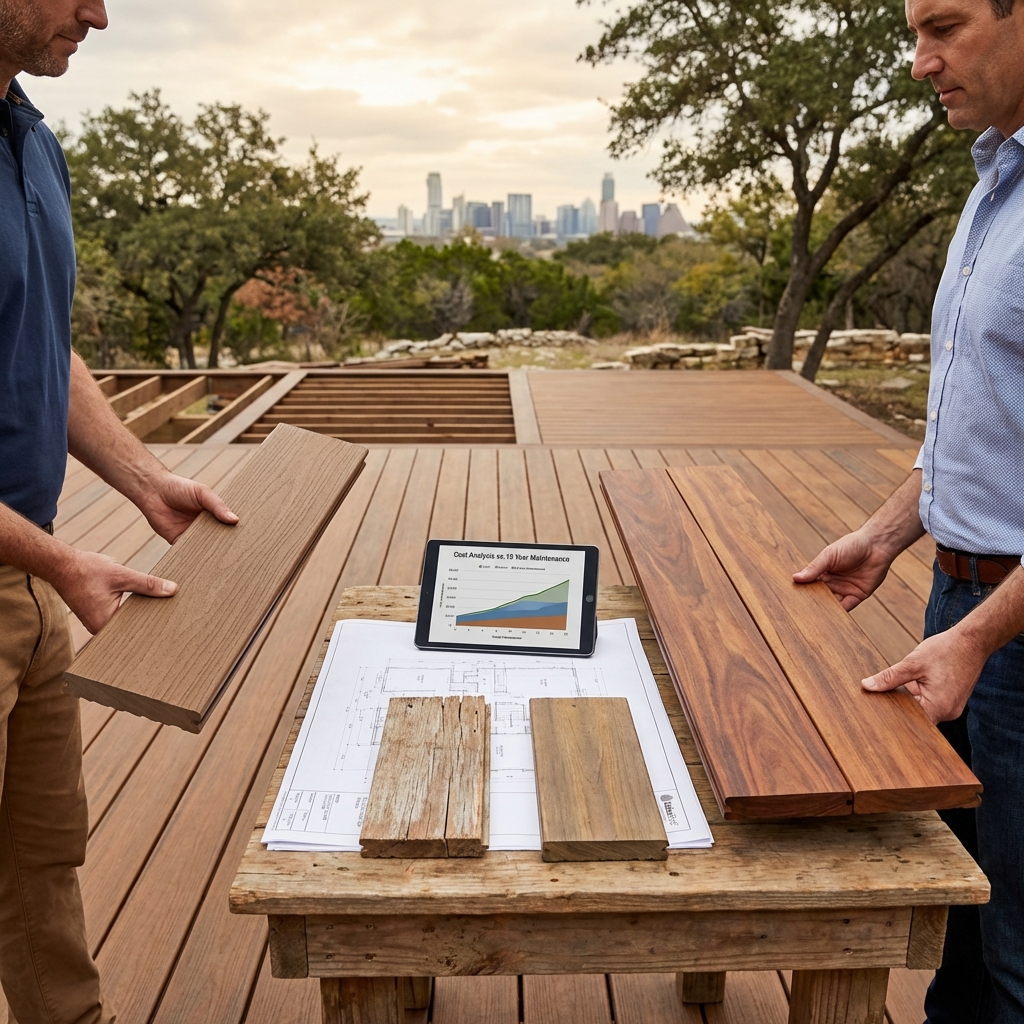
Color variation and grain patterns in hardwood create visual depth that uniform composite boards cannot match. This aesthetic quality matters significantly for high-end residential projects and luxury custom builds where natural materials communicate quality.
What to do next: Inspect samples of the specific hardwood species in both freshly milled and weathered states. Understanding how your chosen material will patina over time prevents client surprises.
Weathering and Climate Resistance: What Central Texas Demands
Austin’s climate presents specific challenges. Summer temperatures exceed 95 degrees F regularly, humidity spikes in spring and early fall, and occasional sub-freezing nights create thermal cycling stress. Your decking material must handle all three conditions without premature failure.
TimberTech composites manage temperature swings more uniformly than wood. The plastic matrix resists moisture absorption, so swelling and shrinking cycles remain minimal. However, the plastic component expands more noticeably than wood in direct sunlight, creating slight surface warping in extreme heat that returns to normal as temperatures cool.
Premium hardwoods like Ipe resist moisture penetration through their density and natural oils. They shrink and expand less than softwoods but still move slightly with humidity changes. The key advantage is that this movement remains predictable and minimal. Ipe boards that are properly fastened and spaced rarely develop the cupping or twisting common in pressure-treated softwoods.
Cypress and Southern Yellow Pine, available through our inventory, perform respectably in Central Texas but demand regular maintenance to prevent decay in areas where moisture pools. Hardwoods eliminate this concern entirely.
Neither composite nor hardwood decking should be installed directly against soil or concrete without air circulation. Both materials need ventilation underneath to manage moisture and prevent accelerated deterioration.
What to do next: Verify that your deck design includes proper slope for drainage and adequate airflow beneath the surface. This foundation practice matters more than material choice in preventing moisture-related failures.
Maintenance Requirements and Long-Term Care Costs
Composite decking requires minimal ongoing care. We recommend rinsing with water annually and spot-cleaning stains as they appear. That’s genuinely it for most composite installations. No sealing, staining, or sanding necessary. The polymer shell protects the wood fiber underneath, and this protection remains stable for 15-20 years.
This simplicity costs money upfront but saves labor, materials, and professional service calls over time. Property managers and homeowners who prioritize ease of ownership consistently choose composites.
Hardwood decking demands regular maintenance to preserve appearance and longevity. Expect sealing or staining every 2-3 years, light sanding of worn spots every 5-7 years, and eventual complete refinishing after 10-15 years. These tasks cost money and require professional expertise to execute properly.
The payoff is that hardwood decks respond to maintenance. Neglected composite decks fade and become dull. Neglected hardwood decks can still be restored to beautiful condition through refinishing, recovering lost value in the process.
Cost comparison over 20 years:
- Composite: higher initial material cost, minimal labor costs, replacement at year 20
- Hardwood: lower initial material cost, consistent maintenance labor, potential refinishing, possible year 25+ lifespan with care
What to do next: Calculate maintenance labor costs for your specific project size. For decks smaller than 400 square feet, hardwood maintenance might cost $500-1000 annually. For larger decks, this climbs quickly, making composites more economical.
Fire Safety and Building Code Compliance in Austin
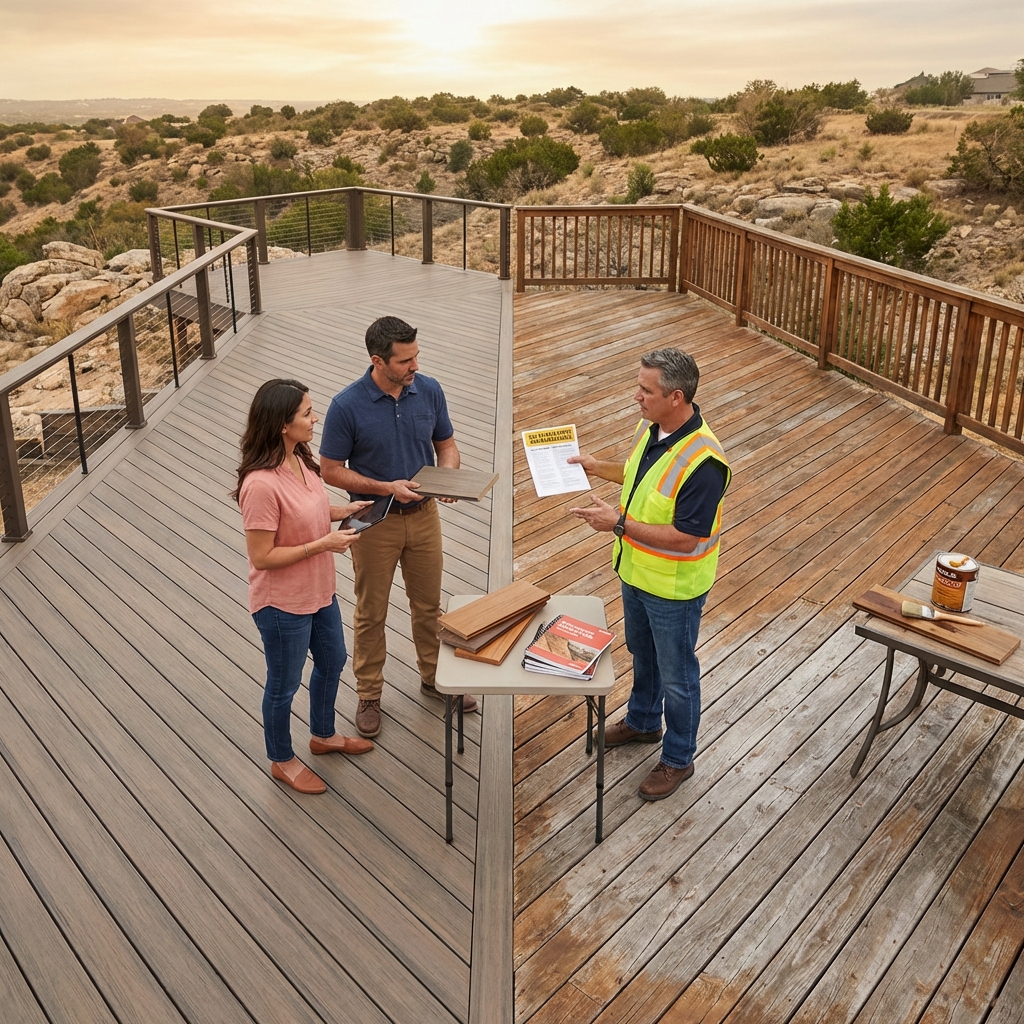
Austin’s wildland-urban interface regulations increasingly require fire-rated building materials. We stock WUI Class A fire-rated wood products specifically to meet these requirements across Texas. These materials undergo testing to resist ignition and limit flame spread, essential for properties in high-risk zones.
TimberTech composite decking does not receive Class A fire ratings by standard. While composites won’t ignite easily, they can melt and release volatile compounds when exposed to extreme heat. This limitation matters for jurisdictions with strict WUI requirements.
Premium hardwoods like Ipe are naturally dense and resistant to ignition, but they don’t automatically meet Class A specifications without treatment. We source treated hardwood options that satisfy fire code requirements for projects demanding maximum safety assurance.
Austin’s building department reviews decking materials for properties near sensitive areas. Verify fire rating requirements during the planning phase, not during construction, to avoid costly material substitutions.
What to do next: Contact the Austin building department or your local jurisdiction’s fire marshal if your project falls within a mapped WUI zone. Confirm material specifications before finalizing your decking selection.
Investment Value: Total Cost of Ownership Analysis
True value emerges when you calculate the total cost of ownership across the deck’s expected lifespan. This includes materials, installation labor, maintenance costs, refinishing, and eventual replacement.
For a typical 500-square-foot deck in Central Texas:
TimberTech Composite: $8,500-12,000 material, $3,000-4,000 installation, $100-200 annual maintenance (20 years = $2,000-4,000), $0 refinishing, replacement year 20. Total: $13,600-20,000 over 20 years.
Premium Hardwood (Ipe): $6,500-9,000 material, $3,000-4,000 installation, $500-1,000 annual maintenance (20 years = $10,000-20,000), $2,000-3,000 refinishing at year 10, possible extension to year 25. Total: $21,500-36,000 over 20 years, or $25,000-41,000 if extended to year 25.
These numbers reveal that composites typically cost less over 20 years, while hardwoods deliver better value if you expect to keep the deck beyond 20 years and can manage ongoing maintenance.
What to do next: Build a simple spreadsheet with your specific material costs, annual maintenance budget, and expected deck lifespan. This clarity helps you defend your selection to stakeholders and clients.
Why We Recommend Strategic Material Selection Based on Project Goals
We don’t recommend one material across all scenarios because context determines the right choice. Your project goals should drive the decision, not the other way around.
Choose composite decking if your client prioritizes low maintenance, consistency of appearance, and predictable costs. Commercial properties, rental homes, and owner-occupied residences where maintenance attention is limited benefit dramatically from composite performance.
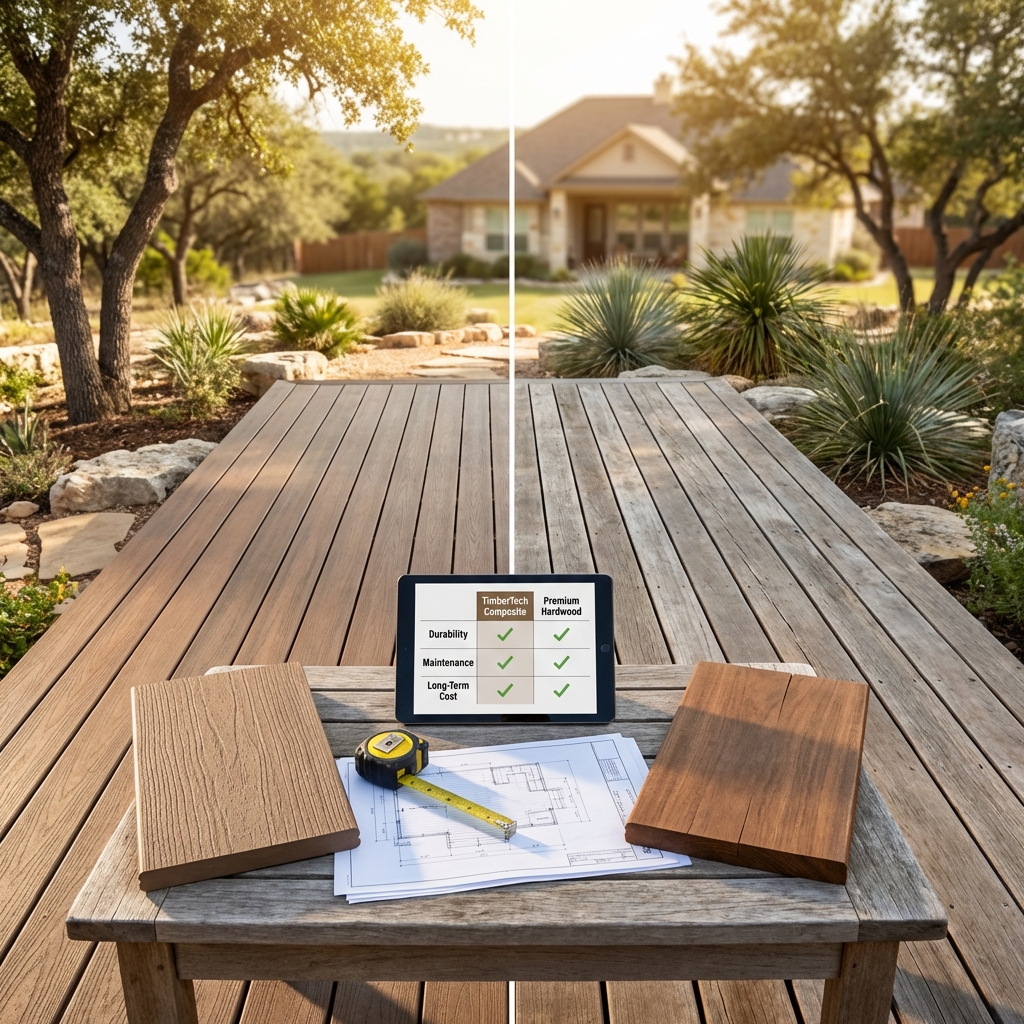
Choose premium hardwood decking if your client values natural aesthetics, plans long-term ownership (15+ years), has budget for professional maintenance, or needs Class A fire ratings for property safety. High-end custom homes, architectural statements, and projects in WUI zones often justify hardwood investment.
The worst outcome occurs when clients select composites expecting zero maintenance, or hardwood expecting no effort. Clear expectations prevent disappointment and ensure satisfaction with your material choice.
What to do next: Have a detailed conversation with your client about their lifestyle, maintenance preferences, and long-term property plans before presenting material options. Your recommendation should reflect their actual situation, not industry trends.
How Our Hardwood and Composite Options Compare in Practice
We’ve completed hundreds of projects across Texas using both material families. Real-world performance generally matches manufacturer claims, with one consistent observation: material quality matters far more than material type.
We source composite decking from established brands like TimberTech, Trex, and Fiberon. Premium hardwoods come from verified sustainable suppliers offering FSC certification and consistent grading. This selection focus means that a deck from our inventory performs as expected because we’ve eliminated bottom-tier suppliers.
Projects using our materials rarely experience premature failure, warranty issues, or aesthetic disappointment. This track record reflects our commitment to providing materials that perform in Central Texas conditions, not just technically meet specifications.
We’re happy to discuss specific project requirements and recommend optimal materials from our inventory. Our expertise extends beyond supplying materials to understanding how different options perform when installed and exposed to Austin’s climate.
What to do next: Call us at 737.260.7431 to discuss your specific project requirements. We can recommend materials from our inventory based on your client’s priorities, site conditions, and budget constraints.
Making Your Final Decision: Composite vs. Hardwood for Your Space
Your final decision balances three factors: budget, aesthetics, and maintenance commitment. There’s no universally correct answer, only the right choice for your specific project.
Start by establishing whether your client prefers minimal maintenance or accepts regular care. This single question eliminates half your options immediately. Next, confirm whether natural wood aesthetics matter enough to justify higher long-term costs. Finally, verify fire rating requirements if your property falls in a mapped WUI zone.
Compare total cost of ownership using your specific material costs and realistic maintenance budget. Avoid assuming costs that don’t reflect real labor rates in your market. When numbers are truly similar, let aesthetics guide the choice.
Remember that professional installation matters equally as material quality. Improper fastening, inadequate drainage, or poor ventilation compromises any decking material. Our relationships with experienced installation contractors ensure that your selected material performs as intended.
The right material for your space is the one that matches your client’s realistic expectations, performs reliably in Central Texas conditions, and fits within their genuine financial constraints. We’re here to help you identify that material from our complete inventory of composites and premium hardwoods.
Contact us today at 737.260.7431 to discuss your decking project and explore options that deliver long-term value for your next build.
To place orders, order samples, or talk with a live person.


