

1. Clear Grain Cedar Stair Treads and Risers for Modern Sophistication
Western Red Cedar delivers what most architects want: visual warmth without the weight of darker woods. Clear grain cedar (no knots, consistent coloring) creates an uncluttered aesthetic that photographs beautifully and ages gracefully, developing a soft silver patina over time if left unfinished, or maintaining rich honey tones under sealant.
The advantage of clear grain over standard cedar is immediate. When you specify it for treads and risers, you’re choosing consistent color progression stair-to-stair, no surprise grain variations breaking your visual rhythm. This matters especially in open-plan homes where the staircase sits as architectural sculpture in the main gathering space.
We supply FSC-certified clear grain western red cedar in both 5/4 and 8/4 thicknesses, appropriate for residential treads that handle foot traffic without deflection. The wood’s natural softness makes it forgiving for custom routing—nosings, bullnose edges, and detail work cut cleanly without tearout.
Actionable step: Request samples in both unfinished and pre-sealed states from your supplier. Cedar color shifts dramatically under different finishes. See how it performs under your home’s specific light conditions before committing to the full staircase.
2. Vertical Grain Douglas Fir Stringers for Structural Excellence and Visual Impact
Douglas fir stringers represent the infrastructure of a custom stair. Where cedar treads provide visual appeal, vertical grain fir (also called edge grain) supplies the spine that holds everything in place without compromise or movement.
Vertical grain fir is harder and more dimensionally stable than flat-sawn alternatives. The grain runs perpendicular to the face, minimizing cupping and warping, critical in Texas climates where humidity swings between 30% and 80% seasonally. Stringers are the unseen structure that keeps your beautiful treads from sagging or shifting after installation.
The visual benefit compounds the functional advantage. Vertical grain fir displays those distinctive striped patterns, tight parallel grain lines that create sophisticated linear aesthetics. Architects designing contemporary staircases increasingly expose stringers as design elements rather than hiding them, making the structural choice a style choice simultaneously.
We carry both clear and tight-knot grades in vertical grain douglas fir, milled to specification for cantilever stairs, open-sided strings, and traditional housed designs. Our material arrives stable and ready for immediate fabrication without acclimation delays.
What to do next: Confirm with your stair builder whether stringers will be exposed or concealed. If exposed, invest in clear grade vertical grain. If concealed, tight-knot grade performs identically structurally while reducing material cost. Either way, verify kiln-dry certification (typically 12-15% moisture content) to ensure no post-installation movement.
3. Ipe Hardwood Steps for Unmatched Durability and Timeless Elegance
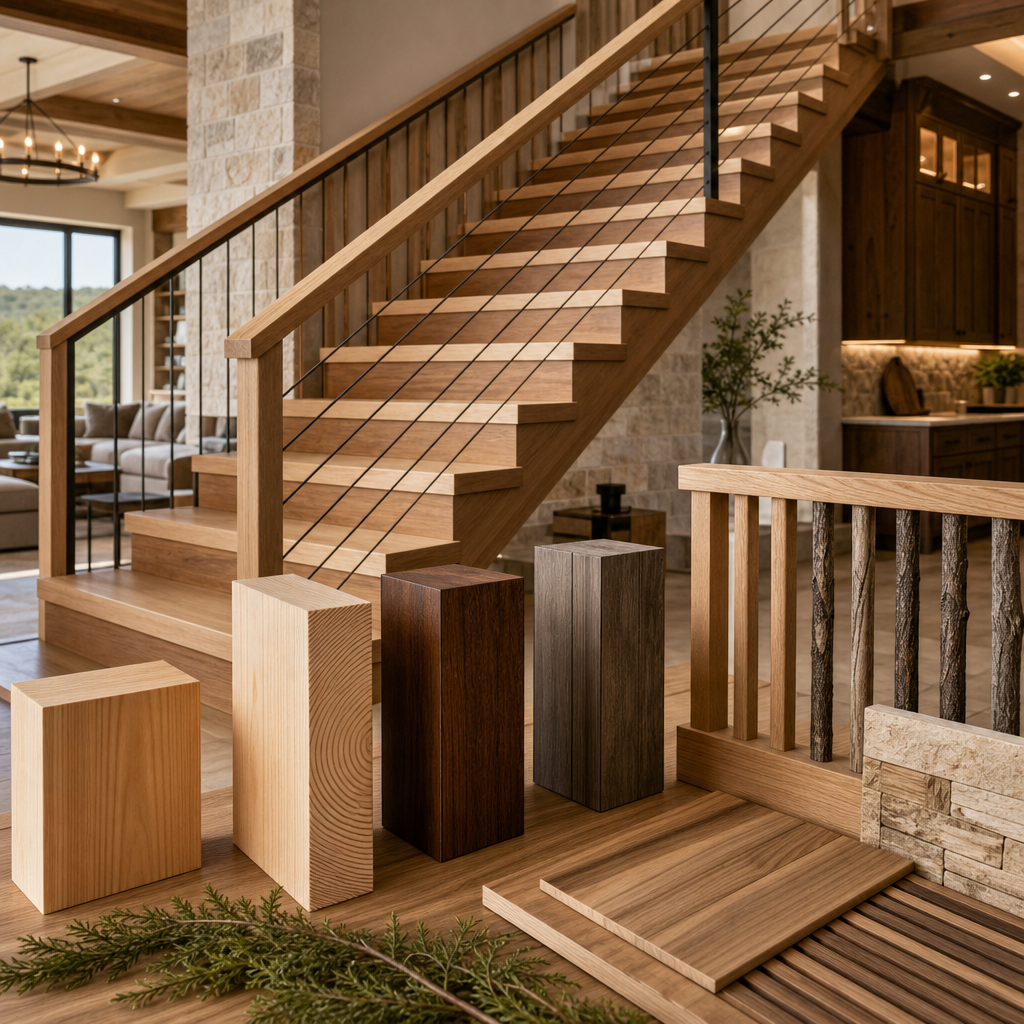
Ipe represents the premium tier of stair material, and for good reason. This Brazilian hardwood outperforms most domestic woods in hardness (rated above 3600 on the Janka hardness scale), making it virtually immune to denting, gouging, or wear patterns that might soften cedar over decades.
Ipe is also naturally rot and insect-resistant, requiring no chemical treatment. This matters for staircases that receive direct sunlight, span unconditioned spaces, or connect indoor and outdoor areas, common in modern Texas architecture where boundaries between inside and outside blur intentionally.
The aesthetic dimension is equally compelling. Ipe develops chocolate-to-deep-brown tones that only deepen over time, creating a rich patina without refinishing. The grain is tight and consistent, lending formal elegance to contemporary homes. Unlike cedar’s softness, ipe’s density means custom detailing stays crisp indefinitely with no grain texture softening from foot traffic.
We stock Ipe in multiple thicknesses and grades, both locally milled and from established brokers. Expect longer lead times than domestic softwoods, but the investment pays dividends across a staircase’s 30-year lifespan.
Practical consideration: Ipe is denser than most domestic woods, making fabrication more demanding. Ensure your stair builder has experience with hardwood construction and appropriate tooling. Dust extraction during milling is also essential, as ipe sawdust is fine and irritating. Work with suppliers who understand these requirements.
4. Thermally Modified Wood Stair Components for Climate-Resilient Performance
Thermally modified wood represents a newer category that solves a specific Texas problem: dimensional instability in conventional wood under seasonal humidity swings. By heating wood to specific temperatures in an oxygen-free environment, the wood’s cellular structure becomes more stable, reducing moisture absorption and expansion-contraction cycles.
We distribute thermally modified wood in multiple species including thermally modified ash, pine, and poplar. These materials perform exceptionally in custom stair applications, especially for cantilevered or open-tread designs where even minor movement becomes visible as a separation or creak.
Thermally modified ash is particularly relevant for stairs. It offers color and grain characteristics similar to white oak, but with improved stability. The modification also reduces checking and cracking, critical for full-width treads or exposed stringers in high-visibility locations.
The sustainability angle matters to many architects we work with. Thermally modified wood avoids tropical hardwood sourcing concerns while delivering comparable durability and visual consistency. It’s a responsible choice that performs without compromise.
Next step: Consider thermally modified wood for components most prone to movement, open stringers, cantilevered treads, or railings in spaces with dramatic humidity fluctuations. This targeted approach provides stability where it matters most without modifying your entire staircase material palette.
5. Custom Wood Railing Systems and Balusters in Cypress and Hemlock
Railings transform staircases from functional to sculptural. Cypress and hemlock offer distinct advantages for balusters, newels, and rails in contemporary homes.
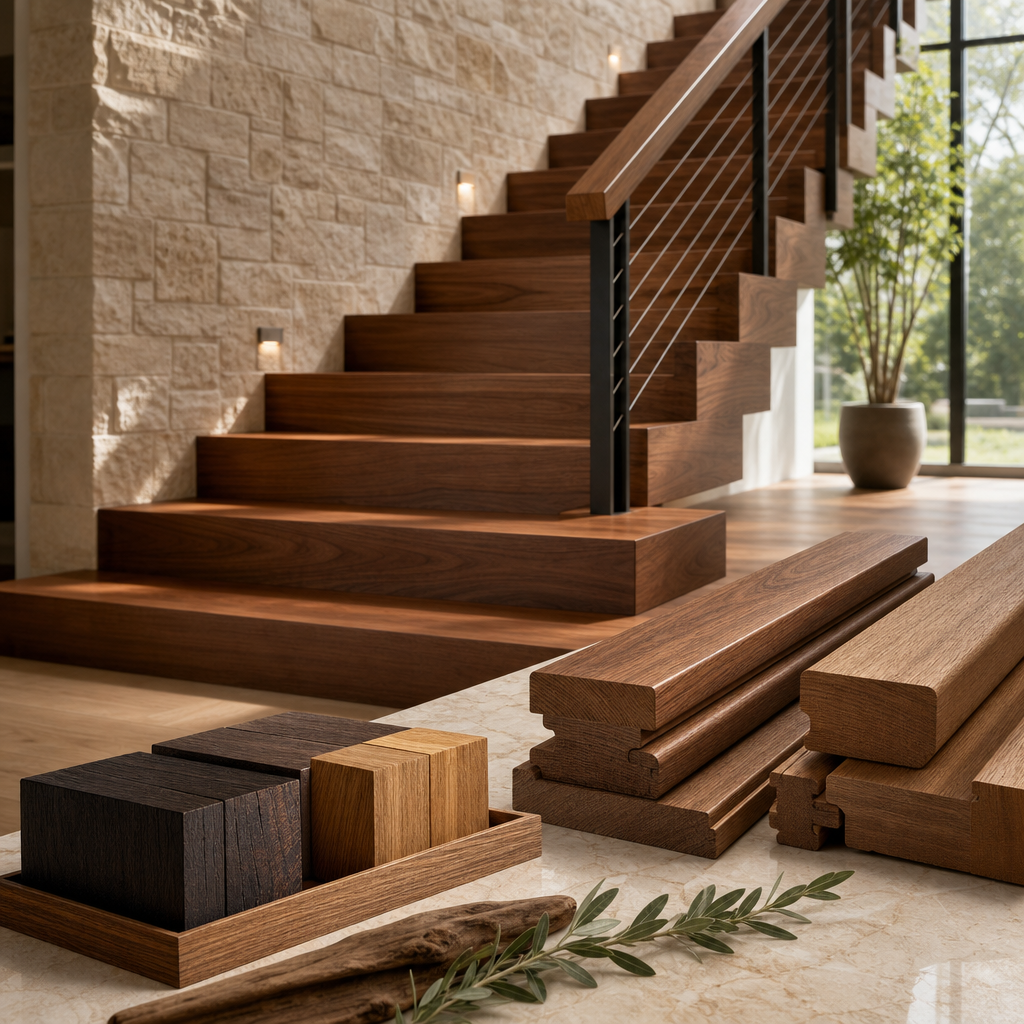
Cypress delivers warm golden tones and natural rot resistance comparable to cedar, making it ideal for spaces with moisture exposure or natural light streaming across railing details. The grain is tighter than cedar, supporting intricate millwork or simple, clean lines with equal grace.
Hemlock provides cooler undertones and exceptional workability. Its consistent grain pattern and pale coloring complement modern minimalist designs. Hemlock also machines cleanly for custom profiles: slender balusters, integrated lighting channels, or sculptural newel posts.
We supply both species in various grades and mill custom profiles to specification. Whether you’re designing open balusters with continuous rails, traditional spindle systems, or modern metal-and-wood hybrids, we source the wood components that integrate seamlessly with your architectural vision.
What to do next: Bring elevation drawings and detail sections to your supplier. Specify species, grain orientation (flat vs. vertical), and finish treatment early. Custom balusters fabricated to wrong profile waste time and budget. Clear communication on dimensions, joinery details, and quality standards prevents costly remake scenarios.
6. Accent Cladding and Paneling Around Stair Openings for Architectural Drama
The walls framing your staircase are canvas for architectural expression. Cladding and paneling around stair openings, applied horizontally, vertically, or in mixed patterns, amplify the staircase’s visual impact and create opportunities for color, texture, and material variation.
Contemporary projects use fluted or combed siding patterns, or alternate wood species to frame stair openings. This technique draws the eye upward and emphasizes the vertical journey of the staircase, inspired by architects like Lake|Flato who understand how material choices create spatial drama.
Arborwood cladding provides a diverse palette for this application, available in thermally modified ash and other species with various surface profiles. Pairing your stair tread species with complementary cladding creates visual continuity and sophistication.
The practical benefit: cladding around stair openings also manages acoustic performance and conceals structural elements. In open-plan homes, strategic paneling reduces staircase noise transmission without requiring heavy structural intervention.
Actionable takeaway: Sketch your proposed cladding pattern (orientation, species selection, spacing) alongside the staircase elevation. Review how light affects the paneling texture throughout the day. Request physical samples in your actual light conditions. Architectural drama depends on material, profile, and lighting working in concert.
7. WUI Class A Fire-Rated Stair Materials for Code Compliance and Safety
Wildland-Urban Interface (WUI) Class A fire-rated wood products are increasingly required for homes in fire-prone Texas regions, including Hill Country properties, areas near natural preserves, and communities with specific fire codes. These materials meet the most stringent fire performance standards while retaining the wood’s authentic character.
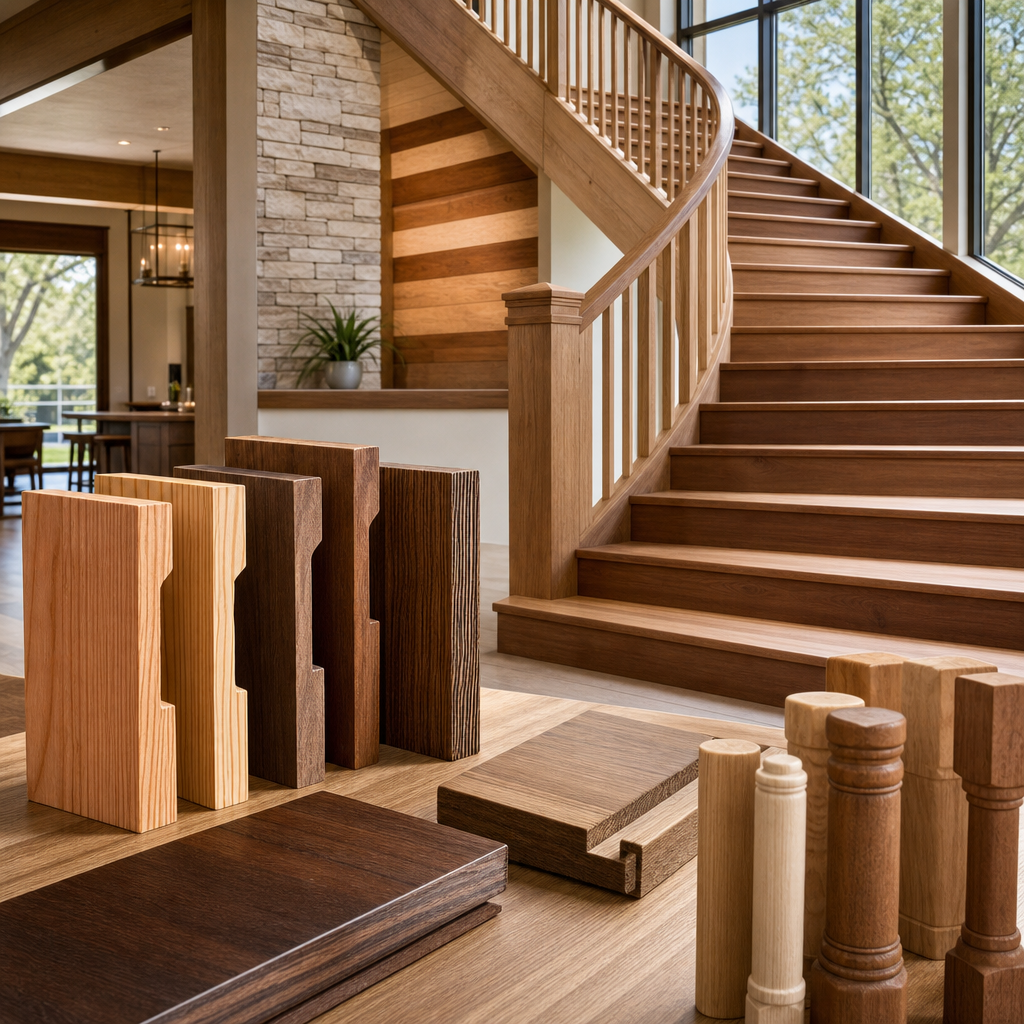
Class A ratings require material to have a flame spread rating of 0-25 and smoke development of 0-450. We supply WUI Class A-approved products for siding, decking, and structural framing that extend naturally into stair design.
The advantage of specifying fire-rated materials for staircases: they perform as primary exits in emergency scenarios while delivering standard aesthetic qualities. You’re not compromising design for safety, you’re choosing materials that deliver both simultaneously.
We carry verified Class A products and maintain documentation confirming compliance with local codes across Texas jurisdictions. Building officials recognize our suppliers, streamlining approval processes.
Practical requirement: Confirm your jurisdiction’s specific fire code before finalizing material specifications. Some areas require Class A certification; others have broader WUI standards. Work with your builder and local AHJ (Authority Having Jurisdiction) to identify material requirements early. Last-minute compliance scrambles create schedule delays and cost overruns.
For further reading: Arborwood cladding.
To place orders, order samples, or talk with a live person.
Frequently Asked Questions (FAQ)
What wood species do we recommend for high-traffic luxury staircase treads?
We typically recommend Ipe hardwood for stairs with heavy use because of its exceptional durability and natural resistance to wear. For projects emphasizing contemporary aesthetics, our Clear Grain Douglas Fir and Vertical Grain Western Red Cedar deliver sophisticated visual impact while performing well in residential settings. If you’re designing in a variable Texas climate, we stock Thermally Modified Ash and Pine, which offer enhanced stability and climate resilience without compromising the natural wood character your architect envisions.
Do we supply fire-rated wood stair components for Austin-area builds?
Yes, we maintain a full inventory of WUI Class A fire-rated wood products specifically for stair applications, including siding, treads, risers, and railing components. These materials meet current code requirements for luxury residential construction throughout Texas while maintaining the authentic wood aesthetics that define your architectural vision. We work directly with builders and architects to specify the right fire-rated options without sacrificing design intent.
Can we provide custom railing systems integrated with accent cladding around stair openings?
We absolutely can. We fabricate custom wood railing systems in Cypress and Hemlock that we pair with complementary cladding and paneling materials for your stair openings. Our approach allows architects to create dramatic architectural moments with vertical grain Douglas Fir, thermally modified woods, or hardwood accents that frame the staircase as a sculptural centerpiece in your home design.


