

Verify FSC Certification Documentation and Chain of Custody
When you’re sourcing materials for a high-stakes commercial project, the supplier you choose determines whether your timeline, budget, and reputation stay intact. We’ve watched countless architects and contractors struggle with FSC wood suppliers who promised certified sustainable lumber but delivered inconsistent quality, incomplete documentation, or missing specialty inventory when deadlines loomed. The wrong partner creates cascading delays and cost overruns. The right one becomes an extension of your team.
This guide walks through the practical steps we recommend for vetting FSC wood suppliers before you sign anything. We’ve built our reputation on transparency, inventory depth, and certification rigor because we understand that your project’s success depends on material reliability.
Start with paperwork, even though it sounds tedious. FSC certification isn’t binary. We maintain full Chain of Custody (CoC) documentation for every product we ship, and you should demand the same from any supplier claiming FSC credentials.
Request their FSC CoC certificate directly from the Accreditation and Certification Committee (ACC). This certificate confirms that the supplier has been audited by an independent third party and can legally label and sell FSC-certified materials. A legitimate supplier will provide this without hesitation. If they hesitate, move on.
Next, ask for product-level documentation. Not all wood in their inventory carries FSC certification. We keep our FSC and non-FSC inventory clearly separated because mixing them creates liability for you. For each product line you’re considering, request the supplier’s documentation showing:
- FSC certificate number and expiration date
- The specific mills or sources included in their CoC
- Batch or lot numbers tied to your purchase order
- Third-party audit reports from the past 12 months
If a supplier gives you generic marketing brochures instead of these specifics, they’re either disorganized or misrepresenting their credentials. Either way, it’s a red flag.
What to do next: Ask for CoC documentation before you request a quote. Their speed and completeness in responding tells you everything about their operations.
Assess Inventory Depth and Specialty Wood Availability
Premium commercial projects rarely use a single wood species or finish. You need a supplier whose inventory aligns with your design specifications, not someone who pushes you toward whatever they have in stock.
We maintain deep inventory across multiple product categories: vertical grain softwoods like Western Red Cedar, Douglas Fir, Hemlock, and Cypress; hardwoods including Ipe, Cumaru, Garapa, and Tigerwood; and thermally modified woods like Ash, Pine, and Poplar. This diversity means architects can design what they want, and we fulfill it without compromises.
When you’re evaluating a supplier, ask these specific questions:
- Do they stock Clear and Vertical Grain options, or just one grade?
- Can they supply specialty products like thermally modified wood or WUI Class A fire-rated materials?
- What’s their lead time for items not currently in stock?
- Do they have siding, decking, cladding, timbers, and soffits in the species you need?

A supplier with shallow inventory will create bottlenecks. You’ll either wait weeks for backorders or accept inferior alternatives. We’ve built our operation around stocking what commercial builders actually need, not just what’s easy to source.
What to do next: Provide your material specifications to three suppliers and compare their response times and availability. The one who can fulfill your complete shopping list without substitutions or delays is worth serious consideration.
Evaluate Manufacturer Expertise and Production Standards
Not all FSC wood suppliers manufacture their own products. Some simply resell commodity lumber. There’s a meaningful difference.
We don’t just distribute wood; we manufacture it. Our production standards cover milling precision, moisture content control, and finishing consistency. When an architect specifies vertical grain siding with tight tolerances, our in-house team controls every variable from rough lumber to final packaging.
Ask your potential supplier about their production capabilities:
- Do they mill products in-house or only resell?
- What quality control processes do they use (moisture meters, visual grading, dimensional checks)?
- Can they customize cuts, profiles, or finishes for your project?
- How do they handle defects or non-conforming material?
A manufacturer with direct control over production catches problems before shipping. A pure reseller passes along whatever the original mill produced, and you discover issues on the job site.
We also invest in ongoing training and equipment upgrades because wood science evolves. Thermally modified woods, for example, require different handling than traditional lumber. A supplier who understands these nuances prevents costly mistakes during installation.
What to do next: Ask for a facility tour or virtual walkthrough. Watch how they organize inventory, handle quality control, and stage orders. The details reveal their operational discipline.
Review Track Record on Large-Scale Commercial Projects
References matter. A supplier with a dozen completed residential decks isn’t the same as one with experience on multi-million-dollar commercial builds with tight schedules and exacting standards.
When evaluating track record, go beyond polite testimonials. Ask specific questions about comparable projects:
- Have they supplied materials for projects similar in scope and complexity to yours?
- How did they handle material changes or last-minute specification adjustments?
- Were shipments on time and complete?
- How responsive was their support team during the build phase?
We work with architects and contractors across Texas and all 50 states on premium custom projects, luxury builds, and large-scale commercial installations. Our clients include projects requiring fire-rated materials, multiple specialty wood species, and complex logistics. That experience means we’ve solved problems you haven’t encountered yet, and we know how to prevent them.

A supplier’s willingness to provide client references and project details signals confidence. If they’re evasive about past work, assume their track record doesn’t support their claims.
What to do next: Contact at least two of their past clients directly. Ask about budget adherence, communication, and problem-solving. Don’t rely on the references the supplier provides; ask for permission to contact an additional past client they don’t suggest.
Confirm Compliance with WUI Class A Fire Ratings
If your project includes wildland-urban interface (WUI) zones or requires fire-rated materials, this section is non-negotiable. Some suppliers claim fire-rated inventory but can’t provide proof.
We stock and distribute WUI Class A fire-rated wood products for siding, cladding, decking, soffits, fencing, and framing. Verification requires specific documentation: the ASTM E84 test results showing Flame Spread and Smoke Development ratings, the listing number from the testing lab (UL, Intertek, or equivalent), and the expiration date of the certification.
When vetting a supplier on this point:
- Request the exact ASTM E84 test certificate for the specific product and manufacturer.
- Confirm the certificate hasn’t expired and covers the product grade you’re specifying.
- Ask how they distinguish fire-rated from standard lumber in inventory to prevent shipping errors.
- Verify the supplier has current inventory, not just the ability to order it.
This matters because a contractor installing wood that doesn’t meet WUI requirements faces project delays, code violations, and potential liability. There’s no negotiation on this criteria.
What to do next: Before requesting a quote, ask for the fire-rating documentation. Their speed in responding confirms they’re organized and actually carry the inventory.
Compare Pricing Transparency and Volume Discounts
Transparent pricing isn’t just about finding the lowest cost; it’s about understanding where your money goes and what happens when you need adjustments.
We provide itemized quotes that break down material costs, applicable volume discounts, delivery fees, and lead times. You see exactly what drives the total. If market conditions shift, we explain how that affects pricing and whether your order qualifies for different tiers.
When comparing suppliers, look for:
- Itemized quotes that show unit costs and extended totals, not lump-sum numbers.
- Clear volume discount thresholds (e.g., 5 percent off at 10,000 board feet, 10 percent at 25,000).
- Transparency about upcharges (specialty cuts, expedited delivery, custom milling).
- How they handle price adjustments between quote and delivery.
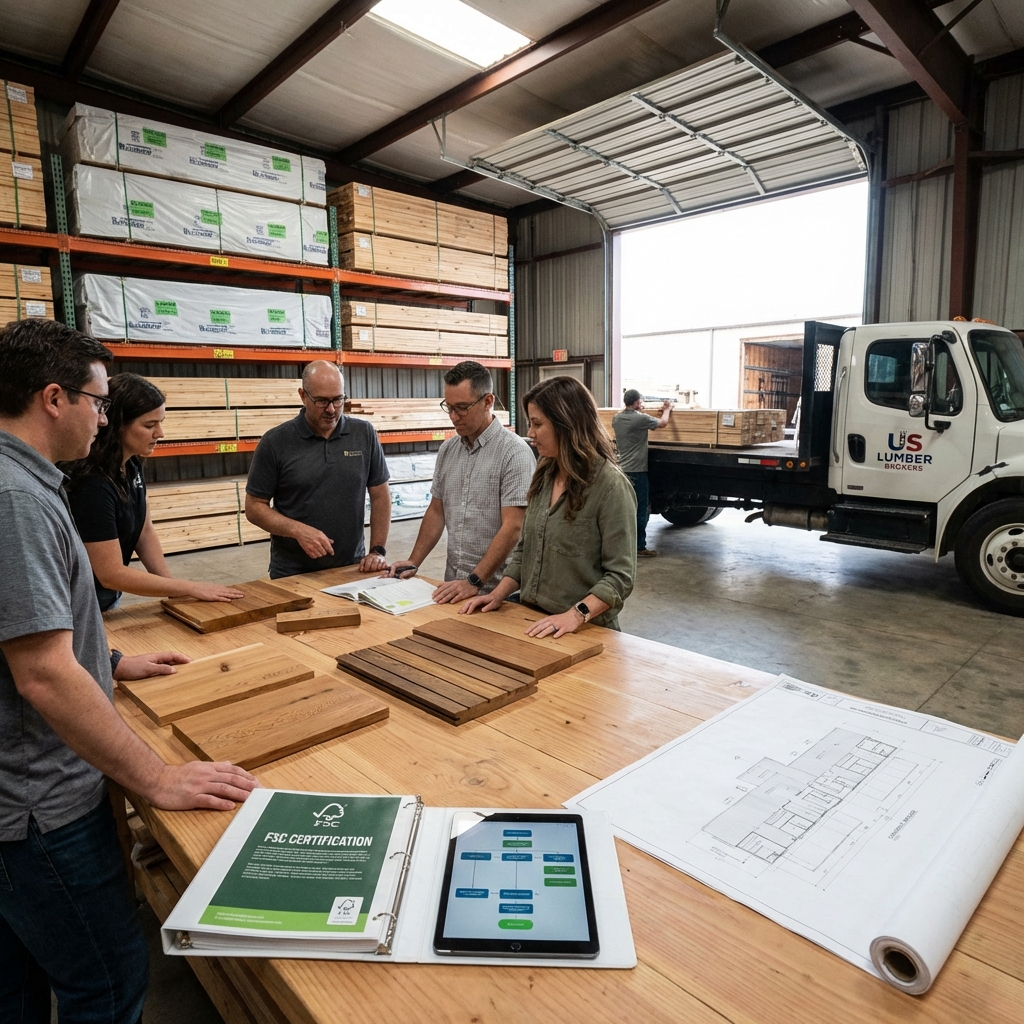
Suppliers who quote only totals or resist showing breakdowns often hide margin structure or apply unexpected charges at invoicing. We’ve seen contractors surprised by hidden fees that weren’t discussed upfront.
We also honor volume discounts and provide realistic lead times. If you’re building a multi-phase project, ask about pricing consistency across phases. A supplier worth retaining won’t penalize you for spreading orders over time.
What to do next: Request quotes from your top three candidates using identical specifications and volumes. Create a comparison spreadsheet that includes unit costs, total material cost, delivery fee, and applicable discounts. The lowest total isn’t always the best deal if the supplier charges premium rates for your specific needs later.
Ensure Local Support and Regional Distribution Capability
The final variable is accessibility. A supplier with warehouses in Texas can respond to urgent needs, manage delivery logistics efficiently, and provide hands-on support during complex projects. A distant supplier adds risk.
We operate across Texas with direct service to Austin, Dallas, Houston, San Antonio, the Texas Hill Country, and the surrounding regions. We also serve all 50 states for projects requiring our specialty inventory. That geographic reach means you get local responsiveness for most projects and national capability when needed.
When evaluating regional support, confirm:
- Do they have a physical location or warehouse near your project site?
- Can they provide local delivery within your timeframe?
- Is their support team available during your build schedule?
- Do they maintain emergency stock for urgent needs?
A supplier with local presence understands regional building codes, contractor relationships, and seasonal challenges. They move faster because they control their own delivery. They’re also more invested in your success because your reputation affects their local market.
For projects outside their service area, ask how they handle fulfillment. Do they partner with regional distributors? Do they ship directly? How do they manage quality control for remote orders?
What to do next: Schedule a conversation with the supplier’s regional account manager. Assess their familiarity with local codes, project types in your area, and their responsiveness to questions. If they can’t schedule a call within 48 hours, that tells you about their service standards.
—
Vetting FSC wood suppliers requires digging into certification details, inventory depth, manufacturing capability, track record, compliance documentation, pricing structure, and regional support. We’ve built our reputation by excelling across all seven criteria because we understand that commercial projects succeed when the material supplier becomes a trusted partner, not just a transaction.
If you’re working on a premium commercial project and need a supplier that combines FSC certification rigor, deep specialty inventory, in-house manufacturing expertise, and local Texas support, we’re ready to discuss your specifications. Contact us with your material list and project timeline, and we’ll provide the transparent, complete response you need to make a confident decision.
To place orders, order samples, or talk with a live person.


