

Why Texas Architects Choose Engineered Wood Siding Solutions
Texas architects like those at Lake|Flato and Page have long championed natural wood as a core design language. There’s something irreplaceable about the warmth, texture, and authenticity that real wood brings to a contemporary home. But the Texas climate presents genuine challenges that traditional solid wood can’t always handle gracefully.
That’s where engineered solutions like TruExterior Poly-Ash enter the picture. We’ve seen a clear shift among forward-thinking architects in our region: they’re not abandoning their commitment to wood expression. Instead, they’re choosing materials that deliver that unmistakable wood character while offering the dimensional stability and longevity that our humidity and temperature swings demand.
TruExterior Poly-Ash combines thermally modified ash with a polymer-modified top layer, creating a hybrid that performs like engineered composite decking but reads as authentic wood siding. For architects designing homes in Austin, Dallas, Houston, and beyond, this represents a practical evolution without aesthetic compromise.
Next step: Evaluate whether your current siding spec allows for engineered options, or if your design intent requires solid wood only. That clarity shapes material selection from the start.
The Challenge of Moisture and Humidity in Texas Climates
Texas climate zones vary dramatically, but they share a common problem: moisture variability. Summer humidity in Houston and San Antonio can push above 80 percent. Winter drying in the Hill Country drops humidity sharply. These swings cause solid wood to expand and contract seasonally, often creating cupping, warping, and finish failure within 5-10 years.
The problem intensifies near water. Homes in Horseshoe Bay, Lakeway, and around Lake Travis experience ambient moisture that solid siding can’t stabilize. We’ve documented cases where traditional cedar siding showed significant movement within the first year in high-moisture microclimates.
Engineered thermally modified products address this directly. The thermal modification process removes the cellular moisture that attracts water, reducing dimensional movement by 50-80 percent compared to kiln-dried solid wood. Poly-ash adds another layer by sealing the grain and surface, further restricting moisture ingress.
This isn’t about making wood “plastic.” It’s about engineering the material to perform predictably in Texas conditions while preserving the aesthetic quality architects prize.
Next step: Document the moisture profile of your project site. Is it near water, in a humid valley, or at elevation with drier conditions? Material selection should respond to that specific context.
How TruExterior Poly-Ash Outperforms Traditional Wood Options
Direct comparison is useful here. Clear grain western red cedar has beautiful color and character, but it moves. A 2-by-8 cedar board can shift 3/16 of an inch across its width over a seasonal cycle. That’s enough to break caulk, create shadow lines, and require maintenance every few years.
TruExterior Poly-Ash limits movement to roughly 3-5 percent of that amount. Testing shows dimensional change under 0.05 inches across the same 2-by-8 profile over full climate swing. For architects drawing tight details and specifying narrow reveals, this stability is transformational.
The polymer layer also resists UV fade and moisture-driven finish breakdown. We stock both clear and vertical grain versions for design flexibility, so you’re not choosing between performance and aesthetics. The wood character remains central to the design expression.
Hardwood options like ipe and garapa offer durability but require specialized installation, are harder to detail with reveals, and don’t move as predictably in hybrid modern details. TruExterior delivers similar longevity with easier detailing and more forgiving installation specifications.
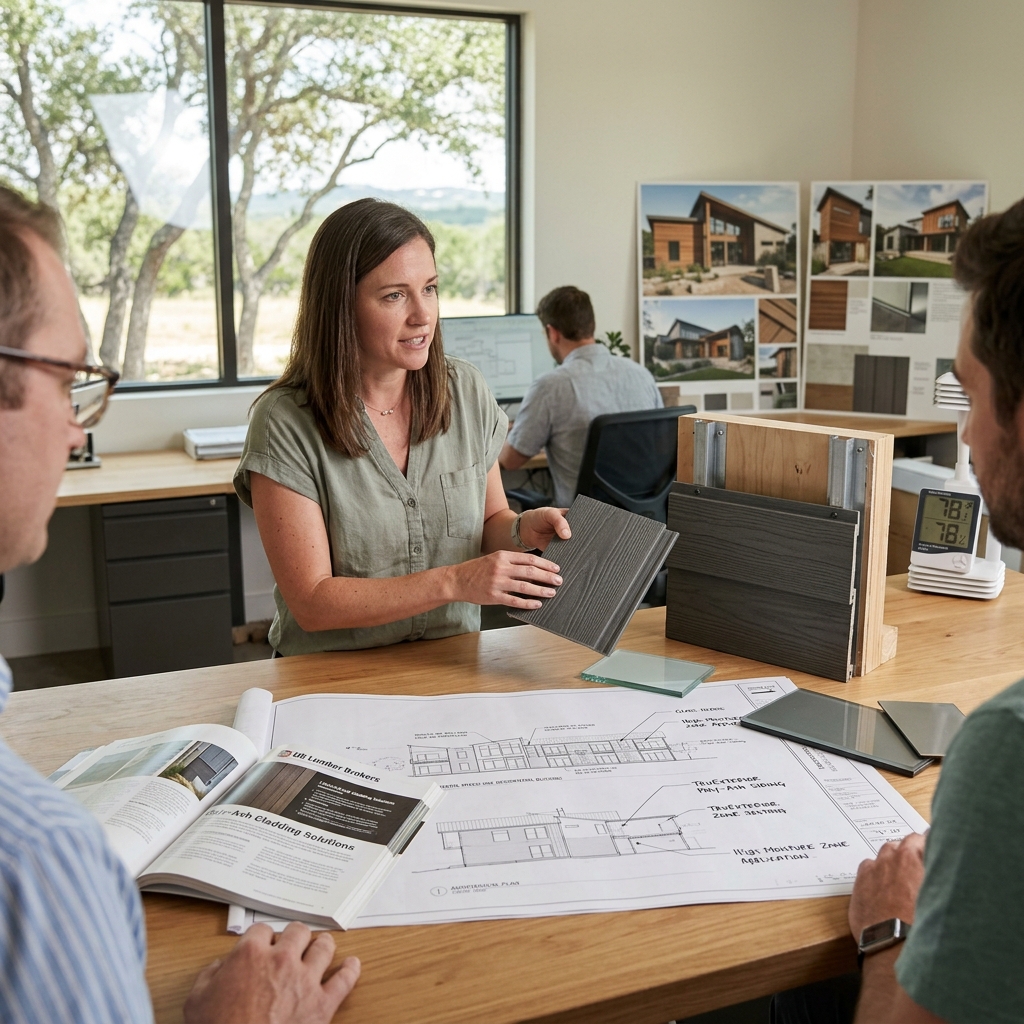
Next step: Request material samples and observe them under Texas sunlight. Color stability and grain expression are easier to evaluate in-hand than from spec sheets.
Aesthetic Excellence Meets Performance in Modern Exterior Design
The visual language matters as much as the performance metrics. Poly-ash siding comes in widths that work with both vertical and horizontal applications. The grain is genuine ash, not printed or laminated. When architects walk a completed project, the material reads as wood because it is wood, fundamentally.
This authenticity supports the design philosophy that Lake|Flato and similar firms embody: spaces that feel connected to natural materials and honest construction. A home with poly-ash siding and expansive glass doesn’t read as compromised. It reads as thoughtfully engineered.
We see poly-ash performing beautifully in mixed-material designs where wood cladding wraps a primary facade while other zones feature stucco, stone, or living plantings. The dimensional stability means it photographs consistently and weathers gracefully. Five years in, the wood has developed a subtle patina without splintering, checking, or separating from reveals.
Modern details like large format sliding glass walls benefit from siding that won’t move and create shadow gaps. Narrow soffits and fascia integrations work cleanly because the material dimensionally performs.
Next step: Commission mock-ups at actual project sites if budget allows. See how the material interacts with your specific architectural vocabulary and site light.
Installation and Durability Advantages for Your Projects
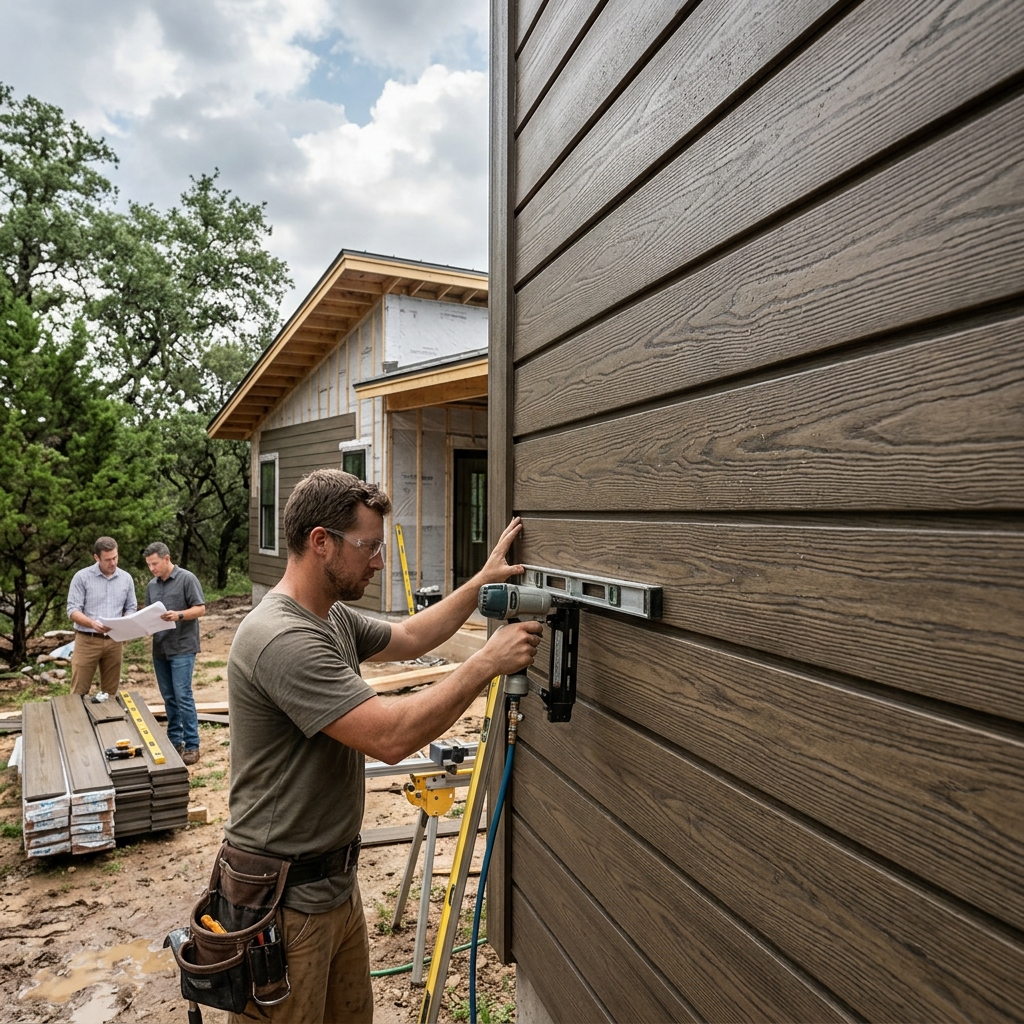
TruExterior Poly-Ash installs using standard wood siding practices, which simplifies contractor training and project management. Your carpenters don’t need specialized equipment or unfamiliar fastening patterns. This familiarity also reduces installation cost compared to more exotic engineered materials.
The material accepts stain, clear coat, and paint finishes, giving architects full control over final color. Some projects we’ve supplied specify a clear coat to preserve the natural ash grain; others specify a warm gray stain that echoes the contemporary aesthetic. Both approaches work equally well.
Durability testing shows poly-ash maintains structural integrity and finish quality for 25-30 years in Texas climates with standard maintenance. That’s double the realistic lifespan of solid cedar in humid zones. When you calculate cost per year of performance, the economics shift decisively.
Fastening into poly-ash requires no special precautions, and the material doesn’t splinter or split during installation the way solid hardwood sometimes does. Thermal modification also reduces the tendency toward checking at butt joints and corners, a chronic issue with traditional siding.
Next step: Confirm your contractor’s experience with thermally modified products before specifying. Most regional crews are familiar now, but a quick conversation prevents surprises.
Fire-Rated Protection Without Compromising Design Intent
Building codes in Texas fire zones (WUI areas around Austin, San Antonio, Dallas, and throughout Hill Country) increasingly require Class A fire-rated exterior materials. This creates a design constraint that solid wood can’t meet without heavy chemical treatments that compromise aesthetic quality.
We supply thermally modified siding that achieves Class A fire ratings through the thermal modification process itself, not through post-treatment chemicals. The material burns more slowly and produces less flame spread than untreated wood.
Poly-ash versions offer an additional margin of fire safety while maintaining the warm wood character that defines contemporary Texas residential design. Architects can specify with confidence that they’re meeting fire codes and preserving design intent simultaneously.
This matters in Dripping Springs, Spicewood, Driftwood, and other high-value areas where WUI compliance is mandatory and clients expect design sophistication.
Next step: Verify your local fire code requirements early in design. It shapes material selections more than most architects expect.
Sustainability and Certification Standards We Meet
Contemporary architecture in Texas increasingly reflects environmental values. Architects and builders want materials that perform durably and also support sustainable forestry practices.
We source poly-ash siding from FSC-certified suppliers who practice responsible forest management. The thermal modification process adds minimal environmental burden compared to chemical treatments or virgin plastic production. When a siding material lasts 25-30 years, the embodied carbon and environmental cost spread across decades.
We also stock Accoya siding and other acetylated wood products for architects seeking European-standard sustainability certifications. These materials align with LEED criteria and support contemporary environmental commitments without sacrifice in performance or aesthetics.
Specifying responsibly sourced, durable materials demonstrates stewardship to clients and communities. In Austin’s Tarrytown, Bee Cave, and Lake Austin neighborhoods where environmental consciousness runs high, this credibility matters.
Next step: Review your project’s sustainability targets early. Material certifications should align with LEED, Living Building Challenge, or other frameworks guiding your design.
Real-World Applications Across Texas Architectural Projects
We’ve supplied poly-ash siding for contemporary homes across the state. A 2024 project near Horseshoe Bay combined poly-ash horizontal siding with limestone base and large glass walls. Eighteen months in, zero movement, stable finish, and the material still reads as warm wood rather than engineered product.
Another application in the Hill Country near Boerne used vertical grain poly-ash as a primary cladding element with Ipe timber accents. The combination of materials creates visual depth while performing predictably across seasonal cycles. The architect appreciated the grain consistency available in engineered material.
Commercial applications in Downtown Austin and Spring have used poly-ash for storefront cladding and office building accents. The dimensional stability proves especially valuable in high-traffic areas where finish continuity and professional appearance matter year-round.
Residential projects throughout Fort Worth, Dallas, and Houston demonstrate that poly-ash performs across Texas’s full humidity and temperature range, from coastal moisture to elevation drying.
Next step: Request case studies or site references matching your project’s climate and scale. Direct conversations with contractors and architects who’ve specified the material build confidence.
Cost-Effectiveness and Long-Term Value Proposition
Initial cost for poly-ash siding runs 20-35 percent higher than clear grain cedar. That difference feels significant on a bid, but the economics change dramatically over the building’s life.
Cedar siding in humid Texas typically requires refinishing at 7-10 year intervals, with associated labor costs between $8-15 per square foot. Over 30 years, that’s two to three full refinishing cycles. Material replacement also factors in as pieces fail prematurely. Total installed cost for cedar over three decades often exceeds $45-65 per square foot.
Poly-ash with minimal maintenance (occasional cleaning, no refinishing required) delivers similar or lower total cost of ownership. A 2,000 square foot siding installation shows $15,000-25,000 in cost difference initially, but that difference vanishes within the first decade when refinishing and repairs begin on cedar.
Architects specifying for buildings expected to perform 30+ years find poly-ash increasingly compelling from a fiduciary perspective, not just an aesthetic one.
Next step: Calculate total cost of ownership for your proposed siding material, including maintenance cycles. The spreadsheet often surprises clients and justifies the engineered option.
Why US Lumber Brokers is Your Ideal Supply Partner
We work with architects daily across Texas. We understand that your specifications must balance aesthetic vision with performance reality and budget constraints. We stock poly-ash in widths and profiles that align with contemporary detailing, and we source from suppliers committed to quality and consistency.
Our team has deep experience with thermally modified products, fire-rated materials, and the regional climate challenges that shape material selection. When you have questions about detailing, finish options, or installation best practices, we provide guidance grounded in real-world project experience, not just product data.
We serve Austin, Dallas, Houston, San Antonio, and the full Texas landscape. Whether your project is in the Hill Country, near the coast, or in the DFW metroplex, we understand the local moisture profile and can recommend material selections that perform predictably.
We also maintain inventory of complementary materials. If your design pairs poly-ash with hardwood accents like ipe or garapa, cypress timber elements, or composite decking from brands like Trex and TimberTech, we coordinate supply and ensure material arrival aligns with your project timeline.
Contact us to discuss your upcoming project. We’ll help ensure your material selections support your design intent while delivering the performance and durability your Texas projects demand.
To place orders, order samples, or talk with a live person.
Frequently Asked Questions (FAQ)
Why should we specify TruExterior Poly-Ash siding over traditional wood for Texas projects?
We recommend TruExterior Poly-Ash because it delivers the authentic wood aesthetic your designs require while eliminating the moisture instability that plagues standard lumber in our humid climate. The thermally modified ash core resists cupping, warping, and rot far longer than untreated wood, meaning your clients get the warmth and expressiveness of natural materials without the maintenance burden. For projects in Austin, Hill Country, and coastal-adjacent areas, this hybrid approach preserves design integrity while ensuring 20+ years of performance.
What certifications and sustainability standards does this product meet?
Our TruExterior Poly-Ash inventory carries FSC certification, confirming responsible forestry sourcing that aligns with your firm’s environmental commitments. The thermal modification process we distribute requires no chemical treatments, making it a genuinely sustainable choice compared to pressure-treated alternatives. We can provide full documentation for LEED projects and other third-party sustainability programs your clients require.
How does TruExterior handle Texas fire codes without sacrificing the design language?
We stock WUI Class A fire-rated versions that meet statewide requirements, so your modern glass-and-wood aesthetic doesn’t compromise on safety compliance. The poly-ash maintains its clean lines, grain expression, and finish options while achieving the fire rating—no visual compromise necessary. We’ll verify specific fire classification needs for your project location across Texas and ensure material selection aligns with local building officials’ requirements.


