

1. Clear Western Red Cedar Fluted Panels for Coastal-Inspired Interiors
Fluted wood wall systems have become the signature choice for Texas architects designing hospitality spaces that demand both visual drama and functional durability. The vertical grooves create depth, shadow play, and an unmistakably modern aesthetic that transforms ordinary walls into statement features. For hospitality projects from Hill Country resorts to downtown Austin boutique hotels, the right fluted wood panel system can define the entire experience.
We work with Texas architects constantly on these installations, and we’ve learned that material choice determines whether a fluted wall system ages beautifully or disappoints over time. High-traffic hospitality environments expose wood to moisture, temperature swings, and heavy use. Your panels need to handle that reality while maintaining the clean architectural lines your design demands.
Here are seven fluted wood wall systems we recommend for Texas hospitality projects, each addressing specific design goals and performance requirements.
Clear Western Red Cedar delivers warmth and sophistication that feels instantly inviting. The natural grain variation reads beautifully when fluted, with the grooves emphasizing the wood’s organic character rather than overwhelming it. For hospitality projects aiming for that relaxed, high-end coastal aesthetic, cedar fluted panels create the right visual tone.
Cedar’s lightweight nature also simplifies installation compared to denser hardwoods. Its natural oils provide inherent rot resistance, making it suitable for spaces with higher moisture exposure like spa lobbies or bar areas. The wood develops a sophisticated silver-gray patina over time, adding character rather than appearing neglected.
The trade-off: cedar is softer than other options, so high-traffic walls near seating areas or beverage stations may show minor dents or scuffs. This isn’t a structural concern, but design-conscious architects should plan accordingly. If your hospitality design tolerates or celebrates this natural weathering, cedar fluted systems become one of our most cost-effective choices.
Actionable takeaway: Specify clear grade (not knotty) to ensure the fluted profile dominates the visual field, and plan a clear matte finish that won’t trap dust in the grooves.
2. Vertical Grain Hemlock Reeded Systems for Modern Warmth
Vertical grain hemlock occupies the sweet spot between cedar’s softness and hardwood durability. The tight grain structure creates a refined appearance when fluted, and the wood’s subtle color variation reads as sophisticated rather than busy. We’ve installed hemlock fluted systems in upscale hotel lobbies and conference centers across Texas where architects needed refined interiors without the maintenance intensity of tropical hardwoods.
Hemlock’s straight grain patterns align naturally with vertical fluting, creating visual harmony that feels intentional. The wood has moderate hardness, meaning it resists denting and marking better than cedar while remaining easier to install than dense tropical species. It also takes stain and finish evenly, which matters if your design calls for color customization.
One practical advantage: hemlock is more cost-accessible than many alternatives, allowing architects to specify premium-grade material without budget overruns. We regularly source FSC-certified vertical grain hemlock for projects that need both design integrity and environmental responsibility.
Actionable takeaway: Pair hemlock fluted systems with matte or satin finishes rather than gloss, which can flatten the grain pattern and reduce the sophisticated warmth you’re after.
3. Thermally Modified Ash Panels for Durability and Sustainability
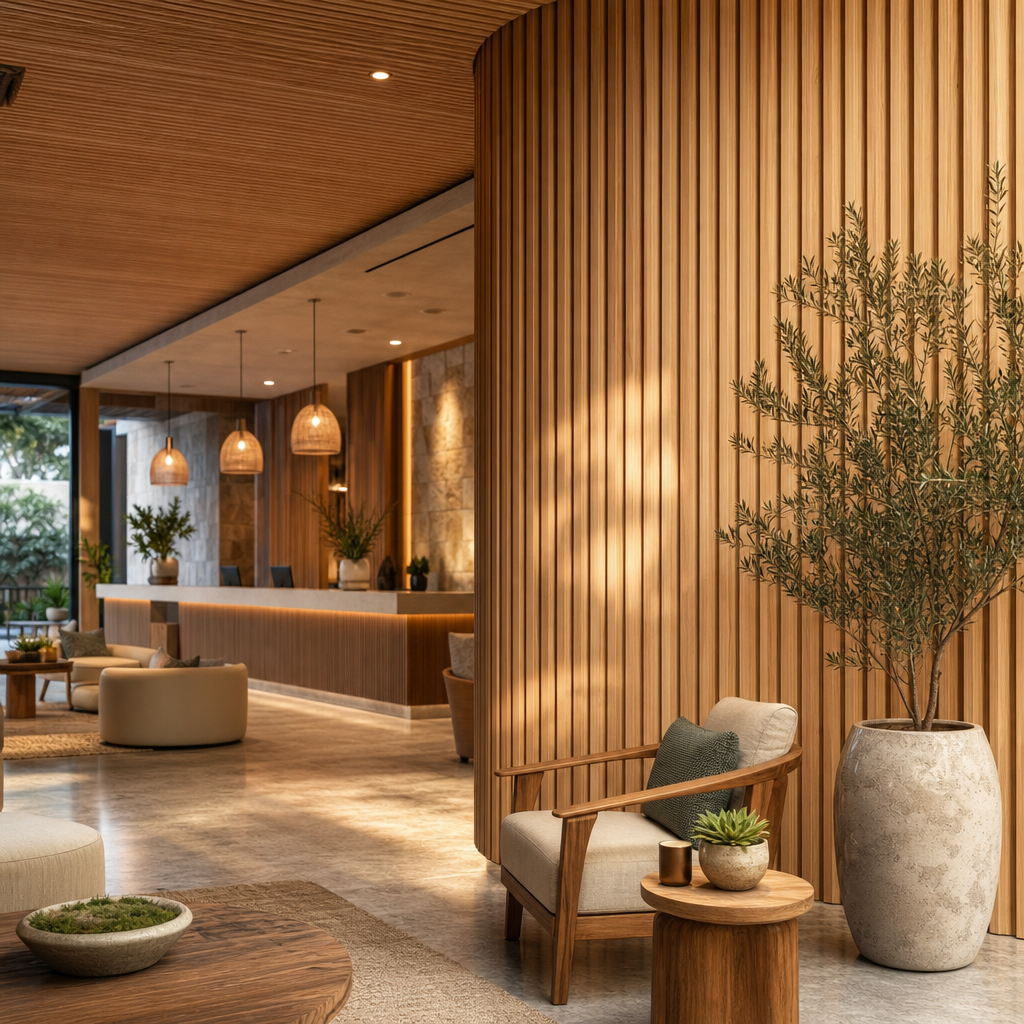
Thermally Modified Ash transforms standard ash into a material that performs like a tropical hardwood while remaining domestically sourced. The thermal modification process removes volatile compounds and increases dimensional stability, meaning your fluted panels resist warping and cupping even in Texas’s challenging humidity and temperature swings. For hospitality designers committed to sustainability, this is a game-changer.
Modified ash accepts fluting beautifully. The process doesn’t compromise the wood’s ability to showcase deep, consistent grooves, and the resulting color (a warm chocolate-brown) reads as intentional luxury. Hospitality clients appreciate that thermally modified ash doesn’t require tropical hardwood harvesting guilt and performs better than unmodified domestic species.
The durability profile is exceptional. Modified ash resists moisture-related movement far better than cedar or standard hemlock, which makes it ideal for bar areas, pool-adjacent hospitality spaces, or any environment with humidity spikes. It’s also naturally more impact-resistant, handling the wear patterns of guest-facing spaces.
Actionable takeaway: Specify thermally modified ash when your design narrative emphasizes sustainability without compromising on performance or visual presence.
4. Douglas Fir Fluted Cladding for Dramatic Architectural Statements
Douglas Fir is where fluted wall systems become dramatic. The wood’s natural color ranges from pale yellow to deeper golden tones, and its grain structure is bold enough to create visual interest without fighting the fluted profile. We specify vertical grain Douglas Fir when architects want a statement wall that commands attention while maintaining sophistication.
Douglas Fir’s strength means you can achieve deeper fluting profiles without structural concern. This allows for more pronounced shadow play and visual texture, which translates to genuinely memorable hospitality interiors. The wood’s density also means excellent durability for high-traffic guest spaces.
The material works particularly well in contemporary hospitality settings that embrace warmth and material honesty. Rather than hiding the wood’s characteristics, Douglas Fir fluted systems celebrate them. This aligns perfectly with modern architecture’s emphasis on authentic materials and expressive design.
Architects should plan for finish clarity. Douglas Fir’s grain pattern is prominent, so semi-transparent or clear finishes work better than opaque stains that would obscure what makes the material visually compelling.
Actionable takeaway: Specify clear vertical grain Douglas Fir when your hospitality design benefits from bold material presence and dramatic shadow effects.
5. Hardwood Ipe Reeded Systems for High-Traffic Hospitality Spaces
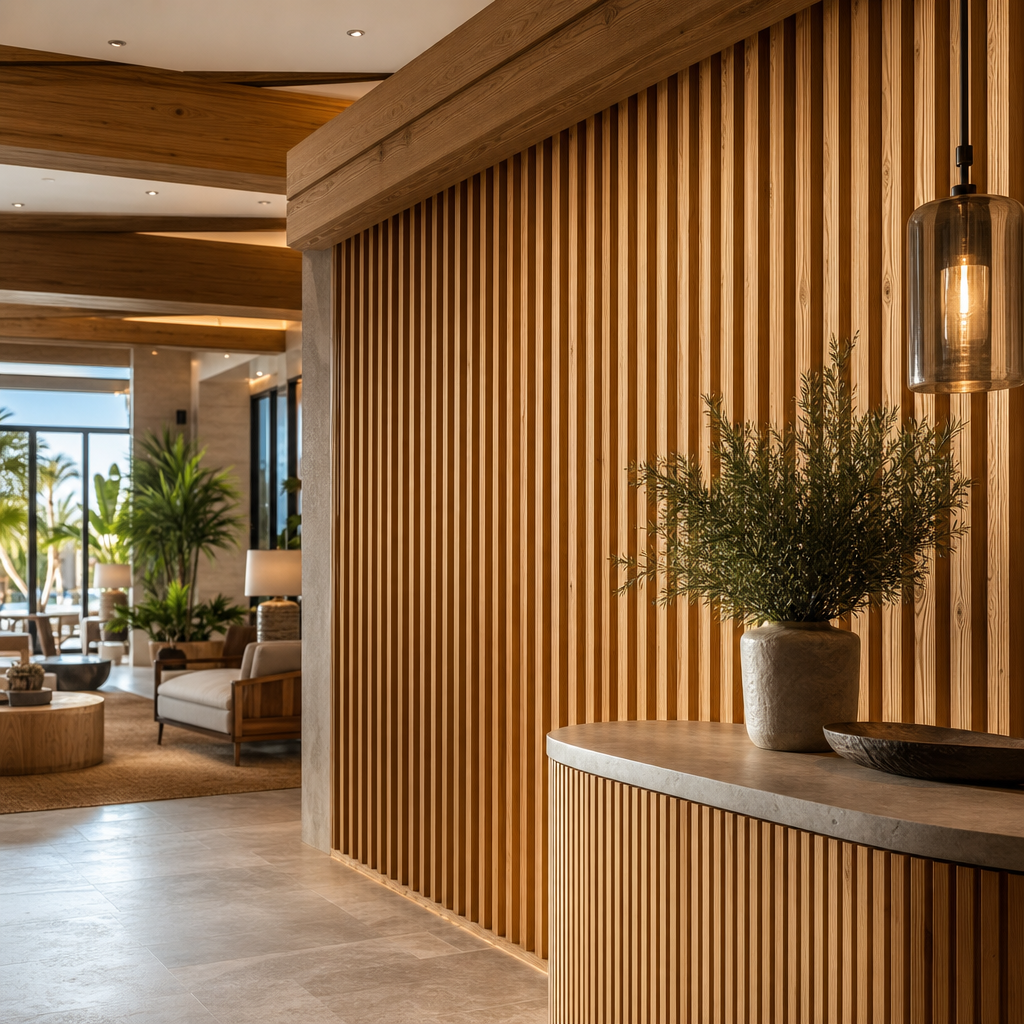
Ipe cladding represents the top tier of fluted wall durability. This Brazilian hardwood is nearly impervious to denting, moisture damage, or decay. For hospitality environments where walls endure aggressive use, spills, and constant guest interaction, Ipe fluted systems deliver longevity that justifies their premium cost.
Ipe’s deep chocolate color provides warm elegance that reads as intentional luxury. The wood’s density means perfectly sharp fluting that maintains its crisp definition for decades. In high-end resort lobbies, upscale restaurants, and hospitality spaces where the material will genuinely be abused, Ipe systems become the only rational choice.
The installation complexity is higher. Ipe’s extreme hardness requires specialized cutting and fastening techniques. We manage this for our clients, but architects should budget installation costs appropriately. The payoff is a material that will outlast the hospitality property’s design cycle.
Ipe also works beautifully in mixed-material fluted systems, where Ipe accent walls frame entries or anchor major design moments while more accessible materials fill secondary spaces.
Actionable takeaway: Reserve Ipe fluted systems for signature walls and high-impact hospitality spaces where material durability will genuinely be stressed over the project’s lifespan.
6. FSC-Certified Cypress Fluted Walls for Eco-Conscious Projects
Cypress occupies its own category. This regionally significant wood carries authentic connections to Texas heritage while delivering genuine environmental responsibility through FSC certification. For hospitality projects with authentic regional narratives, cypress fluted walls create material honesty that guests intuitively understand.
Cypress’s natural durability mirrors Ipe’s performance characteristics but with a lighter, more elegant color palette. The wood’s grain is tighter and more refined than cedar, reading as sophisticated rather than rustic. The wood also contains natural oil compounds that provide rot and insect resistance without chemical treatment.
We source FSC-certified cypress specifically for architects who need material authenticity, environmental responsibility, and superior performance. The wood has become increasingly available as sustainable forestry practices expand, making it a practical choice rather than a compromise.
For hospitality designs emphasizing regional connection and environmental commitment, cypress fluted systems tell that story through material selection. Guests notice and appreciate authentic choices.
Actionable takeaway: Specify FSC-certified cypress when your hospitality project’s narrative includes regional authenticity and environmental stewardship.
7. Custom Vertical Grain Softwood Combinations for Signature Design Identity
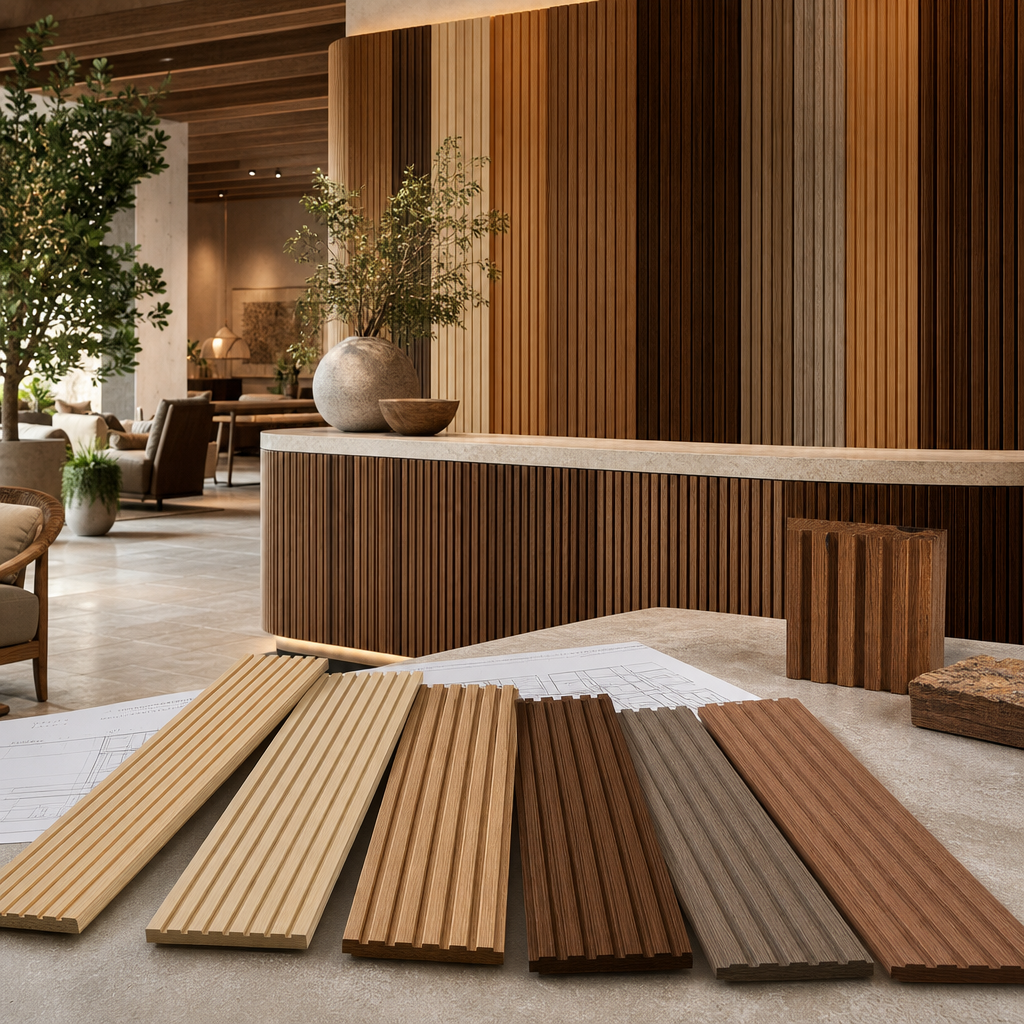
The most distinctive hospitality fluted wall systems we’ve completed combine multiple vertical grain softwoods in complementary configurations. Rather than specifying a single material across an entire wall, architects create rhythm and visual interest through strategic material transitions.
A practical example: a hotel lobby features clear Western Red Cedar fluted panels in the entry vestibule, transitioning to vertical grain hemlock in the main lobby space, with thermally modified ash accent walls framing the concierge desk. Each material brings distinct visual character while the unified softwood palette creates coherence. The variation keeps the eye moving and makes the space feel intentionally designed rather than generic.
These combinations allow architects to balance cost, performance, and visual impact strategically. High-wear areas receive harder materials; signature moments showcase the most visually distinctive woods. The result feels custom and considered rather than mass-produced.
We work directly with architects to design these combinations, selecting materials and fluting profiles that create the specific visual and functional performance your hospitality project demands. This is where material expertise becomes invaluable, because the right combination isn’t obvious without understanding how different woods interact visually and perform over time.
Actionable takeaway: Consider multi-material fluted wall systems when your design benefits from visual rhythm and strategic material emphasis rather than uniform panel treatment.
—
Fluted wood wall systems represent one of the most effective ways to create hospitality interiors that feel genuinely distinctive. The right material choice determines whether those walls age beautifully or deteriorate, whether they justify their cost or disappoint over time.
We supply and manufacture all seven systems detailed here in vertical grain profiles specifically designed for Texas hospitality projects. We handle material selection based on your specific performance requirements and aesthetic vision, manage inventory to support your construction timeline, and coordinate directly with installation teams to ensure your fluted walls perform as designed.
Your hospitality project deserves material expertise that goes beyond generic lumber supply. We work with Texas architects who expect both visual excellence and material integrity, and we’ve built our business around delivering exactly that.
Ready to specify fluted wood wall systems that align with your hospitality design vision? Contact us to discuss material options, performance characteristics, and the specific combination that makes your project distinctive.
To place orders, order samples, or talk with a live person.
Frequently Asked Questions (FAQ)
What fluted wood wall systems does our inventory include for hospitality projects?
We stock a comprehensive range of fluted and reeded wood options including Clear Western Red Cedar, Vertical Grain Hemlock, Thermally Modified Ash, Douglas Fir, and hardwoods like Ipe. Our selection spans softwoods ideal for coastal-inspired designs through durable hardwoods built for high-traffic commercial spaces, giving architects the material flexibility to match their specific project requirements.
How do we ensure our wood products meet Texas hospitality design standards?
We supply FSC-certified products and WUI Class A fire-rated woods that satisfy both aesthetic and safety codes for Texas hospitality installations. Our inventory includes thermally modified woods that deliver superior durability and sustainability credentials architects expect for custom commercial interiors.
Can we source custom vertical grain wood combinations for signature design projects?
Yes, we regularly work with Texas architects to develop custom softwood combinations that create distinctive wall systems tailored to individual project identities. Our manufacturing capabilities and extensive inventory allow us to provide consistent, high-quality vertical grain materials that express the specific design vision you’re pursuing.


