

Why Lakeside Decking Demands Superior Performance Standards
Lakeside properties demand decking that survives constant moisture exposure, temperature swings, and the relentless UV assault that water reflects back onto your structure. Standard materials fail quickly in these conditions, but the right choice can deliver decades of performance without compromise. We’ve spent years sourcing and installing decking for Texas waterfront homes, and the data consistently points to one clear winner.
Water environments create stress conditions that inland decks never face. Moisture wicks into composite materials and wood grain differently depending on material composition. Temperature fluctuations swing 30-40 degrees between sun-exposed and shaded sections of a single deck, forcing constant expansion and contraction. UV rays amplify near water due to reflection, accelerating degradation of finishes and surface coatings.
Architects designing for Lake Travis, Horseshoe Bay, and other Hill Country properties understand that a lakeside deck is as much a structural element as a visual statement. The material you choose determines whether homeowners enjoy their view or spend weekends repairing deck boards.
Your first decision point: Are you prioritizing longevity, aesthetics, minimal maintenance, or initial cost? Most lakeside properties require balancing multiple factors rather than optimizing for just one.
The Real Problem with Composite Decking Near Water
Composite decking marketed as “water-resistant” performs acceptably inland but shows significant limitations in waterfront applications. The core issue is moisture absorption and expansion. Composites absorb water differently than advertised, particularly in end grain and fastener holes where water readily penetrates.
Mold and mildew growth accelerates on composite surfaces because organic matter (wood fiber content) provides food for spores thriving in humid lakeside conditions. Once mildew establishes, regular cleaning becomes monthly rather than annual. Staining compounds the problem: coffee spills, mineral deposits from sprinklers, and algae bloom residue mark composites permanently.
Thermal expansion of composites exceeds natural wood. A 12-foot composite board expands and contracts more than an ipe board of identical dimensions, creating gaps between boards, lifted edges, and fastener stress. We’ve documented cases where composite decking expanded so dramatically that deck boards buckled away from structure in mid-summer heat.
The warranty fine print matters here. Most composite manufacturers exclude warranty coverage for decks within 10-15 feet of water bodies. That exclusion exists because performance data shows degradation accelerates in these environments.
Understanding Millboard and MoistureShield Limitations
Premium composite brands like Millboard and MoistureShield address standard composite shortcomings but still operate within material constraints. Both products incorporate better moisture barriers and rot-resistant cores compared to budget composites. Neither fully solves the fundamental issue: they’re still composites in a waterfront environment.
Millboard’s hollow core design reduces weight and cost but also reduces rigidity. Decks built with Millboard require closer joist spacing (16 inches on center rather than 24 inches) to prevent deflection near water exposure where moisture penetration stresses joints. MoistureShield performs better than standard composites but still absorbs moisture at rates that concern engineers specifying for lakeside properties.
Both products maintain price points requiring $8,000-$12,000 investment for a 400-square-foot deck. Over 25 years, that investment requires supplemental maintenance spending on stain removal, fastener replacement, and board replacement when sections fail. Neither product delivers the “install once and forget” experience marketing promises.
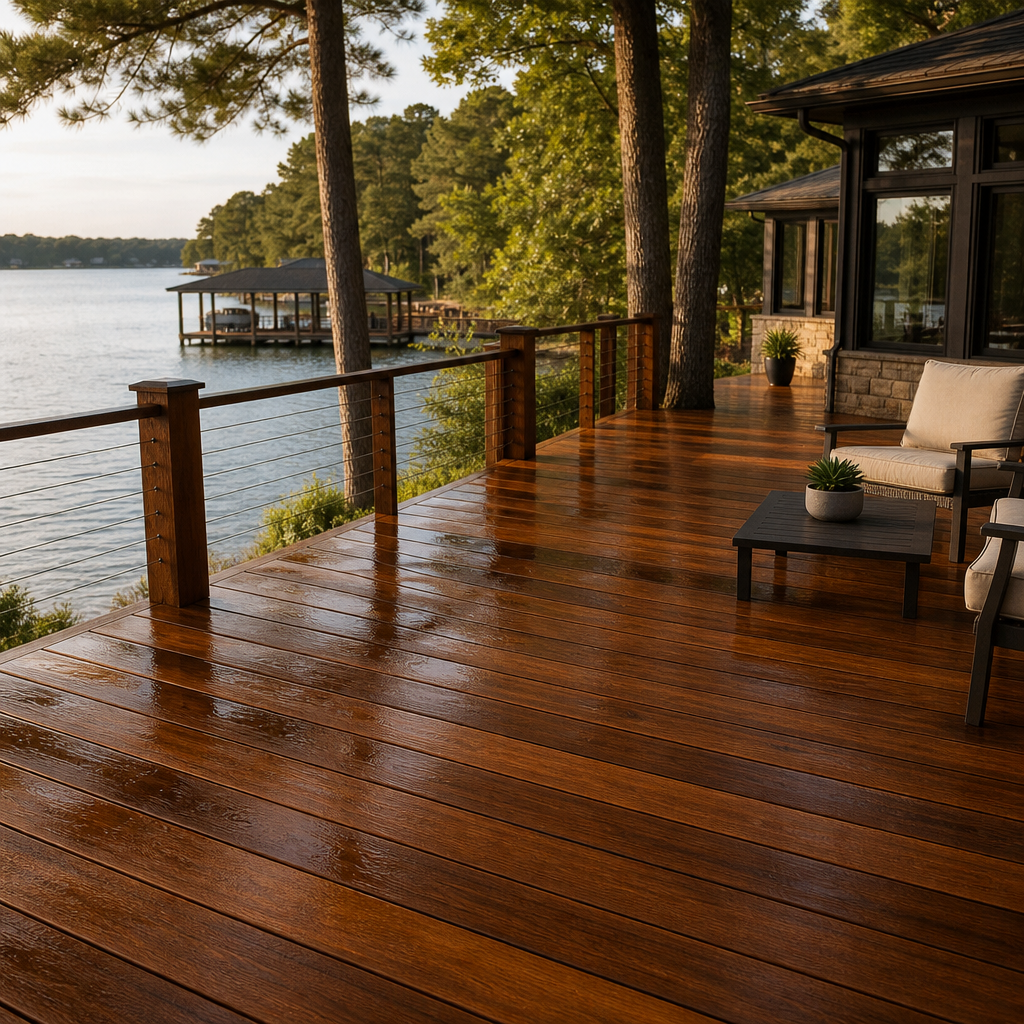
Your maintenance reality with premium composites: pressure wash annually, treat stains as they appear, inspect fasteners every 3-5 years, and budget for partial board replacement starting year 10-12.
Why Ipe Wood Delivers What Waterfront Properties Need
Ipe represents a different category entirely. This South American hardwood exhibits properties specifically suited to moisture exposure that composite materials cannot match. The wood’s natural density (approximately 1.25 specific gravity) sheds water rather than absorbing it. Oil content in ipe’s cellular structure provides inherent resistance to decay organisms that plague softwood alternatives.
Testing data consistently shows ipe decking resisting water absorption below 12% by weight even after 6 months of immersion. Composites under identical conditions absorb 18-28% water weight. That difference translates directly to dimensional stability and resistance to the cupping, warping, and fastener popping that plague waterfront decks.
Ipe’s Janka hardness rating of 3680 means the wood resists surface denting and damage from dropped tools, furniture movement, or the occasional canoe scraping. A composite deck showing permanent indentation from a chair leg sitting for a season barely marks ipe. This hardness also means ipe boards maintain consistent fastener grip for decades without the fastener stress that affects composites and softwoods.
We source ipe decking specifically for lakeside applications because the material performs predictably across the temperature and moisture extremes that define Texas waterfront conditions. Architects who specify ipe for their contemporary designs understand they’re investing in a 40-50 year material, not a 15-20 year product requiring eventual replacement.
Our Curated Ipe Selection for Texas Lakeside Projects
We maintain inventory of premium-grade ipe in multiple profiles suited to modern architectural applications. Clear grain ipe provides the visual warmth that contemporary designs emphasize, avoiding the knots and character marks that distract from clean lines. Vertical grain ipe displays grain patterns that follow the board length, creating visual continuity that enhances expansive deck surfaces overlooking water.
Our sourcing prioritizes ipe certified by sustainable harvesting practices. FSC-certified ipe ensures the wood came from responsibly managed forests rather than environmentally compromised sources. This matters to architects and homeowners whose design philosophy emphasizes sustainability alongside performance.
We stock ipe in common decking widths (5.5 inches and 7 inches) and thickness specifications (5/4 for standard decks, 8/4 for heavy-duty applications requiring minimal deflection). Engineered ipe alternatives exist, but we recommend solid ipe for waterfront applications because the material’s inherent properties eliminate the failure points that engineered composites encounter.
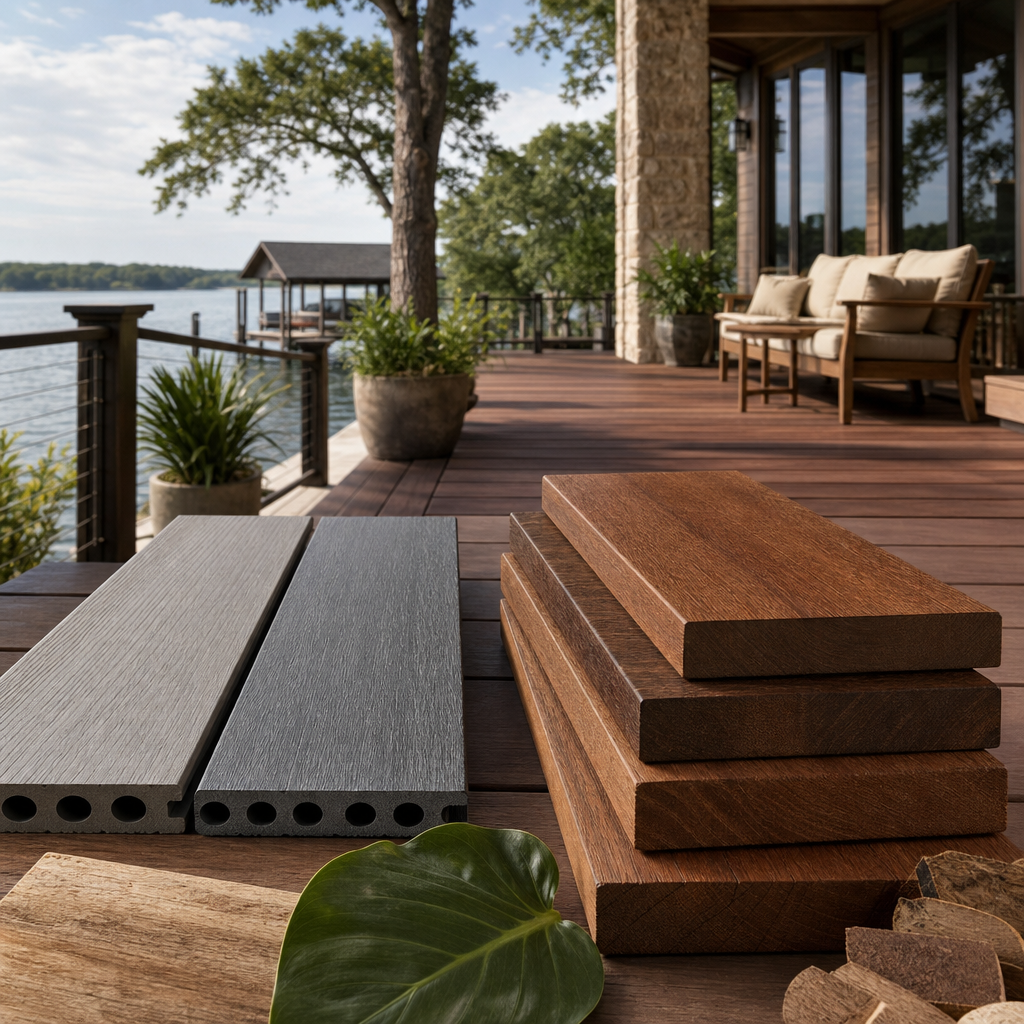
For your lakeside project, we can provide samples showing ipe’s natural color range from golden brown fresh-milled to the silvery gray that develops with UV exposure over 1-2 seasons. Your architect can visualize how the material ages and integrates with surrounding architecture.
Installation and Maintenance Considerations for Ipe Decking
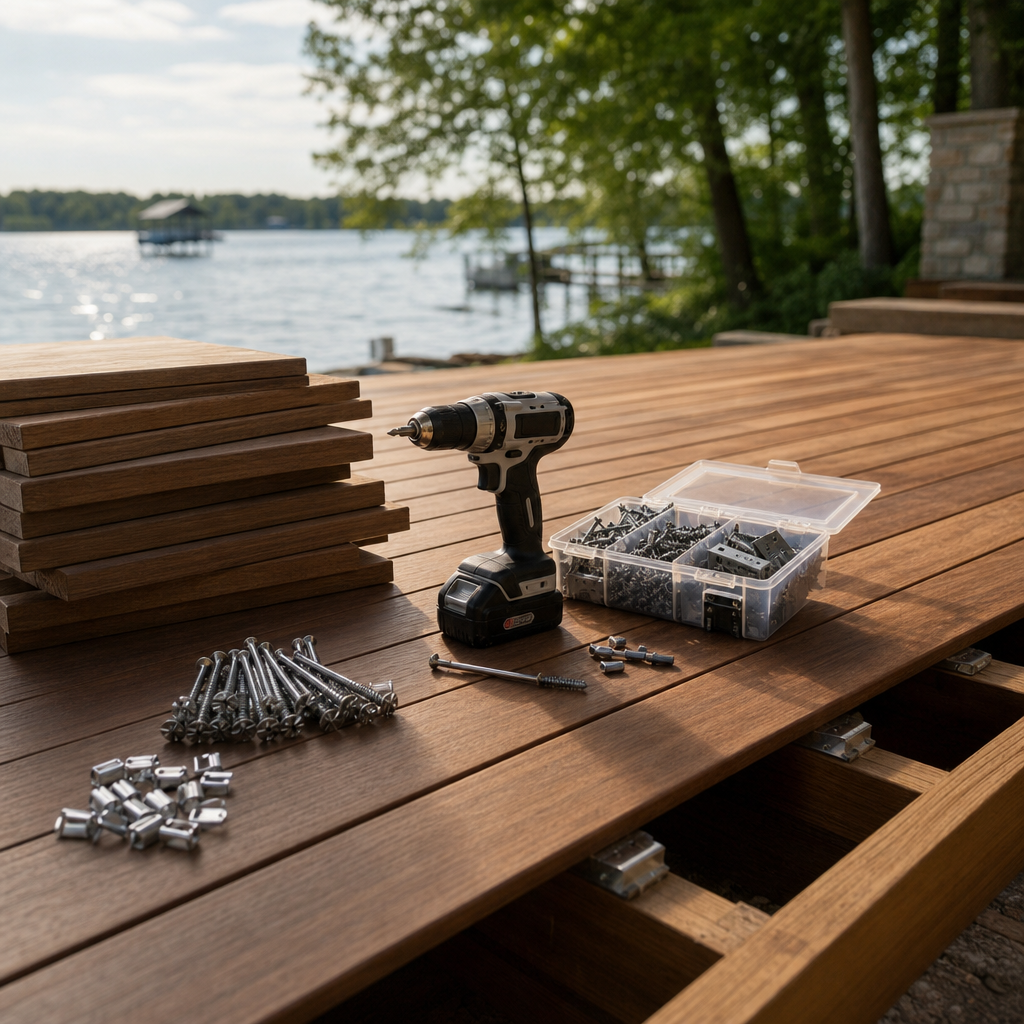
Ipe’s density requires specialized installation techniques. Standard fasteners won’t grip the wood properly, and driving standard nails or screws causes splitting. We specify stainless steel fasteners specifically designed for hardwoods, with pre-drilling required for all penetrations. This means installation costs run higher than composite decking—typically $25-$35 per square foot installed versus $20-$28 for quality composites.
That installation premium pays dividends over time. Once installed, ipe requires minimal ongoing maintenance compared to composites. Annual pressure washing with low-pressure systems keeps the deck clean without accelerating degradation. Unlike composites, ipe’s dense cellular structure doesn’t harbor mold or mildew beneath the surface.
Your maintenance schedule for ipe: pressure wash annually (500 PSI maximum), apply linseed oil or ipe-specific sealant every 2-3 years to maintain color and accelerate drying after rain, and inspect fasteners every 5 years for corrosion around stainless steel. This 30-minute annual investment beats the monthly maintenance demands of composite decks in humid lakeside climates.
Ipe naturally resists termites and wood-boring insects because the wood’s density and chemical composition create hostile conditions for pests. This inherent pest resistance eliminates concerns about treating for termites near structures, a significant advantage in areas where pest pressure runs high.
Aesthetic Advantages of Natural Wood vs Composites
The visual warmth of natural ipe cannot be replicated by composites. Contemporary architectural design prioritizes the expression of natural materials, and ipe delivers authentic wood character that homeowners and architects value. The grain patterns, subtle color variation, and dimensional presence of real wood integrate seamlessly with glass, steel, and stone in modern lakeside homes.
Ipe’s color evolution tells the story of aging gracefully. Fresh-milled ipe displays rich golden and reddish tones that mature into sophisticated silvery grays over 12-24 months of exposure. This evolution creates visual interest and authenticity that engineered composites cannot match. Architects designing homes meant to age beautifully specify ipe for this exact reason.
Composite decking ages differently. The initial color fades predictably but doesn’t develop character or patina. Composites in gray tones look “new” in a way that becomes dated as architectural trends shift. Natural ipe adapts to changing preferences because the material’s inherent qualities appeal across design movements.
Scale and proportion feel different on wood versus composites. The thickness of solid ipe boards (5/4 or 8/4 stock) creates visual substance and detail that thinner composite products cannot achieve. This matters for decks visible from interior spaces through expansive glass walls, where material expression influences the entire perception of the home.
Fire Rating and Safety Benefits of Ipe
Texas properties increasingly face WUI (Wildland-Urban Interface) fire considerations, particularly in Hill Country properties overlooking protected lands and open space. While ipe isn’t inherently fire-resistant, it performs significantly better than composite decking in fire exposure scenarios.
The dense cellular structure of ipe means the wood burns rather than melts. Composite decking contains plastic binders that melt and release flammable gases, accelerating fire spread. In independent testing, ipe decking exposed to flames shows superior flame spread characteristics compared to composite alternatives. This performance margin makes ipe the preferred material for properties in fire-prone areas.
Building codes increasingly require Class A fire ratings for exterior materials in designated fire zones. While untreated ipe doesn’t achieve Class A ratings independently, we stock WUI-approved fire-rated ipe products that meet these stringent requirements. These products maintain ipe’s inherent performance benefits while satisfying code requirements for modern homes in sensitive locations.
Your safety consideration: If your lakeside property sits within a designated WUI zone, ipe decking integrated with proper setbacks and fire-resistant landscaping provides substantially better protection than composite alternatives.
Cost-Benefit Analysis: Long-Term Value of Ipe Investment
Initial cost comparison favors composites. A 400-square-foot deck built with quality composite decking costs approximately $10,000-$12,000 installed. Identical ipe deck costs $14,000-$18,000 due to material and installation labor premiums. That $4,000-$6,000 difference looks significant at the outset.
Calculate forward 25 years. Composite deck maintenance costs include annual stain removal ($300-$500), fastener replacement at year 10-12 ($800-$1,200), board replacement for failed sections at year 15-18 ($2,000-$4,000), and eventual full replacement by year 25 when material degradation becomes unmanageable. Total cost of ownership approaches $25,000-$28,000.
Ipe deck maintenance over 25 years includes annual pressure washing ($150-$250 if done professionally), sealant application every 2-3 years ($400-$600 total), and minimal replacement costs. Total cost of ownership stays under $18,000. The ipe investment pays for itself by year 15, then delivers another 10-15 years of zero additional expense.
This analysis doesn’t account for the value of avoiding the disruption of deck replacement during the 25-year period. Your lakeside home becomes a sanctuary precisely because systems perform reliably. Ipe decking honors that expectation; composites in waterfront applications compromise it.
How We Source and Prepare Premium Ipe for Lakeside Applications
We source ipe from established Brazilian suppliers maintaining FSC certification and sustainable harvesting practices. Our selection process prioritizes clear grades with minimal knots and defects, ensuring architectural consistency across your deck.
Sourcing ipe for lakeside applications requires specific gravity testing to verify density characteristics that affect water resistance. We maintain relationships with suppliers who test material before shipment, confirming the wood meets performance standards required for waterfront properties.
Preparation includes kiln-drying to moisture content between 12-15% before shipment to Texas. This pre-drying ensures the wood arrives ready for immediate installation without additional acclimation time. Our warehouse facilities maintain climate control preventing moisture pickup that would compromise dimensional stability.
When you order ipe from us, you receive material that has been specifically selected, tested, and prepared for lakeside performance. We can provide documentation of sourcing, testing results, and preparation protocols. Your architect gains confidence that the material specified will perform as expected, and your contractor receives boards ready for professional installation.
Next steps: Contact us with your lakeside project specifications, and we’ll provide samples demonstrating ipe’s color range, grain character, and aging characteristics. We can also connect you with architects who have specified our ipe for contemporary waterfront homes throughout Texas, giving you real-world context for your decision.
To place orders, order samples, or talk with a live person.
Frequently Asked Questions (FAQ)
Why do we recommend Ipe over composite materials for lakeside decking?
We’ve observed that composite decking, including products like Millboard and MoistureShield, develops structural and aesthetic problems in waterfront environments where moisture exposure is constant. Ipe’s natural density and oil content make it inherently resistant to water infiltration, decay, and the swelling that compromises composite boards over time. Our clients with lakeside properties consistently report that Ipe maintains its structural integrity and appearance for decades, whereas composites typically require replacement within 15-20 years in these demanding conditions.
What sets your Ipe selection apart for Texas lakeside projects?
We source premium-grade Ipe specifically suited to the intense sun and moisture conditions around Texas lakes like Lake Travis and Lake Austin, ensuring the material we supply has the density and character our architects demand. Our preparation process accounts for the wood’s natural movement in humid environments, and we maintain strict quality standards so every board meets the exacting specifications required for high-end residential and commercial applications. We understand that lakeside decking becomes part of the architectural vision, not just a functional surface, so we curate our inventory accordingly.
How does Ipe’s fire rating benefit waterfront homes?
Our Class A fire-rated Ipe products provide the safety performance that modern building codes require while maintaining the authentic wood aesthetic that distinguishes architect-designed homes. For properties in areas with wildfire risk or strict fire codes, we can supply Ipe that meets WUI Class A standards without compromising the natural material quality our clients expect. This combination of superior fire performance and durability is difficult to achieve with alternative materials.


