

The Fire Risk Reality for Austin Architects and Builders
Wildfire risk has fundamentally changed how we approach exterior materials in Austin and Hill Country properties. For architects designing contemporary homes that celebrate natural wood as a signature material, fire-rated specifications are no longer optional—they’re essential. We supply and specify WUI Class A fire-rated wood products that let you maintain the warm, authentic aesthetic your designs demand while meeting stringent code requirements in high-risk zones.
Austin’s expansion into the wildland-urban interface (WUI) means more luxury homes are built in zones where fire risk is genuine and measurable. Properties in Dripping Springs, Driftwood, Spicewood, Bee Cave, and the Hill Country face elevated wildfire exposure. Insurance companies are responding with stricter material requirements and higher premiums for homes that don’t meet Class A standards.
The reality architects face: clients want the warm aesthetic of natural wood fencing, but insurance underwriters now demand proof that materials won’t contribute to flame spread. This isn’t a hypothetical concern. Recent wildfire seasons have demonstrated that standard wood fencing can become an ignition pathway, particularly in estates where the perimeter plays a visual and protective role.
What this means for your specifications: you need materials that pass Class A fire-rating without compromising the authentic wood character your designs are known for. We’ve positioned our inventory specifically to solve this tension.
Why Standard Wood Fencing Falls Short in High-Risk Zones
Untreated or conventionally treated wood fencing performs poorly under wildfire exposure. Standard pressure-treated lumber, while structurally sound, offers minimal fire resistance. When exposed to radiant heat or embers, it ignites readily and contributes to rapid flame spread—exactly what WUI code amendments aim to prevent.
Insurance carriers working in high-risk Texas zones now routinely deny or severely restrict coverage for properties with standard wood fencing in fire-prone areas. Some carriers require removal entirely. Beyond liability, untreated fencing becomes a complication in design reviews and permitting. Local authorities expect architects to demonstrate fire-resistant material choices in their specifications.
The practical problem: builders and architects have historically chosen between aesthetic compromise (using non-wood materials) or regulatory risk (proceeding with standard wood). Class A fire-rated wood products eliminate this false choice, giving you both performance and the visual authenticity your designs demand.
Action item: Request fire-rating documentation from any fencing supplier before specifying materials on high-risk properties.
Understanding WUI Class A Fire-Rating Standards
Class A fire-rating is determined by ASTM E84 testing, which measures flame spread and smoke development. To earn Class A designation, materials must achieve:
- Flame spread rating of 0-25
- Smoke development rating of 0-450
WUI Class A designation specifically targets wildland-urban interface properties. This standard reflects the reality that materials in high-risk zones must perform predictably under radiant heat, direct flame, and ember exposure. It’s more stringent than standard interior fire-rating because exterior exposure is harsher and the stakes are higher.
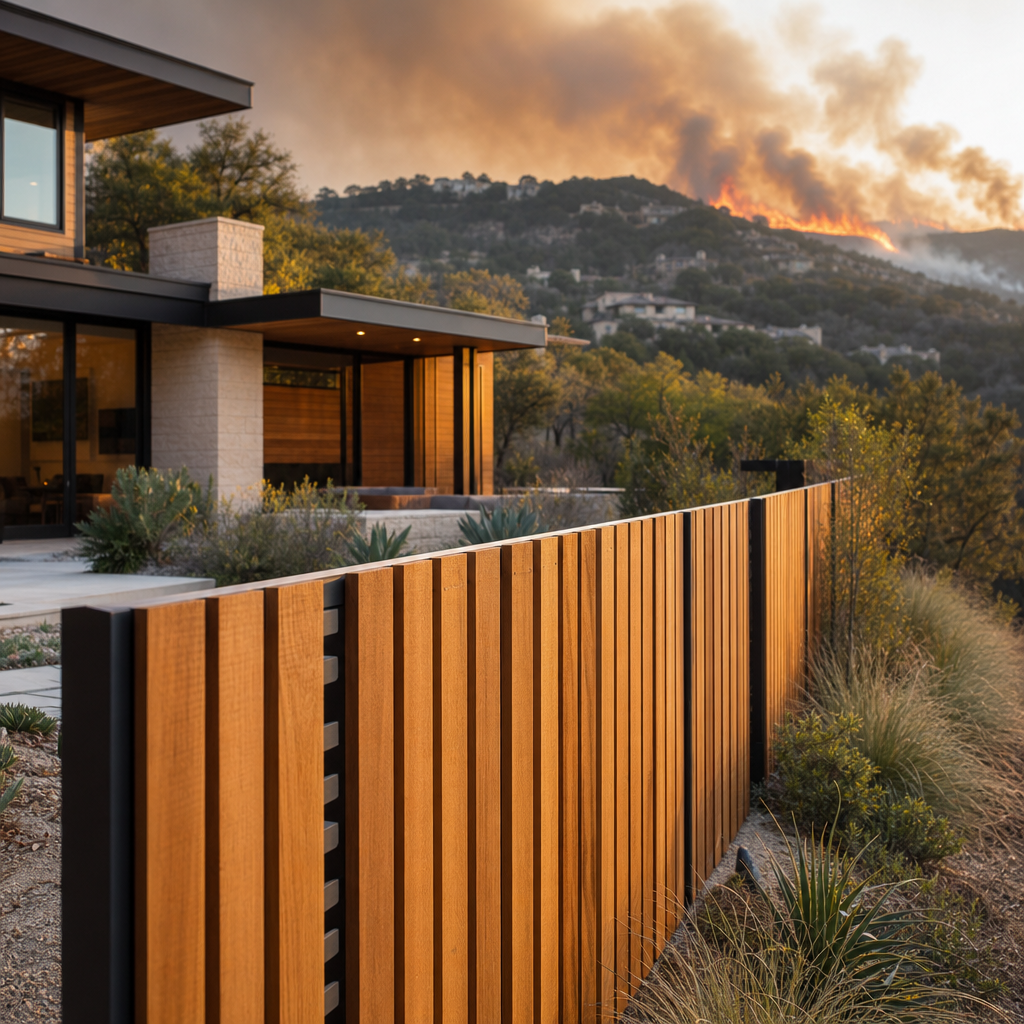
For fencing and pickets, achieving Class A means the material won’t propagate fire along the structure or contribute significantly to flame advancement. In practical terms: your fence becomes a barrier rather than a fuel source.
We source and distribute wood products explicitly tested and certified to Class A standards. Not all fire-rated woods are equal. Some achieve rating through chemical treatment, others through thermal modification. The choice impacts both performance and aesthetic outcome, so understanding your options matters before finalizing specifications.
Our Premium Fire-Rated Wood Selection for Fencing and Pickets
We stock Class A certified woods specifically suited to fencing and picket applications:
Douglas Fir and Hemlock deliver the dimensional stability and appearance architects expect from premium softwoods. Both species achieve Class A rating when properly specified and treated, offering the warm honey and amber tones that read authentically in contemporary designs.
Cypress brings natural durability and a distinctive grain character. It naturally resists rot and insect damage, reducing maintenance while meeting fire code. Cypress fencing reads as distinctly regional, appropriate for Hill Country and coastal-influenced designs.
Western Red Cedar in vertical grain or clear grades provides the warm, clean aesthetic many contemporary projects demand. We source certified Class A versions that maintain cedar’s signature appearance while meeting stringent fire performance standards.
Hardwoods like Ipe offer exceptional durability and a sophisticated visual presence. Class A certified Ipe fencing performs superbly in high-heat environments and develops a distinguished silver patina over time.
Each species brings different visual and performance characteristics. We work with architects to match material to both design intent and site-specific fire risk. Request samples before committing to a species to ensure the tone and grain character align with your overall design vision.
Thermally Modified and Specialized Woods That Exceed Code Requirements
Thermally Modified Woods represent a breakthrough for architects seeking Class A performance without chemical treatment. Thermal modification—heating wood to specific temperatures in a controlled oxygen-free environment—fundamentally alters the wood’s cellular structure. The result: enhanced fire resistance, dimensional stability, and durability, all while preserving the wood’s authentic appearance.
We distribute thermally modified ash, pine, and poplar in fencing applications. These products exceed Class A requirements and offer additional benefits:
- Superior dimensional stability (minimal warping or cupping)
- Extended lifespan without preservative chemicals
- Aesthetic consistency with unmodified wood
- FSC certification available for sustainability-conscious projects
Thermally modified products cost more upfront but deliver superior long-term value through reduced maintenance and extended service life. For luxury estates where fencing is a prominent architectural element, thermal modification provides insurance against both fire risk and performance degradation. The investment typically recoups itself over the fence’s operational life through eliminated maintenance cycles and refinishing expenses.
Design Flexibility Without Compromising Fire Performance
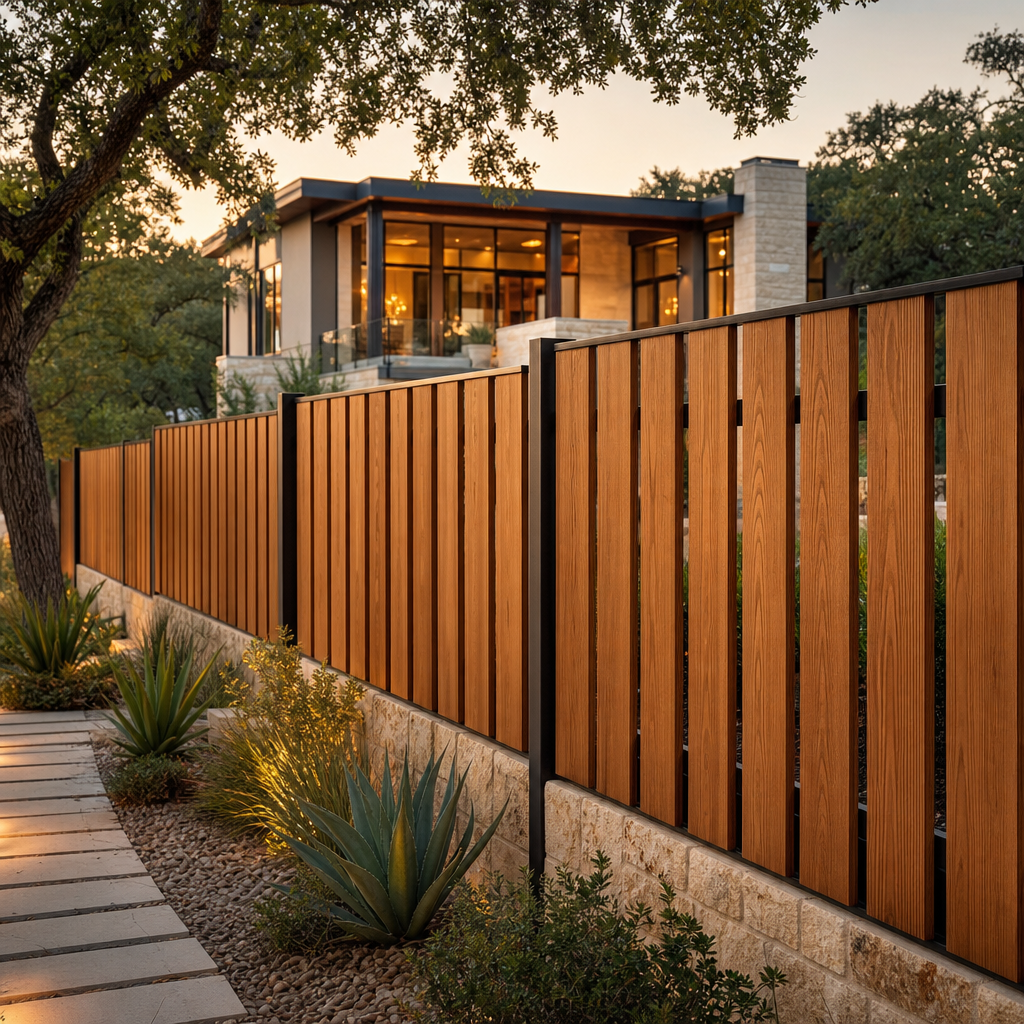
One of the most common concerns we hear: “Will Class A requirements force me into an industrial or compromised aesthetic?” The answer is unequivocally no.
Class A fire-rated wood is available in every profile, finish, and dimension standard wood fencing offers. You can specify vertical grain siding profiles, fluted detailing, custom picket designs, and architectural milling without sacrificing fire performance. The fire-rating lives in the material itself, not in a surface coating or visible treatment that might feel artificial.
This means your fence can read exactly as you’ve designed it: warm, authentic, and contemporary, while meeting the most stringent WUI codes. We’ve delivered Class A picket fencing for estates in Bee Cave and Lakeway that visually distinguish themselves precisely because the wood is genuine and uncompromised.
The key: specify Class A certification at the material selection stage, not as an afterthought. When you do, the rest of the design follows naturally without compromise or visual awkwardness.
Sourcing and Sustainability of Class A Certified Products
We prioritize FSC-certified and responsibly sourced Class A materials. Sustainability and fire performance aren’t in tension—they’re complementary priorities for the caliber of architects we serve.
Our thermally modified wood inventory includes FSC options, ensuring your fire-rated fencing supports responsible forestry. We also work with established brands and suppliers committed to transparent sourcing. When you specify through us, you’re building with materials traceable to their origin and harvest practices.
For architects working on LEED or sustainability-focused projects, this matters. Fire protection and environmental responsibility can coexist in material specifications. Request chain-of-custody documentation and certification details from suppliers to verify claims before finalizing your material schedule.
Installation Specifications for Maximum Fire Protection
Specifying Class A material is half the equation. Installation quality determines whether the material performs as rated.
Key installation requirements for Class A fire-rated fencing:
- Posts must be set with appropriate spacing and depth (typically per local code, 6-8 feet on center)
- Pickets or boards should be attached with corrosion-resistant fasteners (stainless or hot-dipped galvanized)
- Gaps between boards should match specification (typically 1/8″ to 1/4″ for airflow and expansion)
- Keep base clearance minimum 6-12 inches above grade to minimize ember entrapment
- Remove vegetation within 5-10 feet of fence line (defensible space)
We provide detailed specifications with every order. Work with installers familiar with fire-rated material requirements—these differ subtly from standard wood fence installation. We’re happy to discuss specifications with your builders to ensure execution matches design intent and performs as tested.
Case Studies: Fire-Rated Fencing in Austin Luxury Projects
We’ve completed several significant installations in high-risk zones where Class A fencing became a signature design element.
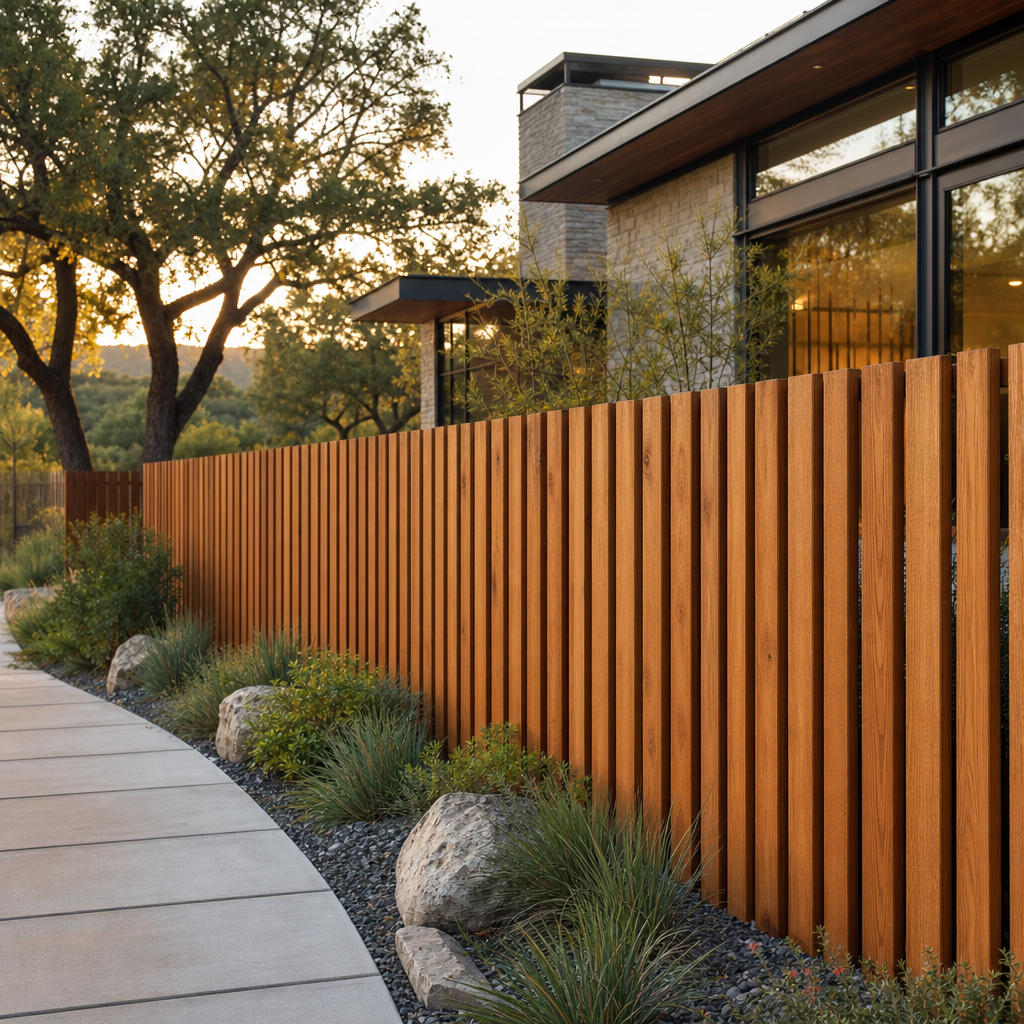
A contemporary estate in Dripping Springs specified thermally modified ash fencing with vertical grain detailing, achieving Class A rating while delivering the warm, distinctive appearance the architect envisioned. The fence became a visual anchor for the property’s modern design language, proving that performance and aesthetics align seamlessly.
Another project in the Hill Country featured Douglas Fir Class A picket fencing complementing a contemporary cedar and glass residence. The architect specified vertical grain fir to echo the home’s exterior wood cladding, creating cohesive material continuity while satisfying WUI code requirements. The result demonstrated that fire-rated fencing enhances rather than compromises architectural vision.
These projects prove that Class A fencing isn’t a compromise. When properly specified and sourced, it becomes an integral part of the architectural narrative.
Integrating Fire-Rated Fencing with Architect-Designed Landscapes
Your fencing doesn’t exist in isolation—it’s part of a broader landscape and architectural composition. Class A specifications work best when integrated with defensible space planning and material coordination.
Consider how your fencing relates to surrounding plantings, hardscape, and the home’s exterior materials. Modern contemporary designs often feature layered wood elements: cladding, screens, decking, and fencing. When all these materials meet Class A standards, you achieve both visual coherence and comprehensive fire resilience.
We recommend early coordination between landscape designers, architects, and material suppliers. This ensures your specifications reflect both aesthetic vision and site-specific fire risk. We work regularly with architects and landscape firms in Austin and the Hill Country, and we’re equipped to provide material recommendations that strengthen overall design intent while meeting fire safety requirements. Schedule a consultation during the design development phase for best results.
To place orders, order samples, or talk with a live person.
Frequently Asked Questions (FAQ)
What makes WUI Class A fire-rated wood different from standard fencing materials?
We source and supply wood products that have been independently tested and certified to meet WUI Class A standards, meaning they resist ignition and flame spread under extreme wildfire conditions. Our selection includes thermally modified woods, specialty softwoods like Clear Grain Western Red Cedar and Cypress, and hardwoods such as Ipe that naturally or through treatment achieve these fire-performance requirements. Standard untreated wood fencing lacks this certification and won’t meet current building codes in high-risk Austin zones like the Hill Country and Bee Cave.
Can we use fire-rated wood fencing without compromising the architectural design we’re developing?
We work regularly with Texas architects to integrate Class A materials into contemporary designs without sacrificing the warm, natural wood aesthetics your projects demand. Our inventory includes thermally modified ash, pine, and specialized hardwoods that deliver both fire performance and the expressive wood qualities that define modern luxury homes. The visual character remains unchanged—you’re gaining code compliance and fire protection, not altering the design intent.
Do you supply fire-rated pickets and smaller fence components, or only full fence systems?
We stock individual fire-rated pickets, soffits, cladding, and all the component pieces architects and builders need for custom fence specifications. Whether you’re specifying Class A certified materials for an entire perimeter or integrating fire-rated elements into a mixed-material fence design, we can source the exact products your project requires across all 50 states.


