

Why Architects Choose Thermally Modified Wood for Contemporary Projects
Contemporary architecture in Texas demands materials that perform as beautifully as they photograph. Thermally modified wood has become the material of choice for architects designing homes that integrate natural warmth with modern precision. We see this across Dallas-Fort Worth projects where designers specify thermally modified wood for Texas architects to achieve specific aesthetic and performance goals.
The appeal goes beyond appearance. Thermally modified wood resists cupping, warping, and checking in ways that standard softwoods cannot match. When architects like those inspired by Lake|Flato’s philosophy design homes with expansive wood features and climate-responsive details, they need materials that hold up to both the design intent and Texas weather. Thermal modification achieves dimensional stability through a chemical-free process that physically alters the wood’s cellular structure, creating consistency across grain variations.
The material also addresses practical constraints. Projects requiring consistent color, minimal movement, and straightforward finishing specifications benefit from thermal modification’s predictability. For architects juggling multiple trades and demanding schedules, this reliability translates to fewer callbacks and stronger outcomes.
What to do next: Review your recent specifications calling for clear grain cedar or Douglas fir siding. Thermal modification of these same species can often deliver better performance with less field adjustment required.
Understanding ThermoWood Profiles: Performance Beyond Standard Softwoods
ThermoWood represents a category of thermally modified wood products engineered for specific performance demands. The thermal modification process exposes wood to controlled heat in an oxygen-free environment, reducing the wood’s ability to absorb moisture. This fundamentally changes how the material behaves in service.
Where standard Western Red Cedar might move 0.6% across its grain width as humidity changes, thermally modified cedar limits that movement to roughly 0.3%. For a 12-inch-wide siding board, that difference becomes tangible: reduced gapping at transitions, fewer split ends, and cleaner shadow lines throughout the facade’s life.
We source thermally modified ash, pine, poplar, and Ayous products from suppliers who maintain strict process control. Each species responds differently to thermal modification. Modified ash delivers rich color stability and excellent hardness. Thermally modified pine provides cost-effective performance for larger-scale applications. Poplar and Ayous offer unique color characteristics suited to specific design palettes.
The real advantage emerges in milling flexibility. Thermally modified wood accepts custom profiles with cleaner detail definition than untreated softwoods. Shadow gaps, fluted panels, and intricate edge work hold their sharpness longer because the wood resists the surface checking that typically softens details on conventional lumber.
What to do next: Request samples of thermally modified species in your specified profile. Compare dimensional stability data across three to five production lots to establish baseline expectations.
Custom Milling Capabilities That Match Your Design Vision
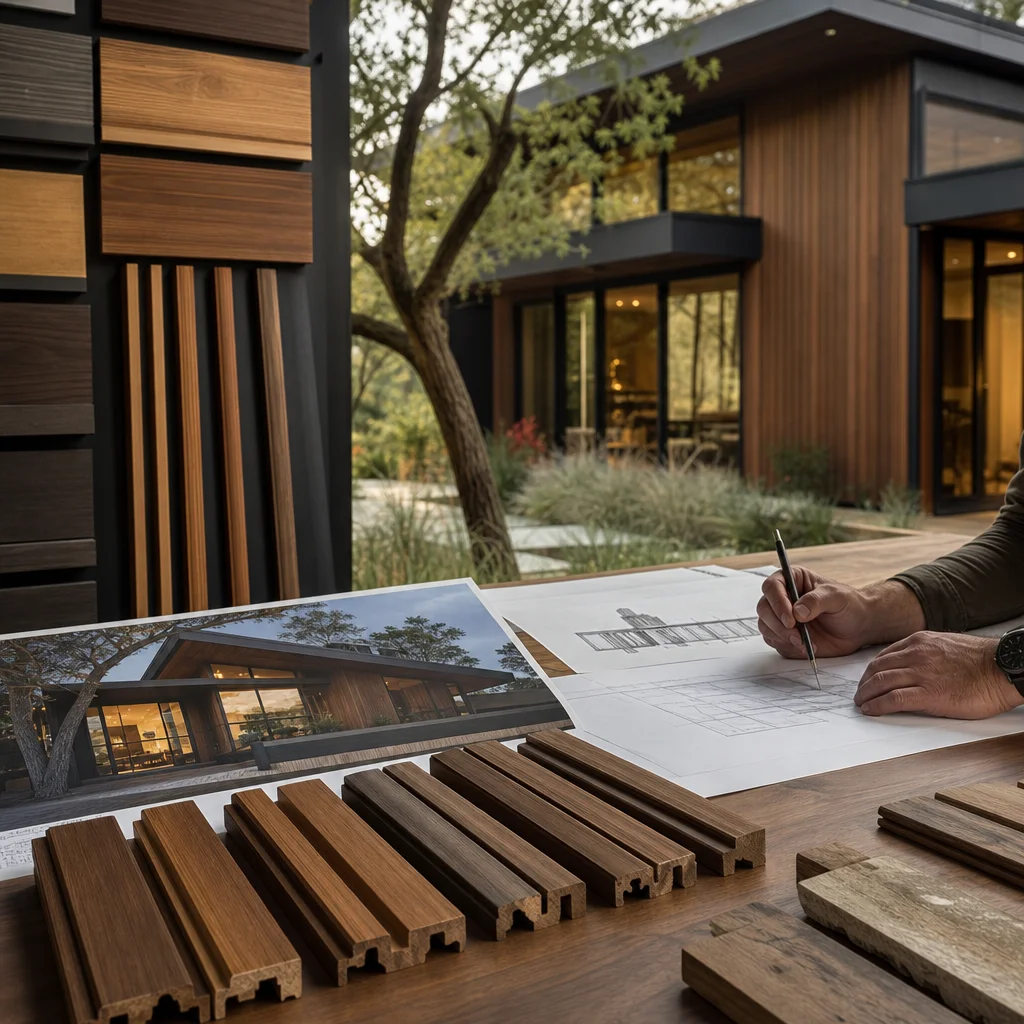
Our milling shop in Dallas-Fort Worth handles custom cladding profiles that extend beyond catalog options. When your design demands a specific shadow gap dimension, flute spacing, or edge detail, we translate that CAD drawing into production-ready tooling.
We work with architects to refine profiles during the specification phase. A 0.25-inch shadow gap versus a 0.5-inch shadow gap creates dramatically different shadow play across a facade, especially on east and west elevations. We can mock up sections at full scale so you see exactly how light interacts with your chosen profile before committing to production.
Our equipment handles thermally modified wood without the blade dulling and tear-out that often plague conventional milling. The denser cellular structure of modified wood actually machines cleaner than standard softwoods when tooling is optimized for the material’s characteristics.
Stock profile inventory includes vertical grain options, fluted systems, board-and-batten configurations, and modern shadow-gap designs. We also manage special runs for architect-specific details. Lead times for custom profiles typically fall within four to six weeks for quantities above 2,000 linear feet.
What to do next: Meet with our milling team to review your cladding profile specifications. Bring elevation drawings and detail sections showing shadow gaps and any custom edge work.
How We Source and Process ThermoWood in Dallas-Fort Worth
We maintain consistent relationships with thermal modification facilities across North America, ensuring reliable supply of premium ThermoWood products. Our sourcing strategy prioritizes species and grades that meet architect specifications while respecting budget constraints.
The thermal modification process itself takes roughly three weeks from raw lumber receipt to finished product. Logs or rough-sawn timber enter a kiln where temperature rises gradually to approximately 380 to 430 degrees Fahrenheit, depending on the desired end properties. Oxygen is excluded throughout, preventing combustion while allowing cellular restructuring. The wood then cools gradually before quality grading and processing.
We receive modified lumber in select or better grades, inspect for color consistency and defect specifications, then process it to your dimensional requirements. Unlike commodity softwoods where variation is assumed, our ThermoWood arrives documented with consistent color data and movement specifications that architects can rely on.
Our Dallas facility stocks core ThermoWood profiles year-round. This inventory buffer means custom milling orders don’t wait for shipments from distant modification plants. Architects working on aggressive timelines benefit from local stock availability combined with quick-turn custom milling.
What to do next: Specify ThermoWood dimensions and grades in your material schedule. We’ll confirm color consistency and lead times within one business day.
Sustainability and Durability: The Long-Term Advantage
Thermal modification extends wood’s service life without chemical treatment. The process uses heat and time, requiring no copper compounds, boron, or pressure-treatment chemicals. This appeals directly to architects designing healthy indoor environments and seeking materials aligned with sustainability principles.
The durability gain is substantial. Thermally modified wood achieves a service life extension typically equivalent to 15 to 25 additional years compared to untreated softwoods of the same species. In Texas, where intense UV exposure and seasonal humidity swings stress exterior materials, that longevity translates to cladding and trim components that age gracefully rather than deteriorate visibly.
Maintenance requirements drop noticeably. Standard cedar siding typically requires restaining every five to seven years. Thermally modified wood extends that interval to ten to twelve years, depending on exposure and finish system selected. The dimensional stability also reduces the coating failure that occurs when untreated wood moves, lifting paint and creating maintenance headaches.
Many of our architect clients specify thermally modified wood not just for performance but as a material story. When a homeowner understands that their cladding is engineered for durability through physics rather than chemistry, it reinforces the thoughtfulness embedded in their architect-designed home.
What to do next: Calculate total cost of ownership across thirty years, including re-staining intervals and potential repair work. ThermoWood often delivers lower lifecycle costs despite higher initial material cost.
Technical Specifications for Architects and Builders
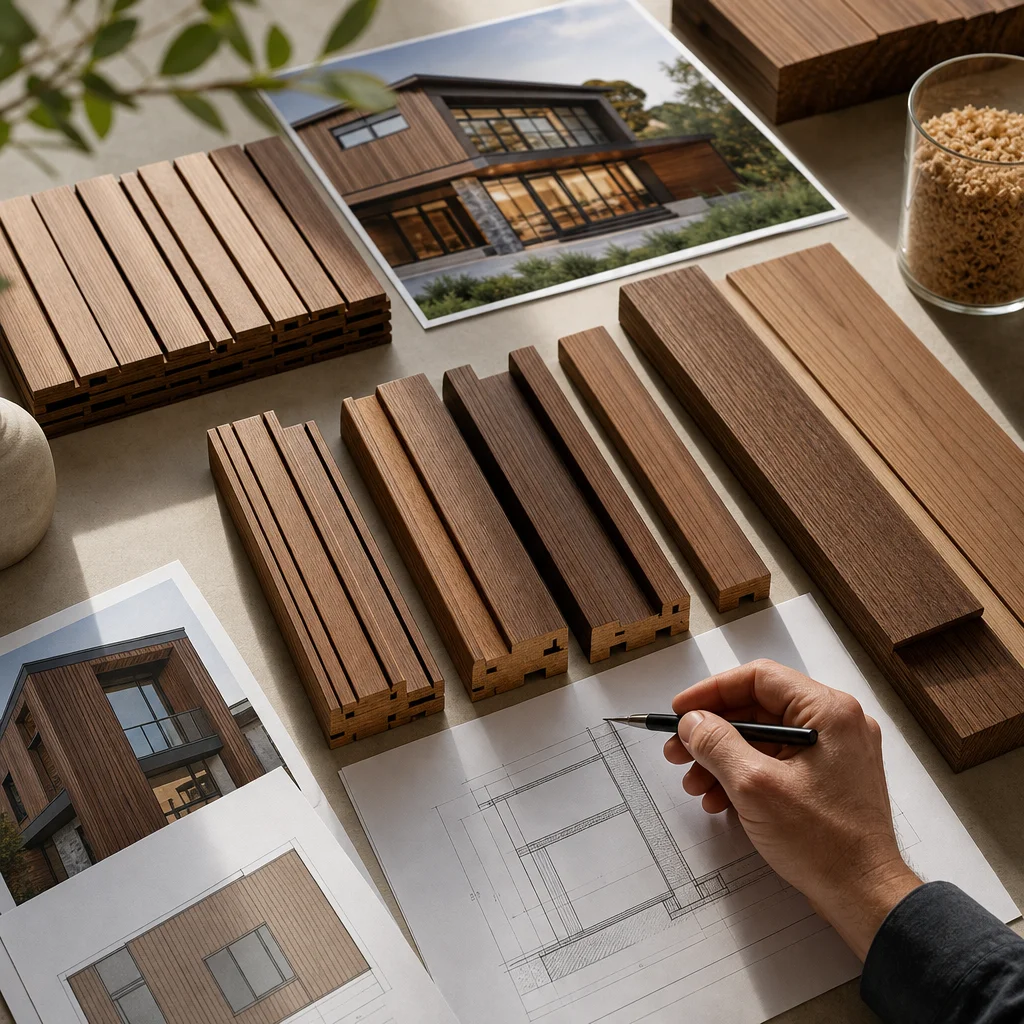
We provide comprehensive technical documentation for every ThermoWood product we source. Specifications include moisture content ranges, shrinkage coefficients, modulus of elasticity, and color variance parameters.
Moisture content for thermally modified siding typically arrives between 8 and 12 percent. The material’s reduced hygroscopic properties mean it stabilizes faster in field conditions than conventional lumber. Radial shrinkage averages 2 to 3 percent, tangential shrinkage 4 to 6 percent, with movement coefficients substantially lower than untreated species.
Hardness ratings guide fastener selection and field handling. Thermally modified ash delivers Janka hardness around 1,010, suitable for trim applications where impact resistance matters. Modified pine remains softer, appropriate for large siding applications where fastener driving remains straightforward.
Color specifications matter for continuity across large facades. We provide color samples from each production lot before milling begins. Finish systems we recommend include water-based stains that allow the wood grain to remain visible while providing UV protection, and semi-transparent or solid finishes depending on your design direction.
What to do next: Include thermal modification characteristics in your master specification template. Reference radial and tangential shrinkage data and fastener recommendations for your specific profile and species selection.
Fire-Rated ThermoWood Solutions for WUI Compliance
Properties in Texas wildland-urban interface zones require Class A fire-rated materials for siding, cladding, and trim. We source fire-rated ThermoWood products that pass ASTM E84 flame spread and smoke development requirements while maintaining the aesthetic and performance benefits of thermal modification.
Fire-rating is achieved through proprietary flame retardant treatments applied post-modification, preserving the dimensional stability advantages while adding fire protection. The treated material maintains workability for milling and accepts standard fasteners without additional precautions.
WUI-zone projects from Austin’s Hill Country to Dallas suburbs increasingly demand Class A materials for the entire exterior envelope, including soffits, fascia, and decorative trim. Thermally modified hardwoods like Ipe naturally resist flame spread without chemical treatment due to their density, but modified softwoods combined with fire-retardant treatment deliver the aesthetic range many contemporary designs require.
Documentation and third-party verification support your submittals to building departments. We maintain current test reports and can direct builders to proper installation practices that preserve the fire-rating throughout construction.
What to do next: Confirm your project’s WUI classification with the local building official, then specify fire-rated ThermoWood accordingly. Lead times for fire-rated material average six to eight weeks due to treatment scheduling.
Integration with Modern Design Aesthetics
Contemporary residential architecture thrives on material authenticity and visible craftsmanship. ThermoWood’s dimensional stability and consistent grain expression support this design language. Large uninterrupted wood surfaces remain flat and true, shadow gaps read cleanly across elevations, and fluted details maintain their definition through years of exposure.
The color palette of thermally modified species complements modern interiors. Ash delivers warm grey tones. Modified pine ranges from honey to deeper amber depending on modification intensity. Ayous provides pale blonde character suited to Scandinavian-influenced designs. Each species accepts clear or tinted finishes that enhance rather than obscure the wood’s natural character.
We’ve supported projects where thermally modified wood cladding extends interior accent walls, creating visual continuity between exterior and interior spaces. The material’s lower movement characteristics make this detail work reliably. Architects can specify consistent profiles and finishes knowing the interior wood won’t shift relative to the facade.
Thermally modified hardwoods like modified Cumaru and Garapa expand material possibilities for contemporary designs emphasizing rich, warm wood tones. These species resist weathering and maintain color stability, supporting design visions that celebrate wood’s natural variation within a coherent aesthetic framework.
What to do next: Specify your finish system alongside material selection. Transparent, semi-transparent, or solid finishes each interact differently with ThermoWood’s color and grain character.
Our Comprehensive Support from Specification to Installation
We guide architects and builders from initial specification through final project closeout. Our technical team reviews your detail drawings to confirm milling tolerances align with installation requirements. We answer finish system questions, provide color samples, and address field concerns that arise during construction.
Our role extends beyond material supply. We connect builders with installation crews experienced in precision wood cladding, reducing the risk of field damage or improper fastening that compromises performance. We troubleshoot color or finish concerns as they emerge, often identifying simple solutions that prevent costly remediation.
We maintain contact with project teams through warranty periods, available if questions arise regarding movement, finish durability, or material performance. This partnership approach reflects our understanding that architect-designed homes demand material suppliers who think beyond transaction completion.
Documentation support includes mill certifications, test reports, maintenance recommendations, and care instructions suitable for homeowner manuals. We prepare submittals formatted for your specification standards.
What to do next: Contact our sales team with your project timeline. We’ll schedule a specification review meeting to confirm material availability, confirm lead times, and discuss any custom milling requirements.
Real Projects: ThermoWood Applications Across Texas
Across Texas, we’ve supplied thermally modified wood for contemporary homes where material performance and design expression demand premium specifications. Hill Country projects embrace modified cedar and ash for cladding that weathers beautifully while maintaining the clean shadows integral to their architectural vision. Dallas residences specify modified softwoods for soffits and fascia systems that complete modern exterior designs with attention to detail.
We’ve supported fire-rated specifications for WUI-zone projects where design quality cannot be sacrificed to regulatory constraints. Austin architects have specified fluted thermally modified panels that create shadow play across expansive facades, knowing the material will hold those details true across decades of Texas sun exposure.
Projects emphasizing material honesty and visible wood grain have benefited from ThermoWood’s consistent expression. Where conventional lumber would show seasonal checking and color variation that reads as deterioration, thermally modified wood ages gracefully, darkening subtly while maintaining its structural integrity and refined appearance.
Hardwood applications including Ipe and modified tropical species have extended architectural possibilities in luxury custom homes, delivering exotic wood character with performance reliability that conventional imports cannot guarantee.
Each project reinforces why architects specify ThermoWood: superior performance, design flexibility, sustainability alignment, and the peace of mind that comes from material integrity matching design intent.
What to do next: Share your current projects with our team. We’ll review cladding details, recommend optimal ThermoWood species and profiles, and provide samples for your material boards.
We’re here to transform your architectural vision into specifications that perform. Contact us to discuss ThermoWood profiles, custom milling capabilities, and how we support your projects from conception through completion.
To place orders, order samples, or talk with a live person.
Frequently Asked Questions (FAQ)
What custom milling capabilities do we offer for thermally modified wood profiles?
We manufacture custom profiles in thermally modified softwoods including Ash, Pine, and Poplar to match your exact design specifications. Our Dallas-Fort Worth facility handles everything from simple edge profiles to complex geometries, allowing us to deliver architect-grade wood solutions that integrate seamlessly with contemporary design visions. We work directly from your drawings and can produce samples for material review before full production runs.
How does thermally modified wood perform compared to standard softwoods in Texas climates?
Thermally modified wood offers superior dimensional stability and moisture resistance, which is critical for our Texas heat and humidity cycles. The thermal treatment process reduces movement and checking without chemical additives, making it ideal for exposed exterior applications like siding and cladding where performance matters as much as aesthetics. We’ve specified these products across residential and commercial projects throughout Texas and can provide technical data on long-term durability specific to your climate zone.
Can we supply WUI Class A fire-rated ThermoWood products for Hill Country and Austin projects?
Yes, we stock and mill thermally modified wood products that meet WUI Class A fire ratings for siding, cladding, decking, and fencing applications. We understand the fire safety requirements for projects in areas like Dripping Springs, Spicewood, and Bee Cave, and we ensure our inventory meets all current Austin City and Hill Country specifications. Our team can verify compliance documentation and coordinate directly with your builders and inspectors.


