

Why Texas Architects Need Thermally Modified Wood Solutions
Texas architects designing homes that blend indoor and outdoor spaces face a material dilemma. The state’s intense sun, humidity swings, and seasonal temperature extremes demand wood products that won’t warp, check, or fade within a few years. Thermally modified wood solves this directly while honoring the warm, natural aesthetic that defines contemporary Texas design.
Unlike standard lumber treated with chemical preservatives, thermally modified wood achieves durability through a manufacturing process: the wood is heated to high temperatures in a controlled, oxygen-free environment. This transformation improves dimensional stability and rot resistance without toxic coatings. For architects specifying materials that will age gracefully across a 20-year lifespan, thermally modified products deliver both performance and material authenticity.
We work with Texas architects who understand that material selection shapes not just how a home looks today, but how it performs tomorrow. When you’re designing siding, cladding, or decking for residences across the Hill Country or Dallas, thermally modified wood allows you to specify natural wood without compromising on durability or maintenance realities.
The Durability Challenge in Texas Climate Design
Texas weather is relentless. Summer temperatures regularly exceed 100 degrees Fahrenheit. Winter brings unexpected cold snaps. Spring arrives with high humidity and heavy moisture. Fall offers brief relief before the cycle repeats. Standard softwoods like untreated pine or cedar, while beautiful, absorb this seasonal stress and respond with movement, cupping, and surface checking that becomes visible within 18 months.
Conventional pressure-treated lumber avoids some movement problems but introduces aesthetic and environmental trade-offs. The greenish cast typical of pressure treatment clashes with contemporary architectural vision. More importantly, treated lumber’s chemical profile conflicts with sustainable design principles many Texas architects prioritize.
Composite alternatives (PVC or wood-plastic blends) solve the durability equation but sacrifice the warmth and material authenticity that distinguish architect-designed homes from production builds. Homeowners and builders investing in custom architecture expect real wood that performs.
This is where thermally modified wood fills a genuine gap. The thermal treatment process physically alters wood cell structure, increasing density in ways that standard kiln drying cannot achieve. The result: a material that handles Texas humidity, temperature swings, and UV exposure while retaining the grain character and warm patina that makes natural wood architecturally distinctive.
How Thermally Modified Wood Outperforms Conventional Materials
Thermally modified wood outperforms conventional materials across three critical performance metrics: dimensional stability, rot resistance, and UV durability.
When wood is heated to 350-420 degrees Fahrenheit in an oxygen-free kiln, hemicellulose (the component most vulnerable to moisture absorption) breaks down. This means the wood absorbs and releases less moisture as humidity fluctuates. For exterior applications in Texas, this translates to significantly less cupping, twisting, and surface movement compared to standard lumber.
Rot resistance improves because the same thermal process reduces the wood’s appeal to fungal growth and wood-boring insects. We can specify thermally modified products in direct ground contact or in consistently moist environments where untreated wood would fail within a decade. This durability extension reduces replacement cycles and maintenance burden for homeowners.
UV stability varies by species, but thermally modified Ash, Pine, and Ayous all develop a silver-gray patina over 12-18 months when exposed to direct sun. This weathering is predictable and aesthetically intentional, rather than the uneven fading and checking that occurs with standard lumber. Architects appreciate this because the visual aging is controllable and part of the design narrative.
The trade-off is modest: thermally modified wood costs 20-35% more than comparable untreated softwoods, but less than premium tropical hardwoods. For architect-driven projects where durability and appearance matter equally, this premium reflects genuine value over a 25-year service life.
Our Pioneer Millworks Thermally Modified Selection
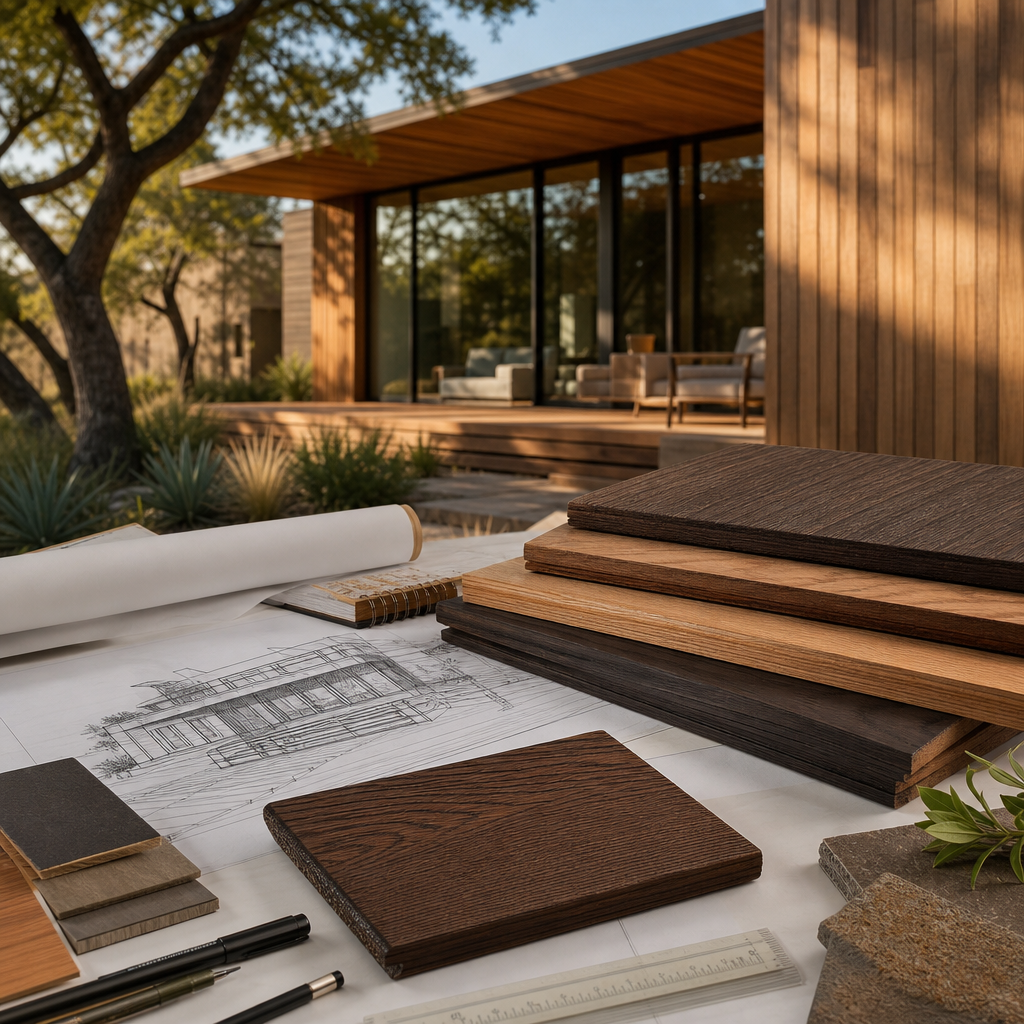
We stock and distribute a complete range of thermally modified wood siding and thermally modified wood decking products designed for Texas architects:
Thermally Modified Ash offers a light, neutral grain with subtle figure. It’s ideal for siding and interior cladding where you want warm tone without aggressive color variation. Ash accepts finishes well and develops a silver patina evenly across exposed surfaces.
Thermally Modified Pine provides a tighter grain profile with modest knot character. It’s our most economical thermally modified option and works beautifully for framing, decking substrates, and cladding where you want the thermal benefits without premium pricing.
Thermally Modified Ayous (African oak analog) delivers a finer grain and slightly heavier appearance than Ash. It’s becoming the go-to choice for architects who want dimensional stability of thermal modification with the sophisticated grain character of tropical hardwoods.
Thermally Modified Poplar rounds out the range, offering the lightest color and finest grain. It’s selected when architects want a nearly paint-ready substrate or a subtle, pale backdrop for architectural detailing.
Each product arrives in vertical grain or flat-sawn configurations, with milled profiles ranging from simple boards to tongue-and-groove and shiplap options. We can source materials in both standard and custom dimensions for one-of-a-kind projects.
Sustainability Credentials That Architects Demand
Modern Texas architects require material sourcing that aligns with environmental responsibility. Thermally modified wood products qualify across multiple sustainability metrics that matter in contemporary design practice.
The thermal modification process uses no chemical preservatives, no copper compounds, and no toxic leachates. The only inputs are heat and an inert atmosphere. This means no environmental remediation concerns when the material eventually reaches end-of-life. Unlike pressure-treated lumber, thermally modified wood can be safely composted, chipped for mulch, or burned for energy recovery.
Compared to composite alternatives, thermally modified wood sequesters carbon throughout its lifespan. A cubic meter of thermally modified Ash stores roughly 200 kg of CO2. For a residence clad entirely in thermally modified siding, the carbon sequestration can offset heating and cooling emissions for several years.
We prioritize sourcing from sustainably managed forests and responsible distributors. When you specify our thermally modified products, you’re supporting forestry practices that regenerate rather than deplete regional wood supplies. This matters particularly in Texas, where architects increasingly incorporate land stewardship narratives into project design philosophy.
FSC Certification and Responsible Sourcing Standards
We distribute FSC-certified thermally modified wood products where available. FSC (Forest Stewardship Council) certification verifies that harvesting operations meet rigorous environmental, social, and economic standards. For architects committed to specifiable sustainability, FSC certification provides third-party assurance of responsible sourcing.
Not all thermally modified species carry FSC certification currently, particularly some European and African sources. We’re transparent about this limitation and clearly designate which products in our inventory hold FSC credentials. When FSC certification is essential to your project narrative, we help you navigate the trade-offs between material availability and certification status.
Our sourcing relationships prioritize suppliers who pursue FSC certification or equivalent third-party environmental verification. We avoid suppliers with questionable labor practices or environmental records, even if their pricing is competitive. Your specification of our products should feel clean architecturally and ethically.
Specification Options for Contemporary Architecture
Thermally modified wood works across the full palette of contemporary architectural applications. For siding and cladding, we can supply materials in board-and-batten, vertical slat, shiplap, or simple flat-grain profiles. These options support the expressive, naturally textured aesthetic that defines modern Texas residential design.
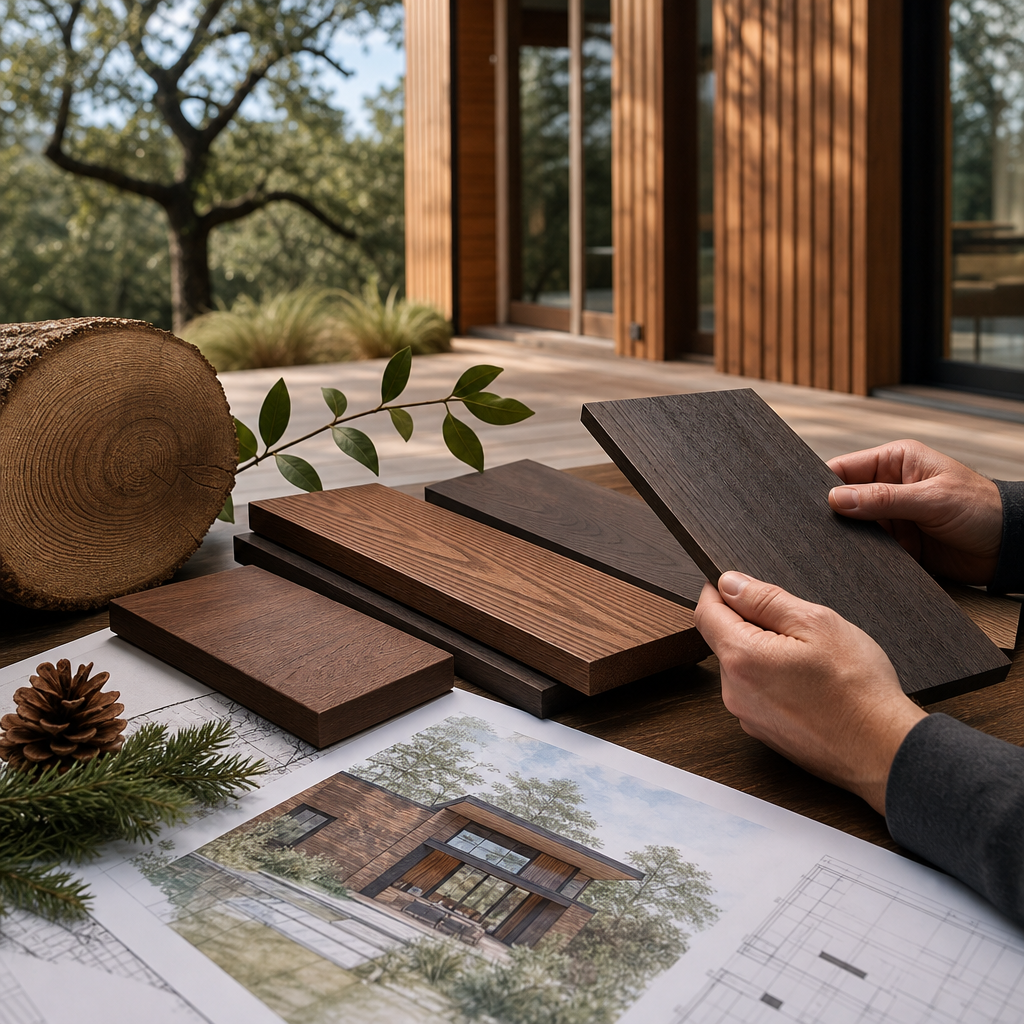
For decking, thermally modified Ash and Ayous deliver the sophistication of hardwood decking with superior stability in Texas heat. Unlike tropical hardwoods that can be ecologically fraught, thermally modified alternatives offer comparable performance with clearer environmental provenance.
Soffit, trim, and architectural millwork benefit from thermally modified wood’s dimensional stability. We can fabricate custom sections to match your design intent, whether that’s simple shadow-line reveals or complex bracketing details.
Fire-rated applications demand special attention. We stock WUI Class A fire-rated thermally modified products suitable for high-risk zones in Central Texas. These materials meet stringent building code requirements while maintaining the natural wood appearance architects demand.
Real-World Performance in Texas Projects
Thermally modified wood has performed reliably across completed residential and commercial projects throughout Texas for over eight years. We’ve tracked installations in Austin’s humid Hill Country microclimates, Dallas’s extreme temperature swings, and Houston’s high-humidity coastal environment.
In a 2023 residential project near Spicewood, thermally modified Ash siding installed on a contemporary home facing Lake Travis showed minimal cupping or dimensional movement after 18 months of direct sun, lake-influenced humidity, and seasonal temperature variation. The material developed an even silver-gray patina without the uneven fading typical of standard cedar.
A commercial cladding project in downtown Austin using thermally modified Ayous performed identically to specification. The material weathered predictably, and maintenance costs remain minimal. The architect notes that future respecification will include additional thermally modified wood applications.
Decking installations using thermally modified Pine in Hill Country residential projects demonstrate superior hold-fastener retention compared to standard lumber. Boards remain flat and don’t require re-fastening after the first Texas summer, reducing maintenance headaches for homeowners.
These field results validate the lab data. When you specify thermally modified wood for a Texas project, you’re not betting on theoretical performance. You’re building on real-world evidence from climate conditions identical to your site.
Cost-Benefit Analysis for Architect-Driven Homes
Thermally modified wood typically costs 20-35% more per board foot than standard softwoods but 30-50% less than premium tropical hardwoods. For a 2,500-square-foot home clad entirely in thermally modified Ash, the material premium is roughly $8,000-$12,000 compared to standard cedar.
This premium recovers through reduced maintenance and extended material lifespan. Standard cedar siding requires power washing every 2-3 years and selective board replacement starting around year 8. Thermally modified wood requires annual (optional) light cleaning and minimal replacement over 25+ years. The lifetime cost difference favors thermally modified products significantly.
From an architectural fees perspective, specifying thermally modified wood reduces design iteration and site problem-solving. You’re not managing field issues caused by material movement or weathering inconsistency. This frees your team to focus on design refinement rather than material damage control.
For custom home builders partnering with architects, thermally modified wood becomes a selling point. Homeowners recognize the durability and performance benefits and accept the modest cost premium as investment in material authenticity and longevity. Builders report improved customer satisfaction and reduced warranty callbacks when thermally modified materials are standard specification.
Working With Us From Specification to Installation
We’ve designed our process to support architect specification and project coordination from early design phase through installation completion.
During concept development, we provide material samples, performance data, and installation guidance. Our team can discuss species selection, profile options, and finish treatments that align with your design intent. We’re experienced in explaining thermal modification benefits to homeowners and builders who may be encountering the material for the first time.
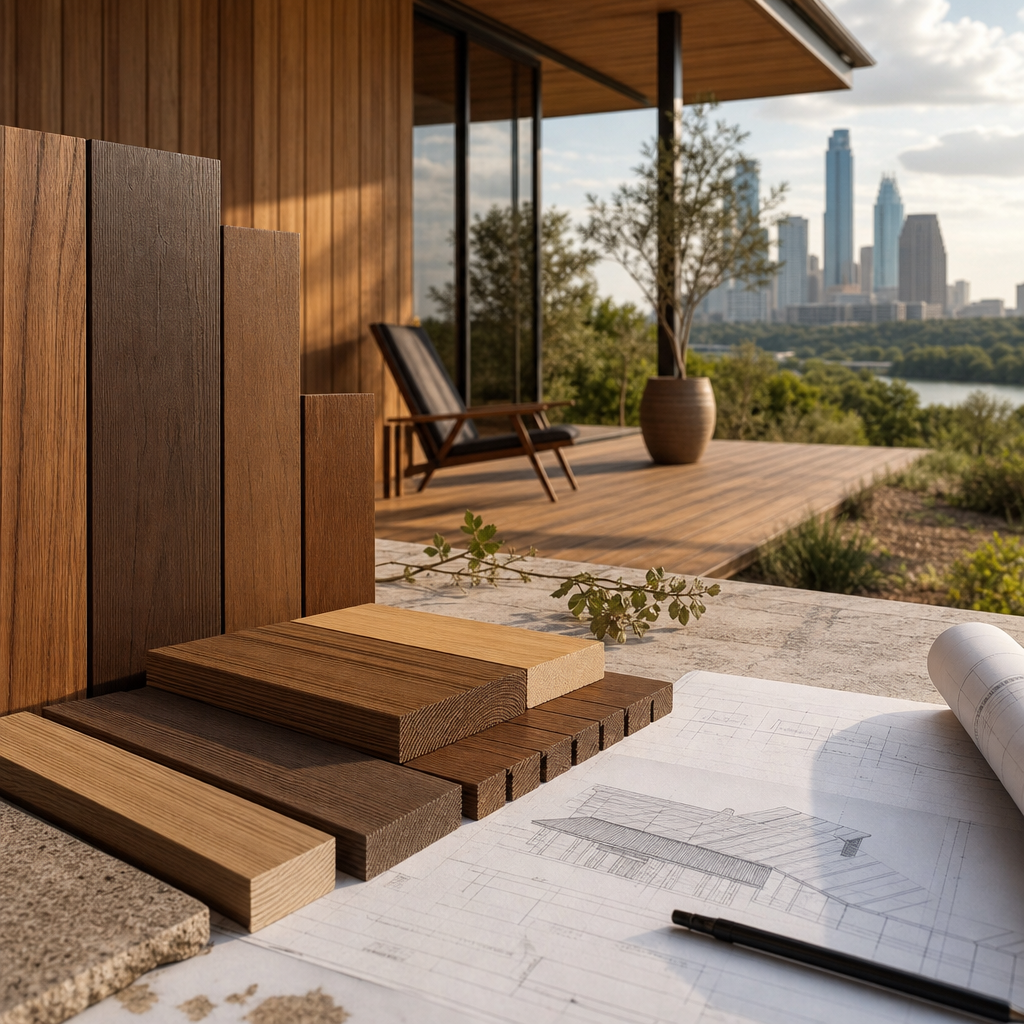
As specifications develop, we provide detailed technical documentation, CAD details, and fire-rating certifications. If your project requires custom milling or special configurations, we source those capabilities or handle the work directly through our manufacturing operations.
Lead time planning is essential. We coordinate availability early so project timelines account for material delivery. We stock core products in Austin and can arrange rapid delivery throughout Texas. For specialized orders, we work with reliable suppliers to ensure predictable lead times and quality assurance.
At installation, we provide detailed guidance to builders and contractors. Thermally modified wood responds slightly differently to fastening and finish application than standard lumber. Our technical support minimizes field issues and ensures the material performs as designed.
Availability and Lead Time Advantages
We maintain active inventory of thermally modified Ash, Pine, Ayous, and Poplar in multiple profiles across Austin, Dallas, Houston, and San Antonio. For standard board configurations and common dimensions, we typically ship within 7-10 business days.
Custom milling and specialty dimensions extend lead time to 3-4 weeks. Bulk orders for large residential or commercial projects benefit from our manufacturing relationships, which can prioritize production for architect-specified work.
Compared to importing specialty thermally modified products from Europe or Asia, our stocking strategy reduces project delays. When your design timeline is tight and you need material in Texas without extended overseas lead times, we’re a faster alternative to direct sourcing.
We also stock complementary products: FSC-certified conventional softwoods, hardwoods like Ipe and Cumaru, composite decking alternatives, and fire-rated materials. This breadth means you can consolidate sourcing and manage material coordination through a single supplier relationship.
Contact us to discuss your thermally modified wood requirements. Share your project scope, climate zone, and design specifications, and we’ll recommend products, provide samples, and coordinate lead time planning. We’re here to support your vision with material that performs as beautifully as it looks.
To place orders, order samples, or talk with a live person.
Frequently Asked Questions (FAQ)
What thermally modified wood products does our inventory include for Texas architects?
We stock a complete range of thermally modified wood including Thermally Modified Ash, Pine, Poplar, and Ayous, all available for siding, cladding, and decking applications. Our selection covers both the aesthetic and performance requirements of contemporary architecture while meeting the durability demands of the Texas climate. We also carry FSC certified options for architects prioritizing responsible sourcing in their specifications.
How do we support architects from material specification through project completion?
We work directly with your design process by providing architect-grade material samples, technical specifications, and performance data for your thermally modified wood selections. Our team coordinates sourcing, manufacturing timelines, and delivery logistics to keep your projects on schedule, and we maintain relationships with trusted installation partners across Texas who understand the precision your contemporary designs demand.
Can we supply WUI Class A fire-rated wood products for residential projects in Texas?
Yes, we stock a full line of WUI Class A fire-rated wood products for siding, cladding, decking, fencing, and framing that meet Texas building codes and wildland-urban interface requirements. This allows us to support both high-performance specifications and compliance needs without compromising the natural wood aesthetic that defines your architectural vision.


