

The Challenge of Sourcing Authentic Exterior Siding for High-End Designs
Finding the right exterior siding material for a contemporary home designed by a forward-thinking architect isn’t just about aesthetics. It’s about material integrity. You need siding that performs in the Texas climate, resists the sun and moisture without sacrificing the warm, tactile wood appearance your design demands. Many architects tell us they’ve spent weeks sourcing materials only to discover that standard offerings either lack the grain character they specified or won’t survive the first summer heat cycle without warping or checking.
The real problem: most commodity siding doesn’t bridge the gap between durability and design authenticity. Composite alternatives feel plastic. Untreated woods crack and fade. And thermally modified options are often misunderstood or difficult to source in Texas.
That’s where specialized knowledge matters. We’ve worked with enough architects across Austin, Dallas, and throughout the state to know exactly which materials hold up and which ones disappoint on-site.
Why Architects Choose Thermally Modified Wood Products
Thermally modified wood solves a fundamental problem: it gives you the genuine wood character architects crave while delivering stability that untreated wood simply cannot match. The process involves heating wood at high temperatures in a controlled, oxygen-free environment. This restructures the wood’s cellular makeup, reducing its ability to absorb moisture and making it significantly more dimensionally stable.
For architects designing contemporary spaces where clean lines and minimal movement matter, this stability is non-negotiable. A warped board breaks the geometry of your facade. Checking and splitting look careless, not intentional.
Beyond performance, thermally modified wood meets the sustainability benchmarks many of your clients now demand. The process uses no chemicals, the wood remains fully natural, and it extends the service life of the material, reducing lifecycle waste. We work with Thermally Modified Wood for Texas Architects products that carry FSC certification, so your specifications align with environmental responsibility.
The aesthetic payoff matters too. Thermally modified ash, in particular, develops a sophisticated gray patina over time that reads as intentional and elegant rather than weathered.
What to do next: Talk with your material supplier about the source and process of their thermally modified wood. Not all thermal modification is equal, and understanding the specifics helps you specify with confidence.
Boral TruExterior Poly-Ash: Superior Performance and Aesthetics
Boral TruExterior Poly-Ash is built on thermally modified ash, a species that brings both visual warmth and structural reliability to exterior cladding. The ash starts with a rich, grain-forward character. After thermal modification, it becomes harder, more stable, and significantly more resistant to insects and decay than untreated ash would ever be.
The “Poly-Ash” designation refers to Boral’s proprietary finishing process, which enhances color consistency and weather resistance without obscuring the natural grain. This is critical for architects. Many synthetic finishes hide the wood character you’re trying to showcase. Boral’s approach amplifies it.
Performance specs back this up. Boral TruExterior Poly-Ash resists cupping and warping far better than standard exterior siding. It handles Texas humidity and temperature swings without the seasonal movement that can create gaps or compromise flashing details. For tall facade applications where even millimeter-level movement compounds visually, this matters enormously.
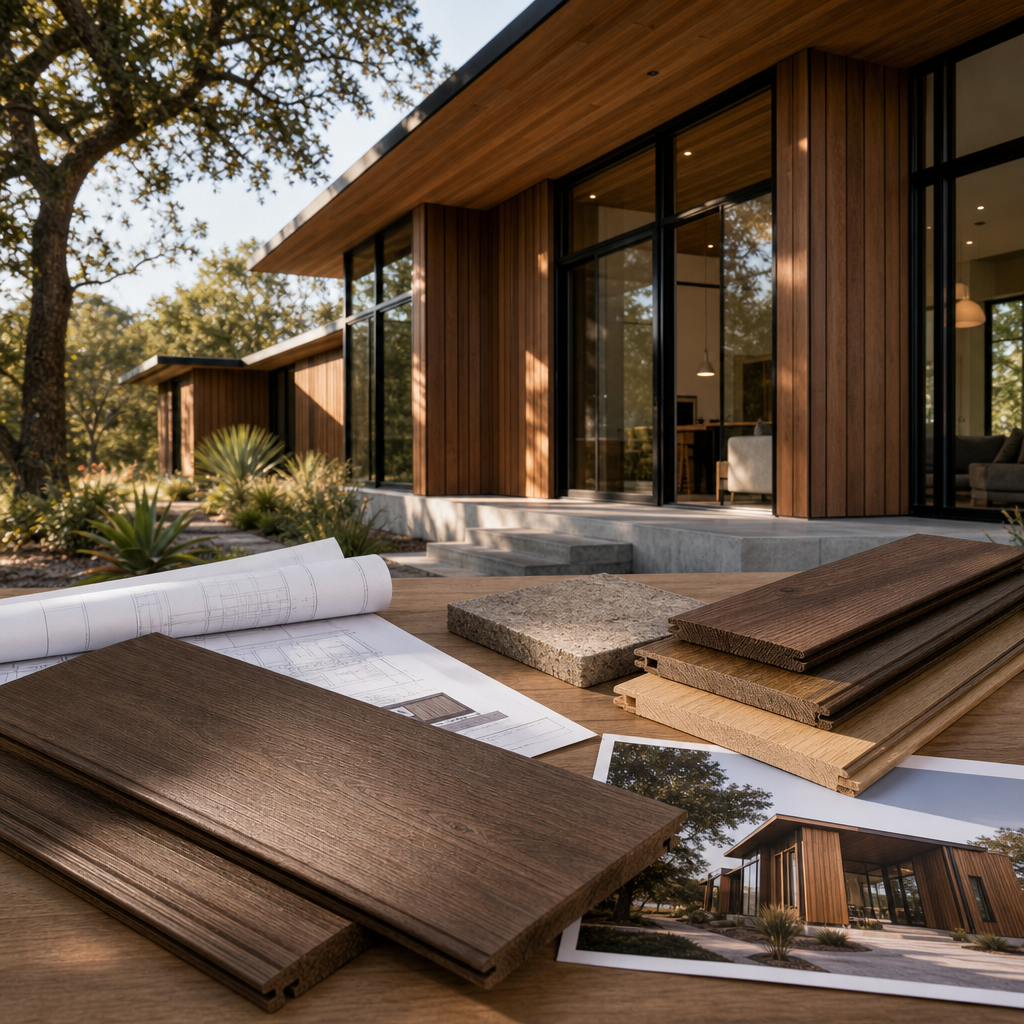
We stock Boral TruExterior Poly-Ash in multiple profiles, from smooth to textured, and in widths that suit both traditional and modern reveals. Installation with proper ventilation and flashing (details we can review with your contractor) ensures decades of performance.
Our Expertise as Your Texas Specialty Wood Supplier
We don’t just stock materials. We manufacture and broker specialty wood products across the full spectrum of contemporary architecture needs. Our facility in Texas allows us to maintain inventory depth that keeps your projects on schedule, and our relationships with mills and manufacturers globally mean we can source exactly what your design specifies.
We carry vertical grain softwoods (Douglas fir, hemlock, cedar, cypress) for architects who prefer traditional species with modern grain expression. Our hardwood selection includes Ipe, Garapa, Cumaru, and Tigerwood for decking and cladding where durability and color matter. And our thermally modified inventory spans ash, pine, poplar, and Ayous.
For architects working across Texas service areas from the Hill Country to Houston, we understand regional climate nuances. What works beautifully in Dripping Springs may face different moisture challenges in East Austin. We help you specify with those variables in mind.
We also stock WUI Class A fire-rated wood products for projects in wildfire-prone areas, and we’re an approved Accoya dealer for architects who want Accoya’s specific performance profile. Composite decking lines from TimberTech, Trex, and Fiberon round out our offering for mixed-material projects.
Actionable step: Schedule a consultation with our team to review your project specifications. We’ll recommend the right material profile, finish, and installation approach for your climate zone and design intent.
How Thermally Modified Ash Delivers on Durability and Design
Ash is a naturally beautiful hardwood with prominent rays and a creamy to light golden base color. Thermally modified ash deepens this warmth slightly while introducing subtle color variation that reads as sophisticated rather than inconsistent.
The durability gains are substantial. Untreated ash is vulnerable to insects and decay in exterior applications. Thermally modified ash resists both naturally, without chemical preservatives. It also becomes harder and denser, making it more resistant to surface denting and wear from weather exposure. For a facade that will face two decades of Texas sun and rain, this translates directly to long-term appearance retention.
One practical advantage we see repeatedly: thermally modified ash accepts stain and finish modifications beautifully if a client later wants to shift the color palette. The wood’s structure is stable enough that finish coats adhere and weather consistently. This flexibility is valuable for renovation-minded homeowners.
The grain expression in ash provides visual interest without competing with glass or other materials. In the contemporary architecture your firm designs, this balance matters. Ash plays a supporting role, framing expansive windows and softening hard angles while never overwhelming the composition.
Check our Thermally Modified Wood Siding inventory to see profiles and finish options available in thermally modified ash.
Seamless Integration with Contemporary Architecture
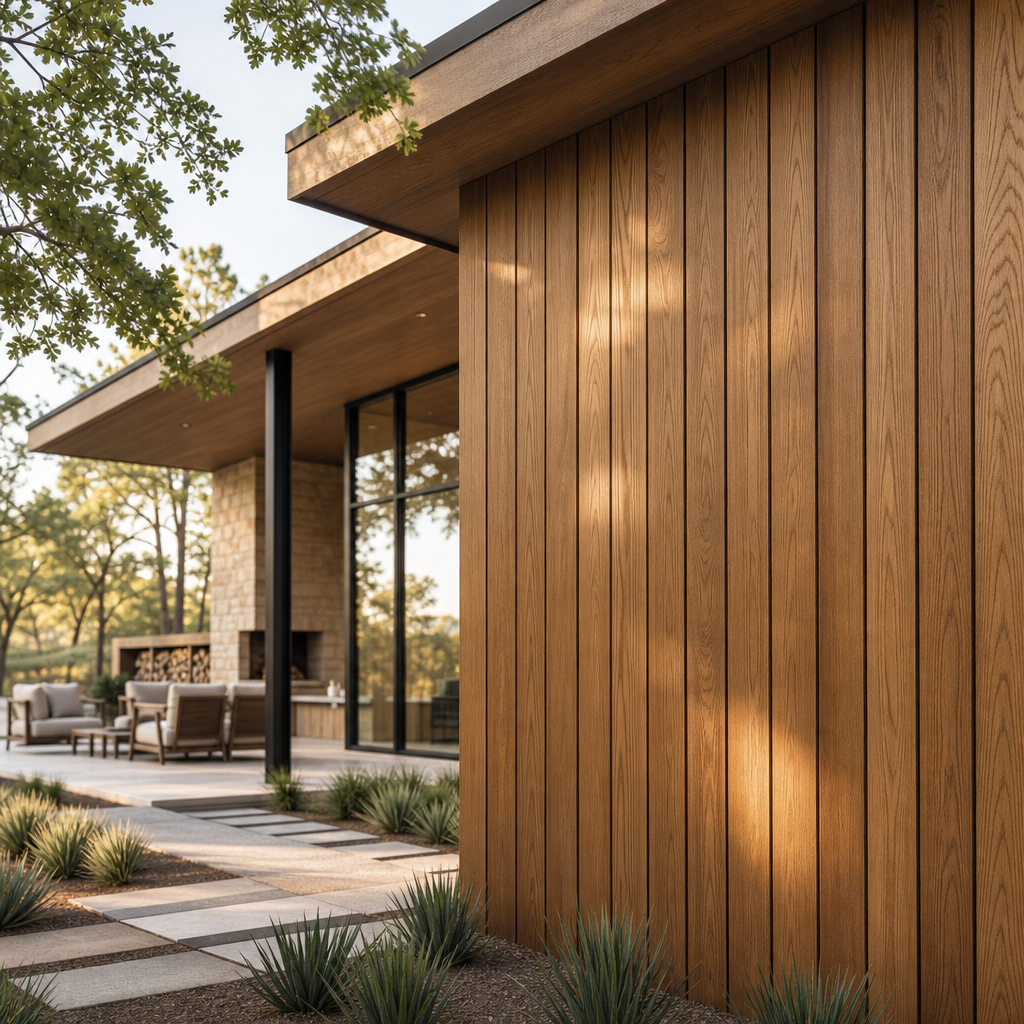
Contemporary design, especially in the Lake|Flato and Page architectural tradition, relies on natural materials as compositional elements. Wood cladding isn’t just protective; it’s part of the visual story. Warm wood tones contrast with expansive glazing, creating the indoor-outdoor continuity your clients value.
Boral TruExterior Poly-Ash integrates seamlessly into this language. Its subtle color and grain work alongside:
- Continuous glass walls and sliding systems
- Exposed structural steel or concrete
- Native stone or stucco accents
- Landscaping that blurs interior and exterior space
The key is specification precision. Grain direction, finish, and profile must align with your architectural intent. A vertical grain specification creates visual rhythm; a rift-sawn profile emphasizes linearity. We help you nail these details.
We’ve also worked with architects on mixed cladding projects where ash siding panels alternate with wood soffit systems, creating shadow lines and depth. These compositions demand material consistency. Our sourcing and manufacturing ensure batch-to-batch uniformity.
Quality Assurance and FSC Certification Standards
We maintain FSC certification across our sourced and manufactured products. This means every board we supply comes with documentation proving responsible forestry. For architects and clients who build with environmental values, this isn’t a marketing detail; it’s a requirement.
Our quality control process includes grading inspection, moisture content verification, and finish consistency checks before material leaves our facility. We grade conservatively to your specifications, so when you call for clear grade material, you receive it without surprises on-site.
We also stand behind our material. If an issue arises with Boral TruExterior Poly-Ash or any of our products, we work with you and your contractor to diagnose and resolve it. That support network is part of what you’re paying for.
Next action: Request a mill certificate and FSC documentation for any material you’re specifying. We provide these proactively and can discuss any questions about sourcing or certification.
Supporting Your Vision from Specification to Installation
Our role extends beyond invoice and delivery. We work with architects during the specification phase to confirm availability, lead times, and any design adjustments needed for material constraints. We then coordinate with general contractors and installers to ensure proper handling and installation protocol.
Thermally modified products, while more stable than untreated wood, still benefit from intelligent detailing. Proper ventilation behind cladding, flashing at openings and transitions, and fastening strategies that allow for minimal seasonal movement all matter. We can review your contractor’s installation plan and flag potential issues.
We also maintain updated information on compatibility with regional building codes and fire-rating standards. If your project requires WUI Class A certification or other specific performance ratings, we confirm material qualifications upfront.
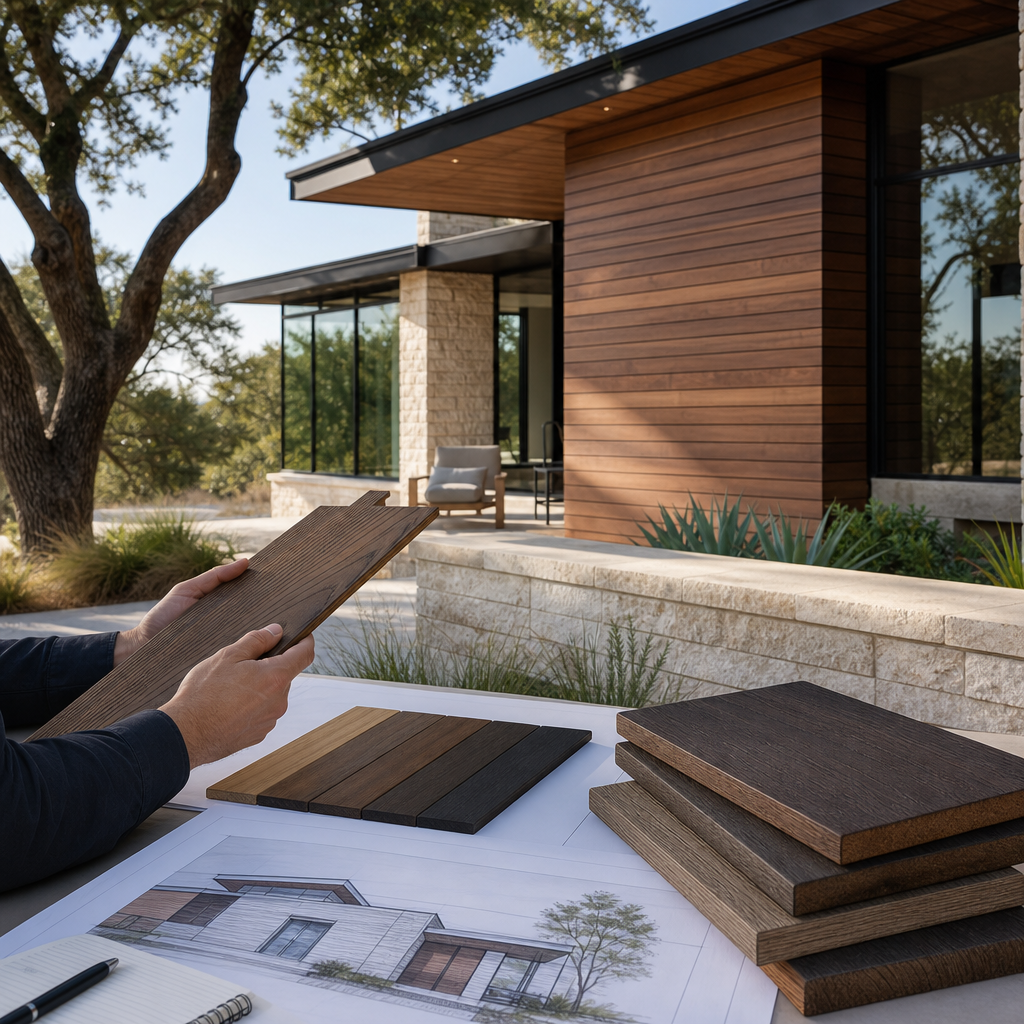
For architects and builders across Texas, whether you’re working in Downtown Austin, the Hill Country, or sprawling suburban developments, our Texas-based operation means responsive communication and local expertise.
Why Texas Architects Partner with US Lumber Brokers
You work with us because we understand your design language and the material reality of bringing those designs to life. We’re not pushing commodity options or generic solutions. We stock specialty products because we know architects like you demand them.
We’ve built relationships with mills and manufacturers worldwide, so we can source exactly what you specify. If Boral TruExterior Poly-Ash is the right material for your project, we have it in stock. If you’re exploring thermally modified alternatives or need vertical grain softwoods with specific grain character, we source those too.
Our team speaks both architecture and builder language. We translate design intent into specification documents and then into material reality on the job site. That bridging role prevents the miscommunication that derails projects.
Most importantly, we treat your material sourcing as a core part of your project’s success, not a transaction. Your reputation depends on the quality and durability of every element, including exterior siding. We recognize that responsibility and work accordingly.
If you’re ready to specify Boral TruExterior Poly-Ash siding or explore other thermally modified wood options for your next Texas project, reach out. We’ll confirm availability, discuss your timeline, and help you move forward with confidence.
To place orders, order samples, or talk with a live person.
Frequently Asked Questions (FAQ)
What makes Boral TruExterior Poly-Ash siding the right choice for architect-designed homes?
We select Boral TruExterior Poly-Ash for projects requiring both aesthetic authenticity and long-term durability. The thermally modified ash core delivers genuine wood character without the maintenance demands of traditional siding, making it ideal for contemporary designs that emphasize natural materials. Our architects consistently specify this product when they need a material that performs as beautifully as it looks.
How do we ensure the materials we supply meet your project specifications?
We maintain direct relationships with manufacturers like Boral and keep comprehensive inventory of thermally modified products, allowing us to verify every detail before it reaches your site. Our team works from your specification drawings to confirm sizing, grain patterns, and finish options match your design intent. We also provide documentation including FSC certification and Class A fire-rating credentials so your projects meet all code requirements.
Can we supply Boral TruExterior materials across Texas and beyond?
Yes, we service the entire state of Texas and ship nationwide to support projects wherever our architect partners are building. Whether you’re designing in Austin, Dallas, Houston, or working on a destination home in the Hill Country, we handle sourcing, inventory management, and delivery logistics so you focus on the design.


