

Why Architects Choose White Oak for Signature Projects
White oak stands apart in luxury residential work because it delivers visual warmth without compromise on durability. Texas architects designing contemporary homes value its straight grain patterns, rich amber undertones, and ability to anchor large open-plan spaces where glass and natural light dominate. Unlike softer woods, white oak accepts stains and finishes beautifully while maintaining structural integrity under the thermal stress that comes with our climate.
The material also aligns with the design philosophy we see across award-winning Texas firms: authentic materiality. When you specify white oak flooring or millwork, you’re making a deliberate statement that the home celebrates natural texture and honest construction. Homeowners notice immediately. The grain tells a story of growth rings and seasonal variation that no veneer can replicate.
We’ve worked with architects who layer white oak throughout a project, from entry millwork to primary bedroom closet systems to stair treads. The consistency of character across these elements creates visual coherence that elevates the entire home.
Actionable takeaway: Before selecting white oak, clarify your finish preference (matte, satin, or poly) with your supplier. This choice affects both appearance and maintenance expectations on Texas job sites.
The Craftsmanship Problem: Finding Consistent Quality Wood
Most architects can identify premium white oak visually, but sourcing it at scale presents real logistical friction. Generic lumber yards stock commodity-grade material. Specialty suppliers often carry limited inventory or require long lead times that conflict with construction schedules. Worse, inconsistent grading between shipments means your flooring installer encounters width variation, color drift, or grain character that diverges from your initial sample.
We’ve heard this complaint repeatedly from architects across Austin, Dallas, and Houston: “We specify the material, approve samples, and then the job site receives something different.” This happens because white oak comes from multiple mills with varying standards, and quality control breaks down in the distribution chain.
The root issue is traceability. Without knowing your wood’s origin mill and processing details, you can’t guarantee the visual and performance outcomes your design demands. Shortcuts appear when suppliers prioritize speed over verification.
Actionable takeaway: Request a mill certificate and photo documentation of the actual material destined for your project, not just reference samples. This single step prevents expensive job site surprises.
Our White Oak Selection and Sourcing Standards
We source white oak from mills that specialize in architectural-grade material, meaning selective harvesting, controlled kiln-drying, and rigorous grading before shipment. Every board meets Clear or Select grade standards, eliminating the knots and defects that compromise appearance in high-visibility applications.
Our inventory process tracks origin, moisture content, and finish specifications so your millwork fabricator receives material that matches approved samples. We work directly with mills rather than acquiring through commodity brokers, which gives us visibility into processing and the ability to request specific characteristics (grain pattern preference, color range, or dimensional tolerance).
For architects designing contemporary spaces, we can source white oak in both rift and quarter-sawn cuts. Quarter-sawn material displays distinctive medial ray flecking that adds visual interest and performs better dimensionally under humidity swings. Rift-sawn offers tighter, more linear grain for minimalist design approaches.
We also maintain relationships with FSC-certified mills, meaning you can specify sustainability credentials without sacrificing quality or lead time. This matters to high-end residential clients who value environmental stewardship.
Actionable takeaway: Discuss grain character preferences with your flooring or millwork fabricator early, then communicate these requirements when we source material. This ensures every board aligns with your architectural intent.
Millwork Packages We Design for Contemporary Texas Homes
We’ve fabricated custom millwork packages that extend white oak beyond flooring into integrated architectural elements. This includes built-in cabinetry for media walls, powder room vanities, primary bedroom closet systems, and stair components (treads, risers, and handrails).
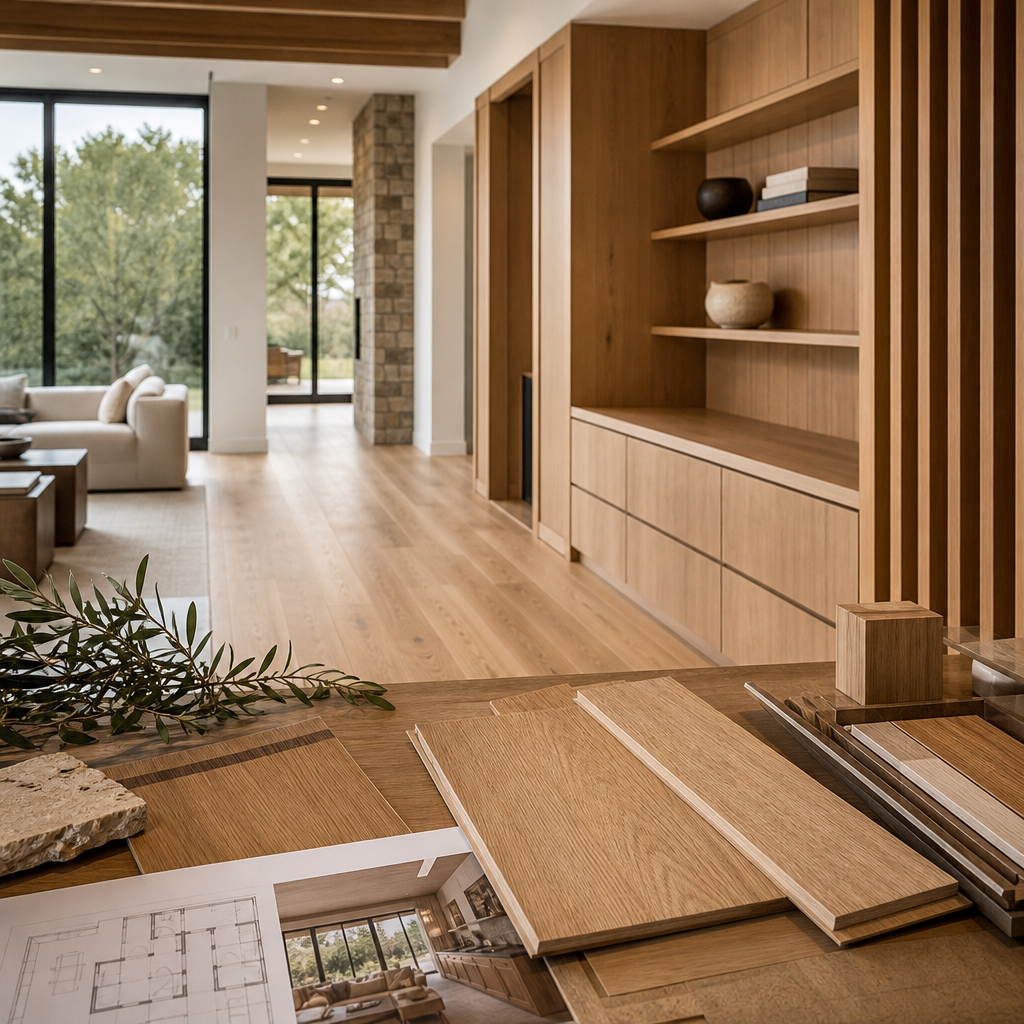
Contemporary design often emphasizes clean lines and minimal reveals, which demands precision from both wood selection and fabrication. We work with cabinet shops and millworkers to ensure grain direction consistency across adjacent panels and to specify edge banding and joinery that feel intentional rather than merely functional.
One recent project involved a Lake|Flato-inspired hill country home with white oak coffered ceiling elements, floating shelving, and flooring throughout the main living spaces. The challenge wasn’t the material quality; it was ensuring seamless grain and color transition across fabricators and installation sequences. We coordinated with the builder and millwork contractor to stage delivery strategically and verify on-site acceptance before installation.
Large-scale millwork packages require lead time. We typically advise architects to lock specifications 12-16 weeks before desired installation dates, giving mills and fabricators sufficient runway without expedite premiums.
Actionable takeaway: Create a detailed millwork schedule with your contractor early, then forward it to us. This lets us stage deliveries by phase and ensure no architectural element delays your critical path.
FSC Certified and Sustainable Wood Solutions
We recognize that Texas architects increasingly specify sustainably sourced materials as standard practice, not premium add-on. FSC (Forest Stewardship Council) certification provides third-party verification that wood originates from responsibly managed forests where harvesting balances ecological health and economic viability.
Our white oak suppliers hold FSC certification for most architectural-grade material. This doesn’t change the visual outcome or performance characteristics; it simply documents that the resource was harvested ethically. For luxury custom homes where clients value environmental consciousness, this certification strengthens the story you tell about the project.
FSC material carries no price premium when sourced through us, and lead times remain standard. We’ve eliminated the artificial cost barrier that sometimes discourages architects from specifying certified wood. It’s the right practice, not the expensive alternative.
Actionable takeaway: Request FSC documentation during specification. We can provide chain-of-custody papers and mill certifications as part of our standard delivery package.
Integration with Your Architectural Vision
White oak works across multiple design idioms: mid-century modern, contemporary farmhouse, minimalist, and warm minimalism all benefit from its presence. The key is intentionality. We’ve seen white oak flooring paired with concrete, steel, glass, and plaster in ways that feel cohesive because the architect made deliberate material choices rather than defaulting to what’s available.
When we partner on projects, we’re not simply filling a material specification. We’re considering how white oak interacts with adjacent materials, how finish selection affects the warmth or coolness of the overall palette, and how grain direction influences the movement and flow of spaces.
This requires communication. Before we source material, understanding your architectural intent helps us guide realistic expectations. If you’re designing a primary bedroom with white oak flooring and want that space to feel grounded and calm, quarter-sawn material with a matte finish reads differently than rift-sawn with a satin poly. Both are white oak; the character varies.
We also discuss installation sequencing. Some architects prefer white oak flooring installed last to protect it from construction traffic. Others want it in place early so trades can see the finished material and adjust stain or finish on millwork accordingly.
Actionable takeaway: Schedule a brief material consultation before finalizing finishes and specifications. We can walk through samples, discuss grain patterns, and address any performance questions specific to your design.
How We Support Architect-Driven Custom Builds
Architects and builders operate on different timelines and accountability structures. We bridge that gap by serving as a reliable material partner who understands both perspectives. We provide builders with technical documentation and material certifications; we give architects visibility into sourcing decisions and quality verification.
This means you can count on us for:
- Detailed material specifications that translate to job site instructions
- Photo documentation of material before and after fabrication
- Support for on-site inspections and acceptance procedures
- Collaboration with your millwork contractor on fabrication details and sequencing
- Problem-solving when site conditions require modifications
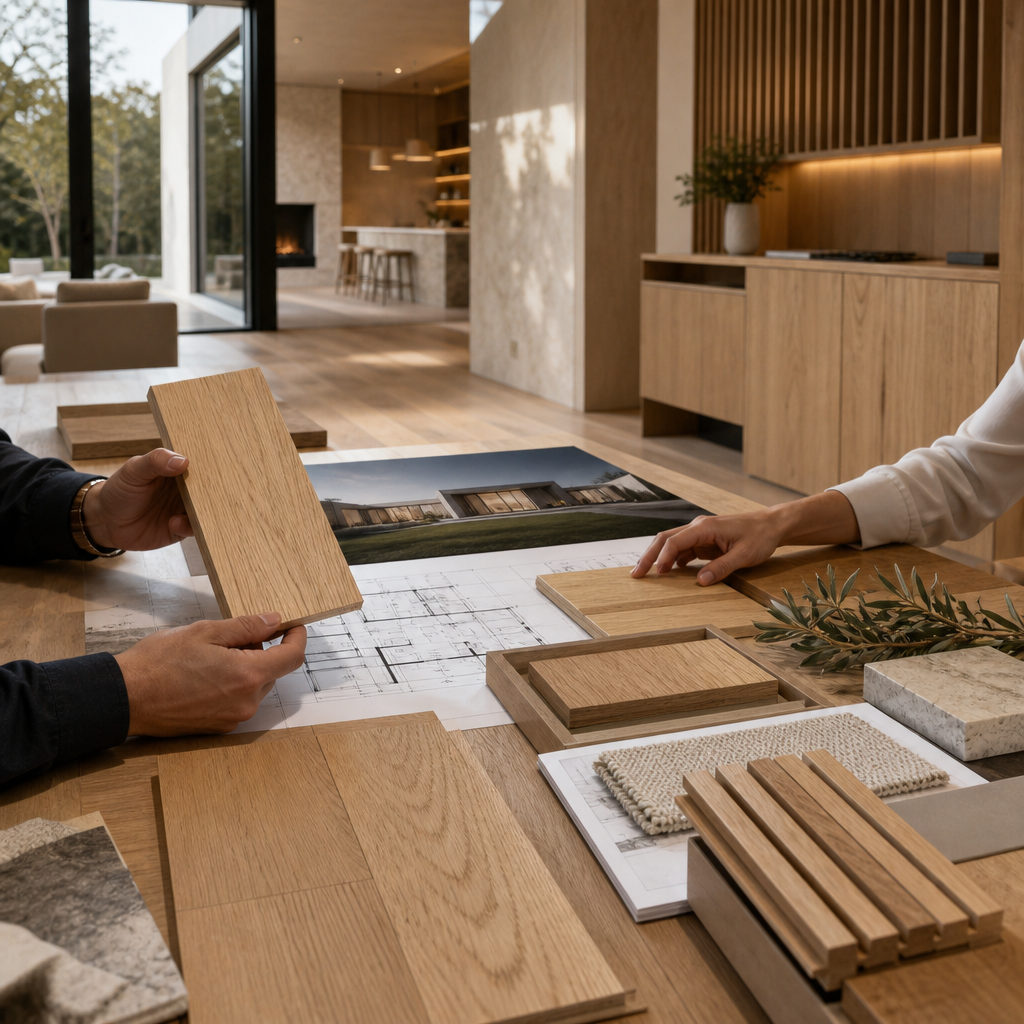
We’ve worked on projects where unexpected humidity changes affected flooring movement or where architectural changes required reconfiguring cabinet packages. In these situations, we coordinate directly with builders and architects rather than defaulting to blame or delay. Material sourcing becomes a collaborative process.
Actionable takeaway: Introduce us to your builder and millwork contractor early. Clear communication between all parties prevents friction and accelerates resolution when issues arise.
White Oak Performance in Texas Climate
Texas presents unique challenges for hardwood flooring and millwork. Summer humidity swings, occasional drought periods, and temperature fluctuations from air conditioning create dimensional movement that softer woods struggle to manage. White oak’s density and grain structure provide natural stability compared to species like red oak or ash.
That said, no hardwood is immune to moisture-related movement. Proper installation practices matter as much as material quality. Flooring contractors should acclimate white oak to the home’s environment for 3-7 days before installation, allowing the wood to reach equilibrium with ambient conditions. Millwork contractors should install backing support that allows seasonal wood movement without cracking finishes.
We advise architects to specify appropriate finishes. Polyurethane creates a vapor barrier that restricts moisture exchange, which can cause cupping or crowning if the wood absorbs moisture from below. Penetrating oils and matte finishes allow more gradual moisture regulation, though they require more frequent maintenance.
Air conditioning consistency matters too. Homes maintained at stable temperature and humidity year-round see minimal movement. Vacation homes or seasonal residences experience more pronounced shifts, which should factor into installation specifications and maintenance planning.
Actionable takeaway: Include climate control expectations and maintenance requirements in your project specifications and homeowner documentation. This sets realistic expectations for finish performance.
Complementary Hardwood Options Beyond Oak
While white oak dominates luxury residential work, we source complementary hardwoods that pair beautifully with it or serve as primary materials depending on design intent. Ipe delivers exceptional durability and chocolate-brown tones for architectural accents or exterior applications. Cumaru and Garapa offer warm amber hues that echo white oak’s warmth while introducing subtle color variation.
For contemporary interiors, thermally modified ash provides character similar to white oak with deeper chocolate undertones and tighter grain. It performs well in Texas climates and accepts finishes beautifully. Thermally modified materials undergo heating processes that alter cell structure, improving dimensional stability and moisture resistance without chemical treatments.
Some architects specify mixed hardwood approaches within a single home: white oak as the primary flooring material with ipe accents on thresholds or stair nosings, or white oak millwork paired with thermally modified ash built-ins. These combinations create visual interest while maintaining material coherence.
Actionable takeaway: If white oak alone feels too monotonous for your design, we can show samples of complementary hardwoods that layer character without creating visual conflict.
From Specification to Installation Support
Our role extends beyond selling material. We support the entire specification-to-installation process by providing architects with technical guidance, builders with material documentation, and millwork contractors with fabrication support.
Specifications should include grade standards (Clear or Select), cut preference (rift or quarter-sawn), finish type, moisture content at delivery, and any custom sizing or milling requirements. We translate architectural intent into language that mills and contractors understand.
Once material ships, we coordinate with fabricators to verify receipt and condition. If issues arise (moisture content outside tolerance, color variation beyond acceptable range, or dimensional drift), we handle resolution with mills or arrange replacement without delay. Your builder and architect shouldn’t manage these logistics; we do.
Installation support includes site visits to inspect flooring or millwork before fastening, coordination with finish contractors on stain or sealant application, and documentation of completed work for your project record.
Actionable takeaway: Provide us with your project timeline and key milestones. We’ll build a material delivery schedule that aligns with construction sequencing and minimizes storage duration on site.
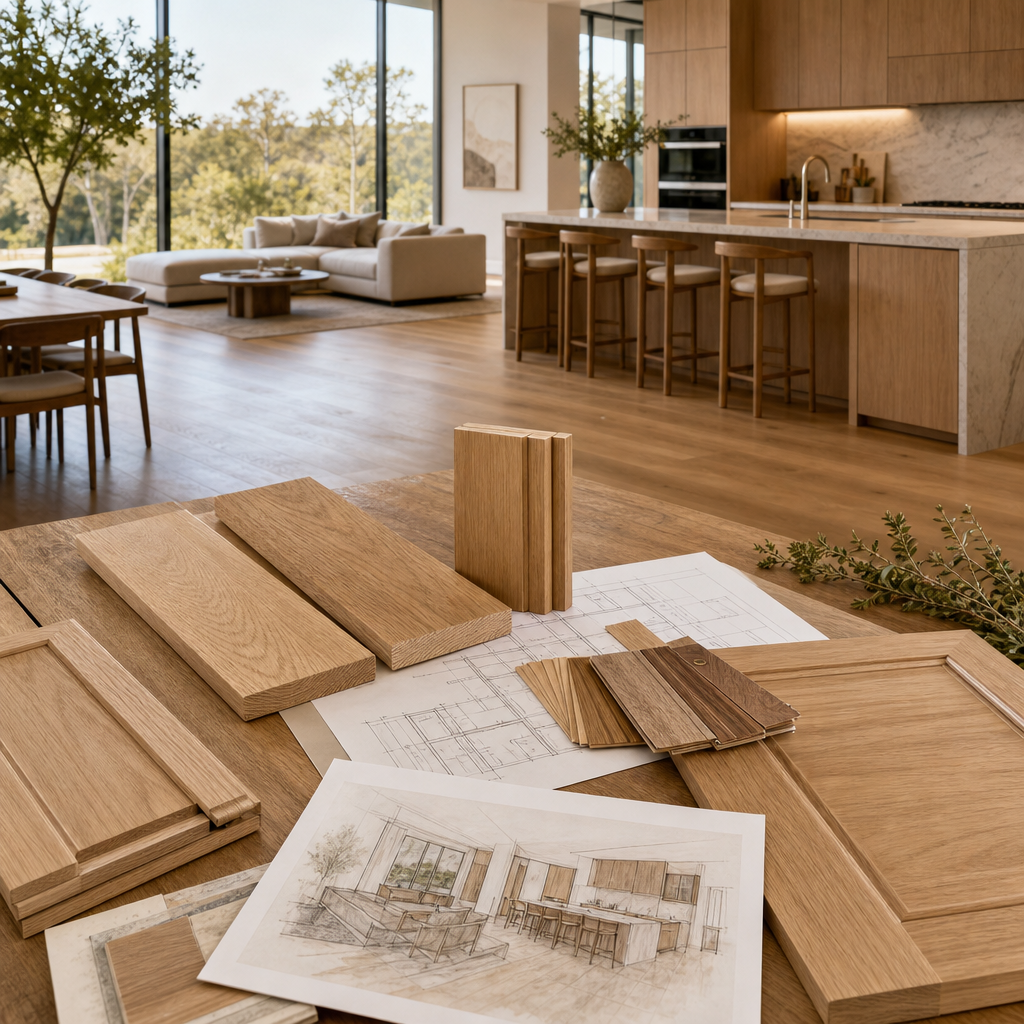
Our Texas-Based Delivery and Local Expertise
Being Texas-based matters when you’re managing luxury residential projects across the state. We understand local climate variations between Austin hill country homes and Houston coastal properties. We have established relationships with mills, fabricators, and contractors throughout Texas, which means faster problem resolution and stronger coordination on job sites.
Local expertise also means we’re familiar with local building codes, architectural preferences, and material standards that resonate in different regions. A home in Dripping Springs requires different material performance considerations than one in Spicewood or downtown Austin. We’ve navigated these nuances across Austin, Dallas, Houston, San Antonio, and surrounding areas.
Our delivery network ensures material reaches job sites on schedule. We don’t rely on distant brokers or national distributors who can’t respond quickly to Texas-specific issues. Direct relationships with mills and mills with local inventory mean faster turnaround when architects need material quickly.
Actionable takeaway: When sourcing white oak or complementary hardwoods for Texas projects, work with a supplier who understands local climate demands and has established mill relationships. We deliver both.
Creating Distinctive Spaces with Premium Wood Materials
At the end, white oak flooring and millwork are tools for creating spaces that feel distinctive and intentional. Luxury custom homes succeed when every material choice reinforces the architectural vision. White oak’s warmth, durability, and visual character make it ideal for contemporary Texas residences where natural materials blur the boundary between indoors and outdoors.
The craftsmanship that separates a good project from an exceptional one begins with sourcing. When you specify premium white oak from a supplier who understands architectural intent and delivers consistently, the material performs as designed. Floors feel grounded. Millwork reads as intentional rather than decorative. The overall aesthetic coheres because the foundational materials were chosen with precision.
We’re here to support that standard. Whether you’re designing a new build in the Texas hill country or a contemporary home in urban Austin, we source, deliver, and support white oak and complementary hardwoods that elevate your architectural vision.
Next step: Reach out to discuss your upcoming project. We’ll walk through material options, timelines, and sourcing standards so you can specify with confidence.
For further reading: Accoya decking.
To place orders, order samples, or talk with a live person.
Frequently Asked Questions (FAQ)
What white oak grades and specifications do we recommend for architect-designed millwork?
We source FSC certified white oak in Clear and Select grades, which provide the consistent color and grain character that contemporary designs demand. Our inventory includes both flat-sawn and quarter-sawn cuts, and we can specify moisture content and milling tolerances to meet your exact architectural drawings. We work directly with architects to understand whether your design calls for tight grain patterns or more expressive figuring, then source accordingly.
How do we ensure white oak performs well in Texas’s humidity and temperature fluctuations?
We’ve developed sourcing and conditioning protocols specifically for the Texas climate, where seasonal humidity swings can affect dimensional stability. Our white oak arrives properly kiln-dried and acclimated before millwork fabrication, and we provide moisture content documentation for every shipment. We also recommend finishing specifications and installation methods proven to perform in Central and South Texas conditions, drawing on our experience across dozens of luxury projects throughout the state.
Can we coordinate white oak flooring and millwork with other hardwoods in complementary species?
Yes. We regularly specify white oak alongside Ipe, Garapa, and thermally modified hardwoods when architectural vision calls for contrasting materials or accents. Our sourcing relationships allow us to source complementary species with matching quality standards and FSC certification, ensuring your entire hardwood palette meets the same performance and sustainability criteria.


